Sprycel 50 mg film-coated tablets
Spain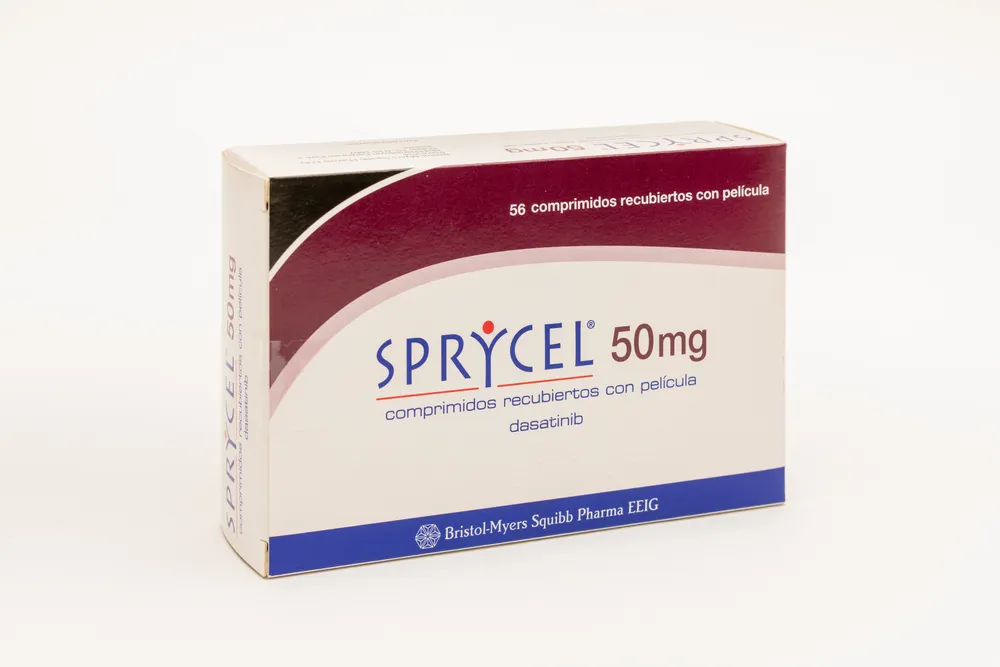
Table of Contents
Patient Information Leaflet
Introduction
Patient Information Leaflet
SPRYCEL 20 mg film-coated tablets
SPRYCEL 50 mg film-coated tablets
SPRYCEL 70 mg film-coated tablets
SPRYCEL 80 mg film-coated tablets
SPRYCEL 100 mg film-coated tablets
SPRYCEL 140 mg film-coated tablets
dasatinib
Read the entire leaflet carefully before you start taking this medicine, as it contains important information for you.
- Keep this leaflet as you may need to read it again.
- If you have any questions, ask your doctor or pharmacist.
- This medicine has been prescribed for you only and must not be given to other people, even if they have the same symptoms, as it may harm them.
- If you experience any adverse reactions, consult your doctor or pharmacist, even if they are adverse reactions not listed in this leaflet. See section 4.
Leaflet Contents
- What SPRYCEL is and what it is used for
- What you need to know before taking SPRYCEL
- How to take SPRYCEL
- Possible side effects
- How to store SPRYCEL
- Contents of the pack and other information
1. What SPRYCEL is and what it is used for
SPRYCEL contains the active substance dasatinib. This medicine is used to treat chronic myeloid leukaemia (CML) in adults, adolescents and children at least 1 year of age. Leukaemia is a type of cancer of the white blood cells. These white blood cells normally help the body fight infections. In patients with CML, a type of white blood cells called granulocytes begin to multiply uncontrollably. SPRYCEL inhibits the growth of these leukaemic cells.
SPRYCEL is also used to treat Philadelphia chromosome-positive (Ph+) acute lymphoblastic leukaemia (ALL) in adults, adolescents and children at least 1 year of age, and lymphoid blast CML in adults who do not benefit from prior therapies. In patients with ALL, a type of white blood cells called lymphocytes multiply too quickly and live too long. SPRYCEL inhibits the growth of these leukaemic cells.
If you have any questions about how SPRYCEL works or why this medicine has been prescribed for you, consult your doctor.
2. What you need to know before taking SPRYCEL
Do not take SPRYCEL
- if you are allergic to dasatinib or to any of the other ingredients of this medicine (listed in section 6).
If you think you may be allergic, consult your doctor.
Warnings and precautions
Talk to your doctor or pharmacist before starting treatment with SPRYCEL
- if you are taking medicines to thin the blood or prevent blood clots (see Use of SPRYCEL with other medicines)
- if you have or have had any liver or heart problems
- if you start experiencing difficulty breathing, chest pain, or cough while taking SPRYCEL: this may be a sign of fluid retention in the lungs or chest (which may be more common in patients aged 65 years or older) or due to changes in the blood vessels supplying the lungs
- if you have ever had or may currently have an infection with hepatitis B virus. This is because SPRYCEL could cause hepatitis B to become active again, which may be fatal in some cases. Your doctor should carefully check for signs of this infection before starting treatment.
- If you experience bruising, bleeding, fever, fatigue, and confusion while taking SPRYCEL, contact your doctor. These may be signs of damage to blood vessels known as thrombotic microangiopathy (TMA).
Your doctor will monitor your condition periodically to ensure that SPRYCEL is having the desired effect. You will also have regular blood tests while receiving SPRYCEL.
Children and adolescents
Do not give this medicine to children under one year of age. Experience with the use of SPRYCEL in this age group is limited. In children taking SPRYCEL, growth and bone development should be closely monitored.
Other medicines and SPRYCEL
Tell your doctor or pharmacist if you are taking, have recently taken, or might need to take any other medicines.
SPRYCEL is mainly processed by the liver. Some medicines may interfere with the effect of SPRYCEL when taken together.
The following medicines must not be used during treatment with SPRYCEL:
-
ketoconazole, itraconazole – antifungal medicines
-
erythromycin, clarithromycin, telithromycin – antibiotics
-
ritonavir – an antiviral medicine
-
phenytoin, carbamazepine, phenobarbital – treatments for epilepsy
-
rifampicin – a treatment for tuberculosis
-
famotidine, omeprazole – medicines that block stomach acid secretions
-
St. John’s Wort – a herbal medicine available without prescription used for the treatment of depression and other conditions (also known as Hypericum perforatum)
Do not take medicines that neutralize stomach acid (antacids such as aluminium hydroxide/magnesium hydroxide) within 2 hours before or 2 hours after taking SPRYCEL.
Tell your doctor if you are taking medicines to thin the blood or prevent blood clots.
Taking SPRYCEL with food and drink
Do not take SPRYCEL with grapefruit or grapefruit juice.
Pregnancy and breastfeeding
If you are pregnant or think you might be pregnant, inform your doctor immediately. SPRYCEL must not be used during pregnancy unless clearly necessary. Your doctor will inform you of the potential risks of taking SPRYCEL during pregnancy.
Men and women are both advised to use effective contraception during treatment with SPRYCEL.
If you are breastfeeding, inform your doctor. You must stop breastfeeding while taking SPRYCEL.
Driving and using machines
Exercise caution when driving or operating machinery if you experience adverse effects such as dizziness or blurred vision.
SPRYCEL contains lactose
If your doctor has informed you that you have an intolerance to certain sugars, consult with him before taking this medicine.
3. How to take SPRYCEL
SPRYCEL will only be prescribed by a physician experienced in the treatment of leukemia. Always follow exactly the instructions provided by your doctor for administering this medicine. If in doubt, consult your doctor or pharmacist again. SPRYCEL is prescribed for adults and children at least 1 year of age.
The recommended initial dose for adult patients with chronic phase CML is 100 mg once daily.
The recommended initial dose for adult patients with accelerated phase CML, blast phase CML, or Ph+ ALL is 140 mg once daily.
Dosing schedule in children with chronic phase CML or Ph+ ALL based on body weight: SPRYCEL is administered orally once daily, either as tablets or as oral suspension powder. SPRYCEL tablets are not recommended for patients weighing less than 10 kg. The oral suspension powder should be used in patients weighing less than 10 kg and in patients who cannot swallow tablets. A dose adjustment may be required when switching between formulations (i.e., tablets and oral suspension powder); therefore, switching from one formulation to the other should be avoided.
Your doctor will determine the appropriate formulation and dose based on your body weight, side effects, and response to treatment. In children, the starting dose of SPRYCEL is calculated according to body weight as shown below:
Body weight (kg)a | Daily dose (mg) |
From 10 to less than 20 kg | 40 mg |
From 20 to less than 30 kg | 60 mg |
From 30 to less than 45 kg | 70 mg |
At least 45 kg | 100 mg |
a Tablets are not recommended for patients weighing less than 10 kg; the oral suspension powder should be used in these patients.
There is no dosage recommendation for SPRYCEL in children under 1 year of age.
Depending on how you respond to treatment, your doctor may prescribe a higher or lower dose, or may temporarily interrupt treatment. To take higher or lower doses, you may need to take combinations of tablets of different strengths.
Tablets may be supplied in calendar blister packs. These are blister packs with days of the week indicated. Arrows indicate the next tablet to be taken according to your treatment schedule.
How to take SPRYCEL
Take the tablets at the same time each day. Swallow the tablets whole. Do not crush, cut, or chew them. Do not take dissolved tablets. You cannot be sure of receiving the correct dose if the tablets are crushed, cut, chewed, or dispersed. SPRYCEL tablets may be taken with or without food.
Special handling instructions for SPRYCEL
It is unlikely that SPRYCEL tablets will break, but if they do, individuals other than the patient should wear gloves when handling SPRYCEL.
How long to take SPRYCEL
Take SPRYCEL daily until your doctor instructs you to stop treatment. Make sure you take SPRYCEL for the prescribed duration.
If you take more SPRYCEL than you should
If you accidentally take too many tablets, consult your doctor immediately. You may require medical attention.
If you forget to take SPRYCEL
Do not take a double dose to make up for missed doses. Take the next scheduled dose at the usual time.
If you have any further questions about the use of this product, ask your doctor or pharmacist.
4. Possible adverse effects
Like all medicines, this medicine can cause adverse effects, although not everyone will experience them.
The following may be signs of serious adverse effects:
- if you have chest pain, difficulty breathing, cough, or fainting
- if you have unexpected bleeding or bruising without injury
- if you notice blood in vomit, stools, or urine, or have black stools
- if you develop signs of infection such as fever, severe chills
- if you have fever, mouth or throat pain, burning sensation, or peeling of the skin and/or mucous membranes
Contact your doctor immediately if you notice any of the above.
Very common adverse effects (may affect more than 1 in 10 patients)
- Infections (caused by bacteria, viruses, and fungi)
- Heart and lungs: difficulty breathing
- Digestive problems: diarrhea, feeling unwell (nausea, vomiting)
- Skin, hair, eyes, general: skin rash, fever, swelling of the face, hands, and feet, headache, tiredness or weakness, bleeding
- Pain: muscle pain (during or after stopping treatment), abdominal pain
- Laboratory tests: low platelet count, low white blood cell count (neutropenia), anemia, fluid around the lungs
Common adverse effects (may affect up to 1 in 10 patients)
-
Infections: pneumonia, herpes virus infection (including cytomegalovirus - CMV), upper respiratory tract infection, severe blood or tissue infection (including rare cases with fatal outcomes)
-
Heart and lungs: palpitations, irregular heartbeat, congestive heart failure, weak heart muscle, high blood pressure, high blood pressure in the lungs, cough
-
Digestive problems: changes in appetite, changes in taste, abdominal distension or bloating, inflammation of the colon, constipation, esophageal reflux, mouth ulcers, weight loss, weight gain, gastritis
-
Skin, hair, eyes, general: tingling of the skin, itching, dry skin, acne, skin inflammation, persistent ringing in the ears, hair loss, excessive sweating, visual disturbances (including blurred vision and distorted vision), dry eyes, bruising, depression, insomnia, hot flushes, dizziness, contusions (bruises), anorexia, drowsiness, generalized edema
-
Pain: joint pain, muscle weakness, chest pain, pain in the feet and hands, chills, stiffness of muscles and joints, muscle spasm
-
Laboratory tests: fluid around the heart, fluid in the lungs, heart arrhythmias, febrile neutropenia, gastrointestinal bleeding, elevated levels of uric acid in the blood
Uncommon adverse effects (may affect up to 1 in 100 patients)
-
Heart and lungs: heart attack (including fatal outcome), inflammation of the membrane surrounding the heart (fibrous sac), irregular heart rhythm, chest pain due to reduced blood supply to the heart (angina), low blood pressure, narrowing of the airways that could cause breathing difficulties, asthma, high blood pressure in the arteries (blood vessels) going to the lungs
-
Digestive problems: inflammation of the pancreas, peptic ulcer, inflammation of the digestive tract, abdominal swelling, anal skin tear, difficulty swallowing, inflammation of the gallbladder, blockage of bile ducts, gastroesophageal reflux (stomach acid and other contents flowing back into the throat)
-
Skin, hair, eyes, general: allergic reactions including sensitivity, red lumps on the skin (erythema nodosum), anxiety, confusion, mood swings, low sex drive, fainting, tremor, eye inflammation that may cause redness or pain, skin disease characterized by sensitivity, redness, well-defined spots with sudden onset of fever and elevated white blood cell count (neutrophilic dermatosis), hearing loss, light sensitivity, visual disturbance, increased eye tearing, changes in skin pigmentation, inflammation of subcutaneous fat tissue, skin ulcer, blisters on the skin, nail changes, hair changes, changes in hands and feet, kidney failure, increased frequency of urination, breast enlargement in men, menstrual disorders, general weakness and malaise, low thyroid function, loss of balance while walking, osteonecrosis (a condition where blood supply to bones is reduced, potentially leading to bone loss and death), arthritis, skin swelling anywhere on the body.
-
Pain: inflammation of veins that may cause redness, tenderness, and swelling, inflammation of tendons
-
Brain: memory loss
-
Additional tests: abnormal blood test results and possibly kidney failure caused by tumor breakdown products during healing (tumor lysis syndrome), low blood albumin levels, low lymphocyte count (a type of white blood cell) in blood, elevated blood cholesterol levels, swollen lymph nodes, brain hemorrhage, irregularity in the heart's electrical activity, enlarged heart, liver inflammation, protein in urine, elevated creatine phosphokinase (an enzyme found mainly in the heart, brain, and skeletal muscles), increased troponin (an enzyme found mainly in the heart and skeletal muscle), increased gamma-glutamyl transferase (an enzyme found mainly in the liver), milky-appearing fluid around the lungs (chylous effusion)
Rare adverse effects (may affect up to 1 in 1000 patients)
-
Heart and lungs: dilation of the right ventricle of the heart, inflammation of the heart muscle, a set of symptoms caused by blocked blood supply to the heart muscle (acute coronary syndrome), heart attack (interruption of blood supply to the heart), coronary artery disease (heart disease), inflammation of the tissue covering the heart and lungs, blood clots, blood clots in the lungs
-
Digestive problems: loss of vital nutrients such as proteins from the digestive system, intestinal obstruction, anal fistula (abnormal opening from the anus to the surrounding skin), impaired kidney function, diabetes
-
Skin, hair, eyes, general: seizure, inflammation of the optic nerve that may cause complete or partial vision loss, bluish to purplish spots on the skin, abnormally high thyroid function, inflammation of the thyroid gland, ataxia (associated with loss of muscle coordination), difficulty walking, spontaneous abortion, inflammation of blood vessel skin, cutaneous fibrosis
-
Brain: stroke, transient episode of neurological dysfunction caused by loss of blood flow, facial nerve paralysis, dementia
-
Immune system: severe allergic reactions
-
Connective tissue and musculoskeletal system: delayed fusion of the rounded ends forming joints (epiphyses); slow or delayed growth
Other adverse effects reported with unknown frequency (cannot be estimated from available data)
- Inflammation of the lungs
- Bleeding in the stomach or intestine that may be fatal
- Recurrence (reactivation) of hepatitis B virus infection if you have had hepatitis B in the past (a liver infection)
- Reaction with fever, blisters on the skin, and mucosal ulceration
- Kidney disorders with symptoms such as edema and abnormal laboratory test results such as protein in urine and low blood protein levels
- Damage to blood vessels known as thrombotic microangiopathy (TMA), which includes decreased red blood cell count, decreased platelets, and blood clot formation.
Your doctor will monitor you for any of these effects during your treatment.
Reporting of adverse effects
If you experience any adverse effect, talk to your doctor or pharmacist, even if it is a possible adverse effect not listed in this leaflet. You can also report them directly through the national reporting system listed in Annex V. By reporting adverse effects, you can help provide more information on the safety of this medicine.
5. Storage of SPRYCEL
Keep this medicine out of the sight and reach of children.
Do not use this medicine after the expiry date stated on the label of the vial after EXP. The expiry date refers to the last day of the month indicated.
No special storage conditions are required.
Medicines should not be disposed of via wastewater or household waste. Ask your pharmacist how to dispose of medicines and packaging that you no longer need. This will help protect the environment.
6. Contents of the container and other information
Composition of SPRYCEL
-
The active substance is dasatinib. Each film-coated tablet contains 20 mg, 50 mg, 70 mg, 80 mg, 100 mg or 140 mg of dasatinib (as monohydrate).
-
The other components are:
-
Tablet core: lactose monohydrate (see section 2, "SPRYCEL contains lactose"); microcrystalline cellulose; sodium croscarmellose; hydroxypropylcellulose; magnesium stearate
-
Film coating: hypromellose; titanium dioxide (E171); macrogol 400
Appearance of the product and contents of the container
SPRYCEL 20 mg: film-coated tablets are white to off-white, biconvex, round, with "BMS" engraved on one side and "527" on the other.
SPRYCEL 50 mg: film-coated tablets are white to off-white, biconvex, oval, with "BMS" engraved on one side and "528" on the other.
SPRYCEL 70 mg: film-coated tablets are white to off-white, biconvex, round, with "BMS" engraved on one side and "524" on the other.
SPRYCEL 80 mg: film-coated tablets are white to off-white, biconvex, triangular, with "BMS 80" engraved on one side and "855" on the other.
SPRYCEL 100 mg: film-coated tablets are white to off-white, biconvex, oval, with "BMS 100" engraved on one side and "852" on the other.
SPRYCEL 140 mg: film-coated tablets are white to off-white, biconvex, round, with "BMS 140" engraved on one side and "857" on the other.
SPRYCEL 20 mg, 50 mg and 70 mg film-coated tablets are available in packages containing 56 film-coated tablets in 4 calendar blister packs with 14 film-coated tablets each, and in packages containing 60 x 1 film-coated tablets in pre-cut single-dose blisters. They are also available in child-resistant bottles containing 60 film-coated tablets. Each carton contains one bottle.
SPRYCEL 80 mg, 100 mg and 140 mg film-coated tablets are available in packages containing 30 x 1 film-coated tablets in pre-cut single-dose blisters. They are also available in child-resistant bottles containing 30 film-coated tablets. Each carton contains one bottle.
Only certain pack sizes may be marketed.
Marketing Authorization Holder
Bristol-Myers Squibb Pharma EEIG
Plaza 254
Blanchardstown Corporate Park 2
Dublin 15, D15 T867
Ireland
Manufacturer
Swords Laboratories Unlimited Company T/A Bristol-Myers Squibb Pharmaceutical Operations,
External Manufacturing
Plaza 254
Blanchardstown Corporate Park 2
Dublin 15, D15 T867
Ireland
For more information about this medicine, please contact the local representative of the Marketing Authorization Holder:
Belgium/Belgium/Belgium N.V. Bristol‑Myers Squibb Belgium S.A. Tel/Tel: + 32 2 352 76 11 | Lithuania Swixx Biopharma UAB Tel: + 370 52 369140 |
| Luxembourg/Luxembourg N.V. Bristol‑Myers Squibb Belgium S.A. Tel/Tel: + 32 2 352 76 11 |
Czech Republic Bristol‑Myers Squibb spol. s r.o. Tel: + 420 221 016 111 | Hungary Bristol‑Myers Squibb Kft. Tel.: + 36 1 301 9797 |
Denmark Bristol‑Myers Squibb Denmark Tlf: + 45 45 93 05 06 | Malta A.M. Mangion Ltd Tel: + 356 23976333 |
Germany Bristol‑Myers Squibb GmbH & Co. KGaA Tel: 0800 0752002 (+ 49 89 121 42 350) | Netherlands Bristol‑Myers Squibb B.V. Tel: + 31 (0)30 300 2222 |
Estonia Swixx Biopharma OÜ Tel: + 372 640 1030 | Norway Bristol‑Myers Squibb Norway AS Tlf: + 47 67 55 53 50 |
Greece Bristol‑Myers Squibb A.E. Tel: + 30 210 6074300 | Austria Bristol‑Myers Squibb GesmbH Tel: + 43 1 60 14 30 |
Spain Bristol‑Myers Squibb, S.A. Tel: + 34 91 456 53 00 | Poland Bristol‑Myers Squibb Polska Sp. z o.o. Tel.: + 48 22 2606400 |
France Bristol‑Myers Squibb SAS Tél: + 33 (0)1 58 83 84 96 | Portugal Bristol‑Myers Squibb Farmacêutica Portuguesa, S.A. Tel: + 351 21 440 70 00 |
Croatia Swixx Biopharma d.o.o. Tel: + 385 1 2078 500 | Romania Bristol‑Myers Squibb Marketing Services S.R.L. Tel: + 40 (0)21 272 16 19 |
Ireland Bristol‑Myers Squibb Pharmaceuticals uc Tel: 1 800 749 749 (+ 353 (0)1 483 3625) | Slovenia Swixx Biopharma d.o.o. Tel: + 386 1 2355 100 |
Iceland Vistor ehf. Tel: + 354 535 7000 | Slovakia Swixx Biopharma s.r.o. Tel: + 421 2 20833 600 |
Italy Bristol‑Myers Squibb S.r.l. Tel: + 39 06 50 39 61 | Finland/Finland Oy Bristol‑Myers Squibb (Finland) Ab Tel/Tel: + 358 9 251 21 230 |
Cyprus Bristol‑Myers Squibb A.E. Tel: 800 92666 (+ 30 210 6074300) | Sweden Bristol‑Myers Squibb Aktiebolag Tel: + 46 8 704 71 00 |
Latvia Swixx Biopharma SIA Tel: + 371 66164750 |

Date of the most recent review of this leaflet:
Detailed information on this medicine is available on the website of the European Medicines Agency:
https://www.emea.europa.eu. There are also links to other websites on rare diseases and orphan medicines.