Spironolactone Accord 25 mg film-coated tablets EFG
Spain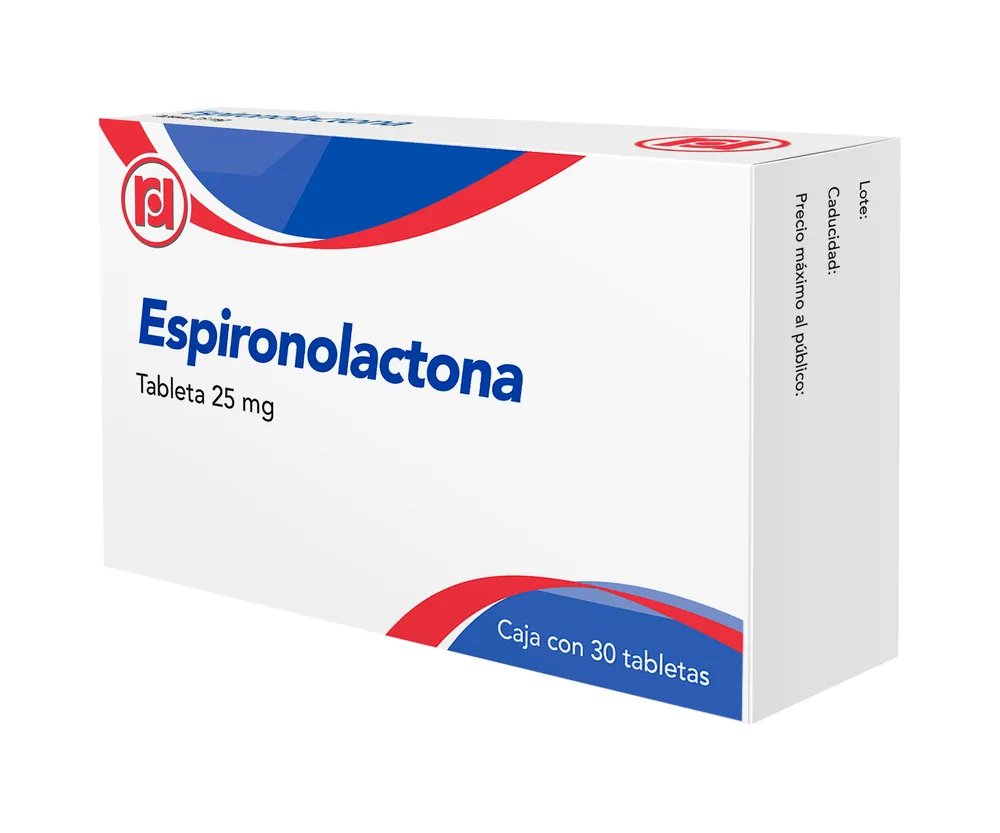
Instructions for Use
Package leaflet: Information for the user
Introduction
Package leaflet: information for the user
Espironolactone Accord 25 mg film-coated tablets EFG
spironolactone
Read all of this leaflet carefully before you start taking this medicine, because it contains important information for you.
- Keep this leaflet, as you may need to read it again.
- If you have any questions, ask your doctor or pharmacist.
- This medicine has been prescribed for you only, and you should not give it to others, even if they have the same symptoms as you, because it could harm them.
- If you experience any adverse reactions, consult your doctor, pharmacist or nurse, even if they are adverse reactions not listed in this leaflet. See section 4.
Contents of the leaflet:
-
What Espironolactone Accord is and what it is used for
-
What you need to know before taking Espironolactone Accord
-
How to take Espironolactone Accord
-
Possible adverse effects
- Storage of Espironolactone Accord
-
Contents of the pack and other information
1. What Espironolactone Accord is and what it is used for
The active substance in the tablets is spironolactone. Spironolactone belongs to a specific group of medicines known as aldosterone antagonists, which inhibit the action of the hormone aldosterone. One of the functions of aldosterone is to ensure that the body retains sodium. It is part of a system that regulates the balance of fluids and salts in the body (renin angiotensin aldosterone system, "RAAS"). Spironolactone promotes urinary excretion in patients who have accumulation of fluid in the tissues (edema) or in the abdominal cavity (ascites), by increasing the amount of sodium (salt) excreted in the urine. It reduces the loss of potassium as a possible consequence of using certain diuretics. The antihypertensive effect depends on the excretion of water and salt.
Your doctor may prescribe Espironolactone Accord for the treatment of:
- accumulation of fluid in the tissues due to heart disorders;
- severe heart failure (NYHA functional classes III-IV);
- elevated blood pressure as an adjunct to a salt-free diet and diuretics;
- certain kidney disorders;
- accumulation of fluid in the tissues of the abdominal cavity.
Espironolactone Accord may also be used:
during medical examinations (diagnostics) to confirm the presence of disorders involving excessively high levels of aldosterone produced in the adrenal cortex (known as Conn's syndrome), and for its treatment.
Children should only be treated under the guidance of a pediatrician.
2. What you need to know before taking Espironolactone Accord
Do not take Espironolactone Accord
- If you are allergic to spironolactone or any of the other ingredients of this medicine (listed in section 6).
- If you have severe renal insufficiency or sudden or rapidly worsening kidney disease, including cases in which little or no urine is produced.
- If you have low sodium levels (hyponatremia).
- If you have Addison's disease (a hormonal deficiency characterized by extreme weakness, weight loss, and low blood pressure).
- If you have hyperkalemia (high blood potassium levels) or any other condition associated with hyperkalemia.
- If you are taking potassium-sparing diuretics (including eplerenone) or potassium supplements, or dual renin-angiotensin-aldosterone system (RAAS) blockade with the combination of an angiotensin-converting enzyme (ACE) inhibitor and an angiotensin receptor blocker (ARB).
Children with moderate to severe kidney disease must not take Espironolactone Accord.
Warnings and precautions
Talk to your doctor or pharmacist before starting Espironolactone Accord.
- Patients receiving spironolactone require regular monitoring of fluid and electrolyte status, especially in elderly patients and/or those with pre-existing renal or hepatic impairment.
- If you have difficulty urinating.
- If you have a liver disorder, your doctor should exercise caution when treating you.
- If you have a kidney disorder, your doctor should exercise caution when treating you.
- If you have high blood potassium levels or impaired kidney function, administration of Espironolactone Accord is not recommended (see also "Do not take Espironolactone Accord").
- If you have severe renal dysfunction and are simultaneously being treated with potassium supplements, hyperkalemia may occur, which could lead to cardiac arrest (sometimes fatal).
- In the case of long-term treatment of young patients with Espironolactone Accord, your doctor should carefully weigh the benefits against the potential long-term risks.
- If you have a disease that may alter electrolyte balance (blood minerals such as potassium and sodium).
- If you have any increase or decrease in blood electrolytes, such as potassium or sodium.
- If you have severe heart failure.
- If you are taking another diuretic in combination with Espironolactone Accord that may cause low sodium levels (hyponatremia) in the blood.
- Concomitant administration of Espironolactone Accord with certain medicines, potassium supplements, and potassium-rich foods may lead to severe hyperkalemia (increased blood potassium levels). Symptoms of severe hyperkalemia may include muscle cramps, arrhythmias, diarrhea, nausea, dizziness, or headache.
Inform your doctor if any of the above warnings apply to your current or past medical history.
Children
Spironolactone should be used with caution in children with hypertension and mild kidney disease. Your doctor will routinely assess your condition. (Children with moderate to severe kidney disease must not take spironolactone.)
Other medicines and Espironolactone Accord
Tell your doctor or pharmacist if you are taking, have recently taken, or might need to take any other medicines, including those obtained without a prescription. Your doctor may need to adjust your dose of Espironolactone Accord if you are taking any of the following:
- Medicines for high blood pressure, including ACE inhibitors and ganglionic blocking agents.
- Other diuretics.
- Non-steroidal anti-inflammatory drugs (NSAIDs) such as acetylsalicylic acid (aspirin), ibuprofen, or mefenamic acid.
- Potassium supplements.
- Heparin or low-molecular-weight heparin (medicines used to prevent blood clots).
- Drugs that inhibit blood clotting (anticoagulants).
- Lithium (used to treat depression).
- Digoxin (used in the treatment of various heart conditions).
- Alcohol, barbiturates, or opioids.
- Medicines known to cause hyperkalemia (high blood potassium levels).
- Cholestyramine (used to reduce blood cholesterol levels).
- Corticosteroids, ACTH (prescribed for various epileptic conditions).
- Ammonium chloride (e.g., in licorice).
- Cyclosporine.
- Carbenoxolone, used to treat gastroesophageal reflux disease.
- Norepinephrine, used to treat acute hypotension.
- Cardiac glycosides, used in the treatment of heart failure.
- Medicines used for local or general anesthesia.
- Trimethoprim and trimethoprim-sulfamethoxazole.
- If you are taking abiraterone for the treatment of prostate cancer.
Inform your doctor if you are taking mitotane for the treatment of malignant adrenal gland tumors. This medicine must not be used together with mitotane.
If you are undergoing surgery where anesthesia will be administered, inform the responsible physician that you are taking spironolactone.
Espironolactone Accord with food
This medicine should be taken with food.
Pregnancy, breastfeeding, and fertility
If you are pregnant or breastfeeding, think you may be pregnant, or are planning to become pregnant, consult your doctor or pharmacist before using this medicine.
Spironolactone must not be used during pregnancy unless considered necessary by your doctor.
Spironolactone must not be used during breastfeeding. You should discuss the use of spironolactone with your doctor, who will advise you to consider an alternative method of feeding your baby while taking this medicine.
Spironolactone may impair fertility and cause impotence and menstrual irregularities.
Driving and use of machines
Occasionally, side effects such as dizziness, headache, and confusion may occur while taking Espironolactone Accord. In such cases, do not drive or operate machinery.
Espironolactone Accord contains lactose
This medicine contains lactose. If your doctor has informed you of an intolerance to certain sugars, consult with him before taking this medicine.
3. How to take Espironolactone Accord
Follow exactly the instructions for use of this medicine as given by your doctor or pharmacist. If in doubt, consult your doctor or pharmacist again.
The recommended dose is:
Adults
The recommended dose is 100 mg daily, taken as a single dose or in divided doses. The dose for adults ranges from 25 mg to 400 mg of spironolactone daily. If you are unsure about how much you should take, consult your doctor or pharmacist.
Take the tablets with food. If the total daily dose exceeds 100 mg, it should be administered in divided doses throughout the day.
Use in children
The recommended dose is 3 mg per kg of body weight per day, divided into several doses. The tablets may be crushed or ground and then suspended in a glass of water to make them easier for children to take.
Elderly patients
It is recommended that elderly patients start with the lowest possible dose and gradually increase it until the desired effect is achieved. Caution and regular medical check-ups are advised, especially in cases of renal impairment.
Do not forget to take your medication. Try to take the tablets at the same time each day to achieve the best effect. This will also help you remember when to take them.
If you take more Espironolactone Accord than you should
If you have taken too much Espironolactone Accord, contact your doctor or pharmacist immediately. Keep the packaging so the doctor can see which medicine you have taken.
Symptoms of overdose may include nausea and vomiting, and (less frequently) drowsiness, confusion, diarrhoea, or a skin rash appearing as flat red areas of skin with small raised bumps. Disturbances in fluid and electrolyte balance and dehydration may occur.
Changes in blood levels of sodium and potassium may cause weakness, tingling, prickling sensations, or numbness of the skin and/or muscle spasms, although these symptoms are unlikely to be associated with severe overdose.
If you forget to take Espironolactone Accord
If you forget to take a dose, take it as soon as possible unless it is almost time for your next dose. In that case, do not take the missed dose but continue with your regular schedule. Do not take a double dose to make up for a forgotten dose. Ask your doctor or pharmacist if you are unsure.
If you stop taking Espironolactone Accord
If you stop taking Espironolactone Accord, your initial symptoms may return. Always consult your doctor if you wish to discontinue treatment with this medicine.
If you have any further questions about the use of this medicine, ask your doctor or pharmacist.
4. Possible adverse effects
Like all medicines, this medicine can cause adverse effects, although not everyone experiences them.
Contact your doctor immediately if you experience any of the following symptoms after taking this medicine. Although these are very rare, the symptoms can be serious.
- Itching and blistering of the skin around the lips and elsewhere on the body,
- Red or purple rash that spreads and forms blisters (Stevens-Johnson syndrome)
- Detachment of the outer layer of skin from the underlying layers throughout the body (toxic epidermal necrolysis - TEN)
- Skin rash, fever, and swelling (which could be symptoms of a more serious condition, Drug Reaction with Eosinophilia and Systemic Symptoms (DRESS))
- Yellowing of the skin and eyes (jaundice; spironolactone may cause disturbances in liver function)
- Irregular heartbeat that may be life-threatening, tingling sensation, paralysis (loss of muscle function), or difficulty breathing; which may be symptoms of high potassium levels in your blood.
Your doctor will perform periodic blood tests to monitor your potassium and other electrolyte levels. Your doctor may stop treatment if necessary.
Other adverse effects
Very common: may affect more than 1 in 10 people
- Increased potassium in the blood
Common: may affect up to 1 in 10 people
- Confusion
- Dizziness
- Malaise
- Skin itching
- Skin rash
- Muscle or leg cramps
- Kidney failure or abnormal kidney function
- Breast enlargement in men
- Breast pain (in men)
- General malaise
Uncommon: may affect up to 1 in 100 people
- Changes in breast glands, such as lumps
- Disturbances in body electrolytes, such as hypercalcemia
- Abnormal liver function
- Skin allergy with itching and hives, rash similar to nettle rash
- Menstrual problems in women
- Chest pain (in women)
Frequency not known: cannot be estimated from available data
- Decrease in the number of white blood cells in the blood
- Decrease in cells that fight infections (white blood cells, increasing the likelihood of infections)
- Decrease in cells that carry oxygen (anemia)
- Decrease in cells that help blood clot, or increase in eosinophils in the blood (eosinophilia), increasing the risk of bleeding or bruising or causing purple spots on the skin (purpura)
- Change in sexual desire in both men and women
- Temporary impotence in men
- Digestive problems, gastrointestinal discomfort
- Skin condition with fluid-filled blisters (bullous pemphigoid)
- Hair loss
- Excessive hair growth
- Headache
- Drowsiness
- General weakness or lethargy and problems with coordination of muscle movements (ataxia)
-
- Fever
Reporting of adverse effects
If you experience any adverse effect, consult your doctor, pharmacist, or nurse, even if it is an effect not listed in this leaflet. You may also report them directly via the Spanish Pharmacovigilance System for Human Medicines: www.notificaRAM.es. By reporting adverse effects, you can help provide more information on the safety of this medicine.
5. Storage of Spironolactone Accord
- Keep this medicine out of the sight and reach of children.
- This medicine does not require any special storage temperature. Store in the original packaging to protect from light.
- Do not use this medicine after the expiry date stated on the container, after EXP. The expiry date refers to the last day of the month.
- Medicines must not be disposed of via wastewater or household waste. Dispose of empty containers and unused medicines at the SIGRE Point in your pharmacy. If you are unsure, ask your pharmacist how to properly dispose of containers and medicines you no longer need. This will help protect the environment.
6. Contents of the pack and other information
Composition of Spironolactone Accord
The active substance is spironolactone. Spironolactone Accord contains 25 mg of spironolactone.
The other components are:
Tablet core
Monohydrate lactose, pregelatinized corn starch, anhydrous calcium hydrogen phosphate, povidone K25, peppermint oil, purified talc, anhydrous colloidal silica, magnesium stearate (E470b).
Film coating
Hypromellose, macrogol, titanium dioxide (E171)
Appearance of the medicinal product and contents of the pack
Spironolactone Accord 25 mg film-coated tablets are round, biconvex, white or pale white tablets, printed with "AD" on one side and no mark on the other. The diameter of the 25 mg tablet is approximately 8.1 mm.
Spironolactone Accord tablets are packed in PVC-aluminum blisters or in HDPE bottles.
Pack sizes:
Blister pack: 20, 28, 30, 50, 60, 90 or 100 tablets in blister.
HDPE bottle: 250, 500 and 1000 tablets (for hospital use or dose-dispenser only).
Only certain pack sizes may be commercially available.
Marketing Authorization Holder
Accord Healthcare, S.L.U.
World Trade Center
Moll de Barcelona, s/n
Edifici Est, 6th floor
08039 Barcelona
Spain
Manufacturer
Accord Healthcare Polska Sp.z o.o.,
ul. Lutomierska 50,
95-200 Pabianice
Poland
Or
Accord Healthcare B.V.,
Winthontlaan 200,
3526 KV Utrecht,
The Netherlands
Or
Accord Healthcare Single Member S.A.,
64th Km National Road Athens Lamia,
Schimatari, 32009, Greece
Date of the latest revision of this leaflet: April 2025
Detailed information on this medicine is available on the website of the Spanish Agency of Medicines and Health Products (AEMPS) http://www.aemps.gob.es
Similar Medications
-
Aldactone 100 mg film-coated tablets
Form: tablets, film-coated
Active substance Dosage SPIRONOLACTONE 100 mg Manufacturer: Pfizer S.L.
-
Aldactone 25 mg film-coated tablets
Form: tablets, film-coated
Active substance Dosage SPIRONOLACTONE 25 mg Manufacturer: Pfizer S.L.
-
Spironolactone Accord 100 mg film-coated tablets EFG
Form: tablets, film-coated
Active substance Dosage SPIRONOLACTONE 100 mg Manufacturer: Accord Healthcare S.L.U.
-
Spironolactone Alter 100 mg film-coated tablets EFG
Form: tablets, film-coated
Active substance Dosage SPIRONOLACTONE 100 mg Manufacturer: Laboratorios Alter S.A.
-
Spironolactone Alter 25 mg film-coated tablets EFG
Form: tablets, film-coated
Active substance Dosage SPIRONOLACTONE 25 mg Manufacturer: Laboratorios Alter S.A.
This page has been machine-translated and may contain inaccuracies. The original data is available in the manufacturing country's language.
Last data check: May 18, 2026 · Data source: CIMA — AEMPS