Sotalol Sandoz 80 mg tablets EFG
Spain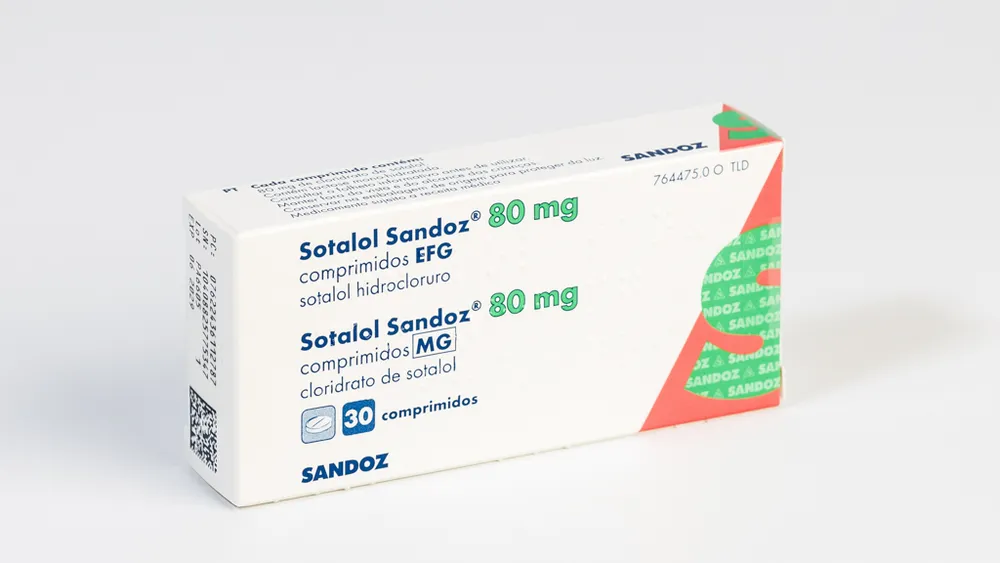
Table of Contents
Package leaflet: Information for the user
Introduction
Package leaflet: information for the patient
Sotalol Sandoz 80 mg tablets EFG
Sotalol hydrochloride
Read the entire leaflet carefully before you start taking this medicine, because it contains important information for you.
- Keep this leaflet, as you may need to read it again.
- If you have any questions, ask your doctor or pharmacist.
- This medicine has been prescribed for you only, and you should not give it to other people, even if they have the same symptoms as you, because it could harm them.
- If you experience any adverse effects, consult your doctor or pharmacist, even if they are adverse effects not listed in this leaflet. See section 4.
Leaflet contents
- What Sotalol Sandoz is and what it is used for
- What you need to know before taking Sotalol Sandoz
- How to take Sotalol Sandoz
- Possible adverse effects
- How to store Sotalol Sandoz
- Contents of the pack and other information
1. What Sotalol Sandoz is and what it is used for
Sotalol belongs to a group of medicines called beta-blockers. These medicines protect the heart from excessive activity.
This medicine is indicated for the treatment of heart rhythm disorders (ventricular and supraventricular arrhythmias).
2. What you need to know before taking Sotalol Sandoz
Do not take Sotalol Sandoz
- if you are allergic to any of the components of this medicine (listed in section 6),
- if you have any heart disease (such as untreated heart pump failure (heart failure), disorders of heart impulse conduction (heart block), sick sinus syndrome (a disorder of heart rhythm)) or cardiogenic shock,
- if you have low blood pressure or a very slow heart rate,
- if you are due to undergo a treatment or surgical procedure requiring outpatient anesthesia or general anesthesia that may suppress heart function,
- if you have an untreated adrenal gland tumor, which may be accompanied by a sudden, sharp increase in blood pressure, severe headache, heavy sweating, and rapid heartbeat (pheochromocytoma),
- if you have a condition causing discoloration (white or purple) of hands and feet (poor circulation – Raynaud's syndrome),
- if you have a serious circulatory disorder,
- if you have asthma, wheezing attacks, or any other lung disease,
- if you have a condition called metabolic acidosis (when your body produces too much acid),
- if you have severe kidney failure.
Warnings and precautions
Talk to your doctor or pharmacist before starting treatment with sotalol:
- when stopping treatment with sotalol. Treatment with this medicine should not be stopped abruptly. The dose should be gradually reduced (over a period of 2 weeks); sometimes it may be necessary to switch to a substitute treatment,
- if you have heart rhythm disorders (arrhythmias); as a side effect, existing heart rhythm disorders (arrhythmia) may worsen or new rhythm disorders may occur,
- if you have low potassium levels in the blood, which in severe cases may manifest as muscle cramps or muscle weakness and fatigue (hypokalemia), or if you have low magnesium levels in the blood (hypomagnesemia); certain heart conditions may occur if you take this medicine while having these conditions, for example if you have severe diarrhea or are being treated simultaneously with medicines that reduce magnesium and/or potassium (e.g., some diuretics); you will have an increased risk of developing certain heart conditions (QT interval prolongation and torsades de pointes),
- if you have impaired heart function; symptoms may worsen,
- if you have recently had a myocardial infarction; your doctor will monitor you closely and the dose will need to be carefully determined,
- if you have a slow heart rate; this increases the risk of developing certain cardiac arrhythmias,
- if you have previously experienced hypersensitivity reactions and are simultaneously using certain medicines used to treat high blood pressure, certain heart conditions, or increased intraocular pressure (beta-blockers); you may not respond adequately to epinephrine (a medicine used to treat hypersensitivity reactions),
- if you are undergoing surgery or treatment with anesthesia; inform the specialist that you are taking this medicine,
- if you have diabetes or episodes of low blood sugar accompanied by hunger, sweating, dizziness, palpitations (hypoglycemia); be more alert to the signs of these conditions and monitor your blood glucose levels more frequently,
- if you have an overactive thyroid gland or are at risk of developing this condition; your doctor will monitor you closely during treatment and abrupt discontinuation should be avoided,
- if you have impaired kidney function; your doctor will reduce the dose (see also "Dosage"),
- if you have a recurring skin condition accompanied by dry, scaly rash (psoriasis); symptoms may worsen,
- if your doctor has told you that you are hypersensitive to certain sugars; consult your doctor before taking this medicine.
Consult your doctor if any of the above conditions apply to you or have affected you in the past.
Inform your doctor that you are taking this medicine if you undergo any laboratory tests, such as a urine test.
Use in athletes
This medicine contains a substance that may lead to a positive result in doping control tests (see references in section 4.4 of the technical information leaflet).
Other medicines and Sotalol Sandoz
Inform your doctor or pharmacist if you are taking, have recently taken, or might need to take any other medicines, including those available without a prescription.
Sotalol and other medicines may affect each other's effects and side effects.
Do not use sotalol with:
- certain medicines used to treat cardiac arrhythmias; cardiac arrhythmias may worsen,
- other medicines used to treat high blood pressure, certain heart conditions, or increased intraocular pressure (beta-blockers),
- phenothiazines (anti-nausea medicines), tricyclic antidepressants (medicines used to treat depression), terfenadine and astemizole (medicines used to treat allergic disorders), and quinolones (medicines used to treat infections caused by certain pathogens), intravenous erythromycin (a medicine used to treat infections), halofantrine (a medicine used to treat malaria), and pentamidine (a medicine used to treat infections). The combination of these medicines with sotalol is not recommended due to an increased risk of developing a certain type of cardiac arrhythmia (torsades de pointes),
- floctafenic acid (a medicine used to treat rheumatoid arthritis),
- calcium channel blockers (agents that protect the heart from excessive activity). Concomitant use with beta-blockers may cause reduced blood pressure, decreased heart rate, and heart problems; combination with calcium channel blockers such as verapamil and diltiazem (a certain type of calcium antagonist) should be avoided.
Use sotalol with caution when taking:
- certain diuretics (water tablets); potassium levels in the blood may become too low, sometimes manifesting as muscle cramps, diarrhea, nausea, dizziness, headache (hypokalemia), and magnesium levels in the blood may become too low, sometimes accompanied by drowsiness, low blood pressure, low body temperature, and abnormal heart function (hypomagnesemia),
- intravenous amphotericin B (an agent used to treat fungal infections), adrenal cortex hormones (corticosteroids) (with anti-inflammatory effects, among others), and certain laxatives; when these medicines are combined with sotalol, potassium levels in the blood may become too low, manifesting as muscle cramps, diarrhea, nausea, dizziness, headache (hypokalemia),
- clonidine (a medicine used to treat high blood pressure (hypertension) and migraine); rebound high blood pressure may occur after stopping clonidine treatment due to the combination with sotalol,
- digitalis glycosides (agents used to treat heart disorders); arrhythmias may occur,
- medicines such as reserpine (a medicine for movement disorders, high blood pressure, and severe low mood (depression)), guanethidine (a medicine for high intraocular pressure (glaucoma)), or alpha-methyldopa (a medicine for high blood pressure); combination with sotalol may reduce muscle tone; if you are treated with such a combination, your blood pressure and heart rate should be closely monitored,
- insulin or other oral hypoglycemic agents; your blood sugar level may become too high (hyperglycemia). Your doctor may decide to adjust the dose of these medicines. Symptoms of low blood sugar such as hunger, sweating, dizziness, palpitations (hypoglycemia) may be masked,
- certain medicines that relax muscles (such as tubocurarine); the effect of these medicines may be prolonged,
- medicines that stimulate the heart and/or blood vessels; it may be necessary to increase the dose of these medicines.
Taking Sotalol Sandoz with food and drinks
The absorption of sotalol into the body may be reduced if taken with food. Therefore, you should take this medicine 30 minutes before meals.
Pregnancy and breastfeeding
If you are pregnant, think you may be pregnant, or plan to become pregnant, consult your doctor or pharmacist before using this medicine.
Pregnancy
Sotalol should only be used during pregnancy if the potential benefit outweighs the risk to the fetus.
If taken during pregnancy, sotalol should be discontinued 48–72 hours before the expected date of delivery. If this is not possible, the newborn must be closely monitored for 48–72 hours after birth.
Breastfeeding
Sotalol is excreted in breast milk. You must not breastfeed while taking this medicine.
Driving and using machines
Sotalol may cause side effects such as dizziness and fatigue. This may negatively affect your reaction ability. Keep this in mind when driving or operating machinery.
Sotalol Sandoz contains lactose and sodium
If your doctor has told you that you have an intolerance to certain sugars, consult him before taking this medicine.
This medicine contains less than 1 mmol of sodium (23 mg) per tablet; essentially "sodium-free".
3. How to take Sotalol Sandoz
Follow exactly the instructions for use of this medicine as prescribed by your doctor or pharmacist. If in doubt, consult your doctor or pharmacist again. Do not stop taking these tablets without first consulting your doctor.
Dosage
Your doctor has prescribed the amount of sotalol you should take. In general, the following doses apply:
Adults
Initial dose:
80 mg once daily or 40 mg twice daily.
Your doctor may decide to gradually increase the dose at intervals of 3 days.
Maintenance dose:
80 to 160 mg twice daily.
For the prevention of certain types of rapid heartbeat (tachycardia), a maintenance dose of 160 mg twice daily is recommended. An exception is after heart surgery, in which case 120 mg twice daily is recommended.
Occasionally, your doctor may decide on a dose of up to 480–640 mg.
If you have renal impairment, your doctor will adjust the dose (depending on the severity of your renal impairment).
Method of administration
The tablet or half tablet should be taken with water, half an hour before meals.
Maintain 12-hour intervals when taking the dose twice daily.
If you feel that the effect of sotalol is too strong or too weak, consult your doctor or pharmacist.
How to split Sotalol Sandoz:
Place the tablet on a hard, flat surface with the marked side facing upwards.
Apply pressure with your thumb at the center of the tablet to break it into two equal halves.
Duration of treatment
Your doctor will tell you how long you should take this medicine. Do not stop treatment too early, as symptoms may recur.
If you take more Sotalol Sandoz than you should
If you have taken more sotalol than prescribed, contact your doctor or pharmacist immediately.
In case of overdose or accidental ingestion, contact your doctor or pharmacist immediately or call the Toxicology Information Service at: 91 562 04 20, indicating the medicine and the amount ingested.
If you forget to take Sotalol Sandoz
If you forget to take a dose, you may take it as soon as you remember, unless it is almost time for the next dose. In that case, continue with your regular schedule.
Do not take a double dose to make up for forgotten doses.
If you stop taking Sotalol Sandoz
This medicine must not be stopped abruptly. The dose should be gradually reduced (over 2 weeks); sometimes it may be necessary to switch to a substitute treatment.
If you have any further questions about the use of this medicine, ask your doctor or pharmacist.
4. Possible adverse effects
Like all medicines, this medicine can cause adverse effects, although not everyone will experience them.
Serious adverse effects:
Immediately inform your doctor or go to the nearest hospital if you experience any of the following symptoms: swelling of the face, lips, tongue and/or throat with difficulty swallowing or breathing. These may be signs of an allergic reaction, and you must stop taking the tablets.
Frequency unknown: (cannot be estimated from available data):
- Inadequate pumping function of the heart (heart failure) (this causes sudden cessation of heartbeat, absence of breathing, and loss of consciousness).
Other adverse effects:
Common (may affect up to 1 in 10 people):
- Irregular heartbeat, slow heartbeat, heart failure, chest pain, low blood pressure, difficulty breathing, swelling, fainting and palpitations, disturbances in heart rhythm (torsade de pointes, QT interval prolongation, AV conduction disorder, ventricular tachycardia), worsening of pressure, heaviness, tightness or pain in the chest (angina pectoris),
- Worsening of reduced blood flow in arms and legs (peripheral occlusive disease), cold extremities,
- Nausea and vomiting, indigestion, abdominal pain, flatulence, diarrhea, cramps,
- Anxiety, depression, confusion, mood changes, headache, dizziness, vertigo, general weakness, fatigue, sleep disturbances, tingling in feet and hands (prickling),
- Sexual dysfunction, impotence, fever, skin rash, skin reactions, hearing problems, vision problems, changes in taste.
Frequency unknown (cannot be estimated from available data):
- Abnormally low levels of platelets in the blood (thrombocytopenia). Platelets clot to form scabs on wounds. If you do not have enough platelets, you may develop bruising, red spots on the skin, nosebleeds, or wounds that bleed for longer than usual,
- Perception (seeing, hearing, smelling, feeling) of things that do not exist (hallucinations), abnormal dreams,
- Blurred vision, inflammation of the ocular mucosa causing itching, tearing or redness (conjunctivitis), inflammation of the cornea (keratoconjunctivitis), decreased tear flow (especially in people who wear contact lenses),
- Dry mouth,
- Recurrent skin condition with scaly, dry rash (psoriasis) which may be triggered or exacerbated, hair loss, excessive sweating,
- Increase in blood fats and decrease in blood sugar.
Patients taking this type of medicine have reported cold and/or blue fingers and toes, worsening leg pain when walking, skin rashes, or dry eyes.
Reporting of adverse effects
If you experience any type of adverse effect, consult your doctor or pharmacist, even if it is a possible adverse effect not listed in this leaflet. You may also report them directly via the Spanish Pharmacovigilance System for Human Medicinal Products: https://www.notificaram.es. By reporting adverse effects, you can help provide more information on the safety of this medicine.
5. Storage of Sotalol Sandoz
Keep this medicine out of the sight and reach of children.
Store in the original container to protect it from light.
Do not use this medicine after the expiry date stated on the packaging and blister after CAD/EXP. The expiry date refers to the last day of the month indicated.
Medicines must not be disposed of via wastewater drains or household waste. Dispose of empty containers and unused medicines at the SIGRE collection point at your pharmacy. If in doubt, ask your pharmacist how to properly dispose of containers and unused medicines. This will help protect the environment.
6. Contents of the pack and other information
Composition of Sotalol Sandoz
- The active substance is 80 mg of sotalol hydrochloride per tablet.
- The other excipients are corn starch, monohydrate lactose, hydroxypropylcellulose (E463), sodium carboxymethylstarch (type A), anhydrous colloidal silicon dioxide (E551), and magnesium stearate (E470b).
Appearance of the medicinal product and contents of the pack
Sotalol Sandoz tablets are white, round, biconvex, scored on one side and marked with "SOT" on the other.
The tablet can be divided into equal doses.
The tablets are presented in blisters within a cardboard box.
Pack sizes: 30, 50, 60, 90, 100 tablets.
Only some pack sizes may be marketed.
Marketing Authorization Holder and Manufacturer
Marketing Authorization Holder
Sandoz Farmacéutica, S.A.
Parque Norte Business Park
Roble Building
C/ Serrano Galvache, 56
28033 Madrid
Spain
Manufacturer
Salutas Pharma GmbH
Otto-von-Guericke-Allee 1
39179 Barleben
Germany
Date of the most recent revision of this leaflet: February 2024
Detailed information on this medicine is available on the website of the Spanish Agency of Medicines and Medical Devices (AEMPS) http://www.aemps.gob.es.