Solu-Moderin 500 mg powder and solvent for solution for injection
Spain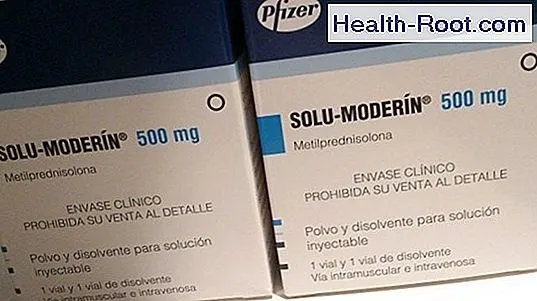
Table of Contents
Package leaflet: Information for the user
Introduction
Package leaflet: information for the user
Solu-Moderín 500 mg powder and solvent for solution for injection
Solu-Moderín 1 g powder and solvent for solution for injection
methylprednisolone
Read all of this leaflet carefully before you start using this medicine, because it contains important information for you.
- Keep this leaflet. You may need to read it again.
- If you have any questions, ask your doctor, pharmacist or nurse.
- This medicine has been prescribed for you only. Do not pass it on to other people, even if they have the same symptoms as you, because it may harm them.
- If you experience any adverse effects, consult your doctor, pharmacist or nurse, even if they are adverse effects not listed in this leaflet. See section 4.
Leaflet contents
- What Solu-Moderín is and what it is used for
- What you need to know before using Solu-Moderín
- How to use Solu-Moderín
- Possible side effects
- How to store Solu-Moderín
- Contents of the pack and other information
1. What Solu-Moderín is and what it is used for
Solu-Moderín 500 mg and Solu-Moderín 1 g contain methylprednisolone as the active substance, which belongs to a group of medicines called corticosteroids that work by reducing the production of substances that cause inflammation or allergic reactions.
Solu-Moderín is used in situations requiring immediate corticosteroid treatment, in severe cases or when oral administration is not possible, including:
- Acute episodes of primary or secondary adrenal insufficiency, shock due to adrenocortical insufficiency.
- Anaphylactic shock (severe allergic reaction) and clinical conditions mediated by immediate hypersensitivity mechanisms that may be life-threatening, such as angioedema (generalized urticaria accompanied by swelling of feet, hands, throat, lips, and airways), laryngeal edema (swelling of the throat area due to fluid accumulation).
- For prevention of anaphylactic shock in accidental poisonings, such as insect stings or snake bites.
- Severe inflammatory respiratory diseases, such as acute exacerbations of bronchial asthma, or in conjunction with appropriate antituberculous chemotherapy for the treatment of fulminating or disseminated tuberculosis.
- As an adjunct to antineoplastic chemotherapy.
- Acute exacerbations of multiple sclerosis (a chronic neurodegenerative disease of the central nervous system characterized by damage to the protective membranes of neurons), cerebral edema (brain inflammation due to fluid accumulation).
- Spinal cord injuries occurring no more than 8 hours previously.
Treatment of acute organ transplant rejection.
2. What you need to know before using Solu-Moderín
Do not use Solu-Moderín
-
if you are allergic to methylprednisolone or any of the other ingredients of this medicine (listed in section 6).
-
if you have fungal infections affecting various organs of the body.
-
via intrathecal route (injection administered within the layer covering the brain and spinal cord).
-
via epidural route (injection administered around the spinal cord).
-
before and after vaccination with live or live-attenuated microorganisms if immunosuppressive doses of corticosteroids are to be administered.
Warnings and precautions
Consult your doctor, pharmacist, or nurse before starting treatment with Solu-Moderín,
-
if you have gastric or duodenal ulcers,
-
if you have intestinal diseases due to the risk of intestinal perforation with peritonitis, such as non-specific ulcerative colitis with imminent risk of perforation, abscesses or other pyogenic infections, as well as diverticulitis (inflammation of small pouches in the intestinal wall), intestinal anastomoses (surgical reconnection of the intestine), or peptic ulcer,
-
if you have any infection, treatment with Solu-Moderín may reduce your resistance to various infections, mask signs of infection, worsen existing infections, or cause reactivation or worsening of latent infections. New infections may also occur during treatment with Solu-Moderín. Your doctor will closely monitor you for the development of infections and may consider interrupting treatment or reducing the dose as necessary,
-
if you have poliomyelitis (an infectious disease affecting the nervous system), except bulbar poliomyelitis,
-
if you have active or latent tuberculosis or a positive tuberculin reaction,
-
if you are to receive vaccines containing killed or inactivated microorganisms while receiving immunosuppressive doses of corticosteroids, as the response to these vaccines may be reduced,
-
if during treatment with Solu-Moderín you may come into contact with individuals who have infections such as chickenpox or herpes zoster, even if you do not have symptoms,
-
if you have osteoporosis (severe bone demineralization),
-
if you have myasthenia gravis, as dose adjustment may be required,
-
if you have diabetes, as it may increase blood glucose levels,
-
if you have congestive heart failure (a condition in which the heart cannot pump oxygen-rich blood effectively),
-
if you have simple ocular herpes due to the risk of corneal perforation,
-
if during treatment with this medicine you notice any visual disturbances, including vision loss, blurred vision, or other visual changes,
-
if you have Cushing's syndrome (rounded face, fat accumulation in the neck area, trunk obesity, etc.), as this medicine may cause or worsen the condition,
-
if you have hypothyroidism or hepatic cirrhosis, as dose reduction may be required.
-
in case of hyperthyroidism, corticosteroid levels may be reduced,
-
if you have hyperactivity of the thyroid gland (hyperthyroidism),
-
if you develop symptoms suggestive of pancreatitis during treatment,
-
if after administration of this medicine by intravenous injection (usually at an initial dose of ≥ 1 g/day) you develop signs of liver injury, such as acute hepatitis or elevated liver enzymes, which require appropriate monitoring,
-
if you have thrombosis or are predisposed to it,
-
if you have hypertension,
-
if you have kidney disease,
-
if you have scleroderma (also known as systemic sclerosis, an autoimmune disorder), as it may increase the risk of a serious complication called scleroderma renal crisis,
-
if you have emotional instability or psychotic tendencies,
-
if pheochromocytoma (a rare tumor of adrenal gland tissue) is suspected or diagnosed,
-
if Solu-Moderín is administered to a premature newborn, monitoring of heart function and structure may be necessary.
Tumor lysis syndrome may occur when corticosteroids are used in cancer treatment. Inform your doctor if you have cancer and experience symptoms of tumor lysis syndrome such as muscle cramps, muscle weakness, confusion, irregular heartbeat, vision loss or visual disturbances, and difficulty breathing.
Oral anticoagulants (medicines taken orally to prevent blood clotting), when used together with Solu-Moderín, may increase the risk of bleeding. In some cases, the effect of oral anticoagulants may also be reduced. Your doctor may need to monitor your bleeding risk more frequently through additional blood tests while you are on Solu-Moderín treatment. The dose of Solu-Moderín may also be adjusted if necessary.
Contact your doctor immediately if you experience muscle weakness, muscle pain, cramps, or stiffness while using methylprednisolone. These may be symptoms of a condition called thyrotoxic periodic paralysis, which may occur in patients with hyperactivity of the thyroid gland (hyperthyroidism) treated with methylprednisolone. You may require additional treatment to relieve this condition.
Interference with laboratory tests
If you are undergoing any diagnostic tests (including blood and urine tests, skin tests using allergens, etc.) while receiving medium or high doses of glucocorticoids, inform your doctor that you are taking this medicine, as it may alter test results.
Use in athletes
If you are subject to doping control tests, note that methylprednisolone may lead to a positive result.
Children and adolescents
Prolonged use of corticosteroids has been associated with delayed growth and development in children. Therefore, it should only be used when there are strong medical reasons.
When corticosteroids are used over prolonged periods in infants and children, there is an increased risk of increased intracranial pressure (pressure within the skull).
If high doses of corticosteroids are administered in this population, severe acute pancreatitis may occur.
Other medicines and Solu-Moderín
Inform your doctor or pharmacist if you are currently taking, have recently taken, or might need to take any other medicines.
Dosage adjustments of your medicines may be required, and adverse reactions should be monitored. This is especially important if you are taking:
Medicines that may increase methylprednisolone levels: aprepitant, fosaprepitant, cyclosporine, diltiazem, erythromycin, clarithromycin, ethinylestradiol, norethindrone, itraconazole, ketoconazole, troleandomycin, and pharmacokinetic enhancers (cobicistat).
Medicines that may decrease methylprednisolone levels: phenobarbital, phenytoin, primidone, carbamazepine, rifampicin.
Medicines that may increase or decrease methylprednisolone levels: tacrolimus, cyclophosphamide, carbamazepine, aprepitant, fosaprepitant, itraconazole, ketoconazole, diltiazem, ethinylestradiol, norethindrone, erythromycin, clarithromycin, phenobarbital, cyclosporine.
Medicines whose blood levels and/or effects may be affected by methylprednisolone: amphotericin B, xanthines or beta-2 agonists, oral anticoagulants (medicines taken orally to prevent blood clot formation), anticholinesterases, isoniazid, antidiabetic agents, non-steroidal anti-inflammatory drugs (NSAIDs), salicylates, anticholinergics (neuromuscular blockers), HIV protease inhibitors, aromatase inhibitors, immunosuppressants, potassium-depleting agents, antihypertensives, toxoids, and vaccines.
Some medicines may enhance the effects of Solu-Moderín; therefore, your doctor may decide to perform close monitoring if you are taking medications such as antivirals (ritonavir, indinavir) and pharmacokinetic enhancers (cobicistat), used to treat HIV.
Use of Solu-Moderín with food and drink
You should avoid consuming grapefruit juice, as it may interfere with this medicine.
Pregnancy, breastfeeding, and fertility
If you are pregnant or breastfeeding, think you may be pregnant, or plan to become pregnant, consult your doctor or pharmacist before using this medicine, weighing the risks and benefits.
Pregnancy
This medicine may be used during pregnancy only if your doctor considers it necessary.
Infants born to mothers who received high doses of corticosteroids during pregnancy should be carefully monitored for possible signs of adrenal insufficiency. Cataracts have been reported in infants born to mothers who received prolonged corticosteroid therapy during pregnancy.
The risk of low birth weight is dose-related and can be minimized by using low doses of corticosteroids.
Breastfeeding
Solu-Moderín passes into breast milk.
Driving and use of machines
Treatment with corticosteroids may cause dizziness, vertigo, visual disturbances, and fatigue.
Therefore, do not drive or operate machinery if you experience these effects during treatment with Solu-Moderín.
Solu-Moderín 500 mg contains sodium
This medicine contains 58.3 mg of sodium (main component of table/cooking salt) per vial. This corresponds to 2.92% of the maximum daily sodium intake recommended for an adult.
Solu-Moderín 1 g contains sodium
This medicine contains 116.8 mg of sodium (main component of table/cooking salt) per vial. This corresponds to 5.84% of the maximum daily sodium intake recommended for an adult.
3. How to use Solu-Moderín
Follow exactly the administration instructions for this medicine given by your doctor or pharmacist. If in doubt, consult your doctor or pharmacist again.
Solu-Moderín may be administered intravenously (by injection or infusion) or intramuscularly (by injection).
The intravenous route is the preferred route of administration in cases of shock or other acute situations.
The intravenous line used for methylprednisolone administration must not be used for administering any other drug. A separate intravenous line must be used for infusion administration when administering by bolus injection.
The dose will be individual for each patient and may be adjusted depending on the severity of the condition and the patient's response. The lowest effective dose required to control the disease should be used, and treatment should be continued for the shortest possible duration.
It should also be evaluated whether administration will be daily or intermittent.
Dose reduction should be performed gradually, particularly with relatively high doses.
Your doctor will decide when to switch to oral therapy.
In life-threatening situations, treatment is recommended to be initiated with doses of 250 mg to 1,000 mg of methylprednisolone.
- Adrenal insufficiency: 16 to 32 mg by intravenous infusion, followed by an additional 16 mg over 24 hours.
In these crises and in Waterhouse-Friderichsen syndrome, simultaneous administration of mineralocorticoids is indicated.
-
Anaphylactic shock and conditions mediated by immediate hypersensitivity mechanisms: 250 mg to 500 mg of methylprednisolone.
-
Severe inflammatory respiratory diseases: 30 to 90 mg/day.
In status asthmaticus, 250 to 500 mg of methylprednisolone is recommended.
-
Acute relapses of multiple sclerosis: administer 500 mg/day or 1 g/day for 3 or 5 days by intravenous injection.
-
Cerebral edema: 250 to 500 mg of methylprednisolone.
-
Acute spinal cord injury: 30 mg of methylprednisolone per kg of body weight as a single IV bolus dose administered over a minimum period of 15 minutes. After a 45-minute pause, a continuous intravenous infusion of 5.4 mg/kg/hour should be administered for 23 hours for patients in whom treatment was initiated within 3 hours of injury, and for 47 hours for patients in whom treatment was initiated between 3 and 8 hours after injury.
-
Rejection crisis: up to 30 mg/kg of body weight.
Use in children and adolescents
The dose should be based on the severity of the disease and the patient's response, rather than on age or body weight.
In any case, the pediatric dose should not be less than 0.5 mg/kg every 24 hours.
In life-threatening situations, treatment is recommended to be initiated with single doses of 4 to 20 mg/kg of body weight in children.
If you use more Solu-Moderín than you should
In case of overdose or accidental ingestion, contact your doctor or pharmacist immediately or call the Toxicology Information Service at telephone number 91 562 04 20, indicating the medicine and the amount ingested.
If you forget to use Solu-Moderín
Do not use a double dose to make up for missed doses.
If you stop treatment with Solu-Moderín
Do not stop using this medicine without consulting your doctor.
If you have any further questions about the use of this medicine, ask your doctor, pharmacist, or nurse.
4. Possible adverse effects
Like all medicines, this medicine can cause adverse effects, although not everyone experiences them.
The following adverse reactions have been reported with the following contraindicated routes of administration: intrathecal/epidural: arachnoiditis, functional gastrointestinal disorders/vesical dysfunction, headache, meningitis, paraparesis/paraplegia, epileptic seizures, sensory disturbances.
The reported adverse effects are classified according to their frequency as follows: frequent adverse effects (may affect up to 1 in 10 people), and frequency not known (cannot be estimated from the available data).
Infections and infestations
Frequent: infection.
Frequency not known: opportunistic infection, peritonitis (may be the first sign or symptom of a gastrointestinal disorder such as perforation, obstruction, or pancreatitis).
Disorders of the blood and lymphatic system
Frequency not known: elevated white blood cell count (leukocytosis).
Immune system disorders
Frequency not known: drug hypersensitivity, anaphylactic reaction, anaphylactoid reaction.
Endocrine disorders
Frequent: Cushingoid.
Frequency not known: hypothalamic-pituitary-adrenal axis suppression, steroid withdrawal syndrome.
Metabolism and nutrition disorders
Frequent: sodium retention, fluid retention.
Frequency not known: metabolic acidosis, epidural lipomatosis, hypokalemic alkalosis, dyslipidemia, decreased glucose tolerance, increased insulin requirement (or increased need for oral hypoglycemics in diabetics), accumulation of adipose tissue in localized areas of the body (lipomatosis), increased appetite (which may lead to weight gain).
Psychiatric disorders
Frequent: affective disorder (including depressed mood, euphoric mood).
Frequency not known: affective disorder (including affective lability, drug dependence, suicidal ideation), psychotic disorder (including mania, delusional disorder, hallucination, and schizophrenia), mental disorder, personality change, confusional state, anxiety, mood changes, abnormal behavior, insomnia, irritability.
Nervous system disorders
Frequency not known: increased intracranial pressure (with papilledema [benign intracranial hypertension]), epileptic seizures, amnesia, cognitive disorder, dizziness, headache.
Eye disorders
Frequent: cataract.
Frequency not known: disease of the retina and choroid (chorioretinopathy), glaucoma, exophthalmos, blurred vision.
Ear and labyrinth disorders
Frequency not known: vertigo.
Cardiac disorders
Frequency not known: congestive heart failure (in susceptible patients), arrhythmia.
Vascular disorders
Frequent: hypertension.
Frequency not known: blood clots (thrombotic events), hypotension, warmth and redness of the skin (rubefaction).
Respiratory, thoracic and mediastinal disorders
Frequency not known: pulmonary embolism, hiccup.
Gastrointestinal disorders
Frequent: peptic ulcer (with possible perforation and hemorrhage).
Frequency not known: intestinal perforation, gastric hemorrhage, pancreatitis, ulcerative esophagitis, esophagitis, abdominal distension, abdominal pain, diarrhea, dyspepsia, nausea.
Hepatobiliary disorders
Frequency not known: methylprednisolone may damage your liver; cases of hepatitis and increased liver enzymes have been reported.
Skin and subcutaneous tissue disorders
Frequent: bruising, skin atrophy, acne.
Frequency not known: angioedema, hirsutism, petechiae, erythema, hyperhidrosis, striae of the skin, rash, pruritus, urticaria, hypopigmentation of the skin, inflammation of the fat tissue under the skin, which may cause the skin to feel hard and painful red lumps or patches to appear (panniculitis), which has been reported following dose reduction or discontinuation of prolonged treatment. Most cases resolve spontaneously.
Musculoskeletal and connective tissue disorders
Frequent: muscle weakness, osteoporosis, growth retardation.
Frequency not known: myalgia, myopathy, muscle atrophy, osteonecrosis, pathological fracture, neuropathic arthropathy, arthralgia.
Reproductive system and breast disorders
Frequency not known: irregular menstruation.
General disorders and administration site conditions
Frequent: impaired healing.
Frequency not known: peripheral edema, fatigue, malaise, injection site reaction.
Investigations
Frequent: decreased blood potassium.
Frequency not known: increased intraocular pressure, decreased carbohydrate tolerance, elevated urinary calcium, elevated alanine aminotransferase (ALT), elevated aspartate aminotransferase (AST), increased blood alkaline phosphatase (ALP), elevated blood urea.
Injury, poisoning and procedural complications
Frequency not known: vertebral compression fracture, tendon rupture (especially of the Achilles tendon).
Other adverse effects in children
The following reactions were more frequent in children: mood changes, abnormal behavior, insomnia, irritability.
Reporting of adverse effects
If you experience any type of adverse effect, consult your doctor, pharmacist, or nurse, even if it is a possible adverse effect not listed in this leaflet. You may also report them directly via the Spanish Pharmacovigilance System for Human Medicines: https://www.notificaram.es. By reporting adverse effects, you can help provide more information on the safety of this medicine.
5. Storage of Solu-Moderín
No special storage conditions are required.
Shelf life after reconstitution with the ampoule of water for injectable preparations: 48 hours.
Store in the refrigerator (between 2 °C and 8 °C) or at a temperature not exceeding 25 °C.
Physical and chemical stability in use has been demonstrated for 48 hours after reconstitution, between 2 °C and 8 °C or at a temperature not exceeding 25 °C.
From a microbiological standpoint, the reconstituted medicine should be used immediately. If not used immediately, the storage time and conditions prior to use shall be the responsibility of the user and should not exceed 24 hours at 2 °C to 8 °C, unless the reconstitution has been carried out under validated and controlled aseptic conditions.
Keep this medicine out of the sight and reach of children.
Do not use this medicine after the expiry date which is stated on the carton after EXP. The expiry date refers to the last day of the month indicated.
Medicines must not be disposed of via wastewater or household waste. Dispose of unused containers and medicines at the SIGRE point in your pharmacy. In case of doubt, ask your pharmacist how to dispose of containers and medicines you no longer need. This will help protect the environment.
6. Package contents and other information
Composition of Solu-Moderín 500 mg and Solu-Moderín 1 g, powder and solvent for injectable solution
- The active substance is methylprednisolone (sodium succinate). Each vial of powder contains 500 mg and 1 g (1000 mg), respectively, of methylprednisolone (as sodium succinate).
- The other components (excipients) are: monobasic sodium phosphate monohydrate, dibasic anhydrous sodium phosphate, and water for injections.
Appearance of the product and contents of the package
Solu-Moderín 500 mg and Solu-Moderín 1 g are supplied as a powder and solvent for injectable solution.
Lyophilized white powder in a vial and a clear, colourless solvent in another vial.
Solu-Moderín 500 mg and Solu-Moderín 1 g are packaged in packs containing 1 vial of powder and 1 vial of solvent.
Marketing Authorization Holder and Manufacturer
Marketing Authorization Holder
Pfizer, S.L.
Avda. de Europa, 20-B. Parque Empresarial La Moraleja - 28108 Alcobendas (Madrid)
Manufacturer
Pfizer Manufacturing Belgium NV
Rijksweg 12
2870 Puurs-Sint-Amands
Belgium
Date of the most recent revision of this leaflet: July 2025
Detailed and up-to-date information on this medicinal product is available on the website of the Spanish Agency of Medicines and Health Products (AEMPS) http://www.aemps.gob.es/.
This information is intended for healthcare professionals only:
Solu-Moderin must be reconstituted before use. Aseptic technique is required for preparation.
- Reconstitution of the solution for injection:
The powder in the vial should be reconstituted with the solvent provided in the solvent vial. Shake well until a clear solution is obtained.
- Reconstitution of the solution for infusion:
First, reconstitute the powder in the vial as described above. The reconstituted solution may be administered in diluted solutions of 5% dextrose in water, isotonic saline, or 5% dextrose in 0.45% or 0.9% sodium chloride.
Physical and chemical stability in use has been demonstrated for 48 hours after dilution when stored between 2°C and 8°C, or for 24 hours at temperatures not exceeding 25°C.
From a microbiological standpoint, the diluted medicinal product should be used immediately. If not used immediately, the duration and storage conditions prior to use shall be the responsibility of the user and must not exceed 24 hours at 2°C to 8°C, unless reconstitution has been carried out under validated and controlled aseptic conditions.