Solinitrina Fuerte 5 mg/ml concentrate for solution for infusion
Spain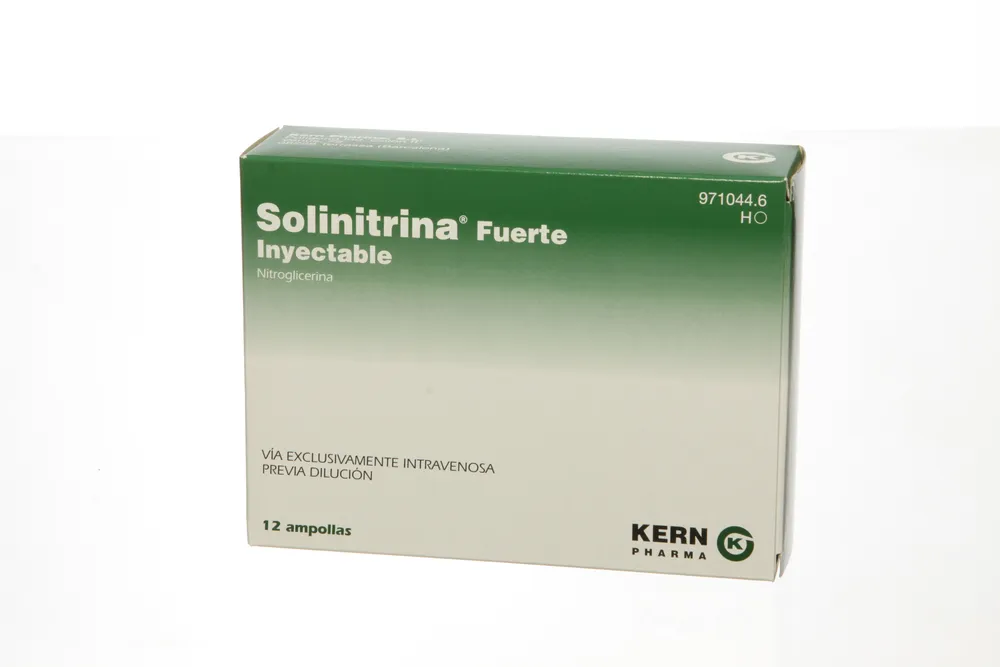
Table of Contents
- Package leaflet: Information for the user
- Introduction
- 1. What Solinitrina Fuerte 5 mg/ml concentrate for solution for infusion is and what it is used for
- 2. What you need to know before starting to use Solinitrina Fuerte 5 mg/ml concentrate for solution for infusion
- 3. How to use Solinitrina Fuerte 5 mg/ml concentrate for solution for infusion
- 4. Possible adverse effects
- 5. Storage of Solinitrina Fuerte 5 mg/ml concentrate for solution for infusion
- 6. Contents of the pack and other information
Package leaflet: Information for the user
Introduction
Package leaflet: information for the user
Solinitrina Fuerte 5 mg/ml concentrate for solution for infusion
nitroglycerin
Read the entire leaflet carefully before you start using the medicine.
- Keep this leaflet, as you may need to read it again.
- If you have any questions, consult your doctor or pharmacist.
- This medicine has been prescribed for you and you should not give it to others, even if they have the same symptoms, as it may harm them.
- If you experience any serious adverse reactions or any adverse reactions not listed in this leaflet, inform your doctor or pharmacist.
Leaflet contents:
- What Solinitrina Fuerte 5 mg/ml concentrate for solution for infusion is and what it is used for
- What you need to know before using Solinitrina Fuerte 5 mg/ml concentrate for solution for infusion
- How to use Solinitrina Fuerte 5 mg/ml concentrate for solution for infusion
- Possible side effects
- How to store Solinitrina Fuerte 5 mg/ml concentrate for solution for infusion
- Contents of the pack and other information
1. What Solinitrina Fuerte 5 mg/ml concentrate for solution for infusion is and what it is used for
Solinitrina Fuerte is a vasodilator, a medicine that dilates blood vessels. This means that your heart does not have to work as hard and uses less oxygen. In addition, oxygen supply to the heart is improved.
This medicine is used for the following indications:
- Severe and prolonged chest pain associated with acute myocardial infarction or unstable angina.
- Left ventricular heart failure and pulmonary congestion associated with myocardial infarction.
- Hypertensive states (high blood pressure) related to open-heart surgery and other surgical procedures.
- Hypertensive crisis.
- During surgical procedures, to achieve controlled hypotension (low blood pressure).
2. What you need to know before starting to use Solinitrina Fuerte 5 mg/ml concentrate for solution for infusion
Do not use this medicine:
- If you are allergic (hypersensitive) to nitroglycerin or to any of the other components of this medicine (listed in section 6).
- If you have severe anemia (reduction of red blood cells in the blood), cerebral hemorrhage (bleeding into the brain), or cranioencephalic trauma (head injury) associated with increased intracranial pressure (elevated pressure in the brain).
- If you have uncorrected hypovolemia (reduced blood volume) or severe hypotension (low blood pressure).
- If you have acute circulatory failure (shock, collapse).
- If you have certain heart conditions, such as cardiogenic shock (the heart cannot pump enough blood to tissues), heart failure caused by aortic or mitral stenosis, obstructive hypertrophic cardiomyopathy (a disease of the heart muscle), constrictive pericarditis (a type of inflammation of the pericardial sac), or cardiac tamponade (fluid accumulation in the pericardial sac).
- If you have increased intraocular pressure (elevated pressure in the eyes).
- If you are being treated with sildenafil or other drugs with similar action (medications used for erectile dysfunction), as they may enhance the blood pressure-lowering effect of this medicine.
- If you are being treated with riociguat, a drug used to treat certain forms of pulmonary hypertension.
Warnings and precautions
Talk to your doctor or nurse before starting to use this medicine.
Inform your doctor if any of the following apply to you:
- If you experience a drop in blood pressure upon standing (orthostatic hypotension).
- If you have left ventricular heart failure due to acute myocardial infarction.
- If you have recently had an acute myocardial infarction (heart attack) or acute heart failure (inability of the heart to pump sufficient blood), as careful clinical monitoring may be required.
- If you have anemia, ischemic heart failure (inability of the heart to pump sufficient blood), or severe cerebral ischemia (lack of blood flow to the brain), as reduced oxygen supply may diminish the effect of nitroglycerin.
- If you have lung diseases involving a ventilation/perfusion imbalance.
- If you have thyroid disorders, malnutrition, severe kidney or liver disease, hypothermia (low body temperature), or if you are predisposed to closed-angle glaucoma (an eye condition characterized by pain, perception of halos around lights, increased eye pressure, and possibly nausea and vomiting).
Development of tolerance to the effects of nitroglycerin has been observed, particularly during long-term treatment with high doses.
Cases of methemoglobinemia (abnormally high levels of methemoglobin in the blood) have been reported following treatment with nitroglycerine.
Use of infusion materials made of polyvinyl chloride (PVC) should be avoided, as nitroglycerin adheres to PVC (see the section at the end of this leaflet: 'Information for healthcare professionals').
Children
The safety and efficacy of this medicine in children have not been established. Safety and efficacy data in children are limited.
Other medicines and Solinitrina Fuerte 5 mg/ml
Tell your doctor or pharmacist if you are taking, have recently taken, or might need to take any other medicines, including those obtained without a prescription.
Concomitant use of nitroglycerin with the following medicines, medicine groups, or substances may enhance the hypotensive effect (blood pressure-lowering effect) of nitroglycerin:
- beta-blockers
- other vasodilators (products that dilate blood vessels), such as papaverine, vincamine, etc.
- diuretics
- calcium channel antagonists
- ACE inhibitors
- neuroleptics
- tricyclic antidepressants
- alcohol
Your doctor may need to adjust the dose of the above-mentioned medicines.
The intake of acetylsalicylic acid and non-steroidal anti-inflammatory substances may reduce the response to nitroglycerin.
The hypotensive effect of nitroglycerin will increase if used together with phosphodiesterase inhibitors (e.g., sildenafil, vardenafil, or tadalafil) (see section: 'Do not use Solinitrina Fuerte 5 mg/ml concentrate for solution for infusion'). This may lead to potentially life-threatening cardiovascular complications. Patients who have recently taken phosphodiesterase inhibitors (e.g., sildenafil, vardenafil, tadalafil) should not receive treatment with Solinitrina Fuerte.
The hypotensive effect of nitroglycerin will increase if used together with riociguat, a guanylate cyclase stimulator (GCs) (see section: 'Do not use Solinitrina Fuerte 5 mg/ml concentrate for solution for infusion').
Nitroglycerin may interfere with the anticoagulant effect of heparin, reducing its effectiveness.
Pregnancy and breastfeeding
If you are pregnant, think you may be pregnant, are breastfeeding, or plan to become pregnant, consult your doctor or pharmacist before using this medicine.
This medicine should not be used during pregnancy unless considered necessary by your doctor.
The alcohol content of this medicine should be taken into account in pregnant or breastfeeding women.
Driving and using machines
This medicine may affect the patient's reaction to the extent that their ability to drive or operate machinery may be impaired. The likelihood of this effect increases when combined with alcohol.
Solinitrina Fuerte 5 mg/ml contains ethanol
This medicine contains 789 mg of ethanol per milliliter. The amount in 10 ml of this medicine is equivalent to less than 250 ml of beer or 100 ml of wine.
It is unlikely that the amount of alcohol in this medicine will have any noticeable effect in adults or adolescents. However, it may have some effects in young children, such as drowsiness.
The amount of alcohol contained in this medicine may alter the effect of other medicines. Consult your doctor or pharmacist if you are taking other medicines.
Since this medicine is usually administered slowly over several hours, the effects of alcohol may be reduced.
If you are alcohol-dependent, consult your doctor or pharmacist before taking this medicine.
If you are pregnant or breastfeeding, consult your doctor or pharmacist before taking this medicine.
3. How to use Solinitrina Fuerte 5 mg/ml concentrate for solution for infusion
This medicine is administered in a hospital. Treatment must be given under continuous and careful monitoring of cardiac and circulatory function using clinical methods or direct pressure measurements.
The dose is individual and depends on the clinical response. Your doctor has determined the appropriate dose and duration of treatment for your condition.
This medicine is administered intravenously. It must be diluted before use.
For further information regarding dosage and method of administration, refer to the section at the end of this leaflet: 'Information for healthcare professionals'.
Use in children
The safety and efficacy of this medicine in children have not been established. Safety and efficacy data for this medicine in children are limited.
If you are given more Solinitrina Fuerte 5 mg/ml than you should
This medicine will be administered to you in a hospital under the supervision of a doctor, so it is unlikely that you will receive an excessive dose. Symptoms of overdose may include severe drop in blood pressure, pallor, sweating, weak pulse, palpitations, dizziness, headache, weakness, vertigo, nausea, vomiting, and diarrhea.
If you suspect that you have received an overdose of the medicine, inform your doctor or nursing staff immediately.
In case of overdose or accidental ingestion, contact the Toxicology Information Service. Telephone (91) 562 04 20.
4. Possible adverse effects
Like all medicines, Solinitrina Fuerte may cause adverse effects, although not everyone experiences them.
Very common (may affect more than 1 in 10 people): headache*
Common (may affect up to 1 in 10 people): dizziness, drowsiness, tachycardia**, hypotension, fatigue, decreased blood pressure.
Uncommon (may affect up to 1 in 100 people): syncope, worsening of angina pectoris, slow heart rate (bradycardia), bluish discoloration of the skin (cyanosis), redness (flushing), circulatory collapse, nausea, vomiting.
Very rare (may affect up to 1 in 10,000 people): alteration of red blood cells known as methaemoglobinaemia, restlessness, reduction or blockage of blood flow to the brain (cerebral ischaemia), abnormal breathing, redness and peeling of the skin (exfoliative dermatitis), drug rash.
Frequency not known (cannot be estimated from available data): vertigo, palpitations, pallor, excessive sweating, urticaria.
* May cause headache, which usually disappears after a few days. This headache can be treated with analgesics, although it may be necessary to reduce the dose or discontinue treatment.
** This tachycardia can be avoided by establishing combination therapy with a beta-blocker.
Reporting of adverse effects
If you experience any type of adverse effect, consult your doctor, even if it is a possible adverse effect not listed in this leaflet. You may also report them directly through the Spanish Pharmacovigilance System for Human Medicinal Products: https://www.notificaram.es. By reporting adverse effects, you can help provide more information on the safety of this medicine.
5. Storage of Solinitrina Fuerte 5 mg/ml concentrate for solution for infusion
Keep this medicine out of the sight and reach of children.
The solvent is volatile, and precautions must be taken to prevent the formation of concentrated nitroglycerin. Do not leave unused opened ampoules unattended. Contents should be flushed with abundant running water. In case of ampoule breakage or accidental spillage of the contents, clean immediately with a cloth moistened in a slightly alkaline solution.
No special storage conditions are required.
Do not use Solinitrina Fuerte after the expiry date stated on the packaging after "EXP". The expiry date refers to the last day of the month indicated.
Medicines must not be disposed of via the sewage system or with household waste. Dispose of containers and unused medicines at the SIGRE collection point at your pharmacy. If in doubt, ask your pharmacist how to dispose of containers and unused medicines. This will help protect the environment.
6. Contents of the pack and other information
Composition of Solinitrina Fuerte 5 mg/ml concentrate for solution for infusion
- The active substance is nitroglycerin. Each millilitre contains 5 mg of nitroglycerin. Each 10 ml ampoule contains 50 mg of nitroglycerin.
- The other components (excipients) are: ethanol.
Appearance of the product and contents of the pack
Pack containing 12 amber glass ampoules of 10 ml.
Marketing Authorization Holder and Manufacturer
Marketing Authorization Holder
Kern Pharma, S.L.
Venus, 72 - Pol. Ind. Colón II
08228 Terrassa - Barcelona
Spain
Manufacturer
Kern Pharma, S.L.
Venus, 72 - Pol. Ind. Colón II
08228 Terrassa - Barcelona
Spain
or
INDUSTRIAS FARMACEUTICAS ALMIRALL PRODESFARMA, S.L.
Ctra. Nacional II, Km. 593
Sant Andreu de la Barca 08740 Spain
or
- BRAUN MEDICAL, S.A.
Ronda de Los Olivares, parcela 11. Polígono Industrial Los Olivares
23009 Jaén Spain
Date of the most recent revision of this summary: November 2025
Detailed information on this medicinal product is available on the website of the Spanish Agency of Medicines and Medical Devices (AEMPS) http://www.aemps.gob.es
…………………………………………………………………………………………………….
Information intended exclusively for medical or healthcare professionals.
In addition to the information included in section 3, practical information on the preparation and handling of the medicinal product is provided.
Solinitrina Fuerte 5 mg/ml concentrate for solution for infusion
Posology
Dosage must be individually adjusted according to the patient's needs and initial clinical and haemodynamic values. It is essential to monitor the clinical response and haemodynamic parameters throughout treatment. Intravenous infusion of Solinitrina Fuerte 5 mg/ml must be administered in a hospital setting with continuous monitoring of cardiac and circulatory function.
Initial dosage should start with an infusion rate of 10–20 micrograms/minute. This dose may be gradually increased in increments of 10–20 micrograms/minute every 5–10 minutes, depending on the patient's clinical response. An effective response is generally achieved at an infusion rate of 50–100 micrograms/minute (equivalent to 3–6 mg/hour).
Severe angina and acute myocardial infarction: an infusion rate of 2–8 mg/hour (33–133 micrograms/minute) is recommended. The maximum dose may reach up to 10 mg/hour in exceptional circumstances. With continuous infusions at high doses, tolerance may develop within 8–24 hours, which might require dose escalation.
Acute left ventricular failure (pulmonary oedema): treatment may be initiated with a 1 mg infusion over 3 minutes, followed by continuous infusion of 2–8 mg/hour (33–133 micrograms/minute) for 1–2 days, provided blood pressure permits.
For controlled hypotension during anaesthesia, the dose is 2–10 micrograms/kg/minute, depending on the type of anaesthesia and target blood pressure. Continuous monitoring via ECG and invasive blood pressure measurement is required.
Duration of treatment:
The duration of treatment should be adjusted according to the patient's clinical response. Generally, treatment does not exceed 3 to 5 days.
Renal and hepatic impairment
In patients with severe hepatic or renal impairment, the dose should be adjusted according to the degree of impairment, with increased monitoring during treatment.
Method of administration
For intravenous use.
This medicine must be diluted before use. This medicine must not be administered directly.
The solution must be diluted beforehand in 5% glucose solution or 0.9% sodium chloride solution (0.9% saline). A concentration of 100 micrograms/ml is recommended. To achieve this, dilute one 10 ml ampoule of Solinitrina Fuerte 5 mg/ml (containing 50 mg of nitroglycerin) in 500 ml of 5% glucose solution or 0.9% saline solution (after removing 10 ml from the bag beforehand). This results in a final concentration of 100 micrograms/ml.
The solvent is volatile, so precautions must be taken to avoid excessive concentration of nitroglycerin. Opened ampoules must not be left unused; any opened contents must be immediately discarded to prevent risks of overdose or contamination.
Incompatibilities
It should be noted that nitroglycerin is absorbed by many types of plastic; therefore, the solution must always be prepared in glass containers. Certain plastic containers (polyethylene) may be compatible with the solution, but polyvinyl chloride (PVC) containers may absorb 40–80% of the nitroglycerin and must be absolutely avoided.
Since most infusion sets are made with polyvinyl chloride tubing, a variable degree of absorption should be expected, meaning that the concentration in the infusion bag will not match the concentration actually received by the patient. For this reason, dosage adjustments must be based on clinical response.
Special infusion sets made from materials that do not absorb nitroglycerin are commercially available. If such sets are used, it should be borne in mind that, since most clinical experience has been obtained with standard polyvinyl chloride sets, standard dosing regimens may lead to unexpectedly high responses. Extreme caution is required when adjusting the dose.
Overdose
In case of overdose, severe hypotension, shock, cyanosis, and methaemoglobinaemia may occur.
Treatment of hypotension depends on its severity: the initial measure consists of elevating the lower limbs, and if necessary, applying centripetal bandaging. If this measure is insufficient, phenylephrine or a sympathomimetic agent should be administered, and in certain cases, plasma volume expansion with plasma or electrolyte solutions may be required.
Methaemoglobinaemia should be treated with intravenous methylene blue at a dose of 1 to 4 mg/kg body weight. Methylene blue must not be used in patients with glucose-6-phosphate dehydrogenase (G6PD) deficiency or methaemoglobin reductase deficiency.