Solifenacin/tamsulosin Normon 6 mg/0.4 mg modified-release tablets EFG
Spain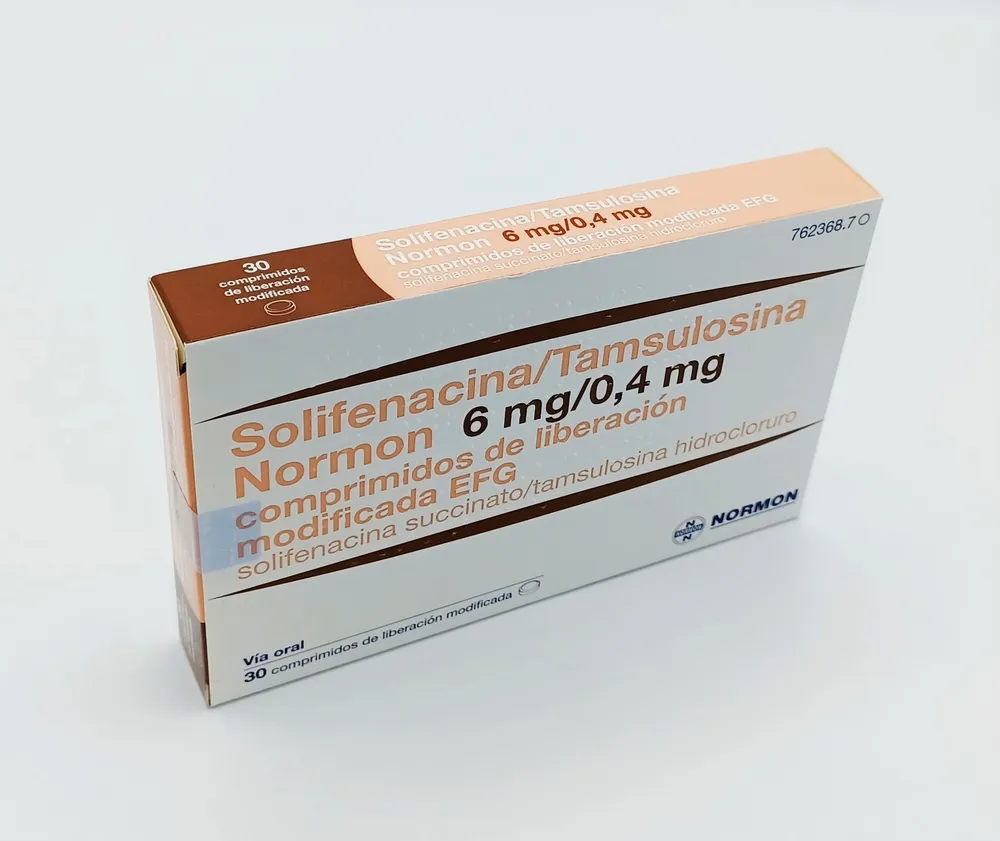
Instructions for Use
Table of Contents
- Introduction
- 1. What Solifenacina/Tamsulosina Normon is and what it is used for
- 2. What you need to know before taking Solifenacin/Tamsulosin Normon
- 3. How to take Solifenacin/Tamsulosin Normon
- 4. Possible adverse effects
- 5. Storage of Solifenacin/Tamsulosin Normon
- 6. Contents of the pack and other information
Package leaflet: Information for the user
Introduction
Package leaflet: information for the user
Solifenacina/Tamsulosina Normon 6mg/0.4mg modified-release tablets EFG
solifenacin succinate/tamsulosin hydrochloride
Read the entire leaflet carefully before you start taking this medicine because it contains important information for you.
- Keep this leaflet as you may need to read it again.
- If you have any questions, ask your doctor or pharmacist.
- This medicine has been prescribed for you only, and you should not give it to others, even if they have the same symptoms as you, because it could harm them.
- If you experience any adverse effects, consult your doctor or pharmacist, even if they are adverse effects not listed in this leaflet. See section 4.
Leaflet contents
-
What Solifenacina/Tamsulosina Normon is and what it is used for
-
What you need to know before taking Solifenacina/Tamsulosina Normon
-
How to take Solifenacina/Tamsulosina Normon
-
Possible side effects
-
How to store Solifenacina/Tamsulosina Normon
-
Contents of the pack and other information
1. What Solifenacina/Tamsulosina Normon is and what it is used for
Solifenacina/Tamsulosina Normon is a combination of two different medicines called solifenacin and tamsulosin in one tablet. Solifenacin belongs to a group of medicines known as anticholinergics, and tamsulosin belongs to a group of medicines called alpha-blockers.
Solifenacina/Tamsulosina Normon is used in men to treat both moderate to severe filling symptoms and voiding symptoms of the lower urinary tract caused by bladder-related problems and by enlargement of the prostate (benign prostatic hyperplasia). This medicine is used when previous treatment with monotherapy for this condition has not adequately relieved symptoms.
When the prostate gland enlarges, urinary problems (voiding symptoms) may occur, such as delayed urination (difficulty starting to pass urine), reduced urine flow (weak stream), dribbling, and a sensation of incomplete bladder emptying. At the same time, the bladder is also affected and contracts spontaneously at times when urination is not desired. This causes filling symptoms such as changes in bladder sensation, urgency (a sudden, strong need to urinate without warning), and increased frequency of urination.
Solifenacin reduces involuntary contractions of the bladder and increases the amount of urine that your bladder can hold. Therefore, you may be able to wait longer before needing to go to the bathroom. Tamsulosin allows urine to pass more easily through the urethra and facilitates urination.
2. What you need to know before taking Solifenacin/Tamsulosin Normon
Do not take Solifenacin/Tamsulosin Normon
- If you are allergic to solifenacin or tamsulosin or to any of the other ingredients of this medicine (listed in section 6).
- If you are undergoing renal dialysis.
- If you have severe liver disease.
- If you have severe renal disease AND are simultaneously being treated with medicines that may reduce the elimination of solifenacin/tamsulosin from the body (e.g. ketoconazole, ritonavir, nelfinavir, itraconazole). Your doctor or pharmacist will inform you if this applies.
- If you have moderate liver disease AND are simultaneously being treated with medicines that may reduce the elimination of solifenacin/tamsulosin from the body (e.g. ketoconazole, ritonavir, nelfinavir, itraconazole). Your doctor or pharmacist will inform you if this applies.
- If you have a severe stomach or intestinal condition (including toxic megacolon, a complication associated with ulcerative colitis).
- If you have a muscle disorder called myasthenia gravis, which can cause extreme weakness in certain muscles.
- If you have increased pressure in the eyes (glaucoma), with gradual loss of vision.
- If you experience fainting due to a drop in blood pressure when changing posture (sitting or standing up); this is called orthostatic hypotension.
Inform your doctor if you think you have any of these conditions.
Warnings and precautions
Consult your doctor or pharmacist before taking Solifenacin/Tamsulosin Normon:
- If you have difficulty passing urine (urinary retention).
- If you have any obstruction in the gastrointestinal tract.
- If you are at risk of reduced gastrointestinal motility (stomach and intestinal movements). Your doctor will inform you if this applies.
- If you have a diaphragmatic hernia (hiatal hernia) or heartburn and/or are simultaneously taking medicines that may cause or worsen esophagitis.
- If you have a certain type of nervous system disorder (autonomic neuropathy).
- If you have severe renal disease.
- If you have moderate liver disease.
Regular medical check-ups are necessary to monitor the condition for which you are being treated.
This medicine may affect your blood pressure, which could cause dizziness, lightheadedness, or rarely fainting (orthostatic hypotension). If you experience any of these symptoms, sit or lie down until they pass.
If you are scheduled for or undergoing eye surgery due to clouding of the lens (cataracts) or increased pressure in the eye (glaucoma), please inform your ophthalmologist that you have previously used, are currently using, or plan to use solifenacin/tamsulosin. The specialist can then take appropriate precautions regarding medication and surgical techniques. Ask your doctor whether you should delay or temporarily stop taking this medicine before undergoing eye surgery for lens clouding (cataracts) or increased eye pressure (glaucoma).
Children and adolescents
Do not give this medicine to children or adolescents.
Other medicines and Solifenacin/Tamsulosin Normon
Inform your doctor or pharmacist if you are taking, have recently taken, or might need to take any other medicines.
It is especially important to inform your doctor if you are taking:
- Medicines such as ketoconazole, erythromycin, ritonavir, nelfinavir, itraconazole, verapamil, diltiazem, and paroxetine, which reduce the rate at which solifenacin/tamsulosin is eliminated from the body.
- Other anticholinergic medicines, as their effects and side effects may be intensified when taking two medicines of the same type.
- Cholinergics, as they may reduce the effect of solifenacin/tamsulosin.
- Medicines such as metoclopramide and cisapride, which increase gastrointestinal motility. Solifenacin/tamsulosin may reduce their effect.
- Other alpha-blockers (used to lower blood pressure), as they may cause an undesirable drop in blood pressure.
- Medicines such as bisphosphonates, which may cause or worsen inflammation of the esophagus (esophagitis).
Taking Solifenacin/Tamsulosin Normon with food and drink
Solifenacin/tamsulosin may be taken with or without food, according to your preference.
Pregnancy, breastfeeding and fertility
Solifenacin/tamsulosin is not indicated for use in women.
In men, abnormal ejaculation (ejaculatory disorder) has been reported. This means that semen does not exit through the urethra but instead enters the bladder (retrograde ejaculation), or the ejaculated volume is reduced or absent (ejaculatory insufficiency). This phenomenon is harmless.
Driving and using machines
This medicine may cause dizziness, blurred vision, fatigue, and less frequently, drowsiness. If you experience these side effects, do not drive or operate machinery.
3. How to take Solifenacin/Tamsulosin Normon
Follow exactly the instructions given by your doctor or pharmacist for taking this medicine. If you are unsure, consult your doctor or pharmacist again.
The maximum daily dose is one tablet containing 6 mg of solifenacin and 0.4 mg of tamsulosin, taken orally. It can be taken with or without food, depending on your preference. Do not crush or chew the tablet.
If you take more Solifenacin/Tamsulosin Normon than you should
If you have taken more tablets than prescribed, or if someone else accidentally takes your tablets, contact your doctor, pharmacist, or hospital immediately for advice.
In case of overdose or accidental ingestion, contact your doctor or pharmacist immediately or call the Toxicology Information Service at telephone number 91 562 04 20, indicating the medicine and the amount ingested.
In case of overdose, your doctor may treat you with activated charcoal; emergency gastric lavage may be helpful if performed within one hour of the overdose. Do not induce vomiting.
Symptoms of overdose may include: dry mouth, dizziness and blurred vision, seeing things that are not there (hallucinations), over-excitability, seizures, difficulty breathing, increased heart rate (tachycardia), inability to completely or partially empty the bladder or to urinate (urinary retention), and/or unwanted increase in blood pressure.
If you forget to take Solifenacin/Tamsulosin Normon
Take your next tablet of solifenacin/tamsulosin as usual. Do not take a double dose to make up for missed doses.
If you stop taking Solifenacin/Tamsulosin Normon
If you stop taking this medicine, your original symptoms may return or worsen. Always consult your doctor if you are considering stopping treatment.
If you have any further questions about the use of this medicine, ask your doctor or pharmacist.
4. Possible adverse effects
Like all medicines, this medicine can cause adverse effects, although not everyone will experience them.
The most serious adverse effect observed infrequently (affecting up to 1 in 100 men) during clinical studies with solifenacin succinate/tamsulosin hydrochloride is acute urinary retention, which consists of a sudden inability to urinate. If you think you may be experiencing this, contact your doctor immediately. You may need to stop taking this medicine.
Solifenacin/Tamsulosin can cause allergic reactions:
- Uncommon signs of allergic reactions may include rash (which may be itchy) or hives (urticaria).
- Rare symptoms include swelling of the face, lips, mouth, tongue, or throat, which may cause difficulty swallowing or breathing (angioedema). Angioedema has been reported rarely with tamsulosin and very rarely with solifenacin. In case of angioedema, treatment with this medicine must be permanently and immediately discontinued.
If you experience an allergic crisis or a severe skin reaction (for example, blistering and peeling of the skin), you must inform your doctor immediately and stop using this medicine. Appropriate treatment and/or measures must be applied.
Other adverse effects:
Frequent adverse effects (may affect up to 1 in 10 men)
- Dry mouth.
- Constipation.
- Indigestion (dyspepsia).
- Dizziness.
- Blurred vision.
- Fatigue.
- Abnormal ejaculation (ejaculation disorder). This means that semen does not exit through the urethra but instead enters the bladder (retrograde ejaculation), or the ejaculated volume is reduced or absent (ejaculatory insufficiency). This phenomenon is harmless.
- Feeling of dizziness (nausea).
- Abdominal pain.
Other uncommon adverse effects (may affect up to 1 in 100 men)
-
Somnolence.
-
Itching (pruritus).
-
Rash.
-
Urinary tract infection, bladder infection (cystitis).
-
Taste disturbance (dysgeusia).
-
Dry eyes.
-
Nasal dryness.
-
Reflux disease (gastroesophageal reflux).
-
Dry throat.
-
Dry skin.
-
Difficulty urinating.
-
Fluid accumulation in the legs (peripheral edema).
-
Headache.
-
Rapid or irregular heartbeat (palpitations).
-
Feeling of dizziness or weakness, especially when standing up (orthostatic hypotension).
-
Runny or blocked nose (rhinitis).
-
Diarrhea.
-
Vomiting.
-
Tiredness (asthenia).
Rare adverse effects (may affect up to 1 in 1,000 men)
- Accumulation of a large amount of hardened feces in the colon (fecal impaction).
- Feeling of fainting (syncope).
- Skin allergy causing swelling in the tissue beneath the skin surface (angioedema).
Very rare adverse effects (may affect up to 1 in 10,000 men)
- Hallucinations, confusion.
- Skin allergic reaction (erythema multiforme).
- Prolonged and painful erection (usually not during sexual activity) (priapism).
- Inflammation and blistering of the skin and/or mucous membranes of the lips, eyes, mouth, nasal passages, or genitals (Stevens-Johnson syndrome).
Frequency not known (cannot be estimated from available data)
- Anaphylactic reaction (sudden and severe allergic reaction with difficulty breathing, swelling, dizziness, rapid heartbeat, sweating, and loss of consciousness).
- Decreased appetite.
- Elevated levels of potassium in the blood (hyperkalemia), which may cause abnormal heart rhythm.
- Increased pressure in the eyes (glaucoma).
- Irregular or abnormal heartbeat (prolongation of QT interval, Torsades de Pointes, atrial fibrillation, arrhythmia).
- Rapid heart rate (tachycardia).
- Breathing difficulty (dyspnea).
- During eye surgery for lens clouding (cataracts) or increased eye pressure (glaucoma), the pupil (the black circle in the center of the eye) may not dilate properly. In addition, the iris (the colored part of the eye) may become flaccid during surgery.
- Voice disorder.
- Liver disorder.
- Muscle weakness.
- Kidney disorder.
- Vision disturbance.
- Nosebleed (epistaxis).
- Psychiatric disorders such as confusion (delirium).
- Abdominal discomfort.
Reporting of adverse effects
If you experience any type of adverse effect, consult your doctor or pharmacist, even if it is a possible adverse effect not listed in this leaflet. You may also report them directly via the Spanish Pharmacovigilance System for Human Medicines: https://www.notificaram.es. By reporting adverse effects, you can help provide more information on the safety of this medicine.
5. Storage of Solifenacin/Tamsulosin Normon
Keep this medicine out of sight and reach of children.
Do not use this medicine after the expiry date stated on the carton or blister after EXP. The expiry date refers to the last day of the month indicated.
This medicine does not require any special storage conditions.
Medicines must not be disposed of via wastewater drains or household waste. Dispose of unused medicines and their packaging at the SIGRE collection point at your pharmacy. Ask your pharmacist how to dispose of medicines and packaging you no longer need. This will help protect the environment.
6. Contents of the pack and other information
Composition of Solifenacina/Tamsulosina Normon
- The active substances are solifenacin succinate and tamsulosin hydrochloride. Each modified-release tablet contains 6 mg of solifenacin succinate and 0.4 mg of tamsulosin hydrochloride.
- The other components are: high molecular weight polyethylene glycol, anhydrous colloidal silica (E551), magnesium stearate (E470b), calcium hydrogen phosphate (E341), microcrystalline cellulose (E460), silicified microcrystalline cellulose (anhydrous colloidal silica and microcrystalline cellulose), low-substituted hydroxypropylcellulose (E463), hypromellose (E464), red iron oxide (E172), polyethylene glycol, and butylated hydroxytoluene (E321).
Appearance of the medicinal product and contents of the pack
Solifenacina/Tamsulosina Normon 6 mg/0.4 mg modified-release tablets are red, film-coated, round, biconvex tablets, 9 mm in diameter, with "6 04" engraved on one side.
Solifenacina/Tamsulosina Normon is available in packs with PA/aluminum/PVC/aluminum blisters or in single-dose pre-cut blisters of PA/aluminum/PVC/aluminum.
Packs of 30 tablets (in blisters).
Packs of 30 × 1 tablet (in single-dose pre-cut blisters).
Only some pack sizes may be commercially available.
Marketing Authorization Holder and Manufacturer
Marketing Authorization Holder
LABORATORIOS NORMON, S.A.
Ronda de Valdecarrizo, 6 - 28760 Tres Cantos - Madrid (SPAIN)
Manufacturer
ADAMED PHARMA S.A.
ul. Marszalka Józefa Pilsudskiego 5
95-200 Pabianice
Poland
Or
ADALVO LIMITED
Malta Life Sciences Park, Building 1, Level 4
Sir Temi Zammit Buildings
San Gwann SGN 3000
Malta
This medicinal product is authorized in the Member States of the European Economic Area under the following names:
Spain: Solifenacina/Tamsulosina Normon 6 mg/0.4 mg modified-release tablets EFG
Date of the most recent review of this package leaflet: January 2023
Detailed information on this medicinal product is available on the website of the Spanish Agency of Medicines and Health Products (AEMPS) (http://www.aemps.gob.es/).
You can access detailed and up-to-date information on this medicinal product by scanning with your mobile phone (smartphone) the QR code included in the package leaflet and outer packaging. You can also access this information at the following internet address:
https://cima.aemps.es/cima/dochtml/p/88710/P_88710.html
Similar Medications
-
Bitamsol 6 mg/0.4 mg modified-release tablets EFG
Form: tablets, modified release
Active substance Dosage SOLIFENACIN SUCCINATE 6 mg TAMSULOSIN HYDROCHLORide 0,4 mg Manufacturer: Laboratorios Q Pharma S.L.
-
Blobax 6 mg/0.4 mg modified-release tablets EFG
Form: tablets, modified release
Active substance Dosage SOLIFENACIN SUCCINATE 6 mg TAMSULOSIN HYDROCHLORide 0,4 mg Manufacturer: Tecnimede Espana Industria Farmaceutica S.A.
-
Daital 6 mg/0.4 mg modified-release tablets EFG
Form: tablets, modified release
Active substance Dosage SOLIFENACIN SUCCINATE 6 mg TAMSULOSIN HYDROCHLORide 0,4 mg Manufacturer: Laboratorios Alter S.A.
-
Solifenacin/tamsulosin Alter 6 mg/0.4 mg modified-release tablets EFG
Form: tablets, modified release
Active substance Dosage SOLIFENACIN SUCCINATE 6,00 mg TAMSULOSIN HYDROCHLORide 0,4 mg Manufacturer: Laboratorios Alter S.A.
-
Solifenacin/tamsulosin Aurovitas 6 mg/0.4 mg modified-release tablets EFG
Form: tablets, modified release
Active substance Dosage SOLIFENACIN SUCCINATE 6 mg TAMSULOSIN HYDROCHLORide 0,4 mg Manufacturer: Aurovitas Spain, S.A.U.
-
Solifenacin/tamsulosin Cinfamed 6 mg/0.4 mg modified-release tablets EFG
Form: tablets, modified release
Active substance Dosage SOLIFENACIN SUCCINATE 6 mg TAMSULOSIN HYDROCHLORide 0,40 mg Manufacturer: Laboratorios Cinfa S.A.
-
Solifenacin/tamsulosin Pensa 6 mg/0.4 mg modified-release tablets EFG
Form: tablets, modified release
Active substance Dosage TAMSULOSIN HYDROCHLORide 0,4 mg SOLIFENACIN SUCCINATE 6 mg Manufacturer: Towa Pharmaceutical S.A.
-
Solifenacin/tamsulosin Stadapharma 6 mg/0.4 mg modified-release tablets EFG
Form: tablets, modified release
Active substance Dosage SOLIFENACIN SUCCINATE 6 mg TAMSULOSIN HYDROCHLORide 0,40 mg Manufacturer: Laboratorio Stada S.L.
-
Solifenacin/tamsulosin Teva 6 mg/0.4 mg modified-release tablets EFG
Form: tablets, modified release
Active substance Dosage TAMSULOSIN HYDROCHLORide 0,4 mg SOLIFENACIN SUCCINATE 6 mg Manufacturer: Teva B.V.
-
Solifenacin/tamsulosin Viatris 6 mg/0.4 mg modified-release tablets EFG
Form: tablets, modified release
Active substance Dosage SOLIFENACIN SUCCINATE 6 mg TAMSULOSIN HYDROCHLORide 0,4 mg Manufacturer: Viatris Limited
-
Tasoltrip 6 mg/0.4 mg modified-release tablets EFG
Form: tablets, modified release
Active substance Dosage SOLIFENACIN SUCCINATE 6 mg TAMSULOSIN HYDROCHLORide 0,4 mg Manufacturer: Gp Pharm S.A.
-
Vesolta 6 mg/0.4 mg modified-release tablets EFG
Form: tablets, modified release
Active substance Dosage TAMSULOSIN HYDROCHLORide 0,4 mg SOLIFENACIN SUCCINATE 6 mg Manufacturer: Kern Pharma S.L.
This page has been machine-translated and may contain inaccuracies. The original data is available in the manufacturing country's language.
Last data check: May 18, 2026 · Data source: CIMA — AEMPS