Solibu 600 mg solution for infusion
Spain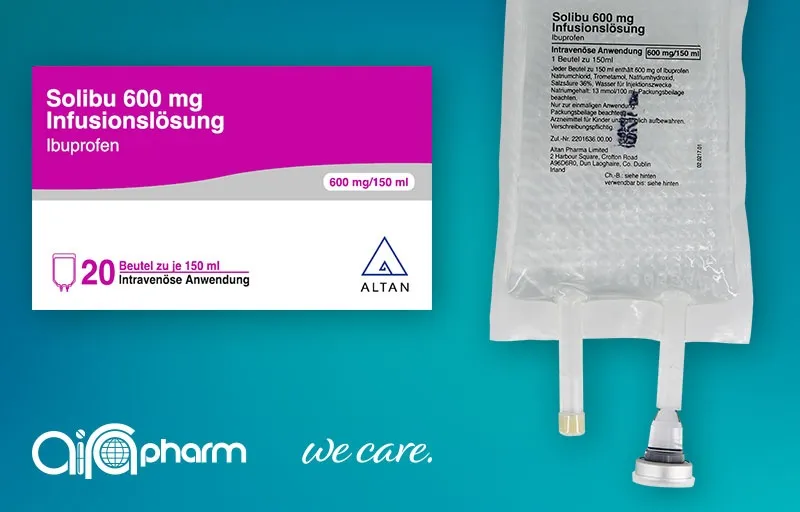
Table of Contents
Package Leaflet: Information for the User
Introduction
Package Leaflet: Information for the Patient
Solibu 600 mg infusion solution
Ibuprofen
Read the entire leaflet carefully before you start using this medicine, because it contains important information for you.
- Keep this leaflet, as you may need to read it again.
- If you have any questions, consult your doctor or nurse.
- If you experience any adverse reactions, consult your doctor or pharmacist, even if they are adverse reactions not listed in this leaflet. See Section 4.
Leaflet Contents
- What Solibu is and what it is used for
- What you need to know before using Solibu
- How to use Solibu
- Possible adverse effects
- How to store Solibu
- Contents of the pack and other information
1. What Solibu is and what it is used for
Ibuprofen belongs to the group of medicines called non-steroidal anti-inflammatory drugs (NSAIDs).
This medicine is used in adults for the short-term symptomatic treatment of moderate acute pain, when intravenous administration is clinically justified and other routes of administration are not possible.
2. What you need to know before using Solibu
Do not use Solibu
- If you are allergic to ibuprofen or any of the other ingredients of this medicine (listed in section 6), acetylsalicylic acid (aspirin), or other painkillers and anti-inflammatory drugs (NSAIDs).
- If you have (or have had two or more episodes of) gastrointestinal ulcer, perforation, or stomach bleeding.
- If you have severe liver, kidney, or heart disease.
- If you have previously experienced gastrointestinal bleeding or perforation related to treatment with NSAIDs.
- If you have a disease that increases your tendency to bleed.
- If you experience dyspnea, asthma, skin rash, pruritus, or swelling of the face or nose after taking ibuprofen, acetylsalicylic acid (aspirin), or other painkillers (NSAIDs).
- If you suffer from severe dehydration (caused by vomiting, diarrhea, or insufficient fluid intake).
- If you have cerebral hemorrhage or other active bleeding.
- If you have unexplained blood disorders.
- If you are in the last trimester of pregnancy.
Warnings and precautions
Consult your doctor or nurse before starting to use this medicine:
- If you have undergone major surgery.
- If you have edema (fluid retention).
- If you have or have had asthma.
- If you have kidney, heart, liver, or intestinal problems, or if you are elderly.
- If you use ibuprofen long-term, your doctor may need to perform regular check-ups.
- If you experience symptoms of dehydration, such as severe diarrhea or vomiting, drink sufficient fluids and inform your doctor immediately, as ibuprofen may cause renal failure due to dehydration.
- Serious skin reactions have been reported with Solibu 600 mg treatment. Stop taking Solibu 600 mg and contact your doctor immediately if you develop any skin rash, lesions on mucous membranes, blisters, or other signs of allergy, as these may be early signs of a very serious skin reaction. See section 4.
- If you have systemic lupus erythematosus (an immune system disease causing joint pain, skin changes, and other organ disorders) or related connective tissue diseases.
- If you have a history of gastrointestinal disease (such as ulcerative colitis or Crohn's disease).
- If you are taking medications that affect blood clotting, such as oral anticoagulants or antiplatelet agents like acetylsalicylic acid. You should also inform your doctor if you are taking other medications that may increase the risk of bleeding, such as corticosteroids or serotonin reuptake inhibitors.
- If you are being treated with diuretics (medicines to increase urination), as your doctor should monitor your kidney function.
- If you are in the first 6 months of pregnancy.
- If you have chickenpox.
- If you have a hereditary metabolic disorder of porphyrin (e.g., acute intermittent porphyria).
- If you consume alcohol while taking this medicine, some side effects related to the stomach, intestines, and nervous system may increase.
- Anti-inflammatory/painkillers such as ibuprofen may be associated with a small increased risk of heart attack or stroke, especially when high doses are used. Do not exceed the recommended dose or duration of treatment.
You should discuss your treatment with your doctor or nurse before using this medicine if:
- You have heart problems, including heart failure, angina (chest pain), or have had a heart attack, coronary bypass surgery, peripheral arterial disease (circulation problems in legs or feet due to narrowed or blocked arteries), or any type of stroke (including "mini-stroke" or transient ischemic attack "TIA").
- You have high blood pressure, diabetes, high cholesterol, a family history of heart disease or stroke, or if you smoke.
- NSAIDs may mask symptoms of infection.
- If you have an infection; see the "Infections" section below.
- It is important to use the lowest effective dose that relieves and controls pain, for the shortest possible time needed to control symptoms.
- Allergic reactions may occur with this medicine, especially at the beginning of treatment. In such cases, treatment should be stopped.
- If you have seasonal rhinitis/asthma, nasal polyps, or chronic obstructive respiratory disorders, you have a higher risk of an allergic reaction. Allergic reactions may present as asthma attacks (called analgesic-induced asthma), rapid swelling (Quincke's edema), or rash.
- Concomitant use with NSAIDs, including selective cyclooxygenase-2 inhibitors, should be avoided.
- Regular use of (various types of) painkillers may generally lead to serious and long-lasting kidney problems.
- Prolonged use of painkillers may cause headache, which should not be treated with higher doses of the medicine.
- Serious skin reactions have been reported with ibuprofen treatment, such as exfoliative dermatitis, erythema multiforme, Stevens-Johnson syndrome, toxic epidermal necrolysis, drug reaction with eosinophilia and systemic symptoms (DRESS syndrome), and acute generalized exanthematous pustulosis (AGEP). Discontinue treatment with Solibu and seek immediate medical attention if you notice any symptoms related to these serious skin reactions described in section 4.
Signs of allergic reaction to ibuprofen, such as breathing difficulties, facial and neck swelling (angioedema), or chest pain, have been reported. Stop using Solibu immediately and contact your doctor or emergency medical services immediately if you notice any of these signs.
Infections
Solibu may mask signs of infection, such as fever and pain. Therefore, Solibu may delay appropriate treatment of infection, increasing the risk of complications. This has been observed in bacterial pneumonia and bacterial skin infections associated with chickenpox. If you take this medicine while having an infection and infection symptoms persist or worsen, consult a doctor without delay.
Other medicines and Solibu
Inform your doctor if you are taking, have recently taken, or might need to take any other medicines.
Ibuprofen may interact with or be affected by other medicines, for example:
- Other non-steroidal anti-inflammatory drugs (NSAIDs), including COX-2 inhibitors (e.g., celecoxib), may increase the risk of gastrointestinal ulcers and bleeding due to additive effects. Concomitant administration of ibuprofen and acetylsalicylic acid is generally not recommended due to the possibility of increased adverse effects.
- Anticoagulant medicines (e.g., for treating or preventing blood clots, such as aspirin/acetylsalicylic acid, warfarin, or ticlopidine).
- Glucocorticoids (medicines containing cortisone or cortisone-like substances), as they may increase the risk of gastrointestinal ulcers or bleeding.
- Lithium (used to treat depression and bipolar disorder), as ibuprofen may increase its blood levels.
- Selective serotonin reuptake inhibitors (medicines used for depression), as they may increase the risk of gastrointestinal ulcers or bleeding.
- Methotrexate (used to treat cancer and inflammatory diseases), as its effects may be potentiated.
- Zidovudine (an anti-HIV drug), as ibuprofen use may increase the risk of bleeding into a joint or cause bleeding leading to inflammation.
- Cyclosporine and tacrolimus (used in organ transplants to prevent rejection), as there is an increased risk of kidney problems.
- Medicines that lower high blood pressure (ACE inhibitors such as captopril, beta-blockers such as atenolol, and angiotensin II receptor antagonists such as losartan) and diuretics, as NSAIDs may reduce the effectiveness of these medicines and increase the risk to the kidneys (using potassium-sparing diuretics with ibuprofen may increase blood potassium levels).
- Sulfonylureas (for diabetes), as interactions may occur.
- Phenytoin (used to treat epilepsy), as its blood levels may increase with ibuprofen.
- Antibiotics called quinolones (e.g., ciprofloxacin), as the risk of seizures may increase.
- Antibiotics called aminoglycosides (e.g., gentamicin), as their nephrotoxic effects may be enhanced.
- Voriconazole, fluconazole (CYP2C9 inhibitors) (used for fungal infections), as they may increase ibuprofen blood levels.
- Cardiac glycosides such as digoxin may have increased blood levels when taken with ib游戏副本
3. How to use Solibu
Follow exactly the administration instructions for this medicine as indicated by your doctor. If you have any doubts, consult your doctor.
Dosage
Adults
The recommended dose is 600 mg of ibuprofen. If clinically justified, an additional dose of 600 mg may be administered every 6–8 hours, depending on the intensity and response to treatment. The maximum daily dose is 1200 mg.
Your doctor will use the lowest effective dose for the shortest possible duration to minimize the risk of side effects. Likewise, your doctor will ensure that you have taken sufficient fluids to minimize the risk of kidney-related side effects.
Use should be limited to situations in which oral administration is inappropriate. Patients should switch to oral treatment as soon as possible.
This medicine is indicated for short-term acute treatment and should not be used for more than 3 days.
The lowest effective dose should be used for the shortest duration necessary to relieve symptoms. If you have an infection, consult a doctor without delay if symptoms (such as fever and pain) persist or worsen (see section 2).
Method of administration
Intravenous route.
This medicine must be administered as an intravenous infusion over 30 minutes.
Use in children and adolescents
This medicine must not be used in children and adolescents. The use of Solibu has not been studied in children and adolescents. Therefore, its safety and efficacy have not been established.
If you use more Solibu than you should
Contact your doctor immediately if you have taken more Solibu than you should, or if a child has accidentally ingested the medicine. Immediately contact a doctor or go to the nearest hospital to assess the risk and obtain advice on the measures to be taken.
Symptoms of overdose may include nausea, stomach pain, vomiting (which may contain blood-stained sputum), gastrointestinal bleeding (see also section 4), diarrhea, headache, tinnitus, confusion, and involuntary eye movements. Agitation, drowsiness, disorientation, or coma may also occur. Occasionally, patients may develop seizures. At high doses, symptoms such as drowsiness, chest pain, palpitations, loss of consciousness, seizures (mainly in children), weakness, dizziness, blood in the urine, low blood potassium levels, chills, and breathing difficulties have been reported. In addition, prothrombin time/INR may be prolonged, probably due to interference with the actions of circulating coagulation factors. Acute renal failure and liver damage may occur. Asthma may be exacerbated in asthmatic patients. In addition, hypotension and reduced respiration may occur.
If you have any further questions about the use of this medicine, ask your doctor or nurse.
4. Possible adverse effects
Like all medicines, this medicine may cause adverse effects, although not everyone will experience them.
Adverse effects can be minimized by using the lowest effective dose for the shortest duration necessary to treat symptoms. You may experience one or more of the known adverse effects of NSAIDs (see below).
If you experience any of these adverse effects, you must stop using this medicine and consult a doctor as soon as possible. Elderly patients taking this medicine are at higher risk of developing problems associated with adverse effects.
The most commonly observed adverse effects are gastrointestinal (affecting the stomach and intestines). Peptic ulcers (stomach or intestinal ulcers), perforation (perforated stomach or intestinal wall), or gastrointestinal bleeding, sometimes fatal, may occur, particularly in elderly adults. Nausea, vomiting, diarrhea, flatulence, constipation, indigestion, abdominal pain, dark stools, vomiting blood, ulcerative stomatitis (inflammation of the oral mucosa with ulceration), exacerbation of colitis (inflammation of the large intestine), and Crohn's disease may also occur. Less frequently, gastritis (inflammation of the stomach) has been observed. In particular, the risk of gastrointestinal bleeding depends on the dose range and duration of use.
Edema (fluid accumulation in tissues), high blood pressure, and heart failure have been reported with NSAID therapy. Medicines such as ibuprofen may be associated with a slight increase in the risk of heart attack ("myocardial infarction") or stroke.
Rarely, serious allergic reactions (including infusion site reactions, anaphylactic shock) and serious skin reactions such as blistering rashes, including Stevens-Johnson syndrome and toxic epidermal necrolysis (Lyell's syndrome), erythema multiforme, alopecia (hair loss), photosensitivity, and allergic vasculitis (inflammation of blood vessels) have been reported.
Very rarely, exacerbation of inflammation related to infections (e.g., development of necrotizing fasciitis) has been reported in association with NSAID use.
In exceptional cases, severe skin infections and complications of cellular tissue occurring during chickenpox infections.
Very common adverse effects (may affect more than 1 in 10 people):
- Tiredness or drowsiness, headache, and dizziness.
- Stomach burning, abdominal pain, nausea, vomiting, flatulence, diarrhea, constipation, blood in stools, and minor gastrointestinal bleeding which may exceptionally lead to anemia.
- Gastrointestinal ulcers with bleeding and potential perforation. Ulcerative stomatitis, exacerbation of colitis, and Crohn's disease.
Common adverse effects (may affect up to 1 in 10 people):
- Dizziness.
- Skin rashes.
- Pain and burning sensation at the site of administration.
Uncommon adverse effects (may affect 1 in 100 people):
- Insomnia (sleep disturbances), restlessness, irritability or fatigue, anxiety, and excitement.
- Visual disturbances.
- Tinnitus (ringing or buzzing in the ears).
- Reduced urine output and, particularly in patients with high blood pressure or kidney problems, nephrotic syndrome, interstitial nephritis, which may be accompanied by acute renal failure.
- Urticaria, pruritus, purpura (including purpuric allergy), skin rash.
- Allergic reactions with skin rash and pruritus, as well as asthma attacks (possibly with drop in blood pressure).
Rare adverse effects (may affect 1 in 1,000 people):
- Reversible toxic amblyopia (double vision).
- Hearing difficulty.
- Narrowing of esophageal blood vessels, complications of diverticula in the large intestine, nonspecific hemorrhagic colitis. If gastrointestinal bleeding occurs, it may lead to anemia.
- Kidney tissue damage (papillary necrosis), particularly with long-term therapy, increased plasma concentration of uric acid in blood.
- Yellowing of the skin or whites of the eyes, liver damage, particularly with long-term treatment of acute hepatitis (liver inflammation).
- Psychotic reactions, nervousness, irritability, confusion or disorientation, and depression.
- Neck stiffness.
Very rare adverse effects (may affect 1 in 10,000 people):
- Disorders in blood cell formation (anemia, leucopenia, thrombocytopenia, pancytopenia, agranulocytosis). Initial symptoms include: fever, sore throat, superficial mouth ulcers, flu-like symptoms, severe fatigue, nosebleeds, and skin bleeding.
- Palpitations (rapid heartbeat), heart failure, myocardial infarction.
- High blood pressure.
- Aseptic meningitis (neck stiffness, headache, vomiting, fever, or confusion). Patients with autoimmune disorders (SLE, mixed connective tissue disease) appear to be predisposed.
- Inflammation of the esophagus or pancreas, intestinal narrowing.
- Asthma, breathing difficulty (bronchospasm), shortness of breath, and wheezing.
- Systemic lupus erythematosus (autoimmune disease), severe allergic reactions (facial edema, tongue swelling, throat swelling with airway constriction, breathing difficulty, rapid heartbeat, drop in blood pressure, and potentially fatal shock).
Adverse effects with unknown frequency (cannot be estimated from available data):
- Renal failure.
- Injection site reactions such as inflammation, bruising, or bleeding.
- Serious skin reactions have been reported with Solibu 600 mg treatment. Stop taking Solibu 600 mg and contact your doctor immediately if you develop any skin rash, mucosal lesions, blisters, or other signs of allergy, as these may be early signs of a serious skin reaction. See section 4.
- Skin becomes sensitive to light.
- Drug reaction with eosinophilia and systemic symptoms: a serious skin reaction known as DRESS syndrome may occur. Symptoms of DRESS syndrome include: skin rash, fever, swollen lymph nodes, and elevated eosinophils (a type of white blood cell).
- Chest pain, which may be a sign of a potentially serious allergic reaction called Kounis syndrome.
Stop treatment with ibuprofen and seek immediate medical attention if you notice any of the following symptoms:
- Non-elevated red spots, target-shaped or circular lesions on the trunk, often with blisters in the center, skin peeling, mouth, throat, nose, genital, or eye ulcers. These serious skin rashes may be preceded by fever and flu-like symptoms [exfoliative dermatitis, erythema multiforme, Stevens-Johnson syndrome, toxic epidermal necrolysis].
- Generalized skin rash, high body temperature, and enlarged lymph nodes (DRESS syndrome).
- Generalized, red, scaly rash with bumps under the skin and blisters, accompanied by fever. Symptoms usually appear at the beginning of treatment (acute generalized exanthematous pustulosis).
Reporting of adverse effects
If you experience any adverse effect, consult your doctor or nurse, even if it is a possible adverse effect not listed in this leaflet. You may also report them directly via the Spanish Pharmacovigilance System for Human Medicines: www.notificaRAM.es. By reporting adverse effects, you can help provide more information on the safety of this medicine.
5. Storage of Solibu
Keep this medicine out of the sight and reach of children.
Do not use this medicine after the expiry date stated on the carton after EXP. The expiry date is the last day of the month indicated.
No special storage conditions are required.
Inspect the solution visually before administration. Do not use this medicine if you see any particles or if the solution has changed colour.
For single use only. Once opened, the medicine should be used immediately. Any remaining solution must not be used and should be discarded.
6. Contents of the pack and other information
Contents of Solibu
The active substance is ibuprofen. Each ml of solution contains 4 mg of ibuprofen.
Each 150 ml bag contains 600 mg of ibuprofen.
The other components are trometamol, sodium chloride, hydrochloric acid, sodium hydroxide, and water for injections.
Appearance of Solibu and contents of the pack
This medicine is a clear, colourless solution contained in 150 ml polyolefin bags with an aluminium overwrap.
Solibu is available in cartons containing 20 and 50 bags of 150 ml.
Marketing Authorisation Holder
Altan Pharmaceuticals S.A.
C/ Cólquide, No. 6, Portal 2, 1st Floor, Office F. Prisma Building
28230 Las Rozas (Madrid)
Spain
Manufacturer
Altan Pharmaceuticals S.A.
Polígono Industrial de Bernedo s/n
01118 Bernedo (Álava)
Spain
This medicinal product is authorised in the Member States of the EEA under the following names:
Germany: Solibu 600 mg Infusionslösung
Poland: Ibuprofen Altan
Portugal: Solibu 600 mg Solução para perfusão
Date of the most recent review of this leaflet: August 2025