Smoflipid 200 mg/ml emulsion for infusion
Spain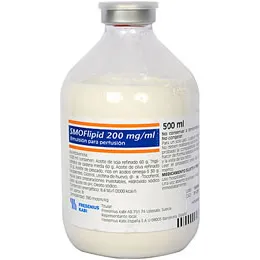
Table of Contents
Package leaflet: Information for the user
Introduction
Package leaflet: information for the user
SMOFlipid 200 mg/ml emulsion for infusion
Soybean oil, medium-chain triglycerides, olive oil, fish oil
Read the entire leaflet carefully before you start using this medicine, because it contains important information for you.
- Keep this leaflet; you may need to read it again. If you have any questions, consult your doctor, pharmacist, or nurse.
- If you experience any adverse reactions, consult your doctor, pharmacist, or nurse, even if they are adverse reactions not listed in this leaflet. See section 4.
Leaflet contents
- What SMOFlipid is and what it is used for
- What you need to know before you start using SMOFlipid
- How to use SMOFlipid
- Possible side effects
- How to store SMOFlipid
- Contents of the pack and other information
1. What SMOFlipid is and what it is used for
SMOFlipid contains four different lipids (fats): soybean oil, medium-chain triglycerides, olive oil, and fish oil, which is rich in omega-3 fatty acids. The liquid is a mixture of fats and water, known as a "lipid emulsion".
- It works by providing energy and fatty acids to the body.
- It is administered into your bloodstream through an intravenous infusion (drip) or infusion pump.
A healthcare professional will administer SMOFlipid to you when other forms of nutrition are not suitable or have not worked.
2. What you need to know before starting to use SMOFlipid
Do not use SMOFlipid
-
if you are allergic to soybean oil, medium-chain triglycerides, olive oil, fish oil, or any of the other ingredients of this medicine (listed in section 6)
-
if you are allergic (hypersensitive) to other products containing fish, egg, soy or peanut.
-
if you have too much fat in your blood (called “severe hyperlipemia”)
-
if you have serious kidney or liver problems
-
if you have serious blood coagulation disorders (called “coagulation disorders”)
-
if you are in acute shock
-
if you have fluid in your lungs (called “pulmonary edema”), fluid overload (hyperhydration), or heart failure (due to excess fluid in the body)
-
if you are in an unstable condition, for example, after severe injuries, acute myocardial infarction, stroke, blood clotting (thrombosis), metabolic acidosis (a metabolic disturbance resulting in high levels of acid in the blood), untreated diabetes, blood poisoning (sepsis), or dehydration.
Warnings and precautions
Talk to your doctor or nurse before starting SMOFlipid if you have a condition causing high lipid levels in the blood because your body cannot properly use fats (called “impaired lipid metabolism”).
When used in newborns and children under 2 years of age, the solution (in bags and administration sets) must be protected from light exposure until administration is complete. Exposure of SMOFlipid to ambient light, especially after mixing with trace elements or vitamins, may generate peroxides and other degradation products, which can be minimized by protecting the product from light.
Allergic reactions
If you experience any allergic reaction while receiving SMOFlipid, administration must be stopped immediately. If you develop any of the following symptoms during infusion, inform your doctor or nurse immediately:
- fever (high temperature)
- chills
- hives
- difficulty breathing
Children
Inform your doctor or nurse if this medicine is being given to your newborn child and the child has:
- too much of a substance called “bilirubin” in the blood (hyperbilirubinemia)
- high blood pressure in the lungs (pulmonary hypertension)
If your newborn child is receiving SMOFlipid for a prolonged period, the doctor will perform blood tests to monitor how well it is working.
Use of SMOFlipid with other medicines:
Tell your doctor or pharmacist if you are using or have recently used any other medicines.
Specifically, inform your doctor if you are taking or have recently taken medicines used to prevent blood clotting, such as warfarin and heparin.
- SMOFlipid naturally contains vitamin K, which may affect warfarin. However, the vitamin K1 content in SMOFlipid is so low that such interactions are very rare.
- Heparin administered at clinical doses may initially increase levels of free fatty acids in the blood due to release of fatty acids from tissues into the bloodstream, thereby reducing the clearance of triglycerides from the blood.
Pregnancy and breastfeeding:
It is unknown whether it is safe to receive SMOFlipid during pregnancy or breastfeeding. If you require intravenous nutrition during pregnancy or breastfeeding, your doctor will only administer SMOFlipid after careful consideration.
If you are pregnant or breastfeeding, think you may be pregnant, or plan to become pregnant, consult your doctor before using this medicine.
Driving and using machines:
Not applicable, as this medicine is administered in a hospital setting.
SMOFlipid contains sodium
This medicine contains 5 mmol (115 mg) of sodium per 1000 ml. Patients on a low-sodium diet should take this into account.
3. How to use SMOFlipid
SMOFlipid is administered into your bloodstream through an intravenous infusion set or infusion pump. Your doctor will determine your dose based on your body weight and your ability to metabolize the infused fat.
When used in newborns and children under 2 years of age, the solution (in bags and administration sets) must be protected from exposure to light until administration is complete (see section 2).
For physicians and healthcare professionals, refer to "Instructions for Use" at the end of the leaflet for further details on dosage and administration.
If you are given more SMOFlipid than you should
If the dose administered is too high, there is a risk that the amount of fat you receive exceeds your body's capacity to metabolize it. This is called "fat overload syndrome". For more information, see section 4, Possible side effects.
In case of overdose or accidental ingestion, contact your doctor or pharmacist immediately or call the Toxicology Information Service at telephone number 91 562 04 20 (indicating the medicine and the amount ingested).
4. Possible adverse effects
Like all medicines, this medicine may cause adverse effects, although not everyone will experience them.
Fat overload syndrome
This can occur when your body has difficulty utilizing fats due to an excess of SMOflipid. It may also occur due to a sudden change in your condition (such as kidney problems or infection). Fat overload syndrome is characterized by high levels of fat in the blood (hyperlipidemia), fever, excessive fat accumulation in tissues (fatty infiltration), disturbances in multiple organs, and coma. All symptoms usually resolve when treatment is stopped.
Frequent (may affect up to 1 in 10 patients)
- Slight increase in body temperature
Uncommon (may affect up to 1 in 100 patients)
- Tremor
- Loss of appetite
- Nausea
- Vomiting
Rare (may affect up to 1 in 1,000 patients)
- Allergic reactions (e.g. high temperature, swelling, decreased blood pressure, skin rash, redness, headache)
- Hot-cold sensation
- Pallor
- Bluish discoloration of the skin and mucous membranes (due to reduced oxygen content in the blood)
- Pain in the neck, back, bones, chest, and lower back
- Increased or decreased blood pressure
- Difficulty breathing
Very rare (may affect up to 1 in 10,000 patients)
- Prolonged and convulsive erection in men
Reporting of adverse effects
If you experience any type of adverse effect, consult your doctor, pharmacist, or nurse, even if it is an adverse effect not listed in this leaflet. You may also report them directly via the Spanish Pharmacovigilance System for Human Medicinal Products: www.notificaRAM.es. By reporting adverse effects, you can help provide more information on the safety of this medicine.
5. Storage of SMOFlipid
Keep out of the sight and reach of children.
Do not store above 25°C. Do not freeze.
Do not use SMOFlipid after the expiry date stated on the label after EXP. The expiry date refers to the last day of the month indicated.
Do not use SMOFlipid if you notice that the container is damaged. Use only if the solution is white and homogeneous. For single use only. Any unused product should be discarded. Do not reuse.
Ask your pharmacist how to dispose of any unused medicines and their containers. This will help protect the environment.
When used in newborns and children under 2 years of age, the solution (in bags and administration sets) must be protected from light exposure until administration is complete (see section 2).
6. Package Contents and Additional Information
Composition of SMOFlipid:
The active substances are:
Soybean oil, refined 60 mg/ml
Medium-chain triglycerides 60 mg/ml
Olive oil, refined 50 mg/ml
Fish oil, rich in omega-3 fatty acids 30 mg/ml
The other components are: Glycerol, egg lecithin, dl-α-tocopherol (vitamin E), water for injections, sodium hydroxide (to adjust pH), sodium oleate
Appearance of the Product and Package Contents
SMOFlipid is a white, homogeneous emulsion and is available in glass bottles or plastic bags.
Glass bottle Plastic bag
100 ml 100 ml
10x100 ml 10x100 ml, 20x100 ml
250 ml 250 ml
10x250 ml 10x250 ml
500 ml 500 ml
10x500 ml 10x500 ml
1000 ml
6x1000 ml
Only certain package sizes may be marketed.
Marketing Authorization Holder and Manufacturer:
Marketing Authorization Holder
Fresenius Kabi AB
751 74 Uppsala
Sweden
Local Representative
Fresenius Kabi España S.A.U
Marina 16-18, 08005 (Barcelona)
Spain
Manufacturer
Fresenius Kabi AB, SE-751 74 Uppsala, Sweden (plastic bags)
Fresenius Kabi Austria GmbH, A-8055 Graz, Austria (glass bottles)
Further information on this medicinal product can be requested from the local representative of the marketing authorization holder.
This medicinal product is authorized in the member states of the European Economic Area under the following names:
Austria, Belgium, Finland, France, Germany, Iceland, Ireland, Italy, Netherlands, Norway, Slovenia, Sweden, United Kingdom: SMOFlipid 200 mg/ml
Cyprus, Czech Republic, Estonia, Greece, Hungary, Latvia, Lithuania, Luxembourg, Spain: SMOFlipid 20%
Denmark, Poland, Portugal, Slovakia: SMOFlipid
Date of latest review of this package leaflet: February 2020
Detailed and up-to-date information on this medicinal product is available on the website of the Spanish Agency of Medicines and Health Products (AEMPS) http://www.aemps.gob.es/
This information is intended for healthcare professionals only:
Warnings and Precautions
Serum triglyceride concentration must not exceed 3 mmol/l during infusion. Overdosing may cause fat overload syndrome. Particular caution is required in patients at high risk of hyperlipidemia (e.g. patients receiving high lipid doses, severe sepsis, and extremely low birth weight infants).
Administration of medium-chain fatty acids alone may result in metabolic acidosis. This risk is largely eliminated by the simultaneous infusion of long-chain fatty acids contained in SMOFlipid. Additionally, the simultaneous administration of carbohydrates also eliminates this risk. Therefore, simultaneous infusion of a carbohydrate solution or a solution containing both carbohydrates and amino acids is recommended. Laboratory tests generally associated with monitoring of parenteral nutrition should be checked regularly. These include blood glucose levels, liver function tests, acid-base metabolism, fluid balance, complete blood count, and electrolytes.
Any sign or symptom of anaphylactic reaction (such as fever, chills, urticaria, or dyspnea) should lead to immediate discontinuation of the infusion.
SMOFlipid should be administered with caution in neonates and preterm infants with hyperbilirubinemia and in cases of pulmonary hypertension. In neonates, particularly preterm infants receiving long-term parenteral nutrition, platelet counts, liver function tests, and serum triglyceride levels should be monitored.
SMOFlipid contains up to 5 mmol of sodium per 1000 ml. This should be taken into account in patients on a low-sodium diet.
In general, adding other medicinal products or substances to SMOFlipid should be avoided unless compatibility is known.
Method of Administration
Intravenous infusion via peripheral or central vein.
Instructions for Use and Handling
Use only if the emulsion is homogeneous. For the infusion bag: The integrity indicator (Oxalert) must be inspected before removing the overpouch. If the indicator is black, oxygen has penetrated the overpouch and the product must be discarded. Visually inspect the emulsion for phase separation before administration. Ensure that the final infusion emulsion shows no signs of phase separation. For single use only. Any remaining portion of the mixture must be discarded.
Additives: SMOFlipid can be aseptically mixed with amino acids, glucose, and electrolyte solutions to produce "All-In-One" Total Parenteral Nutrition (TPN) mixtures. Upon request, compatibility data with various additives and storage times for different mixtures are available. Additions must be made aseptically. Any remaining portion of the mixture after infusion must be discarded.
Do not store above 25°C. Do not freeze.
Stability after Mixing
When SMOFlipid is mixed with other products, the mixture should be used immediately from a microbiological standpoint. If mixtures are not used immediately, the time after first opening and storage conditions are the user's responsibility and should normally not exceed 24 hours at 2–8°C, unless additions have been made under controlled and validated aseptic conditions.
Instructions for Use for Infusion Bags Only
Instructions for Use: SMOFlipid 200 mg/ml emulsion for infusion
Fresenius Kabi Infusion Bags
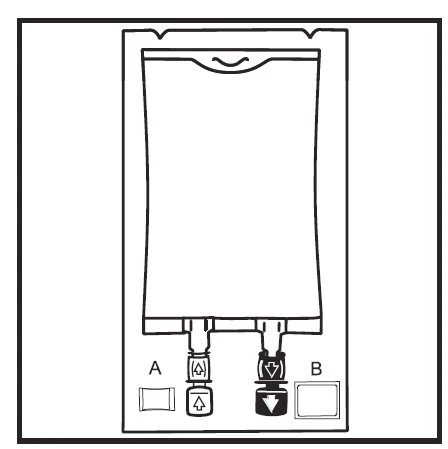
- Inspect the integrity indicator (Oxalert™) A before removing the overpouch. If the indicator is black, oxygen has entered the overpouch and the product must be discarded.
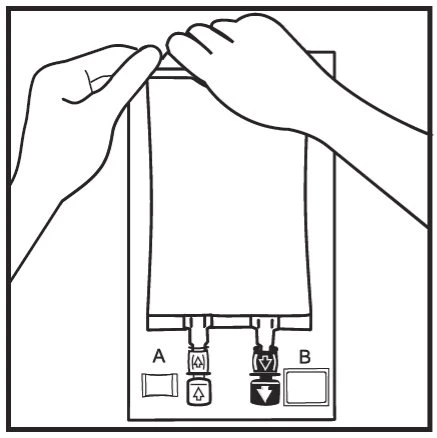
- Remove the overpouch by tearing at the notch and pulling downward along the container. Discard the Oxalert bag A and the oxygen absorber B.
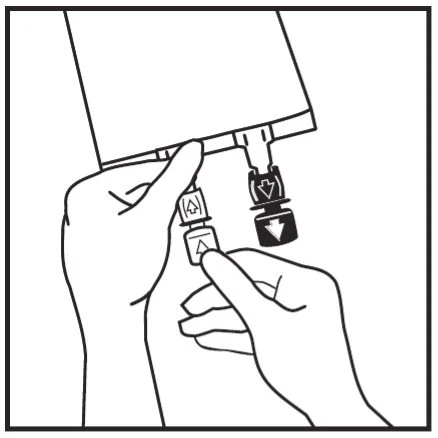
- If additives are required, break the white addition port at the arrow mark (A). If no additives are required, proceed to step 5.
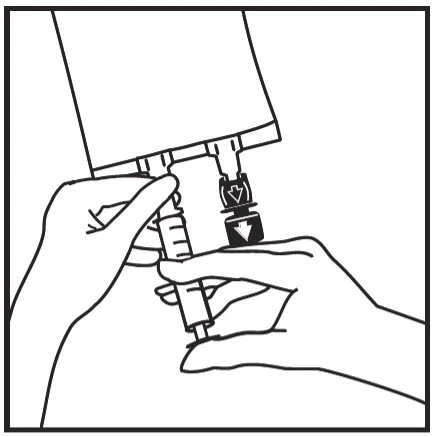
- Insert the needle horizontally through the center of the membrane of the addition port and inject the additives (known to be compatible). Use syringes with needles of gauge 18–23 and a maximum length of 40 mm.
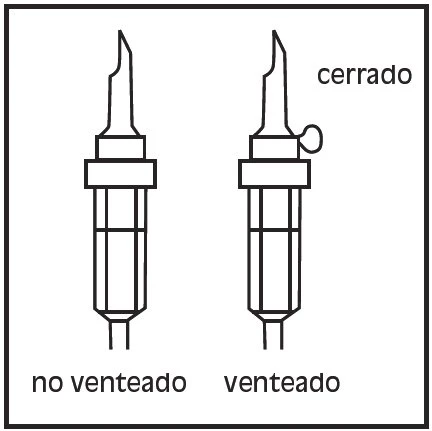
- Use an infusion set without an air inlet or close the air inlet of the infusion set. Follow the instructions for use of the infusion set. Use a spike with a diameter specified in ISO 8536-4: 5.6 ± 0.1 mm.
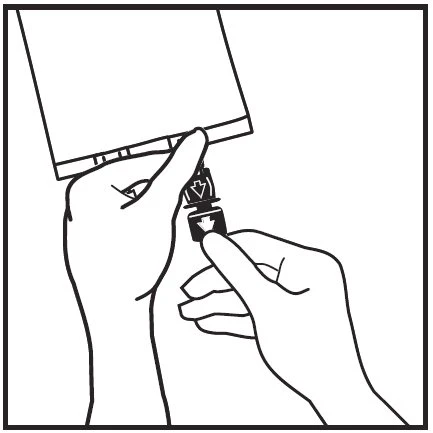
- Break the blue infusion port at the arrow mark.
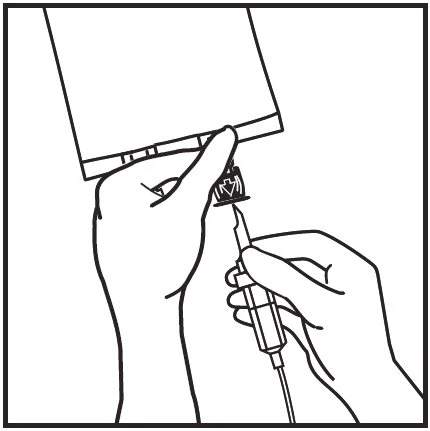
- Hold the base of the infusion port. Insert the spike into the infusion port with a slight wrist rotation until the spike is fully inserted.
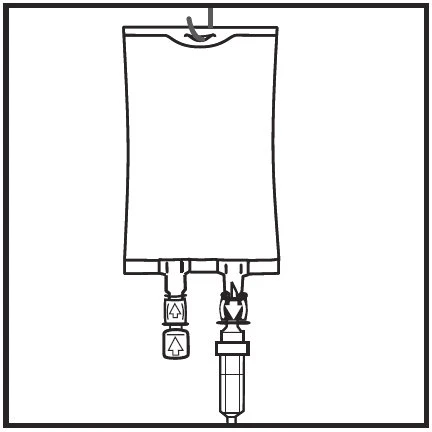
Hang the bag on the hanger using the perforated notch and begin infusion.