SMOFKabiven Low Osmo peripheral emulsion for infusion
Spain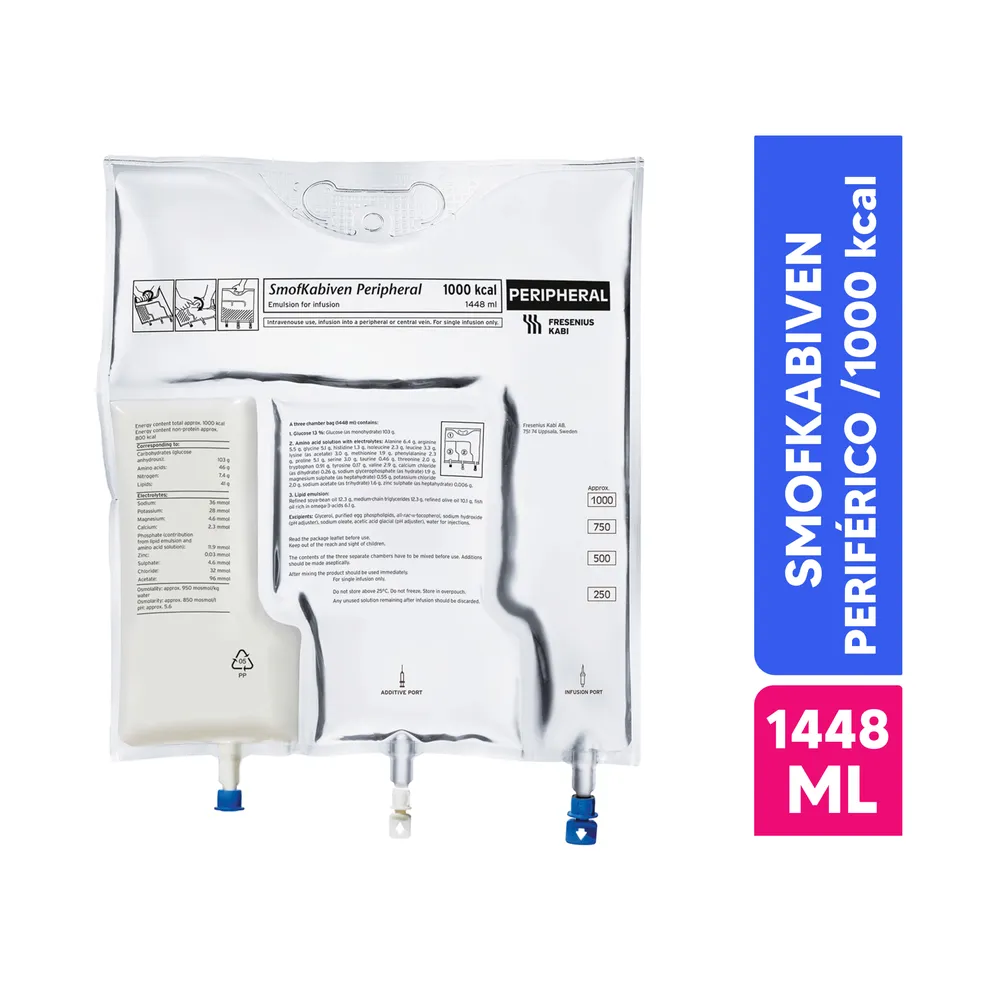
Table of Contents
- Patient Information Leaflet
- Introduction
- 1. What SmofKabiven Low Osmo Peripheral is and what it is used for
- 2. What you need to know before using SmofKabiven Low Osmo Peripheral
- 3. How to use SmofKabiven Low Osmo Peripheral
- 4. Possible adverse effects
- 5. Storage of SmofKabiven Low Osmo Peripheral
- 6. Contents of the pack and other information
Patient Information Leaflet
Introduction
Patient Information Leaflet
SmofKabiven Low Osmo Peripheral emulsion for infusion
Read the entire leaflet carefully before starting to use this medicine, as it contains important information for you
- Keep this leaflet, as you may need to read it again.
- If you have any questions, consult your doctor, pharmacist, or nurse.
- If you experience any adverse reactions, consult your doctor, pharmacist, or nurse, even if they are not listed in this leaflet. See section 4.
Leaflet Contents:
- What SmofKabiven Low Osmo Peripheral is and what it is used for
- What you need to know before using SmofKabiven Low Osmo Peripheral
- How to use SmofKabiven Low Osmo Peripheral
- Possible side effects
- How to store SmofKabiven Low Osmo Peripheral
- Contents of the pack and other information
1. What SmofKabiven Low Osmo Peripheral is and what it is used for
SmofKabiven Low Osmo Peripheral is an infusion emulsion administered into your blood through an intravenous drip (intravenous infusion). The product contains amino acids (components used in protein formation), glucose (carbohydrates), lipids (fats), and salts (electrolytes), all contained in a plastic bag, and can be administered to adults and children aged 2 years and older.
A healthcare professional will administer SmofKabiven Low Osmo Peripheral to you when other forms of nutrition are insufficient or not feasible.
2. What you need to know before using SmofKabiven Low Osmo Peripheral
Do not use SmofKabiven Low Osmo Peripheral:
- if you are allergic (hypersensitive) to the active substances or to any of the other components of this medicine (listed in section 6)
- if you are allergic to fish or egg
- if you are allergic to peanuts or soy, you should not use this product. SmofKabiven Low Osmo Peripheral contains soybean oil
- if you have too many lipids in your blood (hyperlipidemia)
- if you have severe liver impairment
- if you have blood coagulation disorders (coagulation abnormalities)
- if your body has problems utilizing amino acids
- if you have severe renal disease without possibility of dialysis
- if you are in acute shock
- if you have too much sugar in your blood (hyperglycemia) that is not controlled
- if you have elevated levels in blood (serum) of the salts (electrolytes) contained in SmofKabiven Low Osmo Peripheral
- if you have fluid in the lungs (acute pulmonary edema)
- if you have too much fluid in your body (hyperhydration)
- if you have untreated heart failure
- if you have a defect in your blood coagulation system (hemophagocytic syndrome)
- if you are in an unstable condition, such as after severe trauma, uncontrolled diabetes mellitus, acute myocardial infarction, stroke, blood clot, metabolic acidosis (a disorder leading to excess acid in the blood), severe infection (severe sepsis), coma, or if you have insufficient fluid in your body (hypotonic dehydration)
- in newborn infants or children under 2 years of age
Warnings and precautions
Talk to your doctor before using SmofKabiven Low Osmo Peripheral if you have:
- kidney problems
- diabetes mellitus
- pancreatitis (inflammation of the pancreas)
- liver problems
- hypothyroidism (thyroid problems)
- sepsis (severe infection)
If during infusion you develop fever, skin rash, swelling, difficulty breathing, chills, sweating, nausea or vomiting, inform your healthcare professional immediately, as these symptoms could be due to an allergic reaction or because you are receiving too much of the medicine.
Your doctor will need to regularly monitor your blood, including liver function tests and other laboratory values.
Children and adolescents
SmofKabiven Low Osmo Peripheral is not intended for newborn infants or children under 2 years of age. SmofKabiven Low Osmo Peripheral may be administered to children aged 2 to 18 years.
Use of SmofKabiven Low Osmo Peripheral with other medicines
Inform your doctor if you are taking, have recently taken, or might need to take any other medicines, including those obtained without a prescription.
Pregnancy and breastfeeding
If you are pregnant or breastfeeding, think you may be pregnant or plan to become pregnant, consult your doctor before using this medicine.
There is no information available on the use of SmofKabiven Low Osmo Peripheral during pregnancy. SmofKabiven Low Osmo Peripheral should be administered to pregnant women only if the doctor considers it absolutely necessary. Use during pregnancy may be considered if advised by your doctor.
There are no data available on exposure in breastfeeding women.
Components and metabolites of parenteral nutrition such as SmofKabiven Low Osmo Peripheral are excreted in human milk. Parenteral nutrition may be necessary during breastfeeding. SmofKabiven Low Osmo Peripheral should only be administered to breastfeeding women when the doctor has weighed the potential risks and benefits.
Driving and use of machines
Not applicable, as this medicine is administered in a hospital setting.
3. How to use SmofKabiven Low Osmo Peripheral
Follow exactly the administration instructions for this medicine as given by your doctor. If in doubt, consult your doctor again.
Your doctor will determine the dose for you individually, depending on your body weight and condition. SmofKabiven Low Osmo Peripheral will be administered by a healthcare professional.
If you use more SmofKabiven Low Osmo Peripheral than you should
It is very unlikely that you will receive too much medicine, as SmofKabiven Low Osmo Peripheral will be administered by a healthcare professional.
4. Possible adverse effects
Like all medicines, this medicine may cause adverse effects, although not everyone experiences them.
Frequent (may affect up to 1 in 10 patients): a slight increase in body temperature, inflammation of superficial peripheral veins related to the injection site.
Uncommon (may affect up to 1 in 100 patients): elevated blood (plasma) levels of liver components, loss of appetite, nausea, vomiting, chills, dizziness, and headache.
Rare (may affect up to 1 in 1000 patients): low or high blood pressure, difficulty breathing, rapid heart rate (tachycardia). Hypersensitivity reactions (which may cause symptoms such as swelling, fever, drop in blood pressure, skin rash, hives (red, swollen areas), redness, headache). Sensations of cold and heat. Pallor. Bluish discoloration of lips and skin (due to lack of oxygen in the blood). Pain in the neck, back, bones, chest, and lower back area.
Reporting of adverse effects
If you experience any type of adverse effect, consult your doctor, pharmacist, or nurse, even if it is a possible adverse effect not listed in this leaflet. You may also report them directly through the Spanish Pharmacovigilance System for Human Medicines: https://www.notificaram.es. By reporting adverse effects, you can help provide more information on the safety of this medicine.
5. Storage of SmofKabiven Low Osmo Peripheral
Keep this medicine out of the sight and reach of children.
Keep in the overpouch. Do not store above 25°C. Do not freeze.
Do not use this medicine after the expiry date stated on the bag and carton label. The expiry date is the last day of the month indicated.
6. Contents of the pack and other information
SmofKabiven Low Osmo Peripheral contains
The active substances are | g per 1,000 ml |
Glucose (as monohydrate) | 68 |
Alanine | 3.5 |
Arginine | 3.0 |
Glycine | 2.8 |
Histidine | 0.75 |
Isoleucine | 1.3 |
Leucine | 1.9 |
Lysine (as acetate) | 1.7 |
Methionine | 1.1 |
Phenylalanine | 1.3 |
Proline | 2.8 |
Serine | 1.6 |
Taurine | 0.25 |
Threonine | 1.1 |
Tryptophan | 0.50 |
Tyrosine | 0.10 |
Valine | 1.6 |
Calcium chloride (as dihydrate) | 0.14 |
Sodium glycerophosphate (as hydrate) | 1.0 |
Magnesium sulfate (as heptahydrate) | 0.30 |
Potassium chloride | 1.1 |
Sodium acetate (as trihydrate) | 0.85 |
Zinc sulfate (as heptahydrate) | 0.0032 |
Refined soybean oil | 11 |
Medium-chain triglycerides | 11 |
Refined olive oil | 8.8 |
Fish oil, rich in omega-3 fatty acids | 5.3 |
The other components are: glycerol, purified egg phospholipids, all-rac-α-tocopherol, sodium hydroxide (pH adjustment), sodium oleate, glacial acetic acid (pH adjustment), and water for injections.
Appearance of the medicinal product and contents of the container
Glucose and amino acid solutions are clear, colourless or slightly yellow and free from particles. The lipid emulsion is white and homogeneous.
Container sizes:
1 x 850 ml, 5 x 850 ml
1 x 1.400 ml, 4 x 1.400 ml
1 x 1.950 ml, 4 x 1.950 ml
1 x 2.500 ml, 3 x 2.500 ml
Marketing Authorization Holder and Manufacturer
Marketing Authorization Holder
Fresenius Kabi España S.A.U.
C/ Marina 16-18.
08005 Barcelona (Spain)
Manufacturer
Fresenius Kabi AB, SE-751 74 Uppsala, Sweden
This medicinal product is authorized in the Member States of the European Economic Area under the following names:
Member State | Name of the medicinal product |
Austria | SmofKabiven Low Osmo peripher Emulsion zur Infusion |
Belgium | SmofKabiven Low Osmo Perifeer Smofkabiven Low Osmo Périphérique SmofKabiven Low Osmo Peripher |
Bulgaria | ??????????? ??? ???? ????????? ?????????? ??????? |
Croatia | SmofKabiven Low Osmo Peripheral |
Cyprus | SmofKabiven Low Osmo Peripheral |
Czech Rep. | SmofKabiven Low Osmo Peripheral |
Denmark | SmofKabiven Low Osmo Peripheral |
Estonia | SmofKabiven Low Osmo Peripheral |
Finland | SmofKabiven Low Osmo Peripheral |
Germany | SmofKabiven Low Osmo peripher Emulsion zur Infusion |
Greece | SmofKabiven Low Osmo Peripheral |
Hungary | SmofKabiven Low Osmo Peripheral |
Iceland | SmofKabiven Low Osmo Peripheral |
Ireland | SmofKabiven Low Osmo Peripheral |
Latvia | SmofKabiven Low Osmo Peripheral |
Lithuania | SmofKabiven Low Osmo Peripheral |
Luxembourg | SmofKabiven Low Osmo peripher Emulsion zur Infusion |
Netherlands | SmofKabiven Low Osmo Perifeer |
Norway | SmofKabiven Low Osmo Peripheral |
Poland | SmofKabiven Low Osmo Peripheral |
Portugal | SmofKabiven Low Osmo Peripheral |
Romania | SmofKabiven Low Osmo Peripheral emulsie perfuzabila |
Slovakia | SmofKabiven Low Osmo Peripheral |
Slovenia | SmofKabiven Peripheral Low Osmo emulzija za infundiranje |
Spain | SmofKabiven Low Osmo Periférico. |
Sweden | SmofKabiven Low Osmo Peripheral |
United Kingdom | SmofKabiven Low Osmo Peripheral |
Date of the most recent review of this leaflet: July 2023
Up-to-date detailed information on this medicine is available on the website of the Spanish Agency of Medicines and Health Products (AEMPS) http://www.aemps.gob.es/
This information is intended for healthcare professionals only:
Warnings and special precautions for use
To avoid risks associated with excessively rapid infusion rates, continuous and carefully controlled infusion is recommended, preferably using an infusion pump.
Since the use of a peripheral vein is associated with a high risk of infection, strict aseptic precautions must be taken to prevent contamination during catheter insertion and handling.
Serum glucose, electrolytes, and osmolarity, as well as fluid balance, acid-base balance, and liver enzyme levels should be monitored.
If any sign or symptom of anaphylactic reaction occurs (such as fever, chills, skin rash, or dyspnea), the infusion must be stopped immediately.
SmofKabiven Low Osmo Peripheral should not be administered simultaneously with blood through the same infusion set due to the risk of pseudoagglutination.
Thrombophlebitis may occur when peripheral veins are used for infusion. The catheter insertion site should be examined daily for local signs of thrombophlebitis.
Method of administration
Intravenous route, infusion into a peripheral or central vein.
To provide complete parenteral nutrition, trace elements, vitamins, and possibly electrolytes (taking into account the electrolytes already present in SmofKabiven Low Osmo Peripheral) should be added to SmofKabiven Low Osmo Peripheral according to the patient's needs.
Dosage
Adults
Dosage:
The dosage range of 20 ml - 40 ml of SmofKabiven Low Osmo Peripheral /kg body weight/day corresponds to 0.08–0.16 g nitrogen/kg body weight/day (0.5–1.0 g amino acids/kg body weight/day) and 14–29 kcal/kg body weight/day of total energy (12–25 kcal/kg body weight/day of non-protein energy).
Infusion rate
The maximum infusion rate for glucose is 0.25 g/kg body weight/h, for amino acids 0.1 g/kg body weight/h, and for lipids 0.15 g/kg body weight/h.
The infusion rate should not exceed 3.7 ml/kg body weight/hour (corresponding to 0.25 g glucose, 0.09 g amino acids, and 0.13 g lipids/kg body weight/h). The recommended infusion period is 12–24 hours.
Maximum daily dose
The maximum daily dose varies depending on the patient's clinical condition and may even change from day to day. The recommended maximum daily dose is 40 ml/kg body weight/day.
Paediatric population
Children (2–11 years)
Dosage:
The dose of up to 40 ml/kg body weight/day should be regularly adjusted according to the paediatric patient's requirements, which vary more than in adult patients.
Infusion rate:
The recommended maximum infusion rate is 4.0 ml/kg body weight/h (corresponding to 0.10 g amino acids/kg/h, 0.27 g glucose/kg/h, and 0.14 g lipids/kg/h). At the recommended maximum infusion rate, infusion periods longer than 10 hours should not be used, except in exceptional cases and under close monitoring.
The recommended infusion period is 12–24 hours.
Maximum daily dose:
The maximum daily dose varies with the patient's clinical condition and may even change from day to day. The maximum daily dose is 40 ml/kg body weight/day.
Adolescents (12–18 years)
SmofKabiven Low Osmo Peripheral can be used in adolescents in the same way as in adults.
Disposal precautions
Do not use if the container is damaged.
Use only if the amino acid and glucose solutions are clear and colourless or slightly yellow, and if the lipid emulsion is white and homogeneous. The contents of the three separate chambers must be mixed before use and before any addition via the additive port. After opening the peel seals, the bag should be inverted several times to ensure a homogeneous mixture without evidence of phase separation.
For single use only. Any remaining mixture must be discarded after infusion.
Compatibility
Compatibility data are available for the branded products Dipeptiven, Supliven, Vitalipid Adults, Soluvit (lyophilised), and Glycophos at defined quantities, and for generic sodium or potassium solutions at defined concentrations. When adding sodium, potassium, or phosphate, the amounts already present in the bag must be taken into account according to the patient's clinical needs. The generated data support additions to the activated bag according to the following table:
Volume | |
SmofKabiven Low Osmo Peripheral | 850 ml, 1,400 ml, 1,950 ml and 2,500 ml |
Additive | |
Dipeptiven | 0 - 300 ml |
Supliven | 0 - 10 ml |
Soluvit (lyophilisate) | 0 - 1 vial |
Vitalipid Adults | 0 - 10 ml |
Electrolyte range* | |
Sodium | ≤ 150 mmol/l |
Potassium | ≤ 150 mmol/l |
Phosphate (Glycophos) | ≤ 15 mmol/l |
- Including the amounts present in the bag
Note: This table indicates compatibility. It is not a dosing guideline.
Additions must be made aseptically.
Stability after mixing
Physical and chemical stability of the mixed three-chamber bag has been demonstrated for 36 hours at 25°C. From a microbiological standpoint, the product should be used immediately. If not used immediately, the storage time prior to use and the storage conditions are the responsibility of the user and should normally not exceed 24 hours at 2–8°C.
Stability after mixing with additives
From a microbiological standpoint, the product should be used immediately after additives have been added. If not used immediately, the storage time prior to use and the storage conditions are the responsibility of the user. Storage time should normally not exceed 24 hours at 2–8°C.
Instructions for Use of SmofKabiven Low Osmo Peripheral
The Bag
850 ml, 1,400 ml, 1,950 ml, 2,500 ml
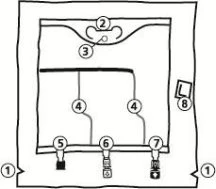
-
Notches on the overpouch
-
Handle
-
Hanging hole
-
Breakable seals
-
Blind port (used only during manufacturing)
-
Addition port
-
Infusion port
-
Oxygen absorber
-
Opening the overpouch
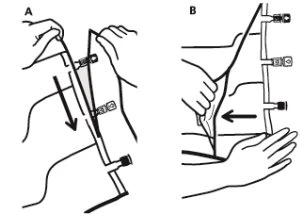
- To remove the overpouch, hold it horizontally and tear at the notch toward the ports along the upper edge (A).
- Then simply tear along the package; separate and discard the overpouch together with the oxygen absorber (B).
- Mixing
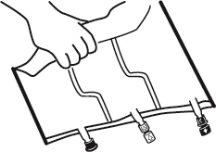
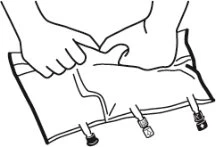
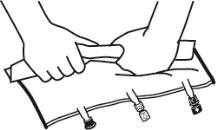
- Place the bag on a flat surface.
- Roll the bag from the hanger end toward the port end, first with the right hand, then applying constant pressure with the left hand until the vertical peel seals have opened. The liquid pressure opens the vertical peel seals. The peel seals may also be opened before removing the overpouch.
Note: Liquids mix easily even if the horizontal seal remains closed.
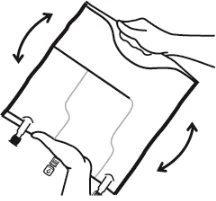
- Mix the contents of the three chambers by inverting the bag three times until the components are completely mixed.
- Completion of preparation:
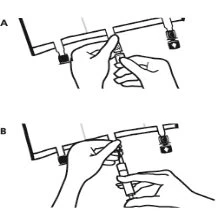
- Place the bag back on a flat surface. Shortly before injecting additives, break the white addition port at the arrow mark (A).
Note: The membrane of the additive port is sterile.
- Hold the base of the additive port. Insert the needle and inject additives (of known compatibility) into the center of the injection site (B).
- Mix thoroughly between each addition by inverting the bag three times. Use syringes with needles of gauge 18–23 and a maximum length of 40 mm.
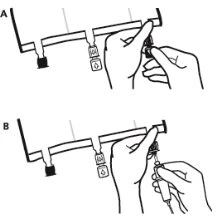
- Shortly before inserting the infusion set, break the blue infusion port at the arrow mark (A).
Note: The membrane of the infusion port is sterile.
- Use a non-vented infusion set, or close the air inlet if using a vented set.
- Hold the base of the infusion port.
- Insert the spike fully through the infusion port. The spike must be fully inserted to ensure retention.
Note: The interior of the infusion port is sterile.
- Hanging the bag
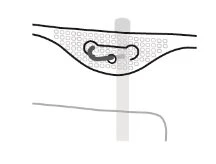
- Hang the bag by the ring located beneath the hanger