Sintrom 1 mg tablets
Spain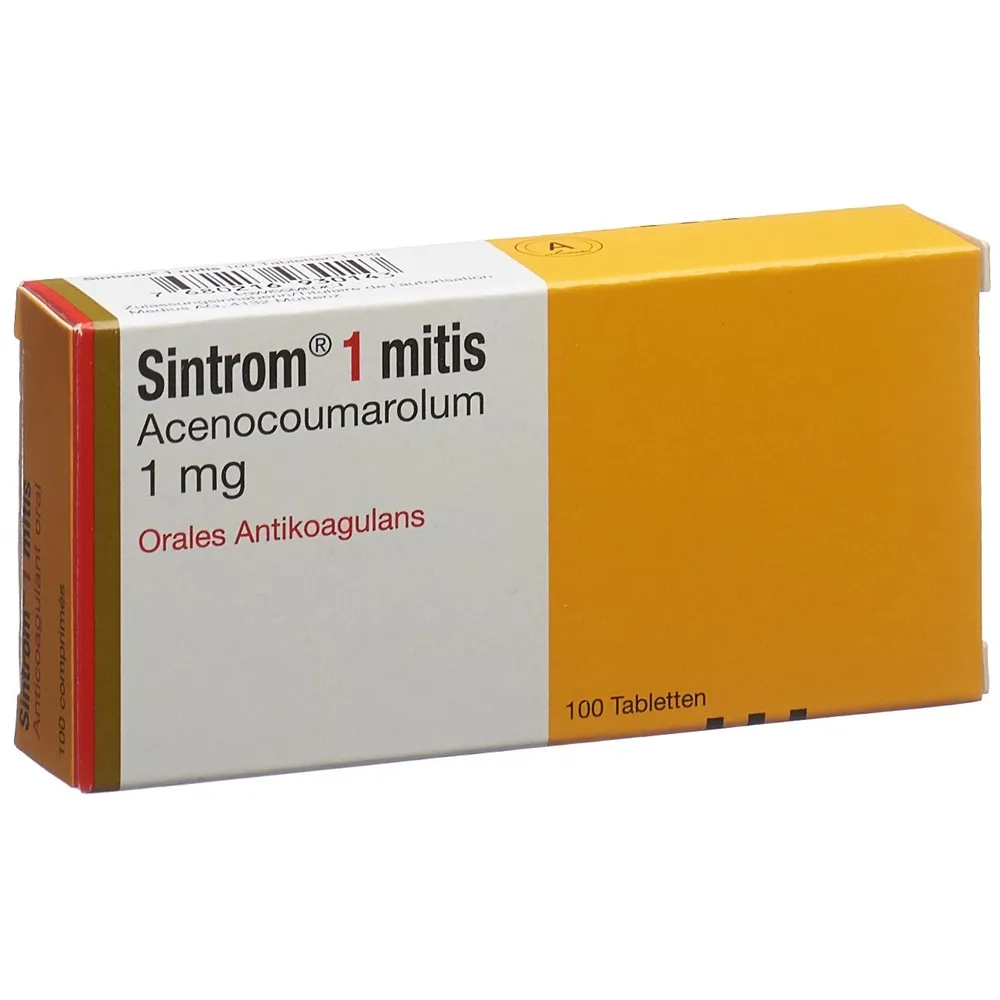
Table of Contents
Package leaflet: Information for the user
Introduction
Package leaflet: information for the user
Sintrom 1 mg tablets
Acenocoumarol
Read the entire leaflet carefully before you start taking this medicine because it contains important information for you.
- Keep this leaflet as you may need to read it again.
- If you have any questions, ask your doctor or pharmacist.
- This medicine has been prescribed for you only and must not be given to other people, even if they have the same symptoms as you, because it could harm them.
- If you experience any adverse effects, consult your doctor or pharmacist, even if they are adverse effects not listed in this leaflet. See section 4.
Leaflet contents
- What Sintrom is and what it is used for
- What you need to know before taking Sintrom
- How to take Sintrom
- Possible side effects
- How to store Sintrom
- Contents of the pack and other information
1. What Sintrom is and what it is used for
Sintrom is a medicine that contains the active substance acenocoumarol. Acenocoumarol belongs to a group of medicines called anticoagulants, which reduce the blood's ability to clot and therefore help prevent the formation of blood clots in blood vessels.
Sintrom is used for the prevention and treatment of blood clotting.
2. What you need to know before starting to take Sintrom
You may only take Sintrom under medical supervision. Sintrom is not suitable for all patients.
Do not take Sintrom
- if you are allergic to acenocoumarol or any of the other ingredients of this medicine listed in section 6.
- if you may have difficulty following treatment (e.g. elderly patients without assistance, alcoholics, or those with mental disorders).
- if you have blood disorders with a tendency to bleed or serious hemorrhagic diseases (e.g. hemophilia).
- if you have had or are about to undergo major surgical procedures such as eye or brain surgery.
- if you have had surgical procedures (lung, prostate, uterus, etc.) in which significant bleeding may occur, including dental procedures, due to the increased ability of this medicine to dissolve blood clots.
- if you have a stomach ulcer or intestinal, cerebral, or pulmonary bleeding.
- if you have a severe infection or inflammation of the heart.
- if you have uncontrolled high blood pressure.
- if you have severe liver or kidney disease.
- if you are pregnant or think you might be pregnant.
Do not take Sintrom if any of these conditions apply to you.
Warnings and precautions
Talk to your doctor or pharmacist before starting to take Sintrom
- if you have a liver disease.
- if you have a kidney or thyroid disease, tumors, infections or inflammations, or any condition that may affect food absorption in the stomach and/or intestines.
- if you have a serious heart disease.
- if you know you have a deficiency of protein C or S (types of coagulation factors).
- if you are about to undergo any procedure that may affect your tendency to bleed, e.g. minor surgery, tooth extraction, lumbar puncture, or angiography (a test to obtain an image of blood vessels).
- if you are receiving a medicine by intramuscular injection. Intramuscular injections may cause bruising while taking Sintrom or similar medicines and should therefore be avoided.
- if you have an increased risk of bleeding, for example, if you have: blood test results showing an International Normalized Ratio (INR) above 4.0, are over 65 years old, have a history of variable INR blood test results, gastric or duodenal ulcer or high blood pressure, problems with blood circulation to the brain (cerebrovascular disease), severe heart disease, anemia, cancer, injuries, reduced kidney function, are currently using or have recently used any of the medicines listed below, or have been taking Sintrom for a prolonged period.
If you have any of the conditions described above, inform your doctor before taking Sintrom.
Taking Sintrom with other medicines
Tell your doctor or pharmacist if you are taking, have recently taken, or might need to take any other medicines.
The effects of Sintrom may be altered by other medicines, particularly:
-
Medicines that may increase the activity of Sintrom:
-
Heparin: a medicine also used to prevent blood clotting;
-
Salicylic acid and related substances such as aspirin, aminosalicylic acid, diflunisal: medicines used for pain;
-
Clopidogrel, ticlopidine, phenylbutazone or other pyrazolone derivatives (e.g. sulfinpyrazone);
-
Other non-steroidal anti-inflammatory drugs, including so-called cyclooxygenase-2 inhibitors (e.g. celecoxib);
-
Methylprednisolone (a corticosteroid) when administered intravenously at high doses.
Blood tests (monitoring) will be more frequent if you are taking these medicines together with Sintrom.
-
Other medicines that may increase the activity of Sintrom, such as:
-
allopurinol: a medicine used for gout;
-
anabolic steroids and androgens: medicines used for muscle development;
-
antiarrhythmic agents such as amiodarone, quinidine: medicines used to normalize heart rhythm;
-
antibiotics such as erythromycin, tetracyclines, neomycin, chloramphenicol, amoxicillin, some cephalosporins, fluoroquinolones, and clindamycin: medicines used to treat infections;
-
serotonin reuptake inhibitors such as citalopram, fluoxetine, sertraline: a group of antidepressant medicines;
-
cimetidine: a medicine used for heartburn and peptic ulcer;
-
clofibrate and other similar medicines used to control cholesterol;
-
corticosteroids such as methylprednisolone, prednisone: medicines used to treat inflammation;
-
disulfiram: a medicine used for alcoholism;
-
ethacrynic acid: a medicine to increase urine production;
-
glucagon: a medicine used to maintain blood sugar levels;
-
imidazole derivatives such as metronidazole and miconazole (even when applied to the skin): medicines used to treat fungal infections;
-
paracetamol: a medicine used for pain and fever;
-
sulfonamides (including co-trimoxazole): medicines used to treat infections;
-
tolbutamide, chlorpropamide: medicines used for diabetes;
-
thyroid hormones (including dextrothyroxine): medicines used to treat thyroid problems;
-
statins such as fluvastatin, atorvastatin, simvastatin: medicines to lower cholesterol levels;
-
tamoxifen: a medicine used in breast cancer;
-
tramadol: a medicine used for pain;
-
omeprazole: a gastric-protective medicine;
-
urokinase, streptokinase, alteplase, and argatroban: medicines used in heart attack to dissolve blood clots;
-
cisapride: a medicine used to treat gastrointestinal problems;
-
antacids such as magnesium hydroxide;
-
viloxazine: an antidepressant medicine;
-
noscapine: a medicine used for cough;
-
vitamin E;
-
glucosamine (for osteoarthritis) may increase the effect of Sintrom.
-
Medicines that may decrease the effect of Sintrom, such as:
-
aminoglutethimide, azathioprine, 6-mercaptopurine: medicines used in cancer;
-
ritonavir, nelfinavir: medicines used for AIDS;
-
barbiturates, carbamazepine: medicines used for epilepsy and seizures;
-
cholestyramine: a medicine used to control cholesterol;
-
griseofulvin: a medicine used for fungal infections;
-
oral contraceptives: medicines used to prevent pregnancy;
-
rifampicin: a medicine used to treat infections;
-
St. John's wort: a plant used to treat depression, also called hypericum;
-
thiazide diuretics: medicines used to increase urine production;
-
foods high in vitamin K;
-
semaglutide, a medicine used to reduce blood sugar levels;
-
hydantoin derivatives such as phenytoin: medicines used to treat epilepsy.
-
Effect of Sintrom on other medicines:
-
Sintrom may increase blood levels of hydantoin derivatives (e.g. phenytoin, often used to treat epilepsy).
-
Sintrom may further lower blood sugar levels when taken with antidiabetic medicines known as sulfonylureas (e.g. glibenclamide, glimepiride).
Taking Sintrom with food, drinks, and alcohol
You should avoid consuming alcohol or blackcurrant juice during treatment, as they may increase the effect of Sintrom and thereby increase the risk of bleeding.
Foods containing large amounts of vitamin K (e.g. green leafy vegetables, spinach, cabbage) may reduce the effect of Sintrom. Consult your doctor or pharmacist if you have any doubts.
Pregnancy, breastfeeding, and fertility
Talk to your doctor or pharmacist before using any medicine.
Pregnancy
Do not use Sintrom if you are pregnant. Sintrom, like other anticoagulants, can cause serious harm to the unborn child. Therefore, it is important that you inform your doctor if you are pregnant or planning to become pregnant. If you are of childbearing age, your doctor will perform a pregnancy test to rule it out. You must use contraception while being treated with Sintrom.
Your doctor will explain the potential risks of Sintrom during pregnancy.
Breastfeeding
The decision to breastfeed while being treated with Sintrom should be discussed carefully with your doctor. If you are breastfeeding while taking Sintrom, you and your baby may require additional monitoring. As a precautionary measure, your doctor may prescribe vitamin K for your baby.
Fertility
There is no information available on the possible effect of Sintrom on human fertility.
Driving and using machines
Sintrom does not affect the ability to drive vehicles or operate machinery.
However, in case of an accident or injury, doctors or healthcare personnel must be informed immediately that you are taking Sintrom. For this purpose, it is advisable to carry your personal anticoagulant card (an identification card specifying that you are taking this medicine).
Sintrom contains lactose
This medicine contains lactose. If your doctor has informed you that you have an intolerance to certain sugars, consult with him before taking this medicine.
3. How to take Sintrom
Follow exactly the instructions for using this medicine as given by your doctor. If in doubt, consult your doctor or pharmacist again.
The dose must be determined by your doctor. You will have regular blood tests to monitor your blood clotting. This will help your doctor adjust your daily dose of Sintrom appropriately.
Your doctor will tell you how many Sintrom tablets you should take. Do not exceed the recommended dose.
Depending on your response to treatment, your doctor may recommend an increase or decrease in your dose.
Sensitivity to anticoagulation varies between individuals and may change during treatment or if your diet changes, especially if you include foods rich in vitamin K (e.g. spinach and members of the cabbage family). Your doctor will monitor you during periodic visits and prescribe the most appropriate dose for your condition. Generally, dose adjustments will be based on the total weekly dose, distributed as evenly as possible over the seven days. Follow your doctor's instructions strictly.
You should normally take the tablets at the same time each day, for example in the evening with a glass of water and apart from meals.
Always remind your doctor, dentist, or pharmacist at each visit that you are taking Sintrom.
Dental treatments and surgery
It is especially important to inform your doctor, dentist, or pharmacist if you are going to undergo any surgery or invasive procedure, such as a dental extraction. Consult your doctor, as you will need close monitoring of your blood clotting status.
Your doctor will decide whether or not to interrupt your medication. Even for a short period, your doctor may prescribe a different medicine to prevent blood clotting until you are told to restart taking Sintrom.
Use in elderly patients
If you are over 65 years of age, you may be more sensitive to the effects of Sintrom and therefore may require more frequent monitoring. It may even be necessary to reduce your dose.
Use in children and adolescents
Experience with the use of Sintrom in children and adolescents is limited. If your doctor decides to treat a child or adolescent with Sintrom, blood samples will be taken more frequently than in adults to measure blood clotting parameters, to confirm that Sintrom is working properly and to ensure that it is not causing side effects.
How long you should take Sintrom
Your doctor will inform you of how long you should take the medicine. Do not stop treatment or change your dose on your own initiative; always consult your doctor.
If you take more Sintrom than you should:
If you accidentally take too many Sintrom tablets, contact your doctor immediately.
The symptoms and severity of overdose depend on individual sensitivity to Sintrom, the number of tablets taken, and the duration of treatment.
If, while following your doctor's instructions, symptoms of overdose appear during continued use of Sintrom, you must see your doctor to have your treatment reviewed.
Overdose with Sintrom may cause bleeding. The most likely symptoms of overdose include skin hemorrhage, blood in the urine, bruising, gastrointestinal bleeding, vomiting blood, vaginal bleeding, nosebleeds, bleeding from the gums, and joint bleeding. If this occurs, treatment must be stopped and the bleeding treated. Other symptoms may include abnormally rapid heartbeat, low blood pressure, disturbances in blood circulation to organs and body extremities, feeling unwell, vomiting, diarrhea, and stomach pain.
In case of overdose or accidental ingestion, contact the Toxicology Information Service. Tel.: 91 562 04 20.
If you forget to take Sintrom
If you forget a dose of this medicine, take it as soon as possible, unless it is almost time for your next dose; then return to your regular dosing schedule. Do not take a double dose to make up for forgotten doses. Remember to inform your doctor at your next control visit about the number of doses you missed.
If you have any further questions about the use of this medicine, ask your doctor or pharmacist.
4. Possible adverse effects
Like all medicines, this medicine may cause adverse effects, although not everyone experiences them.
Some of these adverse effects could be serious:
- Common (affects 1 or more people in 10): bleeding (symptoms such as: nosebleeds without apparent cause or bleeding from gums when brushing teeth; unexplained bruising; unusual, severe bleeding or bleeding from cuts or wounds; heavy or unexpected menstrual bleeding; blood in urine; bloody or black stools; coughing up blood or vomiting blood; sudden, severe or persistent headache). If you experience any of the bleeding symptoms described, it may mean you are taking more medication than you need.
- Rare (less than 1 in 1,000 people): allergic reaction in the form of skin rash or itching.
- Very rare (less than 1 in 10,000 people): blistered bruises on the skin with or without scabs, usually on thighs, buttocks, abdomen, breasts or sometimes on toes; bruises or bleeding under the skin (possible sign of vasculitis); yellowing of the eyes or skin (possible sign of liver injury).
- Frequency not known: bleeding in the kidney, sometimes with blood in urine, which may lead to the kidneys being unable to function properly (anticoagulant-related nephropathy).
If you experience any of these adverse effects, consult your doctor immediately.
Other adverse effects:
- Rare (less than 1 in 1,000 people): unusual hair loss; loss of appetite; vomiting; nausea.
- Frequency not known: painful skin rash. On rare occasions, Sintrom may cause serious skin problems such as calciphylaxis, which may start with a painful skin rash and then lead to more severe complications. This adverse reaction occurs more frequently in patients with chronic kidney disease. Condition characterized by a lower than normal number of red blood cells or reduced hemoglobin (anemia).
Reporting of adverse effects
If you experience any type of adverse effect, consult your doctor or pharmacist, even if it is a possible adverse effect not listed in this leaflet. You can also report them directly via the Spanish Pharmacovigilance System for Human Medicines at www.notificaram.es. By reporting adverse effects, you can help provide more information on the safety of this medicine.
5. Storage of Sintrom
Keep out of the sight and reach of children.
Do not use this medicine after the expiry date stated on the packaging. The expiry date is the last day of the month indicated.
Do not use this medicine if you notice that the packaging is damaged or shows signs of tampering.
Store Sintrom in its original packaging.
Medicines must not be disposed of via wastewater or household waste. Dispose of unused medicines and their containers at the SIGRE Point at your usual pharmacy. If in doubt, ask your pharmacist how to properly dispose of unused medicines and their containers. This will help protect the environment.
6. Contents of the pack and other information
Composition of Sintrom 1 mg tablets
The active substance is acenocoumarol. Each tablet contains 1 mg of acenocoumarol.
The other components are:
Lactose, anhydrous colloidal silica, corn starch, talc, magnesium stearate and hypromellose.
Appearance of the product and contents of the pack
The 1 mg tablet is round, white in colour, marked with “CG” on one side and “AA” on the other.
Packs of 60 tablets.
Marketing Authorization Holder and Manufacturer
Marketing Authorization Holder
Merus Labs Luxco II S.à.R.L.
208, Val des Bons Malades
L-2121 Luxembourg
Luxembourg
Manufacturer
Rovi Pharma Industrial Services, S.A.
Vía Complutense, 140,
Alcalá de Henares, Madrid, 28805,
Spain
For further information about this medicinal product, please contact the local representative of the Marketing Authorization Holder:
Norgine de España, S.L.U.
Paseo de la Castellana, 91, 2nd Floor
28046 Madrid
Spain
Date of the most recent revision of this leaflet: June 2025
Detailed information on this medicinal product is available on the website of the Spanish Agency of Medicines and Health Products (AEMPS) http://www.aemps.gob.es/