Sinogan 40 mg/ml oral solution drops
Spain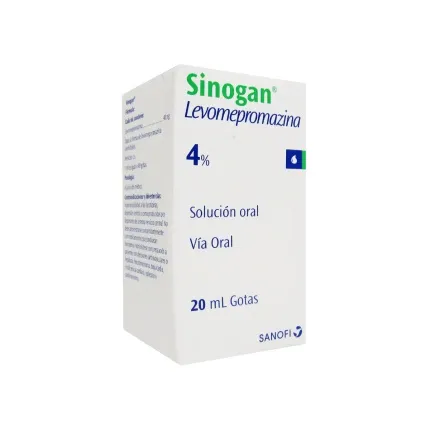
Table of Contents
Package leaflet: Information for the user
Introduction
Package leaflet: information for the patient
Sinogan 40 mg/ml oral drops solution
Levomepromazine, hydrochloride
Read the entire leaflet carefully before you start taking this medicine, because it contains important information for you.
- Keep this leaflet, as you may need to read it again.
- If you have any questions, ask your doctor or pharmacist.
- This medicine has been prescribed for you only, and you should not give it to other people, even if they have the same symptoms as you, because it could harm them.
- If you experience any adverse effects, consult your doctor or pharmacist, even if they are adverse effects not listed in this leaflet. See section 4.
Leaflet contents:
- What Sinogan is and what it is used for
- What you need to know before taking Sinogan
- How to take Sinogan
- Possible side effects
- How to store Sinogan
- Contents of the pack and other information
1. What Sinogan is and what it is used for
Levomepromazine is an antipsychotic drug belonging to the group of medicines known as phenothiazines, endowed with sedative properties, anxiety-reducing effects, strong analgesic capabilities, and significant sleep-inducing power.
Always under the prescription of your doctor, this medicine is indicated for the treatment of:
-
Schizophrenia, transient acute psychoses, and paranoid states, including manic psychoses, organic psychoses, and short-term treatment of prominent psychotic symptoms as part of a personality disorder.
-
Adjunctive treatment for relief of delirium, agitation, nervousness, and confusion associated with pain in the terminal phase.
2. What you need to know before taking Sinogan
Read carefully the instructions provided in section 3 (see “How to take Sinogan”).
Do not take Sinogan
- if you are allergic to levomepromazine or any of the other ingredients of this medicine (listed in section 6),
- if you have Parkinson’s disease,
- if you have suffered from porphyria (a blood disorder),
- if you are being treated with levodopa,
- in combination with alcoholic beverages.
Warnings and precautions
Before and during chronic treatment, your doctor will request blood tests to monitor your liver function.
Consult your doctor or pharmacist before starting to take Sinogan
-
If your body temperature rises inexplicably, contact your doctor immediately due to the risk of developing a condition known as neuroleptic malignant syndrome, which has been reported during treatment with this type of medicine. Symptoms include muscle rigidity, increased body temperature, and altered consciousness. Sweating and irregular pulse or blood pressure may be early warning signs. Although this syndrome occurs with this type of medication, it is important to consider that some patients may have a predisposition.
-
If you have risk factors for stroke.
-
If you develop fever, sore throat, infection, or mouth ulcers, your doctor will perform a blood test to rule out a possible decrease in a type of white blood cells called granulocytes, or an increase in another type of white blood cells, leukocytes. If this occurs, your doctor will discontinue treatment.
-
If you have heart and/or circulatory problems.
-
If you have liver and/or kidney disorders (hepatic and/or renal insufficiency).
-
If you suffer from epileptic seizures. The risk of seizures may increase, so your doctor will monitor you closely and may perform an electroencephalogram.
-
If your treatment is prolonged, your doctor may recommend an eye examination and blood tests.
-
This type of medicine may increase the risk of cardiac rhythm disturbances (QT interval prolongation), which can become severe (torsades de pointes) and potentially fatal. Therefore, your doctor will perform necessary checks to rule out possible risk factors before starting treatment and, if needed, during treatment.
-
Elderly patients are more likely to experience drowsiness and dizziness upon standing due to a drop in blood pressure. They may also be prone to chronic constipation and prostate problems.
-
In elderly patients with psychosis related to dementia who are being treated with antipsychotics (possible increased risk of death).
-
If you have risk factors for venous thromboembolism (blood clot formation) (see “Possible side effects”).
-
Contact your doctor immediately if you experience abdominal distension and pain (risk of paralytic ileus).
-
Use with caution if you have constipation, hypothyroidism, heart failure, pheochromocytoma (a tumor of the adrenal gland), myasthenia gravis (a muscle disease causing drooping eyelids, double vision, difficulty speaking and swallowing, and sometimes muscle weakness in arms or legs), or prostate enlargement.
-
Be aware of the risk of developing tardive dyskinesia (involuntary movements), even at low doses, particularly in children and elderly patients.
-
If you have diabetes mellitus or risk factors for it, as you should monitor your blood glucose levels carefully while taking Sinogan.
-
Liver function tests should be performed at the start of treatment due to the risk of overdose. During chronic treatment, these tests should be repeated every 6–12 months.
Children and adolescents
Do not use in children under 3 years of age. Strict medical monitoring for adverse reactions, particularly neurological ones, is recommended in children over 3 years of age treated with Sinogan.
In this population, Sinogan 40 mg/ml oral drops solution is recommended.
Due to its impact on learning, a clinical examination is recommended once a year. The dose should be regularly adjusted according to the child's clinical condition. Use in children under 6 years of age should occur in a specialized setting.
Taking Sinogan with other medicines
Inform your doctor or pharmacist if you are taking, have recently taken, or might need to take any other medicines.
As with other medicines used to treat psychosis, if Sinogan and levodopa (a medicine used to treat Parkinson’s disease) are taken together, their effects may cancel each other out. If movement disorders occur, your doctor will not prescribe levodopa or will replace it with another medicine.
The use of dopaminergic medicines should be avoided with Sinogan. If a dopaminergic medicine needs to be discontinued, it should be tapered gradually (sudden withdrawal of dopaminergic agents exposes the patient to the risk of “neuroleptic malignant syndrome”).
Cabergoline or quinagolide (medicines used to treat abnormal milk production) should not be used with Sinogan.
Inform your doctor if you are taking any of the following medicines, as they may prolong the QT interval (cause changes in your electrocardiogram). The risk of arrhythmias is higher when Sinogan is taken with medicines that prolong the QT interval (certain antiarrhythmics, antidepressants, and other antipsychotics) and medicines that cause electrolyte imbalances.
Medicines that may prolong the QT interval:
- Antiarrhythmics (medicines for heart rhythm): quinidine, procainamide, amiodarone, mibefradil.
- Antibiotics: erythromycin, cotrimoxazole, trimethoprim-sulfamethoxazole, azithromycin, ketoconazole, pentamidine.
- Drugs acting on gastrointestinal motility: cisapride.
- Antihistamines (allergy medicines): terfenadine, astemizole.
- Hypolipidemics (cholesterol-lowering medicines): probucol.
- Other psychotropic agents (medicines improving psychological state): tricyclic and tetracyclic antidepressants, haloperidol and other phenothiazines.
- Other medicines: organophosphates and vasopressin.
Concomitant administration with antacids (salts, oxides, and hydroxides of aluminum, magnesium, and calcium) reduces the absorption of Sinogan. Therefore, it is recommended to take them at least two hours apart.
Taking Sinogan with medicines used to lower blood pressure (antihypertensives) increases their effect and the risk of low blood pressure upon standing, possibly causing dizziness.
Medicines acting on the brain, such as: tranquilizers, morphine derivatives (medicines for pain and cough), barbiturates, allergy medicines, sleep inducers, anxiety treatments, clonidine and related substances, methadone, and thalidomide, enhance the effect of Sinogan and may cause respiratory depression.
Medicines for depression (such as imipramine), allergy medicines acting on the brain, sedatives, some medicines for Parkinson’s disease and spasms, and disopyramide, when taken with Sinogan, increase the occurrence of anticholinergic adverse reactions such as urinary retention, constipation, dry mouth, etc.
There is a possibility of interaction between CYP2D6 inhibitors such as phenothiazines (including levomepromazine) and CYP2D6 substrates. Therefore, if you take Sinogan together with any of the following medicines:
- Some antidepressants: amitriptyline/amitriptyline-N-oxide, clomipramine, desipramine, imipramine, fluoxetine, fluvoxamine, sertraline, paroxetine.
- Some medicines used to treat cardiac arrhythmias: encainide, flecainide, propafenone.
- Some medicines for treating hypertension: metoprolol, propranolol.
- Some medicines for treating cough: codeine, dextromethorphan.
- Other medicines for treating psychosis: perphenazine.
A dose adjustment of these medicines may be required due to increased blood levels.
Sinogan inhibits the antihypertensive effect of guanethidine.
Lithium: there is a risk of developing symptoms suggestive of neuroleptic malignant syndrome or lithium poisoning.
The combined use of proconvulsant medicines or those that lower the seizure threshold with Sinogan should be carefully considered due to the serious risk of seizures.
Taking Sinogan with food, drinks, and alcohol
Do not consume alcoholic beverages during treatment with Sinogan, as alcohol enhances sedation.
Pregnancy, breastfeeding, and fertility
If you are pregnant or breastfeeding, think you might be pregnant, or plan to become pregnant, consult your doctor or pharmacist before using this medicine.
Pregnancy
Sinogan is not recommended during pregnancy. Consult your doctor before taking this medicine:
- if you are a woman of childbearing age not using effective contraception,
- if you are pregnant, could become pregnant, or think you might be pregnant.
The following symptoms have been reported in newborns whose mothers were treated with Sinogan during the third trimester of pregnancy (last three months of pregnancy): tremor, muscle stiffness and/or muscle weakness, drowsiness, agitation, breathing difficulties and feeding problems at birth, slow or fast heartbeat, abdominal distension, meconium ileus, delayed meconium excretion, and constipation. If your baby develops any of these symptoms, contact your doctor.
Breastfeeding
Do not take Sinogan if you are breastfeeding, as Sinogan passes into breast milk in small amounts.
A decision must be made whether to discontinue breastfeeding or discontinue treatment, taking into account the benefit of breastfeeding for the child and the benefit of treatment for the mother.
A risk to breastfed infants cannot be excluded.
Fertility
In humans, levomepromazine may increase blood levels of the hormone prolactin (hyperprolactinemia), which may be associated with fertility problems in women.
Some data suggest that levomepromazine treatment may be associated with fertility problems in men.
Driving and using machines
Sinogan may cause symptoms such as drowsiness, dizziness, or vision disturbances, and may reduce reaction ability. These effects, as well as the underlying illness, may impair your ability to drive or operate machinery. Therefore, do not drive, operate machinery, or engage in other activities requiring special attention until your doctor evaluates your response to this medicine.
Sinogan contains ethanol and sucrose:
- Ethanol. This medicine contains 122 mg of alcohol (ethanol) per ml, equivalent to 12.2% w/v. The amount in ml of this medicine is equivalent to less than 3.05 ml of beer or 1.22 ml of wine.
The small amount of alcohol in this medicine does not produce any noticeable effect.
- Sucrose. This medicine contains sucrose. If your doctor has told you that you have an intolerance to certain sugars, consult him before taking this medicine. It may cause dental caries.
3. How to take Sinogan
Follow exactly the administration instructions for this medicine as indicated by your doctor. If in doubt, consult your doctor or pharmacist again. To facilitate accurate dosing, the bottle includes a built-in dropper.
Invert the bottle until the prescribed dose is obtained.
When starting to take Sinogan, you should remain lying down for one hour after each dose. If your dose is high, it is important to monitor your blood pressure due to the risk of a drop upon standing.
Remember to take your medication.
The recommended doses are as follows:
- in psychotic patients: the recommended dose is 100 to 200 drops (100 to 200 mg of levomepromazine) daily, sometimes more, divided into 2 or 3 doses.
- in non-psychotic patients: the recommended dose is 25 to 75 drops (25 to 75 mg of levomepromazine) daily, divided into 2 or 3 doses.
The dose for children should be 0.5 to 2 mg/kg/day, given in 2 or 3 doses with meals (see section “Warnings and precautions”). The dose must not exceed 40 mg daily in children under 12 years of age.
Never change the dose prescribed by your doctor on your own. If you feel that the effect of Sinogan is too strong or too weak, inform your doctor or pharmacist.
Your doctor will indicate how long your treatment with Sinogan should last. Do not stop your treatment prematurely.
If you take more Sinogan than you should
In case of overdose or accidental ingestion, contact your doctor or pharmacist immediately or call the Toxicology Information Service at telephone number 91 562 04 20, indicating the medication and the amount ingested.
Seek immediate medical advice or go to the nearest hospital. Symptoms of Sinogan poisoning may include seizures, severe parkinsonism, and even coma. Although there is no specific antidote, in cases of acute intoxication symptomatic treatment is recommended, along with intravenous administration of drugs that restore cardiac activity.
If you forget to take Sinogan
Do not take a double dose to make up for missed doses.
4. Possible adverse effects
Like all medicines, Sinogan may cause adverse effects, although not everyone experiences them.
Uncommon (may affect up to 1 in 100 people)
Nervous system disorders:
- seizures
Vascular disorders:
- blood clot formation (venous thromboembolism)
Frequency not known (cannot be estimated from available data)
Endocrine disorders:
- difficulty regulating body temperature
- increased blood levels of a hormone called prolactin (hyperprolactinaemia), which may lead to absence of menstrual periods (amenorrhoea), abnormal milk secretion (galactorrhoea), excessive breast development in men (gynaecomastia), and impotence.
Metabolism and nutrition disorders:
- glucose intolerance
- high blood glucose levels (hyperglycaemia)
- low sodium levels in blood (hyponatraemia)
- syndrome of inappropriate antidiuretic hormone secretion (fluid retention and decreased levels of certain electrolytes in the blood).
Psychiatric disorders:
- anxiety reactions
- mood changes
- confusion
- delirium.
Nervous system disorders:
- parkinsonism (with high and prolonged doses)
- sedation or drowsiness, especially at the beginning of treatment
- early dyskinesia (lack of coordination or movement difficulty, characterized by muscle contractions in the neck, eye, mouth, etc.)
- tardive dyskinesia (involuntary movements)
- extrapyramidal syndrome:
- akinesia with or without hypertonia (loss of movement with or without muscle rigidity)
- hyperkinetic – hypertonic movements (movements with muscle rigidity), motor excitement
- akathisia (feeling of restlessness, both physical and mental)
- neuroleptic malignant syndrome (see “Warnings and precautions”)
- anticholinergic effects such as paralytic ileus, risk of urinary retention, dry mouth, constipation, ocular accommodation disorders
Cardiac disorders:
- torsades de pointes (a type of arrhythmia)
- electrocardiogram changes including QT interval prolongation, as seen with other neuroleptics
- cardiac arrhythmias that may lead to ventricular fibrillation or cardiac arrest, possibly dose-related.
Vascular disorders:
- blood clot formation (venous thromboembolism), which may affect the lungs (pulmonary embolism), sometimes fatal
- deep vein thrombosis (see “Warnings and precautions”)
- drop in blood pressure upon standing up from a sitting or lying position (postural hypotension).
Hepatic disorders:
- yellowing of the eyes and skin (cholestatic jaundice)
- liver damage (hepatocellular, cholestatic, and mixed types).
Skin disorders:
- increased skin sensitivity to sunlight
- allergic skin reactions.
Genital system disorders:
- erection in the absence of sexual desire (priapism).
Eye disorders:
- decreased eye muscle tension
- brownish deposits in the anterior segment of the eye due to drug accumulation, generally without effect on vision.
Additional investigations:
- weight gain
General disorders and administration site conditions:
- sudden death with possible cardiac causes (see “Warnings and precautions”)
- unexplained sudden death in patients receiving phenothiazine neuroleptics.
Blood disorders:
- general decrease in white blood cell count (leucopenia)
- decrease in a type of white blood cells, granulocytes (agranulocytosis)
- thrombocytopenia, which is a decrease in the number of platelets (blood cells that help with clotting) detected in blood tests, potentially leading to bleeding and bruising (thrombocytopenic purpura)
- eosinophilia, which is an increase in the number of eosinophils (a type of white blood cell) detected in blood tests.
Gastrointestinal disorders:
- inflammation of the small intestine and colon, which may be fatal (necrotizing enterocolitis)
- constipation
- intestinal obstruction (paralytic ileus).
Pregnancy, puerperium and perinatal conditions:
- withdrawal symptoms in newborns (see “Pregnancy, breastfeeding and fertility”).
Reporting of adverse effects
If you experience any adverse effect, consult your doctor or pharmacist, even if it is a possible adverse effect not listed in this leaflet. You may also report them directly through the Spanish Pharmacovigilance System for Human Medicines: https://www.notificaram.es. By reporting adverse effects, you can help provide more information on the safety of this medicine.
5. Storage of Sinogan
Keep this medicine out of the sight and reach of children.
Do not store above 25 ºC. Store in the original packaging to protect from light.
After first opening Sinogan, it should be used within 6 months.
Do not use this medicine after the expiry date stated on the packaging after EXP. The expiry date refers to the last day of the month indicated.
Medicines must not be disposed of via wastewater or household waste. Dispose of empty containers and unused medicines at a SIGRE collection point at your pharmacy. If in doubt, ask your pharmacist how to dispose of unused medicines and their packaging. This will help protect the environment.
6. Contents of the pack and other information
Composition of Sinogan 40 mg/ml oral drops solution
- The active substance is levomepromazine. Each ml contains 40 mg of levomepromazine (as hydrochloride). 1 drop corresponds to 1 mg of levomepromazine.
- The other components are: citric acid monohydrate, ascorbic acid, sucrose, glycerol (E-422), ethanol, orange flavour, vanillin, ammoniacal caramel and purified water.
4% solution in a 30 ml bottle.
Appearance of the medicinal product and contents of the container
Sinogan 40 mg/ml oral drops solution is a brown oral solution. It is supplied in a 30 ml glass bottle.
Marketing Authorization Holder and Manufacturer
Marketing Authorization Holder:
Neuraxpharm Spain, S.L.U.
Avda. Barcelona, 69
08970 Sant Joan Despí
Barcelona - Spain
Manufacturer:
Lichtenheldt GmbH Pharmazeutische Fabrik
Industriestrasse 7-11, Wahlstedt, Schleswig-Holstein,
23812 Germany
Neuraxpharm Pharmaceuticals S.L.
Avenida. de Barcelona 69
Sant Joan Despí, 08970
Barcelona, Spain
Nattermann & Cie. GmbH
Nattermannallee 1
50829 (Cologne) Germany
Date of latest revision of this leaflet: July 2025
Detailed information on this medicinal product is available on the website of the Spanish Agency of Medicines and Health Products (AEMPS) http://www.aemps.gob.es/