Sevorane 100% liquid for inhalation vapor
Spain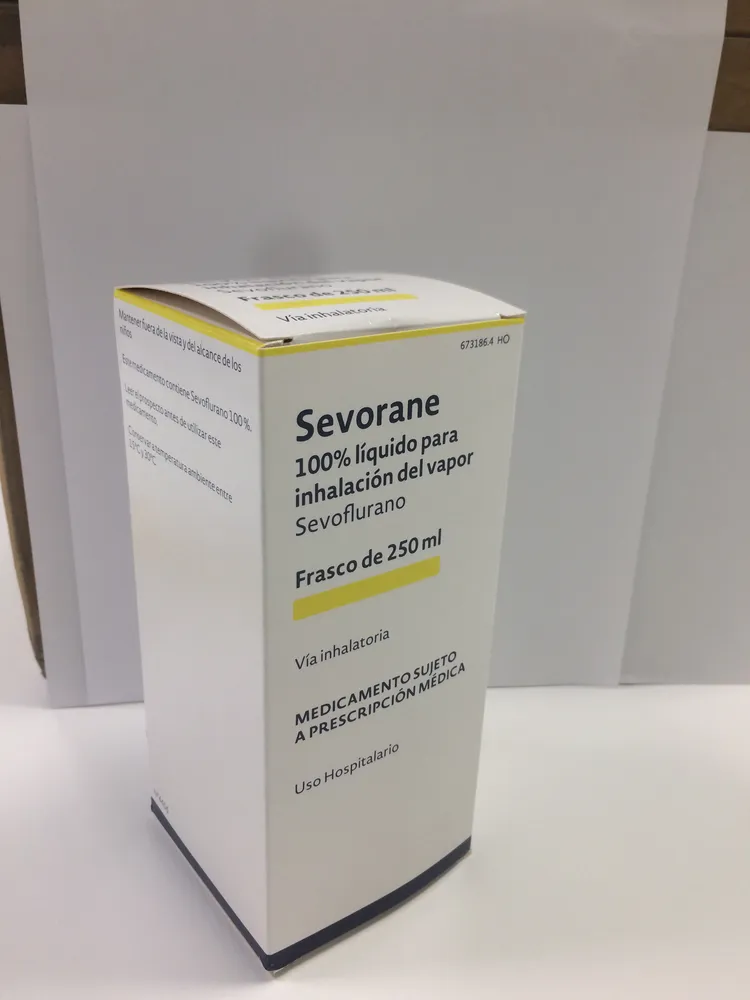
Table of Contents
Package leaflet: Information for the user
Introduction
Package leaflet: information for the user
SEVORANE
100% liquid for vapour inhalation
Sevoflurane
Read all of this leaflet carefully before you start using this medicine because it contains important information for you.
- Keep this leaflet as you may need to read it again. If you have any questions, ask your doctor, pharmacist or nurse.
- This medicine has been prescribed for you only and must not be given to other people, even if they have the same symptoms as you, because it may harm them.
- If you experience any adverse effects, consult your doctor, pharmacist or nurse, even if they are adverse effects not listed in this leaflet. See section 4.
Contents of this leaflet:
- What SEVORANE is and what it is used for
- What you need to know before using SEVORANE
- How to use SEVORANE
- Possible side effects
- How to store SEVORANE
- Contents of the pack and other information
1. What SEVORANE is and what it is used for
SEVORANE is an inhalational anesthetic that belongs to the group of halogenated hydrocarbons.
SEVORANE is used for induction and maintenance of general anesthesia in adult and pediatric inpatients and outpatients.
2. What you need to know before using SEVORANE
Do not use SEVORANE,
- If you are allergic to sevoflurane or any of the other ingredients of this medicine (listed in section 6) or to other halogenated anesthetics.
- If you are susceptible to malignant hyperthermia.
- If you have been advised not to undergo general anesthesia.
Warnings and precautions
Consult your doctor, pharmacist, or nurse before starting to use SEVORANE.
- SEVORANE must be administered by or under the supervision of personnel trained in the administration of general anesthetics, with appropriate facilities available for airway maintenance, artificial ventilation, supplemental oxygen, and circulatory resuscitation.
- The exact concentration of sevoflurane being delivered from the vaporizer must be known. Because volatile anesthetics differ in their physical properties, only vaporizers specifically calibrated for sevoflurane should be used. General anesthesia should be individualized according to the patient's response.
- As anesthesia becomes deeper, greater reductions in blood pressure and respiratory depression occur.
- If you are susceptible to malignant hyperthermia, an increased metabolism in skeletal muscle may be triggered, leading to high oxygen demand, hypercapnia (increased carbon dioxide in blood), and may include muscle rigidity, rapid pulse (tachycardia), breathing difficulties, bluish discoloration of the skin, heart rhythm disturbances (arrhythmias), and/or unstable blood pressure. During light anesthesia, other signs may appear: acute hypoxia (sudden decrease in oxygen in the body), hypercapnia (increased carbon dioxide in blood), and hypovolemia (reduced circulating blood volume).
- In clinical trials, one case of malignant hyperthermia was reported. Additionally, there have been post-marketing reports of malignant hyperthermia. Some of these reports were fatal.
- Treatment of malignant hyperthermia includes discontinuation of SEVORANE and intravenous administration of dantrolene sodium.
- Rarely, cardiac arrhythmias (irregular heartbeat) and death have occurred in children during the postoperative period, primarily in patients with neuromuscular disorders (such as Duchenne muscular dystrophy), and in many cases associated with concomitant use of drugs acting at this level (e.g., succinylcholine).
- If you have heart problems, a type of tachycardia may occur that requires medical treatment, as in rare cases it may be fatal.
- In pediatric patients with Pompe disease, isolated cases of ventricular arrhythmia have been reported.
-
- Caution is required when administering general anesthesia, including SEVORANE, to patients with mitochondrial disorders.
- Post-marketing experience has shown rare cases of moderate to severe liver disease or hepatitis (liver inflammation), with or without jaundice (yellowing of skin and eyes).
- When SEVORANE is used in patients with pre-existing liver disease or who are receiving medications known to cause liver damage, the physician must decide whether or not to use it.
- Repeated exposure to halogenated hydrocarbons, including SEVORANE, within a relatively short interval may increase the risk of liver damage.
- Decreases in blood pressure are related to the concentration of SEVORANE and the depth of anesthesia. Particular caution is required in patients with lower-than-normal blood pressure, reduced blood volume, or other conditions of this type, for example due to other medications.
- As with all anesthetics, maintaining blood pressure and blood volume stability is important to avoid myocardial ischemia (impaired blood flow to the heart muscle) in patients with coronary artery disease.
- Recovery from general anesthesia should be carefully assessed before leaving the recovery room.
- Although recovery of consciousness after SEVORANE administration usually occurs within minutes, the impact on intellectual function has not been studied during the 2 to 3 days following anesthesia. As with other anesthetics, minor mood changes may persist for several days after administration.
- If you have any kidney function impairment.
- If you are at risk of increased intracranial pressure.
- The use of SEVORANE has been associated with seizures occurring in young and adult patients, with or without predisposing risk factors. The anesthesiologist will determine whether or not to use this medication in cases where seizure risk may be present.
- Seizures may occur in children from the age of 2 years. The anesthesiologist will determine whether or not to use this medication in cases where seizure risk may be present.
- The anesthesiologist must adequately replace dried-out CO2 absorbents.
- If you have taken narcotic medications or other drugs that may cause respiratory depression, your doctor will monitor your breathing and provide assistance if necessary.
Use in patients over 80 years of age
If you are a patient aged 80 years, the required dose is approximately half that needed for a 20-year-old patient.
Use of SEVORANE with other medicines
Inform your doctor or pharmacist if you are taking, have recently taken, or might need to take any other medicines, especially those used for blood pressure, heart conditions, anxiety, tuberculosis, muscle relaxants, herbal remedies, or alcohol.
Inform your doctor if you are being treated with opioids such as alfentanil or sufentanil, as their combination with SEVORANE may lead to a combined and more pronounced effect on heart rhythm, blood pressure, and respiratory rate.
It is important to inform your doctor if you are taking or have recently taken any of the following medicines:
- Succinylcholine (used as a muscle relaxant during anesthesia): its use in combination with sevoflurane may cause serious cardiac arrhythmias during the postoperative period.
- Non-selective MAOI antidepressants. Treatment with these medications should be discontinued 2 weeks before surgery.
- Calcium channel antagonist antihypertensives, due to the risk of hypotension, particularly dihydropyridine derivatives.
- Beta-sympathomimetics (such as isoprenaline) and alpha- and beta-sympathomimetics (such as epinephrine and norepinephrine): due to the potential risk of ventricular arrhythmias, sevoflurane should be used with caution when administered with these drugs.
Pregnancy, breastfeeding, and fertility
If you are pregnant or breastfeeding, think you may be pregnant, or plan to become pregnant, consult your doctor or pharmacist before using this medicine.
- SEVORANE should not be used during pregnancy unless clearly necessary.
- It has been used during cesarean section procedures. The safety of SEVORANE during the dilation phase or vaginal delivery has not been established. SEVORANE has uterine-relaxing effects, with a consequent potential risk of uterine bleeding. The physician will decide whether or not to use it in such cases.
- It is unknown whether SEVORANE or its metabolites are excreted in human breast milk.
- Caution should be exercised when SEVORANE is administered to women who are breastfeeding.
- No impairment of fertility has been demonstrated in animals treated with SEVORANE.
Driving and use of machines
Do not drive or operate tools or machinery after receiving SEVORANE, as this medicine may affect your reaction ability. Your doctor will advise you how long you should wait before driving or using machinery again.
3. How to use SEVORANE
Follow exactly the instructions for administering this medicine as described in this leaflet or as directed by your doctor, pharmacist, or nurse. If in doubt, consult your doctor, pharmacist, or nurse.
SEVORANE is administered by a suitably trained healthcare professional using a vaporizer specifically calibrated for this product, so that the released concentration can be precisely controlled.
Your doctor will decide the most appropriate dose of SEVORANE for you.
If you use more SEVORANE than you should
If you receive more SEVORANE than you should, your doctor will stop administration and take the necessary measures.
In case of overdose or accidental ingestion, contact the Toxicology Information Service at telephone number 91.562.04.20, indicating the medicine and the amount ingested.
4. Possible adverse effects
Like all medicines, this medicine can cause adverse effects, although not everyone experiences them.
Most adverse effects are of mild or moderate intensity and transient.
Sevoflurane may cause reductions in cardiac and respiratory function.
Postoperative nausea and vomiting have been observed, which are common sequelae of surgery and general anesthesia and may be due to inhalational anesthesia, other agents administered during or after surgery, and the patient's response to the surgical procedure.
The most commonly observed adverse effects are the following:
In adult patients: decreased blood pressure, nausea, delirium, and vomiting;
In elderly patients: slowed heart rate, decreased blood pressure, and nausea; and
In children: agitation, coughing, vomiting, and nausea.
The following table lists all adverse effects at least possibly related to sevoflurane observed in clinical trials and post-marketing experience, organized by frequency and MedDRA organ system classification. The following frequency categories have been used: Very common adverse effects (in more than 1 in 10 people); Common adverse effects (in 1 to 10 in 100 people); Uncommon adverse effects (in 1 to 10 in 1,000 people); Rare adverse effects (in 1 to 10 in 10,000 people); Very rare adverse effects (in less than 1 in 10,000 people), including isolated events. Post-marketing adverse reactions are voluntarily reported in a population with unknown exposure frequency. Therefore, it is not possible to estimate the frequency of these adverse reactions, and their frequency is considered "not known". The type, severity, and frequency of adverse effects in patients who received SEVORANE in clinical trials are comparable to those observed in patients receiving the reference treatment.
Adverse effects from Clinical Trials and Post-marketing Experience
Organ / system classification | Frequency | Adverse reactions |
Immune system disorders | Not known | Anaphylactic reaction (severe allergic reaction throughout the body) Anaphylactoid reaction (another type of allergic reaction) Hypersensitivity (allergic reaction) |
Psychiatric disorders | Very common | Agitation |
Nervous system disorders | Common | Somnolence Dizziness Headache |
Cardiac disorders | Not known Very common | Convulsion Dystonia (involuntary muscle contractions) Bradycardia (reduced heart rate) |
Common | Tachycardia (increased heart rate) | |
Uncommon | Complete atrioventricular block (heart disorder) | |
Not known | Cardiac arrest QT interval prolongation associated with Torsade de Pointes | |
Vascular disorders | Very common | Hypotension (lower than usual blood pressure) |
Common | Hypertension (higher than usual blood pressure) | |
Respiratory, thoracic and mediastinal disorders | Very common | Cough |
Common | Respiratory disorder Laryngospasm (spasm of the larynx) | |
Not known | Bronchospasm (spasm of the bronchi) Dyspnea (difficulty breathing) Wheezing (whistling sound when breathing) | |
Gastrointestinal disorders | Very common | Nausea Vomiting |
Common | Salivary hypersecretion (excess saliva) | |
Hepatobiliary disorders | Not known | Hepatitis (inflammation of the liver) Hepatic failure (impaired liver function) Hepatic necrosis (areas of dead tissue in the liver) |
Skin and subcutaneous tissue disorders | Not known | Contact dermatitis (skin inflammation due to contact with a substance) Itching Skin rash Facial swelling Urticaria |
General disorders and administration site conditions | Common | Chills Pyrexia (elevated body temperature) |
Not known | Chest discomfort Malignant hyperthermia (see below) | |
Investigations | Common | Abnormal blood glucose Abnormal liver function test Abnormal white blood cell count Increased fluoride |
Injury, poisoning and procedural complications | Common | Hypothermia (lower than usual body temperature) |
Description of selected adverse reactions
Transient increases in serum inorganic fluoride levels may occur during and after anesthesia with SEVORANE. Fluoride concentrations typically reach their peak within two hours after the end of SEVORANE anesthesia and return to preoperative levels within 48 hours. In clinical trials, elevated fluoride concentrations were not associated with impaired renal function.
There have been rare reports of postoperative hepatitis. Additionally, there have been rare post-marketing reports of hepatic failure and hepatic necrosis associated with the use of potent volatile anesthetics, including SEVORANE. However, the true incidence and the causal relationship of SEVORANE to these events cannot be definitively established.
Rare reports of hypersensitivity (including contact dermatitis, skin rash, dyspnea, wheezing, chest discomfort, facial swelling, or anaphylactic reaction) have been received, particularly in association with long-term occupational exposure to inhaled anesthetics, including SEVORANE.
In susceptible individuals, potent inhaled anesthetics can trigger a hypermetabolic state of skeletal muscle, resulting in a very high oxygen demand and the clinical syndrome known as malignant hyperthermia.
Pediatric population
The use of SEVORANE has been associated with seizures. Many of these have occurred in children from the age of 2 years and in adolescents, most of whom did not have risk factors predisposing them to seizures. Clinical judgment should be exercised when considering the use of SEVORANE in patients who may be at risk of seizures.
Reporting of adverse reactions
If you experience any type of adverse reaction, consult your doctor, pharmacist, or nurse, even if it is a possible adverse reaction not listed in this leaflet. You can also report them directly via the Spanish Pharmacovigilance System for Human Medicinal Products: https://www.notificaram.es. By reporting adverse reactions, you can help provide more information on the safety of this medicine.
5. Storage of SEVORANE
Keep this medicine out of sight and reach of children.
Store at room temperature between 15 and 30°C.
Do not use this medicine after the expiry date stated on the container after EXP:. The expiry date refers to the last day of the month indicated.
6. Package contents and other information
Composition of SEVORANE
The active substance is sevoflurane. This medicine contains 100% sevoflurane.
It contains at least 300 ppm of water as protection against environmental Lewis acid. It does not contain any other excipients or preservatives.
Appearance of the product and contents of the pack
SEVORANE is presented as a non-flammable volatile liquid in 250 ml amber polyethylene naphthalate containers. The vaporized liquid is administered by inhalation using a specific vaporizer.
Marketing Authorization Holder and Manufacturer
Marketing Authorization Holder:
AbbVie Spain S.L.U., Avenida de Burgos, 91 - 28050 Madrid, Spain.
Manufacturer:
AbbVie S.r.l., S.R. 148 Pontina km 52 SNC, 04011 Campoverde di Aprilia (LT), Italy.
Date of the most recent revision of this leaflet: February 2016
Detailed information on this medicine is available on the website of the Spanish Agency for Medicines and Health Products (AEMPS) http://www.aemps.gob.es/
Additional information for healthcare professionals
DOSAGE
Premedication should be selected according to the individual patient's needs and at the discretion of the anaesthetist.
Surgical anaesthesia
Sevoflurane must be administered via a vaporizer specifically calibrated for use with this medicine so that the released concentration can be controlled.
The concentration of sevoflurane delivered by the vaporizer during anaesthesia must be known. Dosage should be individualized and adjusted to achieve the desired effect according to the patient's age and clinical condition.
Induction of anaesthesia
The dose should be individualized and adjusted to achieve the desired effect, depending on the patient's age and clinical condition. A short-acting barbiturate or another intravenous induction agent may be administered, followed by inhalation of sevoflurane. Induction of anaesthesia may also be performed by inhalation of sevoflurane in oxygen (O2) or in combination with an oxygen-nitrous oxide (O2/N2O) mixture. For induction of anaesthesia, inhaled concentrations of up to 8% sevoflurane usually produce surgical anaesthesia within less than 2 minutes in both adults and children.
Maintenance of anaesthesia
Surgical anaesthesia levels can be maintained with sevoflurane concentrations of 0.5–3% in O2, with or without concomitant use of nitrous oxide.
Table 1
MAC (minimum alveolar concentration) values in adults and paediatric patients according to age
Age of patient (years) | Sevoflurane in oxygen | Sevoflurane in 65%N2O/35%O2 |
0 - 1 month* | 3.3 % | |
1 - < 6 months | 3.0 % | |
6 months - < 3 years | 2.8 % | 2.0@ |
3 – 12 | 2.5 % | |
25 | 2.6 % | 1.4 % |
40 | 2.1 % | 1.1 % |
60 | 1.7 % | 0.9 % |
80 | 1.4 % | 0.7 % |
*Neonates are of full-term gestational age. MAC values have not been determined in premature infants | ||
@ 60% N2O/40% O2 was used in pediatric patients aged 1 to < 3 years |
Awakening
Awakening times following anesthesia with sevoflurane are generally short. Therefore, patients may require early postoperative pain management.
Elderly Patients
MAC decreases with age. The mean sevoflurane concentration required to achieve MAC in an 80-year-old patient is approximately 50% of that required in a 20-year-old patient.
Pediatric Population
Refer to Table 1 for MAC values according to age in pediatric patients.
INSTRUCTIONS FOR CORRECT ADMINISTRATION OF THE PREPARATION
Sevoflurane must be administered using a vaporizer specifically calibrated for this product, employing a designated filling system for sevoflurane-specific vaporizers or other appropriate vaporizer filling systems.
Replacement of Dried CO2 Absorbents:
Rare cases of extreme heat, smoke, and/or spontaneous fire in the anesthetic machine have been reported during use of sevoflurane in combination with dried CO2 absorbents, particularly those containing potassium hydroxide. An unusually delayed increase or an unexpected decrease in inspired sevoflurane concentration compared to the vaporizer setting may be associated with excessive heating of the CO2 absorbent canister.
An exothermic reaction may occur, increasing sevoflurane degradation and production of degradation products when the CO2 absorbent becomes desiccated, such as after prolonged passage of dry gas through CO2 absorbent canisters. In an experimental anesthetic circuit using dried CO2 absorbents and maximum sevoflurane concentrations (8%) over prolonged periods (>2 hours), degradation products of sevoflurane (methanol, formaldehyde, carbon monoxide, and compounds A, B, C, and D) were observed. The formaldehyde concentrations detected in the anesthetic breathing circuit (using absorbents containing sodium hydroxide) were consistent with levels known to cause mild respiratory irritation. The clinical relevance of the degradation products observed in this extreme experimental model is unknown.
When an anesthetist suspects that the CO2 absorbent may be desiccated, it should be replaced prior to administration of sevoflurane. The color indicator of many CO2 absorbents does not necessarily change as a result of desiccation. Therefore, absence of significant color change should not be taken as assurance of adequate hydration. CO2 absorbents should be replaced routinely regardless of the color of the absorbent indicator.
INTERACTIONS
Beta-sympathomimetic agents such as isoprenaline, and alpha- and beta-sympathomimetic agents such as adrenaline (epinephrine) and noradrenaline (norepinephrine), should be used with caution during sevoflurane anesthesia due to the potential risk of ventricular arrhythmias.
Non-selective MAO Inhibitors:
The combination of non-selective MAO inhibitors and sevoflurane should be avoided due to the risk of preoperative collapse. Treatment should be discontinued at least two weeks before surgery.
Calcium Antagonists:
Sevoflurane may produce marked hypotension, particularly when used in combination with dihydropyridine derivatives. Caution should be exercised when using calcium antagonists concomitantly with inhaled anesthetics due to the risk of additive negative inotropic effects.
Succinylcholine:
Concomitant administration of succinylcholine and inhaled anesthetics has been associated with rare cases of increased serum potassium levels leading to cardiac arrhythmias and death in the postoperative period in pediatric patients.
Sevoflurane has been shown to be safe and effective when administered with a wide variety of drugs commonly used during surgical procedures, including agents acting on the central and peripheral nervous systems, skeletal muscle relaxants, anti-infective agents including aminoglycosides, hormones and synthetic substitutes, blood derivatives, and cardiovascular drugs including epinephrine.
Epinephrine/Adrenaline:
Sevoflurane is similar to isoflurane in sensitizing the myocardium to the arrhythmogenic effects of exogenously administered adrenaline.
Indirect-acting Sympathomimetic Agents:
There is a risk of acute hypertensive episodes with concomitant use of sevoflurane and indirect-acting sympathomimetic agents (e.g., amphetamines, ephedrine).
Beta-blockers:
Sevoflurane may enhance the negative inotropic, chronotropic, and dromotropic effects of beta-blockers by blocking cardiovascular compensatory mechanisms.
Verapamil:
When verapamil and sevoflurane were administered simultaneously, deterioration in atrioventricular conduction was observed.
St. John’s Wort (Hypericum perforatum):
In patients treated long-term with St. John’s Wort, severe hypotension and delayed emergence from anesthesia have been reported after administration of inhaled halogenated anesthetics.
Barbiturates:
Administration of sevoflurane is compatible with barbiturates commonly used in surgical procedures.
Benzodiazepines and Opioids:
Administration of benzodiazepines and opioids is expected to reduce the MAC of sevoflurane, as occurs with other inhaled anesthetics. Sevoflurane administration is compatible with benzodiazepines and opioids commonly used in surgical procedures.
When sevoflurane is combined with opioids such as alfentanil and sufentanil, synergistic depression of cardiac rhythm, blood pressure, and respiratory rate may occur.
CYP2E1 Inducers:
Drugs and compounds that increase the activity of the cytochrome P450 isoenzyme CYP2E1, such as isoniazid and alcohol, may increase sevoflurane metabolism and lead to significant increases in plasma fluoride concentrations. Concomitant use of sevoflurane and isoniazid may potentiate the hepatotoxic effects of isoniazid.
Nitrous Oxide:
As with other volatile halogenated anesthetics, the MAC of sevoflurane decreases when administered in combination with nitrous oxide. The equivalent MAC is reduced by approximately 50% in adults and 25% in pediatric patients.
Neuromuscular Blockers:
As with other inhaled anesthetics, sevoflurane affects the intensity and duration of neuromuscular blockade produced by non-depolarizing muscle relaxants. When administered to supplement alfentanil-N2O anesthesia, sevoflurane potentiates neuromuscular blockade induced by pancuronium, vecuronium, or atracurium. Dosage adjustments for these muscle relaxants when used with sevoflurane are similar to those required with isoflurane. The effect of sevoflurane on succinylcholine and the duration of depolarizing neuromuscular blockade has not been studied.
Reducing the dose of neuromuscular blockers during anesthesia induction may delay optimal conditions for endotracheal intubation or result in inadequate muscle relaxation, since potentiation of neuromuscular blockers occurs within minutes after initiating sevoflurane administration.
Interactions with non-depolarizing agents have been studied for vecuronium, pancuronium, and atracurio. In the absence of specific guidelines: (1) for endotracheal intubation, do not reduce the dose of non-depolarizing muscle relaxants; and (2) during maintenance of anesthesia, dosage reduction of non-depolarizing neuromuscular blockers will likely be required compared to N2O/opioid anesthesia. Administration of supplemental doses of muscle relaxants should be based on response to nerve stimulation.
OVERDOSE
In case of apparent overdose, the following measures should be taken: discontinue administration of SEVORANE, establish an airway, initiate assisted or controlled ventilation with oxygen, and maintain adequate cardiovascular function.