Semglee 100 units/ml solution for injection in pre-filled pen
Spain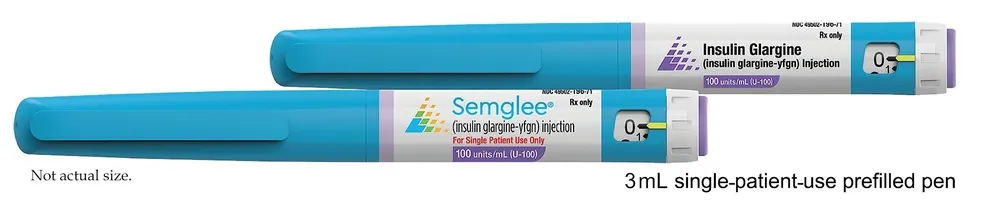
Table of Contents
Patient Information Leaflet
Introduction
Patient Information Leaflet
Semglee 100 units/ml solution for injection in a pre-filled pen
insulin glargine
This medicinal product is subject to additional monitoring, which will allow quicker identification of new safety information. You can help by reporting any side effects you may experience. Information on how to report side effects is included at the end of section 4.
Read all of this leaflet carefully before you start using this medicine, as it contains important information for you.
- Keep this leaflet, as you may need to read it again.
- If you have any questions, ask your doctor, pharmacist, or nurse.
- This medicine has been prescribed for you only and must not be given to other people, even if they have the same symptoms as you, since it may harm them.
- If you experience any side effects, talk to your doctor or pharmacist, even if they are side effects not listed in this leaflet. See section 4.
Contents of the leaflet
- What Semglee is and what it is used for
- What you need to know before using Semglee
- How to use Semglee
- Possible side effects
- How to store Semglee
- Contents of the pack and other information
1. What Semglee is and what it is used for
Semglee contains insulin glargine. This is a modified insulin that is very similar to human insulin.
Semglee is used in the treatment of diabetes mellitus in adult, adolescent patients, and children from the age of 2 years.
Diabetes mellitus is a condition in which your body does not produce enough insulin to control blood sugar levels. Insulin glargine has a prolonged and consistent blood sugar-lowering effect.
2. What you need to know before using Semglee
Do not use Semglee
- if you are allergic to insulin glargine or to any of the other ingredients of this medicine (listed in section 6).
Warnings and precautions
Semglee in the pre-filled pen is only suitable for subcutaneous injection. Consult your doctor if insulin administration by another method is required.
Talk to your doctor, pharmacist, or nurse before you start using Semglee.
Strictly follow the instructions regarding dosage, monitoring (blood and urine tests), diet, physical activity (physical work and exercise), and injection technique as established by your doctor.
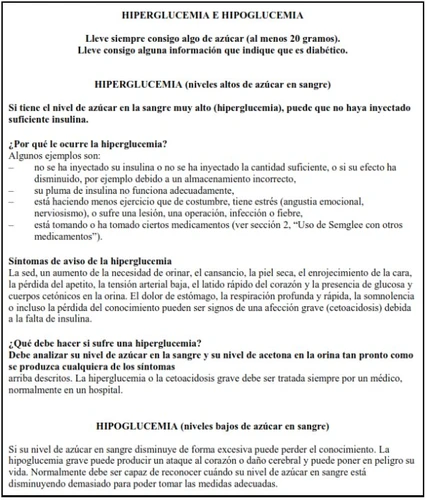
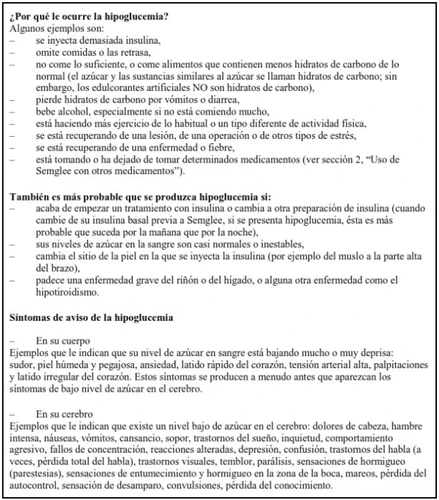
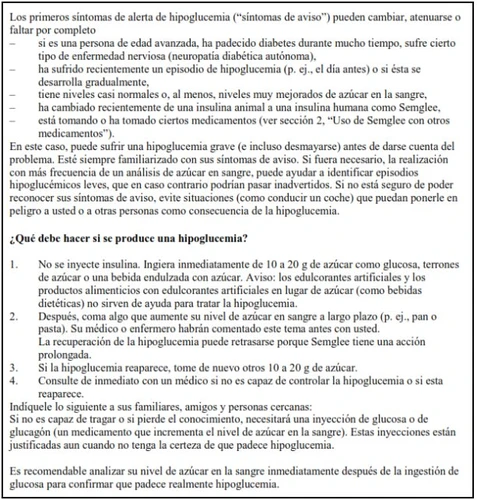
If your blood sugar is too low (hypoglycemia), follow the guidance on hypoglycemia (see the box at the end of this leaflet).
Travel
Before traveling, consult your doctor. You may need advice on:
- the availability of your insulin in the country you are visiting,
- supplies of insulin, needles, etc.,
- proper storage of insulin during travel,
- meal times and insulin administration schedule during travel,
- possible effects of traveling across time zones,
- potential new health risks in the countries you are visiting,
- what to do in emergency situations if you become ill.
Illness and injury
Managing your diabetes may require special care in the following situations (for example, adjustment of insulin dose, blood and urine tests):
- If you are ill or suffer a significant injury, your blood sugar level may increase (hyperglycemia).
- If you do not eat enough, your blood sugar level may drop too low (hypoglycemia).
In most cases, you will need medical attention. Make sure to consult a doctor immediately.
If you have type 1 diabetes (insulin-dependent diabetes mellitus), do not stop taking insulin or consuming sufficient carbohydrates. Always inform healthcare providers involved in your care or treatment that you require insulin.
Treatment with insulin may cause your body to produce antibodies against insulin (substances that act against insulin). However, only very rarely will you need to change your insulin dose.
Some patients with long-standing type 2 diabetes mellitus and prior heart disease or stroke who were treated with pioglitazone (an oral antidiabetic medicine used to treat type 2 diabetes mellitus) and insulin developed heart failure. Inform your doctor as soon as possible if you experience signs of heart failure such as unusual shortness of breath, rapid weight gain, or localized swelling (edema).
Children
There is no experience with the use of Semglee in children under 2 years of age.
Using Semglee with other medicines
Some medicines cause changes in blood sugar levels (increase, decrease, or both, depending on the situation). In each case, your insulin dose may need to be adjusted to prevent blood sugar levels that are too low or too high. Be cautious when starting a new medicine and also when stopping one.
Tell your doctor or pharmacist if you are taking, have recently taken, or might need to take any other medicines. Ask your doctor before taking any medicine whether it may affect your blood sugar level and what steps you should take.
Medicines that may cause a decrease in your blood sugar level (hypoglycemia) include:
- all other medicines used to treat diabetes,
- angiotensin-converting enzyme (ACE) inhibitors (used to treat certain heart conditions or high blood pressure),
- disopyramide (used to treat certain heart conditions),
- fluoxetine (used to treat depression),
- fibrates (used to reduce high lipid levels in the blood),
- monoamine oxidase inhibitors (MAO inhibitors) (used to treat depression),
- pentoxifylline, propoxyphene, salicylates (such as acetylsalicylic acid, used to relieve pain and reduce fever),
- antibiotics of the sulfonamide group.
Medicines that may cause an increase in your blood sugar level (hyperglycemia) include:
- corticosteroids (such as "cortisone", used to treat inflammation),
- danazol (a medicine that affects ovulation),
- diazoxide (used to treat high blood pressure),
- diuretics (used to treat high blood pressure or excess fluid retention),
- glucagon (a pancreatic hormone used to treat severe hypoglycemia),
- isoniazid (used to treat tuberculosis),
- estrogens and progestogens (such as in oral contraceptives used for birth control),
- phenothiazine derivatives (used to treat psychiatric conditions),
- somatropin (growth hormone),
- sympathomimetic medicines (such as epinephrine [adrenaline], salbutamol, terbutaline used to treat asthma),
- thyroid hormones (used to treat underactive thyroid gland),
- atypical antipsychotics (such as clozapine, olanzapine),
- protease inhibitors (used to treat HIV).
Your blood sugar level may rise or fall if you take:
- beta-blockers (used to treat high blood pressure),
- clonidine (used to treat high blood pressure),
- lithium salts (used to treat psychiatric conditions).
Pentamidine (used to treat certain parasitic infections) may cause hypoglycemia, which may sometimes be followed by hyperglycemia.
Beta-blockers, as well as other sympatholytic medicines (such as clonidine, guanethidine, and reserpine), may weaken or completely suppress the early warning symptoms that help you recognize hypoglycemia.
If you are unsure whether you are taking any of these medicines, ask your doctor or pharmacist.
Using Semglee with alcohol
Your blood sugar levels may rise or fall if you drink alcohol.
Pregnancy and breastfeeding
Consult your doctor or pharmacist before using any medicine.
Inform your doctor if you are planning to become pregnant or if you are already pregnant. Your insulin dose may need adjustment during pregnancy and after delivery. Careful control of your diabetes and prevention of hypoglycemia are important for your baby's health.
If you are breastfeeding, consult your doctor, as you may need adjustments in your insulin dose and diet.
Driving and using machines
Your ability to concentrate or react may be reduced if:
- you have hypoglycemia (low blood sugar levels),
- you have hyperglycemia (high blood sugar levels),
- you have vision problems.
Be aware of this potential problem and consider all situations that could pose a risk to you or others (such as driving a vehicle or operating machinery). You should ask your doctor for advice about your ability to drive if:
- you have frequent episodes of hypoglycemia,
- your early warning symptoms of hypoglycemia have decreased or are absent.
Semglee contains sodium
This medicine contains less than 1 mmol (23 mg) of sodium per dose, i.e., essentially "sodium-free".
3. How to use Semglee
Follow exactly the administration instructions for this medicine as given by your doctor. If in doubt, ask your doctor or pharmacist.
Although Semglee contains the same active substance as insulin glargine 300 units/ml, these medicines are not interchangeable. Changing from one insulin treatment to another requires medical prescription, medical supervision, and blood glucose monitoring. For more information, consult your doctor.
Dosage
Depending on your lifestyle, blood glucose monitoring results, and previous insulin treatment, your doctor will:
- determine the daily dose of Semglee you need and the time of day to take it,
- advise you when to monitor your blood glucose levels and whether you need to carry out urine tests,
- inform you when you may need to inject a higher or lower dose of Semglee.
Semglee is a long-acting insulin. Your doctor may instruct you to use it in combination with a short-acting insulin or with tablets to treat elevated blood glucose levels.
Many factors can influence your blood glucose levels. You should be aware of these factors so that you can respond appropriately to changes in your blood glucose and prevent it from becoming too high or too low. For more information, see the box at the end of this leaflet.
Use in children and adolescents
Semglee can be used in adolescents and children aged 2 years and older. Use this medicine exactly as directed by your doctor.
Frequency of administration
You need one injection of Semglee every day, always at the same time.
The Semglee pen delivers insulin in 1-unit increments up to a maximum single dose of 80 units.
Method of administration
Semglee is injected under the skin. DO NOT inject Semglee into a vein, as this will alter its action and may cause hypoglycemia.
Your doctor will show you the area of skin where you should inject Semglee. With each injection, you must change the injection site within the specific area of skin you are using.
How to handle the Semglee pen
The Semglee pre-filled pen is only suitable for subcutaneous injections. Consult your doctor if insulin injection by another method is required.
Carefully read the “Instructions for Use” included in this leaflet. You must use the pen exactly as described in these Instructions for Use.
Before each use, attach a new needle. Only use needles compatible with the Semglee pen (see “Instructions for Use”).
Before each injection, perform a safety test.
Inspect the cartridge before using the pen. Do not use Semglee if you see particles inside. Only use Semglee if the solution is clear and colourless. Do not shake or mix before use.
To prevent possible transmission of disease, never share your pen with anyone else. This pen is for your use only.
Always use a new pen if you notice your blood glucose control worsens inexplicably. If you think you may have a problem with the Semglee pen, consult your doctor, pharmacist, or nurse.
Empty pens must not be refilled and should be safely discarded.
Do not use the Semglee pen if it is damaged or not functioning properly (due to mechanical defects); it should be discarded and a new Semglee pen used.
Insulin confusion
Always check the insulin label before each injection to avoid confusion between Semglee and other insulins.
If you use more Semglee than you should
If you have injected too much Semglee, your blood glucose level may become very low (hypoglycemia). Check your blood glucose level frequently. In general, to prevent hypoglycemia, eat more and monitor your blood glucose level. For more information on the treatment of hypoglycemia, see the box at the end of this leaflet.
If you forget to use Semglee
If you have missed a dose of Semglee or have not injected enough insulin, your blood glucose level may become very high (hyperglycemia). Check your blood glucose level frequently. For more information on the treatment of hyperglycemia, see the box at the end of this leaflet.
Do not take a double dose to make up for missed doses.
If you stop using Semglee
This could lead to severe hyperglycemia (very high blood glucose levels) and ketoacidosis (increased acid in the blood due to breakdown of fats instead of glucose). Do not stop your treatment with Semglee without consulting your doctor; he or she will advise you what to do.
If you have any further questions about the use of this medicine, ask your doctor, pharmacist, or nurse.
4. Possible side effects
Like all medicines, Semglee can cause side effects, although not everyone experiences them.
If you notice signs that your blood sugar level is too low (hypoglycaemia), act immediately to raise your blood sugar level (see the box at the end of this leaflet). Hypoglycaemia (low blood sugar) can be very serious and is very common during insulin treatment (may affect more than 1 in 10 people). Low blood sugar means there is not enough sugar in the blood. If your blood sugar level drops too much, you may faint (lose consciousness). Severe hypoglycaemia can cause brain damage and may be potentially fatal. For more information, see the box at the end of this leaflet.
Severe allergic reactions (rare, may affect up to 1 in 1,000 people): signs may include widespread skin reactions (rash and itching all over the body), severe swelling of the skin or mucous membranes (angioedema), difficulty breathing, drop in blood pressure with rapid heartbeat and sweating. Severe allergic reactions to insulins may be potentially fatal. Inform your doctor immediately if you notice signs of severe allergic reactions.
Skin changes at the injection site:
If you inject insulin too frequently in the same place, the skin may shrink (lipoatrophy, may affect up to 1 in 100 people) or thicken (lipohypertrophy, may affect up to 1 in 10 people). Lumps under the skin may also appear due to the accumulation of a protein called amyloid (cutaneous amyloidosis, frequency unknown). Insulin may not work as well. Change the injection site with each injection to help prevent these skin changes.
Common side effects (may affect up to 1 in 10 people)
- Skin-related side effects and allergic reactions at the injection site
Signs may include redness, unusual severe pain at injection, itching, hives, swelling or inflammation. These reactions may spread around the injection site. Most mild reactions to insulin usually disappear within a few days or weeks.
- Skin-related side effects and allergic reactions at the injection site
Signs may include redness, unusual severe pain at injection, itching, hives, swelling or inflammation. These reactions may spread around the injection site. Most mild reactions to insulin usually disappear within a few days or weeks.
Uncommon side effects (may affect up to 1 in 1,000 people)
- Eye reactions
A significant change (improvement or worsening) in your blood sugar control may temporarily affect your vision. If you have proliferative retinopathy (a diabetes-related eye disease), severe hypoglycaemic attacks may cause temporary loss of vision.
- General disorders
In rare cases, insulin treatment may also cause temporary fluid retention in the body, leading to swelling of the calves and ankles.
Very rare side effects (may affect up to 1 in 10,000 people)
In very rare cases, dysgeusia (taste disturbances) and myalgia (muscle pain) may occur.
Use in children and adolescents
In general, side effects in children and adolescents aged 18 years or younger are similar to those seen in adults.
Reports of injection site reactions (injection site reaction, injection site pain) and skin reactions (rash, urticaria) have been more frequent in children and adolescents aged 18 years or younger than in adults.
There is no experience in children under 2 years of age.
Reporting of side effects
If you experience any side effects, consult your doctor or pharmacist. This includes possible side effects not listed in this leaflet. You can also report them directly through the national reporting system included in Appendix V. By reporting side effects, you can help provide more information on the safety of this medicine.
5. Storage of Semglee
Keep this medicine out of the sight and reach of children.
Do not use this medicine after the expiry date stated on the carton and on the label of the pen after CAD/EXP. The expiry date refers to the last day of the month indicated.
Unused pens
Store in a refrigerator (between 2 °C and 8 °C). Do not freeze or place near the freezer compartment or ice packs.
Keep the pre-filled pen in its outer packaging to protect it from light.
Pens in use
The pre-filled pen being used or carried as a spare should be stored for a maximum of 4 weeks at temperatures below 30 °C and protected from direct heat or direct light. Do not use after this time period has elapsed. Pens in use must not be stored in the refrigerator.
Replace the pen cap after each injection to protect it from light.
Remove the needle after each injection and store the pen without the needle attached. Also, make sure to remove the needle before disposing of the pen. Needles must not be reused.
Medicines must not be disposed of via wastewater or household waste. Ask your pharmacist how to dispose of medicines and packaging that you no longer need. This will help protect the environment.
6. Pack contents and other information
Composition of Semglee
- The active substance is insulin glargine. Each ml of solution contains 100 units of insulin glargine (equivalent to 3.64 mg).
- The other components are: zinc chloride, metacresol, glycerol, sodium hydroxide (to adjust pH) (see section 2 “Semglee contains sodium”), hydrochloric acid (to adjust pH), and water for injections.
Nature of the product and pack contents
Semglee 100 units/ml solution for injection in pre-filled pen is a clear, colourless solution.
Each pen contains 3 ml of injectable solution (equivalent to 300 units).
Semglee is available in packs of 1, 3, 5 and 10 pens, or multi-packs containing 2 boxes, each box containing 5 pens.
Only certain pack sizes may be marketed.
Marketing Authorization Holder
Biosimilar Collaborations Ireland Limited
Unit 35/36
Grange Parade,
Baldoyle Industrial Estate,
Dublin 13
DUBLIN
Ireland
D13 R20R
Manufacturer
Biosimilar Collaborations Ireland Limited
Block B, The Crescent Building, Santry Demesne
Dublin
D09 C6X8
Ireland
For further information about this medicinal product, please contact the local representative of the Marketing Authorization Holder:
Belgium/Belgique/Belgien Biocon Biologics Belgium BV Tél/Tel: 0080008250910 | Lithuania Biosimilar Collaborations Ireland Limited Tel: 0080008250910 |
Bulgaria Biosimilar Collaborations Ireland Limited Tel: 0080008250910 | Luxembourg/Luxemburg Biocon Biologics France S.A.S Tél/Tel: 0080008250910 |
Czech Republic Biocon Biologics Germany GmbH Tel: 0080008250910 | Hungary Biosimilar Collaborations Ireland Limited Tel.: 0080008250910 |
Denmark Biocon Biologics Finland OY Tlf: 0080008250910 | Malta Biosimilar Collaborations Ireland Limited Tel.: 0080008250910 |
Germany Biocon Biologics Germany GmbH Tel: 0080008250910 | Netherlands Biocon Biologics France S.A.S Tel: 0080008250910 |
Estonia Biosimilar Collaborations Ireland Limited Tel: 0080008250910 | Norway Biocon Biologics Finland OY Tlf: +47 800 62 671 |
Greece Biocon Biologics Greece MONOPROSOPI I.K.E Tel.: 0080008250910 | Austria Biocon Biologics Germany GmbH Tel: 0080008250910 |
Spain Biocon Biologics Spain S.L. Tel: 0080008250910 | Poland Biosimilar Collaborations Ireland Limited Tel: 0080008250910 |
France Biocon Biologics France S.A.S Tel: 0080008250910 | Portugal Biocon Biologics Spain S.L. Tel: 0080008250910 |
Croatia Biocon Biologics Germany GmbH Tel: 0080008250910 | Romania Biosimilar Collaborations Ireland Limited Tel: 0080008250910 |
Ireland Biosimilar Collaborations Ireland Limited Tel: 1800 777 794 | Slovenia Biosimilar Collaborations Ireland Limited Tel: 0080008250910 |
Iceland Biocon Biologics Finland OY Tel: +345 8004316 | Slovak Republic Biocon Biologics Germany GmbH Tel: 0080008250910 |
Italy Biocon Biologics Spain S.L. Tel: 0080008250910 | Finland Biocon Biologics Finland OY Tel: 99980008250910 |
Cyprus Biosimilar Collaborations Ireland Limited Tel: 0080008250910 | Sweden Biocon Biologics Finland OY Tel: 0080008250910 |
Latvia Biosimilar Collaborations Ireland Limited Tel: 0080008250910 |
Date of the most recent review of this leaflet: {month YYYY}.
Other sources of information
Detailed information on this medicine is available on the European Medicines Agency website: http://www.ema.europa.eu.
Semglee 100 units/ml solution for injection in pre-filled pen. INSTRUCTIONS FOR USE
Read these Instructions for Use carefully and the patient information leaflet before using the Semglee pre-filled pen, and each time you use another pen. It may contain new information. This information does not replace consultation with your doctor, nurse, or pharmacist regarding your medical condition or treatment. If you cannot read or follow all instructions on your own, ask someone trained to use this pen for help. It is not recommended that blind or visually impaired individuals use this pen without the assistance of someone trained to use it.
If you do not follow these instructions each time you use the pen, you may inject too much insulin or too little. This can affect your blood sugar level.
Semglee is a disposable pre-filled pen injector containing 300 units of insulin glargine in 3 ml of solution (100 units/ml). It allows you to inject from 1 to 80 units in a single injection.
Do not share the Semglee pre-filled pen with another person, even if the needle has been changed. You may transmit a serious infection to others or become infected yourself.
Pen assembly:
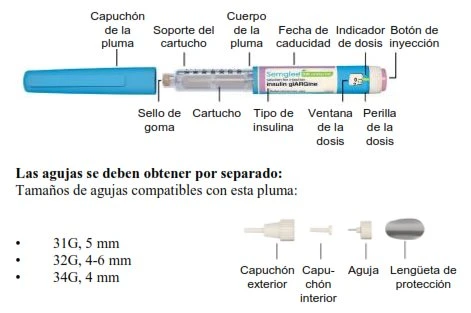
Supplies required:
Ensure you have the following items before injecting your dose:
- Semglee pen
- Sterile disposable hypodermic needle compatible with this pen
- 2 alcohol swabs
- Sharps disposal container
Storage
Before first use, store the packages containing the pen in the refrigerator (2 °C–8 °C).
Do not freeze the pen.
After removing a pen from the refrigerator, place it on a flat surface and wait until it reaches room temperature (between 15 °C and 30 °C) before using it.
After first use of the pen, store it at room temperature up to a maximum of 30 °C. Do not return the pen to the refrigerator after use.
Always keep the pen with its cap on to prevent contamination.
You must discard the pen you are using 4 weeks after first use, even if there is still insulin remaining. See Step 8 for disposal instructions.
Do not leave the needle attached to the pen during storage, and do not reuse needles. Keep the pen and needles out of sight and reach of children.
Always use a new, sterile needle for each injection, as this helps prevent blocked needles and reduces the risk of infection.
Each time you use the pen
- Wash your hands with soap and water before using the pen.
- Check the pen label to ensure you are using the correct type of insulin. The pen has a violet and white label and a violet injection button.
- Check the expiration date on the pen label. Do not use after this date.
- Check that the medicine in the pen cartridge appears clear and colourless. Do not use the pen if the liquid inside the cartridge is cloudy, discoloured, or if you see particles.
- Always use a new, disposable, sterile needle for each injection.
- Use an injection site as instructed by your healthcare professional.
Step 1. Preparing the pen
A – Inspect the pen: check the violet and white pen label to ensure that:
- It is the correct type of insulin.
- The expiration date has not passed.
B – Hold the body of the pen with one hand. Remove the pen cap with the other hand. Set the cap aside for later use.
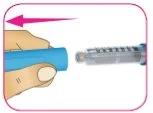
C – Inspect the insulin through the cartridge holder to ensure that:
- The insulin appears clear and colourless.
- There are no cracks, breaks, or leaks around the cartridge holder.
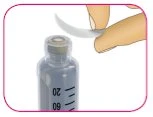
D – Clean the rubber seal (on the front of the cartridge) with a new alcohol swab.
Step 2. Attaching a new needle
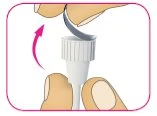
A – Take a new, disposable, sterile needle and remove the protective seal. Do not use the needle if the protective seal is damaged or missing, as the needle may be contaminated.
B – While holding the needle body upright, place the outer needle cap directly onto the cartridge holder as shown. If you try to attach the outer cap sideways, the needle may bend or become damaged.
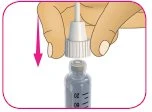
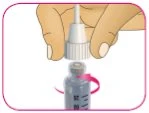
C – Turn the outer needle cap clockwise (to the right) until you feel it tighten securely onto the pen.
D – Carefully remove the outer needle cap and set it aside. Do not discard it, as you will need it later.
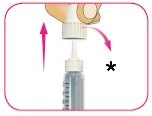
*Keep the outer cap
E – Carefully remove the inner needle cap and dispose of it.
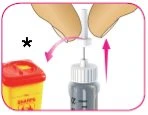
- Discard the inner cap
Step 3. Preparing the pen needle
A – Always prepare a new pen needle before each injection.
B – Turn the white dose knob to 2 dose units. You will hear a “click” for each unit turned.
If you accidentally turn past 2 units, turn the dose knob back in the opposite direction to correct the number of units.
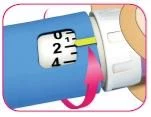
B – Hold the body of the pen upright with one hand.
D – Gently tap the cartridge with your finger to help large air bubbles move to the top of the cartridge. Small bubbles may still remain. This is normal.
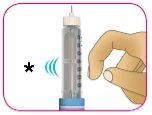
- TAP
E – With the pen held straight, press the injection button until it stops moving and the dose window shows “0”.
F – Repeat steps 3B to 3E up to three more times until you see insulin drops at the needle tip.
Final preparation is complete when insulin drops are visible.
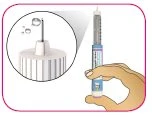
If you do not see insulin at the needle tip after 4 preparation attempts, the needle may be blocked. If this happens:
- Go to Step 7 for instructions on how to safely remove the needle.
- Restart the process at Step 2A to attach and prepare a new needle.
Step 4. Selecting the dose
A – Confirm that the dose window shows “0”.
B – Turn the white dose knob until the yellow dose indicator aligns with the desired dose.
As you turn the white dose knob to set your dose, it will extend and you will hear a “click” for each unit marked.
The dose can be adjusted by turning the dose knob in either direction until the correct dose aligns with the yellow dose indicator.
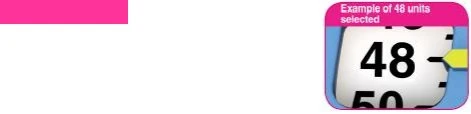 Example of 48 units selected
The pen will not allow you to set a dose greater than the number of units remaining in the pen. If your dose exceeds the number of units left in the pen:
- Inject the remaining amount in the pen and use a new pen for the rest of your dose,
or - Take a new pen and inject the full dose.
Do not force the dose knob beyond 80 units.
Do not press the violet injection button while turning the dose knob.
Step 5. Selecting and cleaning the injection site
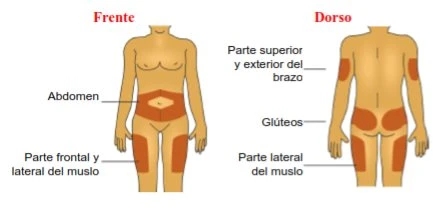
A – Select the injection site as instructed by your healthcare professional, clean the area with a new alcohol swab, and allow the skin to dry before injecting your dose.
Injection sites include the arms, thighs, buttocks, and abdomen. Rotate injection sites with each injection.
Step 6. Injecting the dose
A – If instructed by your healthcare professional, you may pinch the cleaned skin between your fingers.
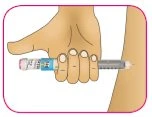
B – Insert the needle straight into the skin as instructed by your healthcare professional.
Do not inject with the needle at an angle.
C – Press the violet injection button fully. The white dose knob will turn and you will hear “clicks” as you press.
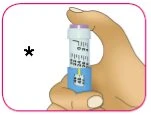
- Press to administer
D – Keep the violet injection button pressed for 10 seconds after “0” appears in the dose window to ensure the full dose of insulin is delivered. If you do not hold the injection button for 10 seconds after “0” appears, you may receive an incorrect dose.
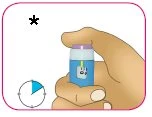
- Hold for 10 seconds
Do not press the injection button sideways or block the white dose knob with your fingers, as this will prevent you from injecting the medicine.
Step 7. After injection
A – Take the outer needle cap you set aside in Step 2D, hold it by the wider end, and carefully cover the needle without touching it.
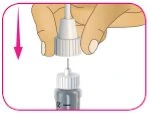
B – Press the wide end of the outer needle cap and unscrew the needle counter-clockwise (to the left). Continue turning until the needle comes off the pen. You may need to turn it several times to release the needle.
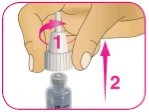
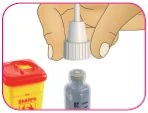
C – Place the used needle into a sharps disposal container (see Step 8 for disposal instructions).
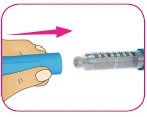
D – Replace the pen cap onto the cartridge.
E – Store the pen at room temperature (below 30 °C). Do not store the pen with a used needle attached.
Step 8. Disposal
Place the used needle into a sharps disposal container immediately after use. Do not throw (discard) loose needles into a household waste container.
If you do not have a sharps disposal container, you may use a household container that:
- Is made of strong plastic,
- Has a tightly sealed, puncture-resistant lid that prevents sharps from escaping,
- Stands upright and stable during use,
- Is leak-proof, and
- Is properly labelled to warn of hazardous waste inside.
The used pen may be discarded in the household waste once the needle has been removed.
Pen care
- Always carry an additional pre-filled insulin pen injector as recommended by your healthcare professional, in case your pen is lost or damaged.
- Always use a new, disposable, sterile needle for each injection.
- Keep the pen away from moisture, dust, direct sunlight, and places where temperature may become too high or too low (see the storage section at the beginning of these instructions).
- You may clean the outside of your pen with a damp cloth.
- Avoid dropping the pen, as this may cause the cartridge to break or damage the pen.
- Do not share your pen with others, even if the needle has been changed. You may transmit a serious infection to others or become infected.
- Do not soak or wash the pen. Do not use alcohol, hydrogen peroxide, bleach, or any other liquid to clean the pen. Do not apply lubricants such as oil. This could damage the pen.
- Do not attempt to repair an unusable or damaged pen. Remove the needle as described in Step 7, then discard the pen or return it to your pharmacist. Use a new pen instead.