Sandostatin LAR 30 mg powder and solvent for injectable suspension
Spain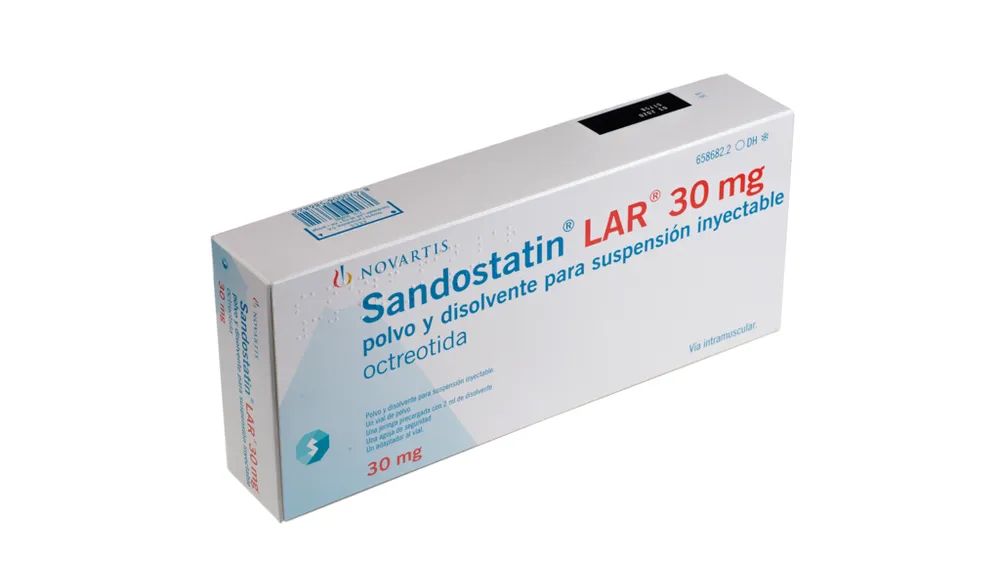
Table of Contents
Package leaflet: Information for the user
Introduction
Package leaflet: information for the patient
SANDOSTATIN LAR 30 mg powder and solvent for injectable suspension
octreotide
Read all of this leaflet carefully before you start using this medicine because it contains important information for you.
- Keep this leaflet. You may need to read it again.
- If you have any questions, ask your doctor, pharmacist, or nurse.
- This medicine has been prescribed for you only. Do not pass it on to others. It may harm them, even if their symptoms are the same as yours.
- If you experience any side effects, talk to your doctor, pharmacist, or nurse, including any side effects not listed in this leaflet. See section 4.
Contents of the leaflet
- What Sandostatin LAR is and what it is used for
- What you need to know before using Sandostatin LAR
- How to use Sandostatin LAR
- Possible side effects
- How to store Sandostatin LAR
- Contents of the pack and other information
1. What Sandostatin LAR is and what it is used for
Sandostatin LAR is a synthetic compound derived from somatostatin. Somatostatin is normally present in the human body, where it inhibits the release of certain hormones such as growth hormone. The advantages of Sandostatin LAR over somatostatin are that it is more potent and its effects last longer.
Sandostatin LAR is used
- to treat acromegaly.
Acromegaly is a condition in which the body produces too much growth hormone. Normally, growth hormone regulates the growth of tissues, organs, and bones. Excess growth hormone leads to an increase in the size of bones and tissues, especially in the hands and feet. Sandostatin LAR significantly reduces the symptoms of acromegaly, including headache, excessive sweating, numbness in the hands and feet, fatigue, and joint pain. In most cases, the overproduction of growth hormone is caused by enlargement of the pituitary gland (pituitary adenoma); treatment with Sandostatin LAR may reduce the size of the adenoma.
Sandostatin LAR is used to treat people with acromegaly:
-
when other types of treatment for acromegaly (surgery or radiotherapy) are not suitable or have not worked properly;
-
after radiotherapy, to cover the interim period until radiotherapy becomes fully effective.
-
to relieve symptoms associated with the overproduction of certain specific hormones and other related substances in the stomach, intestine, or pancreas.
The overproduction of certain specific hormones and other related natural substances may be caused by rare disorders of the stomach, intestine, or pancreas. This disrupts the natural hormonal balance and causes a range of symptoms such as flushing, diarrhea, low blood pressure, skin rash, and weight loss. Treatment with Sandostatin LAR helps control these symptoms.
- to treat neuroendocrine tumors located in the intestine (e.g., appendix, small intestine, or colon).
Neuroendocrine tumors are rare tumors that can occur in different parts of the body. Sandostatin LAR is also used to control the growth of these tumors when they are located in the intestine (e.g., appendix, small intestine, or colon).
- to treat pituitary tumors that produce too much thyroid-stimulating hormone (TSH).
Excess thyroid-stimulating hormone (TSH) causes hyperthyroidism. Sandostatin LAR is used to treat people with pituitary tumors that produce too much thyroid-stimulating hormone (TSH):
- when other types of treatment (surgery or radiotherapy) are not suitable or have not worked;
- after radiotherapy, to cover the period until radiotherapy becomes fully effective.
2. What you need to know before using Sandostatin LAR
Follow all instructions given by your doctor carefully. They may differ from the information contained in this leaflet.
Please read the following information before using Sandostatin LAR.
Do not use Sandostatin LAR:
- if you are allergic to octreotide or to any of the other ingredients of this medicine (listed in section 6).
Warnings and precautions
Talk to your doctor before starting treatment with Sandostatin LAR:
- if you currently have gallstones or have had them in the past, or if you experience any complications such as fever, chills, abdominal pain, or yellowing of the skin or eyes; inform your doctor, as long-term use of Sandostatin LAR may lead to the formation of gallstones. Your doctor may want to monitor your gallbladder periodically.
- if you have diabetes, as Sandostatin LAR may affect blood sugar levels. If you are diabetic, you should monitor your blood sugar levels regularly.
- if you have a history of vitamin B12 deficiency, your doctor may periodically monitor your B12 levels.
Tests and monitoring
If you are receiving long-term treatment with Sandostatin LAR, your doctor may periodically monitor your thyroid function.
Your doctor will monitor your liver function.
Your doctor may check the activity of your pancreatic enzymes.
Children
There is limited experience with the use of Sandostatin LAR in children.
Use of Sandostatin LAR with other medicines
Inform your doctor or pharmacist if you are taking, have recently taken, or might need to take any other medicines.
You can usually continue taking other medications while being treated with Sandostatin LAR. However, it has been reported that certain medicines such as cimetidine, cyclosporine, bromocriptine, quinidine, and terfenadine may be affected by Sandostatin LAR.
If you are taking a medicine to control blood pressure (e.g. a beta-blocker or a calcium channel antagonist) or an agent to regulate fluid and electrolyte balance, your doctor may need to adjust the dose.
If you are diabetic, your doctor may need to adjust your insulin dose.
If you are to receive treatment with lutetium (177Lu) oxodotreotide, a radiopharmaceutical, your doctor may interrupt and/or adjust your Sandostatin LAR treatment for a short period.
Pregnancy and breastfeeding
If you are pregnant or breastfeeding, think you might be pregnant, or plan to become pregnant, consult your doctor before using this medicine.
Sandostatin LAR should only be used during pregnancy if strictly necessary.
Women of childbearing potential should use an effective method of contraception during treatment.
Breastfeeding is not recommended during treatment with Sandostatin LAR. It is unknown whether Sandostatin LAR passes into breast milk.
Driving and use of machines
Sandostatin LAR has no or negligible effects on the ability to drive or operate machinery. However, some of the adverse effects you may experience during treatment with Sandostatin LAR, such as headache and fatigue, may reduce your ability to drive or operate machinery safely.
Sandostatin contains sodium
This medicine contains less than 1 mmol of sodium (23 mg) per vial; essentially “sodium-free”.
3. How to use Sandostatin LAR
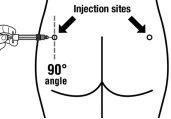
Sandostatin LAR must always be administered as an injection into the gluteal muscle. With repeated administration, the right and left gluteal muscles should be alternated.
If you use more Sandostatin LAR than you should
No life-threatening adverse reactions have been reported following an overdose with Sandostatin LAR.
Symptoms of overdose include: flushing, frequent urination, fatigue, depression, anxiety, and difficulty concentrating.
If you think you have taken an overdose and experience any of these symptoms, inform your doctor immediately. You may also call the Toxicology Information Service at Tel. 91 562 0420.
If you forget to use Sandostatin LAR
If you have missed your injection, it is recommended that you receive it as soon as you remember, and then continue with your regular dosing schedule. Receiving a dose a few days later will not cause you any harm, but your symptoms may temporarily reappear until you return to your regular treatment schedule.
If you stop using Sandostatin LAR
If you stop your treatment with Sandostatin LAR, your symptoms may reappear. Therefore, do not interrupt treatment with Sandostatin LAR unless instructed by your doctor.
If you have any further questions about the use of this medicine, ask your doctor, nurse, or pharmacist.
4. Possible adverse effects
Like all medicines, this medicine may cause adverse effects, although not everyone will experience them.
Some adverse reactions could be serious. Immediately tell your doctor if you experience any of the following:
Very common (may affect more than 1 in 10 people):
- Gallstones, which may cause sudden back pain.
- Too much sugar in the blood.
Common (may affect up to 1 in 10 people):
- Decreased activity of the thyroid gland (hypothyroidism), causing changes in heart rate, appetite, or weight; tiredness, feeling cold, or swelling in the front of the neck.
- Changes in thyroid function tests.
- Inflammation of the gallbladder (cholecystitis); symptoms may include pain in the upper right part of the abdomen, fever, nausea, yellowing of the skin and eyes (jaundice).
- Too little sugar in the blood.
- Impaired glucose tolerance.
- Slow heartbeat.
Uncommon (may affect up to 1 in 100 people):
- Thirst, reduced urine output, dark-coloured urine, dry red skin.
- Fast heartbeat.
Other serious adverse reactions
- Hypersensitivity (allergic) reactions including skin hives.
- A type of allergic reaction (anaphylaxis) which may cause difficulty swallowing or breathing, swelling and tingling, possibly with a drop in blood pressure leading to dizziness or loss of consciousness.
- Inflammation of the pancreas (pancreatitis); symptoms may include sudden pain in the upper abdomen, nausea, vomiting, diarrhoea.
- Inflammation of the liver (hepatitis); symptoms may include yellowing of the skin and eyes (jaundice), nausea, vomiting, loss of appetite, general feeling of being unwell, itching, lightly coloured urine.
- Irregular heartbeat.
- Low platelet count in the blood; this may lead to increased bleeding or bruising.
Immediately tell your doctor if you notice any of the above adverse reactions.
Other adverse effects:
Tell your doctor, pharmacist, or nurse if you notice any of the following adverse effects listed below. These are usually mild and tend to disappear as treatment continues.
Very common (may affect more than 1 in 10 people):
- Diarrhoea.
- Abdominal pain.
- Nausea.
- Constipation.
- Flatulence (gas).
- Headache.
- Local injection site pain.
Common (may affect up to 1 in 10 people):
- Stomach discomfort after eating (dyspepsia).
- Vomiting.
- Feeling of fullness in the stomach.
- Fatty stools.
- Watery stools.
- Change in stool colour.
- Dizziness.
- Loss of appetite.
- Changes in liver function tests.
- Hair loss.
- Difficulty breathing.
- Weakness.
If you experience any adverse effect, consult your doctor, nurse, or pharmacist.
Reporting of adverse effects
If you experience any adverse effect, talk to your doctor or pharmacist, even if it is a possible adverse effect not listed in this leaflet. You can also report them directly via the Spanish Pharmacovigilance System for Human Medicinal Products: http://www.notificaram.es. By reporting adverse effects, you can help provide more information on the safety of this medicine.
5. Storage of Sandostatin LAR
Keep this medicine out of the sight and reach of children.
Store in the original packaging to protect from light.
Store in a refrigerator (between 2°C and 8°C). Do not freeze.
Sandostatin LAR may be stored below 25°C on the day of injection.
Sandostatin LAR must not be stored after reconstitution (it must be used immediately).
Do not use this medicine after the expiry date stated on the packaging after EXP. The expiry date refers to the last day of the month indicated.
Do not use this medicine if you notice the presence of particles or any change in colour.
Medicines must not be disposed of via wastewater or household waste. Dispose of unused containers and medicines at a SIGRE collection point at your pharmacy. If in doubt, ask your pharmacist how to dispose of containers and medicines you no longer need. This will help protect the environment.
6. Contents of the pack and other information
Composition of Sandostatin LAR
- The active substance is octreotide.
One vial contains 30 mg of octreotide (as octreotide acetate).
- The other components of the vial are:
In the powder (vial): poly(DL-lactide-co-glycolide), mannitol (E421).
In the solvent (pre-filled syringe): sodium carboxymethylcellulose, mannitol (E421), poloxamer 188, water for injections.
Appearance of Sandostatin LAR and contents of the pack
Single packs containing a 6 ml glass vial with a rubber stopper (bromobutyl), sealed with an aluminium seal, containing the powder for injectable suspension, and a 3 ml colourless glass pre-filled syringe with a front cap and a plunger stopper (chlorobutyl rubber) containing 2 ml of solvent, packed together in a sealed blister tray with a vial adapter and a safety injection needle.
Multiple packs of three single packs, each containing: a 6 ml glass vial with a rubber stopper (bromobutyl), sealed with an aluminium seal, containing the powder for injectable suspension, and a 3 ml colourless glass pre-filled syringe with a front cap and a plunger stopper (chlorobutyl rubber) containing 2 ml of solvent, packed together in a sealed blister tray with a vial adapter and a safety injection needle.
Only certain pack sizes may be marketed.
Marketing Authorization Holder
Novartis Farmacéutica, S.A.
Gran Vía de les Corts Catalanes, 764
08013 Barcelona, Spain
Manufacturer
Novartis Farmacéutica, S.A.
Gran Vía de les Corts Catalanes, 764
08013 Barcelona, Spain
Novartis Pharma GmbH
Jakov-Lind-Straße 5, Top 3.05, 1020 Wien, Austria
Novartis Pharma SAS
8-10 rue Henri Sainte-Claire Deville, 92500 Rueil-Malmaison, France
Novartis Pharma GmbH
Sophie-Germain-Strasse 10, 90443 Nürnberg, Germany
Novartis Farma-Produtos Farmacêuticos, SA
Avenida Professor Doutor Cavaco Silva nº10E, Taguspark, 2740-255 Porto Salvo, Portugal
Novartis Farma S.p.A.
Via Provinciale Schito 131, 80058 Torre Annunziata, NA, Italy
Novartis Farma S.p.A.
Viale Luigi Sturzo 43, 20154 - Milan (MI), Italy
Novartis Sverige AB
Torshamnsgatan 48, 164 40 Kista, Sweden
Novartis (Hellas) S.A.
12th km National Road Athinon-Lamia, 14451 Metamorphosis Attiki, Greece
Novartis Pharma B.V.
Haaksbergweg 16, 1101 BX Amsterdam, The Netherlands
Novartis Hungária Kft.
Vasút u.13, 2040 Budaörs, Hungary
Abbot Biologicals B.V.
Veerweg, 12, 8121 AA Olst, The Netherlands
This medicinal product is authorized in the European Economic Area member states under the following names:
Austria, Bulgaria, Croatia, Cyprus, Czech Republic, Denmark, Estonia, Finland, Germany, Greece, Hungary, Iceland, Ireland, Latvia, Lithuania, Malta, Norway, Poland, Romania, Slovakia, Slovenia, Spain, Sweden | Sandostatin LAR |
Belgium, Luxembourg, Netherlands | Sandostatine LAR |
Italy, Portugal | Sandostatina LAR |
France | Sandostatine L.P. |
Date of the most recent review of this leaflet: 12/2023
Other sources of information
Detailed and up-to-date information on this medicinal product is available on the website of the Spanish Agency of Medicines and Medical Devices (AEMPS) http://www.aemps.gob.es/
This information is intended for healthcare professionals only:
How much Sandostatin LAR should be used
Acromegaly
Treatment should be initiated with 20 mg of Sandostatin LAR administered every 4 weeks for 3 months. Patients currently receiving Sandostatin s.c. may start Sandostatin LAR the day after the last dose of Sandostatin s.c. Subsequent dose adjustments should be based on serum growth hormone (GH) levels and insulin-like growth factor-1/somatomedin C (IGF-1) levels, as well as clinical symptoms.
For patients in whom clinical symptoms and biochemical parameters (GH; IGF-1) are not adequately controlled within a 3-month period (GH concentrations still above 2.5 micrograms/L), the dose may be increased to 30 mg every 4 weeks. If, after 3 months, GH, IGF-1, and/or symptoms are not adequately controlled at the 30 mg dose, the dose may be increased to 40 mg every 4 weeks.
For patients with consistently GH concentrations below 1 microgram/L, normalized serum IGF-1 levels, and in whom most reversible signs/symptoms of acromegaly have disappeared after 3 months of treatment with 20 mg, 10 mg of Sandostatin LAR every 4 weeks may be administered. However, especially in this group of patients, close monitoring of serum GH and IGF-1 concentrations and signs/symptoms is recommended at this lower dose of Sandostatin LAR.
For patients on a stable dose of Sandostatin LAR, assessment of GH and IGF-1 should be performed every 6 months.
Gastroenteropancreatic neuroendocrine tumours
- Treatment of patients with symptoms associated with functioning gastroenteropancreatic neuroendocrine tumours
Treatment should be initiated with 20 mg of Sandostatin LAR administered every 4 weeks. Patients currently receiving Sandostatin s.c. should continue at their previously effective dose for 2 weeks after the first injection of Sandostatin LAR.
For patients in whom symptoms and biological markers are well controlled after 3 months of treatment, the dose may be reduced to 10 mg of Sandostatin LAR every 4 weeks.
For patients in whom symptoms are only partially controlled after 3 months of treatment, the dose may be increased to 30 mg of Sandostatin LAR every 4 weeks.
On days when symptoms associated with gastroenteropancreatic tumours may increase during treatment with Sandostatin LAR, additional administration of Sandostatin s.c. at the dose previously used before starting Sandostatin LAR is recommended. This may occur mainly during the first 2 months of treatment, until therapeutic octreotide concentrations are achieved.
- Treatment of patients with advanced neuroendocrine tumours of intestinal origin or of unknown origin where non-intestinal primary sites have been excluded
The recommended dose of Sandostatin LAR is 30 mg administered every 4 weeks. Treatment with Sandostatin LAR for tumour control should be continued in the absence of tumour progression.
Treatment of TSH-secreting adenomas
Treatment with Sandostatin LAR should be initiated at a dose of 20 mg every 4 weeks for 3 months before considering a dose adjustment. Thereafter, the dose should be adjusted based on TSH and thyroid hormone response.
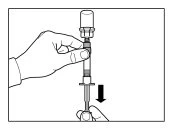
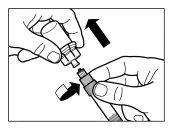
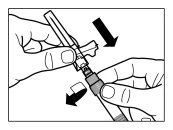
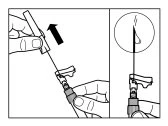
Instructions for the preparation and intramuscular injection of Sandostatin LAR.
FOR INTRAMUSCULAR USE ONLY
Components of the injection kit:
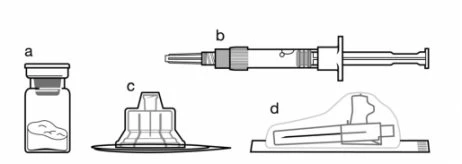
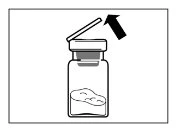
- A vial containing Sandostatin LAR powder
- A pre-filled syringe containing the solvent for reconstitution
- A vial adapter for reconstitution of the medication
- A safety injection needle
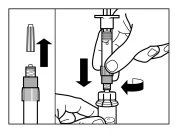
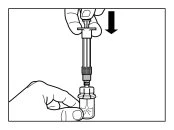
Carefully follow the instructions below to ensure proper reconstitution of Sandostatin LAR prior to deep intramuscular injection.
There are three critical steps in the reconstitution process of Sandostatin LAR. If not performed correctly, this may result in improper administration of the medication.
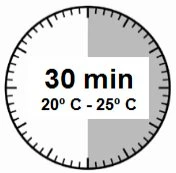
- The injection kit must reach room temperature. Remove the injection kit from the refrigerator and allow it to reach room temperature for at least 30 minutes before reconstitution, but not exceeding 24 hours.
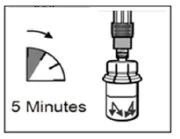
- After adding the diluent solution, let the vial stand for 5 minutes to ensure the powder is completely saturated.
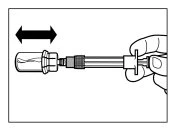
- After saturation, gently agitate the vial horizontally for at least 30 seconds until a uniform suspension is formed. The Sandostatin LAR suspension should only be prepared immediately before administration.
Sandostatin LAR must be administered only by an experienced healthcare professional.
| STEP 1
ATTENTION: It is essential to begin the reconstitution process only after the injection kit has reached room temperature. Allow the kit to reach room temperature for at least 30 minutes prior to reconstitution, but do not exceed 24 hours. Note: The Injection Kit may be refrigerated again if necessary. |
| STEP 2
|
| STEP 3
|
| |
| STEP 4 ATTENTION: It is essential to let the vial stand for 5 minutes to ensure the diluent has completely saturated the powder. Note: It is normal for the plunger to move upward due to possible overpressure in the vial.
|
| STEP 5
ATTENTION: Keep the plunger fully depressed and gently shake the vial horizontally for at least 30 seconds to ensure the powder is completely suspended in the diluent (resulting in a uniform, milky suspension). Repeat gentle shaking for an additional 30 seconds if the powder is not fully suspended. |
| STEP 6
|
| |
| STEP 7
|
| STEP 8
|
| STEP 9
|