Saizen 8 mg/ml solution for injection in cartridges
Spain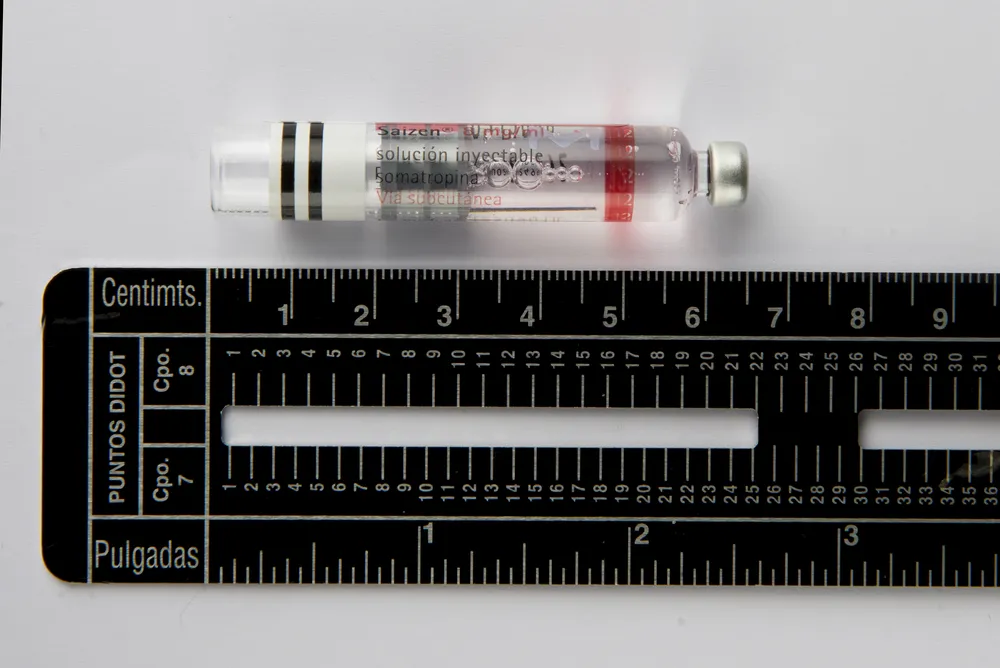
Table of Contents
- Package leaflet: Information for the user
- Introduction
- 1. What Saizen is and what it is used for
- 2. What you need to know before starting to use Saizen
- **Other medicines and Saizen**
- Inform your doctor or pharmacist if you (or your child) are using, have recently used, or might need to use any other medicines.
- **Pregnancy and lactation**
- **Driving and operating machinery**
- 3. How to use Saizen
- **Important information**
- 4. Possible adverse effects
- 5. Storage of Saizen
- 6. Contents of the pack and other information
- **Marketing Authorization Holder:**
Package leaflet: Information for the user
Introduction
Package leaflet: Information for the user
Saizen 8 mg/ml solution for injection in cartridge
somatropin
Read all of this leaflet carefully before you start using this medicine, as it contains important information for you.
- Keep this leaflet, as you may need to read it again.
- If you have any questions, ask your doctor or pharmacist.
- This medicine has been prescribed for you only, and you should not give it to other people, even if they have the same symptoms as you, because it may harm them.
- If you experience any adverse effects, talk to your doctor or pharmacist, even if they are adverse effects not listed in this leaflet. See section 4.
Contents of this leaflet
-
What Saizen is and what it is used for
-
What you need to know before using Saizen
-
How to use Saizen
-
Possible side effects
-
How to store Saizen
-
Contents of the pack and other information
1. What Saizen is and what it is used for
Saizen is a growth hormone. The main action of Saizen is to increase growth in children and adolescents and to treat adults with growth hormone deficiency.
The growth hormone (somatropin) contained in Saizen is virtually identical to natural human growth hormone, except that it has been produced outside the body by a process called "recombinant DNA technology" (genetic engineering).
Saizen is used:
In children and adolescents:
- for the treatment of children with short stature who have not grown sufficiently due to their body not producing or producing insufficient levels of growth hormone
- for the treatment of girls who have not grown sufficiently due to gonadal dysgenesis (also called Turner syndrome), confirmed by chromosome analysis
- for the treatment of prepubertal children who have not grown sufficiently due to chronic renal insufficiency, a condition in which the kidneys are damaged
- for the treatment of growth problems in children who were born small and who have not reached normal height by age 4 or thereafter.
In adults:
- for the treatment of adults with a pronounced deficiency of growth hormone (growth hormone deficiency).
This treatment is given to adults with a pronounced growth hormone deficiency that has been medically diagnosed by testing.
Your doctor or pharmacist can explain why this medicine has been prescribed for you or your child.
2. What you need to know before starting to use Saizen
Do not use Saizen:
-
If you (or your child) are allergic (hypersensitive) to somatropin or to any of the other components of this medicine (listed in section 6).
-
If you have been informed that your child's bones have stopped growing and that he or she has therefore reached adult height.
-
If you have an active tumor (cancer). Tumors must be inactive and you must have completed anti-tumor treatment before starting treatment with Saizen.
-
If you have diabetes and suffer from an associated eye disease (proliferative or preproliferative diabetic retinopathy).
-
If you or your child have a critical acute illness, or complications following open-heart surgery, abdominal surgery, multiple trauma, acute respiratory failure, or similar conditions.
Treatment with Saizen must be discontinued in children with chronic renal insufficiency at the time of kidney transplantation.
Warnings and precautions
Talk to your doctor before starting to use Saizen.
Treatment with Saizen should be carried out under the regular supervision of a physician experienced in the diagnosis and treatment of patients with growth hormone deficiency.
Shortly after administration of Saizen, you (or your child) may feel shaky or dizzy due to low blood sugar levels. These symptoms will resolve quickly. Your blood sugar levels (or your child's) may then rise above normal 2–4 hours after administration. Since growth hormone treatment can alter how your body metabolizes sugar, a doctor will regularly monitor your blood sugar levels (or your child's). Somatropin may cause an increase in blood sugar levels in you (or your child).
If you (or your child) have diabetes or a family history of diabetes, your doctor will closely monitor your blood sugar levels and may adjust diabetes treatment while you are receiving Saizen.
Please note that you may need regular eye examinations after using this medicine.
Saizen may affect the function of the thyroid gland. Your doctor may perform blood tests to determine thyroid hormone levels and may prescribe additional hormone replacement if you (or your child) are found to have a deficiency in thyroid hormone.
If you (or your child) are taking corticosteroids, you should consult your doctor regularly, as the dose of corticosteroids or Saizen may need to be adjusted.
Saizen may cause fluid retention in adult patients. This may present as swelling and pain in muscles or joints. If you experience these symptoms, inform your doctor, who may decide to adjust your Saizen dose.
If you had a tumor during childhood and were treated with Saizen, there is an increased risk of developing a new tumor. If you (or your child) have previously had a brain-related condition, such as a tumor, your doctor will examine you (or your child) regularly to check for recurrence.
Rarely, Saizen may cause inflammation of the pancreas, causing severe pain in the abdomen and back. Please consider this possibility if your child experiences stomach pain and contact your doctor.
Any child undergoing rapid growth phases may develop an increased sideways curvature of the spine (scoliosis). During treatment with Saizen, your doctor will evaluate whether you (or your child) show signs of scoliosis.
Some patients have developed swelling of the brain during treatment with Saizen. If you (or your child) experience severe or recurring headache, vision problems, nausea and/or vomiting, contact your doctor immediately. In such cases, treatment with growth hormone may need to be discontinued, although it may be restarted later. If symptoms of brain swelling reappear, treatment with Saizen must be discontinued.
If the medicine is injected repeatedly in the same site over a long period, this area may become damaged. Therefore, it is important to rotate injection sites. Your doctor or pharmacist can advise you on which body areas to use (see section 3 How to use Saizen).
Some children with growth hormone deficiency have developed leukemia (increased number of white blood cells), regardless of whether they received growth hormone treatment or not. However, there is no evidence of an increased incidence of leukemia in patients receiving growth hormone without predisposing factors. A causal relationship with growth hormone treatment has not been established.
In children with hormonal or kidney disorders, hip problems may occur more frequently. If your child has chronic renal insufficiency, which may occur when the kidneys are damaged, he or she should be examined periodically to rule out bone disease. It is unclear whether bone disease in children with hormonal or kidney disorders is affected by growth hormone treatment. A hip X-ray should be performed before starting treatment. If your child develops a limp or complains of hip or knee pain during treatment with Saizen, inform your doctor.
Treatment with Saizen will be discontinued in children with chronic renal insufficiency at the time of kidney transplantation.
Saizen is not indicated for long-term treatment of pediatric patients with growth failure due to genetically confirmed Prader-Willi syndrome unless they also have a diagnosis of growth hormone deficiency. Cases of sleep apnea and sudden death have been reported after initiation of growth hormone treatment in pediatric patients with Prader-Willi syndrome who had one or more of the following risk factors: severe obesity, history of upper airway obstruction or sleep apnea, or unrecognized respiratory infection.
Generally, growth hormone should not be used in patients who are seriously ill.
If you do not respond to treatment with Saizen, you may have developed antibodies against growth hormone. Your doctor will perform appropriate tests to determine this.
If you are over 60 years of age or have been using Saizen for a long time, your doctor should monitor you more frequently. Because there is limited experience with treatment in elderly patients and with prolonged Saizen treatment, special caution is required.
Other medicines and Saizen
Inform your doctor or pharmacist if you (or your child) are using, have recently used, or might need to use any other medicines.
If you (or your child) are using corticosteroids, it is important to tell your doctor or pharmacist. These medicines may interact with Saizen, so your doctor may need to adjust the dose of these medicines or your dose of Saizen. Corticosteroids are used to treat various conditions, including asthma, allergies, kidney transplant rejection, and rheumatoid arthritis.
If you are taking oral estrogen replacement therapy, the growth effect of Saizen may be reduced. Therefore, your doctor may need to adjust your Saizen dose.
If you are being treated with sex hormones, medicines to control epilepsy (anticonvulsants), or cyclosporine (a medicine that suppresses the immune system after transplant), you should inform your doctor, as a dose adjustment of these medicines may be necessary.
Pregnancy and lactation
If you are pregnant or breastfeeding, think you may be pregnant, or are planning to become pregnant, consult your doctor or pharmacist before using this medicine.
There is insufficient evidence from human studies regarding the safety of growth hormone treatment during pregnancy and lactation. Treatment with Saizen should be discontinued if you become pregnant.
Driving and operating machinery
No studies have been conducted on the effects of Saizen on the ability to drive and operate machinery. Medicinal products containing somatropin do not influence the ability to drive and operate machinery.
Important information about some ingredients of Saizen
This medicine contains less than 23 mg of sodium (1 mmol) per cartridge and is therefore considered essentially “sodium-free”.
3. How to use Saizen
Follow exactly the instructions for administering this medicine as given by your doctor. If in doubt, consult your doctor or pharmacist again.
Dosage
Your doctor will decide the dose and frequency of administration of Saizen based on your body weight or body surface area (or that of your child).
It is recommended to administer Saizen at bedtime.
Children and adolescents:
- Short stature due to a lack or insufficient levels of natural growth hormone:
0.7–1.0 mg/m² of body surface area per day or 0.025–0.035 mg/kg of body weight per day, administered subcutaneously (under the skin).
- Growth delay in girls due to gonadal dysgenesis (Turner syndrome):
1.4 mg/m² of body surface area per day or 0.045–0.050 mg/kg of body weight per day, by subcutaneous injection (under the skin).
If your daughter is being treated for Turner syndrome and is also receiving non-androgenic anabolic steroids, she may achieve a greater growth response. Ask your doctor or pharmacist if you have questions about these medicines.
- Growth delay in prepubertal children due to chronic renal insufficiency, a condition in which the kidneys are damaged:
1.4 mg/m² of body surface area, approximately equivalent to 0.045–0.050 mg/kg of body weight per day, administered subcutaneously (under the skin).
- Growth problems in children born small for gestational age:
1 mg/m² of body surface area, approximately equal to 0.035 mg/kg of body weight per day, administered subcutaneously (under the skin).
Adults:
- Growth hormone deficiency in adults:
Initially, low doses of 0.15–0.30 mg per day are recommended, administered by subcutaneous injection (under the skin). Your doctor will gradually adjust the dose. The final recommended dose of growth hormone rarely exceeds 1.0 mg/day. In general, the smallest effective dose that works for you should be used. Older patients or those who are overweight may require a lower dose.
Method and route of administration
Your doctor will determine the dose and frequency of administration of Saizen based on your body weight or body surface area (or that of your child). Generally, Saizen should be administered daily by subcutaneous injection (under the skin).
Important information
For administration of Saizen, please read the following instructions carefully.
If you inject the medication in the same place for a prolonged period, this area may become damaged. It is important to rotate injection sites. Your doctor or pharmacist can advise you on which areas of the body to use. Do not use areas where you notice lumps, hardening, depressions, or pain; inform your doctor or pharmacist of any such findings.
Clean the skin at the injection site with water and soap.
The cartridge containing the Saizen solution is ready for administration with your easypod auto-injector or your aluetta pen.
Each Saizen cartridge is identified by a different color and must be used with the aluetta pen of the corresponding color to ensure correct dosing. Cartridges containing 12 mg of somatropin (red) must be administered with the aluetta 12 pen (red).
Cartridges containing 20 mg of somatropin (yellow) must be used with the aluetta 20 pen (yellow).
Place all necessary components for the injection on a clean surface and wash your hands with water and soap.
The solution should be clear or slightly opalescent, free from particles, and show no visible signs of deterioration. If the solution contains particles, it must not be injected.
How to perform your daily administration of Saizen
For instructions on how to load the cartridge into the easypod auto-injector or aluetta pen and how to inject the Saizen solution, carefully read the instruction manual provided with each injector. The easypod is primarily intended for use by children aged 7 years and older up to adults. Children must always use auto-injectors under adult supervision.
Duration of treatment
Your child should stop using this treatment when, as directed by their doctor, they have reached a satisfactory adult height or when their bones have stopped growing. Treatment with Saizen should be discontinued in children with chronic renal insufficiency at the time of kidney transplantation.
In adults, growth hormone deficiency is a lifelong condition and should be treated as such by their physician.
If you use more Saizen than you should
If you inject too much Saizen, inform your doctor, as it may be necessary to slightly adjust the dose to compensate. Administration of an excessive dose may cause changes in blood sugar levels, which could cause you (or your child) to experience tremors and dizziness. If this occurs, contact your doctor as soon as possible.
In case of overdose or accidental ingestion, contact the Toxicology Information Service at telephone number 91 562 04 20.
If you forget to use Saizen
If you miss a dose, inform your doctor, as it may be necessary to slightly adjust the dose to compensate.
If you stop treatment with Saizen
Do not stop treatment with Saizen without first consulting your doctor.
If you have any further questions about the use of this medicine, ask your doctor or pharmacist.
4. Possible adverse effects
Like all medicines, this medicine can cause adverse effects, although not everyone will experience them.
Tell your doctor immediately if you experience severe and recurrent headaches associated with dizziness (nausea), vomiting or visual disturbances. These are symptoms of an adverse effect called benign intracranial hypertension, which is uncommon.
Adverse effects may occur with the following frequency:
- Very common: may affect more than 1 in 10 people
- Common: may affect up to 1 in 10 people
- Uncommon: may affect up to 1 in 100 people
- Rare: may affect up to 1 in 1,000 people
- Very rare: may affect up to 1 in 10,000 people
- Frequency not known: frequency cannot be estimated from the available data
Common adverse effects:
- Reactions at the injection site such as redness, itching, swelling, rash, hives, pain, inflammation, bleeding, or abnormal accumulation of blood outside a blood vessel (haematoma). If this is particularly bothersome, you should discuss it with your doctor.
- Local loss of subcutaneous fat tissue, which can be avoided by rotating the injection site.
- Carpal tunnel syndrome in adults, characterized by persistent tingling, burning sensation, pain and/or numbness in the fingers, especially the thumb, index finger, and sometimes also the middle and ring fingers.
- Fluid retention: peripheral oedema (swelling), muscle pain, numbness and tingling, joint pain and joint disorders in adult patients. These adverse effects usually occur at the beginning of treatment, are transient and dose-dependent.
- Headache (isolated).
Uncommon adverse effects:
- Benign intracranial hypertension (increased intracranial pressure around the brain, characterized by headache, nausea, vomiting, double vision and other visual symptoms).
- Carpal tunnel syndrome in children, characterized by persistent tingling, burning sensation, pain and/or numbness in the fingers, especially the thumb, index finger, and sometimes also the middle and ring fingers.
- Fluid retention: peripheral oedema (swelling), muscle pain, numbness and tingling, joint pain and joint disorders in children. These adverse effects usually occur at the beginning of treatment, are transient and dose-dependent.
- Breast enlargement (one or both breasts may be affected).
Very rare adverse effects:
- Slipped capital femoral epiphysis (a hip problem that occurs when the growing end of the thigh bone slips relative to the hip joint) and avascular necrosis of the femoral head. If your child develops unexplained limping or hip or knee pain, contact your doctor or pharmacist.
- Treatment with growth hormone may reduce thyroid hormone levels. Your doctor may perform blood tests to detect this and, if necessary, prescribe appropriate treatment.
Adverse effects of unknown frequency:
You (or your child) may experience allergic reactions due to treatment with Saizen.
You (or your child) may experience elevated insulin levels (hyperinsulinaemia), since during growth hormone treatment, muscle cells, fat cells and liver cells do not respond adequately to insulin (insulin resistance). This condition may result in elevated blood sugar levels (hyperglycaemia).
Pancreatitis has been rarely reported in patients treated with growth hormone.
A few cases of leukaemia have been reported in a small number of patients with growth hormone deficiency, some of whom were treated with somatropin. However, there is no evidence of an increased incidence of leukaemia in patients treated with growth hormone who have no predisposing factors.
Very rarely, a patient may develop antibodies (a type of protein that helps protect the body) against somatropin. These are usually not associated with any adverse effects and do not interfere with growth.
Reporting of adverse effects:
If you experience any adverse effect, consult your doctor or pharmacist, even if they are possible adverse effects not listed in this leaflet. You may also report them directly via the Spanish Pharmacovigilance System for Human Medicinal Products: www.notificaRAM.es. By reporting adverse effects, you can help provide more information on the safety of this medicine.
5. Storage of Saizen
Keep this medicine out of the sight and reach of children.
Do not use Saizen after the expiry date stated on the packaging after EXP. The expiry date is the last day of the month indicated.
Store unused Saizen cartridges in a refrigerator (between 2°C–8°C) in the original packaging to protect from light. Do not freeze.
After first injection, use within 28 days.
After the first injection, the Saizen cartridge, the easypod autoinjector containing the Saizen cartridge, or the aluetta pen containing the Saizen cartridge must be stored in the refrigerator (2°C–8°C) for a maximum of 28 days, during which time they may be kept outside the refrigerator at up to 25°C for up to 7 days. When the Saizen cartridge has been stored outside the refrigerator for up to 7 days, it must be returned to the refrigerator and used within a maximum of 28 days after the first injection.
When using the easypod autoinjector or the aluetta pen, the cartridge remains in the device.
Medicines must not be disposed of via wastewater or household waste. Dispose of packaging and unused medicines at the SIGRE point in your pharmacy. If in doubt, ask your pharmacist how to dispose of packaging and medicines you no longer need. This will help protect the environment.
6. Contents of the pack and other information
Composition of Saizen
The active substance is somatropin (recombinant human growth hormone) 12 or 20 mg.
The other components are: sucrose, poloxamer 188, phenol, citric acid (for pH adjustment), sodium hydroxide (for pH adjustment), and water for injections.
Nature of the product and contents of the container
Saizen 8 mg/ml is an injectable solution, clear to slightly opalescent, in a pre-filled cartridge (type 1 glass) with a plunger-type stopper (rubber) and a folded cap (aluminum and rubber). The cartridge containing 12 mg of somatropin is marked with a colored label (red). The cartridge containing 20 mg of somatropin is marked with a colored label (yellow).
Cartons of 1 and 5 cartridges contain 1.50 ml of solution (12 mg of somatropin) or 2.50 ml of solution (20 mg of somatropin).
Only certain pack sizes may be marketed.
Marketing Authorization Holder:
Merck, S.L.
C/ María de Molina, 40
28006 Madrid, Spain
Information line: 900 200 400
Manufacturer responsible:
Merck Serono S.p.A., Modugno, Bari, Italy.
This medicinal product is authorized in the European Economic Area Member States and in the United Kingdom under the following names:
Saizen: Austria, Belgium, Czech Republic, Estonia, Finland, France, Germany, Greece, Hungary, Iceland, Ireland, Italy, Latvia, Luxembourg, Norway, Portugal, Romania, Slovakia, Spain, Sweden, United Kingdom.
Date of the most recent review of this leaflet: December 2023
Detailed and updated information on this medicinal product is available on the website of the Spanish Agency for Medicines and Health Products (AEMPS): http://www.aemps.gob.es