Ropivacaine B. Braun 7.5 mg/ml solution for injection EFG
Spain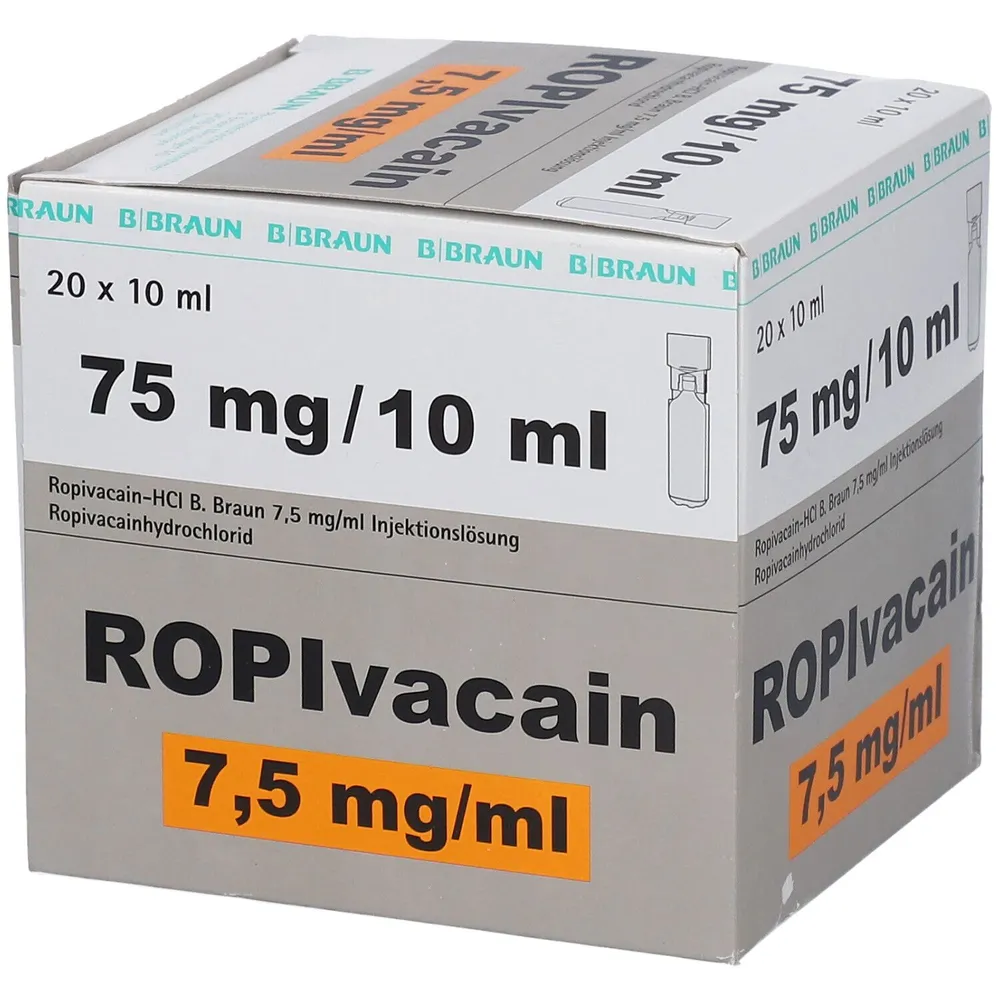
Table of Contents
- Package leaflet: Information for the user
- Introduction
- 1. What Ropivacaine B. Braun is and what it is used for
- 2. What you need to know before starting to receive Ropivacaine B. Braun
- 3. How to use Ropivacaine B. Braun
- 4. Possible adverse effects
- **Frequency not known (cannot be estimated from the available data)**
- 5. Storage of Ropivacaine B. Braun
- 6. Contents of the pack and other information
Package leaflet: Information for the user
Introduction
Package leaflet: information for the user
Ropivacaine B. Braun 7.5 mg/ml solution for injection EFG
Ropivacaine hydrochloride
Read all of this leaflet carefully before you start receiving this medicine, because it contains important information for you.
- Keep this leaflet, as you may need to read it again.
- If you have any questions, ask your doctor or pharmacist.
- If you experience any adverse effects, talk to your doctor or pharmacist, even if they are adverse effects not listed in this leaflet. See section 4.
Leaflet contents
- What Ropivacaine B. Braun is and what it is used for
- What you need to know before receiving Ropivacaine B. Braun
- How Ropivacaine B. Braun is administered
- Possible adverse effects
- How to store Ropivacaine B. Braun
- Contents of the pack and other information
1. What Ropivacaine B. Braun is and what it is used for
The active substance is ropivacaine hydrochloride.
Ropivacaine B. Braun belongs to a group of medicines called local anaesthetics (medicines used to numb). Ropivacaine B. Braun injection solution is used
- in adults and adolescents (over 12 years of age) to numb (anaesthetize) parts of the body. It is used to prevent pain from occurring or to relieve pain. It may be used for
- numbing parts of the body during surgery, including caesarean section delivery.
- relieving pain during childbirth, after surgery, or following an injury.
2. What you need to know before starting to receive Ropivacaine B. Braun
Do not use Ropivacaine B. Braun
- If you are allergic to ropivacaine hydrochloride or to any of the other ingredients of this medicine (listed in section 6). An allergic reaction may include rash, itching, difficulty breathing, or swelling of the face, lips, throat, or tongue.
- If you are allergic to any other local anaesthetic of the same class (e.g. lidocaine or bupivacaine).
- For injection into a blood vessel to numb a specific area of your body, or into the cervix to relieve pain during childbirth.
- If you have been told that you have reduced blood volume (hypovolemia).
If you are unsure whether any of the above applies to you, speak with your doctor before receiving Ropivacaine B. Braun.
Warnings and precautions
Talk to your doctor before starting to receive Ropivacaine B. Braun. Inform your doctor:
- If you have heart, liver, or kidney problems. Your doctor may need to adjust the dose of Ropivacaine B. Braun.
- If you have ever been diagnosed with a rare blood pigment disorder called "porphyria" or if anyone in your family has it. Your doctor may need to administer a different anaesthetic medicine.
- If you are in a weakened state due to advanced age or other reasons.
- About any medical conditions or health problems you currently have or have had in the past.
Children
In children up to 12 years of age, other concentrations (2 mg/ml, 5 mg/ml) may be more appropriate.
Using Ropivacaine B. Braun with other medicines
Tell your doctor or pharmacist if you are taking, have recently taken, or might need to take any other medicines.
This is especially important with the following medicines, as they may increase the effects of Ropivacaine B. Braun:
- other local anaesthetics (e.g. lidocaine),
- strong painkillers (e.g. morphine),
- medicines used to treat irregular heartbeat (e.g. amiodarone, mexiletine).
Prolonged use of ropivacaine should be avoided if you are taking:
- medicines used to treat depression (e.g. fluvoxamine),
- antibiotics used to treat bacterial infections (e.g. enoxacin).
It may still be suitable for you to receive Ropivacaine B. Braun while on these treatments. Your doctor needs to know so they can decide what is appropriate for you.
Pregnancy and breastfeeding
If you are pregnant or breastfeeding, think you may be pregnant, or plan to become pregnant, consult your doctor before receiving this medicine. It is unknown whether ropivacaine passes into breast milk or if it could be harmful to the nursing infant.
Driving and using machines
Ropivacaine B. Braun may cause drowsiness and impair your reaction abilities. After receiving this medicine, you must not drive, operate machinery, or work in hazardous situations until the following day.
Ropivacaine B. Braun contains sodium
This medicine contains 2.9 mg of sodium (main component of table/cooking salt) per ml. This corresponds to 0.15% of the maximum daily recommended sodium intake for an adult.
3. How to use Ropivacaine B. Braun
This medicine will be administered to you by an experienced doctor or under their supervision.
Ropivacaine B. Braun will be given as an injection. The part of the body where it will be administered depends on the reason for which this medicine is being given to you.
Your doctor will administer this medicine at one of the following sites:
- The part of the body that needs to be numbed.
- Near the part of the body that needs to be numbed.
- In an area distant from the part of the body that needs to be numbed. This is the case when you are given an epidural injection or infusion in the mid or lower back near the spine.
While Ropivacaine B. Braun is being administered, you will be closely monitored by healthcare professionals. This medicine prevents nerves from transmitting pain signals to the brain. You will lose the sensation of pain, heat, or cold in the treated area, but you may still feel other sensations such as pressure or touch.
Dosage
Your doctor will determine the dose of Ropivacaine B. Braun to be administered. The dosage depends on the type of pain relief you require and other factors such as body build, age, and physical condition.
If you are given more Ropivacaine B. Braun than you should
Since this medicine will be administered by a doctor under carefully controlled conditions, it is unlikely that you will receive too high a dose or that a dose will be missed.
Serious side effects from receiving too much Ropivacaine B. Braun require special treatment. Your doctor is trained to manage such situations.
The first signs of having received too much Ropivacaine B. Braun usually include:
- Dizziness or feeling lightheaded.
- Numbness of the lips and around the mouth.
- Numbness of the tongue.
- Hearing disturbances.
- Vision problems.
Your doctor will stop administering this medicine as soon as these signs appear, in order to reduce the risk of serious adverse effects. This means that if you experience any of these symptoms or think you have received too much Ropivacaine B. Braun, you must inform your doctor immediately.
More serious adverse effects from receiving too much of this medicine include, among others, speech difficulties, muscle spasms, tremors, seizures, fits, and loss of consciousness.
In case of acute toxicity, healthcare professionals will immediately take appropriate corrective actions.
If you have any further questions about the use of this medicine, ask your doctor.
4. Possible adverse effects
Like all medicines, this medicine may cause adverse effects, although not everyone experiences them.
All medicines, including Ropivacaine B. Braun, may rarely cause allergic reactions such as anaphylaxis, including anaphylactic shock (may affect up to 1 in 1,000 people). You must inform your doctor immediately if you experience any of the following symptoms after receiving this medicine:
- sudden onset of skin rash, itching, or hives;
- swelling of the eyelids, face, lips, tongue, throat, or other parts of the body;
- difficulty breathing, sudden wheezing, dizziness;
- a feeling of losing consciousness.
Other possible adverse effects
Very common (may affect more than 1 in 10 people)
- Low blood pressure (hypotension) (you may feel dizzy or lightheaded).
- Feeling sick (nausea).
Common (may affect up to 1 in 10 people)
- Tingling.
- Dizziness.
- Feeling sick (vomiting).
- Slow or fast heartbeat (bradycardia, tachycardia).
- High blood pressure (hypertension).
- High body temperature (fever) or chills.
- Back pain.
- Headache.
- Difficulty urinating.
Uncommon (may affect up to 1 in 100 people)
- Anxiety.
- Fainting.
- Difficulty breathing.
- Low body temperature (hypothermia).
- Some symptoms may occur if the injection is accidentally administered into a blood vessel or if too much Ropivacaine B. Braun is given (see also section "If you are given more Ropivacaine B. Braun than you should" above). These include, among others, seizures, feeling of dizziness or vertigo, numbness of the lips and around the mouth, numbness of the tongue, hearing problems, vision problems, speech difficulties, rigid muscles, decreased skin sensitivity or sensation, and tremor.
Rare (may affect up to 1 in 1,000 people)
- Heart attack (cardiac arrest).
- Irregular heartbeat (arrhythmia).
Frequency not known (cannot be estimated from the available data)
- Sudden movements (dyskinesia).
Possible adverse reactions observed with other local anaesthetics that could also be caused by Ropivacaine B. Braun:
- Nerve damage. Rarely, this may lead to permanent problems.
- The whole body may become numb (anaesthetized), if too much Ropivacaine B. Braun is injected into the cerebrospinal fluid.
Children
In infants and children, adverse effects are the same as those in adults, except for low blood pressure, which occurs less frequently in infants and children (affects up to 1 in 10 children), and feeling unwell, which occurs more frequently in children (affects more than 1 in 10 children).
Reporting of adverse reactions
If you experience any adverse reaction, talk to your doctor or pharmacist, even if it is a possible adverse reaction not listed in this leaflet. You can also report them directly via the Spanish Pharmacovigilance System for Human Medicines: www.notificaRAM.es. By reporting adverse reactions, you can help provide more information on the safety of this medicine.
5. Storage of Ropivacaine B. Braun
Keep this medicine out of the sight and reach of children.
Do not use this medicine after the expiry date which is stated on the container and label after “EXP”. The expiry date refers to the last day of the month indicated.
Do not freeze.
Your doctor or pharmacist is responsible for the storage of this medicine. They are also responsible for the proper disposal of any unused medicine.
6. Contents of the pack and other information
Composition of Ropivacaine B. Braun
The active substance is ropivacaine hydrochloride.
1 ml of Ropivacaine B. Braun contains 7.5 mg of ropivacaine hydrochloride (as ropivacaine hydrochloride monohydrate).
One 10 ml ampoule of injectable solution contains 75 mg of ropivacaine hydrochloride (as ropivacaine hydrochloride monohydrate).
One 20 ml ampoule of injectable solution contains 150 mg of ropivacaine hydrochloride (as ropivacaine hydrochloride monohydrate).
The other components are sodium chloride, hydrochloric acid 0.36% (for pH adjustment), sodium hydroxide 0.4% (for pH adjustment), and water for injections.
Appearance of the product and contents of the pack
Ropivacaine B. Braun is a clear, colourless injectable solution.
- Ropivacaine B. Braun 7.5 mg/ml solution for injection is available in:
- 10 ml polyethylene ampoules in packs of 20.
- 20 ml polyethylene ampoules in packs of 20.
Only certain pack sizes may be marketed.
Marketing Authorisation Holder and Manufacturer
- Braun Melsungen AG
Carl-Braun-Strasse 1 Postal address:
34212 Melsungen, Germany 34209 Melsungen, Germany
Telephone: +49/5661/71-0
Fax: +49/5661/71-4567
This medicinal product is authorised in the European Economic Area member states under the following names:
Austria, Germany, Luxembourg: Ropivacain-HCl B. Braun 7.5 mg/ml Injektionslösung
Bulgaria: Ropivacain HCI B. Braun 7.5 mg/ml solution for injection
Denmark: Ropivacain B. Braun 7.5 mg/ml
Estonia: Ropivacaine B. Braun 7.5 mg/ml
- Finland: Ropivacaine B. Braun 7.5 mg/ml injektioneste, liuos
- France: Ropivacaine B Braun 7.5 mg/ml, solution injectable en ampoule
- Greece: Ropivacain HCI B. Braun 7.5 mg/ml solution for injection
- Italy: Ropivacaina B. Braun 7.5 mg/ml soluzione iniettabile
- Latvia: Ropivacaine B. Braun 7.5 mg/ml škidums injekcijam
- Lithuania: Ropivacaine B. Braun 7.5 mg/ml injekcinis tirpalas
- Netherlands: Ropivacaïne HCl B. Braun 7.5 mg/ml, oplossing voor injectie
- Norway: Ropivacain B. Braun 7.5 mg/ml injeksjonsvaeske, opplosning
- Portugal: Ropivacaína B. Braun 7.5 mg/ml solução injetável
- Spain: Ropivacaina B. Braun 7.5 mg/ml solución inyectable
- Sweden: Ropivacaine B. Braun 7.5 mg/ml injektionsvätska, lösning
Date of the most recent review of this leaflet: 10/2023.
Detailed and up-to-date information on this medicinal product is available on the website of the Spanish Agency of Medicines and Health Products (AEMPS) http://www.aemps.gob.es/
This information is intended for healthcare professionals only:
Method of administration
Careful aspiration is recommended before and during injection to prevent intravascular injection. When a higher dose is to be administered, a test dose of lidocaine with adrenaline (epinephrine) is advised. Accidental intravascular injection may be recognized by a temporary increase in heart rate, and accidental intrathecal injection by signs of spinal block.
Ropivacaine hydrochloride should be injected slowly or in incremental doses at a rate of 25–50 mg/min, with continuous monitoring of the patient's vital functions and verbal contact maintained throughout. If symptoms of toxicity occur, administration must be stopped immediately.
Warnings
Regional anaesthesia procedures must always be performed in adequately equipped areas with trained personnel. Equipment and medications necessary for monitoring and emergency resuscitation must be readily available at all times.
Patients undergoing major nerve blocks should be in optimal general condition and have an intravenous access established prior to the block procedure.
The responsible physician must take necessary precautions to avoid intravascular injection (see section 4.2 of the Summary of Product Characteristics) and must be adequately trained and familiar with the diagnosis and treatment of adverse effects, systemic toxicity, and other complications (see sections 4.8 and 4.9 of the Summary of Product Characteristics), such as accidental subarachnoid injection, which may result in high spinal block with apnea and hypotension. Seizures have occurred more frequently following brachial plexus block and epidural block, likely due to accidental intravascular injection or rapid absorption from the injection site.
Peripheral nerve trunk blocks may involve administration of a large volume of local anaesthetic in highly vascular areas, often near large blood vessels, where there is an increased risk of intravascular injection and/or rapid systemic absorption, potentially leading to high plasma concentrations.
Patients with hypovolemia due to any cause may develop sudden, severe hypotension during epidural anaesthesia, regardless of the local anaesthetic used.
Handling
Any unused medicine and all materials that have been in contact with it must be disposed of in accordance with local regulations.
For single use only.
The medicine should be inspected visually before use.
Only use if the solution is clear and colourless and if the ampoules and their closures are intact.
Shelf-life after first opening of the container
From a microbiological standpoint, unless the method of opening excludes the risk of microbial contamination, the product should be used immediately.
If not used immediately, the storage times and conditions during use are the responsibility of the user.
Refer to the Summary of Product Characteristics for instructions on incompatibilities and all prescribing-related information.