Rolcya 60 mg solution for injection in pre-filled syringe
SpainTable of Contents
Package leaflet: Information for the user
Introduction
Package leaflet: Information for the user
Rolcya 60 mg solution for injection in a pre-filled syringe
denosumab
This medicinal product is subject to additional monitoring, which will allow quicker identification of new safety information. You can help by reporting any side effects you may experience. See the end of section 4 for information on how to report side effects.
Read all of this leaflet carefully before you start using this medicine, as it contains important information for you.
- Keep this leaflet, as you may need to read it again.
- If you have any questions, ask your doctor or pharmacist.
- This medicine has been prescribed for you only and must not be given to other people, even if they have the same symptoms as you, since it may harm them.
- If you experience any side effects, talk to your doctor or pharmacist, even if they are side effects not listed in this leaflet. See section 4.
- Your doctor will provide you with a patient alert card containing important safety information you should know before and during treatment with Rolcya.
Leaflet contents
- What Rolcya is and what it is used for
- What you need to know before using Rolcya
- How to use Rolcya
- Possible side effects
- How to store Rolcya
- Contents of the pack and other information
- Instructions for use
1. What Rolcya is and what it is used for
What Rolcya is and how it works
Rolcya contains denosumab, a protein (monoclonal antibody) that interferes with the action of another protein, aimed at treating bone loss and osteoporosis. Treatment with Rolcya strengthens bones and reduces the risk of fractures.
Bone is living tissue that is continuously renewed. Estrogens help maintain bone health. After menopause, estrogen levels decrease, which may cause bones to become thinner and more fragile. Over time, this can lead to a condition called osteoporosis. Osteoporosis can also occur in men due to various causes, including age and/or low levels of the male hormone testosterone. It may also occur in patients receiving glucocorticoid therapy. Many patients with osteoporosis do not have symptoms, yet they remain at risk of bone fractures, particularly in the spine, hip, and wrists.
Surgical procedures or medications that suppress the production of estrogen or testosterone, used to treat patients with breast or prostate cancer, can also cause bone loss. As a result, bones become weaker and more prone to breaking.
What Rolcya is used for
Rolcya is used to treat:
- postmenopausal osteoporosis in women and men who are at increased risk of fracture (bone breakage), by reducing the risk of hip, vertebral, and non-vertebral fractures.
- bone loss caused by reduced hormone levels (testosterone) due to surgery or medical treatment in patients with prostate cancer.
- bone loss resulting from long-term glucocorticoid therapy in patients who have a high risk of fracture.
2. What you need to know before using Rolcya
Do not use Rolcya:
- if you have low levels of calcium in your blood (hypocalcemia).
- if you are allergic to denosumab or to any of the other ingredients of this medicine (listed in section 6).
Warnings and precautions
Talk to your doctor or pharmacist before starting treatment with Rolcya.
During treatment with Rolcya, you may develop a skin infection with symptoms such as a swollen and red area of skin, most commonly on the lower leg, which feels warm and tender to the touch (cellulitis), and which may be accompanied by fever. Inform your doctor immediately if you experience any of these symptoms.
In addition, you must take calcium and vitamin D supplements during treatment with Rolcya. Your doctor will discuss this with you.
While receiving Rolcya, you may experience low levels of calcium in the blood. Inform your doctor immediately if you notice any of the following symptoms: muscle spasms, twitches or cramps, and/or numbness or tingling in the fingers, toes or around the mouth, and/or seizures, confusion or loss of consciousness.
In rare cases, very low levels of calcium in the blood have been reported, requiring hospitalization and, in some instances, potentially life-threatening reactions. Therefore, before each dose is administered, and within two weeks after the initial dose in patients predisposed to hypocalcemia, your blood calcium levels will be checked (through a blood test).
Inform your doctor if you have or have had severe kidney problems, renal failure, if you have required dialysis, or if you are taking medicines called glucocorticoids (such as prednisolone or dexamethasone), as these may increase the risk of low blood calcium levels if calcium supplements are not taken.
Problems in the mouth, teeth or jaw
In patients receiving denosumab for osteoporosis, a rare adverse effect called osteonecrosis of the jaw (ONJ) (damage to the jawbone) has been reported (may affect up to 1 in 1,000 people). The risk of ONJ increases in patients treated for a long time (may affect up to 1 in 200 people if treated for 10 years). ONJ may also occur after stopping treatment. It is important to try to prevent the development of ONJ, as it may be a painful condition that can be difficult to treat. To reduce the risk of developing ONJ, follow these precautions:
Before starting treatment, inform your doctor or nurse (healthcare professional) if:
- you have any problems with your mouth or teeth, such as poor dental health, gum disease, or planned dental extraction.
- you do not receive regular dental check-ups or have not had a dental check-up for a long time.
- you are a smoker (as this may increase the risk of dental problems).
- you have previously been treated with a bisphosphonate (used to prevent or treat bone disorders).
- you are taking medicines called corticosteroids (such as prednisolone or dexamethasone).
- you have cancer.
Your doctor may ask you to have a dental examination before starting treatment with Rolcya.
During treatment with Rolcya, you should maintain good oral hygiene and have routine dental check-ups. If you wear dentures, ensure they fit properly. If you are undergoing dental treatment or are scheduled for dental surgery (e.g., tooth extractions), inform your doctor about your dental treatment and inform your dentist that you are being treated with Rolcya.
Contact your doctor and dentist immediately if you experience any problems with your mouth or teeth, such as loose teeth, pain or swelling, or non-healing or discharging ulcers, as these could be symptoms of ONJ.
Unusual femur fractures
Some people have developed unusual fractures in the femur while on treatment with denosumab. Consult your doctor if you experience new or unusual pain in your hip, groin, or thigh.
Children and adolescents
Rolcya should not be used in individuals under 18 years of age.
Other medicines and Rolcya
Inform your doctor or pharmacist if you are taking, have recently taken, or might need to take any other medicines. It is especially important that you inform your doctor if you are being treated with another medicine containing denosumab.
You must not use Rolcya together with another medicine containing denosumab.
Pregnancy and breastfeeding
Denosumab has not been studied in pregnant women. It is important to inform your doctor if you are pregnant, think you may be pregnant, or plan to become pregnant. Rolcya is not recommended during pregnancy. Women of childbearing potential should use effective contraception during treatment with Rolcya and for at least 5 months after stopping treatment with Rolcya.
If you become pregnant during treatment with Rolcya or within 5 months after stopping treatment with Rolcya, inform your doctor.
It is unknown whether denosumab is excreted in human breast milk. It is important to inform your doctor if you are breastfeeding or plan to breastfeed. Your doctor will help you decide whether to discontinue breastfeeding or to discontinue Rolcya, taking into account the benefits of breastfeeding for the child and the benefits of Rolcya for the mother.
If you are pregnant or breastfeeding, think you may be pregnant, or plan to become pregnant, consult your doctor or pharmacist before using this medicine.
Driving and using machines
The influence of Rolcya on the ability to drive and use machines is none or negligible.
Rolcya contains sorbitol
This medicine contains 47 mg of sorbitol per ml of solution.
Rolcya contains sodium
This medicine contains less than 1 mmol of sodium (23 mg) per ml of solution; hence, it is essentially “sodium-free”.
3. How to use Rolcya
Follow exactly the instructions for administration of this medicine as given by your doctor. If in doubt, consult your doctor or pharmacist.
The recommended dose is one pre-filled syringe containing 60 mg administered under the skin (subcutaneous route) as a single injection every 6 months. The best sites for the injection are the upper thighs and the abdomen. If the injection is given by a caregiver (a person who cares for you), the injection may also be administered in the outer side of the upper arm. Consult your doctor regarding the date of your next possible injection. Each Rolcya pack contains a calendar card with a sticker that can be used to keep a record of the date of your next injection.
In addition, you must take calcium and vitamin D supplements during treatment with Rolcya. Your doctor will advise you about this.
Your doctor may decide whether it is better for you or for a caregiver to administer the Rolcya injection. Your doctor or healthcare professional will show you or your caregiver how to use Rolcya.
If you would like instructions on how to inject Rolcya, please read section 7 “Instructions for use” at the end of this leaflet.
Do not shake.
If you forget to use Rolcya
If you miss a dose of Rolcya, the injection should be administered as soon as possible. After that, injections should be scheduled every 6 months starting from the date of the last injection.
If you stop treatment with Rolcya
To get the maximum benefit from your treatment and to reduce the risk of fractures, it is important that you use Rolcya for the entire period prescribed by your doctor. Do not stop treatment without first speaking to your doctor.
4. Possible adverse effects
Like all medicines, this medicine can cause adverse effects, although not everyone will experience them.
Patients treated with denosumab may occasionally develop skin infections (mainly cellulitis). Tell your doctor immediately if you experience any of the following symptoms during treatment with Rolcya: swollen and red area of skin, usually on the lower leg, which is warm and tender to the touch and may be accompanied by fever.
Rarely, patients receiving denosumab may develop mouth and/or jaw pain, swelling or non-healing sores or ulcers in the mouth or jaw, discharge, numbness or heaviness in the jaw, or loose teeth. These could be symptoms of bone damage in the jaw (osteonecrosis). Tell your doctor and dentist immediately if you experience such symptoms while receiving Rolcya or after stopping treatment.
Rarely, patients receiving Rolcya may develop low levels of calcium in the blood (hypocalcaemia); very low calcium levels may require hospitalization and could even be life-threatening. Symptoms include muscle spasms, twitching or cramps, and/or numbness or tingling in the fingers, toes or around the mouth, and/or seizures, confusion or loss of consciousness. If you experience any of these, tell your doctor immediately. Low calcium levels in the blood may also cause a change in heart rhythm called QT prolongation, which can be detected by an electrocardiogram (ECG).
Unusual femoral fractures may rarely occur in patients receiving Rolcya. Consult your doctor if you experience new or unusual pain in your hip, groin or thigh, as this may be an early sign of a possible femoral fracture.
Allergic reactions may rarely occur in patients receiving denosumab. Symptoms include swelling of the face, lips, tongue, throat or other parts of the body; skin rash, itching or hives; wheezing or difficulty breathing. Tell your doctor if you experience such symptoms while receiving Rolcya.
Very common adverse effects (may affect more than 1 in 10 people):
- bone, joint and/or muscle pain, sometimes severe,
- pain in arms or legs (limb pain).
Common adverse effects (may affect up to 1 in 10 people):
- painful urination, frequent urination, blood in the urine, urinary incontinence,
- upper respiratory tract infection,
- pain, tingling or numbness radiating down the lower leg (sciatica),
- constipation,
- abdominal discomfort,
- skin rash,
- skin condition with itching, redness and/or dryness (eczema),
- hair loss (alopecia).
Uncommon adverse effects (may affect up to 1 in 100 people):
- fever, vomiting and abdominal pain or discomfort (diverticulitis),
- ear infection,
- skin rash or mouth ulcers (drug-induced lichenoid eruptions).
Rare adverse effects (may affect up to 1 in 10,000 people):
- allergic reaction that may damage blood vessels, mainly in the skin (e.g. purple or brownish-red spots, hives or skin ulcers) (hypersensitivity vasculitis).
Frequency not known (cannot be estimated from available data):
- consult your doctor if you have ear pain, ear discharge and/or an ear infection. These could be symptoms of damage to the bones of the ear.
Reporting of adverse effects
If you experience any type of adverse effect, talk to your doctor or pharmacist, even if it is a possible adverse effect not listed in this leaflet. You can also report them directly through the national reporting system included in Appendix V. By reporting adverse effects, you can help provide more information on the safety of this medicine.
5. Storage of Rolcya
Keep this medicine out of the sight and reach of children.
Do not use this medicine after the expiry date stated on the label and on the carton after "EXP". The expiry date refers to the last day of the month indicated.
Store in the refrigerator (between 2 °C and 8 °C).
Do not freeze.
Keep the pre-filled syringe in the outer packaging to protect it from light.
Before injection, the pre-filled syringe may be removed from the refrigerator and allowed to reach room temperature (up to 25 °C) to make the injection less uncomfortable. Once the syringe has reached room temperature (up to 25 °C), it must be used within 30 days. Detailed information can be found in section 7 “Instructions for use” at the end of this leaflet.
Medicines must not be disposed of via wastewater or household waste. Ask your pharmacist how to dispose of medicines and packaging you no longer need. This will help protect the environment.
6. Contents of the pack and other information
Composition of Rolcya
- The active substance is denosumab. Each 1 ml pre-filled syringe with safety shield contains 60 mg of denosumab (60 mg/ml).
- The other components are glacial acetic acid, sorbitol (E420), polysorbate 20, sodium hydroxide, hydrochloric acid, and water for injections.
Appearance of Rolcya and contents of the pack
Rolcya is a clear to slightly opalescent, colourless to slightly yellow or slightly brownish injectable solution. Rolcya is available in a transparent, type I glass, pre-filled syringe with a 29 G stainless steel needle with safety shield, a rubber needle cap (thermoplastic elastomer), a rubber plunger stopper (bromobutyl rubber), and a plastic syringe rod, ready for use.
Each pack contains one pre-filled syringe with safety shield.
Marketing Authorization Holder
Sandoz GmbH
Biochemiestr. 10
6250 Kundl
Austria
Manufacturer
Novartis Pharmaceutical Manufacturing GmbH
Biochemiestr. 10
6336 Langkampfen
Austria
You can request further information regarding this medicinal product by contacting the local representative of the Marketing Authorization Holder:
Belgium/Belgium/Belgium Sandoz nv/sa Tel/Tel: +32 2 722 97 97 | Lithuania Sandoz Pharmaceuticals d.d. branch Tel: +370 5 2636 037 |
| Luxembourg/Luxembourg Sandoz nv/sa (Belgium/Belgium) Tel/Tel.: +32 2 722 97 97 |
Czech Republic Sandoz s.r.o. Tel: +420 234 1 42 222 | Hungary Sandoz Hungária Kft. Tel.: +36 1 430 2890 |
Denmark/Norway/Iceland/Sweden Sandoz A/S Tlf/Sími/Tel: +45 63 95 10 00 | Malta Sandoz Pharmaceuticals d.d. Tel: +356 9964 4126 |
Germany Hexal AG Tel: +49 8024 908 0 | Netherlands Sandoz B.V. Tel: +31 36 52 41 600 |
Estonia Sandoz d.d. Estonian branch Tel: +372 6 65 2400 | Austria Sandoz GmbH Tel: +43 5338 2000 |
Greece SANDOZ HELLAS MONOPROSOPIKI E.P.E. Tel: +30 216 600 5000 | Poland Sandoz Polska Sp. z o.o. Tel.: +48 22 209 70 00 |
Spain Laboratorios Farmacéuticos ROVI, S.A. Tel: +34 91 375 62 30 | Portugal Laboratórios Farmacêuticos ROVI, S.A Tel: +351 213 105 610 |
France Sandoz SAS Tel: +33 1 49 64 48 00 | Romania Sandoz Pharmaceuticals SRL Tel: +40 21 407 51 60 |
Croatia Sandoz d.o.o. Tel: +385 1 23 53 111 | Slovenia Sandoz farmacevtska družba d.d. Tel: +386 1 580 29 02 |
Ireland Rowex Ltd. Tel: +353 27 50077 | Slovakia Sandoz d.d. - organizational unit Tel: +421 2 48 200 600 |
Italy Sandoz S.p.A. Tel: +39 02 81280696 | Finland/Finland Sandoz A/S Puh/Tel: +358 10 6133 400 |
Cyprus SANDOZ HELLAS MONOPROSOPIKI E.P.E. Tel: +30 216 600 5000 | United Kingdom (Northern Ireland) Sandoz GmbH (Austria) Tel: +43 5338 2000 |
Latvia Sandoz d.d. Latvia branch Tel: +371 67 892 006 |
Date of the most recent review of this leaflet:
Detailed information on this medicine is available on the European Medicines Agency website: https://www.ema.europa.eu.
- Instructions for use
These “Instructions for use” contain information on how to inject Rolcya.
If your doctor decides that you or your caregiver may administer Rolcya injections at home, make sure your doctor or nurse shows you or your caregiver how to prepare and perform the injection with the Rolcya pre-filled syringe before using it for the first time.
Make sure to read and understand these Instructions for use before administering the injection with the Rolcya pre-filled syringe. If in doubt, speak with your doctor.
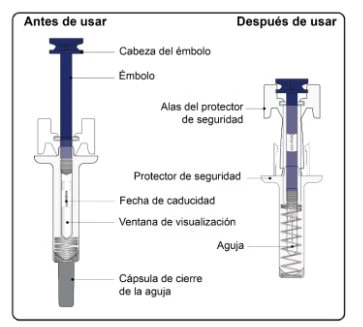
Important information you need to know before injecting Rolcya
- Rolcya is for subcutaneous injection only (inject directly into the fatty layer beneath the skin).
- Do not use the pre-filled syringe if any of the seals on the outer packaging or the seal on the plastic container are broken.
- Do not shake the pre-filled syringe at any time.
- Do not use the pre-filled syringe if it has fallen onto a hard surface or if it has been dropped after removing the needle cap.
- The pre-filled syringe has a safety shield that activates to cover the needle after the injection is complete. The safety shield helps prevent accidental needle sticks for anyone handling the pre-filled syringe after the injection.
- Avoid touching the wings of the safety shield before use. Touching them could cause the safety shield to activate too early.
- Do not attempt to reuse or disassemble the pre-filled syringe.
- Do not pull back on the plunger.
Storage of Rolcya
- Store in a refrigerator between 2 °C and 8 °C.
- Do not freeze.
- If necessary, the pre-filled syringe may be stored at room temperature up to 25 °C for a maximum of 30 days.
- Dispose of the pre-filled syringe that has been stored at room temperature after 30 days.
- Keep the pre-filled syringe in its original packaging until ready for use to protect it from light.
- Keep out of sight and reach of children.
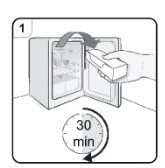
Preparing to inject Rolcya Step 1. Allow to reach room temperature Remove the package containing the pre-filled syringe from the refrigerator and leave it closed for 15 to 30 minutes to allow it to reach room temperature. |
|
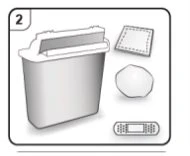
Step 2. Gather materials Ensure you have the following (not included in the package):
|
|
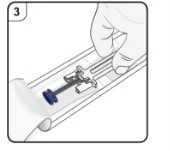
Step 3. Unpack Open the plastic container by removing the lid. Remove the pre-filled syringe by holding it in the middle, as shown. Do not remove the needle cap until you are ready to inject. |
|
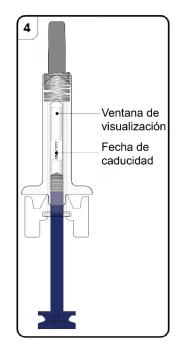
Step 4. Perform safety checks Look through the viewing window of the pre-filled syringe. The liquid inside should be a clear to slightly opalescent solution, colourless to slightly yellowish or slightly brownish. You may see air bubbles in the liquid; this is normal. Do not attempt to remove the air.
If any of these apply, contact your doctor, nurse, or pharmacist. |
|
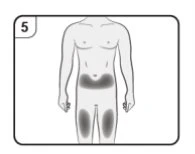
Step 5. Choose the injection site The injection should be given in the front of the thighs or the lower abdomen, except within a 5 cm area around the navel. Do not inject into areas where the skin is tender, bruised, red, scaly, or hard, or into areas with scars or stretch marks. If your caregiver, doctor, or nurse is administering the injection, they may also inject into the upper arm. Administering the injection with Rolcya |
|
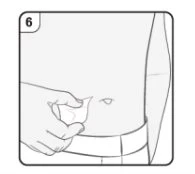
Step 6. Clean the injection site Wash your hands with soap and water. Clean the chosen injection site with an alcohol swab. Allow it to dry before injecting. Do not touch or blow on the cleaned area before injecting. |
|
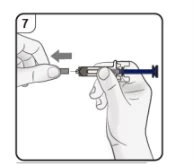
Step 7. Remove the needle cap Firmly pull off the needle cap from the pre-filled syringe. You may see a drop of liquid at the tip of the needle; this is normal. Do not replace the needle cap. Discard the needle cap immediately. |
|
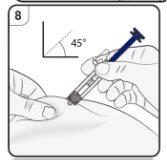
Step 8. Insert the needle Gently pinch the injection site and keep the skin pinched during the injection. With your other hand, insert the needle into the skin at an angle of approximately 45 degrees as shown. Do not press the plunger while inserting the needle. |
|
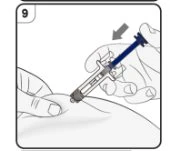
Step 9. Begin the injection Continue pinching the skin. Slowly press the plunger as far as possible. This will ensure the full dose is delivered. |
|
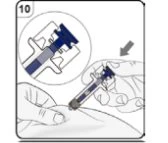
Step 10. Complete the injection Confirm that the plunger head is between the wings of the safety shield as shown. This ensures that the safety shield has been activated and will cover the needle after the injection is complete. |
|
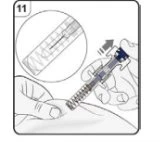
Step 11. Release the plunger While keeping the pre-filled syringe in place at the injection site, slowly release the plunger until the safety shield covers the needle. Remove the pre-filled syringe from the injection site and stop pinching the skin. There may be a small amount of blood at the injection site. You may press the site with a cotton ball or gauze until bleeding stops. Do not rub the injection site. If needed, apply an adhesive bandage. |
|
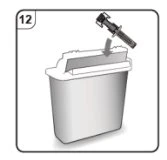
After the injection Step 12. Dispose of the pre-filled syringe Immediately place the used pre-filled syringe into a sharps disposal container after use. Do not throw the pre-filled syringe into household trash. Ask your doctor or pharmacist about proper disposal of the sharps container. It must be disposed of according to local regulations. |
|