Rocuronium Tamarang 10 mg/ml solution for injection and infusion EFG
Spain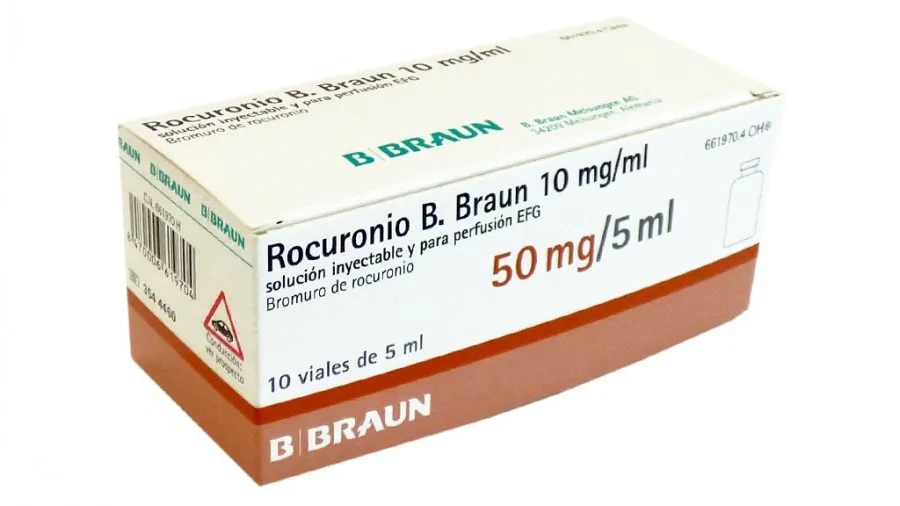
Table of Contents
- Package leaflet: Information for the user
- Introduction
- 1. What Rocuronium Tamarang is and what it is used for
- 2. What you need to know before receiving Rocuronium Tamarang
- 3. How Rocuronium Tamarang is administered
- 4. Possible adverse effects
- 5. Storage of Rocuronium Tamarang
- 6. Contents of the pack and other information
Package leaflet: Information for the user
Introduction
Package leaflet: Information for the user
Rocuronium Tamarang 10 mg/ml solution for injection and infusion EFG
Rocuronium bromide
Read all of this leaflet carefully before you are given this medicine because it contains important information for you.
- Keep this leaflet as you may need to read it again.
- If you have any questions, ask your anaesthetist or another doctor.
- If you experience any side effects, talk to your anaesthetist or another doctor, even if they are not listed in this leaflet. See section 4.
Leaflet contents:
- What Rocuronium Tamarang is and what it is used for
- What you need to know before administration of Rocuronium Tamarang
- How Rocuronium Tamarang is administered
- Possible side effects
- How to store Rocuronium Tamarang
- Contents of the pack and other information
1. What Rocuronium Tamarang is and what it is used for
Rocuronium Tamarang belongs to a group of medicines called muscle relaxants. Muscle relaxants are used during surgery as part of a general anaesthetic. When you undergo surgery, your muscles need to be completely relaxed. This makes it easier for the surgeon to perform the procedure. Normally, nerves send messages to muscles via impulses. Rocuronium Tamarang works by blocking these impulses so that the muscles relax. Because your respiratory muscles also become relaxed, you will need assistance with breathing (artificial ventilation) during and after the surgery until you are able to breathe on your own again.
During the operation, your anaesthetist will monitor the effect of the muscle relaxant and, if necessary, administer additional doses. At the end of the surgery, the effects of the medicine are allowed to wear off, and you will gradually start breathing independently. Sometimes, the anaesthetist may give you another medicine to help speed up this recovery process.
Rocuronium Tamarang may also be used in the Intensive Care Unit for short-term use to maintain muscle relaxation.
2. What you need to know before receiving Rocuronium Tamarang
Do not receive Rocuronium Tamarang
- If you are allergic (hypersensitive) to rocuronium bromide, bromide ion, or any of the other ingredients of this medicine (listed in section 6).
Tell your anaesthetist if any of the following apply to you
Warnings and precautions
Talk to your anaesthetist before receiving Rocuronium Tamarang
- If you are allergic to other muscle relaxants
- If you have a kidney, liver, or gallbladder disease
- If you have a neuromuscular disease (poliomyelitis, myasthenia gravis)
- If you have fluid retention (edema)
- If you have a history of malignant hyperthermia (sudden fever with palpitations, rapid breathing, and muscle stiffness, pain, and/or weakness)
Certain conditions may affect the action of Rocuronium Tamarang, for example:
- Low calcium levels in the blood
- Low potassium levels in the blood
- High magnesium levels in the blood
- Low protein levels in the blood
- Excess carbon dioxide in the blood (acidosis)
- Excessive loss of body water, for example due to illness, diarrhoea, or sweating (dehydration)
- Over-breathing causing reduced carbon dioxide levels in the blood (alkalosis)
- Poor general health
- Severe overweight (obesity)
- Burns
- Abnormally low body temperature (hypothermia)
If you have any of these conditions, your anaesthetist will take them into account when deciding the correct dose of Rocuronium Tamarang for you.
Children and elderly
Rocuronium Tamarang can be used in children (newborns and adolescents) and elderly patients, but your anaesthetist must first evaluate your medical history.
Other medicines and Rocuronium Tamarang
Tell your anaesthetist if you are taking, have recently taken, or might need to take any other medicines. Rocuronium Tamarang may affect other medicines or be affected by them.
Medicines that increase the effect of Rocuronium Tamarang:
- some antibiotics
- some medicines used for heart conditions or high blood pressure (diuretics, calcium channel blockers, beta-blockers, and quinidine)
- certain anti-inflammatory medicines (corticosteroids)
- magnesium salts
- some medicines used to treat bipolar disorder (lithium salts)
- some medicines used to treat malaria (quinine)
- some medicines used to induce sleep during surgery (anaesthetics)
- some medicines that cause an increase in urine volume (diuretics)
- some local anaesthetics (lidocaine, bupivacaine)
- some medicines used to treat epilepsy during surgery (phenytoin)
- some medicines used to induce short-term muscle relaxation in anaesthesia and intensive care (suxamethonium)
Medicines that decrease the effect of Rocuronium Tamarang:
- prolonged use of medicines for the treatment of epilepsy (phenytoin and carbamazepine)
- some protease inhibitors called gabexate and ulinastatin
- acetylcholinesterase inhibitors, medicines for the treatment of myasthenia gravis (neostigmine, edrophonium, pyridostigmine)
- calcium chloride and potassium chloride
In addition, you may be given other medicines before or during surgery that could alter the effects of rocuronium. These include certain anaesthetics, other muscle relaxants, medicines such as phenytoin, and medicines that reverse the effect of Rocuronium Tamarang. Rocuronium may cause certain anaesthetics to act more quickly. Your anaesthetist will take this into account when deciding the correct dose of Rocuronium Tamarang for you.
Pregnancy and breastfeeding
If you are pregnant or breastfeeding, think you may be pregnant, or plan to become pregnant, consult your anaesthetist before receiving this medicine.
Your anaesthetist may give you this medicine, but it must be discussed first. Rocuronium Tamarang may be administered if you are undergoing a caesarean section. Breastfeeding should be suspended for 6 hours after administration of this medicine.
Driving and using machines
Do not drive or operate machinery until you are told it is safe to do so. Since Rocuronium Tamarang is administered as part of general anaesthesia, you may feel tired, weak, or dizzy for some time afterwards. Your anaesthetist can advise you on the likely duration of these effects.
Rocuronium Tamarang contains sodium
This medicine contains less than 1 mmol of sodium (23 mg) per vial/ampoule; essentially, it is considered “sodium-free”.
3. How Rocuronium Tamarang is administered
Dosage
Your anaesthetist will calculate the dose of this medicine based on:
- the type of anaesthetic,
- the expected duration of the surgery,
- other medicines you are taking,
- your health status.
The usual dose is 0.6 mg per kg of body weight, and its effect lasts from 30 to 40 minutes.
How Rocuronium Tamarang is administered
Your anaesthetist will administer Rocuronium Tamarang intravenously (into a vein), either as single injections or as a continuous infusion (an IV drip).
This medicine is for single use only. Any unused solution for injection/infusion must be discarded.
If you are given more Rocuronium Tamarang than recommended
Since your anaesthetist will carefully monitor your condition, it is unlikely that you will receive too much Rocuronium Tamarang. However, if this does happen, your anaesthetist will keep you breathing artificially (using a ventilator) until you can breathe on your own again. You will remain unconscious during this time.
4. Possible adverse effects
Like all medicines, this medicine can cause adverse effects, although not everyone will experience them. If these side effects occur while you are under anesthesia, your anesthetist will recognize and treat them.
Uncommon
(may affect up to 1 in 100 people):
- Increased heart rate
- Decreased blood pressure
- Increased or decreased effect of the drug
- Prolongation of the muscle-relaxing effect of the drug
- Pain at the injection site
Very rare
(may affect up to 1 in 10,000 people):
- Allergic reactions (hypersensitivity) (such as difficulty breathing, circulatory collapse, and shock)
- Wheezing
- Muscle weakness
- Swelling, rash or hives, skin redness
- Chronic muscle impairment, usually observed after concomitant administration of rocuronium bromide and anti-inflammatory medicines (corticosteroids) in critically ill patients in the Intensive Care Unit (steroid myopathy)
- Airway complications due to anesthesia
Frequency not known
(cannot be estimated from available data):
- Severe allergic spasm of the coronary blood vessels (Kounis syndrome), causing chest pain (angina) or heart attack (myocardial infarction).
- Dilated pupils (mydriasis) or fixed pupils that do not change size in response to light or other stimuli.
If any of the adverse effects worsen, or if you notice any adverse effect not listed in this leaflet, inform your anesthetist or another doctor.
Reporting of adverse effects
If you experience any type of adverse effect, consult your anesthetist or another doctor, even if it is a possible adverse effect not listed in this leaflet. You may also report them directly via the Spanish Pharmacovigilance System for Human Medicinal Products: www.notificaram.es. By reporting adverse effects, you can help provide more information on the safety of this medicine.
5. Storage of Rocuronium Tamarang
Keep this medicine out of the sight and reach of children.
Do not use this medicine after the expiry date stated on the container after EXP. The expiry date refers to the last day of the month indicated.
Store in a refrigerator (2 °C - 8 °C).
Do not freeze.
Keep the vial/ampoule in the outer cardboard packaging to protect it from light.
Rocuronium Tamarang may also be stored outside the refrigerator at a temperature not exceeding 25 °C for a maximum period of 12 weeks.
The medicine should be used immediately after opening the vial/ampoule.
In-use shelf life of the diluted medicine: Chemical and physical stability after dilution with infusion fluids (see section 6.6) has been demonstrated for 24 hours at 25 °C. From a microbiological standpoint, the medicine should be used immediately.
If not used immediately, the storage conditions and duration prior to use are the responsibility of the user and should not exceed 24 hours at 2 °C – 8 °C, unless the dilution has been carried out under validated aseptic conditions.
Do not use Rocuronium Tamarang if the solution is not clear or contains particles.
Medicines should not be disposed of via wastewater or household waste. Ask your pharmacist how to dispose of medicines no longer required. This will help protect the environment.
6. Contents of the pack and other information
Composition of Rocuronium Tamarang
The active substance is rocuronium bromide.
Each ml of injectable and infusion solution contains 10 mg of rocuronium bromide.
Each 5 ml vial/ampoule contains 50 mg of rocuronium bromide.
Each 10 ml vial/ampoule contains 100 mg of rocuronium bromide.
The other components are:
Sodium acetate trihydrate
Sodium chloride
Acetic acid 99% (to adjust pH)
Acetic acid 30% (to adjust pH)
Water for injections
Sodium hydroxide (to adjust pH)
Appearance of the product and contents of the pack
Rocuronium Tamarang 10 mg/ml solution for injection and infusion is a clear, colourless or pale brownish-yellow solution.
5 ml and 10 ml vials/ampoules
Pack sizes:
Packs of 10 vials/ampoules x 5 ml
Packs of 12 vials/ampoules x 5 ml
Packs of (6 x 10) vials/ampoules x 5 ml
Packs of 10 vials/ampoules x 10 ml
Packs of (2 x 10) vials/ampoules x 10 ml
Not all pack sizes may be marketed.
Marketing Authorisation Holder and Manufacturer
Holder
Tamarang, S.A.
Balmes 85 P 2
08008 Barcelona
Spain
Manufacturer
SOLUPHARM PHARMAZEUTISCHE ERZEUGNISSE GMBH
Industriestrasse 3
34212 Melsungen
Germany
This medicinal product is authorised in the Member States of the European Economic Area under the following names:
Germany | Rocuronium Inresa 10 mg/ml Injection/Infusion Solution |
Austria | Rocuronium bromide Tamarang 10 mg/ml Injection/Infusion Solution |
Spain | Rocuronium Tamarang 10 mg/ml Injectable and Infusion Solution EFG |
Portugal | Rocuronium bromide Tamarang 10 mg/ml Injectable Solution |
Date of last review of this leaflet: 01/2024
Detailed and up-to-date information on this medicine is available on the website of the Spanish Agency of Medicines and Health Products (AEMPS): http://www.aemps.gob.es