Rocaltrol 0.25 mcg soft capsules
Spain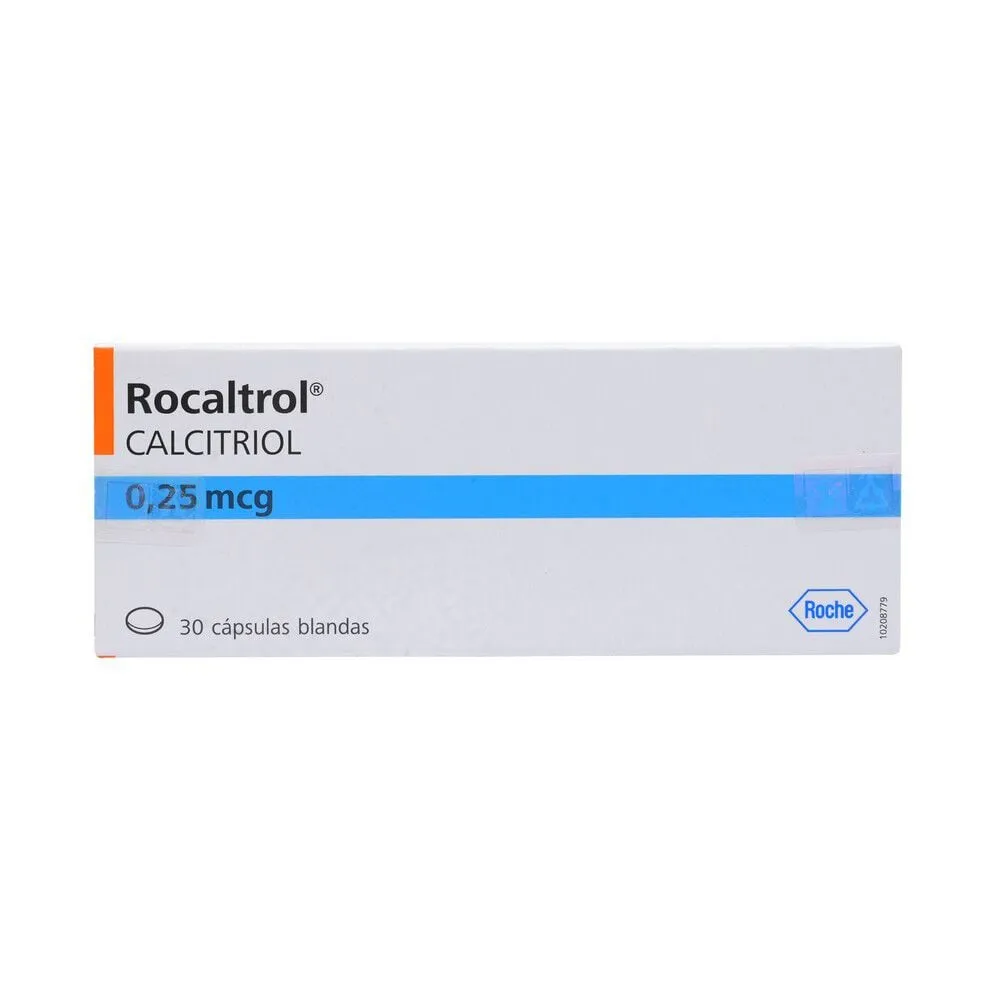
Table of Contents
Package leaflet: Information for the user
Introduction
Package leaflet: information for the user
Rocaltrol 0.25 micrograms soft capsules
Calcitriol
Read this entire leaflet carefully before you start taking this medicine, because it contains important information for you.
- Keep this leaflet, as you may need to read it again.
- If you have any questions, ask your doctor or pharmacist.
- This medicine has been prescribed for you only, and you must not give it to others, even if they have the same symptoms as you, because it could harm them.
- If you experience any adverse effects, talk to your doctor or pharmacist, even if the effects are not listed in this leaflet. See section 4.
Leaflet contents
- What Rocaltrol is and what it is used for
- What you need to know before taking Rocaltrol
- How to take Rocaltrol
- Possible side effects
- How to store Rocaltrol
- Contents of the pack and other information
1. What Rocaltrol is and what it is used for
Rocaltrol contains calcitriol as the active ingredient (a derivative of vitamin D3), which promotes intestinal absorption of calcium and regulates bone mineralization.
Your doctor will prescribe Rocaltrol if your kidneys are unable to synthesize calcitriol properly, which may occur if you have:
- Renal osteodystrophy (bone decalcification due to chronic renal failure).
- Post-surgical or idiopathic hypoparathyroidism (deficiency of parathyroid hormone leading to abnormal levels of calcium and phosphorus in the blood).
- Pseudohypoparathyroidism (a genetic disorder resembling hypoparathyroidism, caused by the body's lack of response to parathyroid hormone, rather than low levels of the hormone itself).
- Osteomalacia (softening and weakening of the bones).
- Vitamin D-dependent rickets (osteomalacia in children) due to disorders in vitamin D metabolism or its receptors, or vitamin D-resistant hypophosphatemic rickets (due to renal phosphate loss).
- Preoperative treatment in primary hyperparathyroidism (elevated parathyroid hormone levels due to enlargement of the parathyroid glands), to minimize postoperative hypocalcemia (low blood calcium levels).
2. What you need to know before taking Rocaltrol
Do not take Rocaltrol:
- If you are allergic to calcitriol or to any of the other ingredients of this medicine (listed in section 6).
- If you have high levels of calcium in your blood.
- If you have vitamin D intoxication.
Warnings and precautions
Talk to your doctor or pharmacist before starting to take Rocaltrol.
Take special care with Rocaltrol:
- If you are immobilized, for example after surgery, as you may be at increased risk of hypercalcemia (high calcium levels in the blood).
- If you have kidney failure, as you may be at increased risk of calcifications.
- If you have vitamin D-resistant rickets (familial hypophosphatemia), as your need for phosphate supplements may need to be adjusted.
- Follow the dietary measures recommended by your doctor. Unless advised by your doctor, do not take other calcium preparations available without a prescription on your own.
- Your doctor will carry out periodic checks to monitor your calcium levels and adjust the dose if necessary.
- Concomitant use of vitamin D or its derivatives (such as dihydrotachysterol) should be avoided, as this could lead to hypercalcemia.
Children
The safety and efficacy of Rocaltrol in children have not been established to allow for a dosage recommendation.
Other medicines and Rocaltrol
Tell your doctor or pharmacist if you are taking, have recently taken, or might need to take any other medicines.
Please note that:
- If you are being treated with digoxin or similar medicines (used to treat heart failure and abnormal heart rhythm), hypercalcemia may lead to arrhythmias.
- If you have vitamin D-resistant rickets and are being treated with oral phosphate, your doctor may need to adjust your intake of supplemental phosphate.
- If you are taking thiazide diuretics (medicines used for hypertension), as they increase the risk of hypercalcemia (high calcium levels in the blood).
- If you are taking cholestyramine (a medicine used to lower cholesterol and fat levels in the blood) or sevelamer (a medicine used to lower phosphate levels in the blood), as they may interfere with the intestinal absorption of calcitriol.
- If you are undergoing chronic renal dialysis, you should avoid taking medicines containing magnesium (e.g. antacids), as they may lead to hypermagnesemia (high magnesium levels in the blood).
- If you are taking corticosteroids, as they may counteract the effects of vitamin D analogues.
Taking Rocaltrol with food and drink
If your kidney function is normal, you should drink adequate fluids to avoid dehydration. Follow the dietary measures recommended by your doctor. Unless advised by your doctor, do not take other calcium preparations available without a prescription on your own.
Pregnancy and breastfeeding
If you are pregnant or breastfeeding, think you might be pregnant, or are planning to become pregnant, consult your doctor or pharmacist before using this medicine.
Your doctor will decide whether or not you should take Rocaltrol. Taking Rocaltrol during breastfeeding requires monitoring of serum calcium levels in both mother and infant.
Driving and using machines
This medicine does not affect the ability to drive or operate machinery.
Rocaltrol contains sorbitol
This medicine contains 2.87 - 4.37 mg of sorbitol in each 0.25 mcg capsule.
3. How to take Rocaltrol
Follow exactly the instructions given by your doctor for taking this medicine. If in doubt, consult your doctor again.
Normal dose:
Your doctor will determine the optimal dose of Rocaltrol based on your blood calcium levels. To do this, your doctor will perform blood tests at least twice a week.
Once your dose has been established, your blood calcium levels will be monitored monthly. If normal calcium levels are exceeded, your doctor will reduce your dose of Rocaltrol or interrupt treatment until your blood calcium levels return to normal.
For optimal treatment with Rocaltrol, it is necessary that your dietary calcium intake is adequate. If needed, your doctor will prescribe a calcium supplement. It is essential that you strictly follow the diet prescribed by your doctor, as a sudden increase in calcium intake may trigger hypercalcemia (high levels of calcium in the blood).
Doses in other conditions:
Renal osteodystrophy (dialysis patients)
The initial daily dose is 0.25 micrograms. If your blood calcium levels are normal or moderately low, this dose every other day may be sufficient. If your doctor does not observe the expected improvement, the dose may be increased every two to four weeks by 0.25 micrograms daily. During this period, your doctor will determine your blood calcium levels at least twice a week.
Most patients respond to doses between 0.5 and 1.0 micrograms daily. Higher doses may occasionally be required, especially when barbiturates or anticonvulsants are administered simultaneously.
Hypoparathyroidism and rickets
The recommended initial dose is 0.25 micrograms daily, taken in the morning.
Likewise, if your doctor considers it appropriate, your dose may be increased every two to four weeks. During the dose adjustment period, your doctor will monitor your blood calcium levels at least twice a week.
In patients with hypoparathyroidism, malabsorption may occasionally occur; in such cases, higher doses of Rocaltrol may be necessary.
If you take more Rocaltrol than you should
Since calcitriol is a derivative of vitamin D, the symptoms of calcitriol overdose are the same as those of vitamin D overdose. These symptoms may also occur if high doses of calcium and phosphate are taken during treatment with Rocaltrol.
Acute symptoms of calcitriol intoxication include: anorexia (loss of appetite), headache, vomiting, and constipation. Chronic symptoms include dystrophy (progressive muscle weakness), sensory disturbances, fever with thirst, polyuria (increased urine excretion), dehydration, apathy (lack of energy), growth arrest, and urinary tract infections. Hypercalcemia (high blood calcium levels) may lead to metastatic calcification of the renal cortex, myocardium, lungs, and pancreas (calcium deposits in these tissues causing them to harden).
Treatment includes emesis (induced vomiting) or gastric lavage to prevent intestinal calcium absorption. Liquid paraffin may also be administered to promote fecal excretion. Repeated blood calcium tests are recommended. If elevated calcium levels persist, forced urinary excretion with phosphates or corticosteroids may be required.
In case of overdose or accidental ingestion, contact your doctor or pharmacist immediately, go to a medical center, or call the Toxicology Information Service at telephone number (91) 562.04.20, indicating the medication and the amount ingested.
If you forget to take Rocaltrol
Do not take a double dose to make up for missed doses.
If you stop taking Rocaltrol
Your doctor will advise you on the duration of your treatment with Rocaltrol. Do not stop treatment prematurely.
If you have any further questions about the use of this medicine, ask your doctor or pharmacist.
4. Possible adverse effects
Like all medicines, Rocaltrol may cause adverse effects, although not everyone experiences them.
The adverse effects are similar to those observed when excessive doses of vitamin D are taken, i.e., hypercalcemia syndrome (high levels of calcium in the blood) or calcium intoxication.
The adverse effects observed with calcitriol are as follows:
Very common adverse effects (may affect more than 1 in 10 people)
- hypercalcemia (high levels of calcium in the blood)
Common adverse effects (may affect up to 1 in 10 people)
- headache
- nausea
- abdominal pain or stomach ache
- urinary tract infections
- rash
Uncommon adverse effects (may affect up to 1 in 100 people)
- anorexia (loss of appetite)
- vomiting
- increased creatinine in the blood
Adverse effects with unknown frequency (cannot be estimated from the available data):
- hypersensitivity (allergy)
- urticaria (hives, usually with itching of the skin)
- polydipsia (increased sensation of thirst)
- dehydration
- apathy (lack of energy)
- psychiatric disturbances
- muscle weakness
- sensory disturbances
- insomnia (difficulty sleeping)
- cardiac arrhythmias (irregular heartbeat)
- constipation
- pain in the upper part of the abdomen
- paralytic ileus (intestinal obstruction)
- erythema (inflamed and reddish skin)
- pruritus (itching)
- growth retardation
- polyuria (increased urine excretion)
- nocturia (need to urinate during the night)
- calcinosis (calcium deposits in tissues)
- fever with thirst
- thirst
- weight loss
Reporting of adverse effects:
If you experience any type of adverse effect, consult your doctor or pharmacist, even if it is an effect not listed in this leaflet. You may also report them directly through the Spanish Pharmacovigilance System for Human Medicines: www.notificaram.es. By reporting adverse effects, you can help provide more information on the safety of this medicine.
5. Storage of Rocaltrol
Keep this medicine out of the sight and reach of children.
Do not store above 25°C. Keep the blister pack in the outer packaging to protect it from light and moisture.
Do not use this medicine after the expiry date stated on the carton after EXP. The expiry date refers to the last day of the month indicated.
Medicines must not be disposed of via wastewater or household waste. Dispose of containers and unused medicines at the SIGRE collection point at your pharmacy. If you are in doubt, ask your pharmacist how to dispose of containers and medicines you no longer need. This will help protect the environment.
6. Contents of the pack and other information
Composition of Rocaltrol 0.25 micrograms:
-
The active substance is calcitriol. Each soft capsule of Rocaltrol contains 0.25 micrograms of calcitriol.
-
The other components are:
Capsule contents: butylhydroxyanisole (E-320), butylhydroxytoluene (E-321), medium-chain triglycerides.
Capsule shell: gelatin, 85% glycerol, karion 83 (containing: sorbitol (E-420), mannitol and hydrogenated hydrolysed corn starch), titanium dioxide (E-171), iron oxide red and yellow (E-172).
Appearance of the product and contents of the pack
Rocaltrol 0.25 microgram capsules are oval, soft gelatin capsules, half opaque brown-orange to red-orange in colour and the other half opaque white to yellowish-grey or orange-grey.
This medicine is supplied in PVC blisters containing 20 soft capsules.
Marketing Authorisation Holder and Manufacturer
Marketing Authorisation Holder
ATNAHS PHARMA NETHERLANDS B.V.
Copenhagen Towers, Ørestads Boulevard 108, 5.tv
DK-2300 København S
Denmark
Manufacturer
IL CSM Clinical Supplies Management GmbH
Marie-Curie-Strasse 8
Lörrach
Baden-Württemberg, 79539
Germany
or
allphamed PHARBIL Arzneimittel GmbH
Hildebrandstr. 10-12,
Göttingen, Lower Saxony, 37081, Germany
Local representative
Laboratorios Rubió, S.A.
Industria, 29 - Pol. Ind. Comte de Sert
08755 Castellbisbal (Barcelona)
Spain
Date of the most recent revision of this leaflet: January 2021.
Detailed information on this medicine is available on the website of the Spanish Agency of Medicines and Medical Devices (AEMPS) http://www.aemps.gob.es/