Roasax 20 mg/100 mg hard capsules
Spain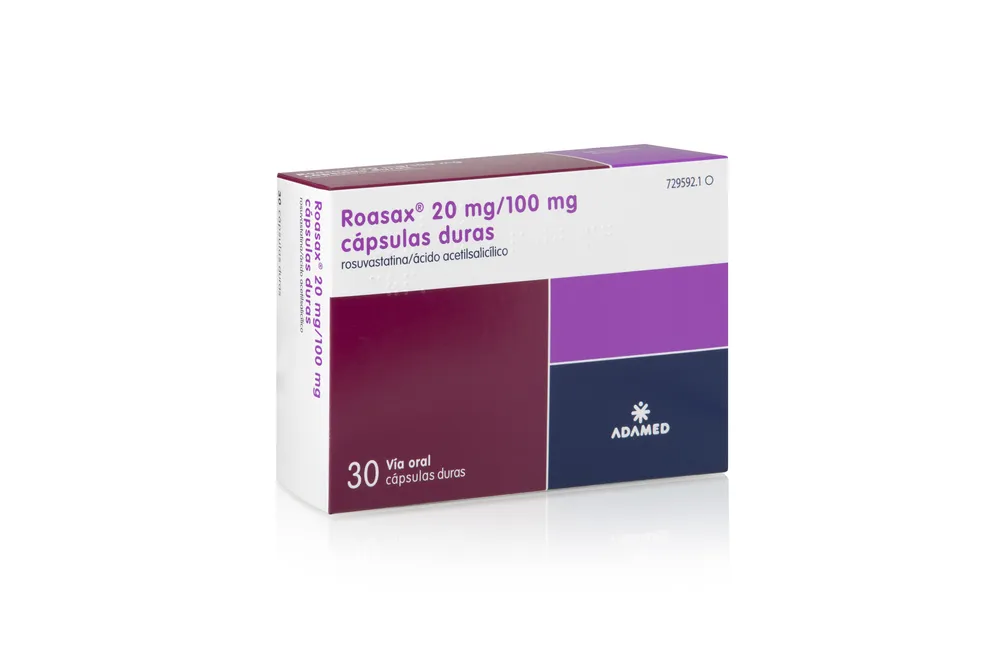
Table of Contents
Patient Information Leaflet
Introduction
Patient Information Leaflet
Roasax 20 mg/100 mg hard capsules
rosuvastatin/acetylsalicylic acid
Read all of this leaflet carefully before you start taking this medicine because it contains important information for you.
- Keep this leaflet. You may need to read it again.
- If you have any questions, ask your doctor or pharmacist.
- This medicine has been prescribed for you only. Do not pass it on to other people, even if they have the same symptoms as you, because it may harm them.
- If you experience any side effects, talk to your doctor or pharmacist, even if the side effects are not listed in this leaflet. See section 4.
Leaflet Contents
- What Roasax is and what it is used for
- What you need to know before taking Roasax
- How to take Roasax
- Possible side effects
- How to store Roasax
- Contents of the pack and other information
1. What Roasax is and what it is used for
Roasax contains two active substances: rosuvastatin and acetylsalicylic acid.
- Rosuvastatin belongs to a group of medicines called statins, which are lipid-regulating (fatty) medications used to lower lipids known as cholesterol and triglycerides in the blood when a low-fat diet and lifestyle changes alone have failed. Cholesterol is a fatty substance (lipid) that can cause narrowing of the blood vessels in the heart and lead to heart disease. If you are at risk of having another heart attack, rosuvastatin may also be used to reduce this risk, even if your cholesterol levels are normal. You should maintain a cholesterol-lowering diet during treatment.
- Acetylsalicylic acid, at low doses, belongs to a group of medicines called antiplatelet agents. Platelets are tiny cells in the blood that cause blood to clot and are involved in thrombosis. When a blood clot forms in an artery, it blocks blood flow and cuts off the supply of oxygen. When this occurs in the heart, it can cause a heart attack or angina.
These two active substances, taken together, reduce the likelihood of having another heart attack if you have previously had a heart attack or suffer from episodes of chest pain (unstable angina). Roasax is indicated for patients who are already taking rosuvastatin and acetylsalicylic acid at these doses. Instead of taking rosuvastatin and acetylsalicylic acid in separate tablets, you will receive one Roasax capsule containing both ingredients at the same doses as before.
2. What you need to know before taking Roasax
Do not take Roasax
- If you are allergic to rosuvastatin, acetylsalicylic acid, or any other salicylate or non-steroidal anti-inflammatory drugs (NSAIDs), or to any of the other ingredients of this medicine (listed in section 6).
- If you are pregnant or breastfeeding, or if you become pregnant while taking Roasax, stop taking it immediately and inform your doctor. Women must avoid becoming pregnant during treatment with Roasax by using an appropriate contraceptive method.
- If you have liver disease.
- If you have severe kidney problems.
- If you experience repeated or unexplained muscle pain or cramps.
- If you are taking a combination of sofosbuvir/velpatasvir/voxilaprevir (used for the viral liver infection called hepatitis C).
- If you are taking a medicine called cyclosporine (used, for example, after organ transplant).
- If you have previously had an asthma attack or swelling of certain body parts, e.g., face, lips, throat, or tongue (angioedema) after taking salicylates or NSAIDs.
- If you currently have or have previously had a stomach or small intestine ulcer or any other type of bleeding such as a cerebral hemorrhage.
- If you have blood clotting disorders.
- If you suffer from gout.
- If you have uncompensated heart failure.
- If you are taking a medicine called methotrexate (for example, for cancer or rheumatoid arthritis) at doses exceeding 15 mg per week.
- If you have ever developed a severe skin rash, skin peeling, blisters, and/or mouth sores after taking Roasax or other related medicines.
- This medicine contains soybean lecithin. It should not be used if you are allergic to peanuts or soybeans.
Warnings and precautions
Talk to your doctor or pharmacist before taking Roasax:
- If you have kidney problems.
- If you have liver problems.
- If you have repeated or unexplained muscle pain or cramps, a personal or family history of muscle disorders, or a previous history of muscle problems during treatment with other cholesterol-lowering medicines. Inform your doctor immediately if you experience unexplained muscle pain or cramps, especially if you also have general malaise or fever. Also inform your doctor or pharmacist if you experience persistent muscle weakness.
- If you regularly consume large amounts of alcohol.
- If your thyroid gland is not functioning properly.
- If you are taking other medicines called fibrates to lower cholesterol. Read this leaflet carefully, even if you have previously taken cholesterol-lowering medicines.
- If you are taking medicines to treat HIV infection (AIDS virus), such as ritonavir with lopinavir and/or atazanavir. See “Other medicines and Roasax”.
- If you are taking or have taken within the last 7 days a medicine called fusidic acid (a medicine for bacterial infection), orally or by injection. Taking Roasax with fusidic acid may cause serious muscle problems (rhabdomyolysis); please see “Other medicines and Roasax”.
- The risk of adverse effects affecting muscles may be higher when daptomycin is taken during treatment with Roasax. Your doctor may decide not to administer daptomycin or to temporarily discontinue Roasax.
- If you have severe respiratory insufficiency.
- If you are over 70 years old.
- If you are of Asian origin (e.g., Japanese, Chinese, Filipino, Vietnamese, Korean, or Indian). Your doctor should determine the appropriate starting dose of Roasax for you.
- If you have or have had stomach or small intestine problems (ulcers or gastrointestinal bleeding).
- If you are taking non-steroidal anti-inflammatory drugs (NSAIDs) at the same time, such as ibuprofen and naproxen (medicines for pain, fever, or inflammation).
- If you have high blood pressure.
- If you are asthmatic, have hay fever, nasal polyps, or other chronic respiratory diseases; acetylsalicylic acid may trigger an asthma attack.
- In case of hypersensitivity (allergy) to other painkillers and anti-inflammatory medicines, other anti-rheumatic medicines, or other allergy-causing factors.
- If you have other allergies (e.g., skin reactions, itching).
- If you are taking other medicines called anticoagulants (e.g., coumarin derivatives, heparin, except for low-dose heparin treatment).
- With renal insufficiency or reduced cardiac and vascular blood flow (e.g., kidney vascular disease, cardiac muscle weakness, reduced blood volume, major surgery, blood poisoning, or increased bleeding): acetylsalicylic acid may further increase the risk of renal dysfunction and acute renal failure.
- If you have heavy menstrual periods.
- If you have or have had myasthenia (a disease characterized by generalized muscle weakness that, in some cases, affects the muscles used for breathing) or ocular myasthenia (a disease causing weakness of the eye muscles), as statins may sometimes worsen the condition or trigger the onset of myasthenia (see section 4).
You should contact your doctor immediately if your symptoms worsen or if you experience serious or unexpected side effects, e.g., unusual bleeding symptoms, severe skin reactions, or any other signs of a severe allergic reaction (see section "Possible side effects").
Metamizole or certain NSAIDs such as ibuprofen or naproxen (substances used to reduce pain and fever) may reduce the effect of acetylsalicylic acid on platelet aggregation (blood cells clumping together to form a blood clot) when taken concomitantly. Therefore, this combination should be used with caution in patients taking low-dose aspirin for cardioprotection.
In a small number of people, statins may affect the liver. This is detected by a simple blood test showing increased levels of liver enzymes. For this reason, your doctor will usually perform blood tests (liver function test) before and during treatment with Roasax.
While taking this medicine, your doctor will monitor you closely if you have diabetes or are at risk of developing diabetes. You are likely at risk of developing diabetes if you have high blood glucose and lipid levels, are overweight, and have high blood pressure.
Be careful not to become dehydrated (you may feel thirsty with a dry mouth), as the use of acetylsalicylic acid at the same time may impair kidney function.
Inform your doctor if you are planning to undergo surgery (even minor procedures, such as tooth extraction), as acetylsalicylic acid thins the blood and may increase the risk of bleeding.
Acetylsalicylic acid may cause Reye's syndrome when administered to children. Reye's syndrome is a very rare disease affecting the brain and liver and can be potentially fatal. For this reason, Roasax must not be given to children and adolescents under 18 years of age.
In patients with severe glucose-6-phosphate dehydrogenase deficiency: acetylsalicylic acid may cause accelerated breakdown or destruction of red blood cells or a certain type of anemia. This risk may be increased by factors such as high doses, fever, or acute infections.
Acetylsalicylic acid reduces uric acid excretion at low doses. This may trigger a gout attack in patients at risk.
If you are cut or injured, bleeding may last slightly longer than normal. This is related to the effect of acetylsalicylic acid. Minor cuts and injuries (e.g., while shaving) are usually not significant. If you experience unusual bleeding (in an unusual location or of unusual duration), contact your doctor.
Severe skin reactions, including Stevens-Johnson syndrome and drug reaction with eosinophilia and systemic symptoms (DRESS), have been reported with rosuvastatin treatment. Stop using Roasax and seek immediate medical attention if you notice any of the symptoms described in section 4.
Medicines containing acetylsalicylic acid should not be taken for prolonged periods or at high doses without consulting your doctor.
Children and adolescents
Roasax must not be used in children and adolescents.
Other medicines and Roasax
Tell your doctor or pharmacist if you are taking, have recently taken, or might need to take any other medicines.
Roasax may affect or be affected by other medicines such as:
- Fibrates (such as gemfibrozil, fenofibrate) or any other medicine used to lower cholesterol (like ezetimibe).
- Treatments for indigestion (used to neutralize stomach acid).
- Oral contraceptives (the pill).
- Hormone replacement therapy.
- Fostamatinib (used to treat low platelet count).
- Febuxostat (used to treat and prevent high blood uric acid levels).
- Teriflunomide (used in the treatment of multiple sclerosis).
- Leflunomide (used to treat rheumatoid arthritis).
- Regorafenib (used for cancer treatment).
- Darolutamide (used to treat cancer).
- Capmatinib (used to treat cancer).
- Any other medicine used to treat viral infections, including HIV or hepatitis C infection, alone or in combination (please see “Warnings and Precautions”): ritonavir, lopinavir, atazanavir, sofosbuvir, voxilaprevir, ombitasvir, paritaprevir, dasabuvir, velpatasvir, grazoprevir, elbasvir, glecaprevir, pibrentasvir.
- Roxadustat (used to treat anemia in patients with chronic kidney disease).
- Daptomycin (antibiotic; see “Warnings and Precautions”).
- Tafamidis (used to treat a disease called transthyretin amyloidosis).
- Momelotinib (used to treat myelofibrosis in adults with anemia).
- Itraconazole (antifungals).
- Erythromycin, clarithromycin (antibiotics).
- Anticoagulants/blood clot prevention (e.g., warfarin, heparin, coumarin, ticagrelor, clopidogrel, ticlopidine): acetylsalicylic acid may increase the risk of bleeding if taken before clot dissolution or during blood-thinning treatment. Therefore, if undergoing such treatment, pay attention to signs of external or internal bleeding (e.g., bruising).
- Organ transplant rejection (cyclosporine, tacrolimus).
- High blood pressure (e.g., diuretics and ACE inhibitors).
- Heart rhythm control (digoxin).
- Manic-depressive illness (lithium).
- Painkillers and anti-inflammatory medicines (non-steroidal analgesics/anti-inflammatories) and anti-rheumatic medicines containing salicylic acid: increased risk of gastrointestinal bleeding and ulcers.
- Gout (e.g., probenecid, benzbromarone).
- Glaucoma (acetazolamide).
- Cancer or rheumatoid arthritis (methotrexate; at doses below 15 mg per week).
- Medicines to lower blood sugar (antidiabetic medicines) such as insulin, tolbutamide, glyburide (the so-called sulfonylureas); when combined with higher doses of acetylsalicylic acid, blood sugar levels may drop.
- Depression (selective serotonin reuptake inhibitors (SSRIs) such as sertraline or paroxetine).
- Hormone replacement therapy when adrenal glands or the pituitary gland have been destroyed or removed (except for products applied to the skin or cortisone replacement therapy for Addison's disease), or to treat inflammation, including rheumatic diseases and intestinal inflammation (corticosteroids). Concomitant use increases the risk of gastrointestinal adverse effects.
- Brain seizures [epilepsy] (valproic acid).
- Medicines causing increased urinary excretion (diuretics: aldosterone antagonists such as spironolactone and canrenoate, loop diuretics, e.g., furosemide).
- Alcohol: increases the risk of gastrointestinal ulcers and bleeding.
If you need to take oral fusidic acid to treat a bacterial infection, you must temporarily stop using Roasax. Your doctor will advise you when it is safe to resume taking this medicine. Taking Roasax with fusidic acid rarely may cause muscle weakness, tenderness, or pain (rhabdomyolysis). See more information on rhabdomyolysis in section 4.
Taking Roasax with food and drinks
Drinking alcohol may possibly increase the risk of gastrointestinal bleeding and prolong bleeding time.
Pregnancy and breastfeeding
Do not take Roasax if you are pregnant or breastfeeding. If you become pregnant while taking Roasax, stop taking it immediately and inform your doctor. Women must avoid becoming pregnant during treatment with this medicine by using an appropriate contraceptive method.
Driving and using machines
Most patients can drive vehicles and operate machinery during treatment with Roasax as it will not affect their ability. However, some people may feel dizzy during treatment with this medicine. If you feel unwell, dizzy, tired, or have a headache, do not drive or operate machinery and consult your doctor immediately.
Roasax contains lactose
This medicine contains lactose. If your doctor has informed you that you have an intolerance to certain sugars, consult with him before taking this medicine.
Roasax contains soybean oil
This medicine contains soybean oil. It should not be used if you are allergic to peanuts or soybeans.
3. How to take Roasax
Follow exactly the instructions for using this medicine as given by your doctor or pharmacist. If you are unsure, consult your doctor or pharmacist again.
Adults
Your doctor will determine the most suitable dose for you, depending on your condition, your current treatment, and your individual risk.
This medicine is not suitable for initiating treatment. Treatment initiation must only be done by administering the active substances separately. After appropriate doses have been adjusted, switching to Roasax at the suitable concentration becomes possible.
The recommended dose is one capsule daily.
This medicine should be taken with food. You must take your medicine at the same time every day. The capsules should be swallowed with plenty of liquid and must not be crushed or chewed.
If you are admitted to hospital or receive treatment for another condition, inform the medical staff that you are taking Roasax.
Elderly patients
Dosage adjustment is not necessary for elderly patients.
Children and adolescents
Roasax must not be used in children and adolescents.
Patients with renal impairment
Dose adjustment is not required if you have mild or moderate renal impairment.
The use of Roasax in patients with severe renal impairment is contraindicated.
Patients with hepatic impairment
The use of Roasax in patients with severe hepatic impairment is contraindicated.
If you take more Roasax than you should
Contact your doctor or nearest hospital for advice. You may also call the Toxicology Information Service at telephone number: 91 562 04 20, stating the medicine and the amount ingested.
If you forget to take Roasax
Do not worry. If you forget to take a capsule, completely omit that dose. Take the next scheduled dose at the usual time. Do not take a double dose to make up for forgotten doses.
If you stop taking Roasax
Your doctor will advise you on how long you should take this medicine. Your cholesterol levels may rise again if you stop taking Roasax. Your condition may recur if you stop using the medicine before being instructed to do so.
If you have any further questions about the use of this medicine, ask your doctor or pharmacist.
4. Possible adverse effects
Like all medicines, this medicine can cause adverse effects, although not everyone will experience them.
Stop taking Roasax and see your doctor immediately if you experience any of the following very rare and serious adverse effects after taking this medicine:
- Sudden wheezing, chest pain, shortness of breath, or difficulty breathing.
- Swelling of the eyelids, face, or lips.
- Swelling of the tongue and throat causing severe difficulty in breathing and/or swallowing.
- Severe skin reactions, such as intense rash, hives, widespread skin redness, severe itching, blisters, skin peeling, and swelling of the skin, inflammation of mucous membranes (Stevens-Johnson syndrome), or other allergic reactions.
- If you have black stools or blood in your vomit (signs of significant stomach bleeding).
- Reddish, non-elevated, target-shaped or circular rashes on the trunk, often with central blisters, skin peeling, and ulcers in the mouth, throat, nose, genitals, and eyes. These severe skin rashes may be preceded by fever and flu-like symptoms (Stevens-Johnson syndrome).
- Widespread rash, high body temperature, and enlarged lymph nodes (DRESS syndrome or drug hypersensitivity syndrome).
Also, stop taking Roasax and contact your doctor immediately
- If you have unexplained muscle pain or cramps lasting longer than expected. As with other statins, a very small number of people have experienced unpleasant muscle effects, and rarely these have led to potentially life-threatening muscle damage known as rhabdomyolysis.
- If you experience muscle breakdown.
- If you develop lupus or a lupus-like illness (including skin rash, joint disorders, and effects on blood cells).
The following side effects have been reported. If any of these cause you problems or if they last longer than one week, you should contact your doctor.
ROSUVASTATIN
Common (may affect up to 1 in 10 people):
- Headache.
- Stomach pain.
- Constipation.
- Nausea.
- Muscle pain.
- Feeling weak.
- Dizziness.
- Diabetes. This is more likely if you have high levels of blood sugar and fats, are overweight, and have high blood pressure. Your doctor will monitor you while you are taking this medicine.
Uncommon (may affect up to 1 in 100 people):
- Rash, itching, hives, or other skin reactions.
- Increased amount of protein in the urine: this usually returns to normal on its own without the need to stop treatment with Roasax capsules (only at doses of 5 to 20 mg).
Rare (may affect up to 1 in 1,000 people):
- Severe allergic reaction – symptoms include swelling of the face, lips, tongue, and/or throat, difficulty swallowing and breathing, and intense skin itching (with rash). If you think you are having an allergic reaction, stop taking Roasax and seek immediate medical attention.
- Muscle injury in adults – as a precaution, stop taking Roasax and consult your doctor immediately if you have unexplained muscle pain or cramps lasting longer than expected.
- Severe stomach pain (possible sign of pancreas inflammation).
- Increased liver enzymes (transaminases) in blood.
- Reduction in blood platelets, increasing the risk of bleeding or bruising (thrombocytopenia).
- Lupus or lupus-like illness (including skin rash, joint disorders, and effects on blood cells).
Very rare (may affect up to 1 in 10,000 people):
- Jaundice (yellowing of the skin and eyes).
- Hepatitis (inflamed liver).
- Blood traces in the urine.
- Nerve damage in the arms and legs (with numbness or tingling).
- Joint pain.
- Memory loss.
- Gynecomastia (enlargement of breast tissue in men).
Frequency not known (frequency cannot be estimated from available data):
- Diarrhea (loose stools).
- Cough.
- Shortness of breath.
- Edema (swelling).
- Sleep disturbances, including insomnia and nightmares.
- Sexual difficulties.
- Depression.
- Respiratory problems, including persistent cough and/or shortness of breath or fever.
- Tendon injuries.
- Nerve disorders that may cause weakness, tingling, or numbness.
- Persistent muscle weakness.
- Myasthenia gravis (a disease causing generalized muscle weakness, which in some cases affects muscles used for breathing).
- Ocular myasthenia (a disease causing weakness of the eye muscles).
Consult your doctor if you experience worsening weakness in your arms or legs after periods of activity, double vision or drooping eyelids, difficulty swallowing, or difficulty breathing.
ACETYLSALICYLIC ACID
Common (may affect up to 1 in 10 people):
- Gastrointestinal disorders such as indigestion, nausea, vomiting, abdominal pain, and diarrhea.
- Minor gastrointestinal bleeding (micro-bleeding).
- Bleeding such as nosebleeds, bleeding from gums, skin bleeding, or bleeding from the urinary tract and genital organs, with a possible prolongation of bleeding time. This effect may last 4 to 8 days after ingestion.
Uncommon (may affect up to 1 in 100 people):
- Bleeding from the stomach or intestines. After long-term use of acetylsalicylic acid, anemia (iron-deficiency anemia) may occur due to hidden blood loss from the stomach or intestines.
- Intracranial bleeding, blood in the urine.
- Stomach or intestinal ulcers, which very rarely may lead to perforation.
- Gastrointestinal inflammation.
- Skin reactions.
Rare (may affect up to 1 in 1,000 people):
- Hypersensitivity reactions affecting the skin, respiratory tract, gastrointestinal area, and cardiovascular system, especially in asthmatics. The following symptoms may occur: drop in blood pressure, dyspnea attacks, nasal mucosa inflammation, nasal congestion, allergic shock, swelling of the face, tongue, and larynx (Quincke's edema).
- Severe bleeding, such as bleeding in the brain, especially in patients with uncontrolled high blood pressure and/or concomitant treatment with anticoagulants (blood-thinning medicines), which may be potentially fatal in individual cases.
- Confusion.
- Headache, dizziness.
- Hearing impairment or ringing in the ears (tinnitus), especially in children and elderly people, which may be signs of overdose (see also section "If you take more Roasax than you should").
Very rare (may affect up to 1 in 10,000 people):
- Increases in liver function tests.
- Kidney dysfunction and acute kidney failure.
- Decreased blood sugar (hypoglycemia).
- Acetylsalicylic acid reduces uric acid excretion at low doses. This may trigger a gout attack in at-risk patients.
- Feverish rashes with mucous membrane involvement (multiforme erythema).
Frequency not known (frequency cannot be estimated from available data):
- Accelerated breakdown or destruction of red blood cells and a specific form of anemia in patients with severe glucose-6-phosphate dehydrogenase deficiency.
- In case of pre-existing intestinal mucosa damage, membranes may form in the intestinal cavity with possible subsequent narrowing.
If you consider any of the adverse effects you experience to be severe, or if you notice any adverse effects not listed in this leaflet, inform your doctor or pharmacist.
Reporting of adverse effects
If you experience any type of adverse effect, talk to your doctor, pharmacist, or nurse, even if it is a possible adverse effect not listed in this leaflet. You can also report them directly via the Spanish Pharmacovigilance System for Human Medicines: https://www.notificaram.es. By reporting adverse effects, you can help provide more information on the safety of this medicine.
5. Storage of Roasax
Keep this medicine out of the sight and reach of children.
Do not use this medicine after the expiry date stated on the packaging after EXP. The expiry date is the last day of the month indicated.
Store below 30°C. Keep in the original packaging, protected from moisture.
Medicines must not be disposed of via wastewater or household waste. Dispose of unused medicines and their containers at the SIGRE collection point at your pharmacy. If you are unsure, ask your pharmacist how to dispose of unused medicines and their containers. This will help protect the environment.
6. Contents of the pack and other information
Composition of Roasax
The active substances are rosuvastatin (as rosuvastatin calcium) and acetylsalicylic acid.
Roasax 20 mg/100 mg: each hard capsule contains 20 mg rosuvastatin (as rosuvastatin calcium) and 100 mg acetylsalicylic acid.
The other components are:
Tablet coated with rosuvastatin:
Core
Monohydrate lactose
Microcrystalline cellulose
Heavy magnesium oxide
Crospovidone (type A)
Anhydrous colloidal silica
Magnesium stearate
Coating
Polyvinyl alcohol
Titanium dioxide (E171)
Talc
Yellow iron oxide (E172)
Lecithin (soybean)
Red iron oxide (E172)
Xanthan gum
Black iron oxide (E172)
Tablet with acetylsalicylic acid:
Microcrystalline cellulose
Corn starch
Anhydrous colloidal silica
Stearic acid
Capsule shell:
Gelatin
Titanium dioxide (E171)
Indigotine (E132)
Yellow iron oxide (E172)
Black ink:
Shellac
Propylene glycol
Strong ammonia solution
Black iron oxide (E172)
Potassium hydroxide
Appearance of the product and contents of the pack
Roasax 20 mg/100 mg: hard gelatin capsules of size 0 with an opaque white body printed in black with "ASA 100" and an opaque green cap printed in black with "RSV 20". Each capsule contains one uncoated tablet, white or almost white, biconvex, oval-shaped, containing acetylsalicylic acid, and two coated, brown, biconvex, round tablets each containing 10 mg of rosuvastatin.
Roasax is available in blisters containing 10, 28, 30, 56, 60, 90 and 100 hard capsules.
Only some pack sizes may be marketed.
Marketing Authorization Holder and Manufacturer
Marketing Authorization Holder
Adamed Laboratorios, S.L.U.
Calle de las Rosas de Aravaca, 31
2nd floor
28023 - Madrid, Spain
Manufacturer
Adamed Pharma S.A.
ul. Marszalka Józefa Pilsudskiego 5
95-200 Pabianice, Poland
or
IASIS PHARMACEUTICALS HELLAS S.A.
137 Filis Ave., Kamatero
13451 Athens, Greece
or
BELUPO D.D.
Ulica Danica 5
48000 Koprivnica, Republic of Croatia
or
Genericon Pharma Gesellschaft m.b.H.
Hafnerstrasse 211, 8054 Graz, Austria
This medicinal product is authorized in the European Economic Area member states under the following names:
Poland: Rosuvastatin+Acetylsalicylic acid Adamed
Austria: RosuASS 20 mg/100 mg Hartkapseln
Bulgaria: ????????????/???????????????? ???????? Adamed
Spain: Roasax 20 mg/100 mg hard capsules
Germany: RosuASS APONTIS, 20 mg/100 mg Hartkapseln
Cyprus: ROSU-ASA
Greece: ROSU-ASA
Croatia: ROSIX DUO 20 mg/100 mg tvrde kapsule
Slovenia: BELOROSTIN 20 mg/100 mg trde kapsule
Portugal: ESTASP
Italy: ASADROX
Date of the most recent revision of this leaflet: December 2025
Detailed and up-to-date information on this medicinal product is available on the website of the Spanish Agency of Medicines and Health Products (AEMPS) http://www.aemps.gob.es