Rivotril 0.5 mg tablets
Spain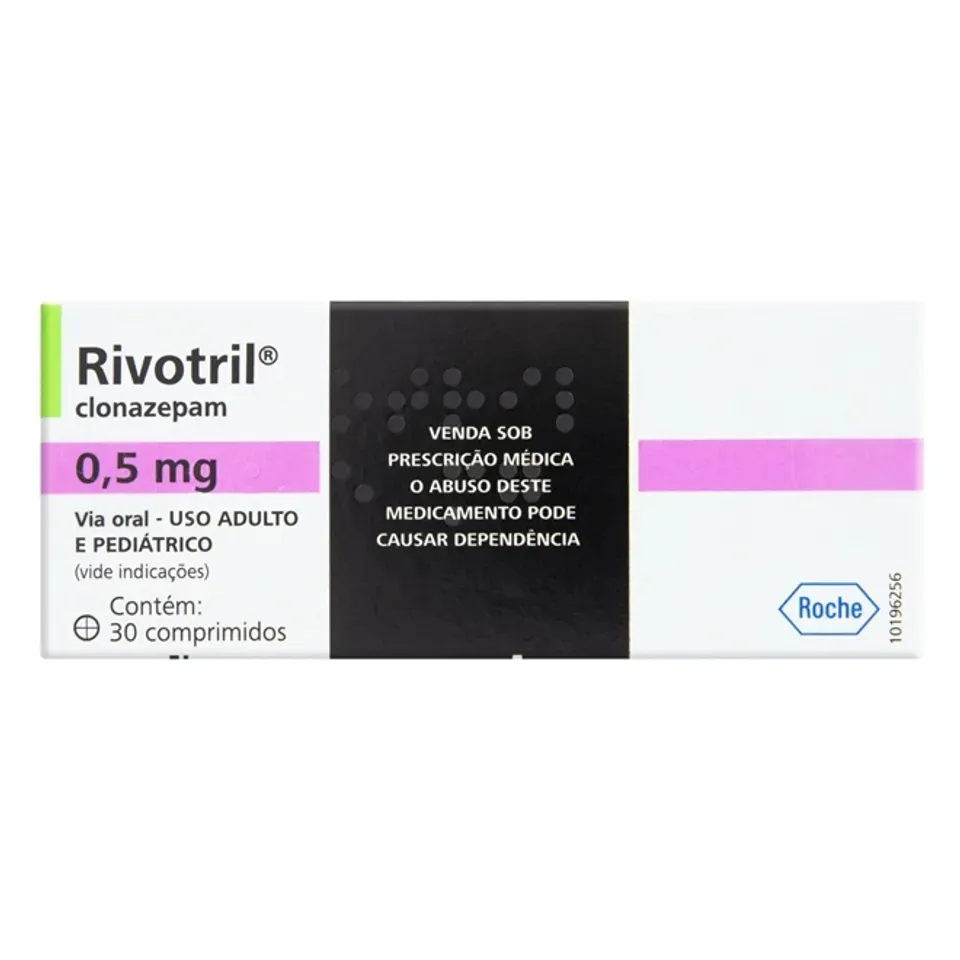
Table of Contents
Patient Information Leaflet
Introduction
Patient Information Leaflet
Rivotril 0.5 mg tablets
Clonazepam
Read this entire leaflet carefully before you start taking this medicine, because it contains important information for you.
- Keep this leaflet as you may need to read it again.
- If you have any questions, ask your doctor or pharmacist.
- This medicine has been prescribed for you only, and you should not give it to others, even if they have the same symptoms as you, because it may harm them.
- If you experience any adverse effects, consult your doctor or pharmacist, even if they are adverse effects not listed in this leaflet. See section 4.
Leaflet Contents
- What Rivotril is and what it is used for
- What you need to know before taking Rivotril
- How to take Rivotril
- Possible side effects
- How to store Rivotril
- Contents of the pack and other information
1. What Rivotril is and what it is used for
Rivotril contains clonazepam as the active ingredient, which belongs to a group of medicines known as benzodiazepines. Clonazepam has anticonvulsant properties, meaning it prevents seizures (convulsions).
It is used in most forms of epilepsy in infants and children, particularly absence seizures and tonic-clonic seizures. It is also indicated for adult epilepsies, focal seizures, and epileptic status.
2. What you need to know before starting to take Rivotril
Do not take Rivotril
- if you are allergic (hypersensitive) to the active substance or to any of the other ingredients of this medicine (listed in section 6)
- if you are allergic (hypersensitive) to other medicines in the benzodiazepine group
- if you have severe and persistent breathing difficulties (feeling of suffocation), severe liver failure (the liver cannot perform its functions), or if you have drug or alcohol dependence, unless strictly prescribed by your doctor
If you are unsure about any of these points, consult your doctor.
Warnings and precautions
Talk to your doctor or pharmacist before starting to take Rivotril.
A loss of effect may occur during treatment with Rivotril.
Rivotril should be used with special caution in the following situations:
- if you have liver or kidney disease,
- if you are elderly, suffer from muscle weakness, sleep apnea, or have breathing difficulties (feeling of suffocation),
- if you have allergies,
- if you have porphyria (a disease that may affect the nervous system and causes the skin to be very sensitive to sunlight),
- if you have hereditary galactose intolerance, Lapp lactase deficiency, or glucose-galactose malabsorption,
- if you have other diseases,
- if you are taking other medicines, especially antiepileptic drugs, sleeping aids (hypnotics), painkillers (analgesics), medicines for mental illnesses (neuroleptics), antidepressants, or lithium,
- if you have problems with drug or alcohol dependence,
- if you have or have had depression and/or have attempted suicide,
- if you have ataxia (lack of coordination of voluntary movements).
A small number of patients treated with antiepileptic medicines such as Rivotril have experienced suicidal or self-harming thoughts. If you have such thoughts at any time, contact your doctor immediately.
Before starting treatment with Rivotril, your doctor will decide whether you should take a lower dose or should not take it at all.
Taking Rivotril with other medicines
Inform your doctor or pharmacist if you are currently using, have recently used, or might need to use any other medicines. This is very important because taking several medicines at the same time may increase or decrease their effects.
For example, the effect of Rivotril may be increased by tranquilizers, sleep-inducing medicines, and other medicines that affect the central nervous system.
Therefore, do not take Rivotril together with other medicines without consulting your doctor.
You may start taking it only when your doctor authorizes you to do so.
Your doctor may prescribe Rivotril together with other antiepileptic medicines; in such cases, your doctor will adjust the dose of each medicine to achieve the desired effect.
Taking Rivotril with alcohol
You should avoid alcohol during treatment with Rivotril, as it may alter its effects, reducing the treatment's efficacy or causing unexpected adverse effects.
Risk of dependence
The use of benzodiazepines may lead to dependence, mainly when the medicine is taken continuously over a long period. To minimize this risk as much as possible, the following precautions should be observed:
- Benzodiazepines should only be taken on a doctor's prescription (never because they worked for other patients), and you should never recommend them to others.
- Do not increase the doses prescribed by your doctor, nor extend the treatment beyond the recommended duration.
- Consult your doctor regularly so they can decide whether treatment should continue.
Pregnancy and breastfeeding
If you are pregnant or breastfeeding, think you may be pregnant, or are planning to become pregnant, consult your doctor or pharmacist before using this medicine.
Driving and using machines
Rivotril may cause symptoms such as drowsiness, dizziness, or visual disturbances, and may reduce reaction capability. These effects, as well as the underlying illness itself, may impair your ability to drive or operate machinery. Therefore, do not drive, operate machinery, or perform other activities requiring special attention until your doctor has assessed your response to this medicine.
Rivotril contains lactose
This medicine contains lactose. If your doctor has diagnosed you with an intolerance to certain sugars, consult with them before taking this medicine.
3. How to take Rivotril
Follow exactly the instructions for using this medicine as given by your doctor. If in doubt, consult your doctor or pharmacist again.
Depending on your response to the medication, the nature of your condition, and your body weight, your doctor will determine the correct dose for you, starting with a low initial dose and gradually increasing it until the desired effect is achieved.
- Adults: The initial dose should not exceed 1.5 mg/day, divided into three doses. This dose may be increased by 0.5 mg every 3 days until seizures are well controlled or until adverse effects prevent further dose increases. The maintenance dose should be individually adjusted for each patient. A daily maintenance dose of 3–6 mg is usually sufficient.
The maximum dose of 20 mg daily must never be exceeded in adults.
To facilitate dose adjustment, scored 0.5 mg tablets are recommended for children and adults during the initial phase of treatment.
Use in children and adolescents
- Infants and children under 10 years of age (or weighing less than 30 kg): The initial dose is 0.01–0.03 mg/kg/day, divided into two or three doses. This dose may be increased by 0.25–0.50 mg every 3 days until seizures are well controlled or adverse effects prevent further dose increases.
The approximate maintenance dose is 0.1 mg/kg/day.
The maximum dose of 0.2 mg/kg/day must never be exceeded in infants and children under 10 years of age.
To facilitate dose adjustment, drops (1 drop = 0.1 mg of active substance) are recommended for infants.
- Children and adolescents aged 10–16 years: The initial dose is 1–1.5 mg/day, divided into two or three doses. This dose may be increased by 0.25–0.5 mg every 3 days until the maintenance dose is reached (usually 3–6 mg/day).
As with all antiepileptic medications, Rivotril treatment should not be stopped abruptly, but rather gradually tapered off.
Instructions for correct administration
Take the tablets with water or another non-alcoholic drink.
The tablet may be divided into equal doses. The tablets are scored to allow administration of lower doses. To split the tablet, hold it with the score line facing upwards and apply downward pressure.
If you forget to take a dose, do not take a double dose at the next scheduled time. Simply continue with your next regular dose.
DO NOT change the dose prescribed by your doctor.
Consult your doctor if you think that the effect of this medicine is too strong or too weak.
Duration of treatment
Your doctor will tell you when to stop treatment with Rivotril.
This treatment may last for life; therefore, if you wish to discontinue Rivotril, you must always consult your doctor, as stopping treatment suddenly may cause withdrawal symptoms such as tremors.
If you take more Rivotril than you should
Symptoms of overdose or poisoning vary significantly from person to person, depending on age, weight, and individual response to the medication. Symptoms may range from fatigue and dizziness to ataxia (lack of coordination of voluntary movements), somnolence (drowsiness), respiratory depression, absence of reflexes, hypotension (low blood pressure), and stupor (reduced responsiveness to stimuli), and ultimately coma with respiratory depression and circulatory failure. Seizures may occur, particularly in patients with blood levels of the drug above the recommended range.
Treatment of poisoning will consist of monitoring (close observation) of respiration, heart rate, and blood pressure; gastric lavage, intravenous hydration, general supportive measures, and emergency interventions in case of airway obstruction. In cases of hypotension (low blood pressure), sympathomimetic drugs may be administered.
Warning:
The medication flumazenil (a benzodiazepine antagonist) is not indicated in epileptic patients treated with benzodiazepines. In these patients, flumazenil may provoke seizures.
If you take more Rivotril than you should, contact your doctor immediately or go to the nearest hospital. Bring the medicine with you.
In case of overdose or accidental ingestion, contact the Toxicology Information Service, Telephone 91 562.04.20.
If you forget to take Rivotril
Do not take a double dose to make up for missed doses.
If you stop taking Rivotril
Upon discontinuation, symptoms such as restlessness, anxiety, insomnia, difficulty concentrating, headache, and sweating may occur. Abrupt interruption of the medication is generally not recommended; instead, the dose should be gradually reduced according to your doctor's instructions.
If you have any further questions about the use of this medicine, ask your doctor or pharmacist.
4. Possible adverse effects
Like all medicines, Rivotril may produce adverse effects, although not everyone experiences them.
The following adverse effects have been reported:
-
Involuntary and uncontrolled eye movements (nystagmus).
-
Drowsiness, slowed reflexes, hypotonia, muscle weakness, dizziness, fatigue, ataxia (lack of coordination of voluntary muscle movements). These adverse effects are usually transient and generally disappear without the need to discontinue treatment.
-
Anterograde amnesia.
-
Thrombocytopenia (reduced platelet count).
-
Urticaria (allergy), itching, skin rash (redness of the skin), temporary hair loss, changes in skin pigmentation (skin color).
-
Headache.
-
Nausea and epigastric discomfort (in the upper abdomen).
-
Urinary incontinence (lack of bladder control).
-
Impotence, decreased libido (reduced sexual desire).
-
Allergic reactions and anaphylactic shock (severe allergic reaction).
-
Generalized epileptic seizures.
-
Reduced ability to concentrate, restlessness, confusion, disorientation.
-
Emotional and mood disturbances.
-
Depression, which may be due to an underlying medical condition.
-
Paradoxical reactions (appearance of reactions opposite to those expected from the drug's action): restlessness, irritability, aggressive behavior, agitation, nervousness, hostility, anxiety, sleep disturbances, delirium, rage, nightmares, vivid dreams, hallucinations, psychosis, hyperactivity, behavioral disturbances.
-
Respiratory depression (slow and shallow breathing), especially if clonazepam is administered intravenously. The risk of respiratory depression is higher in patients with airway obstruction or pre-existing brain damage. Respiratory depression may also occur when other respiratory depressant medicines are administered concomitantly. This effect can generally be avoided by careful individual dose adjustment.
-
Increased risk of falls and fractures in elderly patients and patients taking other sedatives simultaneously (including alcoholic beverages).
-
Heart failure (heart unable to pump blood effectively) and heart attack.
-
Dependence and withdrawal syndrome.
When treatment is prolonged or high doses are used, reversible disorders such as dysarthria (difficulty in articulating words), ataxia (lack of coordination of voluntary muscle movements), and double vision (diplopia) may occur.
In some forms of epilepsy, an increased frequency of seizures may occur during long-term treatment.
It is known that the use of benzodiazepines may cause anterograde amnesia (difficulty in remembering recent events), and the risk of this adverse effect increases with dose.
Other adverse effects in children:
- Hypersalivation (increased saliva production) and bronchial secretions in infants and young children, thus requiring special attention to maintain clear airways.
- Incomplete precocious puberty (rapid body development) in children of both sexes.
Reporting of adverse effects
If you experience any type of adverse effect, consult your doctor or pharmacist, even if they are effects not listed in this leaflet. You may also report them directly via the Spanish Pharmacovigilance System for Human Medicines: www.notificaRAM.es/. By reporting adverse effects, you can help provide more information on the safety of this medicine.
5. Storage of Rivotril
Keep this medicine out of sight and reach of children.
Do not use this medicine after the expiry date stated on the packaging.
The expiry date refers to the last day of the month indicated.
Medicines must not be disposed of via wastewater or household waste. Dispose of unused containers and medicines at the SIGRE Point at your pharmacy. If in doubt, ask your pharmacist how to dispose of medicines and containers you no longer need. This will help protect the environment.
6. Contents of the pack and other information
Composition of Rivotril
- The active substance is clonazepam (INN). Scored tablets containing 0.5 mg of active substance.
- The other components are monohydrate lactose, corn starch, pregelatinized starch (from potato), talc, magnesium stearate, yellow iron oxide (E-172) and red iron oxide (E-172).
Appearance of the product and contents of the pack
Rivotril is available in boxes containing 60 scored tablets in blister packs.
Marketing Authorization Holder and Manufacturer
Marketing Authorization Holder:
CHEPLAPHARM Arzneimittel GmbH
Ziegelhof 24
17489 Greifswald
Germany
Manufacturer:
Recipharm Leganés S.L.U.
Calle Severo Ochoa 13
Leganés
28914 Madrid
Spain
CHEPLAPHARM Arzneimittel GmbH
Ziegelhof 23 – 24
17489 Greifswald
Germany
Local representative:
Laboratorios Rubió, S.A.
C/ Industria, 29 - Pol. Ind. Comte de Sert
08755 Castellbisbal (Barcelona)
Spain
Date of the most recent revision of this leaflet: June 2019
Detailed and up-to-date information on this medicinal product is available on the website of the Spanish Agency for Medicines and Health Products (AEMPS) http://www.aemps.es/