Rivastigmine Ortodrol 2 mg/ml oral solution EFG
Spain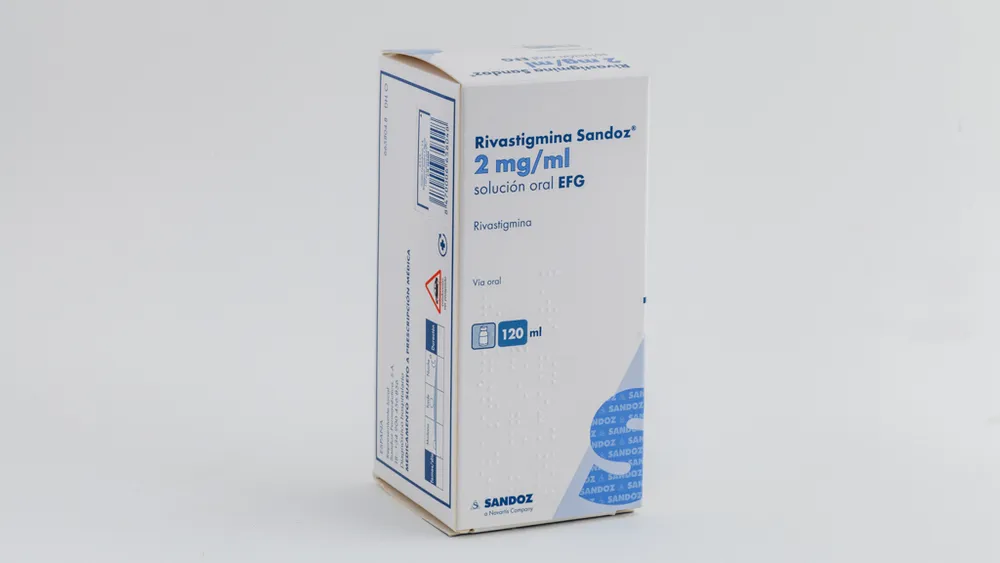
Table of Contents
- Package leaflet: Information for the user
- Introduction
- 1. What Rivastigmina Ortodrol 2 mg/ml oral solution is and what it is used for
- 2. What you need to know before taking Rivastigmina Ortodrol 2 mg/ml oral solution
- 3. How to take Rivastigmina Ortodrol 2 mg/ml oral solution
- 4. Possible adverse effects
- 5. Storage of Rivastigmina Ortodrol 2 mg/ml oral solution
- 6. Contents of the pack and other information
Package leaflet: Information for the user
Introduction
PACKAGE LEAFLET: INFORMATION FOR THE USER
Rivastigmina Ortodrol 2 mg/ml oral solution EFG
Rivastigmine hydrogen tartrate

Read the entire leaflet carefully before you start taking this medicine.
- Keep this leaflet, as you may need to read it again.
- If you have any questions, ask your doctor or pharmacist.
- This medicine has been prescribed for you and should not be given to other people, even if they have the same symptoms, as it may harm them.
- If you consider any of the side effects you experience to be serious, or if you notice any side effects not listed in this leaflet, inform your doctor or pharmacist.
Contents of the leaflet:
- What Rivastigmina Ortodrol 2 mg/ml oral solution is and what it is used for
- Before taking Rivastigmina Ortodrol 2 mg/ml oral solution
- How to take Rivastigmina Ortodrol 2 mg/ml oral solution
- Possible side effects
- How to store Rivastigmina Ortodrol 2 mg/ml oral solution
- Further information
1. What Rivastigmina Ortodrol 2 mg/ml oral solution is and what it is used for
The active substance in Rivastigmina Ortodrol 2 mg/ml oral solution is rivastigmine.
Rivastigmine belongs to a group of substances known as cholinesterase inhibitors.
In patients with Alzheimer's dementia or dementia associated with Parkinson's disease, certain nerve cells in the brain die, resulting in low levels of the neurotransmitter acetylcholine (a substance that enables nerve cells to communicate with each other). Rivastigmine works by blocking the enzymes that break down acetylcholine: acetylcholinesterase and butyrylcholinesterase. By inhibiting these enzymes, rivastigmine allows acetylcholine levels in the brain to increase, helping to reduce the symptoms of Alzheimer's disease and dementia associated with Parkinson's disease.
Rivastigmine is used to treat adult patients with mild to moderately severe Alzheimer's dementia, a progressive brain disorder that gradually affects memory, intellectual capacity, and behaviour. The oral solution can also be used for the treatment of dementia in adult patients with Parkinson's disease.
2. What you need to know before taking Rivastigmina Ortodrol 2 mg/ml oral solution
Before taking Rivastigmina Ortodrol 2 mg/ml oral solution, it is important that you read the following information and discuss any questions with your doctor.
Do not take Rivastigmina Ortodrol 2 mg/ml oral solution
- if you are allergic to rivastigmine or to any of the other ingredients of this medicine (listed in section 6).
- if you have severe liver problems.
Warnings and precautions
Talk to your doctor before starting treatment with rivastigmine:
- if you have or have ever had an irregular or slow heart rate (pulse).
- if you have or have ever had an active stomach ulcer.
- if you have or have ever had difficulties in urination.
- if you have or have ever had seizures.
- if you have or have ever had asthma or a serious respiratory disease.
- if you have or have ever had (impairment) of kidney function.
- if you have or have ever had (impairment) of liver function.
- if you suffer from tremors.
- if you have low body weight.
- if you experience gastrointestinal reactions such as feeling dizzy (nausea), vomiting, and diarrhea. You may become dehydrated (loss of large amounts of fluid) if vomiting or diarrhea are prolonged.
If you are in any of these situations, your doctor may consider closer monitoring during treatment.
If you have not taken rivastigmine for more than three days, do not take the next dose until you have consulted your doctor.
Children and adolescents
Rivastigmina Ortodrol 2 mg/ml oral solution should not be used in the pediatric population for the treatment of Alzheimer's disease.
Taking Rivastigmina Ortodrol 2 mg/ml oral solution with other medicines
Inform your doctor or pharmacist if you are taking, have recently taken, or might need to take any other medicines.
Rivastigmine should not be administered at the same time as metoclopramide (a medicine used to relieve or prevent nausea and vomiting). Taking both medicines together may cause problems such as stiffness in the limbs and hand tremors.
If you need to undergo surgery while taking rivastigmine, inform your doctor before receiving any anesthetic, as rivastigmine may intensify the effects of certain muscle relaxants used during anesthesia.
Caution is advised when using rivastigmine together with beta-blockers (medicines such as atenolol used to treat hypertension, angina, and other heart conditions). Taking both medicines together may lead to complications such as a slow heart rate (bradycardia), which may result in fainting or loss of consciousness.
Rivastigmine should not be administered simultaneously with other medicines that have similar effects to it. Rivastigmine may interfere with anticholinergic medicines (medicines used to relieve stomach cramps or spasms, to treat Parkinson's disease, or to prevent travel sickness).
Pregnancy, breastfeeding, and fertility
Pregnancy
If you are pregnant or breastfeeding, think you may be pregnant, or are planning to become pregnant, consult your doctor or pharmacist before taking this medicine.
If you are pregnant, the benefits of using rivastigmine must be weighed against the potential risks to the fetus. Rivastigmine should not be used during pregnancy unless clearly necessary.
You must not breastfeed during treatment with rivastigmine.
Driving and use of machines
Your condition may affect your ability to drive or operate machinery, and you should not perform these activities unless your doctor advises that it is safe to do so. Rivastigmina Ortodrol 2 mg/ml oral solution may cause dizziness and drowsiness, particularly at the beginning of treatment or when the dose is increased. If you experience these effects, you should not drive or operate machinery.
Rivastigmina Ortodrol contains sodium benzoate
This medicine contains 1 mg of sodium benzoate per ml of solution.
3. How to take Rivastigmina Ortodrol 2 mg/ml oral solution
Follow exactly the instructions for administration of Rivastigmina Ortodrol 2 mg/ml oral solution given by your doctor. Consult your doctor or pharmacist if you have any doubts.
For accurate dosing, the packaging contains an oral dosing syringe. Using this syringe, draw the prescribed amount of rivastigmine from the bottle.
Insert the syringe into the pierced stopper, invert the bottle, and pull the plunger until the liquid reaches the mark in mg. Return the bottle to its upright position and remove the syringe.
The syringe should be cleaned and dried after each use.
Each dose of rivastigmine may be taken directly from the syringe.
Rivastigmine must be taken twice daily with meals (in the morning and at night).
Your doctor will determine the appropriate dose of rivastigmine for you, starting treatment with a low dose and gradually increasing it depending on your response to treatment. The maximum dose to be taken is 6 mg twice daily. If you have not taken rivastigmine for several days, do not take the next dose until you have spoken with your doctor. To ensure your medicine produces the desired effect, you must take it every day.
Inform your caregiver that you are taking rivastigmine.
This medicine should only be prescribed by a specialist, and your doctor should periodically assess whether it is producing the desired effects. Your doctor will monitor your weight while you are taking this medicine.
If you take more Rivastigmina Ortodrol 2 mg/ml oral solution than you should
In case of overdose or accidental ingestion, contact your doctor, pharmacist, or call the Toxicology Information Service immediately at telephone number 91 562 04 20, indicating the medicine and the amount taken. Some people who have accidentally taken higher doses have experienced nausea, vomiting, diarrhoea, high blood pressure, and hallucinations. Slowing of the heart rate and fainting may also occur.
If you forget to take Rivastigmina Ortodrol 2 mg/ml oral solution
If you miss a dose of rivastigmine, wait and take the next dose at the usual time. Do not take a double dose to make up for missed doses.
4. Possible adverse effects
Like all medicines, Rivastigmina Ortodrol 2 mg/ml oral solution may cause adverse effects, although not everyone experiences them.
The likelihood of experiencing adverse effects is higher when starting your medication or when the dose is increased. These adverse effects will likely gradually disappear as your body gets used to the medicine.
The frequencies of adverse effects are:
Very common adverse effects (affect more than 1 in 10 patients): dizziness, nausea, vomiting, diarrhoea, and loss of appetite.
Common adverse effects (affect between 1 and 10 in 100 patients): anxiety, sweating, headache, heartburn, weight loss, stomach pain, feeling restless, feeling tired or weak, feeling generally unwell, tremor, or confusion.
Uncommon adverse effects (affect between 1 and 10 in 1,000 patients): patients have reported depression, difficulty sleeping, changes in liver function, fainting, or accidental falls.
Rare adverse effects (affect between 1 and 10 in 10,000 patients): patients have experienced chest pain, epileptic seizures (fits or convulsions), skin rash, gastric or intestinal ulcers.
Very rare adverse effects (affect fewer than 1 in 10,000 patients): patients have experienced gastrointestinal haemorrhage (blood in stools or vomit), urinary tract infection, pancreatitis (severe pain in the upper abdomen, often accompanied by nausea and vomiting), heart rhythm problems (fast or slow heartbeat), high blood pressure, hallucinations, worsening of Parkinson's disease or development of similar symptoms (muscle rigidity, difficulty moving).
Adverse effects with unknown frequency (cannot be estimated from available data): severe vomiting which may lead to oesophageal rupture (part of the digestive tube connecting the mouth to the stomach), dehydration (loss of large amounts of fluid), hepatic disorders (yellowing of the skin, yellowing of the whites of the eyes, abnormally dark urine, or unexplained nausea, vomiting, tiredness, and loss of appetite), aggression, restlessness, irregular heartbeat, Pisa syndrome (a condition involving involuntary muscle contractions and abnormal tilting of the body and head to one side).
Patients with dementia associated with Parkinson's disease experience some adverse effects more frequently, as well as additional adverse effects: tremor, fainting, accidental falls (very common), difficulty sleeping, anxiety, restlessness, worsening of Parkinson's disease or development of similar symptoms (muscle rigidity, difficulty moving, muscle weakness), abnormally slow or uncontrolled movements, slow heartbeat, excessive salivation, and dehydration (common), irregular heartbeat and impaired movement control (uncommon), Pisa syndrome (a condition involving involuntary muscle contractions and abnormal tilting of the body and head to one side) (unknown frequency).
Other adverse effects observed with rivastigmine transdermal patches and which may also occur with the oral solution:
Common: fever, severe confusion, urinary incontinence (inability to properly control urination).
Uncommon: hyperactivity (high level of activity, restlessness).
If any of these symptoms occur, contact your doctor, as medical attention may be required.
If you consider any of the adverse effects you experience to be severe, or if you notice any adverse effects not listed in this leaflet, inform your doctor or pharmacist.
Reporting of adverse effects
If you experience any type of adverse effect, consult your doctor, pharmacist, or nurse, even if it is a possible adverse effect not listed in this leaflet. You can also report them directly via the Spanish Pharmacovigilance System for Human Medicinal Products: www.notificaRAM.es.
By reporting adverse effects, you can help provide more information on the safety of this medicine.
5. Storage of Rivastigmina Ortodrol 2 mg/ml oral solution
Keep out of the reach and sight of children.
Do not use Rivastigmina Ortodrol 2 mg/ml oral solution after the expiry date stated on the container. The expiry date refers to the last day of the month indicated.
No special storage conditions are required. Use Rivastigmina Ortodrol 2 mg/ml oral solution within one month after first opening the bottle.
Medicines must not be disposed of via wastewater or household waste. Unused medicines and their containers should be taken to the SIGRE point at your pharmacy. If you have any doubts, ask your pharmacist how to dispose of unused medicines and their containers. This will help protect the environment.
6. Contents of the pack and other information
Composition of Rivastigmina Ortodrol 2 mg/ml oral solution
- The active substance is rivastigmine hydrogen tartrate. Each ml contains rivastigmine hydrogen tartrate equivalent to 2.0 mg of rivastigmine base.
- The other components are: sodium benzoate, anhydrous citric acid, sodium citrate dihydrate, quinoline yellow water-soluble dye (E104), and purified water.
Appearance of the product and contents of the pack
Rivastigmina Ortodrol 2 mg/ml oral solution is presented as a yellow, clear solution (2.0 mg/ml rivastigmine base) in 120 ml amber glass bottles with child-resistant closure. An oral dosing syringe is included with the oral solution.
Marketing Authorization Holder and Manufacturer
Industria Química y Farmacéutica VIR, S.A
C/ Laguna 66-68-70
Polígono Industrial Urtinsa II
28923 Alcorcón (Madrid)
Spain
This leaflet was approved in January 2025
Detailed and up-to-date information on this medicinal product is available on the website of the Spanish Agency of Medicines and Medical Devices (AEMPS) http://www.aemps.gob.es/