Rivaroxaban Stada 10 mg film-coated tablets EFG
Spain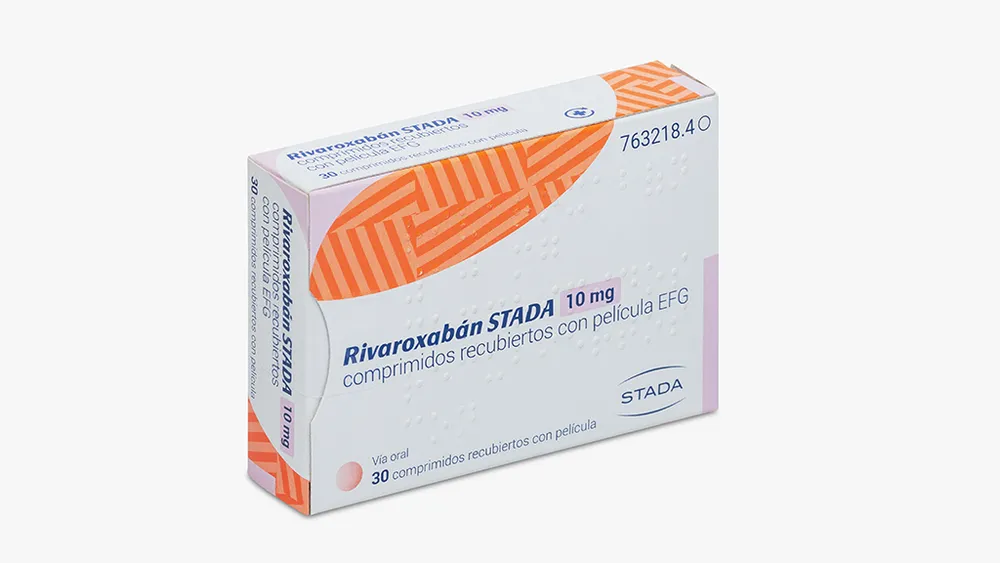
Table of Contents
- Patient Information Leaflet
- Introduction
- **Read the entire leaflet carefully before starting to take this medicine, because it contains important information for you.**
- **Package leaflet contents**
- 1. What Rivaroxaban Stada is and what it is used for
- 2. What you need to know before taking Rivaroxaban Stada
- 3. How to take Rivaroxaban Stada
- 4. Possible adverse effects
- 5. Storage of Rivaroxaban Stada
- 6. Contents of the pack and other information
- **Marketing Authorization Holder**
- STADA, S.L. Laboratory
- **Marketing Authorization Holder**
- STADA, S.L. Laboratory
Patient Information Leaflet
Introduction
Package Leaflet: Information for the user
Rivaroxaban Stada 10 mg film-coated tablets EFG
Read the entire leaflet carefully before starting to take this medicine, because it contains important information for you.
- Keep this leaflet, as you may need to read it again.
- If you have any questions, consult your doctor or pharmacist.
- This medicine has been prescribed for you only, and you should not give it to others, even if they have the same symptoms as you, because it could harm them.
- If you experience any adverse effects, consult your doctor or pharmacist, even if they are adverse effects not listed in this leaflet. See section 4.
Package leaflet contents
- What Rivaroxaban Stada is and what it is used for
- What you need to know before taking Rivaroxaban Stada
- How to take Rivaroxaban Stada
- Possible side effects
- How to store Rivaroxaban Stada
- Contents of the pack and other information
1. What Rivaroxaban Stada is and what it is used for
This medicinal product contains the active substance rivaroxaban and is used in adults for:
- preventing the formation of blood clots in the veins after hip or knee replacement surgery. Your doctor has prescribed this medicine because you are at increased risk of developing blood clots following surgery.
- treating blood clots in the veins of the legs (deep vein thrombosis) and in the blood vessels of the lungs (pulmonary embolism), and for preventing these blood clots from recurring in the blood vessels of the legs and/or lungs.
Rivaroxaban belongs to a group of medicines called antithrombotic agents. It works by inhibiting a clotting factor (factor Xa), thereby reducing the blood's tendency to form clots.
2. What you need to know before taking Rivaroxaban Stada
Do not take Rivaroxaban
- if you are allergic to rivaroxaban or to any of the other ingredients of this medicine (listed in section 6)
- if you are bleeding excessively
- if you have a disease or condition affecting an organ in your body that increases the risk of serious bleeding (e.g., stomach ulcer, injury or bleeding in the brain, or recent surgery on the brain or eyes)
- if you are taking medicines to prevent blood clots (e.g., warfarin, dabigatran, apixaban, or heparin), except when switching from one anticoagulant treatment to another or while receiving heparin through a venous or arterial catheter to prevent it from becoming blocked
- if you have liver disease that increases your risk of bleeding
- if you are pregnant or breastfeeding
Do not take Rivaroxaban and inform your doctor if any of these situations apply to you.
Warnings and precautions
Talk to your doctor or pharmacist before starting this medicine.
Take special care with this medicine
-
if you have an increased risk of bleeding, such as in the following situations:
-
moderate or severe kidney impairment, as kidney function may affect the amount of medicine active in your body
-
if you are taking other medicines to prevent blood clots (e.g., warfarin, dabigatran, apixaban, or heparin), when switching to another anticoagulant treatment or while receiving heparin through a venous or arterial catheter to prevent blockage (see section “Other medicines and Rivaroxaban Stada”)
-
bleeding disorders
-
very high blood pressure that is not controlled by medical treatment
-
stomach or intestinal diseases that could cause bleeding, such as inflammation of the stomach or intestines, inflammation of the oesophagus (e.g., due to gastro-oesophageal reflux disease [a condition where stomach acid flows back into the oesophagus], or tumours in the stomach, intestines, genital tract, or urinary tract)
-
a blood vessel problem at the back of the eyes (retinopathy)
-
a lung disease with widened airways filled with pus (bronchiectasis) or a previous history of lung bleeding
-
if you have a heart valve prosthesis
-
if you know you have a condition called antiphospholipid syndrome (an immune system disorder that increases the risk of blood clots), inform your doctor so they can decide whether your treatment needs to be adjusted
-
if your doctor determines that your blood pressure is unstable or if you are scheduled to receive another treatment or undergo a procedure to remove a blood clot from your lungs
Inform your doctor if any of these situations apply to you before taking this medicine. Your doctor will decide whether you should be treated with this medicine and whether you need closer monitoring.
If you need surgery:
-
It is very important to take this medicine exactly at the times prescribed by your doctor, both before and after surgery.
-
If your surgery involves placement of a catheter or injection into the spine (e.g., for epidural or spinal anaesthesia, or pain relief):
-
It is very important to take this medicine exactly at the times prescribed by your doctor.
-
Inform your doctor immediately if you experience numbness or weakness in your legs or problems with your bowel or bladder after the anaesthesia, as urgent medical attention is required.
Children and adolescents
Rivaroxaban 10 mg tablets are not recommended for use in individuals under 18 years of age. There is insufficient information on the use of this medicine in children and adolescents.
Other medicines and Rivaroxaban Stada
Tell your doctor or pharmacist if you are taking, have recently taken, or might need to take any other medicines, including those obtained without a prescription.
- If you are taking:
? any medicine for fungal infections (e.g., fluconazole, itraconazole, voriconazole, posaconazole), unless applied only to the skin
? tablets containing ketoconazole (used to treat Cushing's syndrome, in which the body produces too much cortisol)
? any medicine for bacterial infections (e.g., clarithromycin, erythromycin)
? antiviral medicines for HIV/AIDS (e.g., ritonavir)
? other medicines that reduce blood clotting (e.g., enoxaparin, clopidogrel, or vitamin K antagonists such as warfarin or acenocoumarol)
? anti-inflammatory medicines and pain relievers (e.g., naproxen or acetylsalicylic acid)
? dronedarone, a medicine used to treat irregular heartbeat
? certain medicines used to treat depression (selective serotonin reuptake inhibitors [SSRIs] or serotonin-norepinephrine reuptake inhibitors [SNRIs])
If any of the above situations apply to you, inform your doctor before taking this medicine, as the effect of this medicine may be increased. Your doctor will decide whether you should be treated with this medicine and whether you need closer monitoring.
If your doctor considers you to be at higher risk of developing stomach or intestinal ulcers, they may recommend that you also use preventive ulcer treatment.
- If you are taking:
? any medicine for epilepsy (phenytoin, carbamazepine, phenobarbital)
? St John’s wort (Hypericum perforatum), a herbal remedy used to treat depression
? rifampicin, an antibiotic
If any of the above situations apply to you, inform your doctor before taking this medicine, as the effect of this medicine may be reduced. Your doctor will decide whether you should be treated with this medicine and whether you need closer monitoring.
Pregnancy and breastfeeding
Do not take this medicine if you are pregnant or breastfeeding. If there is any possibility you could become pregnant, use a reliable method of contraception while taking this medicine. If you become pregnant while taking this medicine, inform your doctor immediately. Your doctor will decide how you should be treated.
Driving and using machines
This medicine may cause dizziness (a common side effect) or fainting (an uncommon side effect) (see section 4, “Possible side effects”). Do not drive, ride a bicycle, or operate tools or machinery if you are affected by these symptoms.
Rivaroxaban Stada contains lactose
If your doctor has informed you that you have an intolerance to certain sugars, consult with them before taking this medicine.
Rivaroxaban Stada contains sodium
This medicine contains less than 23 mg of sodium (1 mmol) per tablet; therefore, it is essentially “sodium-free”.
3. How to take Rivaroxaban Stada
Follow exactly the instructions given by your doctor for taking this medicine. If in doubt, consult your doctor or pharmacist again.
What dose to take
- To prevent the formation of blood clots in the veins after hip or knee replacement surgery: the recommended dose is one 10 mg rivaroxaban tablet once daily.
- To treat blood clots in the veins of the legs and in the blood vessels of the lungs, and to prevent blood clots from recurring.
After at least 6 months of treatment for blood clots, the recommended dose is one 10 mg tablet once daily or one 20 mg tablet once daily. Your doctor has prescribed you rivaroxaban 10 mg once daily.
Swallow the tablet whole, preferably with water.
This medicine may be taken with or without food.
If you have difficulty swallowing the tablet whole, consult your doctor about other ways of taking this medicine. The tablet may be crushed and mixed with water or apple purée immediately before taking.
If necessary, your doctor may also administer the crushed tablet of this medicine through a gastric tube.
When to take Rivaroxaban Stada
Take the tablet every day, until your doctor tells you otherwise.
Try to take one tablet at the same time each day to help you remember.
Your doctor will decide how long you should continue treatment.
To prevent the formation of blood clots in the veins after hip or knee replacement surgery:
Take the first tablet 6 to 10 hours after surgery.
If you have undergone major hip surgery, you will usually take tablets for 5 weeks.
If you have undergone major knee surgery, you will usually take tablets for 2 weeks.
If you take more Rivaroxaban Stada than you should
Call your doctor immediately if you have taken too many tablets of this medicine. Taking too much rivaroxaban increases the risk of bleeding.
In case of overdose or accidental ingestion, contact your doctor or pharmacist immediately or call the Toxicology Information Service at telephone number 91 562 04 20, indicating the medicine and the amount ingested.
If you forget to take Rivaroxaban Stada
If you forget to take a dose, take it as soon as you remember. Take the next tablet the following day, and then continue taking one tablet each day as usual.
Do not take a double dose to make up for a forgotten dose.
If you stop taking Rivaroxaban Stada
Do not stop treatment with this medicine without first speaking to your doctor, because this medicine prevents the development of a serious condition.
If you have any further questions about the use of this medicine, ask your doctor or pharmacist.
4. Possible adverse effects
Like all medicines, this medicine can cause adverse effects, although not everyone will experience them.
Like other similar medicines used to reduce blood clot formation, this medicine can cause bleeding, which may be life-threatening. Excessive bleeding can lead to a sudden drop in blood pressure (shock). In some cases, bleeding may not be obvious.
Tell your doctor immediately if you experience any of the following adverse effects:
-
Signs of bleeding
-
bleeding in the brain or within the skull (symptoms may include headache, weakness on one side of the body, vomiting, seizures, decreased level of consciousness, and neck stiffness. This is a serious medical emergency. Seek immediate medical attention!).
-
prolonged or excessive bleeding
-
unusual weakness, fatigue, paleness, dizziness, headache, unexplained swelling, difficulty breathing, chest pain, or angina.
Your doctor will decide whether to keep you under closer monitoring or change your treatment.
- Signs of serious skin reactions
- severe skin rashes that spread, blisters, or mucosal lesions, e.g., in the mouth or eyes (Stevens-Johnson syndrome/toxic epidermal necrolysis).
- drug reaction causing rash, fever, internal organ inflammation, blood abnormalities, and systemic illness (DRESS syndrome).
The frequency of these adverse effects is very rare (up to 1 in 10,000 people).
- Signs of serious allergic reactions
- swelling of the face, lips, mouth, tongue, or throat; difficulty swallowing; hives; breathing difficulties; sudden drop in blood pressure.
The frequencies of serious allergic reactions are very rare (anaphylactic reactions, including anaphylactic shock; may affect up to 1 in 10,000 people) and uncommon (angioedema and allergic edema; may affect up to 1 in 100 people).
General list of possible adverse effects
Frequent (may affect up to 1 in 10 people)
- decrease in red blood cells that may cause paleness, weakness, or difficulty breathing
- bleeding from the stomach or intestines, urogenital hemorrhage (including blood in urine and heavy menstrual bleeding), nosebleeds, bleeding gums
- bleeding in the eye (including bleeding in the white part of the eye)
- bleeding into tissue or body cavity (hematoma, bruising)
- coughing up blood
- bleeding from or under the skin
- bleeding after surgery
- discharge of blood or fluid from a surgical wound
- swelling of limbs
- limb pain
- impaired kidney function (may be seen in tests performed by your doctor)
- fever
- stomach pain, indigestion, dizziness or feeling dizzy, constipation, diarrhea
- low blood pressure (symptoms may include dizziness or faintness upon standing)
- general decrease in strength and energy (weakness, fatigue), headache, dizziness
- rash, skin itching
- blood tests may show increased levels of certain liver enzymes.
Uncommon (may affect up to 1 in 100 people)
- bleeding in the brain or within the skull (see above, signs of bleeding)
- bleeding into a joint causing pain and swelling
- thrombocytopenia (low platelet count, cells that help blood clotting)
- allergic reaction, including skin allergic reaction
- impaired liver function (may be seen in tests performed by your doctor)
- blood tests may show increased bilirubin, increased pancreatic or liver enzymes, or increased platelet count
- fainting
- feeling unwell
- increased heart rate
- dry mouth
- hives.
Rare (may affect up to 1 in 1,000 people)
- bleeding into a muscle
- cholestasis (reduced bile flow), hepatitis, including hepatocellular injury (liver inflammation or damage)
- yellowing of the skin and eyes (jaundice)
- localized swelling
- blood collection (hematoma) in the groin as a complication after heart surgery involving insertion of a catheter into the leg artery (pseudoaneurysm).
Very rare (may affect up to 1 in 10,000 people)
- accumulation of eosinophils, a type of granulocytic white blood cells causing lung inflammation (eosinophilic pneumonia)
Frequency not known (frequency cannot be estimated from available data)
- kidney failure following severe bleeding
- bleeding in the kidney, sometimes with blood in the urine, leading to impaired kidney function (anticoagulant-related nephropathy)
- increased pressure in the muscles of the legs or arms after bleeding, causing pain, swelling, sensory disturbances, numbness, or paralysis (compartment syndrome following bleeding).
Reporting of adverse effects
If you experience any adverse effect, talk to your doctor or pharmacist, even if it is a possible adverse effect not listed in this leaflet. You may also report them directly via the Spanish Pharmacovigilance System for Human Medicines: https://www.notificaram.es. By reporting adverse effects, you can help provide more information on the safety of this medicine.
5. Storage of Rivaroxaban Stada
Keep this medicine out of the sight and reach of children.
Do not use this medicine after the expiry date stated on the blister and packaging following "EXP". The expiry date refers to the last day of the month indicated.
This medicine does not require any special storage conditions.
Crushed tablets
Crushed tablets are stable in water or apple purée for up to 4 hours.
Medicines must not be disposed of via wastewater or household waste. Return empty containers and any unused medicines to the SIGRE collection point at your pharmacy. Ask your pharmacist how to dispose of containers and medicines no longer required. This helps protect the environment.
6. Contents of the pack and other information
Composition of Rivaroxaban Stada
- The active substance is rivaroxaban. Each tablet contains 10 mg of rivaroxaban.
- The other components are:
Tablet core: microcrystalline cellulose, lactose monohydrate, povidone, pregelatinized starch (from corn), crospovidone, sodium lauryl sulfate, and magnesium stearate.
Tablet coating: hypromellose E464, titanium dioxide E171, macrogol 4000 E1521, and iron oxide red E172.
Appearance of the product and contents of the pack
The film-coated tablets are light pink, round, biconvex, with a diameter of approximately 6 mm.
They are packaged in blister packs or unit-dose blisters, in cartons containing 5, 10, 14, 15, 28, 30, 42, 50, 56, 98, and 100 film-coated tablets.
Only certain pack sizes may be marketed.
Marketing Authorization Holder
STADA, S.L. Laboratory
Frederic Mompou, 5
08028 Sant Just Desvern (Barcelona)
Spain
Manufacturing Responsible Party
STADA Arzneimittel AG
Stadastrasse 2 - 18
61118 Bad Vilbel
Germany
or
STADA Arzneimittel GmbH
Muthgasse 36
1190 Wien
Austria
or
Centrafarm Services B.V.
Van de Reijtstraat 31 E
4814NE Breda
Netherlands
or
Clonmel Healthcare Ltd.
Waterford Road
Clonmel, Co. Tipperary
Ireland
or
Laboratorios Liconsa, S.A.
Avda. Miralcampo, Nº 7,
Polígono Industrial Miralcampo
19200 Azuqueca de Henares - Guadalajara
Spain
This medicinal product is authorized in the Member States of the European Economic Area under the following names:
Member State | Medicinal Product Name |
Sweden | Rivaroxaban STADA 10 mg film-coated tablets |
Austria | Rivaroxaban STADA 10 mg Filmtabletten |
Belgium | Rivaroxaban EG 10 mg film-coated tablets |
Germany | Rivaroxaban AL 10 mg Filmtabletten |
Denmark | Rivaroxaban STADA 10 mg film-coated tablets |
Estonia | Rivaroxaban STADA |
Greece | Rivaroxaban / Stada |
Spain | Rivaroxaban STADA 10 mg film-coated tablets EFG |
Finland | Rivaroxaban STADA 10 mg film-coated tablets |
France | RIVAROXABAN EG 10 mg, film-coated tablet |
Hungary | Rivaroxaban STADA 10 mg filmtabletta |
Ireland | Rivaroxaban Clonmel 10 mg film-coated tablets |
Iceland | Rivaroxaban STADA 10 mg film-coated tablets |
Lithuania | Rivaroxaban STADA 10 mg film-coated tablets |
Luxembourg | Rivaroxaban EG 10 mg film-coated tablets |
Latvia | Rivaroxaban Stada 10 mg film-coated tablets |
Netherlands | Rivaroxaban CF 10 mg, film-coated tablets |
Norway | Rivaroxaban STADA |
Portugal | Rivaroxaban Ciclum |
Romania | Rivaroxaban STADA 10 mg film-coated tablets |
Sweden | Rivaroxaban STADA 10 mg film-coated tablets |
Date of the most recent review of this leaflet: November 2023
Detailed information on this medicine is available on the website of the Spanish Agency of Medicines and Health Products (AEMPS) http://www.aemps.gob.es.
Composition of Rivaroxaban Stada
- The active substance is rivaroxaban. Each tablet contains 10 mg of rivaroxaban.
- The other components are:
Tablet core: microcrystalline cellulose, lactose monohydrate, povidone, pregelatinized starch (from corn), crospovidone, sodium lauryl sulfate and magnesium stearate.
Tablet coating: hypromellose E464, titanium dioxide E171, macrogol 4000 E1521 and iron oxide red E172.
Appearance of the product and contents of the container
The film-coated tablets are light pink, round, biconvex, with a diameter of approximately 6 mm.
They are packaged in blisters or unit-dose blisters, in cartons containing 5, 10, 14, 15, 28, 30, 42, 50, 56, 98 and 100 film-coated tablets.
Only certain pack sizes may be marketed.
Marketing Authorization Holder
STADA, S.L. Laboratory
Frederic Mompou, 5
08028 Sant Just Desvern (Barcelona)
Spain
Manufacturer Responsible
STADA Arzneimittel AG
Stadastrasse 2 - 18
61118 Bad Vilbel
Germany
or
STADA Arzneimittel GmbH
Muthgasse 36
1190 Wien
Austria
or
Centrafarm Services B.V.
Van de Reijtstraat 31 E
4814NE Breda
Netherlands
or
Clonmel Healthcare Ltd.
Waterford Road
Clonmel, Co. Tipperary
Ireland
or
Laboratorios Liconsa, S.A.
Avda. Miralcampo, Nº 7,
Polígono Industrial Miralcampo
19200 Azuqueca de Henares - Guadalajara
Spain
or
Stada Nordic ApS
Marielundvej 46A, Herlev
2730
Denmark
This medicinal product is authorized in the Member States of the European Economic Area under the following names:
Member State | Medicinal Product Name |
Sweden | Rivaroxaban STADA 10 mg film-coated tablets |
Austria | Rivaroxaban STADA 10 mg Filmtabletten |
Belgium | Rivaroxaban EG 10 mg film-coated tablets |
Germany | Rivaroxaban AL 10 mg Filmtabletten |
Denmark | Rivaroxaban STADA 10 mg film-coated tablets |
Estonia | Rivaroxaban STADA |
Greece | Rivaroxaban / Stada |
Spain | Rivaroxaban STADA 10 mg film-coated tablets EFG |
Finland | Rivaroxaban STADA 10 mg film-coated tablets |
France | RIVAROXABAN EG 10 mg, film-coated tablet |
Hungary | Rivaroxaban STADA 10 mg filmtabletta |
Ireland | Rivaroxaban Clonmel 10 mg film-coated tablets |
Iceland | Rivaroxaban STADA 10 mg film-coated tablets |
Lithuania | Rivaroxaban STADA 10 mg film-coated tablets |
Luxembourg | Rivaroxaban EG 10 mg film-coated tablets |
Latvia | Rivaroxaban Stada 10 mg film-coated tablets |
Netherlands | Rivaroxaban CF 10 mg, film-coated tablets |
Norway | Rivaroxaban STADA |
Portugal | Rivaroxaban Ciclum |
Romania | Rivaroxaban STADA 10 mg film-coated tablets |
Sweden | Rivaroxaban STADA 10 mg film-coated tablets |
Date of the last revision of this leaflet: November 2023
Detailed information about this medicine is available on the website of the Spanish Agency for Medicines and Health Products (AEMPS) http://www.aemps.gob.es.