Rimstar film-coated tablets
Spain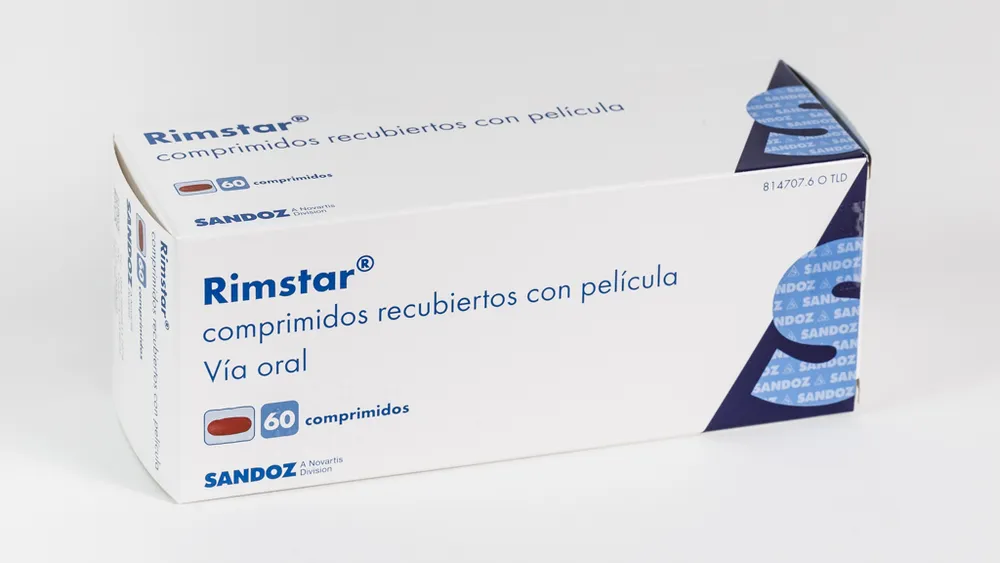
Table of Contents
Package leaflet: Information for the user
Introduction
Package leaflet: Information for the patient
Rimstar film-coated tablets
rifampicin/isoniazid/pyrazinamide/ethambutol hydrochloride
Read the entire leaflet carefully before you start taking this medicine, as it contains important information for you.
- Keep this leaflet, as you may need to read it again.
- If you have any questions, ask your doctor or pharmacist.
- This medicine has been prescribed for you only; do not give it to others, even if they have the same symptoms as you, because it could harm them.
- If you experience any adverse effects, consult your doctor or pharmacist, even if they are adverse effects not listed in this leaflet. See section 4.
Leaflet contents
- What Rimstar is and what it is used for
- What you need to know before taking Rimstar
- How to take Rimstar
- Possible adverse effects
- How to store Rimstar
- Contents of the pack and other information
1. What Rimstar is and what it is used for
Rimstar belongs to a group of medicines called antituberculosis agents.
Antibiotics are used to treat bacterial infections and are not effective against viral infections such as influenza or the common cold.
It is important that you follow your doctor's instructions regarding dosage, administration, and duration of treatment.
Do not store or reuse this medicine. If you have any antibiotic left over after completing the treatment, return it to the pharmacy for proper disposal. Do not dispose of medicines via wastewater or household waste.
It is a fixed-dose combination of four highly effective antituberculosis medicines. It is used to treat infections caused by mycobacteria. These mycobacteria cause tuberculosis.
Rimstar is used in the initial treatment of tuberculosis.
2. What you need to know before starting Rimstar
Do not take Rimstar if:
-
you are allergic (hypersensitive) to rifampicin, isoniazid, pyrazinamide, ethambutol hydrochloride, or to any of the other components of this medicine (listed in section 6),
-
you have acute liver problems or have previously had liver problems caused by taking medicines,
-
you have been diagnosed with a disease called porphyria,
-
you suffer from acute gouty arthritis,
-
you have severe kidney problems,
-
you are currently taking any of the following medicines:
- voriconazole,
- protease inhibitors except ritonavir when prescribed at the full dose or 600 mg twice daily,
-
if you have ever experienced a severe skin rash or peeling skin, blisters and/or mouth sores after taking Rimstar,
-
if you are currently taking any of the following medicines:
-
sofosbuvir: an antiviral medicine used to treat hepatitis C virus infection,
-
cabotegravir, fostemsavir, lenacapavir: HIV medicines,
-
lurasidone,
since rifampicin may reduce blood concentrations of various medicines, including those listed above.
Do not take Rimstar if any of the above conditions apply to you.
If you have any doubts, consult your doctor or pharmacist.
Warnings and precautions
Talk to your doctor or pharmacist before starting to take Rimstar.
Inform your doctor if you have any of the following conditions before taking this medicine:
- liver problems or chronic liver disease,
- kidney problems,
- gout,
- diabetes mellitus,
- epilepsy,
- inflammation of the peripheral nerves or optic nerve,
- eye defects,
- chronic alcoholism,
- malnutrition.
You should not take Rimstar if your body weight is less than 30 kg.
Severe skin reactions, including Stevens-Johnson syndrome (SJS), toxic epidermal necrolysis (TEN), and drug reaction with eosinophilia and systemic symptoms (DRESS), have been reported in association with Rimstar treatment. Stop taking Rimstar and seek immediate medical attention if you notice any symptoms related to these severe skin reactions described in section 4.
Do not stop treatment with Rimstar without consulting your doctor.
You must use additional contraceptive methods besides the oral contraceptive pill while taking Rimstar.
Cases of severe skin reactions such as Stevens-Johnson syndrome (SJS), toxic epidermal necrolysis (TEN), drug reaction with eosinophilia and systemic symptoms (DRESS), and acute generalized exanthematous pustulosis (AGEP) have been reported with Rimstar treatment. Stop taking Rimstar and seek immediate medical attention if you notice any of the symptoms described in section 4.
Immediately inform your doctor while taking this medicine
- if tuberculosis symptoms reappear or worsen (see section 4. Possible side effects).
Other medicines and Rimstar
Tell your doctor or pharmacist if you are taking, have recently taken, or might need to take any other medicines, including those without a prescription.
Inform your doctor if you are taking any of the following medicines:
Do not take Rimstar with any of the following medicines:
- voriconazole,
- protease inhibitors except ritonavir if you have been prescribed a full dose or 600 mg twice daily.
You should not take Rimstar with any of the following medicines:
- nevirapine,
- simvastatin,
- ritonavir,
- oral contraceptives. You must use additional contraceptive methods while taking Rimstar.
Inform your doctor if you are taking any of the following medicines:
- medicines for irregular heartbeat such as class Ia antiarrhythmics (quinidine, disopyramide), propafenone, mexiletine, tocainide, lorcainide,
- medicines for heart or blood pressure: calcium channel blockers (such as diltiazem, nifedipine, verapamil, nimodipine, isradipino, nicardipino, nisoldipino, amlodipine), digitoxin, carvedilol, digoxin, beta-blockers (such as bisoprolol, metoprolol, propranolol, carvedilol), losartan, imidapril, enalapril,
- diuretics such as eplerenone,
- immunosuppressive medicines such as cyclosporine, tacrolimus, sirolimus, leflunomide, azathioprine,
- corticosteroids,
- medicines to treat fungal infections (antifungals such as fluconazole, itraconazole, ketoconazole, voriconazole, terbinafine),
- antibiotics such as clarithromycin, telithromycin, dapsone, doxycycline, fluoroquinolones, chloramphenicol, linezolid,
- medicines to treat malaria: atovaquone, quinine,
- medicines for mood disorders such as haloperidol, clozapine, aripiprazole, tricyclic antidepressants (such as amitriptyline, nortriptyline),
- medicines to prevent blood clots such as oral anticoagulants, warfarin,
- hormonal treatments such as antiestrogens (such as gestrinone, tamoxifen, toremifene), estrogens and progestogens administered as hormone replacement therapy or contraceptives, thyroid hormones (levothyroxine),
- pain medicines such as morphine, etoricoxib, rofecoxib,
- HIV medicines such as saquinavir, indinavir, efavirenz, amprenavir, nelfinavir, atazanavir, lopinavir, zidovudine, nevirapine, stavudine,
- medicines for epilepsy such as tiagabine, carbamazepine, phenytoin, ethosuximide,
- medicines for sleep disorders such as diazepam, benzodiazepines, buspirone, zopiclone, zolpidem, zaleplon, hexobarbital,
- medicines for asthma such as theophylline,
- medicines for diabetes such as repaglinide and nateglinide or oral antidiabetics of the sulfonylurea type,
- p-aminosalicylic acid (a medicine for tuberculosis and inflammatory bowel disease),
- methadone (a medicine for heroin addiction),
- medicines for stomach problems such as cimetidine,
- medicines for treating hyperlipidemia such as clofibrate, fluvastatin, simvastatin,
- medicines for nausea such as tropisetron, ondansetron,
- medicines for anesthesia such as halogenated volatile anesthetics,
- medicines for treating cancer such as imatinib, gefitinib, irinotecan,
- fexofenadine (a medicine for treating hay fever),
- praziquantel (an anthelmintic medicine),
- oral typhoid vaccine.
If you are currently taking any of these medicines, ask your doctor whether your treatment could be changed while taking Rimstar. Often, there are alternative products you can take instead.
If you need to take a medicine for indigestion, such as an antacid, take the tablets at least one hour before taking antacids.
The following diagnostic tests should not be used while taking this medicine, or results should be interpreted with caution:
- radiographic imaging of the gallbladder using contrast agents,
- microbiological determination of plasma folic acid concentrations,
- microbiological determination of plasma cyanocobalamin (vitamin B12) concentrations.
Taking Rimstar with food and drinks
Do not drink alcohol while taking this medicine.
You should avoid foods high in histamine and tyramine (such as aged cheese, cured meats, certain fish such as tuna, salmon, and mackerel, wine, and beer). Consuming these foods with Rimstar may cause headache, sweating, flushing, hunger, irregular or forceful heartbeats (palpitations), dizziness, feeling lightheaded or fainting (due to low blood pressure), or flushing. These foods should be avoided while taking this medicine.
Your doctor can provide further information.
Take this medicine at least one hour before eating.
Pregnancy and breastfeeding
If you are pregnant or breastfeeding, think you may be pregnant, or are planning to become pregnant, consult your doctor or pharmacist before using this medicine.
Your doctor will decide whether treatment with this medicine can continue. If you take Rimstar during pregnancy, your doctor should give you vitamin B6 supplements during pregnancy and vitamin K supplements during the last month of gestation.
This medicine passes into human milk, so you should not take Rimstar while breastfeeding. It is important that you inform your doctor if you are breastfeeding or intend to breastfeed before taking Rimstar.
Driving and using machines
This medicine may cause adverse reactions such as dizziness, confusion, and blurred vision. These may impair your ability to perform certain tasks, such as driving or operating machinery.
Rimstar contains sodium
This medicine contains less than 1 mmol (23 mg) of sodium per film-coated tablet, which is essentially “sodium-free”.
3. How to take Rimstar
Follow exactly the instructions for use of this medicine given by your doctor or pharmacist. If in doubt, consult your doctor or pharmacist again. These doses apply to adults and children weighing more than 30 kg. Children weighing less should not take these tablets.
The recommended dose is:
Adults:
The amount of Rimstar given to each person may vary depending on body weight. Normally, you will receive the following number of tablets:
- If you weigh 30 kilograms (kg) to 39 kg: take 2 tablets daily.
- If you weigh 40 kg to 54 kg: take 3 tablets daily.
- If you weigh 55 kg to 70 kg: take 4 tablets daily.
- If you weigh more than 70 kg: take 5 tablets daily.
Your doctor will prescribe the correct dose for you.
Use in children
This medicine is not recommended for children under 8 years of age or with a body weight below 30 kg.
Elderly
Rimstar is well tolerated by most elderly patients, but you should inform your doctor if you have liver or kidney disease. In some cases, your doctor may recommend that you take additional vitamin B6 while taking this medicine.
Method of administration
You should take Rimstar once daily during the first two months of treatment.
Swallow the tablets whole with a little water.
Rimstar should be taken at least one hour before eating.
Duration of treatment
Rimstar is usually given for two months at the beginning of tuberculosis treatment. Your doctor will decide the duration of treatment for you.
If you take more Rimstar than you should
If you accidentally take one extra tablet, it is unlikely to cause harm. If you take several tablets too many, contact your doctor or pharmacist or go to the nearest hospital emergency department immediately. If possible, take the tablets or the pack with you to show the doctor what you have taken.
You may also call the Toxicology Information Service at telephone number: 91 562 04 20, indicating the medicine and the amount taken.
If you forget to take Rimstar
If you forget to take a dose, take it as soon as possible. However, if it is almost time for the next dose, skip the missed dose and take the next tablet at the usual time.
If you stop taking Rimstar
Always continue taking the tablets for the full duration of treatment, even if you feel better. If you stop taking the tablets too early, the infection may return. In addition, the bacteria may become resistant to the medicine.
If you have any further questions about the use of this medicine, ask your doctor or pharmacist.
4. Possible adverse effects
Like all medicines, this medicine can cause adverse effects, although not everyone will experience them.
Serious adverse effects:
If you experience any of the following symptoms or a severe allergic reaction, stop taking this medicine immediately and inform your doctor or go to the nearest hospital emergency department straight away:
- sudden difficulty breathing, speaking, or swallowing; swelling of the lips, tongue, face, or neck (may affect up to 1 in 1,000 people),
- extreme dizziness or collapse (may affect up to 1 in 1,000 people),
- reddish, non-elevated, target-shaped or circular rashes on the trunk, often with central blisters, skin peeling, and ulcers in the mouth, throat, nose, genitals, and eyes. These serious skin rashes may be preceded by fever and flu-like symptoms (Stevens-Johnson syndrome, toxic epidermal necrolysis) (may affect up to 1 in 1,000 people),
- widespread rash, high body temperature, and enlarged lymph nodes (DRESS syndrome or drug hypersensitivity syndrome) (may affect up to 1 in 1,000 people),
- widespread, red, scaly rash with bumps under the skin and blisters, accompanied by fever. Symptoms usually appear at the beginning of treatment (acute generalized exanthematous pustulosis),
- lupus-like syndrome, causing symptoms such as joint inflammation, fatigue, and skin rashes.
If you experience any of the following adverse effects, inform your doctor as soon as possible:
- inflammation of the pancreas, causing severe abdominal and back pain (pancreatitis, frequency not known),
- yellowing of the skin or whites of the eyes, darkening of urine, pale stools, fatigue, weakness, malaise, loss of appetite, nausea, or vomiting due to liver problems (hepatitis, may affect up to 1 in 100 people),
- severe, prolonged diarrhoea, or diarrhoea containing blood with stomach pain or fever: this may be a sign of serious intestinal inflammation (may affect up to 1 in 1,000 people),
- bleeding into the skin; if you continue taking Rimstar, you are at risk of cerebral haemorrhage (bleeding, may affect up to 1 in 1,000 people),
- vision problems such as blurred vision, eye pain, red-green colour blindness, or even vision loss (may affect up to 1 in 1,000 people),
- reduction in the number of white blood cells, accompanied by sudden high fever, severe sore throat, and mouth ulcers (agranulocytosis, may affect up to 1 in 1,000 people).
These are serious adverse effects. You may require urgent medical attention.
Other adverse effects:
Common adverse effects (may affect up to 1 in 10 people):
- fatigue, drowsiness, headache, dizziness, lightheadedness,
- damage to peripheral nerves,
- redness of the eyes, permanent discoloration of soft contact lenses,
- nausea, vomiting, loss of appetite, abdominal pain, bloating, epigastric discomfort,
- flushing, itching with or without skin rash, urticaria,
- allergic or other reactions such as skin rash, fever, muscle or joint pain,
- elevation of liver enzymes,
- impaired liver function which may present as loss of appetite, nausea, vomiting, fatigue, malaise, and weakness,
- change to a reddish colour of bodily fluids and secretions such as urine, tears, sweat, sputum, faeces, and saliva,
- increased blood uric acid levels, acute gouty arthritis (chills, joint pain and swelling, especially in the big toe, ankle, or knee),
- Paradoxical drug reaction: Symptoms of tuberculosis may reappear or new symptoms may develop after initial improvement during treatment. Paradoxical reactions have been reported as early as 2 weeks and as late as 18 months after starting treatment for tuberculosis. Paradoxical reactions are usually associated with fever, lymph node inflammation (lymphadenitis), difficulty breathing, and cough. Patients with paradoxical drug reactions may also experience headache, loss of appetite, and weight loss.
Uncommon adverse effects (may affect up to 1 in 100 people):
- hallucinations, disorientation, confusion, malaise.
Rare adverse effects (may affect up to 1 in 1,000 people):
- changes in white and red blood cell counts, changes in platelet count, anaemia, coagulation disorders, spleen enlargement,
- oedema/swelling due to fluid retention,
- diarrhoea,
- menstrual disorders, breast tissue swelling, precocious puberty, difficulties in diabetes control, hyperglycaemia, Cushing's syndrome (a disease caused by corticosteroid hormones), induction of crisis in patients with Addison's disease (patients with a specific type of hormonal disorder),
- psychosis, hyperactivity, euphoria, insomnia, seizures,
- muscle weakness, myopathy, problems with coordination of voluntary muscles (ataxia), increased frequency of epileptic seizures,
- vision problems, optic nerve damage,
- sensation of numbness, tingling, burning, or weakness in hands or feet,
- gastritis, jaundice, liver enlargement, liver inflammation (severe in isolated cases),
- allergic and other reactions such as dry mouth, heartburn, urinary disorders, rheumatic syndromes and symptoms, pellagra (a condition characterised by gastrointestinal disturbances, skin redness, and nervous and mental disorders), swollen lymph nodes, acne, skin rash, photosensitivity,
- elevation of liver enzymes, acute renal failure, kidney inflammation, problems with urination,
- induction of a condition called porphyria (a group of disorders characterised by photosensitivity, skin lesions, anaemia, psychosis, and acute abdominal pain).
Frequency not known (cannot be estimated from available data):
- inflammation of blood vessels.
If treatment is resumed after a temporary interruption of Rimstar therapy, a so-called pseudoflu-like syndrome may occur.
It is characterised by fever, chills, and possibly headache, dizziness, and bone and muscle pain. In rare cases, bleeding into the skin, breathing difficulties, asthma-like attacks, shock, and renal failure may develop.
Reporting of adverse effects
If you experience any adverse effects, consult your paediatrician or pharmacist, even if they are not listed in this leaflet. You may also report them directly via the Spanish Pharmacovigilance System for Human Medicines: https://www.notificaram.es. By reporting adverse effects, you can help provide more information on the safety of this medicine.
5. Storage of Rimstar
Keep this medicine out of the sight and reach of children.
Do not use this medicine after the expiry date stated on the carton, label or blister after “CAD/EXP”. The expiry date refers to the last day of the month indicated.
Do not store above 25 °C.
Blister: Keep in the original packaging to protect from moisture.
Bottle: Keep the container tightly closed to protect from moisture.
Medicines should not be disposed of via wastewater or household waste. Return unused medicines and their packaging to the SIGRE collection point at your pharmacy. If you are unsure, please ask your pharmacist how to dispose of medicines and packaging you no longer need. This will help protect the environment.
6. Contents of the pack and other information
Composition of Rimstar
The active substances are: rifampicin, isoniazid, pyrazinamide and ethambutol hydrochloride.
Each tablet contains 150 mg of rifampicin, 75 mg of isoniazid, 400 mg of pyrazinamide and 275 mg of ethambutol hydrochloride.
- The other components are: pregelatinized corn starch, corn starch, sodium lauryl sulfate, microcrystalline cellulose, povidone K 30, crospovidone, magnesium stearate, talc, copovidone, hypromellose, titanium dioxide (E171), macrogol 400, macrogol 6000 and red iron oxide (E172).
Appearance of the product and contents of the pack
Rimstar, film-coated tablets, are brown, oval-shaped, biconvex, film-coated tablets, smooth on both sides.
The tablets are packaged in aluminum/aluminum or PVC/PE/PVDC-aluminum blisters, which are placed in a cardboard box or in a white, opaque polypropylene bottle with a polyethylene cap, or in a white, opaque polyethylene bottle with a polypropylene cap.
Blister packs containing 30, 60, 120, 240, 672 or 1,000 film-coated tablets.
Bottles containing 500 film-coated tablets.
Pack sizes of 500 and 1,000 film-coated tablets are intended for clinical use.
Only certain pack sizes may be commercially available.
Marketing Authorization Holder and Manufacturer
Marketing Authorization Holder
Sandoz GmbH
Biochemiestrasse, 10
A-6250-Kundl
Austria
Manufacturer
Sandoz GmbH
Biochemiestrasse, 10
A-6250-Kundl
Austria
Date of the most recent revision of this leaflet: March 2026
Detailed information on this medicine is available on the website of the Spanish Agency of Medicines and Medical Devices (AEMPS) http://www.aemps.gob.es/