Revestive 5 mg powder and solvent for solution for injection
Spain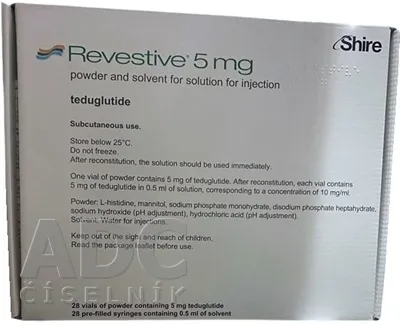
Table of Contents
Package leaflet: Information for the user
Introduction
Package leaflet: information for the patient
Revestive 5 mg powder and solvent for solution for injection
teduglutide
This medicinal product is subject to additional monitoring, which will allow quicker detection of new safety information. You can help by reporting any side effects you may experience. Section 4, towards the end, includes information on how to report these side effects.
Please read this entire leaflet carefully before starting to use this medicine, as it contains important information for you.
- Keep this leaflet, as you may need to read it again.
- If you have any questions, consult your doctor, pharmacist or nurse.
- This medicine has been prescribed for you only, and you should not give it to others, even if they have the same symptoms as you, since it may harm them.
- If you experience any side effects, consult your doctor, pharmacist or nurse, even if they are side effects not listed in this leaflet. See section 4.
Contents of the leaflet
- What Revestive is and what it is used for
- What you need to know before using Revestive
- How to use Revestive
- Possible side effects
- How to store Revestive
- Contents of the pack and other information
1. What Revestive is and what it is used for
Revestive contains the active substance teduglutide. It improves intestinal absorption of nutrients and fluids from your gastrointestinal tract (intestine).
Revestive is used for the treatment of short bowel syndrome in adults, children, and adolescents (4 months of age and older). Short bowel syndrome is a condition caused by an inability to absorb nutrients and water from food as it passes through the intestine. It is usually due to partial or complete surgical removal of the small intestine.
2. What you need to know before starting Revestive
Do not use Revestive
- if you are allergic to teduglutide or any of the other ingredients of this medicine (listed in section 6) or to traces of tetracycline residues;
- if you have or think you may have cancer;
- if you have had cancer in any part of the gastrointestinal tract, such as the liver, gallbladder or bile ducts, or pancreas, within the past five years.
Warnings and precautions
Talk to your doctor before starting to use Revestive:
- if you have severe hepatic insufficiency. Your doctor will take this into account when prescribing this medicine;
- if you have any cardiovascular disease (affecting the heart and/or blood vessels), such as high blood pressure (hypertension) or weak heart (heart failure). Signs and symptoms include sudden weight gain, facial swelling, swelling in the ankles and/or difficulty breathing;
- if you have other severe diseases that are not well controlled. Your doctor will consider this when prescribing this medicine;
- if you have renal insufficiency. Your doctor may need to prescribe a lower dose of this medicine.
When starting or while receiving treatment with Revestive, your doctor may adjust the amount of intravenous fluids or nutrition you receive.
Medical monitoring before and during treatment with Revestive
Before starting treatment with this medicine, your doctor will need to perform a colonoscopy (a procedure to examine the inside of the colon and rectum) to check for polyps (abnormal small growths) and remove them. It is recommended that your doctor perform these examinations once a year during the first two years after starting treatment, and thereafter at least once every five years. If polyps are found before or during treatment with Revestive, your doctor will decide whether you should continue using this medicine. If cancer is diagnosed during colonoscopy, you must not use Revestive. Your doctor will monitor your electrolytes and body fluids, as imbalances may lead to fluid overload or dehydration.
Your doctor will exercise special caution and monitor the function of your small intestine and signs or symptoms indicating problems with your gallbladder, bile ducts, or pancreas.
Children and adolescents
Medical monitoring before and during treatment with Revestive
Before starting treatment with this medicine, you will undergo a test to check for blood in the stool. You will also undergo a colonoscopy (a procedure to examine the inside of the colon and rectum to detect and remove polyps [abnormal small growths]) if you have unexplained blood in your stool. If polyps are found before treatment with Revestive, your doctor will decide whether you should use this medicine. If cancer is diagnosed during colonoscopy, you must not use Revestive. Your doctor will perform additional colonoscopies while you continue treatment with Revestive. Your doctor will monitor your electrolytes and body fluids, as imbalances may lead to fluid overload or dehydration.
Children under 4 months of age
This medicine must not be used in children under 4 months of age. There are no data available on the use of Revestive in this age group.
Other medicines and Revestive
Inform your doctor, pharmacist, or nurse if you are taking, have recently taken, or might need to take any other medicines.
Revestive may affect how other medicines are absorbed in the intestine and thereby reduce their effectiveness. Your doctor may need to adjust the dose of other medicines.
Pregnancy and breastfeeding
Use of Revestive is not recommended if you are pregnant or breastfeeding.
If you are pregnant or breastfeeding, think you may be pregnant, or plan to become pregnant, consult your doctor, pharmacist, or nurse before using this medicine.
Driving and using machines
This medicine may cause dizziness. If this occurs, do not drive or operate machinery until you feel better.
Important information about some ingredients of Revestive
This medicine contains less than 23 mg of sodium (1 mmol) per dose; hence, it is essentially “sodium-free”.
Caution is advised if you are hypersensitive to tetracyclines (see section "Do not use Revestive").
3. How to use Revestive
Follow exactly the administration instructions for this medicine as given by your doctor. If in doubt, consult your doctor, pharmacist, or nurse again.
Dosage
The recommended daily dose is 0.05 mg per kg of body weight. The dose will be given in millilitres (ml) of solution.
Your doctor will determine the most appropriate dose for you depending on your body weight. Your doctor will instruct you on the dose to inject. If in doubt, consult your doctor, pharmacist, or nurse again.
Use in children and adolescents
Revestive may be used in children and adolescents (4 months of age and older). Follow exactly the administration instructions for this medicine as given by your doctor.
How to use Revestive
Revestive is injected under the skin (subcutaneously) once daily. The injection may be administered by the patient themselves or by another person, for example, their doctor, caregiver, or home care nurse. If you or your caregiver are administering the injection, both you and your caregiver must receive proper training from your doctor or nurse. Detailed instructions for injection are provided at the end of this leaflet.
It is strongly recommended that each time you or your child receive a dose of Revestive, the name and batch number of the medicine are recorded in order to keep a record of the batches used.
If you use more Revestive than you should
If you accidentally inject more Revestive than prescribed by your doctor, you must contact your doctor, pharmacist, or nurse.
If you forget to use Revestive
If you forget to use this medicine (or cannot use it at your usual time), use it as soon as possible on the same day. Never use more than one injection in the same day. Do not use a double dose to make up for a missed dose.
If you stop using Revestive
Continue using this medicine for as long as your doctor instructs. Do not stop using this medicine without consulting your doctor, as sudden discontinuation may cause disturbances in fluid balance.
If you have any further questions about the use of this medicine, ask your doctor, pharmacist, or nurse.
4. Possible adverse effects
Like all medicines, this medicine may cause adverse effects, although not everyone experiences them.
Seek immediate medical attention if any of the following adverse effects occur:
Common (may affect up to 1 in 10 people):
- Congestive heart failure. Contact your doctor if you experience fatigue, difficulty breathing, or swelling of the ankles, legs, or facial swelling.
- Inflammation of the pancreas (pancreatitis). Contact your doctor or an emergency service if you experience severe stomach pain and fever.
- Intestinal obstruction (blockage of the intestine). Contact your doctor or an emergency service if you experience severe stomach pain, vomiting, and constipation.
- Reduced bile flow from the gallbladder and/or inflammation of the gallbladder.
Contact your doctor or an emergency service if you develop yellowing of the skin and whites of the eyes, itching, dark urine, pale stools, or if you experience pain in the upper right side or middle of the stomach area.
Uncommon (may affect up to 1 in 100 people):
- Fainting. If heart rate and breathing are normal and you wake up quickly, inform your doctor. In other cases, seek assistance as soon as possible.
Other adverse effects include:
Very common (may affect more than 1 in 10 people):
- Respiratory tract infection (any infection in the nasal sinuses, throat, airways, or lungs).
- Headache.
- Stomach pain, stomach swelling, feeling of dizziness (nausea), inflammation of the stoma (artificial opening for waste elimination), vomiting.
- Redness, pain, or swelling at the injection site.
Common (may affect up to 1 in 10 people):
- Flu or flu-like symptoms.
- Decreased appetite.
- Swelling of hands and/or feet.
- Trouble sleeping, anxiety.
- Cough, difficulty breathing.
- Polyps (growth of small abnormal masses) in the large intestine.
- Gas (flatulence).
- Narrowing or blockage of the pancreatic duct, which may cause inflammation of the pancreas.
- Inflammation of the gallbladder.
Uncommon (may affect up to 1 in 100 people):
- Polyps (growth of small abnormal masses) in the small intestine.
Frequency not known (cannot be estimated from available data):
- Allergic reaction (hypersensitivity).
- Fluid retention.
- Polyps (growth of small abnormal masses) in the stomach.
Use in children and adolescents
In general, adverse effects in children and adolescents are similar to those observed in adults.
No data are available for children under 4 months of age.
Reporting of adverse effects
If you experience any type of adverse effect, consult your doctor or pharmacist, even if they are possible adverse effects not listed in this leaflet. You may also report them directly through the national reporting system included in Appendix V. By reporting adverse effects, you can help provide more information on the safety of this medicine.
5. Storage of Revestive
Keep this medicine out of the sight and reach of children.
Do not use this medicine after the expiry date stated on the carton, vial, and pre-filled syringe following EXP. The expiry date refers to the last day of the month indicated.
Store below 25°C.
Do not freeze.
From a microbiological standpoint, the solution should be used immediately after reconstitution. However, chemical and physical stability has been demonstrated for up to 3 hours at 25°C.
Do not use this medicine if the solution appears cloudy or contains particles.
Medicines must not be disposed of via wastewater or household waste. Ask your pharmacist how to properly dispose of medicines and packaging you no longer need. This helps protect the environment. All needles and syringes must be discarded in sharps containers.
6. Contents of the pack and other information
Composition of Revestive
- The active substance is teduglutide. One vial of powder contains 5 mg of teduglutide. After reconstitution, each vial contains 5 mg of teduglutide in 0.5 ml of solution, corresponding to a concentration of 10 mg/ml.
- The other components are L-histidine, mannitol, monohydrate sodium phosphate, and disodium phosphate heptahydrate, sodium hydroxide (for pH adjustment), hydrochloric acid (for pH adjustment).
- The solvent contains water for injections.
Appearance of the product and contents of the pack
Revestive is a powder and solvent for injectable solution (5 mg teduglutide in vial, 0.5 ml solvent in pre-filled syringe).
The powder is white and the solvent is clear and colourless.
Revestive is available in pack sizes of 1 vial of powder with 1 pre-filled syringe or 28 vials of powder with 28 pre-filled syringes.
Only certain pack sizes may be marketed.
Marketing Authorization Holder and Manufacturer
Takeda Pharmaceuticals International AG Ireland Branch
Block 2 Miesian Plaza
50 – 58 Baggot Street Lower
Dublin 2, D02 HW68
Ireland
Date of the most recent revision of this leaflet: 06/2023
Detailed information on this medicine is available on the website of the European Medicines Agency: http://www.ema.europa.eu. Links to other websites on rare diseases and orphan medicinal products are also available.
Instructions for the preparation and injection of Revestive
Important information:
- Read the leaflet before using Revestive.
- Revestive is injected under the skin (subcutaneous route).
- Do not inject Revestive into a vein (intravenous route) or into a muscle (intramuscular route).
- Keep Revestive out of the sight and reach of children.
- Do not use Revestive after the expiry date stated on the carton, vial, and pre-filled syringe. The expiry date refers to the last day of the month indicated.
- Store below 25°C.
- Do not freeze.
- From a microbiological standpoint, the solution should be used immediately after reconstitution. However, chemical and physical stability has been demonstrated for up to 3 hours at 25°C.
- Do not use Revestive if the solution is cloudy or contains particles.
- Medicines must not be disposed of via wastewater or household waste. Ask your pharmacist how to dispose of medicines no longer required. This helps protect the environment.
- Dispose of all needles and syringes in a sharps container.
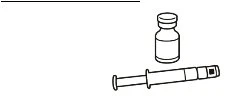 Materials included in the pack:
- 1 or 28 vials containing 5 mg of teduglutide as powder.
- 1 or 28 pre-filled syringes containing solvent.
Materials required but not included in the pack:
- Needles for reconstitution (gauge 22G, length 1½" [0.7 x 40 mm])
- 0.5 ml or 1 ml syringes for injection (with scale intervals of 0.02 ml or less). For children, a 0.5 ml syringe (or smaller) may be used.**
- Fine needles for subcutaneous injection (e.g., gauge 26G, length 5/8" [0.45 x 16 mm], or smaller needles for children, if appropriate).
- Alcohol-impregnated wipes.
- Alcohol-impregnated cotton swabs.
- Sharps container for the safe disposal of used syringes and needles.
NOTE: Before starting, wash your hands and ensure you have a clean surface available for handling materials before proceeding.
- Assemble the pre-filled syringe
Once all materials are prepared, you must assemble the pre-filled syringe. The following procedure should be followed:
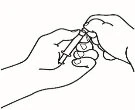
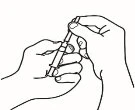
| 1.1 Take the pre-filled syringe with the solvent and remove the upper part of the white plastic cap from the pre-filled syringe so that you can attach the reconstitution needle. |
| 1.2 Attach the reconstitution needle (22G 1½" [0.7 x 40 mm]) to the pre-assembled pre-filled syringe by screwing it on clockwise. |
- Dissolve the powder
You can now dissolve the powder with the solvent.
| 2.1 Remove the green seal from the powder vial, clean the top with an alcohol wipe and allow it to dry. Do not touch the top of the vial. |
| 2.2 Remove the cap from the reconstitution needle of the pre-filled syringe already assembled with the solvent, without touching the needle tip. |
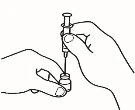
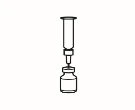
| 2.3 Hold the powder vial and insert the reconstitution needle attached to the pre-filled syringe into the center of the rubber stopper; then carefully push the plunger fully down to inject all the solvent content into the vial. |
| 2.4 Leave the reconstitution needle and the empty syringe in the vial. Allow the contents to stand for approximately 30 seconds. |
| 2.5 Gently roll the vial between the palms of your hands for about 15 seconds. Then, carefully invert the vial once, with the reconstitution needle and empty syringe still in the vial. |
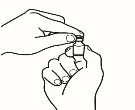
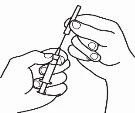
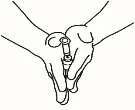
NOTE: Do not shake the vial. Shaking the vial may produce foam, which can make it difficult to withdraw the solution from the vial.
| 2.6 Let the contents of the vial stand for about two minutes. |
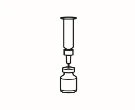
2.7 Observe whether the vial contains undissolved powder. If undissolved powder remains, repeat steps 2.5 and 2.6. Do not shake the vial. If undissolved powder remains, discard the vial and repeat the procedure from the beginning using a new vial.
NOTE: The final solution must be clear and transparent. If the solution is cloudy or contains particles, it must not be injected.
NOTE: Once prepared, the solution must be used immediately. It should be stored below 25°C for a maximum of three hours.
- Prepare the syringe for injection
| 3.1 Remove the reconstitution syringe from the reconstitution needle still in the vial, and discard the reconstitution syringe. |
| 3.2 Take the injection syringe and attach it to the reconstitution needle still in the vial. |
| 3.3 Invert the vial so that it is upside down, slide the tip of the reconstitution needle close to the stopper, and gently pull the plunger to fill the syringe with the medication. |
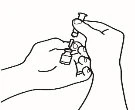
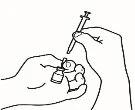
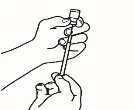
NOTE: If your doctor has indicated that you need two vials, prepare a second pre-filled syringe with solvent and a second vial of powder, as shown in steps 1 and 2. Using the same syringe you just used, withdraw the solution from the second vial by repeating step 3.
| 3.4 Remove the injection syringe from the reconstitution needle, leaving the needle in the vial. Dispose of the vial and reconstitution needle into the sharps container. |
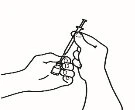
| 3.5 Take the injection needle, but do not remove the plastic needle cap. Attach the injection needle to the syringe containing the medication. |
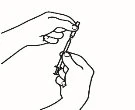
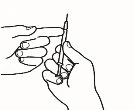
| 3.6 Check for air bubbles. If present, gently tap the syringe with your finger until the bubbles rise to the surface. Then, push the plunger to expel the air bubbles. |
| 3.7 Your doctor has calculated your dose in ml. With the needle cap still on, expel excess volume from the syringe until the dose volume is reached. |
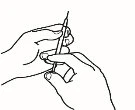
- Inject the solution
|
| 4.1 Locate an area on your abdomen where it is easy for you to administer an injection, or on your thigh if you have abdominal pain or hardening (see diagram). |
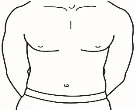
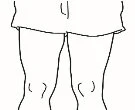
NOTE: Do not administer injections in the same area each time; change the injection site (use the upper, lower, left, or right side of your abdomen) to avoid discomfort. Avoid inflamed, swollen areas, or those with scars, moles, birthmarks, or any type of lesion.
| 4.2 Once the injection site has been selected, clean the entire area with a cotton swab soaked in alcohol using circular motions from the inside outward. Allow the area to dry. |
| 4.3 Remove the plastic cap from the needle prepared for the injection. Gently pinch the cleaned skin at the injection site with one hand. With the other hand, hold the syringe like a pencil. Bend the wrist backward and quickly insert the needle at a 45º angle. |
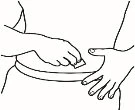
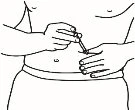
4.4 Gently pull back on the plunger. If you see blood in the syringe, remove the needle and replace it on the injection syringe with a new, clean needle of the same size. You may still use the medication contained within the syringe. Try selecting another injection site within the same clean skin area.
4.5 Inject the medication slowly by steadily pushing the plunger until all the medication has been injected and the syringe is empty.
4.6 Quickly remove the needle from the skin and dispose of the needle and syringe into a sharps container. There may be slight bleeding. If needed, gently press the injection site with an alcohol-soaked cotton swab or a 2x2 gauze pad until bleeding stops.
4.7 Dispose of all needles and syringes in a sharps container or a thick-walled container (for example, a detergent bottle with a cap). You must use a sharps container or a thick-walled container (including the cap and side walls). If you need a sharps container, please consult your doctor.