Revatio 10 mg/ml powder for oral suspension
Spain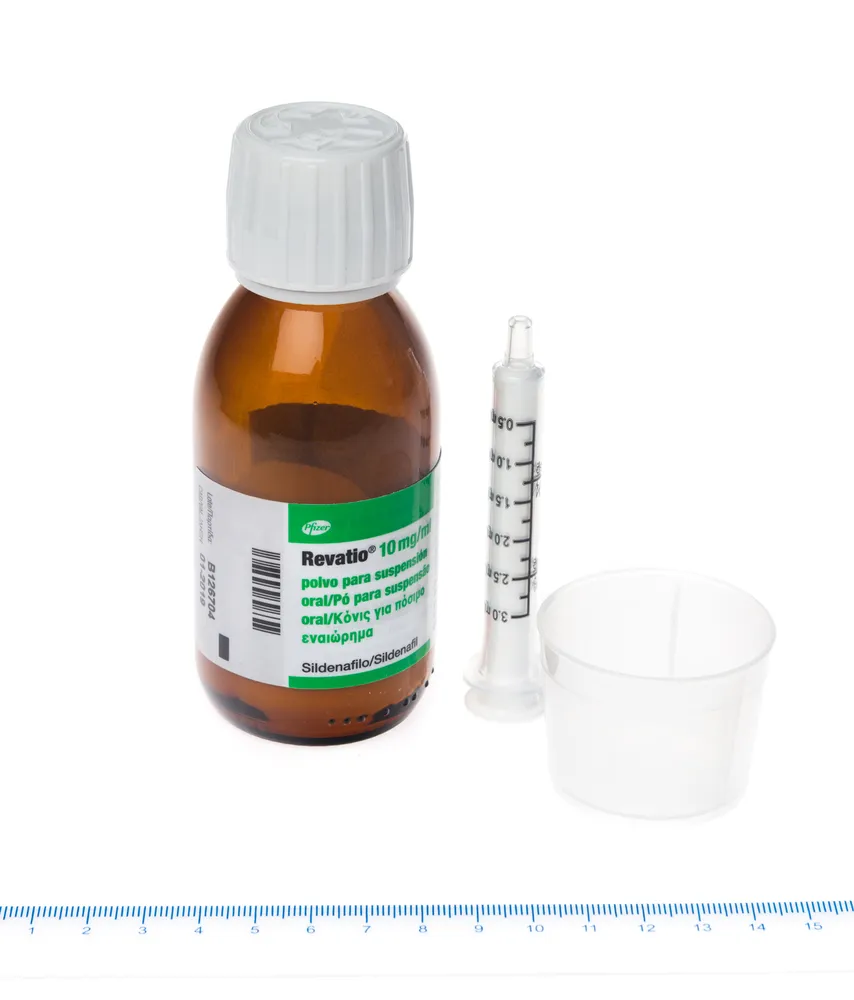
Table of Contents
Package leaflet: Information for the user
Introduction
Package leaflet: information for the patient
Revatio 10 mg/ml powder for oral suspension
sildenafil
Read the entire leaflet carefully before you start taking this medicine, because it contains important information for you.
- Keep this leaflet, as you may need to read it again.
- If you have any questions, ask your doctor or pharmacist.
- This medicine has been prescribed for you only, and you should not give it to other people, even if they have the same symptoms as you, since it could harm them.
- If you experience any adverse effects, consult your doctor or pharmacist, even if they are adverse effects not listed in this leaflet. See section 4.
Contents of the leaflet
- What Revatio is and what it is used for
- What you need to know before taking Revatio
- How to take Revatio
- Possible side effects
- How to store Revatio
- Contents of the pack and other information
1. What Revatio is and what it is used for
Revatio contains the active substance sildenafil, which belongs to a group of medicines called phosphodiesterase type 5 (PDE5) inhibitors.
Revatio reduces blood pressure in the lungs by dilating the blood vessels of the lungs. Revatio is used to treat high blood pressure in the blood vessels of the lung (pulmonary arterial hypertension) in adults and children and adolescents aged 1 to 17 years.
2. What you need to know before taking Revatio
Do not take Revatio
-
if you are allergic to sildenafil or to any of the other components of this medicine (listed in section 6).
-
if you are taking medicines containing nitrates or nitric oxide donors such as amyl nitrite ("poppers"). These medicines are often used to relieve chest pain (or angina). Revatio may significantly increase the effects of these medicines. You must inform your doctor if you are taking any of these medicines. If you are unsure, consult your doctor or pharmacist.
-
if you are taking riociguat. This medicine is used to treat pulmonary arterial hypertension (i.e., high blood pressure in the lungs) and chronic thromboembolic pulmonary hypertension (i.e., high blood pressure in the lungs caused by blood clots). PDE5 inhibitors such as Revatio have been shown to increase the hypotensive effect of this medicine. If you are taking riociguat or are unsure, consult your doctor.
-
if you have recently had a stroke, a heart attack, or if you have severe liver disease or very low blood pressure (<90/50 mmHg).
-
if you are taking a medicine to treat fungal infections such as ketoconazole or itraconazole, or medicines containing ritonavir (for AIDS).
-
if you have previously experienced vision loss due to a problem with blood flow to a nerve in the eye called non-arteritic anterior ischemic optic neuropathy (NAION).
Warnings and precautions
Consult your doctor or pharmacist before starting to take Revatio if:
- you have a disease caused by blockage or narrowing of a vein in the lungs rather than blockage or narrowing of an artery.
- you have a serious heart condition.
- you have a problem with the pumping chambers of the heart.
- you have high blood pressure in the blood vessels of the lungs.
- you have low blood pressure at rest.
- you lose a large amount of body fluids (dehydration), which can occur when you sweat excessively or do not drink enough fluids. This may happen if you are ill with fever, vomiting, or diarrhea.
- you suffer from a rare inherited eye disease (retinitis pigmentosa).
- you suffer from an abnormality of red blood cells (sickle cell anemia), blood cell cancer (leukemia), bone marrow cancer (multiple myeloma), or any disease or deformity of the penis.
- you currently have a stomach ulcer, bleeding disorders (such as hemophilia), or nosebleeds.
- you are using medicines for erectile dysfunction.
When PDE5 inhibitors, including sildenafil, are used to treat erectile dysfunction (ED), the following visual adverse effects have been reported with unknown frequency: decrease or partial, sudden, temporary, or permanent loss of vision in one or both eyes. If you experience sudden reduction or loss of vision, stop taking Revatio and inform your doctor immediately (see also section 4).
Prolonged and sometimes painful erections have been observed in men taking sildenafil. If you have an erection lasting longer than 4 hours, stop taking Revatio and consult your doctor immediately (see also section 4).
Special precautions in patients with kidney or liver problems
You must inform your doctor if you have kidney or liver problems, as a dose adjustment may be necessary.
Children
Revatio must not be given to children under 1 year of age.
Taking Revatio with other medicines
Inform your doctor or pharmacist if you are using, have recently used, or might need to use any other medicine.
- Medicines containing nitrates or nitric oxide donors such as amyl nitrite ("poppers"). These medicines are often used to relieve chest pain or angina (see section 2. Before taking Revatio).
- Inform your doctor or pharmacist if you are taking riociguat.
- Treatments for pulmonary hypertension (e.g., bosentan, iloprost).
- Medicines containing St. John's wort (herbal remedy), rifampicin (used to treat bacterial infections), carbamazepine, phenytoin, and phenobarbital (used, among others, to treat epilepsy).
- Medicines that inhibit blood clotting (e.g., warfarin), although no adverse effects have been reported.
- Medicines containing erythromycin, clarithromycin, telithromycin (antibiotics used to treat certain bacterial infections), saquinavir (for AIDS), or nefazodone (for depression), as dose adjustment may be necessary.
- Alpha-blocker therapy (e.g., doxazosin) for the treatment of hypertension or prostate problems, as the combination of these two medicines may cause symptoms of low blood pressure (e.g., dizziness, fainting).
- Medicines containing sacubitril/valsartan, used to treat heart failure.
Taking Revatio with food and drinks
You should not drink grapefruit juice while being treated with Revatio.
Pregnancy and breastfeeding
If you are pregnant or breastfeeding, think you may be pregnant, or are planning to become pregnant, consult your doctor or pharmacist before using this medicine. Revatio must not be used during pregnancy unless absolutely necessary.
Revatio must not be given to women of childbearing age unless adequate contraceptive methods are used.
Revatio passes into breast milk at very low levels and is not expected to harm your baby.
Driving and using machines
Revatio may cause dizziness and affect vision. You should know how you react to this medicine before driving or operating machinery.
Revatio contains sorbitol
Revatio 10 mg/ml powder for oral suspension contains 250 mg of sorbitol per ml of reconstituted suspension.
Sorbitol is a source of fructose. If your doctor has informed you (or your child) that you have an intolerance to certain sugars, or if you (or your child) have been diagnosed with hereditary fructose intolerance (HFI), a rare genetic disorder in which the patient cannot break down fructose, consult your doctor (or your child's doctor) before taking this medicine.
Revatio contains sodium benzoate
Revatio 10 mg/ml powder for oral suspension contains 1 mg of sodium benzoate per ml of reconstituted suspension. Sodium benzoate may increase levels of a substance called bilirubin. High levels of bilirubin can cause jaundice (yellowing of the skin and eyes) and may also cause brain damage (encephalopathy) in newborns (up to 4 weeks of age).
Revatio contains sodium
Revatio 10 mg/ml powder for oral suspension contains less than 1 mmol of sodium (23 mg) per ml of reconstituted suspension; this is essentially “sodium-free”.
3. How to take Revatio
Follow exactly the instructions for administration of this medicine given by your doctor.
If in doubt, consult your doctor or pharmacist again.
For adults, the recommended dose is 20 mg three times a day (taken at intervals of 6 to 8 hours), taken with or without food.
Use in children and adolescents
For children and adolescents aged 1 to 17 years, the recommended dose is 10 mg (1 ml of oral suspension) three times daily for children and adolescents weighing 20 kg or less, or 20 mg (2 ml of oral suspension) three times daily for children and adolescents weighing more than 20 kg, administered with or without food. In children, doses higher than those recommended must not be used.
The oral suspension must be shaken well for at least 10 seconds before use.
Instructions for reconstituting the oral suspension
It is recommended that your pharmacist reconstitute (prepare) the oral suspension before administration.
When reconstituted, the oral suspension is a liquid. If the powder has not been reconstituted, reconstitute the oral suspension following the instructions below.
Note: Regardless of the dose you take, you must use a total volume of 90 ml (3 x 30 ml) of water to reconstitute the contents of the bottle.
- Tap the bottle gently to loosen the powder.
- Remove the cap.
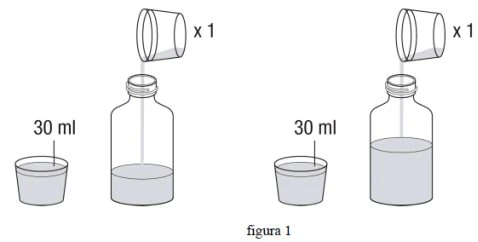
- Measure 30 ml of water by filling the measuring cup (included in the pack) to the mark and add to the bottle. Measure another 30 ml of water using the measuring cup and add to the bottle. (Figure 1)
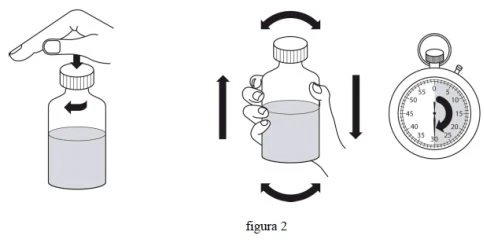
- Replace the cap and shake vigorously for at least 30 seconds. (Figure 2)
- Remove the cap.
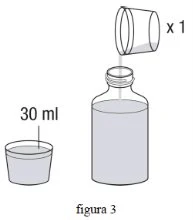
- Using the measuring cup, add another 30 ml of water to the bottle. A total of 90 ml (3 x 30 ml) of water must always be added, regardless of the dose you take. (Figure 3)
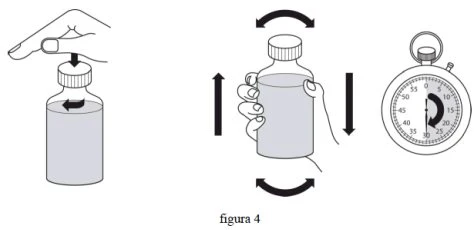
- Replace the cap and shake the bottle vigorously for at least 30 seconds. (Figure 4)
- Remove the cap.
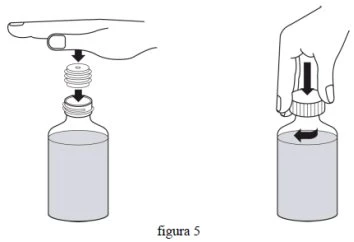
- Press the adapter firmly into the neck of the bottle (as shown in Figure 5 below). An adapter is provided so that you can fill the oral dosing syringe from the bottle. Replace the cap.
- Write the expiry date of the reconstituted oral suspension on the label of the bottle (the expiry date of the reconstituted oral suspension is 30 days from the date of reconstitution). After this date, any unused oral suspension should be discarded or returned to your pharmacist.
Instructions for use
Your pharmacist will instruct you on how to measure the medicine using the oral dosing syringe provided in the pack. Once reconstituted, the oral suspension must only be administered using the oral dosing syringe supplied in each pack. See the following instructions before using the oral suspension.
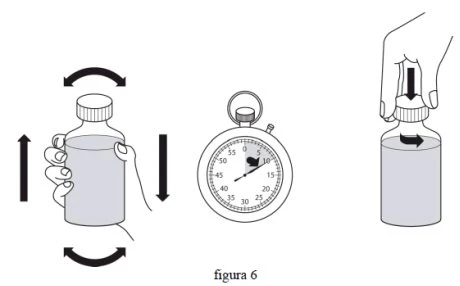
- Shake the reconstituted oral suspension bottle vigorously, closed, for at least 10 seconds before use. Remove the cap. (Figure 6)
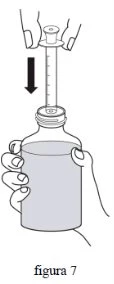
- With the bottle upright on a flat surface, insert the tip of the oral dosing syringe into the adapter. (Figure 7)
- Invert the bottle, holding the oral dosing syringe in place. Slowly pull the plunger of the oral dosing syringe to the mark indicating your dose (taking 1 ml delivers a dose of 10 mg; taking 2 ml delivers a dose of 20 mg). To measure the dose accurately, the top edge of the plunger must be aligned with the appropriate mark on the oral dosing syringe. (Figure 8)
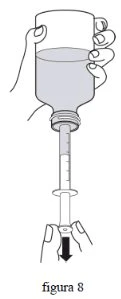
- If large bubbles are visible, gently push the plunger back into the syringe. This will return the medicine to the bottle. Repeat this step 3 times.
- Turn the bottle upright again, with the oral dosing syringe still in place. Remove the oral dosing syringe from the bottle.
- Place the tip of the oral dosing syringe into the mouth. Aim the tip of the oral dosing syringe toward the inside of the cheek. Push the plunger of the oral dosing syringe SLOWLY. Do not expel the medicine rapidly. If administering the medicine to a child, ensure the child is sitting or upright before administration. (Figure 9)
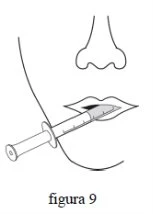
- Replace the cap on the bottle, leaving the bottle adapter in place. Wash the oral dosing syringe as described below.
Cleaning and storage of the syringe:
- After each administration, wash the syringe. Remove the plunger from the syringe and wash both parts with water.
- Dry both parts. Push the plunger into the syringe. Store in a clean and safe place with the medicine.
If you take more Revatio than you should
Do not take more medicine than your doctor has prescribed.
If you have taken more medicine than recommended, consult your doctor immediately.
Taking more Revatio than required may increase the risk of known adverse effects.
If you forget to take Revatio
If you forget to take Revatio, take the dose as soon as you remember and then continue taking your medicine at the usual times. Do not take a double dose to make up for missed doses.
If you stop taking Revatio
Stopping treatment with Revatio suddenly may lead to worsening of your symptoms. Do not stop taking Revatio unless your doctor tells you to. Your doctor will advise you on how to reduce the dose gradually over several days before stopping completely.
If you have any further questions about the use of this medicine, ask your doctor or pharmacist.
4. Possible adverse effects
Like all medicines, this medicine can cause adverse effects, although not everyone will experience them.
If you experience any of the following adverse effects, stop taking Revatio and inform your doctor immediately (see also section 2):
- if you experience sudden partial or complete loss of vision (frequency not known)
- if you have an erection lasting continuously for more than 4 hours. Prolonged and sometimes painful erections have been reported in men taking sildenafil (frequency not known)
Adults
Very commonly reported adverse effects (may affect more than 1 in 10 patients) were headache or facial flushing, indigestion, diarrhoea, and pain in arms and legs.
Commonly reported adverse effects (may affect up to 1 in 10 patients) are: skin infection, flu-like symptoms, sinus inflammation, reduction in the number of red blood cells (anaemia), fluid retention, difficulty sleeping, anxiety, migraine, tremor, tingling sensation, burning sensation, reduced sense of touch, bleeding from the back of the eye, visual disturbances, blurred vision and light sensitivity, effects on colour perception, eye irritation, red eyes, dizziness, bronchitis, nosebleed, rhinorrhoea, cough, nasal congestion, stomach inflammation, gastroenteritis, heartburn, haemorrhoids, abdominal distension, dry mouth, hair loss, skin redness, night sweats, muscle pain, back pain, and increased body temperature.
Uncommonly reported adverse effects (may affect up to 1 in 100 patients) included: reduced visual acuity, double vision, abnormal sensation in the eye, penile bleeding, presence of blood in semen and/or urine, and breast enlargement in men.
Skin rashes, sudden decrease or loss of hearing, and reduction in blood pressure have also been reported with unknown frequency (frequency cannot be estimated from the available data).
Children and adolescents
The following serious adverse effects have been frequently reported (may affect up to 1 in 10 patients): pneumonia, right heart failure, cardiogenic shock, high blood pressure in the lungs, chest pain, dizziness, respiratory infections, bronchitis, viral infection of the stomach and intestine, urinary tract infections, and dental perforations.
The following serious adverse effects were considered related to treatment and reported uncommonly (may affect up to 1 in 100 patients): allergic reaction (such as skin rash, swelling of the face, lips and tongue, sneezing, difficulty breathing or swallowing), seizures, irregular heartbeat, hearing disturbances, shortness of breath, gastrointestinal tract inflammation, and sneezing due to airflow disturbances.
Very commonly reported adverse effects (may affect more than 1 in 10 patients) were headache, vomiting, throat infection, fever, diarrhoea, flu, and nosebleed.
Frequently reported adverse effects (may affect up to 1 in 10 patients) were nausea, increased erections, pneumonia, and runny nose.
Reporting of adverse effects
If you experience any adverse effect, talk to your doctor or pharmacist, even if it is a possible adverse effect not listed in this leaflet. You may also report them directly via the Spanish Pharmacovigilance System for Human Medicines: www.notificaram.es. By reporting adverse effects, you can help provide more information on the safety of this medicine.
5. Storage of Revatio
Keep this medicine out of the sight and reach of children.
Do not use this medicine after the expiry date stated on the bottle after EXP. The expiry date refers to the last day of the month indicated.
Powder
Do not store above 30°C.
Keep in the original packaging to protect from moisture.
Reconstituted oral suspension
Store below 30°C or in the refrigerator between 2°C and 8°C. Do not freeze. After reconstitution, discard any remaining oral suspension after 30 days.
Medicines should not be disposed of via wastewater or household waste. Ask your pharmacist how to dispose of medicines and containers you no longer need. This helps protect the environment.
6. Contents of the container and other information
Composition of Revatio
- The active substance is sildenafil (as sildenafil citrate).
After reconstitution, each ml of oral suspension contains 10 mg of sildenafil (as citrate). A bottle of reconstituted oral suspension (112 ml) contains 1.12 g of sildenafil (as citrate).
- The other components are:
Powder for oral suspension: sorbitol (E240) (see section 2 “Revatio contains sorbitol”), anhydrous citric acid, sucralose, sodium citrate (E331) (see section 2 “Revatio contains sodium”), xanthan gum, titanium dioxide (E171), sodium benzoate (E211) (see section 2 “Revatio contains sodium benzoate” and “Revatio contains sodium”), and colloidal anhydrous silica;
Grape flavour: maltodextrin, grape juice concentrate, acacia gum, pineapple juice concentrate, anhydrous citric acid, natural flavours.
Appearance of Revatio and contents of the container
Revatio is presented as a white to off-white powder for oral suspension, which when reconstituted with water forms a white grape-flavoured oral suspension.
A 125 ml amber glass bottle (with polypropylene screw cap) contains 32.27 g of powder for oral suspension.
Once reconstituted, the bottle contains 112 ml of oral suspension, of which 90 ml will be used for dose administration.
Pack size: 1 bottle.
Each pack also contains a polypropylene dosing cup (graduated to indicate 30 ml), a 3 ml oral dosing syringe made of polypropylene with a HDPE plunger, and a LDPE press-in bottle adapter.
Marketing Authorisation Holder and Manufacturer
Marketing Authorisation Holder:
Upjohn EESV, Rivium Westlaan 142, 2909 LD Capelle aan den IJssel, The Netherlands.
Manufacturer:
Fareva Amboise, Zone Industrielle, 29 route des Industries, 37530 Pocé-sur-Cisse, France
Mylan Hungary Kft., Mylan utca 1, Komárom, 2900, Hungary.
Further information on this medicinal product is available from the local representative of the Marketing Authorisation Holder:
Spain
Viatris Pharmaceuticals, S.L.U.
Tel: +34 900 102 712
Date of the most recent revision of this leaflet:
Other sources of information
Detailed information on this medicinal product is available on the website of the European Medicines Agency: http://www.ema.europa.eu. Links to other websites on rare diseases and orphan medicinal products are also available.