Retrovir 250 mg hard capsules
Spain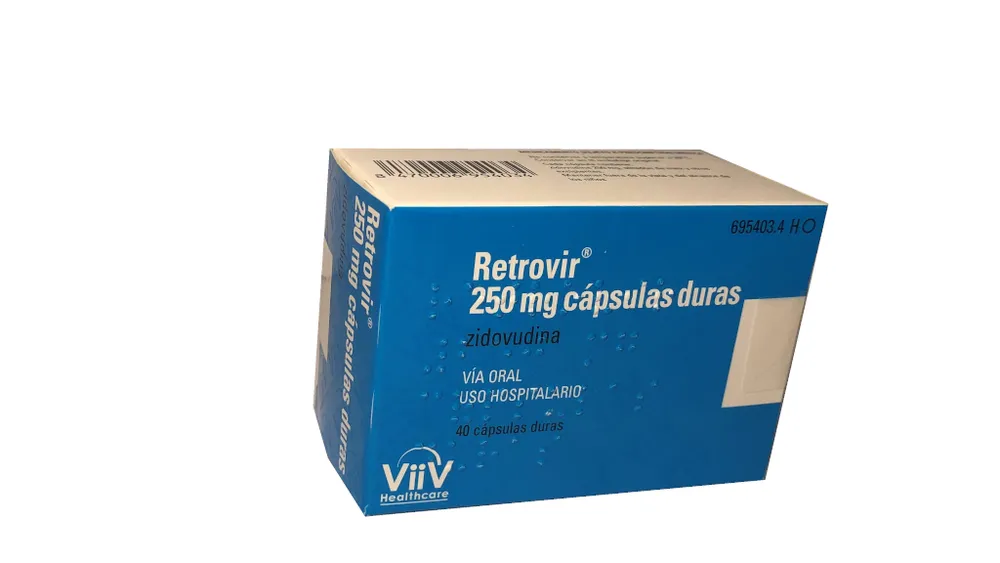
Table of Contents
- Patient Information Leaflet
- Introduction
- 1. What Retrovir is and what it is used for
- 2. What you need to know before taking Retrovir
- **Pregnancy**
- If you are pregnant, think you might be pregnant, or are planning to become pregnant:
- 3. How to take Retrovir
- 4. Possible adverse effects
- 5. Retention of Retrovir
- 6. Contents of the pack and other information
Patient Information Leaflet
Introduction
Patient Information Leaflet
Retrovir 250 mg hard capsules
zidovudine
Read the entire leaflet carefully before you start taking this medicine, as it contains important information for you.
- Keep this leaflet, as you may need to read it again.
- If you have any questions, ask your doctor or pharmacist.
- This medicine has been prescribed for you only, and you should not give it to other people, even if they have the same symptoms as you, because it may harm them.
- If you experience any adverse effects, consult your doctor or pharmacist, even if they are adverse effects not listed in this leaflet. See section 4.
Leaflet Contents
- What Retrovir is and what it is used for
- What you need to know before taking Retrovir
- How to take Retrovir
- Possible side effects
- How to store Retrovir
- Contents of the pack and other information
1. What Retrovir is and what it is used for
Retrovir is used to treat HIV (Human Immunodeficiency Virus) infection.
The active substance in Retrovir is zidovudine. Retrovir belongs to a group of medicines called antiretrovirals. It belongs to a class of medicines known as nucleoside reverse transcriptase inhibitors (NRTIs).
Retrovir does not eliminate HIV infection. It reduces the amount of virus in your body and keeps it at a low level. Retrovir also increases the CD4 cell count in your blood. CD4 cells are a type of white blood cell important for fighting infections.
Retrovir is used in combination with other medicines (combination therapy) to treat HIV in adults and children. To control HIV infection and prevent the disease from worsening, you must take all your medicines as prescribed.
If you are pregnant, your doctor may prescribe Retrovir to help prevent HIV from passing to the fetus. After birth, the baby may also need to take Retrovir to prevent HIV infection.
HIV infection is transmitted through sexual contact with an infected person or through contact with infected blood (for example, by sharing injecting needles).
2. What you need to know before taking Retrovir
Do not take Retrovir
- if you are allergic (hypersensitive) to zidovudine or to any of the other ingredients of Retrovir (listed in section 6)
- if you have very low white blood cells (neutropenia) or very low red blood cells (anemia).
Retrovir for newborns
Retrovir must not be given to newborns with liver problems, including:
- some cases of hyperbilirubinemia (high levels in the blood of a substance called bilirubin , which may cause yellowing of the skin)
- other conditions causing high levels of liver enzymes in the blood.
Take special care with Retrovir
Some patients treated with Retrovir or combination therapies for HIV are at increased risk of developing serious adverse reactions. You should be aware of these potential risks if:
-
you have ever had liver disease (including hepatitis B or C)
-
you are significantly overweight (especially if you are female).
-
Talk to your doctor if any of the above conditions apply to you. You may need more frequent medical check-ups, including additional blood tests while taking this medicine. See section 4 for more information.
Important symptoms to watch for
In some patients with HIV infection, signs and symptoms—sometimes serious—may occur during treatment with Retrovir.
Read carefully the information in section 4 of this leaflet. If you have any questions about this information:
- Consult your doctor.
Other medicines and Retrovir
Tell your doctor or pharmacist if you are taking, have recently taken, or might take any other medicines, including herbal remedies or medicines obtained without a prescription. Remember to inform your doctor or pharmacist if you start taking any new medicine during treatment with Retrovir.
Do not take the following medicines with Retrovir:
- stavudine, used to treat HIV infection
- ribavirin or ganciclovir injections, used to treat viral infections
- rifampicin, an antibiotic.
Some medicines may increase your risk of side effects or make them worse, for example:
-
sodium valproate, used to treat epilepsy
-
aciclovir, ganciclovir, or interferon, used to treat viral infections
-
pyrimethamine, used to treat malaria and other parasitic infections
-
dapsone, used to prevent pneumonia and treat skin infections
-
fluconazole or flucytosine, used to treat fungal infections such as Candida
-
pentamidine or atovaquone, used to treat parasitic infections such as Pneumocystis pneumonia (PCP)
-
amphotericin or co-trimoxazole, used to treat fungal or bacterial infections
-
probenecid, used to treat gout and similar conditions, and given with certain antibiotics to increase their effectiveness
-
methadone, used as a heroin substitute
-
vincristine, vinblastine, or doxorubicin, used to treat cancer.
-
Inform your doctor if you are taking any of these medicines.
Some of the medicines that interact with Retrovir include:
-
clarithromycin, an antibiotic
-
phenytoin, used to treat epilepsy.
-
Inform your doctor if you are taking clarithromycin or phenytoin. Your doctor may need to monitor you while you are taking Retrovir.
Pregnancy
If you are pregnant, think you might be pregnant, or are planning to become pregnant:
- Consult your doctor about the benefits and risks of taking Retrovir.
If HIV-positive pregnant women take Retrovir, there is a lower chance that HIV infection will be transmitted to their baby.
Retrovir and similar medicines can cause adverse effects on the fetus. If you have taken Retrovir during pregnancy, your doctor may recommend periodic blood tests and other diagnostic tests to monitor your child's development. In children whose mothers took NRTIs during pregnancy, the benefit of protection against HIV was greater than the risk of adverse effects occurring.
Breastfeeding
Breastfeeding is not recommended for women living with HIV because HIV infection can be transmitted to the baby through breast milk.
A small amount of the components of Retrovir may also pass into breast milk.
If you are breastfeeding or are considering breastfeeding, you must consult your doctor as soon as possible.
Driving and operating machinery
Retrovir may affect your ability to drive and operate machinery, as it may cause dizziness and other adverse effects that could reduce your alertness.
- Do not drive or operate tools/machinery unless you feel well.
Retrovir contains sodium
This medicine contains less than 23 mg of sodium (1 mmol) per dose unit; essentially, it is "sodium-free".
You will need regular blood tests
During treatment with Retrovir, your doctor will request regular blood tests to monitor for adverse effects. For more information about adverse effects, see section 4 of this leaflet.
Maintain regular contact with your doctor
Retrovir helps you control your disease but does not cure HIV infection. You will need to take it every day to prevent the disease from worsening. You may develop other infections associated with HIV infection.
- Stay in contact with your doctor and do not stop taking Retrovir without medical advice.
3. How to take Retrovir
Follow exactly the instructions for administration of this medicine given by your doctor. If in doubt, consult your doctor or pharmacist again.
Swallow the hard capsules whole with a little water.
How much Retrovir do you need to take?
Adults and adolescents weighing at least 30 kg:
The normal dose of Retrovir is 250 mg twice daily. Take the doses 12 hours apart.
Children:
Children may take zidovudine as an oral solution or in 100 mg capsules.
Dosage during pregnancy and childbirth:
Administration of Retrovir is not recommended to pregnant women with less than 14 weeks of gestation. After the fourteenth week, your doctor may prescribe 500 mg, administered as 100 mg five times a day, until the onset of labour. During labour, your doctor may decide to use injectable zidovudine until the umbilical cord is clamped. Retrovir may also be administered to the newborn to prevent HIV infection.
Dosage in patients with renal or hepatic impairment:
If you have severe kidney or liver problems, your doctor may decide to use a lower dose, depending on how well these organs are functioning. Follow your doctor's advice.
If you take more Retrovir than you should
If you take more Retrovir than you should, consult your doctor or pharmacist. If possible, show them the Retrovir packaging.
If you forget to take Retrovir
If you forget to take a dose, do not worry. You may take the next dose as soon as you remember, but not within two hours of the next scheduled dose. If, when you remember, less than two hours remain before the next dose, simply skip the missed dose and take the next one at the regular time. Then continue your treatment as before.
Do not take a double dose to make up for missed doses.
If you stop taking Retrovir
Do not stop taking Retrovir without medical advice.
Take Retrovir for as long as your doctor has instructed you to do so. Do not stop taking it unless your doctor tells you to.
4. Possible adverse effects
During HIV treatment, there may be an increase in weight and in blood glucose and lipid levels. This may be partly related to improved health, lifestyle factors, and, in the case of blood lipids, sometimes to the anti-HIV medications themselves. Your doctor will monitor these changes.
Treatment with zidovudine (Retrovir) often causes loss of fat from the legs, arms, and face (lipoatrophy). This loss of body fat has been shown not to be completely reversible after stopping zidovudine. Your doctor should monitor for signs of lipoatrophy. If you notice any loss of fat in your legs, arms, or face, inform your doctor. When these symptoms occur, Retrovir should be discontinued and your anti-HIV treatment changed.
Like all medicines, this medicine can cause adverse effects, although not everyone experiences them. Some adverse effects may only be detected in blood tests and may not appear until 4–6 weeks after starting Retrovir. If you experience any of these adverse effects, and if they are severe, your doctor may advise you to stop taking Retrovir.
In addition to the effects described below, other adverse effects may occur during combination anti-HIV treatment.
- It is important to read the information on “Other possible adverse effects of combination anti-HIV treatment”.
Very common adverse effects
May affect more than 1 in 10 people treated with Retrovir:
- headache
- nausea.
Common adverse effects
May affect up to 1 in 10 people treated with Retrovir:
- vomiting
- diarrhea
- stomach pain
- dizziness
- muscle pain
- general feeling of discomfort.
Common adverse effects that may show up in blood tests include:
- decrease in the number of red blood cells (anaemia) and white blood cells (leucopenia or neutropenia)
- increased liver enzymes in blood
- increased blood bilirubin (a substance produced by the liver), which may cause yellowing of the skin.
Uncommon adverse effects
May affect up to 1 in 100 people treated with Retrovir:
- skin rash (redness, swelling, or itching of the skin)
- difficulty breathing
- fever (high temperature)
- generalised pain and fatigue
- flatulence
- weakness.
Uncommon adverse effects that may show up in blood tests include:
- reduction in the number of blood cells involved in blood clotting (thrombocytopenia) or in all types of blood cells (pancytopenia).
Rare adverse effects
May affect up to 1 in 1,000 people treated with Retrovir:
- lactic acidosis (excess lactic acid in the blood; see the section below, “Other possible adverse effects of combination anti-HIV treatment”)
- liver problems, for example jaundice, enlarged liver, and fatty liver
- inflammation of the pancreas
- chest pain, heart abnormalities
- seizures
- anxiety and depression, inability to sleep (insomnia), difficulty concentrating, drowsiness
- indigestion, loss of appetite, altered taste
- changes in the colour of nails, skin, or the mucous membrane inside the mouth
- flu-like syndrome: chills, sweating, and cough
- tingling sensation in the skin (as if being pricked by pins or needles)
- frequent urination
- enlargement of the breasts in men.
A rare adverse effect that may show up in blood tests is:
- decrease in the number of a specific type of red blood cells (pure red cell aplasia).
Very rare adverse effects
May affect up to 1 in 10,000 people treated with Retrovir:
A very rare adverse effect that may show up in blood tests is:
- failure of the bone marrow to produce new blood cells (aplastic anaemia).
If you experience any type of adverse effect
- Consult your doctor or pharmacist. This includes any possible adverse effect not mentioned in this leaflet.
Other possible adverse effects of combination anti-HIV treatment
Other conditions may develop during anti-HIV treatment.
Opportunistic infections may flare up
Patients with advanced HIV infection (AIDS) have a weakened immune system and are more likely to develop serious infections (opportunistic infections). When these patients start treatment, previously hidden infections may flare up, causing signs and symptoms of inflammation. These symptoms are likely due to the immune system reacting against these infections.
In addition to opportunistic infections, autoimmune disorders (a condition in which the immune system attacks healthy body tissue) may also occur after you start taking anti-HIV medications. Autoimmune disorders may appear many months after starting treatment. If you notice any signs of infection or other symptoms such as muscle weakness, weakness starting in the hands and feet and moving upwards towards the trunk, palpitations, tremor, or hyperactivity, inform your doctor immediately to receive appropriate treatment.
If you have any symptoms of infection during treatment with Retrovir:
- Inform your doctor immediately. Do not take any other medicines without your doctor’s advice.
Lactic acidosis is a rare but serious adverse effect
Some people taking Retrovir develop a condition called lactic acidosis, along with an enlarged liver. Lactic acidosis is caused by increased levels of lactic acid in the body. It is rare and, if it occurs, usually develops after several months of treatment. It can be potentially fatal, causing failure of internal organs.
Lactic acidosis is more likely to occur in patients with pre-existing liver disease, or in obese individuals (particularly those with significant overweight), especially women.
Signs of lactic acidosis include:
-
difficulty breathing, rapid and deep breathing
-
drowsiness
-
numbness or weakness in the limbs
-
loss of appetite, weight loss
-
malaise (nausea) and vomiting
-
stomach pain.
During treatment, your doctor will monitor for any signs that you may be developing lactic acidosis. If you experience any of the symptoms listed above, or are concerned about any other symptoms:
- See your doctor as soon as possible.
You may have bone problems
Some patients receiving combination anti-HIV treatment develop a bone disease called osteonecrosis. In this condition, part of the bone tissue dies due to reduced blood supply to the bone.
The risk of developing this condition is higher in people who:
- have been on combination anti-HIV treatment for a long time
- also take anti-inflammatory medicines called corticosteroids
- drink alcohol
- have a severely weakened immune system
- are overweight.
Signs of osteonecrosis include:
-
stiffness in the joints
-
pain (especially in the hips, knees, or shoulders)
-
difficulty moving.
If you notice any of these symptoms:
- Inform your doctor.
Other effects that may appear in blood tests:
Combination anti-HIV treatment may also cause:
- increased levels of lactic acid in the blood, which in rare cases may lead to lactic acidosis.
This effect may be detected in blood tests during treatment with Retrovir.
Reporting of adverse effects
If you experience any type of adverse effect, talk to your doctor or pharmacist, even if it is a possible adverse effect not listed in this leaflet. You can also report them directly via the Spanish Pharmacovigilance System for Human Medicines: www.notificaRAM.es. By reporting adverse effects, you can help provide more information on the safety of this medicine.
5. Retention of Retrovir
Keep this medicine out of the sight and reach of children.
Do not use this medicine after the expiry date stated on the packaging after EXP. The expiry date is the last day of the month indicated.
Do not store above 30°C. Store in the original packaging.
Medicines must not be disposed of via wastewater or household waste. Dispose of unused containers and medicines at the SIGRE collection point at your pharmacy. If you are in doubt, ask your pharmacist how to properly dispose of containers and medicines you no longer need. This will help protect the environment.
6. Contents of the pack and other information
Composition of Retrovir
The active substance is zidovudine. Each capsule contains 250 mg of zidovudine.
The other components are: maize starch, microcrystalline cellulose, sodium carboxymethyl starch, magnesium stearate, titanium dioxide (E171), gelatin, indigo carmine (E132), and black printing ink Opacode black 10A1 or 10A2 (lakes, black iron oxide (E172), propylene glycol, 28% ammonium hydroxide (only in Opacode black 10A1), concentrated ammonium solution (only in Opacode black 10A2), potassium hydroxide (only in Opacode black 10A2)).
Appearance of the product and contents of the container
Retrovir 250 mg are opaque hard gelatin capsules with a white body and blue cap, marked with the code “GSJV2” printed in black ink. They are packaged in blisters and supplied in packs of 40 capsules.
Marketing Authorization Holder
Laboratorios ViiV Healthcare, S.L.
P.T.M. C/ Severo Ochoa, 2
28760 Tres Cantos (Madrid)
Tel: + 34 900 923 501
Manufacturer
Delpharm Poznan Spólka Akcyjna - ul. Grunwaldzka 189 – (60-322 Poznan) – Poland
Date of the most recent revision of this leaflet: April 2021.
Detailed and up-to-date information on this medicinal product is available on the website of the Spanish Agency of Medicines and Medical Devices (AEMPS) http://www.aemps.gob.es/