Respidina 120 mg prolonged-release tablets
Spain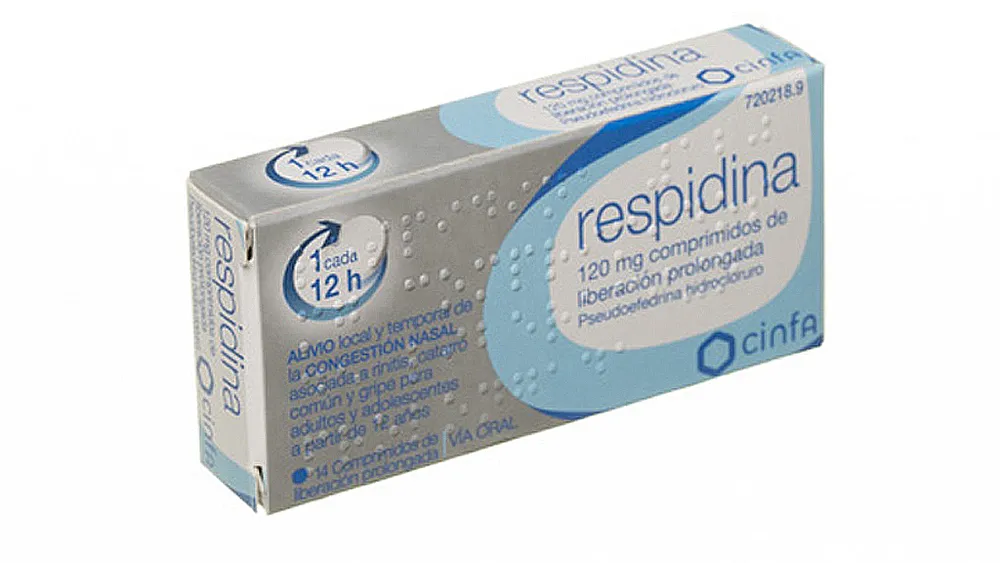
Table of Contents
- Package leaflet: Information for the user
- Introduction
- 1. What respidina is and what it is used for
- 2. What you need to know before taking respidina
- **Respidina contains hydrogenated castor oil**
- 3. How to take respidina
- 4. Possible adverse effects
- 5. Storage of respidina
- 6. Contents of the pack and other information
Package leaflet: Information for the user
Introduction
Package leaflet: information for the user
Respidina 120 mg prolonged-release tablets
Pseudoephedrine hydrochloride
Read the entire patient information leaflet carefully before you start taking this medicine, as it contains important information for you. Always follow exactly the instructions for taking this medicine as described in this leaflet or as directed by your doctor or pharmacist.
|
Package leaflet
- What respidina is and what it is used for
- What you need to know before taking respidina
- How to take respidina
- Possible side effects
- Storage of respidina
Contents of the pack and other information
1. What respidina is and what it is used for
Pseudoephedrine acts as a nasal decongestant.
It is indicated for the local and temporary relief of nasal congestion associated with rhinitis, the common cold, and influenza in adults and adolescents aged 12 years and older.
You should consult a doctor if symptoms worsen or persist for more than 5 days.
2. What you need to know before taking respidina
Do not take respidina:
- If you are allergic to pseudoephedrine, to other nasal decongestants, or to any of the other components of this medicine (listed in section 6).
- If you have very high blood pressure (severe hypertension) or uncontrolled hypertension despite medication.
- If you have a heart or blood vessel disease, or have had a cerebral hemorrhage.
- If you are taking or have taken within the last two weeks antidepressant medicines known as monoamine oxidase inhibitors (MAOIs), as this may cause an increase in blood pressure (see section “Taking respidina with other medicines”).
- If you currently have or have previously experienced difficulty urinating and/or urinary obstruction.
- If you have severe acute (sudden) or chronic (long-term) kidney disease, or kidney failure.
- If you have narrow-angle glaucoma (increased eye pressure).
- If you have hyperthyroidism.
- If you are pregnant or breastfeeding.
- If you are under 12 years of age.
Warnings and precautions
Sudden abdominal pain or rectal bleeding may occur during treatment with respidina due to inflammation of the colon (ischemic colitis). If these gastrointestinal symptoms occur, stop taking respidina and contact your doctor or seek immediate medical attention. See section 4.
Consult your doctor or pharmacist before starting to take respidina:
- If you are taking other medicines containing nasal decongestants, you should not take this medicine.
- You must stop treatment at least 24 hours before undergoing surgery.
- You must stop treatment and consult your doctor if, during treatment with this medicine, you experience or are diagnosed with high blood pressure (hypertension), rapid or strong heartbeat (tachycardia), palpitations, or irregular heart rhythm (arrhythmias), nausea, or headache.
You should consult your doctor before taking this medicine if you have:
-
diabetes
-
high blood pressure (hypertension)
-
any heart disease or have had a heart attack
-
high eye pressure (ocular hypertension)
-
epilepsy or risk of seizures
-
severe liver disease with reduced liver function
-
difficulty urinating, urinary obstruction
-
enlarged prostate (prostatic hypertrophy)
-
moderate or severe kidney disease with reduced kidney function
-
stomach ulcer or intestinal or bladder obstruction
-
are over 60 years of age
-
have had acute asthma attacks (bronchospasm)
-
a tumor of the adrenal gland that produces hormones affecting heart rate and blood pressure (pheochromocytoma)
-
Concurrent use of cocaine with pseudoephedrine may increase cardiovascular effects and the risk of adverse reactions.
-
Small pellets may appear in the stools, which are remnants of the medicine, but this is harmless and does not affect the medicine's efficacy.
-
Patients with gastrointestinal obstruction should not use prolonged-release oral formulations without consulting their doctor.
-
Patients should be advised to stop treatment and consult their doctor in case of persistent abdominal pain or vomiting.
-
Pseudoephedrine, the active ingredient in this medicine, may cause dependence if taken in large quantities, and therefore may be harmful.
-
You should avoid alcohol consumption during treatment with this medicine.
With respidina, blood flow to the optic nerve may be reduced. If you experience sudden vision loss, stop taking respidina and contact your doctor or seek immediate medical attention. See section 4.
Cases of reversible posterior encephalopathy syndrome (PRES) and reversible cerebral vasoconstriction syndrome (RCVS) have been reported after using medicines containing pseudoephedrine. PRES and RCVS are rare conditions that may involve reduced blood flow to the brain. Stop using respidina immediately and seek immediate medical assistance if you experience symptoms that could indicate PRES or RCVS (for symptoms, see section 4 "Possible side effects").
Children
Children under 12 years of age must not take this medicine; it is contraindicated.
Taking respidina with other medicines
Inform your doctor or pharmacist if you are currently taking, have recently taken, or might need to take any other medicines.
In particular, inform your doctor if you are taking any of the following medicines, as it may be necessary to adjust the dose or discontinue one of the treatments:
- Urinary acidifying agents (ammonium chloride).
- Urinary alkalinizing agents (sodium bicarbonate, citrates), as they may slow down the elimination of pseudoephedrine, increasing its effect and toxicity.
- Inhalational anesthetics, as they may increase the risk of heart problems.
- Antidepressants (tricyclics and monoamine oxidase inhibitors [MAOIs]), as they may cause a hypertensive crisis: headache, very high fever, and increased blood pressure (see section Do not take respidina).
- Central nervous system stimulants (amphetamines, xanthines), as they may cause nervousness, irritability, insomnia, or possibly seizures or irregular heart rhythm (arrhythmias).
- Certain blood pressure-lowering medicines or diuretics (such as beta-blockers, ACE inhibitors, rauwolfia alkaloids like reserpine, methyldopa, guanethidine, and reserpine), as they may cause a drop in blood pressure and possible hypertensive emergency.
- Oral anticoagulants such as acenocoumarol, as they may reduce the effect of acenocoumarol.
- Dihydroergotamine (an ergot derivative used to treat headache), as it may cause a severe increase in blood pressure.
- Digitalis glycosides (used for heart conditions), as they may cause disturbances in heart rhythm.
- Thyroid hormones (used for thyroid disorders), as the effects of both the hormones and pseudoephedrine may be enhanced.
- Levodopa and selegiline (used to treat Parkinson's disease), as they may cause a severe increase in blood pressure, high fever, and headache.
- Linezolid (used as an antibacterial), as it may cause an increase in blood pressure.
- Nitrates (used to treat angina pectoris), as the effects of nitrates may be reduced.
- Procarbazine (used to treat cancer), as it may cause a severe increase in blood pressure, very high fever, and headache.
This medicine should not be used with other medicines for nasal congestion relief.
Interference with diagnostic tests:
If you are scheduled to undergo any diagnostic tests (including blood and urine tests, skin tests using allergens, etc.), inform your doctor that you are taking this medicine, as it may alter test results.
Taking respidina with food, drinks, and alcohol
This medicine may be taken with or without food.
Alcoholic beverages should be avoided during treatment with this medicine.
Do not take with bitter orange juice, as it may cause a hypertensive crisis.
Pregnancy and breastfeeding
If you are pregnant or breastfeeding, think you may be pregnant, or are planning to become pregnant, consult your doctor or pharmacist before using this medicine.
This medicine is contraindicated during pregnancy and breastfeeding.
Athletes
Athletes should be aware that this medicine contains a component that may lead to a positive result in doping control tests.
Driving and use of machines
Treatment with this medicine at the recommended doses is not expected to reduce your reaction ability or cause drowsiness, dizziness, or vertigo. However, if any of these effects occur, do not drive or operate dangerous machinery.
Respidina contains hydrogenated castor oil
This medicine may cause stomach discomfort and diarrhea because it contains hydrogenated castor oil.
3. How to take respidina
Follow exactly the instructions for use provided in this leaflet or those indicated by your doctor or pharmacist. If in doubt, ask your doctor or pharmacist.
The usual dose is:
- Adults and adolescents from 12 years of age: 1 tablet (120 mg of pseudoephedrine) every 12 hours. The maximum daily dose is 2 tablets (240 mg of pseudoephedrine). Do not take more than 2 tablets of pseudoephedrine (240 mg) within 24 hours.
- Patients over 60 years of age: the dosage should be determined by the doctor, as a reduction of the usual dose may be necessary.
- Patients with kidney, liver, or heart disease: may require a lower dose; therefore, it is necessary to consult your doctor.
Use in children
This medicine is contraindicated in children under 12 years of age.
Respidina is administered orally. The tablet must be swallowed whole and must not be divided, chewed, or dissolved.
It should be taken with a liquid, preferably water.
It may be taken with or without food.
If the medicine is taken at night, it should be taken a few hours before going to bed to reduce the possibility of insomnia in patients who have difficulty sleeping.
You should consult your doctor if you feel worse, if symptoms worsen or persist for more than 5 days of treatment, or if they are accompanied by high fever.
If you take more respidina than you should
If you take more respidina than you should, you may experience: rapid breathing, excitation, nervousness, irritability, restlessness, tremors, seizures, palpitations, increased blood pressure, changes in heart rhythm (arrhythmias), difficulty urinating. In more severe cases, the following may occur: decreased potassium levels in blood (hypokalemia), mental disorder with altered perception of reality (psychosis), seizures, coma, and hypertensive crises.
In case of overdose or accidental ingestion, contact your doctor or pharmacist immediately or call the Toxicology Information Service at telephone number 91 562 04 20, indicating the medicine and the amount ingested.
If you forget to take respidina
If you forget to take respidina and symptoms persist, do not take a double dose to make up for the missed dose.
If necessary, take it again as indicated in section 3. How to take respidina.
4. Possible adverse effects
Like all medicines, this medicine may cause adverse effects, although not everyone experiences them.
Serious adverse effects (frequency known): serious conditions affecting the blood vessels in the brain known as reversible posterior encephalopathy syndrome (RPES) and reversible cerebral vasoconstriction syndrome (RCVS).
Stop using respidina immediately and seek urgent medical assistance if you experience symptoms that could be signs of reversible posterior encephalopathy syndrome (RPES) or reversible cerebral vasoconstriction syndrome (RCVS). These include:
- sudden, severe headache
- malaise
- vomiting
- confusion
- seizures
- changes in vision
During the period of use of pseudoephedrine, the following adverse effects have been observed, although their frequency cannot be accurately determined:
- More frequently: nervousness, restlessness, difficulty sleeping, anxiety, tremor. Taste disturbance.
- Less frequently: hyperactivity, hyperexcitability, dizziness, headache, uncoordinated movements, pupil dilation, rapid heartbeat, elevated blood pressure. Nausea, vomiting, bloody diarrhea. Dermatitis, urticaria, skin rash. Painful urination. Increased sweating, pallor, and weakness.
- Rarely: nightmares, screaming, and confusion in children. Heart rhythm disturbances and slow heartbeat. Breathing difficulty, diarrhea.
- Very rarely: myocardial infarction, and at very high doses, hallucinations, seizures, confusion, and headache.
- Frequency not known: inflammation of the colon due to insufficient blood supply (ischaemic colitis). Reduced blood flow to the optic nerve (ischaemic optic neuropathy).
Reporting of adverse effects
If you experience any type of adverse effect, consult your doctor or pharmacist, even if it is a possible adverse effect not listed in this leaflet. You may also report them directly via the Spanish Pharmacovigilance System for Human Medicinal Products: https://www.notificaram.es. By reporting adverse effects, you can help provide more information on the safety of this medicine.
5. Storage of respidina
Keep this medicine out of the sight and reach of children.
Do not store above 30°C.
Do not use this medicine after the expiry date stated on the packaging after "EXP". The expiry date refers to the last day of the month indicated.
Medicines must not be disposed of via wastewater or household waste. Dispose of unused containers and medicines at the SIGRE collection point at your pharmacy. If in doubt, ask your pharmacist how to dispose of containers and medicines you no longer need. This will help protect the environment.
6. Contents of the pack and other information
Composition of respidina
- The active substance is pseudoephedrine. Each prolonged-release tablet contains 120 milligrams of pseudoephedrine (as hydrochloride).
- The other components are: microcrystalline cellulose, hypromellose, anhydrous colloidal silica, hydrogenated castor oil, magnesium carbonate, pregelatinized corn starch, magnesium stearate, carbomers, Opadry Y-1-7000 (hypromellose, titanium dioxide (E-171) and polyethylene glycol 400).
Appearance of the medicinal product and contents of the pack
Respidina is available as prolonged-release coated tablets, white in colour, cylindrical and biconvex, with the logo “r”.
Each pack contains 6 or 14 prolonged-release tablets.
Marketing Authorisation Holder and Manufacturer
Laboratorios Cinfa, S.A.
Carretera Olaz-Chipi, 10. Polígono Industrial Areta.
31620 Huarte (Navarra) - Spain
Date of the most recent revision of this leaflet: April 2024
Detailed information on this medicinal product is available on the website of the Spanish Agency of Medicines and Health Products (AEMPS): http://www.aemps.gob.es