Resochin 155 mg film-coated tablets
Spain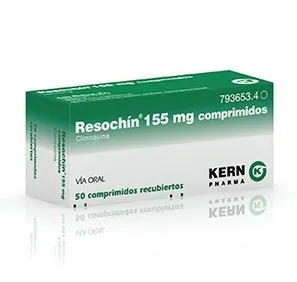
Table of Contents
Package leaflet: Information for the user
Introduction
Package leaflet: information for the user
Resochín®155 mg film-coated tablets
Chloroquine
Read the entire leaflet carefully before you start taking this medicine, because it contains important information for you.
- Keep this leaflet as you may need to read it again.
- If you have any questions, ask your doctor or pharmacist.
- This medicine has been prescribed for you only and must not be given to other people, even if they have the same symptoms as you, because it could harm them.
- If you experience any adverse effects, consult your doctor or pharmacist, even if they are effects not listed in this leaflet. See section 4.
Leaflet contents:
- What Resochín is and what it is used for
- What you need to know before taking Resochín
- How to take Resochín
- Possible adverse effects
- How to store Resochín
- Contents of the pack and other information
1. What Resochín is and what it is used for
Resochín belongs to the group of antiparasitic agents, specifically as an antimalarial.
It is indicated for:
- the prevention and treatment of malaria (also known as paludism)
- rheumatoid arthritis, spondyloarthritis (inflammatory disease of the spine)
- connective tissue diseases (systemic autoimmune diseases) and collagen diseases, such as systemic lupus erythematosus (chronic autoimmune disease), scleroderma (connective tissue disease), sarcoidosis (multisystem inflammatory disease), actinodermatosis (skin disease), rosacea (skin condition causing chronic redness), and dermatitis herpetiformis (skin disease causing itching and rashes)
- other protozoal or helminthic infections: giardiasis (intestinal disease caused by the protozoan G. lamblia), extraintestinal amebiasis (disease caused by the parasite Entamoeba histolytica), hepatic fluke disease (liver disease caused by parasites), paragonimiasis (disease caused by helminths), and American mucocutaneous leishmaniasis (disease caused by the protozoan Leishmania).
2. What you need to know before taking Resochín
Do not take Resochín
- if you are allergic to chloroquine or to other 4-aminoquinoline derivatives, or to any of the other ingredients of this medicine (listed in section 6)
- if you have retinal disease
- if you have blood disorders
- if you have haemolytic anaemia (glucose-6-phosphate dehydrogenase deficiency)
- if you have myasthenia gravis (an autoimmune disease causing muscle weakness and fatigue)
- if you have skin disorders such as psoriasis
- if you have porphyria (an inherited metabolic disorder)
- if you have epilepsy
- if you have severe liver or kidney disease
- if you are pregnant or breastfeeding (see section “Pregnancy and breastfeeding”)
You must not take Resochín together with the medicines described in the section “Other medicines and Resochín”.
Warnings and precautions
Talk to your doctor or pharmacist before taking Resochín.
Some people treated with Resochín may experience mental health problems such as irrational thoughts, hallucinations, confusion, aggression, paranoia, depression, or thoughts of self-harm or suicide, even if they have never had similar problems before. If you or people around you notice any of these side effects (see section 4), consult a doctor immediately.
Before starting long-term treatment, your doctor will examine your eyes and will then carry out periodic eye examinations every three months. Contact your doctor immediately if you notice any visual disturbances.
Your doctor will advise you when to have periodic blood tests to monitor your blood cell counts.
You must inform your doctor if you have:
- Liver disease
- Kidney disease
Consult your doctor, even if any of the conditions listed above occurred in the past.
Chloroquine may cause a decrease in blood glucose levels. Please consult your doctor about the signs and symptoms of low blood glucose. Monitoring of blood glucose levels may be necessary.
During treatment and for at least 3 months after stopping treatment, pregnancy must be avoided (see section “Pregnancy and breastfeeding”).
Chloroquine may cause heart rhythm disorders in some patients. Caution is required when using chloroquine if you have congenital prolongation of the QT interval, a family history of QT prolongation, acquired QT prolongation (as seen on an ECG, an electrical recording of the heart), heart disorders, a history of heart attack (myocardial infarction), or an electrolyte imbalance in the blood (especially low potassium or magnesium levels, see section “Other medicines and Resochín”).
If you experience palpitations or irregular heartbeat during treatment, inform your doctor immediately. The risk of heart problems may increase with higher doses. Therefore, the recommended dose must be strictly followed.
Other medicines and Resochín
Inform your doctor or pharmacist if you are taking, have recently taken, or might need to take any other medicines.
Inform your doctor if you are taking any of the following medicines:
- Medicines known to affect heart rhythm. This includes medicines used for abnormal heart rhythms (antiarrhythmics), for depression (tricyclic antidepressants), for psychiatric disorders (antipsychotics), for bacterial infections (e.g., a group of medicines called macrolides, including azithromycin), and for malaria (such as halofantrine).
You must not take Resochín with the following medicines:
- antacids and kaolin,
- intradermal rabies vaccine,
- phenylbutazone (a medicine used to treat pain and/or fever),
- probenecid (a medicine used to treat gout),
- corticosteroids,
- monoamine oxidase inhibitors (MAOIs) such as phenelzine, tranilcypramine, isocarboxazid, and selegiline, and potentially hepatotoxic drugs such as isoniazid, amiodarone, carbamazepine, phenytoin, phenothiazines, and ketoconazole, or MAO inhibitors (such as phenelzine, tranilcypramine, isocarboxazid, and selegiline),
- digoxin (a medicine used to treat heart failure),
- methotrexate (a medicine used to treat certain types of cancer and/or immune system disorders such as psoriasis or rheumatoid arthritis),
- neostigmine and pyridostigmine,
- cyclosporine,
- ampicillin (a medicine used to treat various infections),
- cimetidine (a medicine used to treat ulcers),
- mefloquine,
- bupropion (a medicine used to help stop smoking),
- penicillamine,
- metronidazole, pyrimethamine/sulfadoxine, praziquantel (medicines used to treat parasitic infections).
Pregnancy and breastfeeding
If you are pregnant or breastfeeding, think you may be pregnant, or are planning to become pregnant, consult your doctor or pharmacist before using this medicine.
Generally, Resochín should not be taken during pregnancy. However, your doctor will advise you if it is essential for you to take it while pregnant.
Contraception:
Pregnancy must be avoided during treatment and for at least 3 months after stopping treatment.
This medicine is excreted in breast milk; your doctor will advise you whether or not to continue breastfeeding.
Driving and use of machines:
Resochín may cause side effects such as headache, dizziness, somnolence, or confusion, which may impair your ability to drive or operate machinery. This is particularly important when starting treatment or if you consume alcohol or take other sedative medicines.
3. How to take Resochín
Follow exactly the administration instructions for this medicine as given by your doctor.
If in doubt, consult your doctor or pharmacist again.
Resochín is administered orally. Take the tablets whole or divided with a little water after main meals.
Your doctor will determine the dosage of Resochín according to your medical condition.
Malaria:
Your doctor will determine the treatment regimen, as it will depend on the region and parasite sensitivity.
- Prophylactic therapy:
Adults: generally, an initial dose of 2 tablets taken one week before starting the trip is recommended; or, if treatment begins at the start of the trip, 4 tablets administered in two equal doses separated by an interval of 6 hours.
The maintenance dose is 2 tablets per week, taken on exactly the same day each week.
Children: an initial dose of 5 mg of chloroquine base per kg of body weight is recommended one week before travel; or, if treatment begins at the start of the trip, 10 mg of chloroquine base per kg divided into two equal doses separated by an interval of 6 hours.
The maintenance dose is 5 mg of chloroquine base per kg of body weight per week, taken on exactly the same day each week.
Prophylactic therapy should be continued for 4 weeks after leaving the risk area.
- Treatment of malaria:
Adults: generally, 620 mg of chloroquine base (4 tablets) on the first and second day, and 310 mg of chloroquine base (2 tablets) on the third day.
Children: your doctor will determine the dose based on body weight.
Rheumatoid arthritis, spondylitis (rheumatic disease of the spine):
Adults: 1 tablet per day.
Children: your doctor will determine the dose based on body weight.
The duration of treatment at a dose of 1 tablet per day should not exceed 2 years.
Lupus erythematosus (chronic autoimmune disease):
Adults: 3 tablets per day for the first ten days, followed by 1 tablet daily for 3–5 weeks.
Children: your doctor will determine the dose based on body weight.
Actinodermatosis (skin disease):
Adults: 1 tablet per day for several weeks; then continue with 1 tablet taken two or three days per week.
Children: your doctor will determine the dose based on body weight.
Rosacea (skin disorder causing chronic redness):
Adults: 3 tablets per day for the first ten days; then 2 tablets per day for the next ten days; finally, 1 tablet per day for several months.
Children: your doctor will determine the dose based on body weight.
Giardiasis (intestinal disease caused by G. lamblia):
Adults: 3 tablets per day for five consecutive days.
Children: your doctor will determine the dose based on body weight.
Sarcoidosis (multisystem inflammatory disease):
Adults: 1–2 tablets per day for three to six months.
Children: your doctor will determine the dose based on body weight.
Extraintestinal amebiasis (disease caused by the parasite Entamoeba histolytica):
Adults: 3 tablets per day during the first week; 2 tablets per day during the second week; and 1 tablet per day during the third week.
Children: your doctor will determine the dose based on body weight.
Follow these instructions unless your doctor has given you different directions.
Remember to take your medicine.
If you feel that the effect of Resochín is too strong or too weak, inform your doctor or pharmacist.
Your doctor will indicate how long you should take Resochín. Do not stop treatment prematurely, as it will not be effective.
If you take more Resochín than you should:
It may cause headache, visual disturbances, and cardiac rhythm disturbances. A drop in blood pressure may occur, followed by shock with loss of consciousness and seizures. Death due to cardiorespiratory arrest may occur.
Go immediately to a hospital. Gastric lavage should be performed as soon as possible.
If you accidentally take more chloroquine than you should, inform your doctor immediately.
The following effects may occur: heart problems leading to irregular heartbeat.
In case of overdose or accidental ingestion, contact your doctor or pharmacist immediately or call the Toxicology Information Service at telephone number 91 562 04 20, indicating the medication and the amount ingested.
If you forget to take Resochín:
Do not take a double dose to make up for missed doses.
If you have any further questions about the use of this medicine, ask your doctor or pharmacist.
4. Possible adverse effects
Like all medicines, Resochín may produce adverse effects, although not everyone experiences them.
Frequent (less than 1 in 10 but at least 1 in 100 patients):
- abdominal pain
- loss of appetite
- diarrhoea
- nausea
- vomiting
- weight loss
- visual disturbances
Uncommon (less than 1 in 100 but at least 1 in 1,000 patients):
- headache
- cardiac disorders, hypotension
- confusion
- dizziness
- muscle weakness
- insomnia or somnolence
- nervousness
- tingling sensation
Rare (less than 1 in 1,000 but at least 1 in 10,000 patients):
- photosensitivity
- liver damage and worsening of pre-existing liver damage
- abnormalities in liver function test results
- blood cell count abnormalities
- worsening or precipitation of porphyria (inherited metabolic disorder)
- muscle weakness
- seizures
- emotional changes
- neuropathy
- worsening of psoriasis
- alopecia
- pruritus
- changes in pigmentation of the skin, hair, and oral mucosa
- deafness, auditory disturbances
- retinal abnormalities
- heart muscle disease (cardiomyopathy), which may be fatal with prolonged treatment at high doses (see section 2, Warnings and precautions).
Very rare (less than 1 in 10,000 patients):
- drug hypersensitivity syndrome (a drug reaction characterized by fever, rash, and internal organ involvement)
- acquired methaemoglobinaemia (a haemoglobin disorder impairing oxygen transport)
- abnormal ECG; with prolonged treatment, especially at high doses, cardiomyopathy may occur in some cases.
- eosinophilia in blood and tissues
- Stevens-Johnson syndrome (vesiculobullous erythema multiforme of the skin and other organs)
- toxic epidermal necrolysis (a severe skin disorder characterized by blistering and skin exfoliation)
- reversible phospholipidosis (accumulation of phospholipids)
Frequency not known (cannot be estimated from available data):
- reduction in blood glucose levels
- abnormal heart rate
- life-threatening irregular heart rhythm (observed on ECG) (see section 2, Warnings and precautions);
- depression or thoughts of self-harm or suicide, anxiety, confusion, irrational thoughts, paranoia, aggression, sleep disorders, agitation, euphoria or overexcitement, difficulty concentrating.
Reporting of adverse effects
If you experience any adverse effect, consult your doctor or pharmacist, even if it is a possible adverse effect not listed in this leaflet. You may also report them directly via the Spanish Pharmacovigilance System for Human Medicinal Products: www.notificaRAM.es. By reporting adverse effects, you can help provide more information on the safety of this medicine.
5. Storage of Resochín
Keep this medicine out of the sight and reach of children.
No special storage conditions are required.
Do not use this medicine after the expiry date stated on the packaging after “EXP”. The expiry date refers to the last day of the month indicated.
Medicines must not be disposed of via wastewater or household waste. Unused medicines and their containers should be handed over to the SIGRE point at your pharmacy. Ask your pharmacist how to dispose of medicines and containers you no longer need. This will help protect the environment.
6. Information for the user
Composition of Resochín:
-
The active substance is chloroquine. Each tablet contains 250 mg of chloroquine diphosphate, equivalent to 155 mg of chloroquine base.
-
The other components (excipients) are: maize starch, talc, magnesium stearate, hypromellose, macrogol 4000 and titanium dioxide (E171).
Appearance of the medicinal product and contents of the pack
Resochín film-coated tablets are white to slightly brownish in colour.
Resochín tablets are available in blister packs containing 50 tablets.
Marketing Authorization Holder and Manufacturer:
Kern Pharma, S.L.
Venus, 72 - Pol. Ind. Colón II
08228 Terrassa - Barcelona
Spain
Date of the most recent revision of this leaflet: March 2022
Detailed and up-to-date information on this medicinal product is available on the website of the Spanish Agency of Medicines and Medical Devices (AEMPS) http://www.aemps.gob.es/