Remifentanil Noridem 1 mg powder for concentrate for solution for injection and infusion EFG
Spain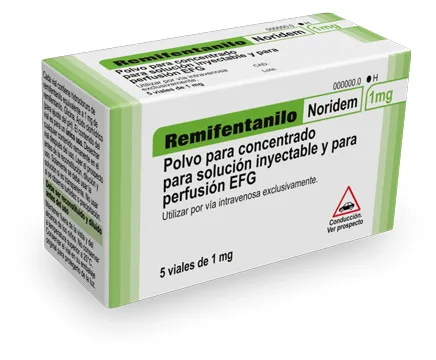
Instructions for Use
Table of Contents
Package leaflet: Information for the user
Introduction
Package leaflet: Information for the user
Remifentanilo Noridem 1 mg powder for concentrate for solution for injection and for infusion EFG
remifentanil
Read all of this leaflet carefully before you start using this medicine, because it contains important information for you.
- Keep this leaflet as you may need to read it again.
- If you have any questions, ask your doctor, pharmacist or nurse.
- If you get any side effects, talk to your doctor, pharmacist or nurse. This includes any side effects not listed in this leaflet. See section 4.
Contents of this leaflet:
- What Remifentanilo Noridem is and what it is used for
- What you need to know before using Remifentanilo Noridem
- How to use Remifentanilo Noridem
- Possible side effects
- How to store Remifentanilo Noridem
- Contents of the pack and other information
1. What Remifentanilo Noridem is and what it is used for
Remifentanilo Noridem contains a medicine called remifentanil, which belongs to a group of medicines known as opioids, used as analgesics. Remifentanilo Noridem differs from other medicines in this class due to its rapid onset of action and short duration of effect.
Remifentanilo Noridem is used:
- To prevent you from feeling pain before and during surgical procedures.
- To prevent you from feeling pain while receiving controlled mechanical ventilation in an Intensive Care Unit (for patients aged 18 years and older).
2. What you need to know before using Remifentanilo Noridem
Do not use Remifentanilo Noridem:
- if you are allergic to remifentanil or to any of the other ingredients of this medicine (listed in section 6)
- if you are allergic to fentanyl analogues (analgesic medicines similar to fentanyl and belonging to the class of medicines known as opioids)
- by injection into the spinal canal
- as the sole medicine to initiate anesthesia
If you are unsure whether any of the above apply to you, consult your doctor, pharmacist, or nurse before using Remifentanilo Noridem.
Warnings and precautions:
Consult your doctor, pharmacist, or nurse before starting to use Remifentanilo Noridem if:
- you are allergic to any other opioid medicine, such as morphine or codeine
- you have lung problems (you may be more sensitive to experiencing breathing difficulties)
- you are over 65 years of age, are frail, or have low blood volume and/or hypotension (you may be more sensitive to cardiac disturbances)
Inform your doctor before using remifentanil if:
- you or a family member have ever abused or been dependent on alcohol, prescription medicines, or illegal drugs (“addiction”)
- you are a smoker
- you have ever had mood disorders (depression, anxiety, or personality disorder) or have been treated by a psychiatrist for other mental illnesses.
This medicine contains remifentanil, which is an opioid. Repeated use of opioids may lead to reduced effectiveness of the medicine (you may become accustomed to its effects). It may also cause dependence and abuse, which in turn could lead to potentially fatal overdose. If you are concerned about becoming dependent on Remifentanilo Noridem, it is important to consult your doctor.
Occasionally, withdrawal reactions (e.g., rapid heartbeat, high blood pressure, and agitation) have been reported after abrupt discontinuation of treatment with this medicine, especially when treatment has been administered for more than 3 days (see also section 4. Possible side effects). If you experience these symptoms, your doctor may restart treatment and gradually reduce the dose.
Using Remifentanilo Noridem with other medicines
Inform your doctor or pharmacist if you are taking, have recently taken, or might need to take any other medicines. This includes herbal medicines and other medicines available without a prescription.
It is especially important that you inform your doctor or pharmacist if you are taking:
- Medicines for blood pressure control or heart problems, such as beta-blockers or calcium channel blockers.
- Medicines for depression, such as selective serotonin reuptake inhibitors (SSRIs), serotonin-norepinephrine reuptake inhibitors (SNRIs), and monoamine oxidase inhibitors (MAOIs). Concomitant use of these medicines with Remifentanilo Noridem is not recommended, as they may increase the risk of serotonin syndrome, a potentially life-threatening condition.
Concomitant use of Remifentanilo Noridem and sedative agents such as benzodiazepines and similar drugs increases the risk of drowsiness, breathing difficulties (respiratory depression), coma, and may even be potentially fatal.
Because of this, concomitant use should only be considered when no other treatment options are available.
The concomitant use of opioids and other medicines used to treat epilepsy, nerve pain, or anxiety (gabapentin and pregabalin) increases the risk of opioid overdose and respiratory depression, and may be potentially fatal.
However, if your doctor prescribes Remifentanilo Noridem together with sedatives, both the dose and duration of concomitant treatment must be carefully determined and monitored by your doctor.
Tell your doctor about all sedative medicines you are taking and strictly follow the dosing recommendations provided by your doctor. It may be helpful to inform friends or family members about the signs and symptoms described above. Contact your doctor if you experience any of these symptoms.
Use of Remifentanilo Noridem and alcohol
After receiving Remifentanilo Noridem, you should not consume alcohol until you have fully recovered.
Pregnancy and breastfeeding
If you are pregnant or breastfeeding, think you may be pregnant, or are planning to become pregnant, consult your doctor or pharmacist before using this medicine.
Your doctor will weigh the benefits to you against the risks to your baby of using this medicine during pregnancy.
If you receive this medicine during labor or shortly before delivery, it may affect your baby’s breathing. Both you and your baby will be monitored for signs of excessive drowsiness or breathing difficulties.
You should stop breastfeeding for 24 hours after receiving the medicine. If you produce milk during this time, discard the milk and do not give it to your baby.
Driving and using machines
If you are hospitalized only during the day, your doctor will inform you how long you should wait before leaving the hospital or driving. It may be dangerous to drive too soon after undergoing surgery.
3. How to use Remifentanilo Noridem
This medicine must never be self-administered. This medicine will always be administered to you by qualified healthcare personnel.
Remifentanilo Noridem can be administered:
- as a single injection into a vein
- as a continuous infusion (drip) into a vein, if you need to receive the medicine over a longer period of time.
The way in which the medicine is administered and the dose you receive will depend on:
- the type of surgery or treatment in the Intensive Care Unit you are undergoing
- the degree of pain you have
The dose may vary from patient to patient. Is dose adjustment required in patients with kidney or liver problems?
If you use more Remifentanilo Noridem than you should
The effects of Remifentanilo Noridem are closely monitored throughout the operation and in intensive care. If you have received too much, appropriate measures will be taken promptly.
After surgery
Inform your doctor or healthcare personnel if you feel pain. If you experience pain after surgery, you may be given other analgesics to relieve it.
4. Possible adverse effects
Like all medicines, Remifentanilo Noridem can cause adverse effects, although not everyone experiences them.
Allergic reactions including anaphylaxis: These are rare (may affect up to 1 in 1,000 people) in individuals taking Remifentanilo Noridem. Signs include:
- Raised, itchy skin rash (urticaria).
- Swelling of the face or mouth (angioedema) causing difficulty breathing.
- Collapse.
Severe allergic reactions can progress to cause potentially life-threatening anaphylactic shock:
Frequency is unknown (cannot be estimated from available data) and includes worsening of allergic signs, a marked drop in blood pressure, rapid heartbeat and/or fainting.
If you experience any of these symptoms, contact or see a doctor urgently.
Very common adverse effects
May affect more than 1 in 10 people
- Muscle rigidity.
- Low blood pressure (hypotension).
- Nausea (feeling sick) or vomiting.
Common adverse effects
May affect up to 1 in 10 people
- Slow heart rate (bradycardia).
- Shallow breathing (respiratory depression).
- Temporary cessation of breathing (apnea).
- Itching.
- Cough.
Uncommon adverse effects
May affect up to 1 in 100 people
- Oxygen deficiency (hypoxia).
- Constipation.
Rare adverse effects
May affect up to 1 in 1,000 people
- Slow heart rate (bradycardia), followed by absence of heartbeats (asystole/cardiac arrest) in patients receiving Remifentanilo Noridem together with one or more anesthetic medicines.
Other adverse effects
Other adverse effects have been reported in a very small number of people, so their exact frequency is unknown.
- Physical dependence on remifentanil (dependence) or need to increase doses over time to achieve the same effect (tolerance).
- Seizures (fits).
- A type of irregular heart rhythm (atrioventricular block).
- Irregular heartbeat (arrhythmia).
- Withdrawal syndrome (may present with the following adverse effects: increased heart rate, high blood pressure, feeling agitated or restless, nausea, vomiting, diarrhea, anxiety, chills, tremors, and sweating).
Adverse effects that may occur after surgery:
Common adverse effects (may affect up to 1 in 10 people)
- Shivering.
- Increased blood pressure (hypertension).
Uncommon adverse effects (may affect up to 1 in 100 people)
- Pain.
Rare adverse effects (may affect up to 1 in 1,000 people)
- Feeling of extreme calmness or drowsiness.
Reporting of adverse effects
If you experience any type of adverse effect, consult your doctor or pharmacist, even if they are effects not listed in this leaflet. You may also report them directly via the Spanish Pharmacovigilance System for Human Medicines: www.notificaRAM.es. By reporting adverse effects, you can help provide more information on the safety of this medicine.
5. Remifentanil Noridem Storage Instructions
Keep this medicine out of the sight and reach of children.
Do not use this medicine after the expiry date stated on the packaging following "EXP". The expiry date refers to the last day of the month indicated.
Do not use the reconstituted product if the solution appears non-clear, coloured, or contains visible particles.
Do not store above 25°C. Keep the vial in its original packaging to protect it from light.
After reconstitution/dilution
Physicochemical stability in use has been demonstrated for up to 24 hours at 25°C. From a microbiological standpoint, the product should be used immediately. If not used immediately, the user is responsible for ensuring storage times and conditions prior to use, which under normal circumstances should not exceed 24 hours between 2 and 8°C, unless reconstitution/dilution has been carried out under controlled, validated aseptic conditions.
Unused solution must not be disposed of via wastewater or household waste. Your doctor or healthcare professional will dispose of any unused medicines. This helps protect the environment.
6. Contents of the container and other information
Composition of Remifentanil Noridem
- The active substance is remifentanil hydrochloride. Each vial contains 1 mg of remifentanil (as hydrochloride).
- The other components are glycine and hydrochloric acid (for pH adjustment).
Appearance of the product and contents of the container
Remifentanil Noridem is a white or almost white powder. This powder must be mixed with a suitable fluid before injection. Once reconstituted, the resulting solution of Remifentanil Noridem is clear and colourless.
Remifentanil Noridem 1 mg powder for concentrate for solution for infusion is supplied in a glass vial with bromobutyl rubber stoppers and an aluminium cap with a hinged light blue plastic lid.
Each of these strengths of Remifentanil Noridem is available in cardboard packs containing 5 and 10 vials.
Only certain pack sizes may be marketed.
Marketing Authorization Holder and Manufacturer
Marketing Authorization Holder:
Noridem Enterprises Ltd., Evagorou & Makariou, Mitsi Building 3, Office 115, 1065 Nicosia, Cyprus.
Manufacturer:
DEMO S.A., 21st km National Road Athens-Lamia, 14568 Krioneri, Attica, Greece.
This medicinal product is authorized in the European Economic Area member states under the following names:
Ireland: | Remifentanil Noridem 1mg Powder for Concentrate for Solution for Injection or Infusion |
Austria: | Remifentanil/Noridem 1mg Powder for Concentrate for Solution for Injection or Infusion |
Greece: | Remifentanil/Noridem Powder for Concentrate for Solution for Injection or Infusion, 1mg/vial |
Spain: | Remifentanil Noridem 1 mg powder for concentrate for solution for injection and infusion EFG |
Date of the last review of this leaflet: 03/2025.
Detailed and up-to-date information on this medicinal product is available on the website of the Spanish Agency for Medicines and Health Products (AEMPS) http://www.aemps.gob.es/
This information is intended solely for healthcare professionals: For detailed information, please refer to the Remifentanilo Noridem Summary of Product Characteristics (SmPC). Posology and method of administration Remifentanil Noridem must be administered in a fully equipped environment for monitoring and maintaining respiratory and cardiovascular function, and by personnel trained in the use of anaesthetic agents and in the recognition and management of adverse effects expected with potent opioids, including respiratory and cardiac resuscitation. Such training must include establishing and maintaining an airway and providing assisted ventilation. Continuous infusions of Remifentanil Noridem should be administered using a calibrated infusion pump via a dedicated intravenous line or a rapid intravenous administration set. The infusion line should be connected as close as possible to the venous cannula and must be primed to minimize dead space (see Special precautions for disposal and other handling and section 6.6 of the SmPC, including tables with examples of infusion rates by body weight to assist in dose adjustment of Remifentanil Accord according to the anaesthesia required for the patient). Remifentanil Noridem may also be administered via target-controlled infusion (TCI) using a certified infusion device incorporating the Minto pharmacokinetic model with covariates based on age and lean body mass (LBM) (Anesthesiology 1997; 86: 10–23). It is important to take care to avoid occlusion or disconnection of infusion lines and to flush lines appropriately to remove residual Remifentanil Noridem after use (see Special warnings and precautions for use). Remifentanil Noridem is for intravenous use only and must not be administered via epidural or intrathecal injection (see Contraindications). Dilution Remifentanil Noridem may be diluted after reconstitution. Refer to the dilution instructions for the medicinal product before administration; see Special precautions for disposal and other handling. For manually controlled infusion, Remifentanil Noridem may be diluted to concentrations between 20 and 250 micrograms/mL (50 micrograms/mL is the recommended dilution for adults; 20 to 25 micrograms/mL for paediatric patients aged 1 year and older). For TCI, the recommended dilution of Remifentanil Noridem is 20 to 50 micrograms/mL. General anaesthesia Administration of Remifentanil Noridem should be individually adjusted according to patient response. Adults Manually Controlled Infusion (MCI) Table 1 summarizes the initial bolus injection/infusion rates and dose ranges: Table 1. Dose recommendations for adults
When administered as a slow bolus during induction, the Remifentanil Noridem injection must last at least 30 seconds. At the recommended doses above, remifentanil significantly reduces the amount of hypnotic agent required to maintain anaesthesia. Therefore, isoflurane and propofol should be administered as recommended in the table to avoid increased haemodynamic effects such as hypotension and bradycardia (see section Concomitant Medication). No data are available to provide dose recommendations for the simultaneous use of other hypnotic-sedative agents with remifentanil different from those listed in Table 1. Induction of anaesthesia: Remifentanil Noridem should be administered with a standard dose of a hypnotic agent, such as propofol, thiopental, or isoflurane, for the induction of anaesthesia. Remifentanil Noridem may be administered at an infusion rate of 0.5 to 1 microgram/kg/min, with or without an initial bolus of 1 microgram/kg given over no less than 30 seconds. If endotracheal intubation is to be performed more than 8–10 minutes after starting the Remifentanil Noridem infusion, a bolus is not necessary. Maintenance of anaesthesia in ventilated patients: After endotracheal intubation, the Remifentanil Noridem infusion rate should be reduced according to the anaesthetic technique, as indicated in Table 1. Due to the rapid onset and short duration of action of Remifentanil Noridem, the administration rate during anaesthesia may be increased in increments of 25% to 100% or decreased by 25% to 50%, every 2 to 5 minutes, to achieve the desired level of μ-opioid receptor response. Supplemental bolus doses may be administered every 2 to 5 minutes in response to light anaesthesia. Anaesthesia in anaesthetized patients with spontaneous ventilation via a secure airway (e.g. laryngeal mask anaesthesia): Respiratory depression is likely to occur in anaesthetized patients breathing spontaneously through a secure airway. Particular care must be taken to adjust the dose according to individual patient requirements, and supportive ventilation may be necessary. The recommended initial infusion rate for supplemental analgesia in anaesthetized patients breathing spontaneously is 0.04 microgram/kg/min, titrated to effect. An infusion rate range of 0.025 to 0.1 microgram/kg/min has been studied. Bolus injection is not recommended in anaesthetized patients with spontaneous ventilation. Remifentanil Noridem must not be used as an analgesic in procedures where the patient remains conscious or does not receive airway support during the procedure. Concomitant Medication: Remifentanil reduces the amounts or doses of inhaled anaesthetics, hypnotics, and benzodiazepines required for anaesthesia (see section 4.5 of the Summary of Product Characteristics). Doses of the following agents used in anaesthesia: isoflurane, thiopentone, propofol, and temazepam have been reduced by up to 75% when used concomitantly with remifentanil. Recommendations for discontinuation/continuation during the immediate postoperative period: Due to the very rapid reversal of the effect of Remifentanil Noridem, there will be no residual opioid activity within 5 to 10 minutes after stopping administration. For patients undergoing surgical procedures where postoperative pain is expected, analgesics should be administered prior to discontinuation of Remifentanil Noridem. Sufficient time should be allowed for the long-acting analgesic to reach its maximum effect. The choice of analgesic should be appropriate for the surgical procedure performed and the level of postoperative care. If the long-acting analgesic has not achieved adequate effect before the end of surgery, continuation of Remifentanil Noridem administration may be required to maintain analgesia during the immediate postoperative period until the longer-acting analgesic has reached its maximum effect. Further information on use in intensive care patients is provided in the section "Use in Intensive Care". In patients with spontaneous respiration, the initial infusion rate of Remifentanil Noridem should be reduced to 0.1 microgram/kg/min and may then be increased or decreased every 5 minutes in increments of no more than 0.025 microgram/kg/min to balance the level of analgesia with the patient's respiratory rate. Remifentanil Noridem should only be used in a fully equipped environment for monitoring and maintaining respiratory and cardiovascular function, under careful supervision of personnel specifically trained and experienced in the recognition and management of respiratory effects of potent opioids. Bolus injection is not recommended in patients with spontaneous respiration for pain treatment during the postoperative period. Administration by Target-Controlled Infusion (TCI) Induction and maintenance of anaesthesia in ventilated patients: Remifentanil Noridem TCI should be used in combination with an intravenous or inhaled hypnotic agent during induction and maintenance of anaesthesia in ventilated adult patients (see Table 1 in the General Anaesthesia section). In combination with these drugs, adequate analgesia for induction of anaesthesia and surgery can generally be achieved with blood concentrations of Remifentanil Noridem of 3–8 nanograms/ml. Remifentanil dosage should be adjusted to achieve the individual patient's response. Blood concentrations of up to 15 nanograms/ml may be required for particularly stimulating surgical procedures. At the recommended doses above, remifentanil significantly reduces the amount of hypnotic agent required to maintain anaesthesia. Therefore, isoflurane and propofol should be administered as recommended to avoid increased haemodynamic effects of remifentanil such as hypotension and bradycardia (see Table 1 and section Concomitant Medication). For information on remifentanil blood concentrations achieved with manually controlled infusion, see Table 11 in section 6.6 of the Summary of Product Characteristics. As there are insufficient data on the administration of Remifentanil Noridem by TCI, anaesthesia with spontaneous ventilation is not recommended. Recommendations for discontinuation/continuation in the immediate postoperative period: At the end of surgery, when the TCI infusion is stopped or the target concentration is reduced, spontaneous respiration is likely to return within calculated remifentanil blood concentration ranges of 1–2 nanograms/ml. As with manually controlled infusion, postoperative analgesia with longer-acting analgesics should be administered before the end of surgery (see section Administration by Manually Controlled Infusion: Recommendations for Discontinuation). Due to insufficient data, administration of remifentanil by TCI is not recommended for postoperative pain management. Pediatric patients (1 to 12 years of age) Concomitant administration of remifentanil with intravenous anaesthetic agents for induction of anaesthesia has not been thoroughly studied and is therefore not recommended. Remifentanil Noridem TCI has also not been studied in pediatric patients, and thus TCI administration is not recommended in these patients. To maintain anaesthesia, the following Remifentanil Noridem doses are recommended. Table 2. Dose recommendations for pediatric patients (1 to 12 years of age)
*administered concomitantly with nitrous oxide/oxygen in a 2:1 ratio When remifentanil is administered by bolus injection, the duration of administration must not be less than 30 seconds. Surgical intervention should not begin until at least 5 minutes after the start of Remifentanil Noridem infusion, if no simultaneous bolus dose has been given. For the sole administration of nitrous oxide (70%) with Remifentanil Noridem, the usual maintenance infusion rates should range between 0.4 and 3 micrograms/kg/min. Despite the lack of specific studies, data obtained in adults suggest that 0.4 micrograms/kg/min may be an appropriate initial dose. Pediatric patients should be closely monitored, with dose adjustments made according to the depth of analgesia considered appropriate for each surgical procedure. Concomitant medication: At the recommended doses above, remifentanil significantly reduces the amount of hypnotic agent required to maintain anesthesia. Therefore, isoflurane, halothane, and sevoflurane should be administered as recommended in the table above in order to avoid increased hemodynamic effects such as hypotension and bradycardia. There are no data available to provide dose recommendations for the concomitant use of other hypnotic agents with remifentanil (see section Adults - Concomitant Medication). Recommendations for patient management in the immediate postoperative period / Establishment of alternative analgesia prior to discontinuation of Remifentanil Noridem: Due to the very rapid offset of action of Remifentanil Noridem, there is no residual activity within 5 to 10 minutes after discontinuation of administration. For patients undergoing surgical procedures in which postoperative pain is expected, analgesics should be administered before stopping the Remifentanil Noridem infusion. Sufficient time should be allowed for the therapeutic effect of the longer-acting analgesic to take effect. The choice of drugs, dosage, and timing of administration should be planned in advance and individually adjusted to suit both the surgical procedure and the anticipated level of postoperative care (see Warnings and special precautions for use). Neonates and children (under 1 year of age) Clinical trial experience with remifentanil in neonates and children under one year of age is limited (see section 5.1 of the Summary of Product Characteristics). The pharmacokinetic profile of remifentanil in newborns/infants (less than 1 year of age) is comparable to that observed in adults after appropriate correction for body weight differences (see section 5.2 of the Summary of Product Characteristics). However, due to insufficient clinical data, remifentanil administration is not recommended in this age group. Use for Total Intravenous Anesthesia (TIVA): Clinical trial experience with remifentanil in children is limited (see section 5.1 of the Summary of Product Characteristics). However, clinical data are insufficient to establish dosing recommendations. Cardiac anesthesia Administration by Manually Controlled Infusion Table 3. Dose recommendations for cardiac anesthesia
Induction period of anesthesia: After administration of a hypnotic to achieve loss of consciousness, Remifentanil Noridem should be administered at an initial infusion rate of 1 microgram/kg/min. In patients undergoing cardiac surgery, bolus injections of Remifentanil Noridem during induction are not recommended. Endotracheal intubation should not be performed until at least 5 minutes after the start of the infusion. Maintenance period of anesthesia: After endotracheal intubation, the infusion rate of Remifentanil Noridem should be adjusted according to the patient's needs. Supplemental bolus doses may also be given if necessary. In high-risk cardiac patients, such as those undergoing valve surgery or with poor ventricular function, the maximum bolus dose to be administered is 0.5 micrograms/kg. These dosage recommendations are also applicable during hypothermic cardiopulmonary bypass anastomosis (see section 5.2 of the Summary of Product Characteristics). Concomitant medication: At the recommended doses above, remifentanil significantly reduces the amount of hypnotic drug required to maintain anesthesia. Therefore, isoflurane and propofol should be administered as recommended above to avoid an increase in hemodynamic effects such as hypotension and bradycardia. Data are not available to provide dosage recommendations for the simultaneous use of other hypnotic drugs with remifentanil (see section Adults - Concomitant Medication ). Recommendations for postoperative patient management Continuation of Remifentanil Noridem in the postoperative period to achieve analgesia prior to discontinuation for extubation: It is recommended to maintain the Remifentanil Noridem infusion at the final intraoperative rate during transfer of patients to the post-anesthesia care unit. Upon arrival in this area, the patient's level of anesthesia and sedation should be carefully monitored, and the Remifentanil Noridem infusion rate adjusted according to individual patient requirements (for further information on patient management in intensive care, see section Use in Intensive Care ). Establishment of alternative analgesia prior to discontinuation of Remifentanil Noridem: Due to the very rapid offset of action of Remifentanil Noridem, there will be no residual opioid activity within 5 to 10 minutes after discontinuation of administration. Before stopping Remifentanil Noridem, alternative analgesic and sedative drugs should be administered with sufficient lead time to allow establishment of their therapeutic effects. Therefore, it is recommended that the choice of agent, dose, and timing of administration be planned before removing the patient from the ventilator. Recommendations for discontinuation of Remifentanil Noridem: Due to the rapid offset of action of Remifentanil Noridem, hypertension, shivering, and pain have been reported in cardiac patients immediately after discontinuation of Remifentanil Noridem (see section 4.8 of the Summary of Product Characteristics). To minimize the risk of these effects, appropriate alternative analgesia (as described above) should be established before stopping the Remifentanil Noridem infusion. The infusion rate should be reduced in 25% decrements at intervals of at least 10 minutes until infusion is discontinued. During weaning from the ventilator, the Remifentanil Noridem infusion rate should not be increased; only downward adjustments should be made, supplemented if necessary with alternative analgesics. Any hemodynamic changes such as hypertension and tachycardia should be managed appropriately with alternative agents. When other opioid agents are administered as part of the transition regimen to alternative analgesia, patients should be carefully monitored. The benefit of achieving adequate postoperative analgesia must always be weighed against the potential risk of respiratory depression associated with these drugs. Administration by Target-Controlled Infusion (TCI) Induction and maintenance of anesthesia: Remifentanil Noridem TCI should be used in combination with an intravenous or inhaled hypnotic agent during induction and maintenance of anesthesia in ventilated adult patients (see Table 3). In combination with these agents, an adequate level of analgesia for cardiac surgery is generally achieved at the upper end of the remifentanil target blood concentration range used in general surgical procedures. After titration of remifentanil according to individual patient response, clinical studies have used remifentanil blood concentrations up to 20 nanograms/ml. At the recommended doses above, remifentanil significantly reduces the amount of hypnotic agent required to maintain anesthesia. Therefore, isoflurane and propofol should be administered as previously recommended to avoid an increase in hemodynamic effects such as hypotension and bradycardia (see Table 3 and section Concomitant Medication ). For information on remifentanil blood concentrations achieved with manually controlled infusion, see Table 11 in section 6.6 of the Summary of Product Characteristics. Recommendations for discontinuation/continuation in the immediate postoperative period: At the end of surgery, when TCI infusion is stopped or the target concentration is reduced, spontaneous respiration is likely to occur within the remifentanil concentration range of 1 to 2 nanograms/ml. As with manually controlled infusion, postoperative analgesia should be established before the end of surgery using longer-acting analgesics (see Manually Controlled Infusion: Recommendations for Discontinuation ). Due to insufficient data, administration of remifentanil by TCI is not recommended for management of postoperative analgesia. Pediatric patients (1 to 12 years of age) There are insufficient data to make a dosage recommendation for use during cardiac surgery. Use in intensive care Adults Remifentanil Noridem can be used to provide analgesia in mechanically ventilated patients in intensive care. Sedative agents should be administered when necessary. The safety and efficacy of remifentanil use in intensive care patients have been established in well-controlled clinical trials for up to a maximum of 3 days (see section Intensive Care Patients with Renal Impairment and section 5.2 of the Summary of Product Characteristics). Therefore, use beyond three days is not recommended. Remifentanil TCI has not been studied in intensive care patients, and therefore administration of Remifentanil Noridem by TCI in such patients is not recommended. In adults, administration of Remifentanil Noridem should be initiated at an infusion rate of 0.1 microgram/kg/min (6 micrograms/kg/h) to 0.15 microgram/kg/min (9 micrograms/kg/h). The infusion rate should be adjusted in increments of 0.025 microgram/kg/min (1.5 micrograms/kg/h) until the desired level of analgesia is achieved. A minimum interval of at least 5 minutes should be allowed between each dose adjustment. The patient should be regularly assessed, and the Remifentanil Noridem infusion rate adjusted accordingly. If an infusion rate of 0.2 microgram/kg/min (12 micrograms/kg/h) is reached and sedation is required, administration of an appropriate sedative drug is recommended (see below). The dose of the sedative agent should be adjusted to achieve the desired level of sedation. If additional analgesia is needed, further increases in the Remifentanil Noridem infusion rate by increments of 0.025 microgram/kg/min (1.5 micrograms/kg/h) may be made. Table 4 summarizes the recommended initial infusion rates and typical dosage ranges for achieving analgesia in individual patients: Table 4. Dosing guidelines for the use of Remifentanil Noridem in intensive care units
Bolus injection of Remifentanil Noridem is not recommended in intensive care settings. The use of Remifentanil Noridem will reduce the dose required of any concomitantly administered sedative drug. The following table 5 details the usual recommended initial doses for sedative drugs, if their administration is required: Table 5. Recommended initial dose for sedative drugs, if needed
To allow separate adjustment of the doses of each drug, sedatives should not be prepared as a mixture in the same infusion bag. Additional analgesia for ventilated patients undergoing stimulating procedures: It may be necessary to increase the infusion rate of Remifentanil Noridem to provide additional analgesic coverage in ventilated patients undergoing stimulating and/or painful procedures such as endotracheal suctioning, wound care, and physiotherapy. It is recommended to maintain an infusion rate of Remifentanil Noridem of at least 0.1 microgram/kg/min (6 microgram/kg/h) for at least 5 minutes before starting the stimulation procedure. The dose may subsequently be adjusted every 2 to 5 minutes in increments of approximately 25–50%, either in anticipation of or in response to increased analgesic requirements. The average infusion rate used to provide additional analgesia during stimulation procedures has been 0.25 microgram/kg/min (15 microgram/kg/h), with a maximum of 0.75 microgram/kg/min (45 microgram/kg/h). Establishment of alternative analgesia prior to discontinuation of Remifentanil Noridem: Due to the very rapid offset of action of Remifentanil Noridem, there is no residual opioid activity within 5 to 10 minutes after discontinuation of administration. Following administration of Remifentanil Noridem, tolerance, hyperalgesia, and associated hemodynamic changes may occur, especially when used in intensive care units (see section 4.4, Warnings and special precautions for use of the Summary of Product Characteristics). Therefore, before discontinuing Remifentanil Noridem, alternative analgesic and sedative medications should be administered with sufficient lead time to allow establishment of their therapeutic effects and to prevent hyperalgesia and concomitant hemodynamic changes. Available analgesic options include prolonged-release oral analgesics or intravenous or local analgesics, administered either by healthcare personnel or patient-controlled. These drugs should be carefully titrated according to individual patient needs as the Remifentanil Noridem infusion is tapered. It is recommended that the choice of agent, its dosage, and timing of administration be planned in advance of discontinuing Remifentanil Noridem. There is a risk that prolonged administration of μ-opioid agonists may induce tolerance development. Recommendations for extubation and discontinuation of Remifentanil Noridem: To ensure a gradual transition from Remifentanil Noridem therapy, it is recommended that the remifentanil infusion rate be gradually adjusted in steps of up to 0.1 microgram/kg/min (6 microgram/kg/h) over a period of up to 1 hour before extubation. After extubation, the infusion rate should be reduced in decrements of 25%, at intervals of at least 10 minutes, until infusion is stopped. During weaning from the ventilator, the Remifentanil Noridem infusion should not be increased and should only be reduced, supplemented if necessary with alternative analgesics. After discontinuation of Remifentanil Noridem administration, the intravenous cannula should be flushed or removed to prevent any inadvertent subsequent administration of the drug. When other opioid drugs are administered as part of the transition to alternative analgesia, the patient must be carefully monitored. The benefit of providing appropriate analgesia must always be weighed against the potential risk of respiratory depression following administration of these agents. Pediatric patients in intensive care No data are available for use in this patient population. Renal-impaired patients in intensive care No adjustment of the recommended doses is necessary in patients with renal impairment, including those undergoing renal replacement therapy; however, the clearance of the carboxylic acid metabolite is reduced in patients with renal failure (see section 5.2 of the Summary of Product Characteristics). Special patient groups Elderly patients (over 65 years of age) General anesthesia: The initial dose of remifentanil in patients over 65 years of age should be half of that recommended for adults, and should then be adjusted according to the individual needs of each patient, as increased sensitivity to the pharmacological effects of remifentanil has been observed in this patient group. This dose adjustment may apply to all phases of anesthesia, including induction, maintenance, and immediate postoperative analgesia. Due to increased sensitivity of elderly patients to remifentanil, when administering Remifentanil Noridem by TCI in this population, the initial target concentration should be 1.5 to 4 nanogram/ml, with subsequent titration according to response. Cardiac anesthesia: No reduction in the initial dose is required (see section Cardiac anesthesia). Intensive care: No reduction in the initial dose is required (see section Use in intensive care). Obese patients For manually controlled infusion, a dose reduction of Remifentanil Noridem is recommended in obese patients, based on ideal body weight, as remifentanil clearance and volume of distribution correlate better with ideal body weight than with actual body weight. Using the lean body mass (LBM) calculation in the Minto model, LBM may be underestimated in female patients with a body mass index (BMI) above 35 kg/m² and in male patients with a BMI above 40 kg/m². To avoid underdosing in these patients, careful titration of remifentanil administered by TCI according to individual patient response is recommended. Patients with renal impairment Based on available studies to date, no dose adjustment is necessary in patients with impaired renal function, including patients in intensive care. Patients with hepatic impairment Studies conducted in a limited number of patients with impaired liver function do not indicate the need for any special dosage adjustment. However, patients with severe hepatic insufficiency may be slightly more sensitive to the respiratory depressant effects of remifentanil (see section 4.4 of the Summary of Product Characteristics). These patients should be closely monitored, and the dose of remifentanil should be adjusted according to the individual needs of each patient. Neurosurgery Limited clinical experience in patients undergoing neurosurgery has shown that no special dosage recommendations are required. ASA class III/IV patients General anesthesia: As the hemodynamic effects of potent opioids are expected to be more pronounced in ASA class III/IV patients, caution should be exercised when administering Remifentanil Noridem in this population. Therefore, a reduced initial dose is recommended, with subsequent titration to achieve the desired effect. Insufficient data are available to make a dosage recommendation in children. In the case of TCI administration, an initial dose lower than 1.5 to 4 nanogram/ml should be used in ASA class III or IV patients, with subsequent titration to achieve response. Cardiac anesthesia: No reduction in the initial dose is required (see section Cardiac anesthesia in this section). Overdose As with all potent opioid analgesics, overdose would manifest as an increase in the predictable pharmacological actions of remifentanil. Because the effect of Remifentanil Noridem is very short-acting, the potential for harmful effects following overdose is limited to the immediate period after drug administration. Response to discontinuation of the drug is rapid, with return to baseline status within 10 minutes. In case of overdose or suspected overdose, the following actions should be taken: discontinue administration of Remifentanil Noridem, maintain a patent airway, initiate assisted or controlled ventilation with oxygen, and maintain adequate cardiovascular function. If respiratory depression is associated with muscle rigidity, a neuromuscular blocking agent may be required to facilitate assisted or controlled ventilation. For treatment of hypotension, intravenous fluids and vasopressors, as well as other supportive measures, may be used. As a specific antidote to treat severe respiratory depression and muscle rigidity, an opioid antagonist such as naloxone may be administered intravenously. It is unlikely that the duration of respiratory depression following remifentanil overdose will be longer than the duration of action of the opioid antagonist. Shelf life
Special precautions for disposal and other handling Remifentanilo Noridem must be prepared for intravenous use by adding, as appropriate, 1, 2 or 5 ml of diluent to obtain a reconstituted solution with a concentration of 1 mg/ml of remifentanil. This reconstituted solution is clear, colourless and practically free of particles. After reconstitution, visually inspect the product (whenever the container allows) to determine the presence of particles, discoloration or container damage. Discard any solution in which such defects are observed. The reconstituted product is for single use only. Any unused material must be discarded. Remifentanilo Noridem must not be administered by manually controlled infusion without further dilution to concentrations of 20 to 250 micrograms/ml (50 micrograms/ml is the recommended dilution for adults and 20 to 25 micrograms/ml for pediatric patients aged 1 year or older). Remifentanilo Noridem must not be administered by TCI without additional dilution (the recommended dilution for TCI is 20 to 50 micrograms/ml). The dilution selected depends on the technical capacity of the infusion device and the anticipated patient requirements. One of the following intravenous fluids must be used for dilution: Water for injections Glucose 5% solution for injection Glucose 5% and sodium chloride 0.9% solution for injection Sodium chloride 0.9% solution for injection Sodium chloride 0.45% solution for injection After dilution, visually inspect the product to ensure it is clear, colourless, practically free of particles and that the container shows no damage. Discard any solution in which any of these defects are observed. Compatibility of Remifentanilo Noridem with the following intravenous fluids has been demonstrated when administered into an intravenous catheter: Ringer's lactate solution for injection Ringer's lactate and glucose 5% solution for injection Remifentanilo Noridem has been shown to be compatible with propofol when administered into an intravenous catheter. Disposal of unused medicinal product and of all materials that have been in contact with it must be carried out in accordance with local regulations. . |
Similar Medications
-
Remifentanil Kern Pharma 1 mg powder for concentrate for solution for injection and infusion EFG
Form: powder for concentrate for injectable solution and for perfusion
Active substance Dosage REMIFENTANIL HYDROCHLORIDE 1 mg Manufacturer: Kern Pharma S.L.
-
Remifentanil Kern Pharma 2 mg powder for concentrate for solution for injection and infusion EFG
Form: powder for concentrate for injectable solution and for perfusion
Active substance Dosage REMIFENTANIL HYDROCHLORIDE 2,0 mg Manufacturer: Kern Pharma S.L.
-
Remifentanil Kern Pharma 5 mg powder for concentrate for solution for injection and for infusion EFG
Form: powder for concentrate for injectable solution and for perfusion
Active substance Dosage REMIFENTANIL HYDROCHLORIDE 5,0 mg Manufacturer: Kern Pharma S.L.
-
Remifentanil Noridem 2 mg powder for concentrate for solution for injection and infusion EFG
Form: powder for concentrate for injectable solution and for perfusion
Active substance Dosage REMIFENTANIL HYDROCHLORIDE 2.2 mg Manufacturer: Noridem Enterprises Limited
-
Remifentanil Noridem 5 mg powder for concentrate for solution for injection and infusion EFG
Form: powder for concentrate for injectable solution and for perfusion
Active substance Dosage REMIFENTANIL HYDROCHLORIDE 5.5 mg Manufacturer: Noridem Enterprises Limited
-
Remifentanil Normon 1 mg powder for concentrate for solution for injection and infusion EFG
Form: powder for concentrate for injectable solution and for perfusion
Active substance Dosage REMIFENTANIL HYDROCHLORIDE 1 mg Manufacturer: Laboratorios Normon S.A.
-
Remifentanil Normon 2 mg powder for concentrate for solution for injection and for infusion EFG
Form: powder for concentrate for injectable solution and for perfusion
Active substance Dosage REMIFENTANIL HYDROCHLORIDE 2 mg Manufacturer: Laboratorios Normon S.A.
-
Remifentanil Normon 5 mg powder for concentrate for solution for injection and for infusion EFG
Form: powder for concentrate for injectable solution and for perfusion
Active substance Dosage REMIFENTANIL HYDROCHLORIDE 5 mg Manufacturer: Laboratorios Normon S.A.
-
Remifentanil Sala 1 mg powder for concentrate for solution for injection or infusion EFG
Form: powder for concentrate for injectable solution and for perfusion
Active substance Dosage REMIFENTANIL HYDROCHLORIDE 1,097 mg Manufacturer: Laboratorio Reig Jofre, S.A.
-
Remifentanil Sala 2 mg powder for concentrate for solution for injection or infusion EFG
Form: powder for concentrate for injectable solution and for perfusion
Active substance Dosage REMIFENTANIL HYDROCHLORIDE 2,194 mg Manufacturer: Laboratorio Reig Jofre, S.A.
-
Remifentanil Sala 5 mg powder for concentrate for solution for injection or infusion EFG
Form: powder for concentrate for injectable solution and for perfusion
Active substance Dosage REMIFENTANIL HYDROCHLORIDE 5,485 mg Manufacturer: Laboratorio Reig Jofre, S.A.
-
Ultiva 1 mg powder for concentrate for solution for injection and infusion
Form: powder for concentrate for injectable solution and for perfusion
Active substance Dosage REMIFENTANIL HYDROCHLORIDE 1 mg Manufacturer: Aspen Pharma Trading Limited
This page has been machine-translated and may contain inaccuracies. The original data is available in the manufacturing country's language.
Last data check: May 18, 2026 · Data source: CIMA — AEMPS