Rapibloc 300 mg powder for solution for infusion
Spain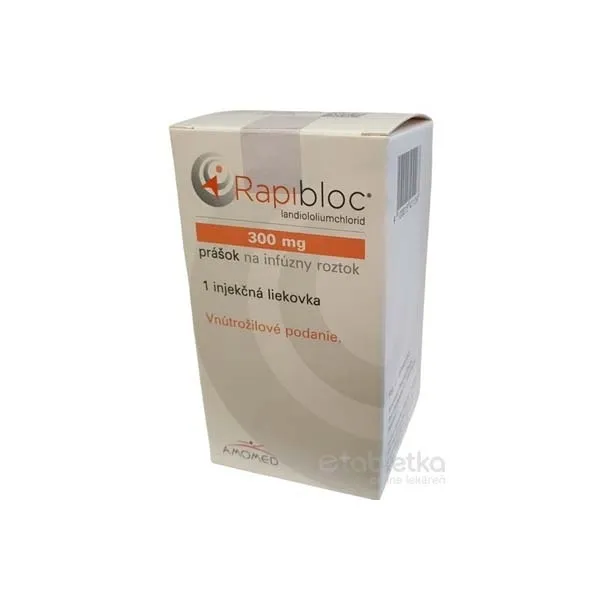
Table of Contents
- Package leaflet: Information for the user
- Introduction
- ***Package leaflet contents***
- 1. What Rapibloc is and what it is used for
- 2. What you need to know before starting Rapibloc
- 3. How to take Rapibloc
- 4. Possible adverse effects
- 5. Storage of Rapibloc
- 6. Contents of the pack and other information
- ***Contraindications***
Package leaflet: Information for the user
Introduction
Package leaflet: Information for the patient
Rapibloc 300 mg powder for solution for infusion
landiolol hydrochloride
Read all of this leaflet carefully before you start taking this medicine, because it contains important information for you.
- Keep this leaflet, as you may need to read it again.
- If you have any questions, ask your doctor or nurse.
- If you experience any side effects, talk to your doctor or nurse, even if they are side effects not listed in this leaflet. See section 4.
Package leaflet contents
- What Rapibloc is and what it is used for
- What you need to know before taking Rapibloc
- How to take Rapibloc
- Possible side effects
- Storage of Rapibloc
- Contents of the pack and other information
1. What Rapibloc is and what it is used for
Rapibloc contains the active substance landiolol hydrochloride. It belongs to a group of medicines called "beta-blockers". It works by converting irregular or rapid heartbeats into normal rhythms.
This medicine is used in adults to treat heart rhythm problems when the heart beats too fast.
It is used during or immediately after surgical procedures or in other situations where control of heart rate is required.
2. What you need to know before starting Rapibloc
Your doctor will NOT give you Rapibloc if:
- You are allergic to landiolol or any of the other ingredients of this medicine (listed in section 6).
- You have a very slow heart rate (less than 50 beats per minute).
- You have a fast heart rhythm or alternating fast and slow rhythms (a condition known as "sick sinus syndrome").
- You have a serious heart block. Heart block is a problem with the electrical signals that control your heartbeat.
- You have a problem with blood supply to the heart (a condition called "cardiogenic shock").
- You have very low blood pressure.
- You have severe symptoms of heart failure.
- You have increased pressure in the lungs (pulmonary hypertension).
- You have an untreated gland disorder called phaeochromocytoma. Phaeochromocytoma originates in the adrenal gland and can cause sudden high blood pressure, severe headache, sweating, and increased heart rate.
- You have rapidly worsening asthma symptoms.
- You have very high levels of acid in your body (severe metabolic acidosis) that cannot be corrected.
Warnings and precautions
- Talk to your doctor or nurse before starting this medicine.
- Rapibloc is a powder and must be dissolved by your doctor or nurse before administration.
- Your heart rate, blood pressure, and heart's electrical activity will usually be continuously monitored while you are receiving this medicine.
Your doctor will use special caution with this medicine if:
- You have diabetes or low blood sugar levels. Landiolol may mask the symptoms of low blood sugar.
- You have low blood pressure.
- You have a condition called "pre-excitation syndrome" combined with an irregular and fast heart rhythm (atrial fibrillation).
- You have problems with the electrical signals controlling your heartbeat (heart block).
- You have problems with electrical impulse conduction through the heart and are receiving verapamil or diltiazem.
- You have a specific type of angina (chest pain) called "Prinzmetal's angina".
- You have or have had heart problems (such as congestive heart failure). Your doctor will monitor you closely for any cardiac symptoms. If necessary, treatment may be stopped, the dose reduced, or special treatment initiated.
- You have certain heart rhythm disorders called supraventricular arrhythmias and:
- have other heart problems or
- are taking other heart medications
- You have kidney problems.
- You have a gland disorder called phaeochromocytoma that has been treated with medications known as alpha-receptor blockers.
- You have airway narrowing or wheezing, such as in asthma.
- You have circulatory problems, such as pale fingers (Raynaud's disease) or pain, fatigue, and sometimes burning sensations in the legs.
- You have allergies or are at risk of anaphylactic reactions (severe allergic reactions). Rapibloc may make allergies more severe and more difficult to treat.
If any of the above apply to you (or you are unsure), consult your doctor or nurse before receiving this medicine.
Other medicines and Rapibloc
Tell your doctor or nurse if you are taking, have recently taken, or might need to take any other medicines. This includes medicines you have obtained yourself without a prescription, including herbal and natural products. Your doctor will check that any other medicines you are taking do not interfere with the way Rapibloc works.
In particular, inform your doctor or nurse if you are taking any of the following:
- Medicines used to treat heart rhythm problems (such as diltiazem, verapamil, propafenone, disopyramide, amiodarone, and digitalis preparations) and high blood pressure (such as nifedipine).
- Medicines used to treat diabetes, including insulin and oral antidiabetic medicines.
- Medicines commonly used during surgery to relax muscles (such as suxamethonium) or medicines used to reverse the effects of muscle relaxants called cholinesterase inhibitors (such as neostigmine, distigmine, and edrophonium). Your doctor will also exercise special caution when using landiolol during surgery, especially when you are receiving anaesthesia and other treatments.
- Medicines known as ganglion blockers (such as trimethaphan).
- Medicines used as painkillers, such as non-steroidal anti-inflammatory drugs (NSAIDs).
- Floctafénine, which is a painkiller.
- Amisulpride, a medicine used to treat mental health disorders.
- Tricyclic antidepressants (such as imipramine and amitriptyline).
- Barbiturates (such as phenobarbital, used to treat epilepsy).
- Phenothiazines (such as chlorpromazine, used to treat mental disorders).
- Medicines used to treat asthma.
- Medicines that may lower blood pressure (such as reserpine and clonidine).
- Epinephrine, used to treat allergic reactions.
- Heparin, used to thin the blood.
If you are unsure whether any of the above apply to you, talk to your doctor or nurse before starting Rapibloc.
Pregnancy and breastfeeding
If you are pregnant, breastfeeding, think you may be pregnant, or plan to become pregnant, consult your doctor before using this medicine.
Available data on the use of landiolol during pregnancy are limited. Due to lack of experience, use of this medicine during pregnancy is not recommended.
Inform your doctor if you are breastfeeding. Landiolol may pass into breast milk, therefore this medicine should not be administered if you are breastfeeding.
Rapibloc contains sodium
This medicine contains less than 1 mmol of sodium (23 mg) per vial, i.e., essentially "sodium-free".
3. How to take Rapibloc
- Landiolol is a powder and must be dissolved by your doctor or nurse. It is administered to you as an intravenous infusion through a needle placed in a vein.
- The dose must be individually adjusted. An initial dose may be given before starting the maintenance dose. Your doctor will determine the dosing regimen and adjust the dose as necessary.
- The duration of treatment depends on the effect achieved and any possible side effects. Your doctor will decide how long you should receive treatment.
- While you are receiving landiolol, your heart rate, blood pressure, and the electrical activity of your heart will be monitored.
- Once a stable condition has been achieved, you may be given another heart medication while your landiolol dose is gradually reduced.
Dose adjustment is usually not necessary in elderly patients.
If you have kidney problems, your doctor will take appropriate precautions.
Hepatic impairment
If you have liver problems, your doctor will start treatment with a lower dose.
Use in children and adolescents
Experience with the use of landiolol in children and adolescents is limited. Your doctor will decide whether treatment with landiolol is appropriate.
If you are given more Rapibloc than you should
If you feel you have received too much landiolol, inform your doctor or nurse immediately.
Your doctor will take appropriate measures (your treatment may be stopped immediately and you may receive supportive therapy).
If you have received an excessive dose of this medicine, you may experience the following symptoms:
- Severe drop in blood pressure (you may feel dizzy or lightheaded).
- Very slow heart rate
- Reduced heart function
- Shock due to reduced heart function
- Breathing difficulties
- Loss of consciousness, potentially progressing to coma
- Seizures (convulsions)
- Nausea
- Vomiting
- Low blood sugar levels
- High potassium levels in the blood (hyperkalemia)
In case of overdose or accidental ingestion, contact the Toxicology Information Service (telephone 91 562 04 20) or consult your doctor or pharmacist.
If you stop treatment with Rapibloc
Sudden discontinuation of Rapibloc treatment usually does not cause a recurrence of tachycardia symptoms. Your doctor will monitor you closely if treatment with this medicine is stopped.
If you have any further questions about the use of this medicine, ask your doctor or nurse.
4. Possible adverse effects
Like all medicines, this medicine can cause adverse effects, although not everyone experiences them.
Most side effects disappear within 30 minutes after stopping treatment with landiolol. Immediately inform your doctor or nurse if you notice any of the following adverse effects, which may be serious.
It may be necessary to stop the infusion if your doctor observes any significant changes in:
- Your heart rate
- Your blood pressure
- The electrical activity of your heart
Frequent (may affect up to 1 in 10 people):
- Slow heartbeats
- Low blood pressure
Uncommon (may affect up to 1 in 100 people):
-
Lung infection (pneumonia)
-
Abnormally low number of blood clotting cells (decreased platelet count)
-
Low sodium levels in the blood
-
Reduced blood supply to the brain, headache
-
Myocardial infarction, failure of normal blood circulation (cardiac arrest), rapid and/or irregular heartbeat
-
High blood pressure
-
Asthma
-
Vomiting, nausea
-
Liver disease
-
Cold sweating
-
Skin redness
-
Kidney failure
-
Fever
-
Changes in blood tests
Rare (may affect up to 1 in 1,000 people):
-
Inflammation of the chest tissue
-
Elevated blood glucose
-
Stroke
-
Heart rhythm disorders, decreased heart function, certain types of heartbeat problems (such as a brief pause in normal heart activity or absence of beats; sensation of heart pounding (palpitations))
-
Shock, hot flushes
-
Breathing problems (difficulty breathing), abnormally low levels of oxygen in the blood
-
Abdominal discomfort, oral discharge, bad breath
-
Abnormally high level of bilirubin (a pigment produced by the breakdown of red blood cells) in the blood
-
Kidney injury, decreased urine volume
-
Chills, chest discomfort, pain at the injection site
-
Increased pressure in the pulmonary vessels
-
Sugar (glucose) in the urine
-
Abnormal readings (ECG, medical ultrasound) of the heart
-
Abnormal urine test (proteins in the urine, increased urea in the urine)
-
Pain at the injection site
-
Skin changes at the injection site
-
Sensation of pressure at the injection site
Reporting of adverse effects
If you experience any type of adverse effect, consult your doctor or nurse, even if it is a possible adverse effect not listed in this leaflet. You may also report them directly through the Spanish Pharmacovigilance System for Human Medicinal Products: https://www.notificaRAM.es.
By reporting adverse effects, you can help provide more information on the safety of this medicine.
5. Storage of Rapibloc
- Keep the vial in the outer packaging to protect it from light.
- Keep this medicine out of the sight and reach of children.
- Do not use this medicine after the expiry date stated on the carton and vial following CAD. The expiry date refers to the last day of the month indicated.
- This medicine does not require any special storage temperature.
- Landiolol must be dissolved before use. The diluted medicine is stable for 24 hours at 25 °C. However, it should be used immediately after dilution.
- Do not freeze after reconstitution.
- Do not use this medicine if you observe particles or discoloration of the solution.
Medicines should not be disposed of via wastewater or household waste. Ask your pharmacist how to dispose of medicines you no longer need. This will help protect the environment.
6. Contents of the pack and other information
Composition of Rapibloc
The active substance is landiolol hydrochloride. One vial contains 300 mg of landiolol hydrochloride (as powder), equivalent to 280 mg of landiolol. After dilution, 1 ml contains 6 mg of landiolol hydrochloride.
The other components are mannitol (E421) and sodium hydroxide (E524) (to adjust pH).
Appearance of Rapibloc and contents of the pack
Rapibloc is a white to almost white powder for solution for infusion.
The pack contains a 50 ml vial made of glass, with a chlorobutyl rubber stopper and an aluminium flip-off cap.
Marketing Authorization Holder and Manufacturer
Marketing Authorization Holder
Orpha-Devel Handels und Vertriebs GmbH
Wintergasse 85/1b
3002, Purkersdorf
Austria
Manufacturer
AOP Orphan Pharmaceuticals GmbH
Leopold-Ungar-Platz 2
1190 Vienna
Austria
For further information about this medicinal product, please contact the local representative of the Marketing Authorization Holder:
AOP Orphan Pharmaceuticals Iberia S.L.U.
Calle de Cólquide nº6, Edif. Prisma – Portal 2, 1º F
28231, Las Rozas, Madrid
Spain
This medicinal product is authorized in the EEA Member States under the following names:
Belgium Runrapiq 300 mg powder for solution for infusion
Ireland Rapibloc 300 mg powder for solution for infusion
Portugal Rapibloc 300 mg powder for solution for infusion
Spain Rapibloc 300 mg powder for solution for infusion
Netherlands Landiolol Hydrochloride Orpha-Devel 300 mg powder for solution for infusion
Date of the most recent review of this summary: 03/2026
Detailed information on this medicinal product is available on the website of the Spanish Agency of Medicines and Health Products (AEMPS) (http://www.aemps.gob.es/)
This information is intended for healthcare professionals only:
This section contains practical information regarding administration. Please read the summary of product characteristics for complete information on dosage and method of administration, contraindications, warnings, etc.
Landiolol is indicated for intravenous use in a supervised setting. Landiolol must be administered only by a qualified healthcare professional. The dose of landiolol should be individually adjusted.
Rapibloc must not be administered without reconstitution.
Reconstitute 1 vial with 50 ml of one of the following solutions:
- Sodium chloride solution 9 mg/ml (0.9%)
- Glucose solution 50 mg/ml (5%)
- Ringer's solution
- Ringer lactate solution
The white to almost white powder dissolves completely after reconstitution. Gently mix until a clear solution is obtained. Reconstituted solutions should be inspected visually for visible particles and discoloration. Only clear, colourless solutions should be used.
Infusion is usually started at an infusion rate of 10 to 40 micrograms/kg/min, which will achieve a heart rate-reducing effect within 10–20 minutes.
If a rapid onset of hypotensive effect is desired (within 2 to 4 minutes), an optional loading dose of 100 micrograms/kg/min for 1 minute may be considered, followed by continuous intravenous infusion of 10 to 40 micrograms/kg/min.
Lower initial doses should be used in patients with cardiac dysfunction and septic shock. Dosage instructions are provided in the "Special populations" section and in the integrated dosing scheme.
Maximum dose: The maintenance dose may be increased up to 80 micrograms/kg/min for a limited period (see section 5.2 of the summary of product characteristics), if the patient's cardiovascular status requires and allows such dose increase and the maximum daily dose is not exceeded.
The recommended maximum daily dose of landiolol hydrochloride is 57.6 mg/kg/day (e.g., infusion of 40 micrograms/kg/min for 24 hours). Limited experience exists with landiolol infusion durations exceeding 24 hours at doses >10 micrograms/kg/min.
Conversion formula for continuous intravenous infusion: micrograms/kg/min to ml/h
(Landiolol 300 mg/50 ml = 6 mg/ml):
Target dose (micrograms/kg/min) × body weight (kg) / 100 = infusion rate (ml/h)
Conversion table (example):
kg of body weight | 1 µg/kg/min | 2 µg/kg/min | 5 µg/kg/min | 10 µg/kg/min | 20 µg/kg/min | 30 µg/kg/min | 40 µg/kg/min | |
40 | 0.4 | 0.8 | 2 | 4 | 8 | 12 | 16 | ml/h |
50 | 0.5 | 1 | 2.5 | 5 | 10 | 15 | 20 | ml/h |
60 | 0.6 | 1.2 | 3 | 6 | 12 | 18 | 24 | ml/h |
70 | 0.7 | 1.4 | 3.5 | 7 | 14 | 21 | 28 | ml/h |
80 | 0.8 | 1.6 | 4 | 8 | 16 | 24 | 32 | ml/h |
90 | 0.9 | 1.8 | 4.5 | 9 | 18 | 27 | 36 | ml/h |
100 | 1 | 2 | 5 | 10 | 20 | 30 | 40 | ml/h |
Optional bolus administration for hemodynamically stable patients:
Conversion formula from 100 microgram/kg/min to ml/h (landiolol 300 mg/50 ml = 6 mg/ml):
Loading dose infusion rate (ml/h) for 1 minute = body weight (kg)
(Example: loading dose infusion rate of 70 ml/h for 1 minute in a 70 kg patient)
In case of an adverse reaction, the landiolol dose should be reduced or the infusion discontinued, and patients should receive appropriate medical treatment if necessary. In cases of hypotension or bradycardia, administration of landiolol may be restarted at a lower dose once blood pressure or heart rate has returned to an acceptable level. Special caution is required when adjusting the dose and during maintenance infusion in patients with low systolic blood pressure.
In case of overdose, the following symptoms may occur: severe hypotension, severe bradycardia, AV block, heart failure, cardiogenic shock, cardiac arrest, bronchospasm, respiratory failure, loss of consciousness up to coma, seizures, nausea, vomiting, hypoglycemia, hyperkalemia.
In case of overdose, administration of landiolol must be immediately discontinued.
Transition to an alternative drug: After achieving adequate heart rate control and clinical stability, transition to alternative medications (such as oral antiarrhythmics) may be achieved.
When replacing landiolol with alternative medications, the physician must carefully consider the labeling and dosing of the alternative drug. If switching to an alternative medication, the landiolol dose may be reduced as follows:
- During the first hour after administration of the first dose of the alternative medication, the landiolol infusion rate may be reduced by half (50%).
- After administration of the second dose of the alternative medication, the patient's response should be monitored, and if satisfactory control is maintained for at least one hour, landiolol infusion may be discontinued.
Special populations
Elderly population (≥65 years): dose adjustment is not required.
Renal impairment: dose adjustment is not required.
Hepatic impairment: data on treatment in patients with hepatic impairment are limited. Careful dosing starting with the lowest dose is recommended in patients with any degree of hepatic impairment.
Cardiac dysfunction: in patients with impaired left ventricular function (LVEF < 40%, CI <2.5 L/min/m², NYHA 3-4), e.g. after cardiac surgery, during ischemia, or in septic states, lower doses starting from 1 microgram/kg/min have been used and gradually increased under close monitoring of blood pressure up to 10 microgram/kg/min to achieve heart rate control. Further dose increases may be considered under close hemodynamic monitoring, if required and tolerated by the patient's cardiovascular status.
Septic shock
In patients with septic shock receiving vasopressor therapy, lower doses starting from 1 microgram/kg/min up to a maximum of 40 microgram/kg/min have been used to achieve heart rate control. The dose was increased in increments of 1 microgram/kg/min with a minimum interval of 20 minutes between doses, under close monitoring of blood pressure.
Pediatric population: the safety and efficacy of landiolol in children aged 0 to 18 years have not yet been established.
Method of administration
Rapibloc must be reconstituted prior to administration and used immediately after opening.
Rapibloc must not be mixed with other medicinal products except those listed in section 6.6 of the Summary of Product Characteristics.
Rapibloc must be administered intravenously via a central or peripheral line and must not be administered through the same intravenous line as other medicinal products.
Unlike other beta-blockers, landiolol did not show withdrawal tachycardia in response to abrupt interruption after 24 hours of continuous infusion. However, patients should be closely monitored when discontinuing landiolol administration.
Contraindications
- Hypersensitivity to the active substance or to any of the excipients listed in section 6.1 of the summary of product characteristics.
- Severe bradycardia (less than 50 beats per minute)
- Sick sinus syndrome without pacemaker
- Severe disturbances of atrioventricular (AV) conduction (without pacemaker): second- or third-degree AV block
- Cardiogenic shock
- Severe hypotension
- Decompensated heart failure when considered unrelated to arrhythmia
- Pulmonary hypertension
- Untreated phaeochromocytoma
- Acute asthma attack
Severe, uncorrectable metabolic acidosis.