Rapamune 2 mg coated tablets
Spain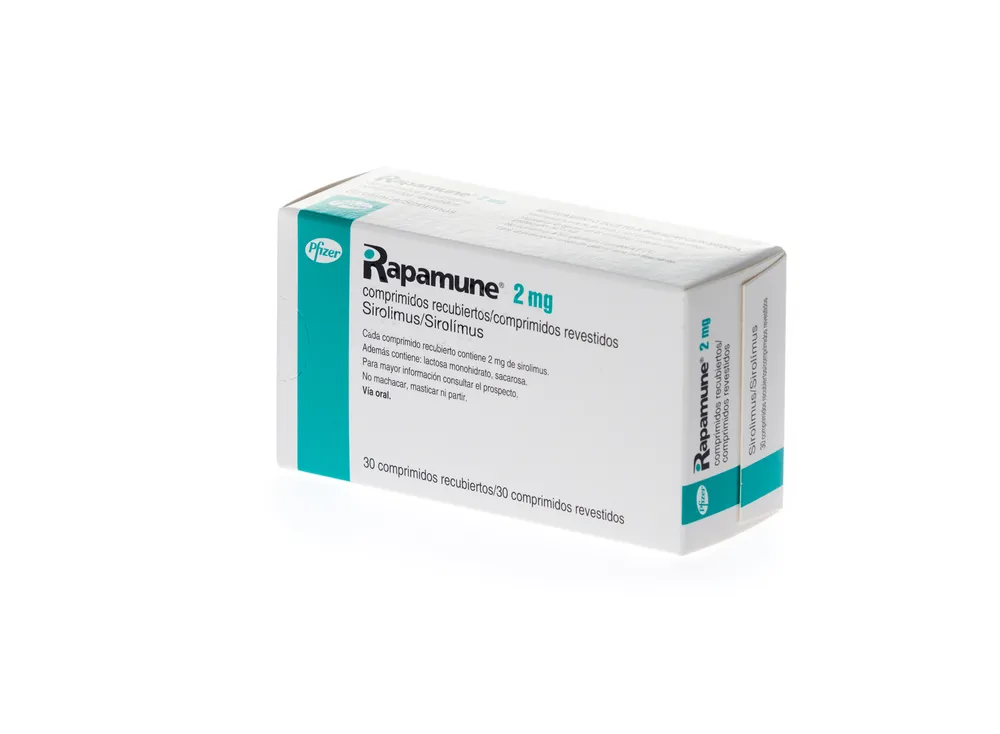
Table of Contents
Package leaflet: Information for the user
Introduction
Package leaflet: information for the user
Rapamune 0.5 mg coated tablets
Rapamune 1 mg coated tablets
Rapamune 2 mg coated tablets
sirolimus
Read the entire leaflet carefully before you start taking this medicine, because it contains important information for you.
- Keep this leaflet, as you may need to read it again.
- If you have any questions, consult your doctor or pharmacist.
- This medicine has been prescribed for you only, and you should not give it to other people, even if they have the same symptoms as you, because it may harm them.
- If you experience any adverse effects, consult your doctor or pharmacist, even if they are adverse effects not listed in this leaflet. See section 4.
Contents of the leaflet
- What Rapamune is and what it is used for
- What you need to know before taking Rapamune
- How to take Rapamune
- Possible side effects
- How to store Rapamune
- Contents of the pack and other information
1. What Rapamune is and what it is used for
Rapamune contains the active substance sirolimus, which belongs to a group of medicines called immunosuppressants. It helps you control your body's immune system after receiving a kidney transplant.
Rapamune is used in adults to prevent rejection of transplanted kidneys and is usually used together with other immunosuppressive medicines called corticosteroids, and initially (the first 2 to 3 months) with ciclosporin.
Rapamune is also used for the treatment of patients with sporadic lymphangioleiomyomatosis (S-LAM) who have moderate lung disease or impaired lung function. S-LAM is a rare, progressive lung disease that primarily affects women of reproductive age. The most common symptom of S-LAM is difficulty breathing.
2. What you need to know before taking Rapamune
Do not take Rapamune
- if you are allergic to sirolimus or to any of the other ingredients of this medicine (listed in section 6).
Warnings and precautions
Talk to your doctor or pharmacist before taking Rapamune.
- If you have any liver problems or have had any illness that may have affected your liver, inform your doctor, as this may influence the dose of Rapamune you receive and may require additional blood tests.
- Rapamune, like other immunosuppressive medicines, may reduce your ability to fight infections and may increase the risk of developing cancer in lymphoid tissues and in the skin.
- If you have a body mass index (BMI) above 30 kg/m², you may have an increased risk of abnormal wound healing.
- If you are considered a patient at high risk of kidney rejection, for example, if you previously underwent a transplant that was rejected.
Your doctor will perform tests to monitor your blood levels of Rapamune. Your doctor will also perform tests to monitor kidney function, measure your blood lipid levels (cholesterol and/or triglycerides), and possibly liver function during treatment with Rapamune.
Exposure to sunlight and UV light should be limited by covering the skin with clothing and using a high-protection sunscreen due to the increased risk of developing skin cancer.
Children and adolescents
Experience with the use of Rapamune in children and adolescents under 18 years of age is limited. The use of Rapamune is not recommended in this population.
Taking Rapamune with other medicines
Tell your doctor or pharmacist if you are taking, have recently taken, or might need to take any other medicines.
Some medicines may interfere with the action of Rapamune, and therefore you may need a dose adjustment. In particular, inform your doctor or pharmacist if you are taking any of the following medicines:
- any other immunosuppressive medicine.
- antibiotics or antifungal medicines used to treat infections, for example, clarithromycin, erythromycin, telithromycin, troleandomycin, rifabutin, clotrimazole, fluconazole, and itraconazole. Concomitant use of Rapamune with rifampicin, ketoconazole, or voriconazole is not recommended.
- any medicine used for high blood pressure or heart problems, including nicardipine, verapamil, and diltiazem.
- antiepileptic medicines, including carbamazepine, phenobarbital, and phenytoin.
- medicines used to treat ulcers or other gastrointestinal problems, such as cisapride, cimetidine, or metoclopramide.
- bromocriptine (used in the treatment of Parkinson’s disease and various hormonal disorders), danazol (used in the treatment of gynecological disorders), or protease inhibitors (e.g., for HIV and hepatitis C such as ritonavir, indinavir, boceprevir, and telaprevir).
- St. John’s wort (Hypericum perforatum).
- letermovir (an antiviral medicine to prevent cytomegalovirus disease).
- cannabidiol (its use includes, among others, the treatment of epileptic seizures).
The use of live vaccines should be avoided during treatment with Rapamune. Before vaccination, inform your doctor or pharmacist that you are receiving Rapamune.
The use of Rapamune may lead to increased levels of cholesterol and triglycerides in the blood (blood fats), which may require treatment. Medicines known as “statins” and “fibrates,” used to treat high cholesterol and triglycerides, have been associated with an increased risk of muscle fiber breakdown (rhabdomyolysis). Inform your doctor if you are taking medicines to lower blood fats.
The combined use of Rapamune and angiotensin-converting enzyme (ACE) inhibitors (a type of medicine used to lower blood pressure) may cause allergic reactions. Inform your doctor if you are taking these medicines.
Taking Rapamune with food and drink
Take Rapamune in the same way each time, either with or without food. If you prefer to take Rapamune with food, you should always take it with food. If you prefer to take Rapamune without food, you should always take it without food. Food can alter the amount of medicine that enters the bloodstream; therefore, by taking your medicine consistently the same way, blood levels of Rapamune remain more stable.
Do not take Rapamune with grapefruit juice.
Pregnancy, breastfeeding, and fertility
Rapamune should not be used during pregnancy unless clearly necessary. You must use an effective method of contraception during treatment with Rapamune and for 12 weeks after stopping treatment. If you are pregnant or breastfeeding, think you may be pregnant, or are planning to become pregnant, consult your doctor or pharmacist before using this medicine.
It is not known whether Rapamune passes into breast milk. Patients taking Rapamune should not breastfeed.
A reduction in sperm count has been associated with the use of Rapamune, which usually returns to normal after discontinuation of treatment.
Driving and using machines
Although Rapamune treatment is not expected to affect your ability to drive, if you have any doubts, consult your doctor.
Rapamune contains lactose and sucrose
Rapamune contains 86.4 mg of lactose and up to 215.8 mg of sucrose. If your doctor has diagnosed you with an intolerance to certain sugars, consult him or her before taking this medicine.
3. How to take Rapamune
Follow exactly the instructions for taking this medicine as given by your doctor. If in doubt, consult your doctor or pharmacist again.
Your doctor will decide the exact dose of Rapamune you should take and how often you should take it. Always follow your doctor's instructions precisely and never change the dose on your own.
Rapamune is for oral use only. Do not crush, chew, or split the tablets. Inform your doctor if you have difficulty swallowing the tablet.
You must not take several Rapamune 0.5 mg tablets as a substitute for 1 mg or 2 mg tablets, as they are not directly interchangeable.
Take Rapamune in the same way every time, either always with food or always without food.
Kidney transplant
Your doctor will give you an initial dose of 6 mg as soon as possible after your kidney transplant surgery. After that, you will need to take 2 mg of Rapamune every day until your doctor tells you otherwise. Your dose will be adjusted based on the blood level of Rapamune. Your doctor will need to perform blood tests to measure Rapamune concentrations.
If you are also taking cyclosporine, you must space the administration of the two medicines approximately 4 hours apart.
Rapamune is recommended initially in combination with cyclosporine and corticosteroids. After 3 months, your doctor may discontinue either Rapamune or cyclosporine, as it is not recommended to continue taking these two medicines together beyond this time.
Spontaneous lymphangioleiomyomatosis (S-LAM)
Your doctor will prescribe 2 mg of Rapamune daily until otherwise instructed. Your dose will be adjusted according to your blood level of Rapamune. Your doctor will need to perform blood tests to measure Rapamune concentrations.
If you take more Rapamune than you should
If you have taken more medicine than prescribed, contact your doctor immediately or go to the nearest hospital emergency department. Always bring the labeled medicine pack with you, even if it is empty.
If you forget to take Rapamune
If you forget to take Rapamune, take it as soon as you remember, but not within 4 hours of taking cyclosporine. After this, continue taking the medicine as usual. Do not take a double dose to make up for a missed dose, and always take Rapamune and cyclosporine approximately 4 hours apart. If you completely miss a dose of Rapamune, you must inform your doctor.
If you stop taking Rapamune
Do not stop taking Rapamune unless your doctor tells you to do so, as you risk losing your transplant.
If you have any further questions about the use of this medicine, ask your doctor or pharmacist.
4. Possible adverse effects
Like all medicines, this medicine can cause adverse effects, although not everyone will experience them.
Allergic reactions
You should see your doctor immediately if you experience symptoms such as swelling of the face, tongue and/or back of the mouth (pharynx) and/or difficulty breathing (angioedema), or skin peeling (exfoliative dermatitis). These could be symptoms of a serious allergic reaction.
Kidney damage with low blood cell counts (thrombocytopenic purpura/hemolytic uremic syndrome)
When taken with medicines called calcineurin inhibitors (cyclosporine or tacrolimus), Rapamune may increase the risk of a condition combining kidney damage with low blood counts of platelets and red blood cells, with or without skin irritation (thrombocytopenic purpura/hemolytic uremic syndrome). If you experience symptoms such as bruising, skin rash, changes in urine, mood changes, or any other symptom you consider serious, unusual or prolonged, contact your doctor.
Infections
Rapamune reduces your body's defense mechanisms. As a result, your body may not be as effective as before in fighting infections. Therefore, if you are taking Rapamune, you may develop more infections than usual, such as infections of the skin, mouth, stomach and intestines, lungs, and urinary tract (see list below). You should contact your doctor if you experience symptoms you consider serious, unusual or prolonged.
Frequency of adverse effects
Very common: affects more than 1 in 10 patients
- fluid accumulation around the kidney
- swelling of the body, including hands and feet
- pain
- fever
- headache
- increased blood pressure
- stomach pain, diarrhea, constipation, nausea
- decreased number of red blood cells, decreased number of platelets
- increased blood fats (cholesterol and/or triglycerides), increased blood sugar, decreased blood potassium, decreased blood phosphorus, increased blood lactate dehydrogenase, increased blood creatinine
- joint pain
- acne
- urinary tract infection
- pneumonia and other bacterial, viral, and fungal infections
- decreased blood cells that fight infections (white blood cells)
- diabetes
- abnormalities in tests measuring liver function, elevated liver enzymes AST and/or ALT
- skin rash
- increased protein in urine
- menstrual disorders (including absent, infrequent, or heavy periods)
- slow healing (this may include separation of the layers of a surgical wound or suture line)
- increased heart rate
- general tendency for fluids to accumulate in various tissues
Common: affects between 1 and 10 in 100 patients
- infections (including potentially life-threatening infections)
- blood clots in legs
- blood clots in the lungs
- mouth ulcers
- fluid accumulation in the abdomen
- kidney injury with decreased number of platelets and red blood cells in the blood, with or without skin rash (hemolytic uremic syndrome)
- decreased number of a type of white blood cells called neutrophils
- bone deterioration
- inflammation that may lead to lung injury, fluid accumulation around the lungs
- nosebleeds
- skin cancer
- kidney infection
- ovarian cysts
- fluid accumulation in the membrane surrounding the heart, which in some cases may reduce the heart's ability to pump blood
- pancreatitis
- allergic reactions
- herpes
- cytomegalovirus infection
Uncommon: affects between 1 and 10 in 1,000 patients
- cancer of lymphatic tissue (lymphoma/post-transplant lymphoproliferative disorder), combined decrease in red blood cells, white blood cells, and platelets
- bleeding in the lungs
- protein in urine, sometimes severe and associated with adverse effects such as swelling
- scarring process in the kidney that may reduce kidney function
- excess fluid in tissues due to irregular lymphatic function
- decreased number of platelets in blood, with or without skin rash (thrombocytopenic purpura)
- severe allergic reactions that may cause skin peeling
- tuberculosis
- Epstein-Barr virus infection
- infectious diarrhea due to Clostridium difficile
- severe liver injury
Rare: affects between 1 and 10 in 10,000 patients
- deposition of protein in the air sacs of the lungs that may interfere with breathing
- severe allergic reactions that may affect blood vessels (see section on allergic reactions)
Frequency not known: cannot be estimated from available data
- Posterior reversible encephalopathy syndrome (PRES), a serious nervous system disorder with the following symptoms: headache, nausea, vomiting, confusion, seizures, and vision loss. If you experience more than one of these symptoms, contact your doctor.
Patients with S-LAM experienced adverse effects similar to those in kidney transplant patients, with the addition of weight loss, which may affect more than 1 in 10 people.
Reporting of adverse effects
If you experience any type of adverse effect, talk to your doctor, pharmacist, or nurse, even if it is a possible adverse effect not listed in this leaflet. You can also report them directly via the Spanish Pharmacovigilance System for Human Medicines: www.notificaRAM.es. By reporting adverse effects, you can help provide more information on the safety of this medicine.
5. Storage of Rapamune
Keep this medicine out of the sight and reach of children.
Do not use this medicine after the expiry date which is stated on the blister and the carton after “EXP”. The expiry date refers to the last day of the month indicated.
Do not store above 25°C.
Keep the blister in the outer packaging to protect from light.
Medicines should not be disposed of via wastewater or household waste. Ask your pharmacist how to dispose of medicines and packaging no longer required. This will help protect the environment.
6. Contents of the pack and other information
Composition of Rapamune
The active substance is sirolimus.
Each Rapamune 0.5 mg coated tablet contains 0.5 mg of sirolimus.
Each Rapamune 1 mg coated tablet contains 1 mg of sirolimus.
Each Rapamune 2 mg coated tablet contains 2 mg of sirolimus.
The other components are:
Tablet core: lactose monohydrate, macrogol, magnesium stearate, talc
Tablet coating: macrogol, glycerol monooleate, pharmaceutical glaze, calcium sulfate, microcrystalline cellulose, sucrose, titanium dioxide, poloxamer 188, α-tocopherol, povidone, carnauba wax, printing ink (shellac, red iron oxide, propylene glycol [E1520], concentrated ammonia solution, simethicone). The 0.5 mg and 2 mg tablets also contain yellow iron oxide (E172) and brown iron oxide (E172).
Appearance of the product and contents of the pack
Rapamune 0.5 mg is presented as light brown, triangular, coated tablets, with “RAPAMUNE 0.5 mg” printed on one side.
Rapamune 1 mg is presented as white, triangular, coated tablets, with “RAPAMUNE 1 mg” printed on one side.
Rapamune 2 mg is presented as yellow to beige, triangular, coated tablets, with “RAPAMUNE 2 mg” printed on one side.
The tablets are packed in blisters of 30 and 100 tablets. Only some pack sizes may be marketed.
Marketing Authorization Holder and Manufacturer Responsible
Marketing Authorization Holder: Pfizer Europe MA EEIG Boulevard de la Plaine 17 1050 Brussels Belgium | Manufacturer Responsible: Pfizer Ireland Pharmaceuticals Unlimited Company Little Connell Newbridge Co. Kildare Ireland Pfizer Manufacturing Deutschland GmbH Mooswaldallee 1 79108 Freiburg im Breisgau Germany |
You can request further information about this medicinal product by contacting the local representative of the marketing authorization holder:
Belgium/Belgium/Belgium Pfizer NV/SA Tel/Tel: +32 (0)2 554 62 11 | Lithuania Pfizer Luxembourg SARL branch in Lithuania Tel: +3705 2514000 |
Bulgaria Pfizer Bulgaria EOOD Tel: +359 2 970 4333 | Hungary Pfizer Kft. Tel: +36 1 488 3700 |
Czech Republic Pfizer, spol. s r.o. Tel: +420 283 004 111 | Malta Vivian Corporation Ltd. Tel: +35621 344610 |
Denmark Pfizer ApS Tlf: +45 44 201 100 | Netherlands Pfizer bv Tel: +31 (0)800 63 34 636 |
Germany Pfizer Pharma GmbH Tel: +49 (0)30 550055-51000 | Norway Pfizer AS Tlf: +47 67 52 61 00 |
Estonia Pfizer Luxembourg SARL Estonia branch Tel: +372 666 7500 | Austria Pfizer Corporation Austria Ges.m.b.H. Tel: +43 (0)1 521 15-0 |
Greece PFIZER ΕΛΛΑΣ A.E. | Poland Pfizer Polska Sp. z o.o. Tel.: +48 22 335 61 00 |
Spain Pfizer, S.L. Tel: +34 914909900 | Portugal Laboratórios Pfizer, Lda. Tel: +351 21 423 5500 |
France Pfizer Tél: +33 (0) 1 58 07 34 40 | Romania Pfizer Romania S.R.L Tel: +40 (0) 21 207 28 00 |
Croatia Pfizer Croatia d.o.o. Tel: +385 1 3908 777 | Slovenia Pfizer Luxembourg SARL, Pfizer, branch for consulting in the pharmaceutical field, Ljubljana Tel: +386 (0)1 52 11 400 |
Ireland Pfizer Healthcare Ireland Unlimited Company Tel: +1800 633 363 (toll free) Tel: +44 (0)1304 616161 | Slovakia Pfizer Luxembourg SARL, organizational unit Tel: +421 2 3355 5500 |
Iceland Icepharma hf Tel: +354 540 8000 | Finland Pfizer Oy Puh/Tel: +358 (0)9 430 040 |
Italy Pfizer S.r.l. Tel: +39 06 33 18 21 | Sweden Pfizer AB Tel: +46 (0)8 550 520 00 |
Cyprus PFIZER ΕΛΛΑΣ A.E. (Cyprus Branch) Tel: +357 22 817690 | |
Latvia Pfizer Luxembourg SARL branch in Latvia Tel: +371 67035775 |
Date of the most recent review of this leaflet: 01/2025.
Detailed information on this medicine is available on the website of the European Medicines Agency: http://www.ema.europa.eu/.