Prostaglandin E2 Pfizer 10 mg/ml concentrate for infusion solution
Spain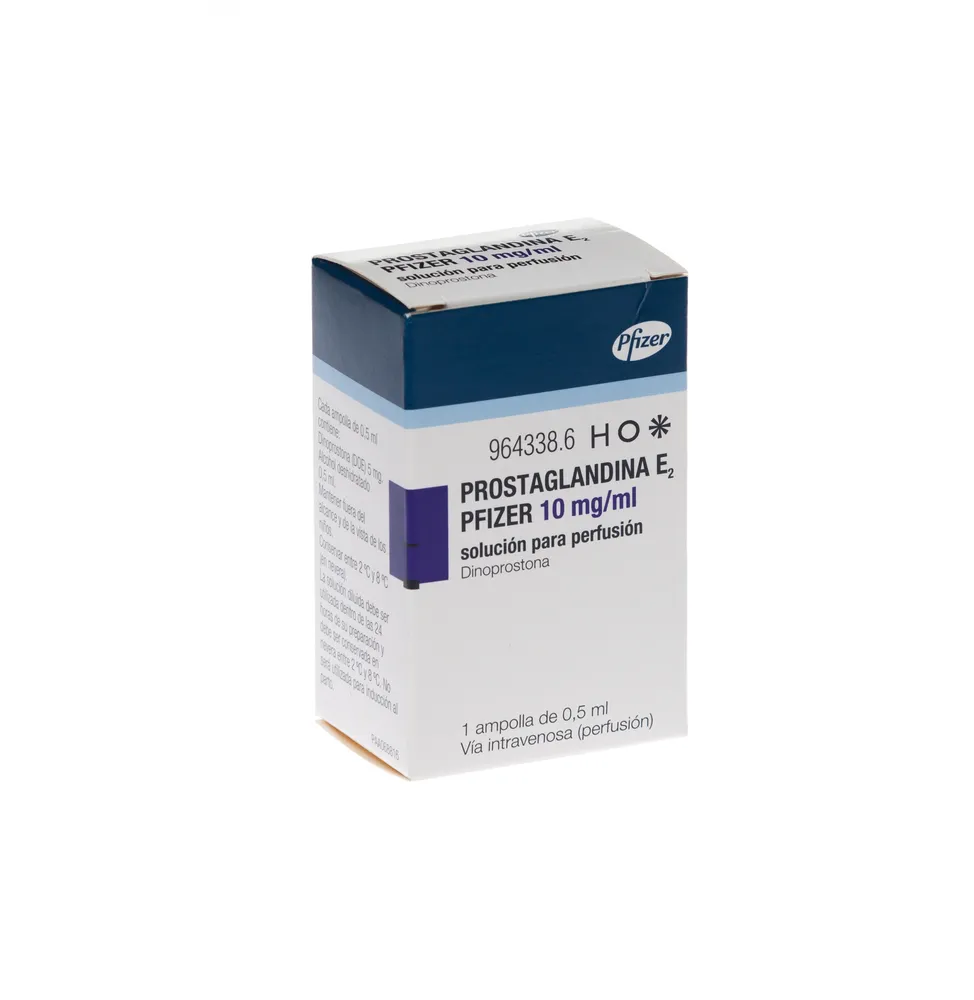
Table of Contents
- Package Leaflet: Information for the User
- Introduction
- 1. What Prostaglandin E2 Pfizer 10 mg/ml is and what it is used for
- 2. What you need to know before using Prostaglandin E2 Pfizer 10 mg/ml
- 3. How to use Prostaglandin E2 Pfizer 10 mg/ml
- 4. Possible adverse effects
- 5. Storage of Prostaglandin E2 Pfizer 10 mg/ml
- 6. Contents of the pack and other information
Package Leaflet: Information for the User
Introduction
Package leaflet: information for the patient
Prostaglandin E2 Pfizer 10 mg/ml concentrate for solution for infusion
dinoprostone
Read the entire leaflet carefully before you start using this medicine, because it contains important information for you.
- Keep this leaflet. You may need to read it again.
- If you have any questions, ask your doctor, pharmacist, or nurse.
- This medicine has been prescribed for you only. Do not give it to other people, even if they have the same symptoms as you, because it may harm them.
- If you experience any side effects, talk to your doctor, pharmacist, or nurse, even if they are side effects not listed in this leaflet.
Leaflet contents:
-
What Prostaglandin E2 Pfizer 10 mg/ml is and what it is used for.
-
What you need to know before using Prostaglandin E2 Pfizer 10 mg/ml.
-
How to use Prostaglandin E2 Pfizer 10 mg/ml.
-
Possible side effects.
-
How to store Prostaglandin E2 Pfizer 10 mg/ml.
-
Contents of the pack and other information.
1. What Prostaglandin E2 Pfizer 10 mg/ml is and what it is used for
Prostaglandins are naturally occurring substances produced by the body that have various functions, including stimulating contractions of the uterus (the organ of pregnancy and childbirth).
Prostaglandin E2 Pfizer 10 mg/ml is a medicine that your doctor will administer by intravenous infusion (injection of the solution into a vein), which stimulates the uterine muscle, causing contractions similar to those observed in the uterus during labor.
Prostaglandin E2 Pfizer 10 mg/ml is used in delayed abortion (for the expulsion of a fetus that has died inside the uterus) and in hydatidiform mole (abnormal growth of the placenta).
2. What you need to know before using Prostaglandin E2 Pfizer 10 mg/ml
Do not use Prostaglandin E2 Pfizer 10 mg/ml:
-
if you are allergic to dinoprostone or to any of the other ingredients of this medicine (listed in section 6).
-
if you have any of the following conditions, in which medicines that initiate or accelerate labour should not be used, or in which prolonged uterine contractions are inappropriate:
-
if you have previously undergone a caesarean section or major uterine surgery
-
if you have been told that you are at risk of obstructed labour
-
if you currently have uncontrolled heart, lung, liver, or kidney disease
-
if you have an infection of the uterus, ovaries, or fallopian tubes (pelvic inflammatory disease) and are not receiving treatment for it, or if you have had such an infection in the past
-
if you are simultaneously being administered a medicine called oxytocin or other medicines that also stimulate uterine contractions (see section “Use of Prostaglandin E2 Pfizer 10 mg/ml concentrate for solution for infusion with other medicines”)
-
if you are at risk of developing intravascular coagulation and/or fibrinolysis (clotting disorders)
Warnings and precautions
Consult your doctor, pharmacist, or nurse before starting treatment with Prostaglandin E2 Pfizer 10 mg/ml concentrate for solution for infusion:
- if you have asthma or a history of asthma (a condition characterized by breathing difficulties)
- if you have glaucoma (an eye disease that may lead to vision loss) or elevated intraocular pressure
- if you have high blood pressure (hypertension)
- if you have a disorder affecting heart or blood vessel function
- if you have impaired kidney and/or liver function
- if you have or have had any form of epilepsy
- if you are over 35 years of age, have experienced complications during pregnancy, or are more than 40 weeks pregnant
- if you are to be given oxytocin, as your doctor must allow a 6-hour interval between administration of the two medicines and must carefully monitor uterine activity
- if you are expecting more than one baby
- if your waters have broken
- if you have alcoholism, liver disease, or epilepsy (see section “This medicine contains alcohol”)
During treatment with this medicine, your doctor will monitor uterine contractions.
Use of Prostaglandin E2 Pfizer 10 mg/ml concentrate for solution for infusion with other medicines
Inform your doctor or pharmacist if you are taking, have recently taken, or might need to take any other medicines.
Certain medicines may affect how Prostaglandin E2 Pfizer 10 mg/ml concentrate for solution for infusion works. In such cases, your doctor may decide it is advisable to adjust the dose or discontinue treatment with one of the medicines.
Prostaglandin E2 Pfizer 10 mg/ml concentrate for solution for infusion may enhance the effect of a medicine called oxytocin, which stimulates uterine contractions; therefore, these medicines should not be used simultaneously. If your doctor considers it necessary to administer oxytocin, a 6-hour interval must be maintained between administration of the two medicines, and your uterine activity must be carefully monitored.
Pregnancy and breastfeeding
In cases of abortion, it is important that the process is complete; therefore, your doctor may prescribe appropriate treatment to ensure complete expulsion of the fetus.
This medicine contains alcohol. Harmful effects are not expected given the conditions of use of this medicine.
Driving and use of machines
The amount of ethanol (alcohol) in this medicine may affect the patient's ability to drive or operate machinery.
This medicine contains alcohol
This medicine contains 400 mg of alcohol (ethanol) per ampoule. The amount per ampoule is equivalent to less than 10 ml of beer or 4 ml of wine.
The small amount of alcohol in this medicine is not expected to have harmful effects.
3. How to use Prostaglandin E2 Pfizer 10 mg/ml
This treatment will be administered by healthcare professionals experienced in handling this medicine and will take place exclusively in hospitals or clinics with access to intensive care and emergency surgery.
This medicine will be given to you by a healthcare professional as an intravenous infusion. Your doctor will assess the duration of treatment, determine the dose to be administered, and adjust it according to your individual needs. Your doctor will also monitor your response to treatment.
If your doctor observes that this medicine has not taken effect within the first 12–14 hours after administration, the treatment will be discontinued. Continuous administration of this medicine for more than two days is not recommended.
If more Prostaglandin E2 Pfizer 10 mg/ml is used than should be
This medicine must be administered under the supervision of your doctor, so it is unlikely that you would receive more than the appropriate amount. However, if you think you have been given too much Prostaglandin E2 Pfizer 10 mg/ml, inform your doctor immediately.
Excessive administration of this medicine may result in increased uterine activity (stronger, more frequent, and painful contractions). However, this effect is usually transient and typically resolves with a change in the woman's position and administration of oxygen. Medications known as beta-adrenergic agents (which act similarly to adrenaline) may also be given.
If uterine activity is very intense, your doctor may reduce the dose or stop administering the medicine. If uterine activity is excessively intense, your doctor will take appropriate measures.
In case of overdose or accidental ingestion, contact your doctor or pharmacist immediately, or call the Toxicology Information Service at 91 562 04 20, indicating the medicine and the amount ingested.
If a dose of Prostaglandin E2 Pfizer 10 mg/ml has been missed
Since this medicine must be administered under medical supervision, it is highly unlikely that a dose would be missed. However, if you think a dose has not been administered, inform your doctor.
If you have any further questions about the use of this medicine, ask your doctor, pharmacist, or nurse.
4. Possible adverse effects
Like all medicines, this medicine can cause adverse effects, although not everyone will experience them.
Infections and infestations: skin infections.
Blood and lymphatic system disorders: After marketing authorization, it has been observed that medicines which stimulate uterine contractions may increase the risk of developing disseminated intravascular coagulation after childbirth (widespread blood clotting within blood vessels).
Immune system disorders: severe allergic reactions.
Nervous system disorders: dizziness, fainting, headache, tremors, skin flushing (transient vasovagal symptoms).
Eye disorders: increased intraocular pressure.
Cardiac disorders: cardiac arrest.
Vascular disorders: high blood pressure (hypertension).
Respiratory, thoracic and mediastinal disorders: cough, breathing difficulty (asthma, dyspnea), bronchial constriction (bronchospasm), sensation of tightness.
Gastrointestinal disorders: nausea, vomiting, diarrhea, abdominal pain.
Skin and subcutaneous tissue disorders: skin rash.
Musculoskeletal and connective tissue disorders: back pain.
Pregnancy, puerperium and perinatal conditions: abnormal uterine contractions, uterine rupture, premature rupture of membranes (premature breaking of the amniotic sac), inflammation of the membranes and fluid surrounding the fetus (amnionitis), premature placental abruption, pulmonary embolism due to amniotic fluid (blockage in the lungs caused by amniotic fluid).
The following adverse reactions have an unknown frequency: fetal death, stillbirth, neonatal death, particularly following the occurrence of severe adverse effects such as uterine rupture.
Reproductive system and breast disorders: rapid dilation of the cervix.
General disorders and administration site conditions: fever, transient increase in body temperature, chills, irritation and redness at the injection site, which disappears within 2–5 hours.
Investigations: increased white blood cell count, which returns to normal after treatment ends.
Reporting of adverse effects:
If you experience any type of adverse effect, consult your doctor or pharmacist, even if it is a possible adverse effect not listed in this leaflet. You may also report them directly via the Spanish Pharmacovigilance System for Human Medicines: http;//www.notificaram.es. By reporting adverse effects, you can help provide more information on the safety of this medicine.
5. Storage of Prostaglandin E2 Pfizer 10 mg/ml
Keep this medicine out of the sight and reach of children. Store in a refrigerator (between 2°C and 8°C). Do not freeze.
The diluted solution must be used within 24 hours of preparation and should be stored in a refrigerator between 2°C and 8°C.
Do not use this medicine after the expiry date stated on the carton after EXP. The expiry date is the last day of the month indicated.
Medicines should not be disposed of via wastewater or household waste. If you are unsure how to dispose of unused medicines and their packaging, please consult your pharmacist. This will help protect the environment.
6. Contents of the pack and other information
Composition of Prostaglandin E2 Pfizer 10 mg/ml concentrate for solution for infusion
- The active substance is dinoprostone. Each ml of concentrate contains 10 mg of dinoprostone (also known as prostaglandin E2).
- The other component is: ethanol.
Appearance of the medicinal product and contents of the pack
Prostaglandin E2 Pfizer 10 mg/ml concentrate for solution for infusion is supplied in packs containing 1 vial of 0.5 ml of sterile solution. Each vial contains 5 mg of dinoprostone (also known as prostaglandin E2), which the healthcare professional will dilute prior to administration.
Marketing Authorisation Holder and Manufacturer
Marketing Authorisation Holder:
Pfizer, S.L.
Avda. de Europa, 20-B.
Parque Empresarial La Moraleja.
28108, Alcobendas (Madrid). Spain
Manufacturer:
Pfizer Manufacturing Belgium NV
Rijksweg 12
2870 Puurs-Sint-Amands
Belgium
Date of the most recent revision of this leaflet: November 2021
Detailed and up-to-date information on this medicinal product is available on the website of the Spanish Agency of Medicines and Medical Devices (AEMPS) http://www.aemps.gob.es/
This information is intended for healthcare professionals only:
Caution should be exercised when handling this product to avoid contact with the skin. Hands should be thoroughly washed with soap and water after administration of the preparation.
The concentrate for solution for infusion must be administered intravenously only after prior dilution.
This medicine must be diluted before use using appropriate diluents. The preparation of the diluted solution from Prostaglandin E2 Pfizer 10 mg/ml concentrate for solution for infusion shall be performed by aseptically withdrawing 0.5 ml from the vial. The withdrawn amount shall be added to 1,000 ml of sterile normal saline or 5% dextrose solution, resulting in a final concentration of 5 micrograms/ml. The solution should be shaken to ensure uniformity.
Prior to administration, a visual inspection should be performed to check for particles or discoloration, whenever the solution and container permit.
For intravenous infusion administration of this medicinal product, a drop-by-drop dosing set (60 drops/ml) or a constant-rate infusion pump may be used.
A device delivering 60 drops/ml (paediatric administration set) or a constant-rate infusion pump should be used. The initial infusion rate will be 2.5 micrograms/minute (30 drops/minute), which should be maintained for at least 30 minutes. If the uterine response is satisfactory, this rate will be maintained; otherwise, it will be increased to 5 micrograms/minute (60 drops/minute). If satisfactory uterine activity is not achieved after at least 4 hours at this infusion rate, the rate may be increased up to 10 micrograms/minute (120 drops/minute), provided that side effects allow, and maintained at this level until abortion occurs or until treatment is considered to have failed.
If significant side effects occur, the infusion rate should be reduced by 50%, or the infusion should be discontinued.
Continuous administration of the drug is not recommended for more than two days.
If a constant-rate infusion pump is used, a different solution concentration (e.g., 15 micrograms/ml) may be required depending on the type of pump, although the dose administration rate (micrograms/minute) will remain as specified above.
The occurrence of uterine hypertonicity requires immediate discontinuation of treatment until normal condition is restored. Then, re-evaluation of treatment administration will be performed, and if necessary, infusion will be restarted at lower rates, at 50% of the last dose used.
If no response is observed within the first 12–14 hours after starting treatment, treatment should be discontinued.