Propofol Baxter 10 mg/ml emulsion for injection and for infusion EFG
Spain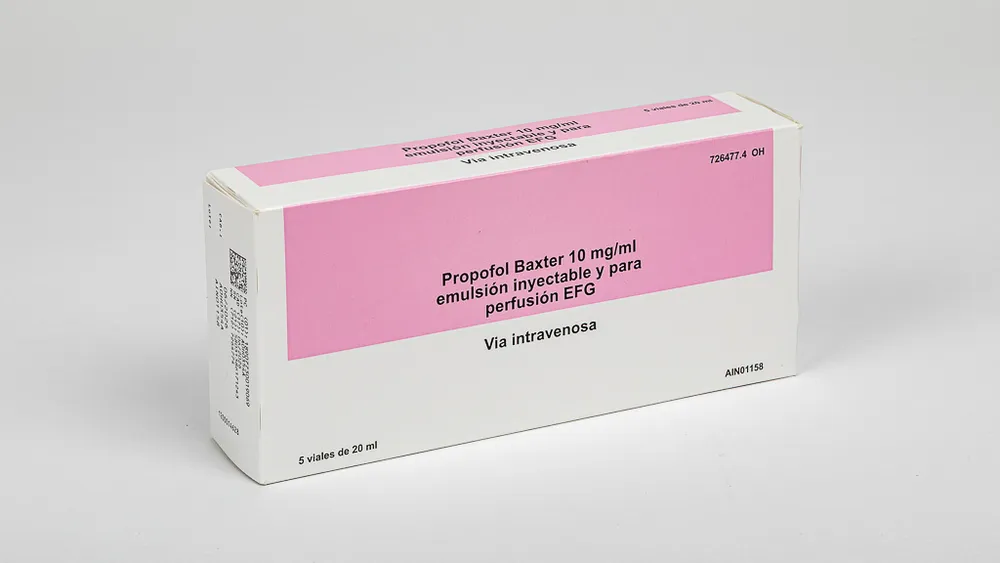
Table of Contents
Package leaflet: Information for the user
Introduction
Package leaflet: information for the user
Propofol Baxter 10 mg/ml injectable emulsion and for infusion EFG
Read all of this leaflet carefully before you start using this medicine, because it contains important information for you.
- Keep this leaflet. You may need to read it again.
- If you have any questions, ask your doctor, pharmacist or nurse.
- If you experience any side effects, talk to your doctor, pharmacist or nurse, even if it is not one of the side effects listed in this leaflet. See section 4.
Contents of this leaflet
- What Propofol Baxter is and what it is used for
- What you need to know before you use Propofol Baxter
- How to use Propofol Baxter
- Possible side effects
- How to store Propofol Baxter
- Contents of the pack and other information
1. What Propofol Baxter is and what it is used for
Propofol Baxter is a short-acting anesthetic administered by intravenous injection. It belongs to a group of medicines known as "general anesthetics" (narcotics). General anesthetics are used to induce unconsciousness (a type of sleep) during surgical operations or other medical procedures. They may also be used to sedate you (make you feel drowsy, but not fully asleep).
Propofol Baxter is used for:
- Induction and maintenance of anesthesia in adults and children over 1 month of age.
- Sedation of patients over 16 years of age who are on mechanical ventilation in the intensive care unit (ICU).
- Sedation of adults and children over 1 month of age during diagnostic and surgical procedures, either alone or in combination with local or regional anesthesia.
2. What you need to know before using Propofol Baxter
Do not use Propofol Baxter
- if you are allergic to propofol, soybeans, peanuts, or any of the other ingredients of this medicine (listed in section 6),
- in patients aged 16 years or younger for sedation in intensive care (see section 2.2).
Warnings and precautions
Please consult your doctor, pharmacist, or nurse before Propofol Baxter is administered to you.
Special caution is required when using Propofol Baxter in the following cases:
- If you have very high levels of lipids in your blood.
- If you have a condition in which fat-containing emulsions must be used with caution. (See notes on intensive care medical management by the physician.)
Propofol Baxter should be administered more slowly than usual in patients who:
- are in poor general health,
- have problems with heart, lung, kidney, or liver function,
- have lost a significant amount of body water (hypovolemia).
If possible, any cardiac, circulatory, respiratory insufficiency, or hypovolemia should be treated before administration.
A pronounced drop in blood pressure may require administration of plasma substitutes, possibly vasoconstrictors, and a slower infusion rate of Propofol Baxter. The possibility of a massive drop in blood pressure should be considered in patients with reduced coronary or cerebral perfusion or with hypovolemia. Propofol clearance depends on blood flow. Therefore, concomitant medication that reduces cardiac output will also reduce propofol clearance.
Patients with severe heart disease should be given Propofol Baxter with caution and under close monitoring.
The use of Propofol Baxter in patients with epilepsy may trigger seizures. If Propofol Baxter is administered in combination with lidocaine, note that lidocaine should not be given to patients with acute hereditary porphyria.
Propofol Baxter lacks vagolytic activity. Its use has been associated with reports of bradycardia (slowing of the heartbeat), occasionally leading to serious outcomes (cardiac arrest). Therefore, intravenous administration of an anticholinergic agent should be considered before induction or during maintenance of anesthesia with Propofol, especially in situations where vagal tone is predominant or when used in combination with other agents that may cause bradycardia.
When Propofol Baxter is administered for sedation during surgical and diagnostic procedures, patients must be continuously monitored for early signs of hypotension, airway obstruction, and oxygen desaturation.
As with other sedative agents, involuntary movements of the patient may occur when Propofol Baxter is used for sedation during procedures. In procedures requiring patient immobility, these movements may jeopardize the success of the procedure.
Misuse and dependence on propofol have been reported, predominantly among healthcare professionals. As with other general anesthetics, administration of Propofol Baxter without securing an airway may lead to fatal respiratory complications. An adequate recovery period is required before patient discharge to ensure full recovery after Propofol use.
In rare cases, use of Propofol Baxter may be associated with a period of postoperative unconsciousness, which may be accompanied by increased muscle tone. This depends on whether the patient was previously awake or not. Although recovery is spontaneous, appropriate care should be provided to the unconscious patient.
Impairment induced by Propofol Baxter is generally not detectable beyond 12 hours.
When advising patients about the effects of Propofol Baxter, consider the type of procedure, concomitant medication, age, and patient condition, and accordingly advise them:
- not to go home unaccompanied,
- when they may resume manual activities or perform hazardous tasks (e.g., driving a motor vehicle),
- that the use of other sedatives (e.g., benzodiazepines, opioids, alcohol) may prolong and intensify impairments.
Animal studies in young animals and clinical data suggest that repeated or prolonged use of anesthetics or sedatives in children under 3 years of age and in pregnant women during the third trimester of pregnancy may have adverse effects on brain development in the child. Parents or guardians should discuss with the doctor the benefits, risks, timing, and duration of surgery and other procedures requiring anesthesia or sedatives.
Notes on intensive care medical management by the physician
The use of propofol emulsion infusions for sedation in intensive care is associated with a group of metabolic disorders and organ failure that may lead to death.
In addition, reports have been received of combinations of the following adverse reactions: metabolic acidosis, rhabdomyolysis, hyperkalemia, hepatomegaly, renal failure, hyperlipidemia, cardiac arrhythmia, Brugada-type ECG (saddleback or coved ST segment elevations in right precordial leads [V1–V3] and negative T waves), and rapidly progressive cardiac failure generally unresponsive to inotropic support therapy.
Combinations of these events are also known as "propofol infusion syndrome."
These events occurred primarily in patients with severe traumatic brain injury and in children with respiratory tract infections who received doses exceeding those recommended for adults for intensive care unit (ICU) sedation.
The following appear to be major risk factors for developing these events: reduced tissue oxygen delivery; severe neurological injury and/or sepsis; high doses of one or more of the following pharmacological agents: vasoconstrictors, steroids, inotropes, and/or propofol (usually propofol doses greater than 4 mg/kg/h for more than 48 hours).
Medical staff should remain vigilant for these potential adverse effects in patients with the above risk factors and consider immediate discontinuation of propofol administration at the first signs of the symptoms described above. All sedative and therapeutic agents used in the intensive care unit (ICU) should be adjusted to maintain optimal oxygen delivery and hemodynamic parameters. Appropriate treatment should be provided to patients with elevated intracranial pressure to maintain cerebral perfusion pressure during these treatment modifications. Healthcare professionals are reminded that, if possible, the recommended dose of 4 mg/kg/h should not be exceeded.
Care should be taken in patients with lipid metabolism disorders or other conditions in which lipid emulsions should be used with caution.
If Propofol Baxter is administered to patients who may be at risk of elevated blood lipid levels, monitoring of blood lipid levels is recommended. Propofol administration should be appropriately adjusted if monitoring indicates impaired lipid metabolism. If the patient is concurrently receiving another intravenous lipid-containing product, the amount of lipids infused as part of Propofol Baxter should be taken into account. 1.0 ml of propofol contains 0.1 g of fat.
Additional information
Caution should be exercised in patients with mitochondrial disorders. In these patients, anesthesia, surgery, and intensive care may exacerbate their condition. Maintenance of normothermia, carbohydrate supply, and adequate hydration is recommended in these patients. The early presentation of mitochondrial disorder exacerbation and "propofol infusion syndrome" may be similar.
Propofol Baxter does not contain antimicrobial preservatives, and microbial growth is possible due to its composition.
- Children
Use of Propofol Baxter is not recommended in neonates, as this patient population has not been fully studied. Pharmacokinetic data indicate that clearance is considerably reduced in neonates and shows high inter-individual variability. Administering doses recommended for older children may result in relative overdose, causing severe cardiovascular depression and respiratory problems. Propofol should not be used for sedation in intensive care in patients aged 16 years or younger, as its safety and efficacy for sedation have not been established in this age group (see section 2.1).
- Elderly patients
Lower doses of Propofol Baxter are required for induction of anesthesia in elderly patients. The patient's general medical condition and age should be taken into account. The reduced dose should be administered more slowly and adjusted according to response. When Propofol Baxter is used for maintenance of anesthesia and for sedation, the infusion rate and selected blood concentration of propofol should also be reduced. Further dose and infusion rate reduction is necessary for ASA class III and IV patients. Rapid bolus administration (single or repeated) should not be used in this population, as it may cause cardiopulmonary depression.
Use of Propofol Baxter with other medicines
Inform your doctor or pharmacist if you are taking, have recently taken, or might need to take any other medicines.
Specifically, inform your doctor, anesthesiologist, or healthcare professional if you are taking midazolam (used to induce sedation [a very relaxed state of calm, drowsiness, or sleep] and to relieve anxiety and muscle tension).
Propofol Baxter is compatible with other agents used for anesthesia, including:
- inhaled anesthetic agents (inhalational anesthesia),
- analgesics,
- muscle relaxants,
- local anesthetics.
With regional anesthesia techniques, smaller doses of Propofol Baxter may be required. No signs of serious interactions have been observed.
Some of the agents mentioned may reduce blood pressure or affect respiration and thus may cause cumulative effects when Propofol Baxter is used. Profound hypotension has been reported after induction of anesthesia with propofol in patients treated with rifampicin. With additional premedication with opioids, apnea may occur more frequently and last longer.
Use of Propofol Baxter with food, drinks, and alcohol
You should not drink alcohol after administration of Propofol Baxter.
Pregnancy, breastfeeding, and fertility
Pregnancy
The safety of propofol during pregnancy has not been established. Animal studies have shown reproductive toxicity. Therefore, Propofol Baxter should only be used during pregnancy if absolutely necessary.
However, Propofol Baxter may be used during induced abortion.
Propofol crosses the placenta and may be associated with respiratory and cardiovascular collapse (depression of vital functions) in neonates. High doses should be avoided (more than 2.5 mg of propofol/kg body weight for induction or 6 mg of propofol/kg body weight per hour for maintenance of anesthesia). Propofol may be used as an anesthetic during termination of pregnancy.
Breastfeeding
Studies in lactating mothers showed that propofol is excreted in small amounts into breast milk. Therefore, women should suspend breastfeeding and discard breast milk for 24 hours following administration of propofol.
If you are pregnant or breastfeeding, think you may be pregnant, or plan to become pregnant, consult your doctor or pharmacist before using this medicine.
Fertility
The safety of propofol with regard to fertility has not been established.
Driving and using machines
After administration of Propofol Baxter, patients must be observed for an adequate period of time, and they should be warned that their ability to drive and operate machinery may be impaired for some time after administration. Generally, no Propofol Baxter-related impairments are observed beyond 12 hours (see section 2.2). When returning home, patients should be accompanied by another person.
Propofol Baxter contains sodium and soybean oil (E322)
This medicine contains less than 1 mmol of sodium (23 mg) per 100 ml; hence, essentially "sodium-free".
Propofol Baxter contains soybean oil. Do not use this medicine if you are allergic to peanuts or soybeans.
3. How to use Propofol Baxter
Method of administration
For intravenous injection/infusion.
Propofol Baxter must only be administered by specialist physicians in anaesthesia or in the care of intensive care patients. Propofol must not be administered by the same person performing the surgical procedure or diagnostic technique when used for sedation or anaesthesia.
Cardiovascular and respiratory functions must be continuously monitored (e.g., ECG, pulse oximeter), and equipment necessary to maintain airway patency, artificial ventilation, and other resuscitation devices must be readily available at all times.
The dose should be individualized according to prior medication and patient response.
Administration of additional analgesics is generally required to prevent injection pain.
Dosage
The administered dose varies according to age, body weight, physical condition, and prior medication. Your doctor will administer the correct dose to induce and maintain anaesthesia or to achieve the required level of sedation, closely monitoring your physical response and vital signs (pulse, blood pressure, respiration, etc.).
If you use more Propofol Baxter than you should
Circulatory and respiratory depression may occur. In the event of respiratory arrest, artificial ventilation is required; in the case of a drop in blood pressure, standard measures should be taken, such as lowering the patient's head, possibly plasma substitutes (blood volume expanders), and, if necessary, vasoconstrictor agents.
If you have any further questions about the use of this medicine, ask your doctor, pharmacist, or nurse.
4. Possible adverse effects
Like all medicines, this medicine can cause adverse effects, although not everyone will experience them.
Information on the frequency of adverse reactions is based on the following categories:
Very common: more than 1 in 10 people
Common: 1 to 10 in 100 people
Uncommon: 1 to 10 in 1,000 people
Rare: 1 to 10 in 10,000 people
Very rare: less than 1 in 10,000 people
Not known: cannot be estimated from the available data
Possible adverse effects:
Induction and maintenance of anesthesia or sedation with propofol are generally smooth, with minimal evidence of excitation. The most frequently reported adverse effects are hypotension and impaired respiratory center responsiveness (respiratory depression). The type, severity, and frequency of these effects observed in patients receiving propofol depend on the patient's health status, type of procedure, and therapeutic measures taken. In particular, the following adverse effects have been observed:
Immune system disorders
Very rare: severe hypersensitivity reactions (anaphylaxis) which may include angioedema, difficulty breathing due to bronchospasm, skin redness, and low blood pressure
Metabolism and nutrition disorders
Frequency not known: metabolic acidosis5, increased blood potassium levels5, hyperlipidemia5
Psychiatric disorders
Frequency not known: euphoric mood during the wakefulness phase; Drug abuse and drug dependence8
Nervous system disorders
Common: spontaneous movements and muscle spasms during induction of anesthesia, headache during the wakefulness phase
Rare: dizziness, chills, and feeling cold during recovery, epileptic-like seizures with convulsions and opisthotonos during induction, maintenance, and recovery (very rarely delayed by hours to a few days)
Very rare: postoperative unconsciousness (see section 2.2)
Frequency not known: involuntary movements
Cardiac disorders
Common: bradycardia1
Very rare: pulmonary edema
Frequency not known: cardiac arrhythmia5, heart failure5,7
Vascular disorders
Common: hypotension2
Uncommon: thrombosis and phlebitis
Respiratory, thoracic and mediastinal disorders
Common: hyperventilation and cough during induction of anesthesia, temporary respiratory arrest during induction of anesthesia
Uncommon: cough during maintenance
Rare: cough during recovery phase
Frequency not known: respiratory depression (dose-dependent)
Gastrointestinal disorders
Common: hiccups during induction, nausea and vomiting during recovery
Very rare: inflammation of the pancreas
Hepatobiliary disorders
Frequency not known: hepatomegaly5, hepatitis (liver inflammation), acute liver failure (symptoms may include yellowing of the skin and eyes, itching, dark urine, stomach pain, and liver tenderness (indicated by pain below the front of the rib cage on the right side), sometimes with loss of appetite)
Musculoskeletal and connective tissue disorders
Frequency not known: breakdown of striated muscle fibers (rhabdomyolysis)3,5
Renal and urinary disorders
Very rare: discoloration of urine after prolonged administration of Propofol Baxter
Frequency not known: renal failure5
Reproductive system and breast disorders
Very rare: sexual disinhibition
Frequency not known: prolonged and often painful erection (priapism)
General disorders and administration site conditions
Very common: local pain after the first injection4
Common: hot flushes during induction of anesthesia
Very rare: severe tissue reactions and tissue necrosis9 following accidental extravascular administration
Frequency not known: local pain, swelling, after accidental extravascular administration
Investigations
Frequency not known: changes in ECG (Brugada syndrome)5,6
Injury, poisoning and procedural complications
Very rare: fever after surgery
The following adverse effects may occur after simultaneous administration of lidocaine: dizziness, vomiting, somnolence, seizures, bradycardia, arrhythmias, and shock.
Soybean oil may cause allergic reactions in very rare cases.
1 Severe bradycardias are rare. Isolated cases of progression to asystole have been reported.
2 Occasionally, hypotension may require administration of intravenous fluids and a reduction in the infusion rate of Propofol Baxter.
3 Rare cases of rhabdomyolysis have been reported when propofol was administered at doses exceeding 4 mg of propofol per kg body weight per hour for sedation in the intensive care unit (ICU).
4 Can be minimized by concomitant administration of lidocaine and using large forearm veins or veins in the antecubital fossa.
5 The combination of these reactions, also reported as “propofol infusion syndrome,” may be observed in critically ill patients who often have multiple risk factors for developing these events (see section 2.2).
6 Brugada syndrome – elevated ST segment and inverted T wave on ECG.
7 Rapidly progressive heart failure (sometimes fatal) in adults. Heart failure in these cases usually does not respond to supportive treatment with inotropes.
8 Drug abuse and dependence, primarily among healthcare professionals.
9 Necrosis with impaired tissue viability has been reported.
Reporting of adverse effects
If you experience any adverse effect, talk to your doctor or pharmacist, even if it is a possible adverse effect not listed in this leaflet. You may also report them directly via the Spanish Pharmacovigilance System for Human Medicines: https://www.notificaram.es. By reporting adverse effects, you can help provide more information on the safety of this medicine.
5. Storage of Propofol Baxter
Keep this medicine out of the sight and reach of children.
Do not use this medicine after the expiry date stated on the container and label after EXP. The expiry date refers to the last day of the month indicated.
Storage conditions
Do not store above 25°C.
Do not freeze.
Once opened, the product should be used immediately.
Your doctor or anesthesiologist or the hospital pharmacist is responsible for the proper storage, use, and disposal of the medicine.
6. Contents of the Pack and Additional Information
Composition of Propofol Baxter
- The active substance is propofol.
- The other components are refined soybean oil, medium-chain triglycerides, glycerol, egg lecithin, sodium hydroxide (to adjust pH), water for injectable preparations.
Each millilitre of injectable and perfusion emulsion contains 10 mg of propofol.
Each 20-millilitre vial contains 200 mg of propofol.
Each 50-millilitre vial contains 500 mg of propofol.
Each 100-millilitre vial contains 1000 mg of propofol.
Appearance of the Product and Contents of the Container
White, oil-in-water injectable and perfusion emulsion.
This medicine is supplied in colourless glass vials (type II) with grey bromobutyl rubber stoppers.
Pack sizes:
20 ml vials in packs of 5 and 10 vials.
50 ml vials in packs of 1 vial.
100 ml vials in packs of 1 vial.
Only certain pack sizes may be marketed.
Marketing Authorisation Holder and Manufacturer
Marketing Authorisation Holder:
BAXTER HOLDING B.V.
Kobaltweg 49, 3542CE Utrecht
The Netherlands
Manufacturer:
Baxter S.A.
Boulevard René Branquart, 80
7860 Lessines
Belgium
Bieffe Medital S.P.A.
Via Nuova Provinciale
IT-23034 GROSOTTO
Italy
Further information on this medicine can be requested from the local representative of the Marketing Authorisation Holder:
Baxter S.L.
Pouet de Camilo, 2. 46394 Ribarroja del Turia (Valencia) Spain
This medicine is authorised in the European Economic Area member states under the following names:
Germany: Propofol Baxter 10 mg/ml Emulsion zur Injektion/Infusion
Spain: Propofol Baxter 10 mg/ml emulsión inyectable y para perfusión EFG
Date of the most recent review of this leaflet: September 2024
Detailed information on this medicine is available on the website of the Spanish Agency of Medicines and Health Products (AEMPS): http://www.aemps.gob.es
Medical Information
This information is intended exclusively for healthcare professionals:
This informational section is a summary of the Summary of Product Characteristics (SmPC) and is limited to instructions for proper handling and preparation. It is not sufficient as a basis for deciding whether the medicine may be administered. Please consult the SmPC for further information.
- Preparation
Propofol Baxter emulsion for injection/infusion
- Important information on other ingredients of Propofol Baxter
Sodium: This medicine contains less than 1 mmol of sodium (=23 mg) per dose, i.e., essentially "sodium-free".
Soybean oil: Propofol Baxter contains soybean oil. If you are allergic to peanuts or soybeans, do not use this medicine.
- Handling Instructions
Propofol Baxter must only be administered by specialists in anaesthesia or in the care of intensive care patients. Propofol Baxter must not be administered by the same person performing the diagnostic or surgical procedure when used for sedation or anaesthesia.
Cardiovascular and respiratory functions must be continuously monitored (e.g., ECG, pulse oximeter), and equipment necessary to maintain airway patency, artificial ventilation, and other resuscitation devices must be readily available at all times.
- Information on Shelf Life After Opening or After Preparation
The duration of perfusion of undiluted Propofol 10 mg/ml via a perfusion system must not exceed 12 hours. After first opening and/or dilution, the product must be used immediately.
Opened vials must be discarded after single administration of Propofol Baxter.
- Instructions for Use
Before use, the surface of the rubber stopper must be cleaned with alcohol spray or an alcohol-moistened swab. The rubber stopper does not contain latex. Vials must be shaken before use. If two layers are observed after shaking, the emulsion must not be used. Opened vials must be discarded after single administration of Propofol Baxter 1%.
Propofol Baxter is administered intravenously, even undiluted, in plastic syringes or glass vials.
Propofol Baxter does not contain antimicrobial preservatives and, due to its composition, may support microbial growth. The emulsion must be withdrawn aseptically using a sterile syringe or into an administration set immediately after breaking the vial seal. Administration must begin immediately.
Strict aseptic conditions must be maintained for Propofol Baxter and the administration equipment throughout the entire perfusion period. Concomitant administration of any other medication or fluids added to the Propofol Baxter infusion line must be performed near the cannula. Propofol Baxter must not be administered through infusion sets containing microbiological filters.
If patients are receiving concomitant intravenous lipids, the amount of lipids infused as part of Propofol Baxter must be taken into account. 1.0 ml of Propofol Baxter contains 0.1 g of fat.
Perfusion of undiluted propofol 10 mg/ml:
A perfusion pump or volumetric pump must be used for perfusion of undiluted Propofol Baxter.
As is customary with lipid emulsions, perfusion of Propofol Baxter via a perfusion system must not exceed 12 hours. At the end of the procedure or after 12 hours, whichever comes first, both the remaining propofol and the infusion line must be discarded or replaced if necessary.
Perfusion of diluted propofol 10 mg/ml:
When administering diluted Propofol Baxter via perfusion, burettes or volumetric infusion pumps must always be used to avoid the risk of accidental overdose.
One part of Propofol Baxter may be diluted with up to 4 parts of 5% glucose solution (minimum concentration of 2 mg of propofol/ml). The ready-to-use mixture must be prepared under aseptic conditions immediately before administration and used within 6 hours.
Propofol Baxter must not be mixed with other injectable solutions or perfused fluids. However, it may be added to a continuous infusion of 5% glucose, 0.9% sodium chloride, or 4% glucose / 0.18% sodium chloride via a Y-connector at the injection site.
To reduce injection site pain during anaesthesia induction, Propofol Baxter may be mixed with lidocaine immediately before administration (20 parts Propofol Baxter with up to 1 part 1% lidocaine).
Neuromuscular blocking agents such as atracurium or mivacurium should only be administered after flushing the same infusion site used for Propofol Baxter.
The contents of a vial and the corresponding infusion system are for single use in one patient only. Opened vials must be discarded after use.
- Dosage
General Anaesthesia in Adults
Induction of Anaesthesia
For induction of general anaesthesia, the dose of Propofol Baxter should be titrated in increments of 20 to 40 mg of propofol every 10 seconds, according to patient response, until clinical signs indicate the onset of anaesthesia. Most adults under 55 years of age will likely require a total dose of 1.5 to 2.5 mg of propofol/kg body weight.
In elderly patients and in patients with ASA grades III and IV (American Society of Anesthesiologists), especially those with impaired cardiac function, the total dose of Propofol Baxter may need to be reduced to 1 mg of propofol/kg body weight. Lower incremental doses of Propofol Baxter (approximately 2 ml of the 10 mg/ml emulsion (20 mg of propofol) every 10 seconds) should be used.
Maintenance of General Anaesthesia
For maintenance of anaesthesia by continuous perfusion, the dose and perfusion rate must be individually adjusted. Generally, a dose of 4 to 12 mg of propofol/kg body weight per hour is required to maintain a satisfactory level of anaesthesia. A reduced maintenance dose of approximately 4 mg of propofol/kg body weight/h may be sufficient during less stressful surgical procedures, such as minimally invasive surgery.
In elderly patients, patients in unstable general condition, patients with impaired cardiac function, hypovolemic patients, and patients with ASA grades III and IV, the dose of Propofol Baxter may need to be further reduced depending on the severity of the patient's condition and the anaesthetic technique used.
General Anaesthesia in Children Over 1 Month of Age
Induction of Anaesthesia
For induction of anaesthesia, Propofol Baxter should be administered slowly until clinical signs indicate the onset of anaesthesia. The dose should be adjusted according to age and/or body weight. Most children over 8 years of age require approximately 2.5 mg of propofol/kg body weight for induction. In younger children, especially between 1 month and 3 years of age, the required dose may be higher (2.5 – 4 mg of propofol/kg body weight). Lower doses are recommended for patients with ASA grades III and IV (see section 4.4).
Maintenance of General Anaesthesia
Anaesthesia may be maintained by continuous infusion or repeated bolus injections of Propofol Baxter to maintain the required depth of anaesthesia. The required administration rate varies considerably between patients, but rates in the range of 9 to 15 mg/kg body weight/h generally achieve satisfactory anaesthesia. In younger children, especially between 1 month and 3 years of age, the required dose may be higher.
Lower doses are recommended for patients with ASA grades III and IV (see section 2.2).
Sedation of Patients Over 16 Years of Age in the Intensive Care Unit
For sedation of ventilated patients in intensive care, Propofol Baxter should be administered by continuous perfusion. The dose should be adjusted according to the required depth of sedation. Satisfactory sedation is usually achieved with doses in the range of 0.3 to 4.0 mg of propofol/kg body weight per hour (see section 2.2). Perfusion doses exceeding 4.0 mg of propofol/kg body weight/h are not recommended (see section 2.2).
Administration of Propofol Baxter via Target Controlled Infusion (TCI) is not recommended for sedation in the intensive care unit.
Sedation for Diagnostic and Surgical Procedures in Adult Patients
During administration of Propofol Baxter, patients must be continuously monitored for signs of hypotension, airway obstruction, and oxygen desaturation, and standard emergency equipment must be readily available.
Most patients will require between 0.5 and 1 mg of propofol/kg body weight over 1 to 5 minutes for the onset of sedation. Maintenance of sedation can be achieved by adjusting the perfusion rate to the desired depth of sedation. Most patients will require between 1.5 and 4.5 mg of propofol/kg body weight/h.
If a rapid increase in depth of sedation is required, this may be supplemented by bolus administration of 10–20 mg.
Patients with ASA grades III and IV may require lower doses and a reduced administration rate. A lower dose may also be necessary in patients over 55 years of age.
Note
In elderly patients, lower doses are required for induction of anaesthesia with Propofol Baxter. The patient's general medical condition and age must be taken into account. The reduced dose should be administered more slowly and adjusted according to response.
When Propofol Baxter is used for maintenance of anaesthesia and for sedation, both the perfusion rate and the selected blood concentration of propofol should also be reduced.
An additional dose and perfusion rate reduction is necessary in patients with ASA grades III and IV. Rapid bolus administration (single or repeated) should not be used in elderly patients, as this may cause cardiopulmonary depression.
Sedation of Children Over 1 Month of Age for Surgical and Diagnostic Procedures
The dose and intervals between doses are adjusted according to the required depth of sedation and clinical response. Most paediatric patients require 1 to 2 mg of propofol/kg body weight for the onset of sedation. Maintenance of sedation can be achieved by adjusting the Propofol Baxter perfusion to the desired depth of sedation. Most patients require 1.5 to 9 mg of propofol/kg body weight per hour. If a rapid increase in depth of sedation is required, this may be supplemented by bolus administration of up to 1 mg/kg body weight.
Patients with ASA risk grades III and IV may require lower doses.
Propofol Baxter is contraindicated in children aged 16 years or younger for the indication of sedation in intensive care.
- Duration of Administration
The duration of administration must not exceed 7 days.
- Marketing Authorisation Holder
Baxter Holding B.V.