ProPess 10 mg vaginal delivery system
Spain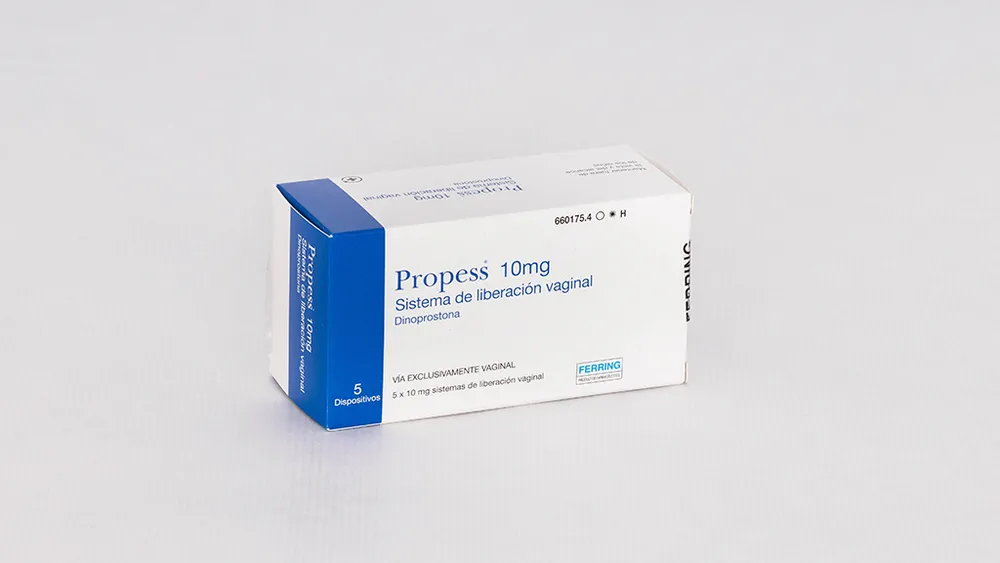
Table of Contents
- Patient Information Leaflet
- Introduction
- **Propess 10 milligram vaginal delivery system**
- 1. What Propess is and what it is used for
- 2. What you need to know before using Propess
- **Do not use Propess**
- 3. How to use Propess
- 4. Possible adverse effects
- 5. Storage of Propess
- 6. Information for healthcare professionals
Patient Information Leaflet
Introduction
Patient Information Leaflet
Propess 10 milligram vaginal delivery system
Dinoprostone
Read the entire package leaflet carefully before you start using this medicine, as it contains important information for you.
-
Keep this leaflet, as you may need to read it again.
-
If you have any questions, consult your doctor or pharmacist.
- If you experience any adverse reactions, consult your doctor or pharmacist, even if they are adverse reactions not listed in this leaflet. See section 4.
-
Propess must be administered by healthcare professionals under the supervision of a specialist.
Contents of the package leaflet
- What Propess is and what it is used for
- What you need to know before using Propess
- How to use Propess
- Possible adverse effects
- Storage of Propess
- Contents of the pack and other information
1. What Propess is and what it is used for
Propess contains the active substance dinoprostone 10 mg and is used to help initiate the process of labour, provided that 37 weeks of gestation have been completed. Dinoprostone dilates the cervix to allow the baby to pass through. There are several reasons why assistance in initiating this process may be necessary. Please consult your doctor if you would like to know more.
2. What you need to know before using Propess
Do not use Propess
Propess must not be used:
- if your baby’s head is too large and may cause any problems during delivery
- if your baby is not in the correct position within the uterus for a normal delivery to be considered
- if your baby is not in good health and/or is in distress
- if you have previously had major surgery or rupture of the cervix (of the uterus)
- if you have untreated pelvic inflammatory disease (an infection in the uterus, ovaries, fallopian tubes, and/or cervix)
- if the placenta is obstructing the birth canal
- if during this pregnancy you have or have had vaginal bleeding of unknown cause
- if you have previously undergone surgery on the uterus, including prior caesarean section
- if you are allergic (hypersensitive) to dinoprostone or to any of the other ingredients of Propess (listed in section 6).
Your doctor or midwife must not use Propess or, if already inserted, must remove it:
- when labour has started
- if you are given a medication, for example an oxytotic (uterine stimulant), to assist progress in labour
- if your contractions are too strong or prolonged
- if your baby shows signs of distress
- if adverse effects occur (see section 4. Possible side effects).
Experience with the use of Propess when the membranes have ruptured is limited. Your doctor or midwife will remove it if your waters break spontaneously or artificially.
Warnings and precautions
Before Propess is used, please inform your doctor or midwife if any of the following apply to you:
- if you have or have ever had asthma (difficulty breathing) or glaucoma (an eye disease)
- if you have experienced very strong or prolonged contractions in a previous pregnancy
- if you have any lung, liver, or kidney disease
- if you are carrying multiple fetuses
- if you have given birth to more than three children
- if you are taking pain and/or anti-inflammatory medicines containing non-steroidal anti-inflammatory drugs (NSAIDs), for example aspirin
- if you are 35 years of age or older, if you have had complications during pregnancy such as diabetes, high blood pressure, or low thyroid hormone levels (hypothyroidism), or if the pregnancy exceeds 40 weeks, due to an increased risk of developing disseminated intravascular coagulation (DIC), a rare disorder affecting blood clotting.
Children and adolescents
The use of PROPESS has not been studied in girls and adolescents under 18 years of age.
Use of Propess with other medicines:
Tell your doctor or pharmacist if you are using or have recently used any other medicines, including those obtained without a prescription. PROPESS may make you more sensitive to other medicines belonging to the group of oxytotic drugs used to strengthen contractions. It is not recommended to administer these medicines together with PROPESS.
Pregnancy and lactation
Propess is used from week 38 of gestation to help initiate the process of labour. Propess must not be used at other stages of pregnancy.
Propess has not been studied during breastfeeding. Propess may be excreted in colostrum and breast milk, but the level and duration are expected to be very limited and not interfere with breastfeeding. No effects have been observed in breastfed infants.
Driving and use of machines
Not applicable, as Propess should only be used in relation to labour.
3. How to use Propess
Propess will be administered to you by a trained healthcare professional in a hospital or clinic where facilities are available to monitor you and your baby.
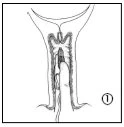
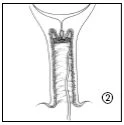
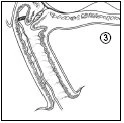
The doctor or midwife will insert the vaginal delivery system into your vagina, near the cervix. You must not do this yourself. Before applying Propess, the doctor or midwife will coat the vaginal delivery system with a small amount of gel lubricant. A sufficient length of the tape will be left outside the vagina to facilitate removal of the vaginal delivery system when necessary.
You should remain lying down during insertion of Propess and should continue to lie in this position for the following 20–30 minutes.
After insertion, the vaginal delivery system absorbs some of the moisture in the area, allowing dinoprostone to be released slowly.
Once the vaginal delivery system is in place to help initiate labour, you will be monitored periodically for, among other things:
- Cervical ripening
- Uterine contractions
- Labour pains and fetal well-being
The duration of time that Propess remains in place will be determined by your doctor or midwife based on your progress. Propess may remain in place for a maximum of 24 hours.
At the time of removal from the vagina, the vaginal delivery system will have expanded to 2–3 times its original size and will be flexible.
If you use more Propess than you should
If Propess is used for longer than recommended, increased uterine contractions or fetal distress may occur. The Propess vaginal delivery system must be removed immediately.
4. Possible adverse effects
Like all medicines, this medicine can cause adverse effects, although not everyone experiences them.
Frequent: may affect up to 1 in 10 people
- Increase in uterine contractions that may or may not affect the baby.
- The baby may experience distress and/or have a heart rate that is faster or slower than normal.
- Discoloration of amniotic fluid.
Uncommon: may affect up to 1 in 100 people
- Headache
- Decrease in blood pressure
- The baby has difficulty breathing immediately after birth
- The baby has high levels of bilirubin in the blood, a waste product from red blood cells, which may cause yellowing of the skin and eyes (jaundice)
- Itching
- Heavy vaginal bleeding after childbirth
- The placenta separates from the uterine wall before the baby is born (placental abruption)
- Decreased general condition of the newborn immediately after birth
- Slow progress of labour
- Inflammation of the membranes lining the inside of the uterus (endometritis)
- The mother’s uterus does not contract after childbirth due to lack of normal uterine contractions
- Burning sensation in the genital area
- Fever
Frequency unknown: frequency cannot be estimated from available data:
- Fetal death, stillbirth, and death of the newborn (neonatal death); especially following serious events such as uterine rupture.
- Disseminated intravascular coagulation (DIC); a rare condition affecting blood clotting, causing blood clots and increasing the risk of bleeding after childbirth.
- The fluid surrounding the baby during pregnancy may enter the mother’s bloodstream during delivery and block a blood vessel, leading to a condition known as amniotic fluid embolism, which may include symptoms such as: shortness of breath, low blood pressure, anxiety, chills, life-threatening blood clotting problems, seizures, coma, bleeding, fluid in the lungs, and fetal distress with low heart rate.
- Severe allergic reactions, including difficulty breathing, shortness of breath, weak or rapid pulse, dizziness, itching, skin redness, and severe rash.
- Abdominal pain
- Nausea
- Vomiting
- Diarrhea
- Swelling of the genital area
- Uterine rupture
Reporting of adverse effects:
If you experience any adverse effect, talk to your doctor or pharmacist, even if it is a possible adverse effect not listed in this leaflet. You can also report them directly via the Spanish Pharmacovigilance System for Human Medicines: https://www.notificaram.es. By reporting adverse effects, you can help provide more information on the safety of this medicine.
5. Storage of Propess
Keep out of the sight and reach of children.
Do not use Propess after the expiry date stated on the carton and on the aluminium pouch. The expiry date refers to the last day of the month indicated.
Store in a freezer (-10 to -25ºC). Keep in the original packaging to protect it from moisture.
Medicines should not be disposed of via wastewater drains or household waste. Ask your pharmacist how to dispose of medicines and packaging that you no longer need. This will help protect the environment.
6. Information for healthcare professionals
Composition of Propess:
- The active substance is dinoprostone, commonly known as prostaglandin E2. Each vaginal delivery system contains 10 milligrams of dinoprostone, which is released at approximately 0.3 milligrams per hour over 24 hours.
- The other components are: cross-linked macrogol polymer (hydrogel) and polyester thread.
Nature of the product and contents of the container
The vaginal delivery system is a small rectangular plastic device within a meshed extraction system.
The plastic device is a hydrogel polymer that swells in the presence of moisture, releasing dinoprostone.
The extraction system includes a long tape that allows the physician or midwife to remove it when necessary.
Each vaginal delivery system is supplied in an individual aluminium pouch made from laminated aluminium strip and packaged in a carton.
Pack containing 5 vaginal delivery systems.
Marketing Authorization Holder and Manufacturer
Marketing Authorization Holder:
FERRING S.A.U.
C/ del Arquitecto Sánchez Arcas nº 3, 1º
28040 Madrid, SPAIN.
Manufacturer:
Ferring GmbH
Wittland 11
24109 Kiel
Germany
This medicinal product is authorized in the European Economic Area (EEA) Member States and the United Kingdom (Northern Ireland) under the following names:
Austria, PROPESS 10 mg vaginales Freisetzungssystem
Belgium, PROPESS 10 mg hulpmiddel voor vaginaal gebruik, PROPESS 10 mg système de diffusion vaginale, PROPESS 10 mg vaginales Wirkstofffreisetzungssystem
Bulgaria, ?????? 10 mg ????????? ?????????????????? ??????? / PROPESS 10 mg vaginal delivery system
Croatia, Propess 10 mg sustav za isporuku u rodnicu
Cyprus, Propess
Czechia, CERVIDIL
Denmark, Propess, vaginalindlæg
Estonia, Propess
Finland, Propess 10 mg depotlääkevalmiste, emättimeen
France, PROPESS 10 mg, système de diffusion vaginale
Germany, PROPESS 10 mg vaginales Freisetzungssystem
Greece, PROPESS 10 mg σύστημα ενδοκολπικής χορήγησης
Hungary, Propess 10mg hüvelyben alkalmazott gyógyszerleadó rendszer
Ireland, Propess 10 mg vaginal delivery system
Italy, PROPESS 10 mg – Dispositivo vaginale
Latvia, Propess
Lithuania, Propess
Luxembourg, PROPESS 10 mg système de diffusion vaginale
Netherlands, Propess, vaginaal toedieningssysteem 10 mg
Norway, Propess
Poland, Cervidil
Portugal, PROPESS 10 mg, Sistema de libertação vaginal
Romania, PROPESS 10 mg/24 ore sistem cu cedare vaginala
Slovakia, Cervidil 10 mg vaginálny inzert
Slovenia, Propess 10mg vaginalni dostavni sistem
Spain, PROPESS 10 mg sistema de liberación vaginal
Sweden, Propess 10 mg vaginalinlägg
United Kingdom (Northern Ireland), PROPESS 10mg vaginal delivery system
Date of the most recent revision of this leaflet: September 2021.
The following information is intended for medical or healthcare professionals only:
INSTRUCTIONS FOR USE
Administration
|
|
| |
|
|
|
Removal
Propess can be removed quickly and easily by carefully pulling on the tape. After removal, check that the entire product (vaginal delivery system and withdrawal system) has come out of the vagina.