Proderma 100 mg hard capsules
Spain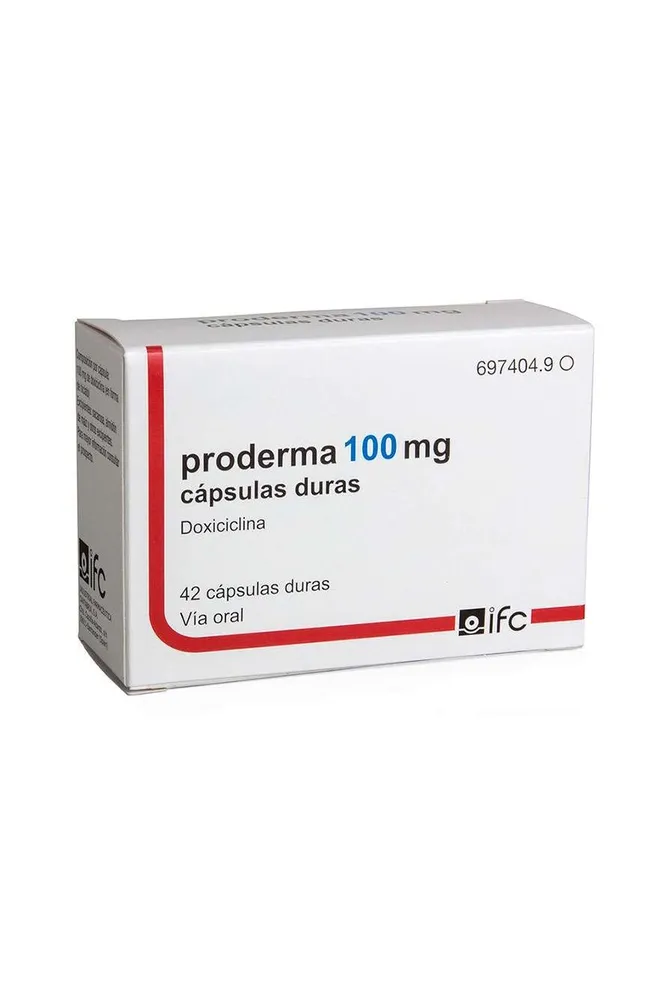
Table of Contents
- Package leaflet: Information for the user
- Introduction
- 1. What Proderma 100 mg hard capsules is and what it is used for
- 2. What you need to know before taking Proderma 100 mg hard capsules
- 3. How to take 100 mg hard capsules
- 4. Possible adverse effects
- 5. Storage of Proderma 100 mg hard capsules
- 6. Contents of the pack and other information
Package leaflet: Information for the user
Introduction
Package leaflet: information for the user
Proderma 100 mg hard capsules
Doxycycline
Read the entire leaflet carefully before you start taking this medicine, because it contains important information for you.
- Keep this leaflet, as you may need to read it again.
- If you have any questions, ask your doctor or pharmacist.
- This medicine has been prescribed for you only; do not give it to other people, even if they have the same symptoms as you, because it could harm them.
- If you experience any adverse effects, consult your doctor or pharmacist, even if they are effects not listed in this leaflet.
Leaflet contents
- What Proderma 100 mg hard capsules is and what it is used for
- What you need to know before taking Proderma 100 mg hard capsules
- How to take Proderma 100 mg hard capsules
- Possible adverse effects
- How to store Proderma 100 mg hard capsules
- Contents of the pack and other information
1. What Proderma 100 mg hard capsules is and what it is used for
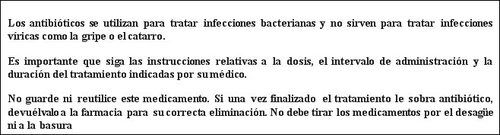
Doxycycline belongs to a group of medicines called tetracyclines, which are broad-spectrum antibiotics active against multiple microorganisms.
Doxycycline is primarily indicated for infections of the skin and soft tissues, respiratory tract infections, and genitourinary infections, such as:
- Atypical pneumonia
- Psittacosis (A disease transmitted to humans from certain birds, presenting as pneumonia accompanied by fever and cough).
- Typhus and other infections caused by microorganisms called rickettsiae.
- Sexually transmitted diseases.
- Brucellosis (Malta fever).
- Cholera.
- Early stages of Lyme disease (a disease transmitted by ticks).
- Fevers transmitted by lice and ticks.
- Malaria.
- Severe vulgar acne.
2. What you need to know before taking Proderma 100 mg hard capsules
Do not take Proderma 100 mg hard capsules
If you are allergic to doxycycline, tetracyclines, or any of the other components of Proderma 100 mg (listed in section 6).
Warnings and precautions
Consult your doctor or pharmacist before starting to take Proderma 100 mg.
Children
Proderma 100 mg must not be administered during the period of tooth development (second half of pregnancy, breastfeeding, and in children under 8 years of age), as it may cause permanent discoloration of teeth and delayed bone development.
General
- Cases of bulging fontanelles (soft spots in the skull) in children and intracranial hypertension (increased pressure of the cerebrospinal fluid in the brain) in both children and adults have been reported (see section 4. Possible side effects).
- If you develop diarrhea during treatment with doxycycline, consult your doctor.
- If you take this medicine while lying down or without sufficient water, ulcers in the digestive tract may occur; therefore, it is important to follow the administration instructions (see section 3. How to take Proderma 100 mg hard capsules and section 4. Possible side effects).
- If you have liver or kidney disease, consult your doctor.
- During prolonged treatment, your doctor will monitor your kidney and liver function.
- If you have systemic lupus erythematosus, you should avoid using this medicine.
- Skin redness may occur upon direct sun exposure; if this happens, consult your doctor.
- If you have myasthenia gravis (a form of muscle weakness), consult your doctor before taking this medicine.
- If you are due to have urine tests, inform healthcare professionals that you are being treated with this medicine, as doxycycline may interfere with test results.
Taking Proderma 100 mg hard capsules with other medicines
Inform your doctor or pharmacist if you are taking, or have recently taken, any other medicines, including those obtained without a prescription.
Like all medicines, Proderma 100 mg may interact with certain medicines, such as:
- Aluminum, calcium, and magnesium-containing antacids, as they reduce the absorption of Proderma 100 mg.
- Antibiotics, as they may reduce the effectiveness of Proderma 100 mg.
- Methoxyflurane combined with tetracyclines and Proderma 100 mg may cause kidney toxicity, which can be severe.
- Anticoagulants (such as warfarin), as Proderma 100 mg may alter the effect of these anticoagulants; therefore, consult your doctor.
- Medicines used to treat epilepsy, such as carbamazepine and phenytoin.
- Oral contraceptives and barbiturates, as Proderma 100 mg may reduce their effectiveness.
- Chronic alcohol consumption may reduce the effectiveness of Proderma 100 mg.
If in doubt, consult your doctor or pharmacist.
Taking Proderma 100 mg hard capsules with food and drinks
- During treatment with doxycycline, alcohol consumption should be avoided.
- Proderma 100 mg should be taken with food or water to avoid esophageal irritation (see section 3. How to take Proderma 100 mg hard capsules).
Pregnancy and breastfeeding
If you are pregnant or breastfeeding, think you may be pregnant, or are planning to become pregnant, consult your doctor or pharmacist before using this medicine.
Breastfeeding
You should avoid taking this medicine during breastfeeding.
Driving and using machines
There is no evidence that Proderma 100 mg affects the ability to drive or use machines.
Proderma 100 mg hard capsules contain sucrose. If your doctor has diagnosed you with an intolerance to certain sugars, consult him before taking this medicine.
3. How to take 100 mg hard capsules
Follow exactly the dosing instructions for Proderma 100 mg provided by your doctor. If in doubt, consult your doctor or pharmacist again.
Remember to take your medication.
Consult your doctor or pharmacist if you think the effect of doxycycline is not as expected, either because it is too strong and causes unwanted adverse effects, or because it is too weak, proving insufficient for the treatment of the infection.
IMPORTANT:
This medication should be taken during a meal, accompanied by a large glass of water. It is important to wait at least one hour after taking the medication before lying down or going to bed. The above recommendations aim to prevent the occurrence of gastrointestinal problems, especially stomach ulcers. |
Your doctor will determine the duration of treatment with Proderma 100 mg. Do not stop the treatment prematurely, even if you have already started to improve.
Adults: the usual dose of doxycycline is 200 mg given in one or two divided doses on the first day of treatment, followed by a maintenance dose of 100 mg/day. For the treatment of more severe infections, 200 mg/day should be administered throughout the entire treatment period. In general, treatment should be continued for at least 24 to 48 hours after the disappearance of symptoms and fever.
Children over 8 years of age: for children over 8 years of age weighing 45 kg or less, the usual dose is 4 mg/kg body weight on the first day of treatment, administered as a single dose or in equal doses every 12 hours. In severe infections: 4 mg/kg body weight every 24 hours, maintaining the same dose throughout treatment. Treatment should continue for 24 to 48 hours after symptoms have disappeared.
If you take more Proderma 100 mg hard capsules than you should
If you have taken more Proderma 100 mg hard capsules than you should, consult your doctor or pharmacist immediately.
In case of overdose or accidental ingestion, contact the Toxicology Information Service. Telephone: (91) 562 04 20.
If you forget to take Proderma 100 mg hard capsules
If you forget to take a dose, take the next dose at the scheduled time. Do not take a double dose to make up for the missed dose.
4. Possible adverse effects
Like all medicines, Proderma 100 mg hard capsules may cause adverse effects, although not everyone experiences them.
The following adverse effects have been reported after taking Proderma 100 mg:
Blood and lymphatic system disorders: Blood disorders following administration of tetracyclines are very rare. However, cases have been reported of: hemolytic anemia (resulting from excessive destruction of red blood cells), thrombocytopenia (reduced number of platelets), neutropenia (reduced number of neutrophils), and eosinophilia (increased number of eosinophils).
Nervous system disorders: Intracranial hypertension, characterized by headache, nausea, vomiting, dizziness, tinnitus, and visual disturbances, may occur infrequently. These symptoms resolve after discontinuation of the drug. Bulging of fontanelles in children has also been reported.
Gastrointestinal disorders: Gastrointestinal disturbances may occur, such as esophageal ulcers (see section 3. How to take Proderma 100 mg hard capsules), nausea, stomach pain, diarrhea, loss of appetite, inflammation of the tongue, intestinal inflammation, and anogenital candidiasis (a fungal microscopic infection).
Permanent tooth discoloration may also occur if doxycycline is used during dental development (second half of pregnancy, breastfeeding, and in children under 8 years of age).
Hepatic disorders: Treatment with high doses may cause hepatitis and disturbances in liver function.
Skin and subcutaneous tissue disorders: Urticaria, maculopapular rash (skin spots and small elevations), exudative erythema (redness and skin lesions), multiform eruptions (redness and swelling of the skin), photosensitivity skin reactions, exceptionally exfoliative dermatitis (inflammation and peeling of the skin), and rarely Stevens-Johnson syndrome.
Frequency not known: photo-onycholysis (nail pigmentation).
Musculoskeletal and connective tissue disorders: Joint pain and muscle pain may occur, as well as delayed growth in children.
Renal disorders: Like all tetracyclines, doxycycline may cause elevations in blood urea nitrogen.
General disorders: Hypersensitivity reactions (allergies), sometimes severe, may occasionally occur, including urticaria, angioedema (fluid retention in blood vessels), hypotension (decrease in blood pressure), pericarditis (inflammation of the tissue surrounding the heart), worsening of systemic lupus erythematosus, angioneurotic edema, serum sickness (allergic reaction to serum), and very rarely, anaphylactic shock (unusual or exaggerated allergic reaction).
Jarisch-Herxheimer reaction: characterized by fever, chills, headache, muscle pain, and skin rash, which usually resolves spontaneously. This reaction may occur shortly after starting doxycycline treatment for spirochetal infections, such as Lyme disease.
If you consider any of the adverse effects you experience to be severe, or if you notice any adverse effects not listed in this leaflet, inform your doctor or pharmacist.
Reporting of adverse effects
If you experience any type of adverse effect, consult your doctor or pharmacist, even if it is a possible adverse effect not listed in this leaflet. You may also report them directly via the Spanish Pharmacovigilance System for Human Medicines Website: www.notificaRAM.es. By reporting adverse effects, you can help provide more information on the safety of this medicine.
5. Storage of Proderma 100 mg hard capsules
Keep out of the sight and reach of children.
No special storage conditions are required.
Do not use this medicine after the expiry date stated on the packaging after EXP. The expiry date refers to the last day of the month indicated.
Medicines must not be disposed of via wastewater or household waste. Instead, return unused medicines and empty containers to your pharmacy's SIGRE collection point. If you are unsure, ask your pharmacist how to properly dispose of unused medicines and packaging. This helps protect the environment.
6. Contents of the pack and other information
Composition of Proderma 100 mg hard capsules
-
The active substance is doxycycline. Each capsule contains 100 mg of doxycycline (as hyclate).
-
The other components are: sucrose, corn starch, crospovidone, polyaminomethacrylate (Eudragit E100), talc, gelatin, indigo carmine (E132), erythrosine (E127), and titanium dioxide (E171).
Appearance of the product and contents of the pack
Proderma 100 mg is available in packs containing 42 capsules.
Other pack sizes:
Proderma 50 mg hard capsules
Proderma 200 mg hard capsules
Marketing Authorization Holder
INDUSTRIAL FARMACÉUTICA CANTABRIA, S.A.
Barrio Solía, nº 30,
La Concha de Villaescusa, 39690
Cantabria (Spain)
Manufacturer
INDUSTRIAL FARMACÉUTICA CANTABRIA, S.A.
C/ Pirita, 9
28850 Torrejón de Ardoz (Madrid)
Spain
or
TOLL MANUFACTURING SERVICES, S.L.
Aragoneses 2,
28108 Alcobendas (Madrid)
Spain
This leaflet was approved in June 2022.
Detailed and up-to-date information on this medicine is available on the website of the Spanish Agency for Medicines and Health Products (AEMPS) http://www.aemps.gob.es/