Procrin Semestral 30 mg powder and solvent for injectable suspension in pre-filled syringe
Spain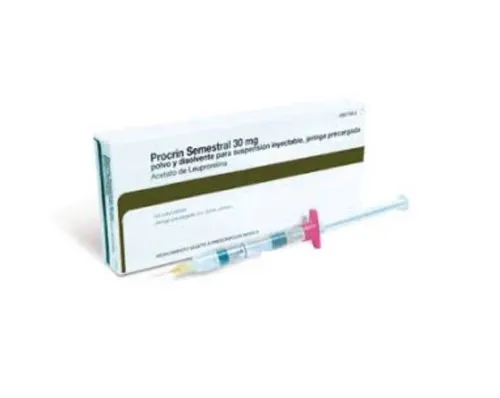
Table of Contents
- Package leaflet: Information for the user
- Introduction
- 1. What Procrin Semestral is and what it is used for
- 2. What you need to know before using Procrin Semestral
- 3. How to use Procrin Semestral
- 4. Possible adverse effects
- 5. Storage of Procrin Semestral
- 6. Contents of the container and additional information
- 1B**Appearance of the product and contents of the pack**
- **Marketing Authorization Holder and Manufacturing Responsible Party**
- 2B**Additional information for healthcare professionals**
Package leaflet: Information for the user
Introduction
Package leaflet: information for the user
Procrin Semestral 30 mg powder and solvent for injectable suspension in pre-filled syringe
Leuprorelin acetate
Read the entire package leaflet carefully before you start using this medicine, as it contains important information for you.
|
Package leaflet contents:
- What Procrin Semestral is and what it is used for
- What you need to know before using Procrin Semestral
- How to use Procrin Semestral
- Possible side effects
- How to store Procrin Semestral
- Contents of the pack and other information
1. What Procrin Semestral is and what it is used for
Procrin Semestral is a medicine that belongs to a group of gonadotropin-releasing hormone analogues and is used to reduce circulating levels of testosterone and oestrogens in the body.
Procrin Semestral is indicated for the palliative treatment of advanced hormone-dependent prostate carcinoma and for the treatment of high-risk localized and locally advanced hormone-dependent prostate carcinoma in combination with radiotherapy.
Procrin Semestral should be administered to patients who have previously been treated with one of the following medicines: natural gonadotropin-releasing hormone analogues (GnRH or LH-RH) and/or antiandrogens.
2. What you need to know before using Procrin Semestral
Do not use Procrin Semestral:
- If you are allergic to leuprorelin acetate or similar nonapeptides, or to any of the other components of this medicine (listed in section 6).
- After surgical removal of your testicles.
- As a single treatment, if you have symptoms related to pressure on the spinal cord or a tumor in the spine.
- If you are a woman or a child.
This is a medicine indicated exclusively for men. However, since the same active substance is used in different doses in women, it is important to emphasize that it must not be used in women:
- If you have undiagnosed vaginal bleeding.
- If you are pregnant or think you might be pregnant during treatment.
Warnings and precautions
Talk to your doctor or pharmacist before starting to use Procrin Semestral
- An increase in blood levels of the male sex hormone (testosterone) generally occurs during the first week of treatment. This may lead to a temporary worsening of disease-related symptoms and may also cause new symptoms not previously experienced. These symptoms include especially bone pain, urinary disturbances, and pressure on the spinal cord. These symptoms usually resolve as treatment continues. If symptoms do not resolve or worsen, you must contact your doctor immediately.
- If you experience sudden headache, vomiting, visual disturbances, or altered mental status during the first weeks of treatment, seek immediate medical attention, as you may be experiencing a serious condition called pituitary apoplexy (a disease caused by reduced blood flow to an area of the brain).
- If you experience urinary tract obstruction, blood in the urine, or vertebral and/or cerebral metastatic lesions. In these cases, your doctor should monitor you frequently and may consider initiating treatment with the daily formulation of PROCRIN for the first two weeks of treatment to facilitate discontinuation if deemed necessary.
- This medicine may cause loss of bone mineral density, increasing the risk of osteoporotic fractures.
- Seizures may occur in patients predisposed to them due to their underlying condition, in patients taking medications that may provoke seizures, and to a lesser extent in patients not belonging to either of these two groups.
- If you have diabetes, since leuprorelin treatment may affect glucose control.
- If you have or have had heart problems, inform your doctor.
- If you were born with or have a history of QT interval prolongation on electrocardiogram (ECG, recording of the heart's electrical activity), electrolyte imbalance in the blood, or are taking medications that may cause ECG changes (see Use with other medicines). Inform your doctor.
- Inform your doctor if you have any condition affecting the heart or blood vessels, or if you are being treated for such conditions, including medications to control heart rhythm (arrhythmias). The risk of heart rhythm problems may increase when using Procrin Semestral.
- Cases of depression, which may be severe, have been reported in patients using Procrin. If you are using Procrin and experience depressed mood, inform your doctor.
- If you have a history of hyperglycemia, diabetes, hypercholesterolemia, and/or fatty liver, your doctor should monitor you closely for possible changes/metabolic syndrome.
- If you have fatty liver.
- Serious skin reactions, including Stevens-Johnson syndrome/toxic epidermal necrolysis (SJS/TEN), have been reported in association with leuprorelin. Discontinue leuprorelin and seek immediate medical attention if you notice any symptoms related to these serious skin reactions described in section 4.
Use of Procrin Semestral with other medicines
Inform your doctor or pharmacist if you are taking, have recently taken, or might need to take any other medicines.
Procrin Semestral may interfere with certain medications used to treat heart rhythm disorders (e.g., quinidine, procainamide, amiodarone, and sotalol), or may increase the risk of heart rhythm problems when used with other medicines such as methadone (used for pain relief and detoxification from other drugs), moxifloxacin (an antibiotic), and antipsychotics used to treat serious mental illnesses.
Interference with laboratory tests:
Variations in the results of various laboratory tests may occur. Such fluctuations are expected as treatment progresses, and it is the physician's responsibility to evaluate these changes.
Pregnancy, breastfeeding, and fertility
This medicine is intended exclusively for male patients.
If accidentally administered to women, it should be noted that Procrin Semestral is contraindicated in pregnant women or women who may be pregnant, and during breastfeeding. There is a risk of miscarriage if administered during pregnancy.
Consult your doctor or pharmacist before using any medicine.
Driving and using machines
Your ability to drive or operate machinery may be impaired due to fatigue, dizziness, vertigo, and visual disturbances, which may be possible adverse reactions of the treatment or consequences of the underlying disease.
Use in athletes:
This medicine contains leuprorelin acetate, which may result in a positive outcome in doping control tests.
3. How to use Procrin Semestral
Procrin Semestral must only be administered by your doctor or nurse. They will be responsible for preparing the product.
Procrin Semestral is administered subcutaneously (injection of the medicine into the tissue just beneath the skin).
The usual dose is a single subcutaneous injection every six months.
Your doctor will decide which dose of Procrin Semestral you should receive and when it should be given. You must receive the dose specified by your doctor.
Your doctor may perform blood tests to monitor the effect of Procrin Semestral.
In some patients, your doctor may additionally prescribe a medication belonging to the antiandrogen group to control symptoms caused by increased testosterone levels (male sex hormone) during the first weeks of treatment.
If you feel that the effect of Procrin Semestral is too strong or too weak, inform your doctor or pharmacist.
If you use more Procrin Semestral than you should
There is no clinical experience regarding the effects of an acute overdose of leuprorelin acetate. In animal studies, administration of doses approximately 133 times higher than recommended for human use resulted in dyspnea (shortness of breath), decreased activity, and local irritation at the injection site. In case of overdose, the patient should be monitored and managed accordingly.
In the event of overdose or accidental ingestion, contact your doctor or pharmacist immediately or call the Toxicology Information Service at telephone number 91.562.04.20, stating the name of the medicine and the amount administered.
If you have any further questions about the use of this medicine, ask your doctor, pharmacist, or nurse.
4. Possible adverse effects
Like all medicines, this medicine can cause adverse effects, although not everyone will experience them.
Most of the adverse effects observed with leuprorelin acetate are due to the drug's own action, which causes increases and/or decreases in male hormone levels.
Adverse effects at the beginning of treatment:
During clinical trials in prostate cancer, at the start of treatment a transient increase in blood testosterone (male hormone) occurs in patients who have not previously been treated with hormonal therapy. This is occasionally associated with a worsening of signs and symptoms, usually a transient increase in bone pain. In patients with vertebral metastases and/or urinary obstruction or blood in urine, neurological problems may occur, such as temporary weakness and/or abnormal sensations of itching, cold, tingling, etc., in the legs, or worsening of urinary symptoms. If you consider these symptoms to be significant, inform your doctor.
The adverse effects reported during clinical trials and after marketing of the medicine are listed below, classified by frequency:
Very common (may affect more than 1 in 10 people):
Erythema (superficial skin inflammation characterized by red patches), erythema at injection site.
Common (may affect up to 1 in 100 people):
Prostate tumor exacerbation¹, worsening of prostate tumor¹, anemia, increased appetite, diabetes mellitus (excess glucose in blood)², glucose tolerance disorder², increased fat in blood (increased cholesterol)², increased low-density lipoprotein (LDL)² in blood, increased triglycerides² (a type of fat), decreased libido¹, increased libido¹, mood changes², depression², headache¹, dilation of arteries or veins¹, hot flushes¹, hypotension (low blood pressure)¹, sudden drop in blood pressure upon standing (orthostatic hypotension)¹, abnormal fluid accumulation in the lungs, excessive sweating (hyperhidrosis)¹, dry skin¹, skin rash¹, urticaria¹, abnormal hair growth¹, hair disorder¹, night sweats¹, hair loss¹, pigmentation disorder¹, cold sweat¹, excessive growth of facial or body hair (hirsutism)¹, muscle weakness¹, osteoporosis (a disease in which bone mineral density is low and bones may suffer fractures or microfractures)², inability to achieve penile erection¹, testicular atrophy¹, breast growth in males¹, breast gland congestion¹, testicular pain¹, breast enlargement¹, breast pain¹, prostate pain¹, penile inflammation¹, penile disorder¹, feeling of tiredness (fatigue), reaction at injection site, inflammation at injection site, pain at injection site, induration at injection site, abscess at injection site, dryness of mucous membranes¹, increased transaminases, weight gain or loss¹, increase in prostate-specific antigen (PSA)¹, decreased bone density¹.
¹Adverse effects frequently associated with the pharmacological action of the medicine.
²Adverse effects frequently associated with the pharmacological action of the medicine during prolonged treatment (6 to 12 months).
Uncommon (may affect up to 1 in 1,000 people):
Abnormal weight gain, sleep disorders, mood changes³, depression³, dizziness, heart failure (the heart loses its ability to pump blood effectively), nausea, itching, night sweating, partial hair loss, increased frequency of urination, difficulty urinating, peripheral edema (fluid accumulation in ankles, feet, and legs), abnormal liver function test.
³Adverse effects frequently associated with the pharmacological action of the medicine during short-term treatment.
Frequency not known (cannot be estimated from available data):
Infection, urinary tract infection, pharyngitis, pneumonia, skin cancer, anaphylactic reaction (generalized, usually severe immune reaction), goiter (enlargement of the thyroid gland), pituitary apoplexy (death of an area of tissue in the pituitary gland), low blood sugar levels, dehydration, high blood phosphate levels, decreased blood protein levels, nervousness, insomnia, anxiety, delusional ideas, suicidal thoughts, suicide attempt, dizziness, numbness or tingling sensation in parts of the body (paresthesia), lethargy, memory disturbance, taste disturbance (dysgeusia), hypoesthesia (reduced sensory perception), fainting, peripheral neuropathy (disorder of peripheral nerves), stroke, loss of consciousness, transient ischemic attack, paralysis, neuromuscular disorders, seizures, blurred vision, eye disorders, visual impairment, decreased vision in one or both eyes (amblyopia), dry eyes, tinnitus, hearing loss, congestive heart failure (the heart loses its ability to pump blood effectively), cardiac rhythm disturbances, myocardial infarction, angina pectoris, increased heart rate, slow heart rate, sudden cardiac death, electrocardiogram (ECG) abnormalities (prolongation of QT interval), accumulation of lymph fluid in tissues (lymphedema), hypertension (high blood pressure), inflammation of a vein due to a blood clot (phlebitis), blockage of an artery by a blood clot (thrombosis), varicose veins (swollen and painful veins due to abnormal blood accumulation), pleural friction rub (noise caused by contact of inflamed pleural layers), scarring or thickening of lung tissue (pulmonary fibrosis), nosebleed, breathing difficulty, coughing up blood, cough, pleural effusion (fluid in the chest), pulmonary infiltrate, respiratory disorders, sinus congestion, pulmonary embolism, inflammatory disorder of lower airways (interstitial lung disease), constipation, vomiting, gastrointestinal bleeding, bloated abdomen, diarrhea, difficulty swallowing, dry mouth, duodenal ulcer, gastrointestinal disorder, peptic ulcer, rectal polyps, abnormal liver function, yellowing of skin and eyes (jaundice), non-alcoholic fatty liver, severe liver injury, hair loss, red spots on the skin (ecchymosis), photosensitivity reaction, urticaria, dermatitis, skin lesions, erythema multiforme, bullous dermatitis, exfoliative dermatitis, Stevens-Johnson Syndrome, Toxic Epidermal Necrolysis, muscle pain, bone inflammation, joint disorders, joint pain, ankylosing spondylitis (inflammatory disease affecting the vertebrae), tenosynovitis (inflammation of the tendon sheath), urinary incontinence, sudden and strong urge to urinate, blood in urine, bladder spasms, urinary tract disorders, urinary tract obstruction, breast growth in males, testicular disorder, generalized pain, edema (swelling), generalized fatigue, essential fever (pyrexia), sterile abscess at injection site, hematoma at injection site, chills, nodule, thirst, inflammation, pelvic fibrosis, skin cell death (necrosis) at injection site, increased blood urea, increased blood uric acid, increased blood creatinine, increased blood calcium, abnormal electrocardiogram (graphical representation of the heart's electrical activity), ECG signs of myocardial ischemia (lack of blood flow to part of the myocardium in the heart), decreased platelets, decreased blood potassium, increased white blood cells, decreased white blood cells, prolonged prothrombin time, increased activated partial thromboplastin time, heart murmur (noise indicating improper heart function), increased blood low-density lipoproteins (a type of fat), increased blood triglycerides, increased blood bilirubin, vertebral fracture.
Seek immediate medical attention if you notice any of the following symptoms:
- If you notice circular or target-shaped, reddish, non-elevated spots on your trunk, often with central blisters, skin peeling, or ulcers in the mouth, throat, nose, genitals, and eyes. These severe skin rashes may be preceded by fever and flu-like symptoms (Stevens-Johnson syndrome/toxic epidermal necrolysis).
- Skin redness and itchy rash (toxic skin eruption).
- A skin reaction causing pimples or red spots on the skin, which may resemble a target, with a dark red center surrounded by rings of lighter red (erythema multiforme).
Reporting of adverse effects
If you experience any adverse effect, consult your doctor or pharmacist, even if they are possible adverse effects not listed in this leaflet. You may also report them directly via the Spanish Pharmacovigilance System for Human Medicines: www.notificaRAM.es. By reporting adverse effects, you can help provide more information on the safety of this medicine.
5. Storage of Procrin Semestral
Keep out of sight and reach of children.
Do not use this medicine after the expiry date stated on the packaging after EXP. The expiry date is the last day of the month indicated.
No special storage conditions are required.
Medicines must not be disposed of via wastewater or household waste. Dispose of empty containers and unused medicines at the SIGRE Point located at your pharmacy. If in doubt, please consult your pharmacist on how to properly dispose of containers and medicines you no longer need. This way, you will help protect the environment.
6. Contents of the container and additional information
Composition of Procrin Semestral
The active substance is leuprorelin acetate. Each pre-filled syringe contains 30 mg of leuprorelin (as acetate), equivalent to 28.58 mg of leuprorelin.
The other components are:
Powder: Polylactic acid and mannitol.
Solvent: Sodium carboxymethylcellulose, mannitol, polysorbate 80, and water for injections.
1BAppearance of the product and contents of the pack
Each pack contains a dual-chamber pre-filled syringe with a single-use 23 G needle, a plunger, and a wipe impregnated with 70% isopropyl alcohol.
Marketing Authorization Holder and Manufacturing Responsible Party
Marketing Authorization Holder
AbbVie Spain S.L.U.,
Avenida de Burgos 91,
28050 Madrid,
Spain.
Manufacturing Responsible Party
ABBVIE LOGISTICS B.V.,
Zuiderzeelaan 53 8017 Zwolle,
The Netherlands
or
AbbVie Deutschland GmbH & Co. KG,
Knollstrasse,
67061 Ludwigshafen,
Germany
Date of latest review of this package leaflet: November 2025
Detailed and up-to-date information on this medicinal product is available on the website of the Spanish Agency of Medicines and Health Products (AEMPS) http://www.aemps.gob.es/
2BAdditional information for healthcare professionals
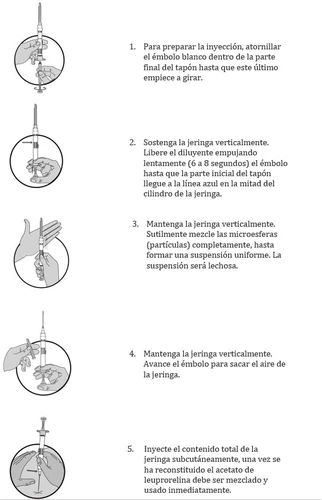
Instructions for correct administration of the preparation: