Priligy 60 mg film-coated tablets
Spain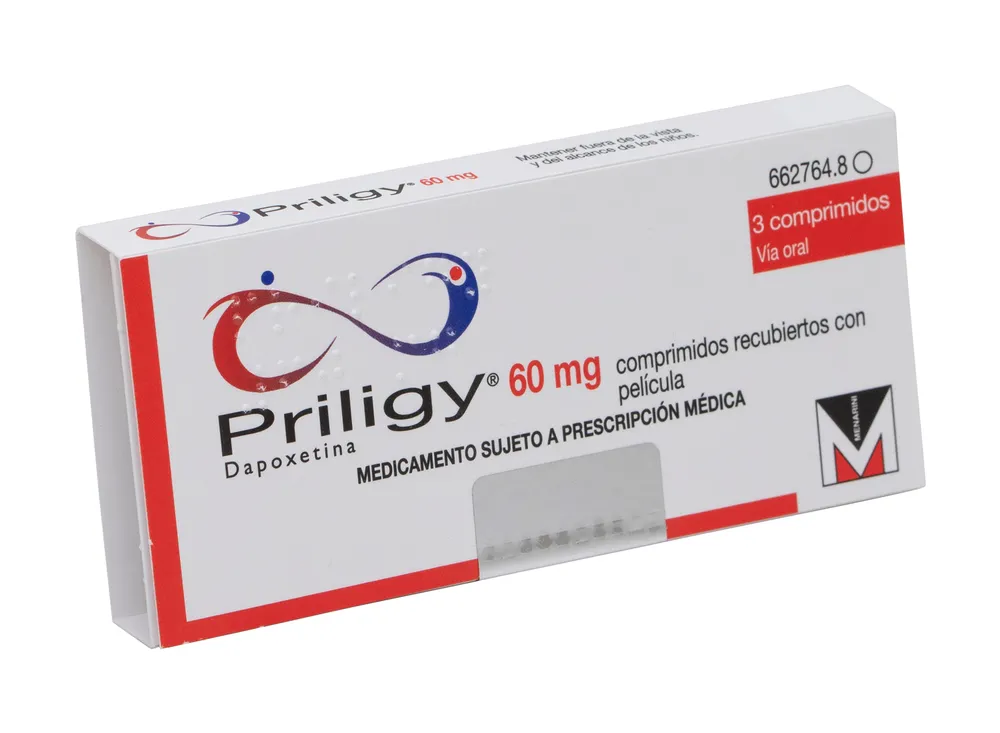
Table of Contents
Package leaflet: Information for the user
Introduction
Package leaflet: Information for the user
Priligy 60mg film-coated tablets
dapoxetine
Read the entire leaflet carefully before you start taking this medicine because it contains important information for you.
- Keep this leaflet. You may need to read it again.
- If you have any questions, ask your doctor, pharmacist, or nurse.
- This medicine has been prescribed for you only, and you should not give it to other people, even if they have the same symptoms as you, because it may harm them.
- If you experience any adverse effects, consult your doctor, pharmacist, or nurse, even if they are effects not listed in this leaflet. See section 4.
Contents of the leaflet
-
What Priligy is and what it is used for
-
What you need to know before taking Priligy
-
How to take Priligy
-
Possible side effects
- How to store Priligy
-
Contents of the pack and other information
1. What Priligy is and what it is used for
Priligy contains an active substance called "dapoxetine". It belongs to a group of medicines known as "selective serotonin reuptake inhibitors" (SSRIs). Priligy may also be known as a "urological" medicine.
Priligy prolongs the time until ejaculation and can improve control over ejaculation. This may reduce frustration or distress related to rapid ejaculation.
Priligy is used for the treatment of premature ejaculation in adult men aged 18 to 64 years.
Premature ejaculation occurs when a man ejaculates with minimal sexual stimulation and before he wishes to do so. This condition can cause problems for the man and may affect sexual relationships with his partner.
2. What you need to know before taking Priligy
Do not take Priligy
-
if you are allergic to dapoxetine or any of the other ingredients of this medicine (listed in section 6)
-
if you have heart problems, such as heart failure or irregular heartbeat
-
if you have a history of fainting (syncope)
-
if you have a history of mania (symptoms such as overexcitement, irritability, or inability to think clearly) or severe depression
-
if you are taking:
-
Medications used to treat depression called MAOIs (monoamine oxidase inhibitors)
-
Thioridazine, used to treat schizophrenia
-
Other medications for depression
-
Lithium – a medication used for bipolar disorder
-
Linezolid – an antibiotic used to treat infections
-
Tryptophan – a medication that helps with sleep
-
St. John’s wort (Hypericum perforatum) – a herbal medicine
-
Tramadol – used to treat severe pain
-
Medications used to treat migraine.
Do not take Priligy at the same time as any of the medications listed above. If you have taken any of these medications, you must wait 14 days before starting Priligy. After stopping Priligy, you must wait 7 days before taking any of the listed medications. If you are unsure what to do, consult your doctor or pharmacist before taking this medicine. (See section "Other medicines and Priligy")
-
Certain antifungal medications, including ketoconazole and itraconazole (see section "Other medicines and Priligy")
-
Certain HIV medications, including ritonavir, saquinavir, nelfinavir, and atazanavir (see section "Other medicines and Priligy")
-
Certain antibiotics used to treat infections, including telithromycin (see section "Other medicines and Priligy")
-
Nefazodone – an antidepressant (see section "Other medicines and Priligy")
-
If you have moderate or severe liver problems.
Do not take this medicine if any of the above conditions apply to you. If you are unsure, consult your doctor or pharmacist before taking this medicine.
Warnings and precautions
Talk to your doctor, pharmacist, or nurse before starting Priligy if:
- You have not been diagnosed with premature ejaculation
- You have any other sexual problems, such as erectile dysfunction
- You have a history of dizziness due to low blood pressure
- You take drugs such as ecstasy, LSD, narcotics, or benzodiazepines
- You drink alcohol (see section "Taking Priligy with food, drinks, and alcohol")
- You have ever had mental health disorders such as depression, mania (feelings of overexcitement, irritability, or inability to think clearly), bipolar disorder (symptoms include severe mood swings between mania and depression), or schizophrenia (a psychiatric illness)
- You have epilepsy
- You have a history of bleeding or blood clotting problems
- You have kidney problems
- You have or are predisposed to high eye pressure (glaucoma).
If any of these situations apply to you (or you are unsure), consult your doctor or pharmacist before taking this medicine.
Before you start taking this medicine, your doctor should perform a test to ensure your blood pressure does not drop too much when you stand up.
Children and adolescents
This medicine must not be used in children or adolescents under 18 years of age.
Other medicines and Priligy
Tell your doctor or pharmacist if you are currently taking, have recently taken, or might need to take any other medicines. This includes over-the-counter medicines, such as herbal remedies. Priligy may interact with other medicines, and other medicines may affect how Priligy works. Therefore, taking other medicines may influence the maximum dose of Priligy you can take.
Do not take Priligy at the same time as any of the following medicines:
- Medications for depression called "monoamine oxidase inhibitors" (MAOIs)
- Thioridazine, used for schizophrenia
- Other medications for depression
- Lithium – a medication for bipolar disorder
- Linezolid – an antibiotic used to treat infections
- Tryptophan – a medication that helps with sleep
- St. John’s wort (Hypericum perforatum) – a herbal medicine
- Tramadol – used to treat severe pain
- Medications used to treat migraine.
Do not take Priligy at the same time as any of the medications listed above. If you have taken any of these medications, you must wait 14 days before starting Priligy. After stopping Priligy, you must wait 7 days before taking any of the listed medications. If you are unsure what to do, consult your doctor or pharmacist before taking this medicine.
- Certain antifungal medications, including ketoconazole and itraconazole
- Certain HIV medications, including ritonavir, saquinavir, nelfinavir, and atazanavir
- Certain antibiotics used to treat infections, including telithromycin
- Nefazodone – an antidepressant.
Tell your doctor or pharmacist if you are taking any of the following medicines:
- Medications for mental health conditions other than depression
- Non-steroidal anti-inflammatory drugs (NSAIDs) such as ibuprofen or acetylsalicylic acid
- Medications that thin the blood, such as warfarin
- Certain medications used to treat erectile dysfunction, such as sildenafil, tadalafil, or vardenafil, as these may lower your blood pressure, especially when standing up
- Certain medications used to treat high blood pressure and chest pain (angina) (such as verapamil and diltiazem), or enlarged prostate, as these may also lower your blood pressure, especially when standing up
- Certain antifungal medications, such as fluconazole
- Certain HIV medications, such as amprenavir and fosamprenavir
- Certain antibiotics used to treat infections, such as erythromycin and clarithromycin
- Aprepitant – used to treat nausea.
If you are unsure whether any of the above apply to you, consult your doctor or pharmacist before taking this medicine.
Taking Priligy with food, drinks, and alcohol
- Do not drink grapefruit juice within 24 hours before taking this medicine, as it may increase the concentration of this medicine in your body.
- This medicine may be taken with or without food.
- This medicine should be taken with at least one full glass of water.
- Avoid alcohol while taking this medicine.
- The effects of alcohol, such as dizziness, drowsiness, and slowed movements, may be increased when taken with this medicine.
- Drinking alcohol while taking this medicine may increase the risk of injury due to fainting or other side effects.
Pregnancy, breastfeeding, and fertility
Women must not take this medicine.
Driving and using machines
This medicine may cause some people to feel drowsy, dizzy, faint, have difficulty concentrating, or experience blurred vision. If you experience any of these effects or similar symptoms, you should avoid driving and using machines. The effects of alcohol may be increased if you take this medicine with alcohol, increasing the risk of injury from fainting or other side effects.
Priligy contains lactose
This medicine contains lactose (a type of sugar). If your doctor has informed you that you have an intolerance to certain sugars, consult your doctor before taking this medicine.
Priligy contains sodium
This medicine contains less than 1 mmol of sodium (23 mg) per tablet; this is essentially “sodium-free”.
3. How to take Priligy
Follow exactly the instructions for use of this medicine as given by your doctor or pharmacist. If in doubt, please consult your doctor or pharmacist again.
-
The recommended dose is 30 mg. Your doctor may increase your dose to 60 mg.
-
Take the medicine only 1 to 3 hours before you expect to have sexual intercourse.
-
Do not take this medicine more than once every 24 hours or once a day.
-
Swallow the tablet whole to avoid a bitter taste, with at least a full glass of water, which may help reduce the possibility of fainting (see “Fainting and drop in blood pressure” in section 4).
-
This medicine can be taken with or without food.
-
Men under 18 years of age and men over 65 years of age must not use this medicine.
-
Talk to your doctor to determine whether continuing treatment with Priligy is appropriate after the first 4 weeks of treatment or after 6 doses. If you continue treatment, you should visit your doctor to discuss it again at least once every six months.
If you take more Priligy than you should
If you take more tablets than you should, inform your doctor or pharmacist. You may feel dizzy or vomit.
In case of overdose or accidental ingestion, contact your doctor or pharmacist immediately or call the Toxicology Information Service at: 91 562 04 20.
If you stop taking Priligy
Consult your doctor before stopping this medicine. You may experience problems sleeping and dizziness when you stop taking Priligy, even if you have not taken it daily.
If you have any further questions about the use of this medicine, ask your doctor, pharmacist, or nurse.
4. Possible adverse effects
Like all medicines, this medicine can cause adverse effects, although not everyone will experience them.
Stop taking Priligy and contact your doctor immediately if:
- You have seizures (fits)
- You faint or feel dizzy when standing up
- You notice any change in mood
- You have any thoughts of suicide or of harming yourself.
If you experience any of the above, stop taking this medicine and contact your doctor immediately.
Fainting and drop in blood pressure
This medicine may cause you to faint or experience a drop in blood pressure when standing up. To help prevent this:
- Take this medicine with at least one full glass of water.
- Do not take this medicine if you are dehydrated (you do not have enough fluid in your body).
This may occur if:
-
You have not drunk anything in the last 4 to 6 hours.
-
You have sweated excessively for a prolonged period.
-
You have been ill with a high temperature, diarrhoea, or vomiting.
-
If you feel like fainting (you feel nauseous, dizzy, have vertigo, confusion, sweating, or an abnormal heartbeat) or feel dizzy when standing up, lie down immediately with your head lower than the rest of your body, or sit with your head between your knees until you feel better. This will help prevent falling and getting injured if you faint.
-
Do not stand up quickly if you have been sitting or lying down for a long time.
-
Do not drive or operate any tools or machinery if you feel you might faint while taking this medicine.
-
Consult your doctor if you faint while taking this medicine.
Very common adverse effects (may affect more than 1 in 10 people):
- Dizziness
- Headache
- Nausea.
Common adverse effects (may affect up to 1 in 10 people):
- Feeling irritable, anxious, agitated, or nervous
- Numbness or tingling sensations
- Difficulty achieving or maintaining an erection
- Excessive sweating or flushing
- Diarrhoea, constipation, or flatulence
- Abdominal pain, bloating, or vomiting
- Trouble sleeping or abnormal dreams
- Tiredness or drowsiness, yawning
- Stuffy nose (nasal congestion)
- Increased blood pressure
- Difficulty concentrating
- Tremors or shaking
- Reduced sexual desire
- Ringing in the ears (tinnitus)
- Blurred vision
- Indigestion
- Dry mouth.
Uncommon adverse effects (may affect up to 1 in 100 people):
- Fainting or dizziness upon standing (see previous recommendations)
- Mood changes, euphoria, or paranoia
- Confusion, disorientation, or difficulty thinking clearly
- Slow, irregular, or increased heart rate
- Loss of sexual appetite, difficulty reaching orgasm
- Feeling weak, sedated, lethargic, or fatigued
- Depression, nervousness, or indifference
- Feeling hot, tense, strange, or drunk
- Vision problems, eye pain, or dilated pupils
- Low or high blood pressure
- Itching or cold sweats
- Vertigo
- Abnormal taste
- Teeth grinding.
Rare adverse effects (may affect up to 1 in 1,000 people):
- Dizziness after exercise
- Sudden drowsiness
- Urgency to defecate.
Reporting of adverse effects
If you experience any adverse effect, talk to your doctor, pharmacist, or nurse, even if it is a possible adverse effect not listed in this leaflet. You can also report them directly via the Spanish Pharmacovigilance System for Human Medicines: https://www.notificaram.es. By reporting adverse effects, you can help provide more information on the safety of this medicine.
5. Storage of Priligy
- This medicine does not require any special storage conditions.
- Keep this medicine out of the sight and reach of children.
- Do not use this medicine after the expiry date stated on the packaging. The expiry date is the last day of the month indicated.
- Medicines must not be disposed of via wastewater or household waste. Dispose of unused medicines and their containers at the SIGRE collection point at your pharmacy. If you are unsure, ask your pharmacist how to dispose of medicines and containers you no longer need. This will help protect the environment.
6. Contents of the pack and other information
Composition of Priligy
The active substance is dapoxetine. Each tablet contains 60 mg of dapoxetine as dapoxetine hydrochloride.
The other components are:
- Tablet core: lactose monohydrate, microcrystalline cellulose, sodium croscarmellose, colloidal anhydrous silica, magnesium stearate.
- Tablet coating: lactose monohydrate, hypromellose, titanium dioxide (E171), triacetin, black iron oxide (E172), yellow iron oxide (E172).
Appearance of Priligy and pack sizes
- The 60 mg film-coated tablets are grey in colour, round, biconvex, approximately 8 mm in diameter, with the number "60" inside a triangle engraved on one side.
The tablets are supplied in blisters containing 1, 2, 3 and 6 film-coated tablets.
Only some pack sizes may be marketed.
Marketing Authorization Holder and Manufacturer
Marketing Authorization Holder
Phoenix Labs Unlimited Company
Suite 12, Bunkilla Plaza, Bracetown Business Park
Clonee, County Meath, Ireland
Manufacturer
Menarini - Von Heyden GmbH, Leipziger Strasse 7-13, 01097 Dresden, Germany
For further information about this medicinal product, please contact the local representative of the Marketing Authorization Holder:
EUROMED PHARMA SPAIN S.L.
C/Eduard Maristany, 430-432
08918 Badalona
Barcelona – Spain
Tel: +34 932 684 208
This medicinal product is authorized in EEA Member States under the following names:
Austria, Belgium, Bulgaria, Croatia, Cyprus, Czech Republic, Estonia, Finland, France, Germany, Greece, Hungary, Ireland, Italy, Latvia, Lithuania, Luxembourg, Malta, Netherlands, Norway, Poland, Portugal, Romania, Slovak Republic, Slovenia, Spain, Sweden, United Kingdom (Northern Ireland): Priligy
Date of the most recent review of this leaflet: June 2021
Detailed and up-to-date information on this medicinal product is available on the website of the Spanish Agency for Medicines and Health Products (AEMPS) http://www.aemps.gob.es/