Pravastatin Codramol 20 mg tablets EFG
Spain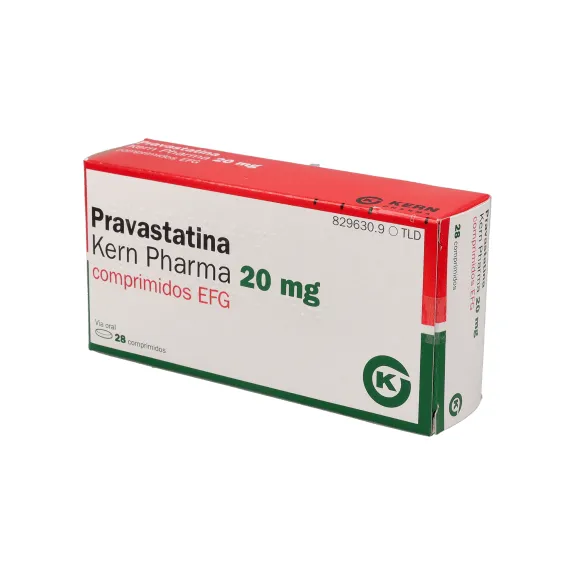
Table of Contents
- Package leaflet: Information for the user
- Introduction
- 1. What PRAVASTATIN CODRAMOL 20 mg TABLETS is and what it is used for
- 2. BEFORE TAKING PRAVASTATIN CODRAMOL 20 mg TABLETS
- 3. HOW TO TAKE PRAVASTATIN CODRAMOL 20 mg TABLETS
- 4. Possible adverse effects
- 5. Storage of PRAVASTATINA CODRAMOL 20 mg TABLETS
- 6. ADDITIONAL INFORMATION
Package leaflet: Information for the user
Introduction
Package leaflet: information for the user
Pravastatine Codramol 20 mg tablets EFG
Read the entire leaflet carefully before you start taking this medicine.
-
Keep this leaflet as you may need to read it again.
-
If you have any questions, ask your doctor or pharmacist.
-
This medicine has been prescribed for you and you should not give it to other people, even if they have the same symptoms, as it may harm them.
-
If you consider any of the side effects you experience to be severe, or if you notice any side effects not listed in this leaflet, inform your doctor or pharmacist.
Leaflet contents:
- What Pravastatine Codramol 20 mg tablets are and what they are used for
- Before you take Pravastatine Codramol 20 mg tablets
- How to take Pravastatine Codramol 20 mg tablets
- Possible side effects
- How to store Pravastatine Codramol 20 mg tablets
- Further information
1. What PRAVASTATIN CODRAMOL 20 mg TABLETS is and what it is used for
Pravastatin Codramol are tablets containing pravastatin as the active substance, available on the market in the following strengths: 10 mg, 20 mg and 40 mg. It belongs to the class of lipid-lowering agents (anti-dyslipidemics).
Therapeutic indications
Hypercholesterolemia
Treatment of primary hypercholesterolemia or mixed dyslipidemia, in conjunction with diet, when response to diet and other non-pharmacological interventions (e.g., exercise, weight reduction) has been inadequate.
Primary prevention
Reduction of cardiovascular mortality and morbidity in patients with moderate to severe hypercholesterolemia and at high risk of a first cardiovascular event, as an adjunct to diet.
Secondary prevention
Reduction of cardiovascular mortality and morbidity in patients with a history of myocardial infarction or unstable angina, and with normal or elevated cholesterol levels, along with correction of other risk factors.
Post-transplant
Reduction of post-transplant hyperlipidemia (blood lipid levels) in patients receiving immunosuppressive therapy following solid organ transplantation (see sections Before taking Pravastatin Codramol and How to take Pravastatin Codramol).
2. BEFORE TAKING PRAVASTATIN CODRAMOL 20 mg TABLETS
Do not take Pravastatin Actavis:
- If you are allergic (hypersensitive) to pravastatin or any of the excipients in Pravastatin Codramol.
- If you have active liver disease, including unexplained elevations of serum transaminases above 3 times the upper limit of normal (see section Before taking Pravastatin Codramol).
- If you are pregnant or breastfeeding.
Take special care with Pravastatin Codramol:
In the case of familial hypercholesterolemia, as pravastatin has not been evaluated in patients with this condition.
If you have liver disorders, since, like other similar lipid-lowering drugs, moderate increases in serum transaminase levels may occur, which in most cases return to baseline levels without the need to discontinue treatment.
As with other statins, treatment with pravastatin has been associated with the occurrence of muscle problems: myalgia, myopathy, and rarely, rhabdomyolysis. The possibility of myopathy should be considered in any patient treated with statins who experiences unexplained muscle symptoms such as muscle pain or tenderness, muscle weakness, or muscle cramps.
The risk and severity of muscle disorders during statin treatment increase when co-administered with drugs that interact with them. Muscle symptoms associated with statins usually resolve after discontinuation of treatment.
Consult your doctor or pharmacist before starting to take Pravastatin Codramol:
- if you have severe respiratory insufficiency.
- if you have or have had myasthenia (a disease characterized by generalized muscle weakness, which in some cases affects the muscles used for breathing) or ocular myasthenia (a disease causing weakness of the eye muscles), as statins may sometimes worsen the condition or trigger the onset of myasthenia (see section 4).
While taking this medicine, your doctor will monitor whether you have diabetes or are at risk of developing diabetes. This risk increases if you have high levels of sugar and fats in the blood, are overweight, or have high blood pressure.
Children under 18 years: the use of Pravastatin Codramol is not recommended due to limited data on safety and efficacy in these patients.
Elderly: dose adjustment may be necessary in elderly patients with risk factors.
Patients with renal or hepatic impairment: the dose should be adjusted according to blood lipid levels and under medical supervision.
Before starting treatment:
-
Measurement of creatine kinase levels is recommended before starting treatment in patients with specific predisposing factors and in patients who develop muscle symptoms during statin treatment.
-
Caution should be exercised in patients with predisposing factors such as renal insufficiency, hypothyroidism, previous history of muscle toxicity with a statin or fibrate, personal or family history of hereditary muscle disorders, or alcohol abuse. In these cases, creatine kinase levels should be determined before starting treatment. The assessment of creatine kinase levels before starting treatment should also be considered in individuals over 70 years of age, especially those with other predisposing factors.
During treatment:
- Patients should be advised to promptly report any unexplained muscle pain, tenderness, weakness, or cramps. In such cases, creatine kinase levels should be measured. If a hereditary muscle disorder is suspected in the patient, resumption of statin treatment is not recommended.
Use of other medicines:
Inform your doctor or pharmacist if you are taking, have recently taken, or might take any other medicines, including those obtained without a prescription.
Fibrates: fibrates alone are occasionally associated with the occurrence of myopathy. An increased risk of muscle-related adverse reactions, including rhabdomyolysis, has been reported when fibrates are co-administered with other statins. Since these adverse reactions cannot be ruled out with pravastatin, concomitant use of pravastatin and fibrates (e.g., gemfibrozil, fenofibrate) should be avoided.
Cholestyramine/colestipol: concomitant administration reduces the bioavailability of pravastatin. When pravastatin was administered one hour before or four hours after cholestyramine, or one hour before colestipol and a standard meal, no clinically significant reduction in bioavailability or therapeutic effect was observed (see section How to take Pravastatin Codramol).
Cyclosporine: concomitant administration of pravastatin and cyclosporine increases systemic exposure to pravastatin. Clinical and biochemical monitoring is recommended for patients receiving this combination (see section How to take Pravastatin Codramol).
Warfarin and other anticoagulants: chronic administration of pravastatin and warfarin does not produce any change in the anticoagulant effect of warfarin.
Drugs metabolized by cytochrome P450: no significant pharmacokinetic interactions have been specifically demonstrated between pravastatin and other drugs, particularly those that are substrates/inhibitors of CYP3A4, such as diltiazem, verapamil, itraconazole, ketoconazole, protease inhibitors, grapefruit juice, and CYP2C9 inhibitors (e.g., fluconazole).
Special caution should be exercised when pravastatin is administered with erythromycin or clarithromycin.
Other drugs: no statistically significant differences in bioavailability were observed when pravastatin was co-administered in interaction studies with acetylsalicylic acid, antacids (taken one hour before pravastatin), nicotinic acid, or probucol.
Taking Pravastatin Actavis with food and drinks:
Pravastatin is administered once daily, preferably at night. Tablets may be taken with or without food.
Pravastatin should be administered under strict supervision in patients who consume large amounts of alcohol or who have a history of liver disease.
Pregnancy and breastfeeding:
Consult your doctor or pharmacist before taking any medicine.
Pravastatin is contraindicated during pregnancy.
If a patient plans to become pregnant, she should inform her doctor immediately and discontinue pravastatin treatment due to the potential risk to the fetus.
Pravastatin passes into breast milk in small amounts; therefore, it is contraindicated during breastfeeding.
Driving and using machines:
Pravastatin has no or negligible influence on the ability to drive and use machines. However, when driving or operating machinery, it should be borne in mind that dizziness may occur during treatment.
Important information about some of the ingredients of Pravastatin Codramol tablets:
This medicine contains lactose. If your doctor has informed you of an intolerance to certain sugars, consult him before taking this medicine.
3. HOW TO TAKE PRAVASTATIN CODRAMOL 20 mg TABLETS
Follow exactly the dosing instructions for Pravastatin Codramol provided by your doctor. Consult your doctor or pharmacist if you have any doubts.
Before starting treatment with Pravastatin Codramol, secondary causes of hypercholesterolemia must be ruled out, and patients should be placed on a standard lipid-lowering diet (a diet aimed at reducing blood lipid levels), which must be maintained throughout the treatment period.
Pravastatin Codramol is administered orally once daily, preferably at night, with or without food.
Hypercholesterolemia: the recommended dose range is 10 to 40 mg once daily. A response to treatment is observed after one week, with maximum effect reached by four weeks; therefore, periodic blood lipid measurements should be performed and the dose adjusted accordingly. The maximum dose is 40 mg per day.
Cardiovascular prevention: in all morbidity and mortality studies (studies analyzing complications and mortality), the only dose studied for both initiation and maintenance was 40 mg per day.
Dosage after organ transplantation: following organ transplantation, an initial dose of 20 mg per day is recommended in patients receiving immunosuppressive therapy. Depending on blood lipid levels, the dose may be increased up to 40 mg under close medical supervision (see section Before Taking Pravastatin Codramol).
Children: available data on safety and efficacy in patients under 18 years of age are limited; therefore, the use of Pravastatin Codramol is not recommended in these patients.
Elderly patients: dose adjustment is not necessary in elderly patients unless other risk factors are present (see section Before Taking Pravastatin Codramol).
Renal or hepatic impairment: in patients with moderate to severe renal dysfunction or significant hepatic impairment, an initial dose of 10 mg per day is recommended. The dose should be adjusted according to blood lipid levels and under medical supervision.
Concomitant therapy: the cholesterol-lowering effect of Pravastatin Codramol on total cholesterol and LDL-cholesterol is enhanced when combined with a bile acid sequestrant resin (e.g., cholestyramine, colestipol). Pravastatin Codramol should be administered one hour before or at least four hours after the resin (see section Before Taking Pravastatin Codramol).
Patients receiving cyclosporine, with or without other immunosuppressive agents, should start therapy with 20 mg of pravastatin once daily, and any dose adjustment to 40 mg should be made cautiously (see section Before Taking Pravastatin Codramol).
If you feel that the effect of Pravastatin Codramol is too strong or too weak, consult your doctor or pharmacist.
If you take more Pravastatin Codramol than you should:
There is limited information regarding overdose with pravastatin and its treatment. If you have taken more Pravastatin Codramol than prescribed, contact your doctor, pharmacist, or nearest hospital so that appropriate symptomatic treatment can be administered.
In case of overdose or accidental ingestion, contact the Toxicology Information Service. Telephone: 91 562 0420.
If you forget to take Pravastatin Codramol:
Do not take a double dose to make up for the missed dose; wait until the next scheduled dose.
If you have any further questions about the use of this medicine, ask your doctor or pharmacist.
If you stop taking Pravastatin Codramol:
Contact your doctor or pharmacist.
4. Possible adverse effects
Like all medicines, Pravastatina Codramol can cause adverse effects, although not everyone experiences them.
The effects are classified as: very common (affecting at least 1 in 10 patients), common (affecting at least 1 in 100 patients), uncommon (affecting at least 1 in 1,000 patients), rare (affecting at least 1 in 10,000 patients), very rare (affecting fewer than 1 in 10,000 patients), and isolated cases.
The effects observed during clinical studies with pravastatin 40 mg have been:
Nervous system disorders:
Uncommon: dizziness, headache, sleep disturbances, insomnia.
Eye disorders:
Uncommon: visual disturbances (including blurred vision and double vision).
Gastrointestinal disorders:
Uncommon: indigestion/heartburn, abdominal pain, nausea/vomiting, constipation, diarrhoea, flatulence.
Skin and subcutaneous tissue disorders:
Uncommon: itching, skin rash, blistering accompanied by itching, abnormalities of hair and scalp (including hair loss).
Renal and urinary disorders:
Uncommon: urinary abnormalities (such as difficulty urinating, increased frequency of urination, and increased frequency of urination at night).
Reproductive system and breast disorders:
Uncommon: sexual disturbances.
General disorders:
Uncommon: fatigue.
Adverse effects of particular clinical relevance:
Musculoskeletal disorders: musculoskeletal pain including joint pain, muscle cramps, muscle pain (very common), muscle weakness (common), and increased levels of creatine kinase (an enzyme indicating muscle damage).
Hepatic disorders: increased serum transaminases (enzymes indicating liver disease).
During post-marketing experience with pravastatin, the following adverse reactions have been reported:
Nervous system disorders:
Very rare: peripheral polyneuropathy, particularly when used for prolonged periods, and tingling sensations (paraesthesia).
Frequency not known: myasthenia gravis (a disease causing generalized muscle weakness which, in some cases, affects the muscles used for breathing).
Eye disorders:
Frequency not known: ocular myasthenia (a disease causing weakness of the eye muscles).
Consult your doctor if you experience worsening weakness in the arms or legs after periods of activity, double vision or drooping eyelids, difficulty swallowing, or difficulty breathing.
Immune system disorders:
Very rare: hypersensitivity reactions such as swelling of the arms, legs, face, lips, tongue and/or throat (angioedema), lupus-like syndrome.
Gastrointestinal disorders:
Very rare: inflammation of the pancreas (pancreatitis).
Hepatobiliary disorders:
Very rare: yellowing of the skin (jaundice), inflammation of the liver (hepatitis), destruction of liver cells (fulminant hepatic necrosis).
Musculoskeletal and connective tissue disorders:
Very rare: destruction of muscle fibres (rhabdomyolysis), which may be associated with acute kidney failure secondary to myoglobinuria (red-coloured urine) and muscle disorders (myopathy), inflammation of muscles (myositis), significant muscle weakness (polymyositis) (see section 2).
Isolated cases of tendon disorders, occasionally complicated by tendon rupture.
Frequency not known: muscle rupture.
Possible adverse effects reported with some statins:
- Sleep disorders, including insomnia and nightmares
- Memory loss
- Sexual dysfunction
- Depression
- Respiratory problems including persistent cough and/or difficulty breathing or fever
Diabetes. This is more likely if you have high levels of blood sugar and fats, are overweight, and have high blood pressure. Your doctor will monitor you while you are taking this medicine.
If you consider any of the adverse effects you experience to be severe, or if you notice any adverse effects not listed in this leaflet, inform your doctor or pharmacist.
5. Storage of PRAVASTATINA CODRAMOL 20 mg TABLETS
Keep Pravastatina Codramol out of the reach and sight of children.
Do not store above 25°C. Store in the original container tightly closed.
Expiry:
Do not use this medicine after the expiry date stated on the packaging. The expiry date refers to the last day of the month indicated.
Medicines should not be disposed of via wastewater or household waste. Dispose of unused medicines and their containers at the SIGRE collection point at your pharmacy. Ask your pharmacist how to dispose of medicines and containers you no longer need. This will help protect the environment.
6. ADDITIONAL INFORMATION
Composition of Pravastatin Codramol 20 mg tablets
The active substance is pravastatin. Each tablet contains 20 mg of pravastatin.
The other components (excipients) are: anhydrous lactose, microcrystalline cellulose, sodium croscarmellose, magnesium stearate, talc, and anhydrous disodium phosphate.
Appearance of the product and contents of the container
Pravastatin Codramol is presented as white, oblong, biconvex, scored tablets on both sides. Each container contains 7, 20, 28, 30, 50, 60 or 100 tablets in high-density polyethylene bottles.
Only certain pack sizes may be marketed.
Marketing Authorization Holder and Manufacturer
Marketing Authorization Holder:
FARMALIDER, S.A.
Aragoneses, 15
28108, Alcobendas, Madrid, Spain
Manufacturer:
West Pharma - Producções de Especialidades Farmacêuticas, S.A.
Rua João de Deus, nº 11, Venda Nova, 2700 Amadora (Portugal).
This leaflet was approved in May 2024
Detailed and up-to-date information on this medicine is available on the website of the Spanish Agency for Medicines and Health Products (AEMPS) http://www.aemps.gob.es/