Pravastatin Alter 10 mg tablets EFG
Spain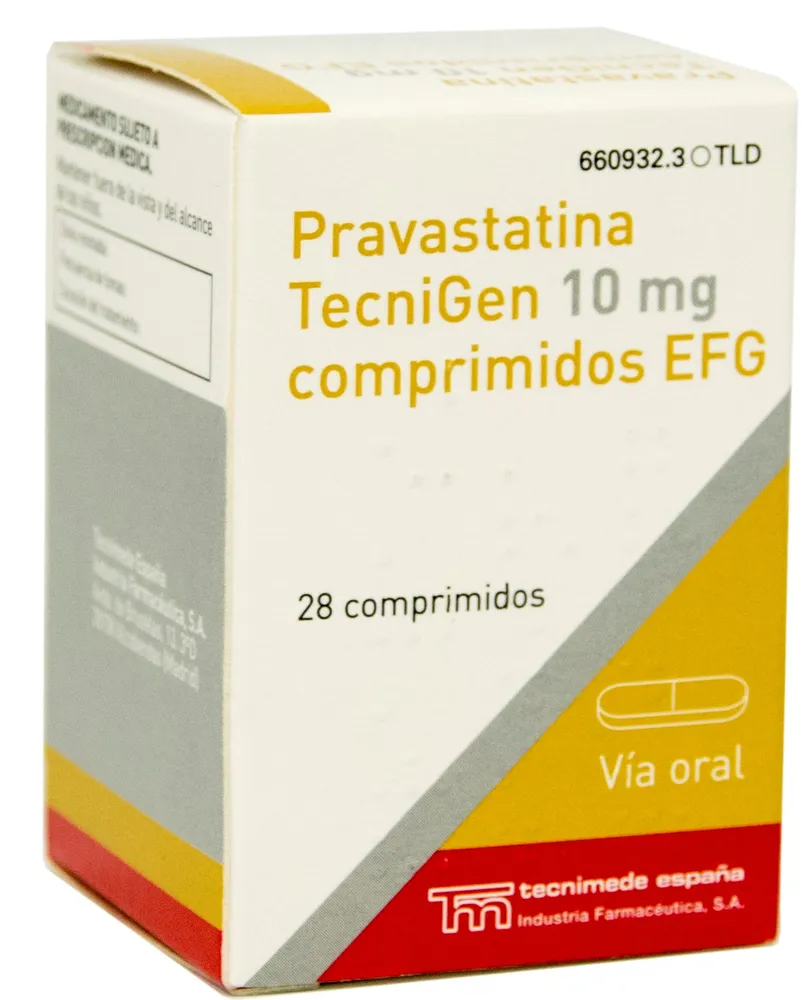
Table of Contents
Patient Information Leaflet
Introduction
Package leaflet: Information for the patient
Pravastatina Alter 10 mg tablets EFG
(Sodium pravastatin)
Read the entire leaflet carefully before you start taking this medicine, as it contains important information for you.
- Keep this leaflet as you may need to read it again.
- If you have any questions, consult your doctor or pharmacist.
- This medicine has been prescribed for you only and must not be given to other people, even if they have the same symptoms as you, because it could harm them.
- If you experience any adverse reactions, consult your doctor or pharmacist, even if they are adverse reactions not listed in this leaflet. See section 4.
Leaflet contents
- What Pravastatina Alter is and what it is used for
- What you need to know before taking Pravastatina Alter
- How to take Pravastatina Alter
- Possible side effects
- How to store Pravastatina Alter
- Contents of the pack and other information
1. What Pravastatina Alter is and what it is used for
Pravastatina Alter belongs to a group of medicines known as statins, which work by reducing lipid, cholesterol, and triglyceride levels in the blood.
Pravastatina Alter, together with an appropriate diet, is indicated for:
-
Treatment of primary hypercholesterolemia and mixed dyslipidemia, conditions characterized by elevated cholesterol and/or triglycerides in the blood, when diet or other measures (such as exercise or weight reduction) have not been effective.
-
Prevention of cardiovascular events (myocardial infarction) and cardiovascular death in patients with high cholesterol levels and a high risk of experiencing a first cardiovascular event (Primary prevention).
-
Prevention of cardiovascular events and cardiovascular death in patients with normal or high cholesterol levels who have already had a cardiovascular event, such as myocardial infarction or angina pectoris (Secondary prevention).
-
Reduction of blood lipid levels in patients who have undergone organ transplantation and are receiving immunosuppressive therapy.
2. What you need to know before taking Pravastatina Alter
Do not take Pravastatina Alter
- If you are allergic to pravastatin sodium or to any of the other ingredients of this medicine (listed in section 6).
- If you have active liver (hepatic) disease or elevated transaminases (enzymes indicating liver disease).
- If you are pregnant or think you might be pregnant.
- If you are breastfeeding.
Warnings and precautions
Talk to your doctor or pharmacist before starting Pravastatina Alter:
-
If you are taking or have taken within the last 7 days an oral or injectable medicine containing fusidic acid (used to treat bacterial infection). The combination of fusidic acid and Pravastatina Alter may cause serious muscle problems (rhabdomyolysis).
-
If you have had liver disease or have a history of alcoholism.
Mild increases in liver transaminase levels may occur, which in most cases return to normal levels without the need to stop treatment.
-
You should also inform your doctor if you have kidney failure, hypothyroidism, a personal or family history of muscle disorders, or if you regularly consume alcohol.
-
During treatment, some patients may experience muscle pain, tenderness, weakness, or cramps. If you experience any of these symptoms, you must inform your doctor immediately.
-
If you have or have had myasthenia (a disease characterized by generalized muscle weakness, which in some cases affects the muscles used for breathing) or ocular myasthenia (a disease causing weakness of the eye muscles), since statins may sometimes worsen the condition or trigger the onset of myasthenia (see section 4).
Your doctor may recommend blood tests to monitor your muscle status before and during treatment, to assess whether to start, continue, or discontinue treatment.
Tell your doctor if you are taking other medicines that may also cause muscle disorders, such as:
- Fibrates (lower cholesterol levels).
- Nicotinic acid (lowers cholesterol levels).
Consult your doctor, even if any of the above conditions occurred in the past.
Talk to your doctor or pharmacist before taking Pravastatina Alter if you:
- Have severe respiratory failure.
While taking this medicine, your doctor will monitor whether you have diabetes or are at risk of developing diabetes. This risk increases if you have high blood sugar and fat levels, are overweight, or have high blood pressure.
Also inform your doctor or pharmacist if you experience persistent muscle weakness. Additional tests and treatments may be needed to diagnose and manage this condition.
Taking Pravastatina Alter with other medicines
Inform your doctor or pharmacist if you are taking, have recently taken, or might need to take any other medicines.
- If you need to take oral fusidic acid to treat a bacterial infection, you must stop taking this medicine. Your doctor will advise you when you can restart Pravastatina Alter. Using Pravastatina Alter with fusidic acid may cause muscle weakness, tenderness, or pain (rhabdomyolysis). For more information on rhabdomyolysis, see section 4.
Certain medicines may interact with Pravastatina Alter; in such cases, it may be necessary to adjust the dose or discontinue one of the medicines.
It is important to inform your doctor if you are taking or have recently taken any of the following medicines:
- Colestyramine or colestipol (may reduce blood levels of pravastatin), and fibrates (may increase the risk of muscle-related adverse reactions); these are other medicines used to lower cholesterol levels.
- Cyclosporine, a medicine used to prevent transplant rejection (when taken with pravastatin, cyclosporine increases blood levels of pravastatin).
- Antibiotics such as erythromycin or clarithromycin (may increase pravastatin blood levels).
- If you are taking a medicine used for the treatment and prevention of blood clots known as “vitamin K antagonists,” inform your doctor before taking pravastatin, as concomitant use of vitamin K antagonists with pravastatin may increase the results of blood tests used to monitor treatment with vitamin K antagonists.
Taking Pravastatina Alter with food and drinks
Pravastatina Alter can be taken with or without food.
If you regularly consume alcohol, consult your doctor before taking this medicine.
Pregnancy, breastfeeding, and fertility
If you are pregnant or breastfeeding, think you may be pregnant, or plan to become pregnant, consult your doctor or pharmacist before using this medicine.
Pregnancy:
Pravastatina Alter is contraindicated during pregnancy. If you become pregnant or suspect pregnancy, you must stop treatment and inform your doctor as soon as possible.
Breastfeeding:
Pravastatina Alter is contraindicated during breastfeeding, as it passes into breast milk.
Driving and using machines
At the recommended doses, Pravastatina Alter does not affect the ability to drive or operate machinery. However, if you experience dizziness, do not drive or operate machinery until you know how the medicine affects you.
Pravastatina Alter contains lactose
This medicine contains lactose. If your doctor has informed you that you have an intolerance to certain sugars, consult with your doctor before taking this medicine.
3. How to take Pravastatin Alter
Follow exactly the instructions given by your doctor for taking this medicine. If in doubt, consult your doctor or pharmacist again.
Follow these instructions unless your doctor has given you different advice.
Remember to take your medicine.
Your doctor will tell you how long to continue treatment with Pravastatin Alter. Do not stop treatment early.
The tablets should be swallowed with water and may be taken with or without food, preferably at night.
The usual dose ranges from 10–40 mg once daily. Your doctor will determine the appropriate dose for you and will make any necessary adjustments based on your response to the medication.
Combination therapy: Patients receiving pravastatin and cyclosporine should start treatment at 20 mg of pravastatin once daily; your doctor will adjust the dose up to 40 mg as needed. For patients taking pravastatin and a bile acid sequestrant resin (e.g. cholestyramine, colestipol), Pravastatin Alter should be taken either one hour before or four hours after the resin.
Children and adolescents (8–18 years) with heterozygous familial hypercholesterolemia: The recommended dose for patients aged 8–13 years is 10–20 mg once daily; the recommended dose for patients aged 14–18 years is 10–40 mg once daily.
Elderly patients: Dose adjustment is not usually necessary in these patients unless other risk factors are present.
Patients with renal or hepatic impairment: In patients with moderate or severe renal dysfunction or significant hepatic impairment, treatment should be initiated at a dose of 10 mg.
If you think that the effect of Pravastatin Alter is too strong or too weak, inform your doctor or pharmacist.
If you take more Pravastatin Alter than you should
If you have taken more Pravastatin Alter than you should, contact your doctor, pharmacist, or call the Toxicology Information Service at 91 562 04 20, indicating the medication and the amount taken.
If you forget to take Pravastatin Alter
If you miss a dose, wait until your next scheduled dose. Do not take a double dose to make up for a missed dose.
If you have any further questions about the use of this medicine, ask your doctor or pharmacist.
4. Possible adverse effects
Like all medicines, this medicine may cause adverse effects, although not everybody gets them.
Immune system disorders:
Very rare (may affect up to 1 in 10,000 people): allergic reactions, angioedema (swelling of the arms, legs, face, lips, tongue and/or throat), lupus-like syndrome (skin inflammation).
Nervous system disorders:
Uncommon (may affect up to 1 in 100 people): dizziness, headache, sleep disorders, insomnia.
Very rare (may affect up to 1 in 10,000 people): peripheral polyneuropathy, particularly when used for a prolonged period, and tingling sensations.
Frequency not known (frequency cannot be estimated from the available data): myasthenia gravis (a disease causing generalized muscle weakness, which in some cases affects the muscles used for breathing).
Eye disorders:
Uncommon (may affect up to 1 in 100 people): vision disturbances (including blurred vision and double vision of objects).
Frequency not known (frequency cannot be estimated from the available data): ocular myasthenia (a disease causing weakness of the eye muscles).
Consult your doctor if you experience weakness in the arms or legs that worsens after periods of activity, double vision or drooping eyelids, difficulty swallowing, or difficulty breathing.
Gastrointestinal disorders:
Uncommon (may affect up to 1 in 100 people): indigestion/heartburn, abdominal pain, nausea, vomiting, constipation, diarrhoea, flatulence.
Very rare (may affect up to 1 in 10,000 people): pancreatitis (inflammation of the pancreas).
Hepatobiliary disorders:
Very rare (may affect up to 1 in 10,000 people): jaundice (yellowing of the skin), hepatitis (inflammation of the liver), fulminant hepatic necrosis (destruction of liver cells).
Skin and subcutaneous tissue disorders:
Uncommon (may affect up to 1 in 100 people): itching, skin rash, blistering accompanied by itching, hair and scalp abnormalities (including hair loss).
Frequency not known (frequency cannot be estimated from the available data): dermatomyositis (a disease characterized by inflammation of the muscles and skin).
Musculoskeletal and connective tissue disorders:
Very rare (may affect up to 1 in 10,000 people): rhabdomyolysis (destruction of muscle fibres), which may be associated with kidney disorders, myopathy (muscle disorders).
Tendon abnormalities, sometimes complicated by tendon rupture.
Frequency not known (frequency cannot be estimated from the available data): muscle rupture.
Renal and urinary disorders:
Uncommon (may affect up to 1 in 100 people): disturbances in urination (such as difficulty urinating, increased frequency of urination, and increased frequency of nighttime urination).
Reproductive system and breast disorders:
Uncommon (may affect up to 1 in 100 people): sexual dysfunction.
General disorders:
Uncommon (may affect up to 1 in 100 people): fatigue.
Sleep disorders, including insomnia and nightmares.
Memory loss.
Sexual dysfunction.
Depression.
Respiratory problems including persistent cough and/or difficulty breathing or fever.
Diabetes mellitus: frequency will depend on the presence or absence of risk factors (fasting blood glucose levels of 5.6 mmol/L, BMI > 30 kg/m², elevated triglycerides, history of hypertension). Your doctor will monitor you while you are taking this medicine.
The following adverse effects of special clinical interest have also been reported during clinical studies:
Musculoskeletal and connective tissue disorders:
musculoskeletal pain, including joint pain, muscle cramps, muscle pain (very common), muscle weakness (common), and elevated levels of creatine kinase (an enzyme indicating muscle damage).
Frequency not known (frequency cannot be estimated from the available data): persistent muscle weakness.
Hepatic disorders:
elevations in serum transaminases (enzymes indicating liver disease).
Reporting of adverse effects
If you experience any type of adverse effect, consult your doctor, pharmacist, or nurse, even if it is a possible adverse effect not listed in this leaflet. You can also report them directly through the Spanish Pharmacovigilance System for Human Medicinal Products: https://www.notificaram.es. By reporting adverse effects, you can help provide more information on the safety of this medicine.
5. Storage of Pravastatin Alter
Keep this medicine out of sight and reach of children.
Do not use this medicine after the expiry date stated on the container. The expiry date refers to the last day of the month indicated.
Do not store above 30 °C.
Medicines must not be disposed of via wastewater drains or household waste. Unused medicines and their containers should be returned to a pharmacy's SIGRE point (or any other medicine waste collection system). If in doubt, ask your pharmacist how to dispose of unused medicines and their packaging. This will help protect the environment.
6. Contents of the pack and other information
Composition of Pravastatin Alter
- The active substance is sodium pravastatin. Each tablet contains 10 mg of pravastatin.
- The other components are: Lactose monohydrate, Povidone 30, Magnesium oxide, Microcrystalline cellulose, Sodium croscarmellose, Magnesium stearate
Appearance of the medicinal product and contents of the pack
Pravastatin Alter are white, round, scored tablets.
The tablet can be divided into equal doses.
They are presented in Al/Al blisters packed in boxes containing 28 tablets.
Marketing Authorization Holder and Manufacturer:
Laboratorios Alter, S.A.
C/ Mateo Inurria 30
28036 Madrid
Spain
Date of the most recent review of this leaflet: April 2024
Detailed and up-to-date information on this medicinal product is available on the website of the Spanish Agency of Medicines and Health Products (AEMPS) http://www.aemps.gob.es/