PravaFenix 40 mg/160 mg hard capsules
Spain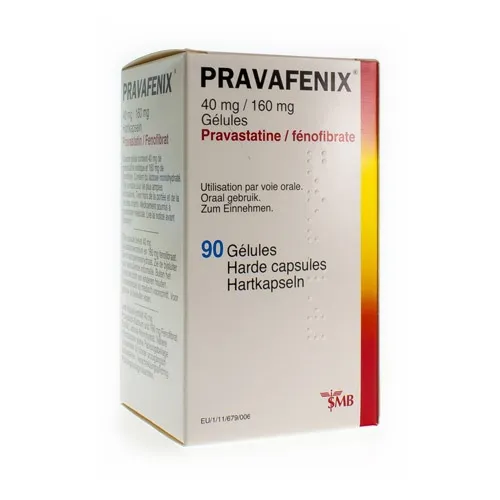
Table of Contents
Package leaflet: Information for the user
Introduction
PACKAGE LEAFLET: INFORMATION FOR THE USER
Pravafenix 40mg/160mg hard capsules
pravastatin sodium/fenofibrate
Read the entire leaflet carefully before you start taking this medicine, because it contains important information for you.
- Keep this leaflet, as you may need to read it again.
- If you have any questions, ask your doctor or pharmacist.
- This medicine has been prescribed for you only, and you should not give it to other people, even if they have the same symptoms as you, because it may harm them.
- If you experience any adverse effects, consult your doctor or pharmacist, even if they are adverse effects not listed in this leaflet. See section 4.
Leaflet contents
- What Pravafenix is and what it is used for
- What you need to know before taking Pravafenix
- How to take Pravafenix
- Possible adverse effects
- How to store Pravafenix
- Contents of the pack and other information
1. What Pravafenix is and what it is used for
Pravafenix contains two active substances: pravastatin and fenofibrate. Both are lipid-modifying agents.
Pravafenix is used in combination with a low-fat diet in adults
- To reduce levels of "bad" cholesterol (LDL cholesterol). It achieves this by lowering blood concentrations of total cholesterol and of fatty substances called triglycerides.
- To increase levels of "good" cholesterol (HDL cholesterol).
What should I know about cholesterol and triglycerides?
Cholesterol is one of several types of fat present in the blood. Total cholesterol is made up mainly of LDL cholesterol and HDL cholesterol.
LDL cholesterol is known as "bad" cholesterol because it can build up in the walls of arteries and form plaques. Over time, plaque buildup can eventually block arteries, slowing or interrupting blood flow to vital organs such as the heart and brain. When blood flow is blocked, a heart attack or stroke may occur.
HDL cholesterol is known as "good" cholesterol because it helps prevent "bad" cholesterol from building up in the arteries and protects against heart disease.
Triglycerides are another type of fat in the blood that may increase the risk of heart problems.
In most people, cholesterol problems are initially unnoticed. Your doctor can determine your cholesterol levels with a simple blood test. Visit your doctor regularly for cholesterol monitoring.
Pravafenix is used in adult patients at high risk of coronary heart disease to reduce blood cholesterol and triglyceride levels when "bad" cholesterol levels are adequately controlled with pravastatin or with another moderate-intensity statin (cholesterol-lowering medicine) as monotherapy.
2. What you need to know before taking Pravafenix
Do not take Pravafenix
-
if you are allergic to fenofibrate, pravastatin, or any of the other ingredients of this medicine (listed in section 6).
-
if you have liver disease.
-
if you are under 18 years of age.
-
if you have kidney disease.
-
if you have experienced a photoallergic reaction (allergic reaction caused by sunlight or exposure to ultraviolet radiation) or phototoxic reactions (skin damage caused by exposure to sunlight or ultraviolet radiation) during treatment with fibrates (lipid-modifying drugs) or ketoprofen (an anti-inflammatory that may be administered orally or applied to the skin for musculoskeletal disorders, and orally for pain caused by gout or menstruation).
-
if you have gallbladder disease.
-
if you have pancreatitis (inflammation of the pancreas causing abdominal pain).
-
if you are pregnant or breastfeeding.
-
if you have a history of muscle problems (such as myopathy or rhabdomyolysis) during treatment with cholesterol-lowering medicines called "statins" (such as simvastatin, atorvastatin, pravastatin, or rosuvastatin) or fibrates (such as fenofibrate and bezafibrate).
Do not take Pravafenix if any of the above apply to you. If you are unsure, consult your doctor or pharmacist before taking Pravafenix.
Warnings and precautions
Talk to your doctor or pharmacist before starting to take Pravafenix.
Before taking Pravafenix, you must inform your doctor if you have or have had any medical conditions.
- Inform your doctor of all your medical conditions, including allergies.
- Inform your doctor if you consume large amounts of alcohol (if you consume more than the recommended daily amount; consult your doctor or pharmacist if you are unsure) or have ever had liver disease. See the section "Use of Pravafenix with food and drink" below.
- Your doctor will perform a blood test before you start treatment with Pravafenix. This test will check whether your liver and kidneys are functioning properly.
- Your doctor may also want to perform blood tests to monitor proper liver function after you have started taking Pravafenix.
- If you have or have had myasthenia (a disease characterized by generalized muscle weakness that, in some cases, affects the muscles used for breathing) or ocular myasthenia (a disease causing weakness of the eye muscles), since statins may sometimes worsen the condition or trigger the onset of myasthenia (see section 4).
Contact your doctor immediately if you experience unexplained muscle pain, tenderness, or weakness: in rare cases, serious muscle problems may occur, sometimes with muscle breakdown leading to kidney damage and, very rarely, death.
Also inform your doctor or pharmacist if you experience persistent muscle weakness. Additional tests and treatments may be needed to diagnose and manage this condition.
The risk of muscle breakdown is higher in some patients. Inform your doctor if any of the following apply to you:
- Liver or kidney problems.
- Thyroid problems.
- Age over 70 years.
- History of muscle problems during treatment with cholesterol-lowering medicines such as statins or fibrates.
- You are taking or have taken within the last 7 days a medicine called "fusidic acid" (a medicine used to treat bacterial infections) orally or by injection. The combination of fusidic acid and Pravafenix may lead to serious muscle problems (rhabdomyolysis).
- Personal or family history of inherited muscle disease.
- Alcohol-related problems (regular consumption of large amounts of alcohol).
Talk to your doctor or pharmacist before taking Pravafenix if you have acute respiratory failure; for example, if you have breathing problems such as persistent non-productive cough, general deterioration in health such as fatigue (tiredness), weight loss, dyspnea, or fever.
If you notice any of these symptoms, stop taking Pravafenix and inform your doctor.
During treatment with this medicine, your doctor will closely monitor you if you have diabetes or are at high risk of developing diabetes. Your risk of developing diabetes is higher if your blood sugar and fat levels are elevated, if you are overweight, or if you have high blood pressure.
Children and adolescents
Pravafenix must not be taken by children and adolescents under 18 years of age.
Other medicines and Pravafenix
Taking Pravafenix with other medicines
Inform your doctor or pharmacist if you are taking, have recently taken, or might need to take any other medicine. It is important that you inform your doctor if you are already being treated with any of the following medicines:
- Bile acid resins such as cholestyramine/colestipol (a medicine used to lower cholesterol), as they may interfere with the effect of Pravafenix.
- Cyclosporine (a medicine commonly used in patients receiving organ transplants).
- Medicines to prevent blood clots, such as warfarin, fluindione, phenprocoumon, or acenocoumarol (anticoagulants).
- An antibiotic such as erythromycin or clarithromycin for the treatment of bacterial infections.
- Fusidic acid: If you need to take oral fusidic acid to treat a bacterial infection, you will need to temporarily stop using this medicine. Your doctor will advise you when it is safe to restart Pravafenix. Taking Pravafenix with fusidic acid may rarely cause muscle weakness, tenderness, or pain (rhabdomyolysis). See section 4 for more information on rhabdomyolysis.
- Glecaprevir/pibrentasvir (used to treat hepatitis C virus infection), as it may increase certain adverse effects, including muscle problems.
- a particular class of medicines used to treat diabetes (such as rosiglitazone, pioglitazone).
Taking Pravafenix with food, drink, and alcohol
- Always take Pravafenix with food, as it is less well absorbed on an empty stomach.
- You should always minimize alcohol consumption. If you are unsure about how much alcohol you can drink while taking this medicine, speak to your doctor.
If you have any doubts, follow your doctor's advice.
Pregnancy and breastfeeding
Do not take Pravafenix if you are pregnant, think you may be pregnant, or are trying to become pregnant. If you plan to become pregnant, consult your doctor immediately. This medicine should be discontinued due to the potential risk to the fetus.
Do not take Pravafenix if you are breastfeeding.
Driving and using machines
Pravafenix generally does not affect the ability to drive or use machines. However, if you experience dizziness, blurred vision, or double vision during treatment, make sure you are fit to drive or operate machinery before attempting to do so.
Pravafenix contains lactose and sodium
This medicine contains lactose. If your doctor has informed you that you have an intolerance to certain sugars, consult him or her before taking this medicine.
This medicine contains 33.3 mg of sodium (the main component of table/cooking salt) per capsule (including excipients and active ingredient). This corresponds to 1.7% of the maximum daily intake of sodium recommended for an adult.
3. How to take Pravafenix
Follow exactly the instructions for use of this medicine given by your doctor. If in doubt, consult your doctor or pharmacist again.
- Before starting to take Pravafenix, you should follow a cholesterol-lowering diet.
- You must continue this diet throughout the entire duration of treatment with Pravafenix.
The recommended dose is one capsule daily, taken with dinner. The capsule should be swallowed with water, and it is important to take it with food, as it is not as effective when taken on an empty stomach.
If your doctor has prescribed Pravafenix together with colestyramine or other bile acid sequestrant resins (medicines to reduce cholesterol), take Pravafenix 1 hour before, or between 4 and 6 hours after taking the resin. This is because colestyramine or other bile acid sequestrant resins often reduce the absorption of medicines when they are not taken sufficiently apart, and may therefore prevent the absorption of Pravafenix. If you need antacids (used to neutralize stomach acids), wait one hour before taking Pravafenix.
If you take more Pravafenix than you should
Consult your doctor or pharmacist.
If you forget to take Pravafenix
Do not take a double dose to make up for missed doses. Simply take your usual dose of Pravafenix at the normal time the next day.
If you stop taking Pravafenix
Do not stop taking Pravafenix without first talking to your doctor.
If you have any further questions about the use of this medicine, ask your doctor or pharmacist.
4. Possible adverse effects
Like all medicines, this medicine can cause adverse effects, although not everyone will experience them.
The following two adverse effects are important and will require immediate action.
Immediately inform your doctor if you experience pain or cramps, tenderness to touch, or muscle weakness without apparent cause; in rare cases (may affect up to 1 in 10,000 people), muscle problems may be severe, including destruction of muscle tissue leading to kidney injury and, very rarely, patient death.
Sudden severe allergic reactions, with swelling of the face, lips, tongue or trachea, may greatly impair breathing. This is a very rare reaction, but it can be serious if it occurs. If this occurs, you must inform your doctor immediately.
Other adverse effects
Frequent adverse effects (may affect up to 1 in 10 people)
- Gastrointestinal effects: gastric or intestinal disorders (abdominal pain, nausea, vomiting, diarrhea and flatulence, constipation, dry mouth, upper abdominal pain with flatulence [dyspepsia], belching [eructation]).
- Effects on the liver: increased serum transaminases.
Uncommon adverse effects (may affect up to 1 in 100 people)
- Abnormal heartbeat (palpitations), formation of blood clots in veins (deep vein thrombosis), and blockage of the pulmonary arteries due to blood clots (pulmonary embolism).
- Rash, skin eruption, itching, hives, or reactions to sunlight or exposure to ultraviolet radiation (photosensitivity reactions), abnormalities of the scalp/hair (such as alopecia).
- Effects on the nervous system: dizziness (sensation of unsteadiness), headache, sleep disturbances (such as difficulty sleeping and nightmares), tingling sensation (paresthesia).
- Muscle and joint pain (myalgia, arthralgia), back pain, changes in results of certain clinical tests of muscle function.
- Visual problems, such as blurred or double vision.
- Kidney problems (increase or decrease in concentrations of certain body enzymes detected in blood tests), bladder problems (painful or frequent urination, need to urinate at night), sexual dysfunction.
- Fatigue, weakness, flu-like illness.
- Hypersensitivity.
- Increased blood cholesterol, increased blood triglycerides, increased LDL, elevated gamma-glutamyl transferase (various liver enzymes), liver pain (upper right abdominal pain, with or without back pain), weight gain.
- Obesity.
- Muscle inflammation (myositis), muscle cramps and weakness.
Rare adverse effects (may affect up to 1 in 1,000 people)
- Decrease in hemoglobin (the pigment that carries oxygen in the blood) and leukocytes (white blood cells).
Very rare adverse effects (may affect up to 1 in 10,000 people)
- Inflammation of the liver (hepatitis), symptoms of which may range from mild yellowing of the skin and whites of the eyes (jaundice) to abdominal pain and pruritus.
- Muscle breakdown (rhabdomyolysis), some cases of tendon problems, sometimes complicated by rupture.
- A disorder characterized by inflammation of muscles and skin (dermatomyositis).
- Skin rash, possibly with joint pain (lupus-like syndrome).
- Tingling or numbness (peripheral polyneuropathy).
Adverse effects with unknown frequency (frequency cannot be estimated from available data)
- Persistent muscle weakness.
- Muscle rupture.
- Skin rash (lichenoid eruption).
- Myasthenia gravis (a condition causing generalized muscle weakness which, in some cases, affects the muscles used for breathing).
- Ocular myasthenia (a condition causing weakness of the eye muscles).
- Consult your doctor if you experience worsening weakness in arms or legs after periods of activity, double vision or drooping eyelids, difficulty swallowing, or difficulty breathing.
Possible adverse effects reported with some statins (medicines of the same type as pravastatin, cholesterol-lowering drugs)
- Memory loss.
- Depression.
- Respiratory problems, including persistent cough, shortness of breath, or fever.
- Diabetes. This is more likely if your blood sugar and fat levels are high, you are overweight, or you have high blood pressure. Your doctor will monitor you while you are being treated with this medicine.
Reporting of adverse effects
If you experience any type of adverse effect, consult your doctor or pharmacist, even if they are possible adverse effects not listed in this leaflet. You may also report them directly via the Spanish Pharmacovigilance System for Human Medicines: www.notificaram.es. By reporting adverse effects, you can help provide more information on the safety of this medicine.
5. Storage of Pravafenix
Keep this medicine out of the sight and reach of children.
Do not use this medicine after the expiry date stated on the carton, blister pack, or bottle after "EXP". The expiry date refers to the last day of the month indicated.
This medicine does not require any special storage conditions.
Do not dispose of medicines via wastewater or household waste. Ask your pharmacist how to dispose of medicines and packaging that you no longer use. This will help protect the environment.
6. Contents of the pack and other information
Composition of Pravafenix
-
The active substances are fenofibrate and pravastatin sodium. Each hard capsule contains 40 mg of pravastatin sodium and 160 mg of fenofibrate.
-
The other components are:
-
capsule contents: lactose monohydrate, microcrystalline cellulose, ascorbyl palmitate, povidone, sodium carboxymethyl starch, magnesium stearate, talc, triacetin, sodium bicarbonate, lauroyl macrogol glycerides, hypromellose, macrogol 20,000.
-
capsule coating: gelatin, indigo carmine (E-132), black iron oxide (E-172), titanium dioxide (E-171), yellow iron oxide (E-172).
Nature and contents of the container
The capsules are hard gelatin capsules, with an olive-green cap and a light green body, containing a whitish-beige waxy mass and a tablet. The capsules are supplied in polyamide-aluminum-PVC/aluminum blisters containing 30, 60 or 90 capsules, and in opaque white plastic bottles containing 14, 30, 60 or 90 capsules.
Only certain pack sizes may be marketed.
Marketing Authorization Holder and Manufacturer
Marketing Authorization Holder Manufacturer
Laboratoires SMB s.a. SMB Technology s.a.
Rue de la Pastorale, 26-28 Rue du Parc Industriel 39
B-1080 Brussels B-6900 Marche en Famenne
Belgium Belgium
More information on this medicinal product is available upon request by contacting the local representative of the Marketing Authorization Holder:
Belgium/Belgium/Belgium Laboratoires SMB S.A. Tel/Tel: + 32.2.411.48.28. | Lithuania Laboratoires SMB S.A. Tel: + 32.2.411.48.28. |
Greece Meditrina LTD Tel: +30 2106726260 | Luxembourg/Luxembourg Laboratoires SMB S.A. Tél/Tel: + 32.2.411.48.28. |
Czech Republic Laboratoires SMB S.A. Tel: + 32.2.411.48.28. | Hungary Laboratoires SMB S.A. Tel.: + 32.2.411.48.28. |
Denmark Laboratoires SMB S.A. Tlf: + 32.2.411.48.28. | Malta Laboratoires SMB S.A. Tel: + 32.2.411.48.28. |
Germany Galephar Pharma GmbH Tel: +49 7164 66 26 | Netherlands Galephar B.V. Tel: +31 71 562 15 02 |
Estonia Laboratoires SMB S.A. Tel: + 32.2.411.48.28. | Norway Laboratoires SMB S.A. Tlf: + 32.2.411.48.28. |
Greece Meditrina LTD Tel: +30 2106726260 | Austria Laboratoires SMB S.A. Tel: + 32.2.411.48.28. |
Spain Lacer S.A. Tel: +34 934 46 53 00 | Poland Laboratoires SMB S.A. Tel.: + 32.2.411.48.28. |
France Laboratoires SMB S.A. Tél: + 32.2.411.48.28. | Portugal Tecnimede Sociedade Técnico-Medicinal S.A. Tel: +351 21 041 41 00 |
Croatia Laboratoires SMB S.A. Tel: + 32.2.411.48.28. | Romania Meditrina Pharmaceuticals S.r.l Tel: +40 21 211 71 83 |
Ireland Laboratoires SMB S.A. Tel: + 32.2.411.48.28. | Slovenia Laboratoires SMB S.A. Tel: + 32.2.411.48.28. |
Iceland Laboratoires SMB S.A. Sími: + 32.2.411.48.28. | Slovakia Laboratoires SMB S.A. Tel: + 32.2.411.48.28. |
Italy Laboratoires SMB S.A. Tel: + 32.2.411.48.28. | Finland Laboratoires SMB S.A. Puh/Tel: + 32.2.411.48.28. |
Cyprus Multi-Pharm Co. Ltd. Tel: +357 22438443 | Sweden Laboratoires SMB S.A. Tlf: + 32.2.411.48.28. |
Latvia Laboratoires SMB S.A. Tel: + 32.2.411.48.28. | United Kingdom (Northern Ireland) Laboratoires SMB S.A. Tel: + 32.2.411.48.28. |
Date of the latest review of this product information: 21-10-2024
Detailed information on this medicinal product is available on the website of the European Medicines Agency: http://www.ema.europa.eu/.