Potassium chloride Serraclinics 2 mEq/ml concentrate for infusion solution
Spain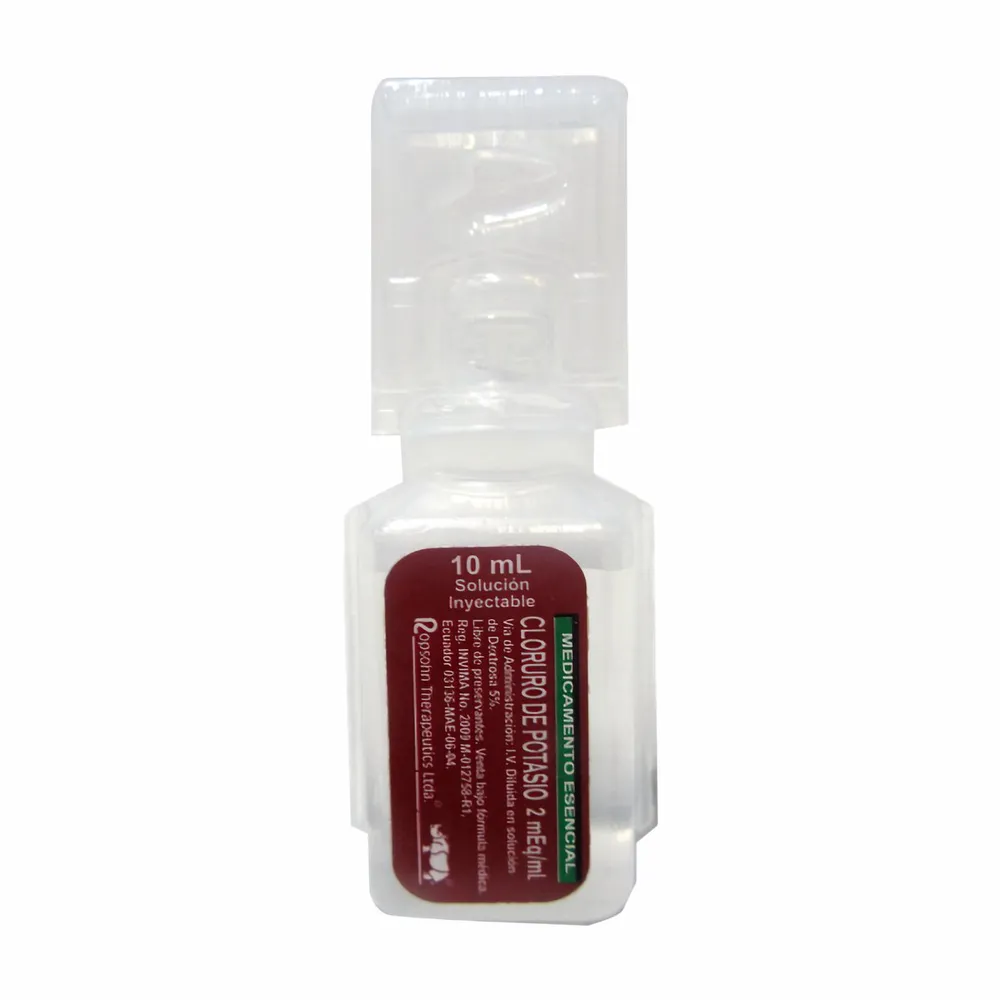
Table of Contents
- Patient Information Leaflet
- Introduction
- 1. What potassium chloride Serraclinics is and what it is used for
- 2. What you need to know before starting to use Potassium chloride Serraclinics
- **The doctor or nurse who will administer this medication to you will ask you some questions. They need the following information before giving you this medication for the first time.**
- 3. How to use Potassium chloride Serraclinics
- **Potassium chloride must be diluted before use to at least 50 times its volume, using an appropriate diluent.**
- 4. Possible adverse effects
- 5. Conservation of Potassium chloride Serraclinics
- **Keep out of the sight and reach of children.**
- 6. Contents of the container and additional information
- Composition of Potassium Chloride Serraclinics
Patient Information Leaflet
Introduction
Patient Information Leaflet
Potassium chloride Serraclinics 2 mEq/ml, Concentrate for solution for infusion
Potassium chloride
Read all of this leaflet carefully before you start using this medicine, as it contains important information for you.
- Keep this leaflet, as you may need to read it again.
·
- If you have any questions, ask your doctor, pharmacist or nurse.
- This medicine has been prescribed for you only and must not be given to other people, even if they have the same symptoms as you, because it may harm them.
- If you experience any side effects, talk to your doctor, pharmacist or nurse, even if they are side effects not listed in this leaflet. See section 4.
The name of this medicine is Potassium chloride Serraclinics 2 mEq/ml, Concentrate for solution for infusion
From now on, Potassium chloride Serraclinics 2 mEq/ml, Concentrate for solution for infusion will be referred to as Potassium chloride Serraclinics.
Contents of this leaflet:
- What Potassium chloride Serraclinics is and what it is used for
- What you need to know before using Potassium chloride Serraclinics
- How to use Potassium chloride Serraclinics
- Possible side effects
- How to store Potassium chloride Serraclinics
- Contents of the pack and other information
1. What potassium chloride Serraclinics is and what it is used for
Potassium chloride Serraclinics is a medicine belonging to a class called electrolytes. Electrolytes help maintain the proper balance of water levels in the various parts of your body.
Potassium chloride Serraclinics works by replacing a substance called potassium that your body has lost.
Your body needs the correct amount of potassium. Potassium contributes to the proper functioning of your muscles, heart, and other organs. Potassium also helps maintain the balance of water levels affecting many electrical and chemical processes in your body. Without the appropriate amount of potassium, your heart may begin to beat abnormally, which could be life-threatening.
If you cannot take potassium orally, your doctor or nurse will administer this medicine to you as an infusion (drip).
2. What you need to know before starting to use Potassium chloride Serraclinics
The doctor or nurse who will administer this medication to you will ask you some questions. They need the following information before giving you this medication for the first time.
Do not use Potassium chloride Serraclinics
- If you have hyperkalemia (high levels of potassium in your blood).
- If you are allergic to potassium chloride or to any of the other ingredients of this medicine (listed in section 6).
Do not use Potassium chloride Serraclinics if the above applies to you.
Warnings and precautions
Talk to your doctor or nurse before starting to use Potassium chloride Serraclinics:
- You have kidney or adrenal gland problems.
- You have heart problems.
- You have been told you are severely dehydrated (you do not have enough fluid in your body).
- You have heat cramps.
- You have a large area of damaged skin (e.g. severe burns).
- You are elderly (over 65 years old).
- You have problems urinating.
- You are receiving an intravenous infusion containing the sugar called glucose.
Other medicines and Potassium chloride Serraclinics
Tell your doctor or pharmacist if you are taking, have recently taken, or might need to take any other medicines. Also remember to mention any medicines you are taking that do not require a prescription.
It is very important that you tell your doctor if you are taking any of the following medicines:
- ACE inhibitors (angiotensin-converting enzyme inhibitors) such as lisinopril, captopril, enalapril (may cause your blood potassium level to become too high).
- Angiotensin II receptor antagonists such as losartan, valsartan, candesartan (may cause your blood potassium level to become too high).
- Blood transfusion (may cause your blood potassium level to become too high).
- Cyclosporine (may cause your blood potassium level to become too high).
- Corticosteroids such as cortisone, hydrocortisone, prednisone, prednisolone, betamethasone (may prevent potassium chloride from working properly).
- Digoxin (may increase adverse effects).
- Potassium-sparing diuretics such as spironolactone (may cause your blood potassium level to become too high).
- Quinidine (may cause your heart to start beating abnormally).
- Tacrolimus (may cause your blood potassium level to become too high).
Potassium chloride Serraclinics contains potassium
Inform your doctor if you are using potassium-containing salt substitutes in your diet. You could receive too much potassium if you use this medication at the same time.
Pregnancy and breastfeeding
If you are pregnant or breastfeeding, think you may be pregnant, or plan to become pregnant, consult your doctor or pharmacist before using this medicine.
Driving and using machines
The effect of Potassium chloride on the ability to drive and use machines is none or negligible.
·
.
3. How to use Potassium chloride Serraclinics
Potassium chloride must be diluted before use to at least 50 times its volume, using an appropriate diluent.
This medicine is generally administered by a doctor or nurse.
Your doctor or nurse will give you the correct dose as a slow intravenous infusion (your doctor or nurse may refer to this as an IV or intravenous infusion).
Your doctor will decide the amount (dose) of medicine you should receive and how long you will need it.
Your doctor will also decide the concentration of the medicine to be given. The medicine is highly concentrated and must always be diluted by adding more liquid before administration.
Your doctor will monitor your heart while you are receiving this medicine.
Your doctor will also request certain blood tests and monitor the amount of urine you produce. This is to check the level of potassium in your blood during treatment with this medicine.
If you have very low levels of potassium in your blood, or if you have diabetic ketoacidosis (a complication of diabetes), you may be given this medicine more rapidly than usual.
Adults and elderly
The usual dose is up to 80 mmol (millimoles) per day. The medicine will be prepared at a concentration of 20–40 mmol/litre.
Use in children and adolescents
The usual dose is up to 3 mmol (millimoles) per kilogram of body weight per day. The medicine will be prepared at a concentration of 20 mmol/litre. For children weighing 25 kg or more, refer to the adult dose.
If you use more Potassium chloride Serraclinics than you should
This medicine is usually administered by a doctor or nurse. If you think you may have received too much medicine, please inform your doctor or nurse immediately.
Excess potassium in your blood can cause serious adverse effects that may be life-threatening.
Please read carefully the important warning at the beginning of the next section, section 4, regarding the signs that may indicate you have too much potassium in your blood.
If you forget to use Potassium chloride Serraclinics
This medicine is usually administered by a doctor or nurse. If you think a dose has been missed, please inform your doctor or nurse.
If you have any further questions about the use of this medicine, ask your doctor, pharmacist, or nurse.
4. Possible adverse effects
Like all medicines, this medicine may cause adverse effects, although not everyone will experience them. The expected benefit of the medicine will generally be greater than the risk of you experiencing any harmful adverse effect.
Important: Adverse effects or symptoms you should be aware of, and what to do if you are affected. The first signs of excess potassium in your blood are: abnormal heartbeat, chest pain, possible heart attack, muscle weakness, paralysis, or difficulty breathing. If you experience any of these symptoms, seek urgent medical attention.
The following side effects may occur in some people with frequency not known (frequency cannot be estimated from the available data):
Immune system problems:
- Fever
Heart and circulation problems:
- Low blood pressure (you may feel dizzy)
Problems at the infusion site:
- Pain, redness, irritation, and swelling at the injection site
Nervous system problems:
- Tingling or prickling sensations in the hands or feet
- Paralysis with flaccid muscles
- Loss of reflexes
- Weakness, lack of energy
- Mental confusion
- Weakness and heaviness in the legs
Reporting of adverse effects
If you experience any type of adverse effect, consult your doctor, pharmacist, or nurse, even if it is a possible adverse effect not listed in this leaflet. You may also report them directly via the Spanish Pharmacovigilance System for Human Medicinal Products: www.notificaRAM.es. By reporting adverse effects, you can help provide more information on the safety of this medicine.
5. Conservation of Potassium chloride Serraclinics
Keep out of the sight and reach of children.
Do not use this medicine after the expiry date stated on the pack after “EXP”. The expiry date is the last day of the month indicated.
No special storage conditions are required.
Use this medicine only if it is a clear, colourless solution. Open and use immediately. The product must be diluted and used immediately after opening. Any unused portion should be discarded.
Medicines should not be disposed of via wastewater or household waste. Ask your pharmacist how to dispose of medicines and packaging you no longer need. This will help protect the environment.
6. Contents of the container and additional information
Composition of Potassium Chloride Serraclinics
- The active substance is potassium chloride.
- The other component is: water for preparations for injection.
The medicine contains 15% w/v (150 mg per ml) of potassium chloride. Each ml (millilitre) of this medicine contains 2 mmol of potassium and 2 mmol of chloride.
Appearance of the product and contents of the container
Potassium Chloride Serraclinics is a concentrate for solution for infusion. This means it is a concentrated (strong) solution in a plastic container. It is a clear, colourless liquid. Potassium chloride must be diluted before use with at least 50 times its volume of a suitable diluent. Additional fluid must be added to the solution (diluted) to prepare a weaker solution that can be administered by drip (infusion).
Each plastic ampoule contains 5 ml (millilitres), 10 ml or 20 ml of the medicine. A box contains 20 ampoules. Only certain pack sizes may be marketed.
Marketing Authorisation Holder and Manufacturer
Marketing Authorisation Holder
Laboratorios SERRA PAMIES S.A.
Ctra. Castellvell, 24
43206 REUS (Tarragona)
Manufacturer
DEMO S.A. PHARMACEUTICAL INDUSTRY
21st Km National Road Athens-Lamia
14568 Athens
Greece
This medicine is authorised in the European Economic Area member states under the following names:
AT: Kaliumchlorid Noridem 15% Konzentrat zur Herstellung einer Infusionslösung
BE: Chlorure de potassium Noridem 15% w/v Solution à diluer pour perfusion
DE: Kaliumchlorid Noridem 150 mg/ml Konzentrat zur Herstellung einer Infusionslösung
DK: Kaliumchlorid “Noridem”, Koncentrat til infusionsvæske, opløsning 2 mmol/ml
EL: POTASSIUM CHLORIDE 15%/NORIDEM, Πυκνό διάλυμα για παρασκευή διαλύματος προς έγχυση
ES: Cloruro de potasio Serraclinics 2 mEq/ml, Concentrado para solución para perfusión
IE: Potassium Chloride 15% w/v Concentrate for solution for infusion
NL: Kaliumchloride Noridem 15% w/v Concentraat voor oplossing voor infusie
NO: Kaliumklorid Noridem 2 mmol/ml Konsentrat til infusjonsvæske, oppløsning
PT: Cloreto de potássio Noridem 150 mg/ml Concentrado para solução para perfusão
SE: Kaliumklorid Noridem 2 mmol/ml Koncentrat till infusionsvätska, lösning
Date of latest review of this leaflet: 12/2024
Detailed and up-to-date information on this medicine is available on the website of the Spanish Agency of Medicines and Health Products (AEMPS) http://www.aemps.es/