Pombiliti 105 mg powder for concentrate for solution for infusion
Spain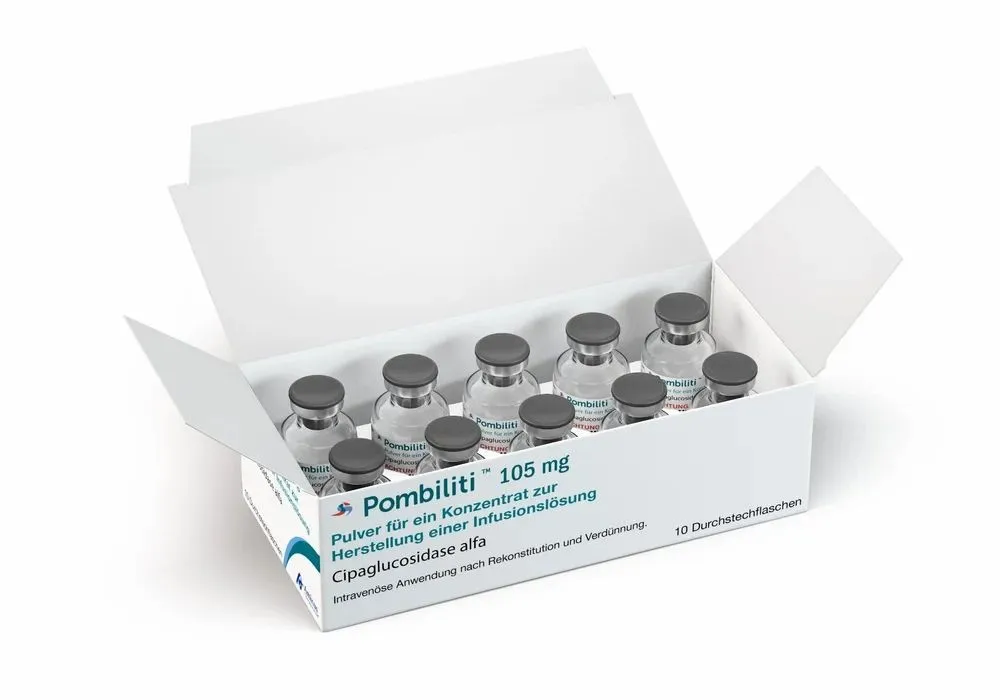
Table of Contents
Package leaflet: Information for the user
Introduction
Package leaflet: information for the patient
Pombiliti 105 mg powder for concentrate for solution for infusion
cipaglucosidase alfa
This medicinal product is subject to additional monitoring, which will enable rapid identification of new safety information. You can help by reporting any suspected adverse reactions. Information on how to report adverse reactions is provided at the end of section 4.
Read all of this leaflet carefully before you start receiving this medicine, as it contains important information for you.
- Keep this leaflet, as you may need to read it again.
- If you have any questions, ask your doctor, pharmacist or nurse.
- If you experience any adverse reactions, consult your doctor, pharmacist or nurse, even if they are not listed in this leaflet. See section 4.
Contents of this leaflet
- What Pombiliti is and what it is used for
- What you need to know before receiving Pombiliti
- How Pombiliti is administered
- Possible adverse reactions
- How to store Pombiliti
- Contents of the pack and other information
1. What Pombiliti is and what it is used for
Pombiliti is a type of "enzyme replacement therapy" (ERT) indicated for adults with late-onset Pompe disease. It contains the active substance called "cipaglucosidase alfa".
What it is used for
Pombiliti is always used in combination with another medicine called miglustat 65 mg hard capsules. It is very important that you also read the package leaflet for miglustat 65 mg hard capsules.
If you have any questions about these medicines, consult your doctor or pharmacist.
How Pombiliti works
People with Pompe disease have low levels of an enzyme called acid α-glucosidase (GAA). This enzyme helps regulate glycogen levels (a type of carbohydrate) in the body.
In Pompe disease, large amounts of glycogen accumulate in muscles throughout the body. This impairs the proper function of muscles, such as those involved in walking, those involved in breathing in the lungs, and the heart muscle.
Pombiliti enters the muscle cells affected by Pompe disease. Once inside the cells, the medicine acts like GAA, promoting the breakdown of glycogen and regulating its levels.
2. What you need to know before you start receiving Pombiliti
Do not receive Pombiliti
-
If you have ever had potentially life-threatening hypersensitivity reactions to any of the following:
-
cipaglucosidase alfa
-
miglustat
-
any of the other components of this medicine (listed in section 6).
-
If a previous infusion had to be discontinued and could not be resumed due to potentially life-threatening hypersensitivity reactions.
Warnings and precautions
Talk to your doctor, pharmacist, or nurse before starting Pombiliti.
Contact your doctor or nurse immediately if any of the following situations apply to you, or you think they might, or if you have ever experienced any of these reactions with another enzyme replacement therapy (ERT):
- allergic reactions, including anaphylaxis (a severe allergic reaction) – see section 4, “Possible side effects”, below, for symptoms of potentially life-threatening reactions;
- infusion-associated reaction while receiving the medicine or in the hours following, see section 4, “Possible side effects”, below, for symptoms of potentially life-threatening reactions.
Inform your doctor if you have a history of heart or lung disease. These conditions may worsen during or immediately after Pombiliti infusion. Contact your doctor or nurse immediately if you experience difficulty breathing, coughing, rapid or irregular heartbeat, or any other symptoms related to these conditions.
Also inform your doctor if you develop swelling in the legs or generalized body swelling, severe skin rash, or foamy urine when passing fluids. Your doctor will decide whether Pombiliti infusion should be interrupted and will provide appropriate medical treatment. Your doctor will also determine whether you can continue receiving Pombiliti.
Medications prior to treatment
Your doctor may administer other medications before treatment with Pombiliti, for example:
- antihistamines and corticosteroids to prevent or reduce infusion-associated reactions;
- antipyretics to reduce fever.
Children and adolescents
This medicine must not be given to patients under 18 years of age, as the effects of Pombiliti in combination with miglustat are unknown in this age group.
Other medicines and Pombiliti
Tell your doctor or nurse if you are taking, have recently taken, or might need to take any other medicines, including medicines obtained without a prescription and herbal medicines.
Pregnancy and breastfeeding
If you are pregnant or breastfeeding, think you may be pregnant, or plan to become pregnant, do not take this medicine without first consulting your doctor or pharmacist.
There are no data on the use of Pombiliti in combination with miglustat during pregnancy.
- If you are pregnant, you must not receive Pombiliti and/or take miglustat 65 mg hard capsules. Inform your doctor immediately if you become pregnant, think you may be pregnant, or plan to become pregnant. There may be risks to the unborn baby.
- Pombiliti in combination with miglustat must not be given to women who are breastfeeding. A decision must be made whether to discontinue breastfeeding or discontinue treatment.
Contraception and fertility
Women of childbearing potential must use effective contraceptive methods during treatment and for 4 weeks after stopping both medicines.
Driving and using machines
You may experience dizziness, drowsiness, or low blood pressure (hypotension) after receiving Pombiliti or the pre-treatment medications. If so, do not drive or operate tools or machinery.
Pombiliti contains sodium
This medicine contains 10.5 mg of sodium (the main component of table/cooking salt) per vial. This corresponds to 0.52% of the maximum daily recommended sodium intake for an adult.
3. How Pombiliti is administered
Pombiliti is administered by a doctor or nurse. It is given as an intravenous infusion, meaning as a drip into a vein.
Talk to your doctor if you wish to be treated at home. After an assessment, your doctor will decide whether it is safe for you to receive Pombiliti infusions at home. If you experience any side effects during a Pombiliti infusion, the healthcare professional administering it may stop the infusion and start appropriate medical treatment.
Pombiliti must be used in combination with miglustat. Only use miglustat 65 mg capsules with cipaglucosidase alfa. DO NOT use miglustat 100 mg capsules (a different medicine). For the recommended dose, follow your doctor's instructions and read the miglustat 65 mg capsule package leaflet.
How much Pombiliti is administered
The amount of medication you will receive is based on your body weight. The recommended dose is 20 mg per kilogram of body weight.
When Pombiliti is administered and for how long
-
You will receive Pombiliti treatment once every two weeks. Miglustat 65 mg capsules are taken on the same day as the Pombiliti infusion. Refer to the package leaflet for miglustat 65 mg hard capsules for information on how to take miglustat.
-
The cipaglucosidase alfa infusion should begin 1 hour after taking the miglustat 65 mg hard capsules.
-
If there is a delay, the infusion must start no later than 3 hours after taking miglustat.
-
The cipaglucosidase alfa infusion lasts approximately 4 hours.
Figure 1. Timeline of doses
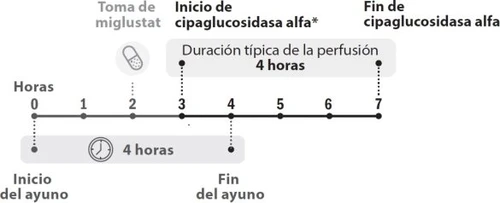
- The cipaglucosidase alfa infusion should start 1 hour after taking miglustat capsules. If the infusion is delayed, it must begin no later than 3 hours after taking miglustat.
Switching from another enzyme replacement therapy (ERT)
If you are currently receiving another ERT:
- Your doctor will advise you when to stop the other ERT before starting Pombiliti.
- Inform your doctor when you received your last dose.
If you receive more Pombiliti than you should
If you have difficulty breathing, feel swelling or inflammation, or notice a rapid heartbeat, you may have received too much Pombiliti; inform your doctor immediately. Infusing Pombiliti too quickly may cause symptoms due to fluid overload, such as difficulty breathing, rapid heart rate, or generalized swelling throughout the body.
If you miss your dose of Pombiliti
If you have missed an infusion, contact your doctor or nurse as soon as possible to schedule an appointment. You should receive Pombiliti in combination with miglustat 24 hours after your last dose of miglustat.
If you stop treatment with Pombiliti
Talk to your doctor if you wish to stop treatment with Pombiliti. Your disease symptoms may worsen if you discontinue treatment.
4. Possible adverse effects
Like all medicines, this medicine can cause adverse effects, although not everyone will experience them.
Pombiliti is used together with miglustat, and either of these medicines may cause adverse effects. Adverse effects have mainly been observed in patients during Pombiliti infusion (infusion-related reactions) or shortly afterwards. Inform your doctor immediately if you experience an infusion-related reaction or an allergic reaction. Some of these reactions may be serious and potentially life-threatening. Your doctor may administer medications to you before the infusion to help prevent these reactions.
Infusion-related reactions
Most infusion-related reactions are mild or moderate. Symptoms of an infusion-related reaction include, among others, difficulty breathing, swelling, fever, chills, dizziness, skin redness and itching, and rash.
Allergic reactions
Allergic reactions may cause symptoms such as rash anywhere on the body, swelling of the eyes, prolonged difficulty breathing, cough, swelling of the lips, tongue, or throat, skin itching, and hives.
Very common (may affect more than 1 in 10 people)
- Headache
Common (may affect up to 1 in 10 people)
- Cough
- Sudden redness of the face, neck, or upper chest
- Chest pain
- Rash, itching
- Increased blood pressure
- Sweating
- Abdominal swelling
- Flatulence or gas
- Diarrhea, loose stools
- Vomiting
- Nausea
- Fever or chills
- Hives
- Swelling or pain at the injection site
- Muscle cramps, pain, or weakness
- Tremors in one or more parts of the body
- Increased sweating
- Pain
- Altered sense of taste
- Feeling constantly tired or sleepy
- Difficulty breathing
Uncommon (may affect up to 1 in 100 people)
- Difficulty breathing causing cough, wheezing, and shortness of breath (asthma)
- Allergic reaction
- Swelling of the hands, feet, ankles, legs
- Facial swelling
- Indigestion
- Stomach pain
- Feeling constantly tired
- Pain or irritation in the throat
- Painful and abnormal contractions of the throat
- Mouth irritation
- Pain in the mouth or discomfort at the back of the mouth
- Pain in the cheeks, gums, lips, or chin
- Loss of strength and energy, feeling of weakness
- Malaise, general feeling of lethargy
- Burning sensation
- Scratches or skin lesions
- Changes in body temperature
- Decrease in a type of white blood cell (detected in blood tests)
- Somnolence
- Dizziness
- Joint pain
- Pain in the area between the hip and ribs
- Muscle fatigue
- Increased muscle stiffness
- Inability to maintain balance
- Low blood pressure
- Feeling faint
- Pain on one or both sides of the head, stabbing pain, aura, eye pain, light sensitivity (migraine)
- Skin spots
Reporting of adverse effects
If you experience any type of adverse effect, consult your doctor, pharmacist, or nurse, even if they are possible adverse effects not listed in this leaflet. You may also report them directly through the national reporting system listed in Appendix V. By reporting adverse effects, you can help provide more information on the safety of this medicine.
5. Storage of Pombiliti
Your doctor, pharmacist, or nurse is responsible for storing this medicine and for properly disposing of opened vials. This information is intended for healthcare professionals only.
Keep this medicine out of the sight and reach of children.
Do not use this medicine after the expiry date stated on the vial and carton following “EXP”. The expiry date refers to the last day of the month indicated.
Unopened vials: Store in a refrigerator (between 2 °C and 8 °C). Keep the vial in the outer packaging to protect it from light.
After dilution, immediate use is recommended. However, stability of the intravenous infusion bag containing Pombiliti has been demonstrated for 6 hours at a temperature between 20 °C and 25 °C and for 24 hours at a temperature between 2 °C and 8 °C.
Medicines should not be disposed of via wastewater or household waste. Ask your pharmacist how to properly dispose of medicines and packaging you no longer need. This will help protect the environment.
6. Contents of the container and other information
Composition of Pombiliti
The active substance is cipaglucosidase alfa. One vial contains 105 mg of cipaglucosidase alfa. After reconstitution, the solution contained in the vial contains 15 mg of cipaglucosidase alfa per milliliter. A final concentration of diluted cipaglucosidase alfa in the intravenous infusion bag between 0.5 mg/ml and 4 mg/ml is recommended.
The other components are:
- Disodium citrate dihydrate (E331)
- Citric acid monohydrate (E330)
- Mannitol (E421)
- Polysorbate 80 (E433)
Presentation of the product and contents of the container
Pombiliti is a white to slightly yellow powder. After reconstitution, it is a solution ranging from clear to opalescent, colorless to slightly yellow, free from foreign particles and practically free from white to translucent particles. The reconstituted solution must subsequently be diluted in an intravenous infusion bag.
Pombiliti is a powder for concentrate for solution for infusion in a vial.
Pack sizes of 1, 10 or 25 vials.
Only certain pack sizes may be marketed.
Marketing Authorization Holder
Amicus Therapeutics Europe Limited
Block 1, Blanchardstown Corporate Park
Ballycoolin Road
Blanchardstown, Dublin
D15 AKK1
Ireland
Tel.: +353 (0) 1 588 0836
Fax: +353 (0) 1 588 6851
Email: [email protected]
Manufacturer
Manufacturing Packaging Farmaca (MPF) B.V.
Neptunus 12, Heerenveen, 8448CN, The Netherlands
Further information on this medicinal product is available upon request by contacting the local representative of the Marketing Authorization Holder:
Belgium/Belgium/Belgium Amicus Therapeutics Europe Limited Tel/Tel: (+32) 0800 89172 e-mail: [email protected] | Lithuania Amicus Therapeutics Europe Limited Tel: (+370) 8800 33167 El. paštas: [email protected] |
| Luxembourg/Luxembourg Amicus Therapeutics Europe Limited Tel/Tel: (+352) 800 27003 e-mail: [email protected] |
Czech Republic Amicus Therapeutics Europe Limited Tel.: (+420) 800 142 207 e-mail: [email protected] | Hungary Amicus Therapeutics Europe Limited Tel.: (+36) 06 800 21202 e-mail: [email protected] |
Denmark Amicus Therapeutics Europe Limited Tlf.: (+45) 80 253 262 e-mail: [email protected] | Malta Amicus Therapeutics Europe Limited Tel: (+356) 800 62674 e-mail: [email protected] |
Germany Amicus Therapeutics GmbH Tel: (+49) 0800 000 2038 E-Mail: [email protected] | Netherlands Amicus Therapeutics BV Tel: (+31) 20 235 8510/(+31) 0800 022 8399 e-mail: [email protected] |
Estonia Amicus Therapeutics Europe Limited Tel: (+372) 800 0111 911 e-post: [email protected] | Norway Amicus Therapeutics Europe Limited Tlf: (+47) 800 13837 e-post: [email protected] |
Greece Amicus Therapeutics Europe Limited Tel: (+30) 00800 126 169 e-mail: [email protected] | Austria Amicus Therapeutics Europe Limited Tel: (+43) 0800 909 639 e-mail: [email protected] |
Spain Amicus Therapeutics S.L.U. Tel: (+34) 900 941 616 e-mail: [email protected] | Poland Amicus Therapeutics Europe Limited Tel.: (+48) 0080 012 15475 e-mail: [email protected] |
France Amicus Therapeutics SAS Tél: (+33) 0 800 906 788 e-mail: [email protected] | Portugal Amicus Therapeutics Europe Limited Tel: (+351) 800 812 531 e-mail: [email protected] |
Croatia Amicus Therapeutics Europe Limited Tel: (+358) 0800 222 452 e-pošta: [email protected] | Ireland Amicus Therapeutics Europe Limited Tel: (+353) 1800 936 230 e-mail: [email protected] |
Romania Amicus Therapeutics Europe Limited Tel.: (+40) 0808 034 288 e-mail: [email protected] | Slovenia Amicus Therapeutics Europe Limited Tel.: (+386) 0800 81794 e-pošta: [email protected] |
Iceland Amicus Therapeutics Europe Limited Tel: (+354) 800 7634 Netfang: [email protected] | Slovakia Amicus Therapeutics Europe Limited Tel: (+421) 0800 002 437 e-mail: [email protected] |
Italy Amicus Therapeutics S.r.l. Tel: (+39) 800 795 572 e-mail: [email protected] | Finland Amicus Therapeutics Europe Limited Puh/Tel: (+358) 0800 917 780 sähköposti/e-mail: [email protected] |
Cyprus Amicus Therapeutics Europe Limited Tel: (+357) 800 97595 e-mail: [email protected] | Sweden Amicus Therapeutics Europe Limited Tfn: (+46) 020 795 493 e-post: [email protected] |
Latvia Amicus Therapeutics Europe Limited Tel: (+371) 800 05391 e-pasts: [email protected] | United Kingdom (Northern Ireland) Amicus Therapeutics, UK Limited Tel: (+44) 08 0823 46864 e-mail: [email protected] |
Date of the most recent review of this leaflet
Other sources of information
Detailed information on this medicinal product is available on the website of the European Medicines Agency: http://www.ema.europa.eu. There are also links to other websites on rare diseases and orphan medicinal products.
This information is intended for healthcare professionals only:
Instructions for use: reconstitution, dilution, and administration
Pombiliti must be reconstituted with water for injections and then diluted in a 9 mg/ml (0.9%) sodium chloride solution for injections and administered via intravenous infusion. Reconstitution and dilution must be performed in accordance with good clinical practice standards, particularly with regard to aseptic technique.
Since this medicinal product is a protein, particles may form in the reconstituted solution and in the final diluted infusion bag. Therefore, a low-protein-binding in-line filter of 0.2 micrometres must be used during administration. The use of a 0.2-micrometre in-line filter has been shown to remove visible particles without causing apparent loss of protein or activity.
Determine the number of vials to be reconstituted based on the patient's individual dosing regimen (mg/kg) and remove the required number of vials from the refrigerator to allow them to reach room temperature (approximately 30 minutes). Each vial of Pombiliti is for single use only.
Use an aseptic technique.
Reconstitution
Reconstitute each vial of Pombiliti containing 105 mg with 7.2 ml of water for injections, using a syringe with a needle gauge no larger than 18 G. Add the water for injections dropwise down the side of the vial, not directly onto the lyophilized powder. Gently tilt and rotate each vial. Do not invert, shake, or agitate the vial. The extractable volume is a solution ranging from clear to opalescent, colourless to slightly yellow, free from foreign particles and practically free from white to translucent particles. Immediately inspect reconstituted vials to verify the absence of particles or discoloration. If, upon immediate inspection, foreign particles other than those described above are observed or if the reconstituted solution shows discoloration, do not use it. The pH of the reconstituted solution is approximately 6.0.
After reconstitution, dilution should be performed immediately (see below).
Dilution
After the reconstitution described above, the reconstituted solution in the vial contains 15 mg of cipaglucosidase alfa per millilitre. The reconstituted volume allows for the exact withdrawal of 7.0 ml (equivalent to 105 mg) from each vial. The solution should then be diluted as follows: using a syringe with a needle gauge no larger than 18 G, slowly withdraw the reconstituted solution from each vial, including the volume below 7.0 ml in any partial vial, to obtain the patient's required dose. The recommended final concentration of cipaglucosidase alfa in infusion bags is between 0.5 mg/ml and 4 mg/ml. Remove air from the infusion bag.
Additionally, withdraw an equivalent volume of 9 mg/ml (0.9%) sodium chloride solution for injections, which will be replaced by the volume of reconstituted Pombiliti. Slowly inject the reconstituted Pombiliti solution directly into the 9 mg/ml (0.9%) sodium chloride solution for injections. Gently invert or massage the infusion bag to mix the diluted solution. Do not shake or vigorously agitate the infusion bag.
The final infusion solution should be administered as soon as possible after preparation.
Disposal of unused medicinal product and of all materials that have come into contact with it must be carried out in accordance with local regulations.
Administration
Pombiliti infusion should begin 1 hour after the patient has taken miglustat capsules. If the infusion is delayed, administration must not exceed 3 hours after miglustat intake. The recommended dosing regimen for Pombiliti is 20 mg/kg body weight administered every two weeks via intravenous infusion.
Infusions should be administered gradually. It is recommended that the initial infusion rate be 1 mg/kg/h, increasing gradually by 2 mg/kg/h every 30 minutes, provided no infusion-related reactions (IRRs) occur, until a maximum rate of 7 mg/kg/h is reached.