Polaramine 0.4 mg/ml syrup
Spain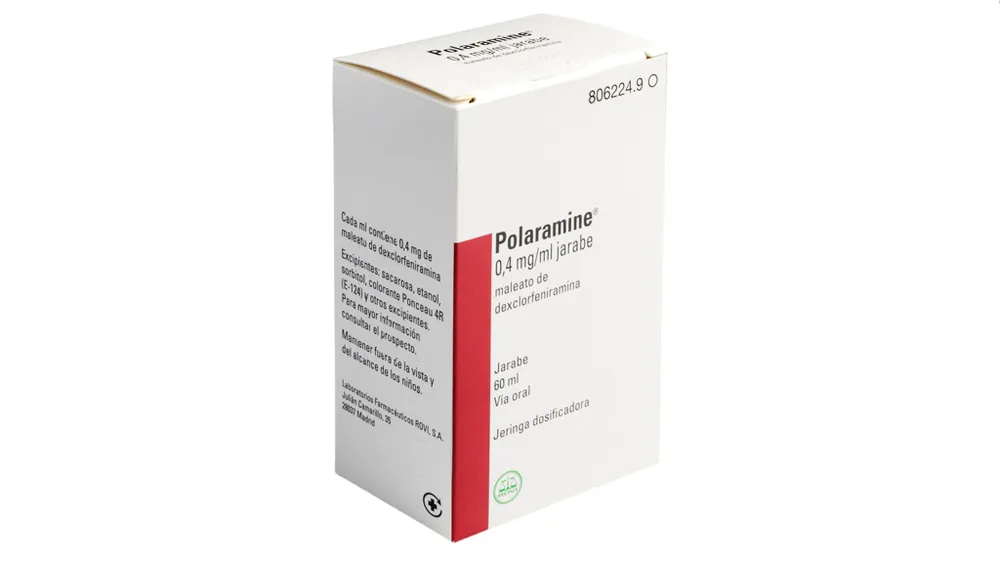
Table of Contents
Package leaflet: Information for the user
Introduction
Package leaflet: information for the user
Polaramine 0,4 mg/ml syrup
dexchlorpheniramine maleate
Read the entire leaflet carefully before you start taking this medicine because it contains important information for you.
- Keep this leaflet as you may need to read it again.
- If you have any questions, ask your doctor or pharmacist.
- This medicine has been prescribed for you only, and you should not give it to others, even if they have the same symptoms as you, because it could harm them.
- If you experience any adverse effects, consult your doctor or pharmacist, even if they are adverse effects not listed in this leaflet. See section 4.
Leaflet contents
- What Polaramine is and what it is used for
- What you need to know before taking Polaramine
- How to take Polaramine
- Possible side effects
- How to store Polaramine
- Contents of the pack and other information
1. What Polaramine is and what it is used for
Dexchlorpheniramine belongs to a group of medicines known as antihistamines.
Polaramine is indicated for the symptomatic treatment of seasonal and perennial allergic rhinitis, vasomotor rhinitis, allergic conjunctivitis, mild uncomplicated cutaneous allergic manifestations such as urticaria and angioedema, and reactions to blood or plasma. It is also indicated in the treatment of anaphylactic reactions together with adrenaline or other appropriate measures, after controlling the acute manifestations. Polaramine often relieves cutaneous manifestations such as allergic eczema, atopic and contact dermatitis, insect bites, dermographism, and drug reactions.
2. What you need to know before taking Polaramine
Do not take Polaramine
- if you are allergic to dexchlorpheniramine maleate or any of the other ingredients of this medicine (listed in section 6).
- Polaramine must not be administered to newborns and premature infants.
- If you are being treated with a special type of antidepressants known as monoamine oxidase inhibitors (MAO inhibitors), or during the two weeks following discontinuation of such treatment.
Warnings and precautions
Talk to your doctor or pharmacist before taking Polaramine
- If you have narrow-angle glaucoma, a certain type of stomach ulcer (stenosing), pyloroduodenal obstruction, prostate disorders or urinary bladder neck obstruction, cardiovascular diseases including high blood pressure, or if you have increased intraocular pressure or thyroid disorders.
- If you are over 60 years of age, as Polaramine may cause dizziness, sedation, and hypotension (low blood pressure) in patients over 60.
Children
The safety and efficacy of Polaramine have not been established in children under 2 years of age; therefore, it should not be administered to these patients. Polaramine may cause nervousness and restlessness, especially in children.
Taking Polaramine with other medicines
Inform your doctor or pharmacist if you are taking, have recently taken, or might need to take any other medicines.
A special type of antidepressants known as monoamine oxidase inhibitors (MAO inhibitors) prolong and intensify the effects of antihistamines, possibly causing severe hypotension (a serious drop in blood pressure).
Concurrent use of Polaramine with tricyclic antidepressants, barbiturates, or other medicines acting on the central nervous system may enhance the sedative effect of Polaramine.
Medicines in the same group as Polaramine (antihistamines) may reduce the effectiveness of oral anticoagulants; therefore, you should consult your doctor before taking Polaramine.
Taking Polaramine with food, drinks and alcohol
The simultaneous use of Polaramine with alcohol may enhance the sedative effect of Polaramine.
Interaction with laboratory tests
Treatment with Polaramine should be discontinued at least 48 hours before undergoing any skin allergy testing, as medicines in the Polaramine group (antihistamines) may mask the results of such tests.
Pregnancy, breastfeeding and fertility
If you are pregnant or breastfeeding, think you may be pregnant, or are planning to become pregnant, consult your doctor or pharmacist before using this medicine.
Pregnancy
Polaramine must not be administered during the third trimester of pregnancy, as newborns and premature infants may experience severe adverse reactions to antihistamines.
During the first two trimesters of pregnancy, Polaramine should be used only if considered necessary by your doctor.
Breastfeeding
It is unknown whether Polaramine is excreted in human milk; therefore, you should consult your doctor if you are breastfeeding.
Driving and using machines
Polaramine may cause drowsiness, affecting mental and/or physical abilities. If you experience these effects, avoid driving vehicles or operating machinery.
Polaramine contains sucrose
This medicine contains sucrose. If your doctor has told you that you have an intolerance to certain sugars, consult him before taking this medicine.
Polaramine contains ethanol
This medicine contains 0.5% ethanol (alcohol); this small amount corresponds to 24 mg/5 ml.
Polaramine contains sorbitol
This medicine contains sorbitol. If your doctor has told you that you have an intolerance to certain sugars, consult him before taking this medicine.
Polaramine contains the colour Ponceau 4R (E-124)
This medicine may cause allergic reactions because it contains the colour Ponceau 4R (E-124).
It may provoke asthma, especially in patients allergic to acetylsalicylic acid.
3. How to take Polaramine
Follow exactly the instructions for use of this medicine as given by your doctor. If in doubt, consult your doctor or pharmacist again.
Your doctor will determine your individual dose according to your disease requirements and your response.
In adults and children from 12 years of age: the recommended dose is 2 mg (5 ml) 3 or 4 times daily.
Use in children
Children from 6 to 12 years: 1 mg (2.5 ml) 3 or 4 times daily.
Children from 2 to 6 years: 0.5 mg (1.25 ml) 3 or 4 times daily.
Method of administration
Use the dosing syringe to take the dose prescribed by your doctor.
If you take more Polaramine than you should
In case of overdose or accidental ingestion, contact your doctor or pharmacist immediately or call the Toxicology Information Service at telephone (91) 562 04 20, indicating the medicine and the amount ingested.
If you forget to take Polaramine
Do not take a double dose to make up for missed doses.
If you have any further questions about the use of this medicine, ask your doctor or pharmacist.
4. Possible adverse effects
Like all medicines, this medicine may have adverse effects, although not everyone experiences them.
The most commonly observed adverse effect with the use of Polaramine (antihistamines) is mild to moderate drowsiness. Rarely, general adverse effects such as urticaria, skin rash, severe allergic reactions (anaphylactic shock), photosensitivity, excessive sweating, chills, dry mouth, nose, and throat have been reported.
Other adverse effects that may occur with the use of antihistamines include: cardiovascular reactions, blood-related reactions, nervous system reactions, gastrointestinal reactions, genitourinary reactions, and respiratory reactions.
Reporting of adverse effects:
If you experience any type of adverse effect, consult your doctor or pharmacist, even if it is a possible adverse effect not listed in this leaflet. You may also report them directly through the Spanish Pharmacovigilance System for Human Medicines: https://www.notificaram.es. By reporting adverse effects, you can help provide more information on the safety of this medicine.
5. Storage of Polaramine
Keep this medicine out of sight and reach of children.
Do not store above 30°C.
Do not use this medicine after the expiry date stated on the packaging after EXP. The expiry date refers to the last day of the month indicated.
Medicines must not be disposed of via wastewater or household waste. Dispose of unused medicines and their containers at the SIGRE collection point at your pharmacy. If you are in doubt, ask your pharmacist how to dispose of unused medicines and their containers. This will help protect the environment.
6. Contents of the pack and other information
Composition of Polaramine
- The active substance is dexchlorpheniramine maleate. Each ml of syrup contains 0.4 mg of dexchlorpheniramine maleate.
- The other components are ethanol, sucrose, sodium citrate dihydrate, sodium chloride, sorbitol, methylparaben, propylparaben, menthol, apricot flavor, orange flavor, Ponceau 4R coloring (E-124), and purified water.
Appearance of the medicine and contents of the pack
Clear red syrup, free from foreign particles.
Plastic bottle made of white opaque high-density polyethylene. Each bottle contains 60 ml of syrup.
A dosing syringe is included.
Marketing Authorization Holder and Manufacturer
Marketing Authorization Holder |
Laboratorios Farmacéuticos ROVI, S.A. Julián Camarillo, 35 28037 Madrid - Spain |
Manufacturer
SAG Manufacturing S.L.U.
Km. 36, National Highway I
28750 San Agustín de Guadalix
Madrid, Spain
Date of the most recent review of this leaflet: March 2007
Detailed and up-to-date information on this medicine is available on the website of the Spanish Agency for Medicines and Health Products (AEMPS) http://www.aemps.gob.es/