Plerixafor Glenmark 20 mg/ml solution for injection EFG
Spain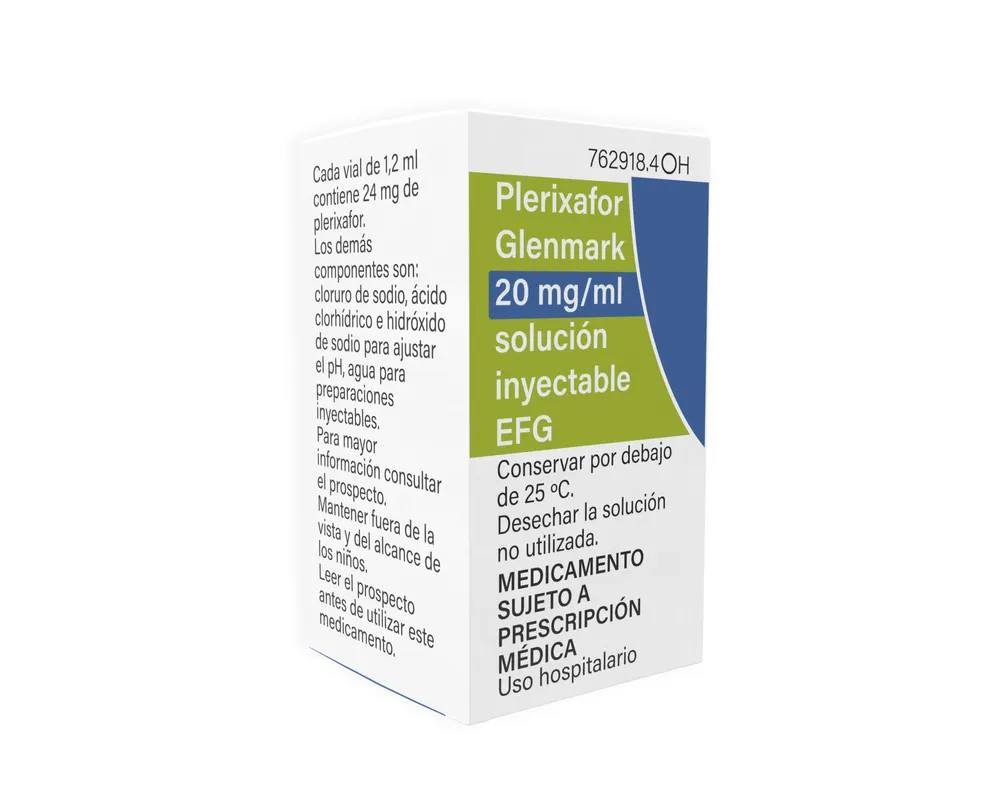
Table of Contents
- Patient Information Leaflet
- Introduction
- **Plerixafor Glenmark 20 mg/ml solution for injection EFG**
- **Package leaflet contents**
- 1. What Plerixafor Glenmark is and what it is used for
- 2. What you need to know before starting to use Plerixafor Glenmark
- **Warnings and precautions**
- **Other medicines and Plerixafor Glenmark**
- **Pregnancy and breastfeeding**
- **Driving and operating machinery**
- **Plerixafor Glenmark contains sodium**
- 3. How to use Plerixafor Glenmark
- **You will first receive G-CSF and then be given Plerixafor Glenmark**
- 4. Possible adverse effects
- **Tell your doctor immediately if**
- **Myocardial Infarction**
- **Tingling and Numbness**
- **Reporting of Adverse Reactions**
- 5. Storage of Plerixafor Glenmark
- 6. Contents of the container and other information
- **Appearance of the Product and Contents of the Container**
- Manufacturer responsible:
- **Other sources of information**
Patient Information Leaflet
Introduction
Patient Information Leaflet
Plerixafor Glenmark 20 mg/ml solution for injection EFG
Read this entire leaflet carefully before you start using this medicine, because it contains important information for you.
- Keep this leaflet, as you may need to read it again.
- If you have any questions, consult your doctor.
- If you experience any adverse reactions, consult your doctor or nurse, even if they are adverse reactions not listed in this leaflet. See section 4.
Package leaflet contents
- What Plerixafor Glenmark is and what it is used for
- What you need to know before using Plerixafor Glenmark
- How to use Plerixafor Glenmark
- Possible side effects
- How to store Plerixafor Glenmark
- Contents of the pack and other information
1. What Plerixafor Glenmark is and what it is used for
Plerixafor Glenmark contains the active substance plerixafor, which blocks a protein on the surface of hematopoietic stem cells. This protein "anchors" blood stem cells to the bone marrow. Plerixafor enhances the release of stem cells into the bloodstream (mobilization). The stem cells can then be collected using a device that separates the components of the blood (apheresis machine), subsequently frozen and stored until transplantation.
If mobilization is inadequate, plerixafor is administered to help collect stem cells from the patient's blood for collection, storage, and reinfusion (transplantation),
- In adult patients with lymphoma (a cancer of white blood cells) or multiple myeloma (a cancer affecting plasma cells in the bone marrow).
- In children from 1 year to less than 18 years of age with lymphoma or solid tumors.
2. What you need to know before starting to use Plerixafor Glenmark
Do not use Plerixafor Glenmark
- if you are allergic to plerixafor or to any of the other ingredients of this medicine (listed in section 6).
Warnings and precautions
Consult your doctor before starting to use plerixafor.
Inform your doctor:
- if you have or have had any heart problems.
- if you have kidney problems. Your doctor may adjust your dose.
- if you have a high number of white blood cells.
- if you have a low number of platelets.
- if you have a history of fainting or dizziness while standing or sitting, or if you have previously fainted after injections.
Your doctor may perform periodic blood tests to monitor your blood cell counts.
Plerixafor is not recommended for stem cell mobilization in patients with leukemia (a cancer of the blood or bone marrow).
Other medicines and Plerixafor Glenmark
Inform your doctor or pharmacist if you are taking, have recently taken, or might need to take any other medicines.
Pregnancy and breastfeeding
If you are pregnant or breastfeeding, think you may be pregnant or are planning to become pregnant, consult your doctor before using this medicine. You must not use plerixafor if you are pregnant, as there are no data available on the effects of plerixafor in pregnant women. Contraceptive methods are recommended if you are of childbearing age.
You must not breastfeed while using plerixafor, as it is unknown whether plerixafor passes into breast milk.
Driving and operating machinery
Plerixafor may cause dizziness and fatigue. Therefore, you should avoid driving if you feel dizzy, tired, or unwell.
Plerixafor Glenmark contains sodium
This medicine contains less than 1 mmol of sodium (23 mg) per dose; essentially, "sodium-free".
3. How to use Plerixafor Glenmark
Your doctor or a nurse will inject your medicine.
You will first receive G-CSF and then be given Plerixafor Glenmark
Mobilization will begin by first administering another medicine called G-CSF (granulocyte colony-stimulating factor). G-CSF will help plerixafor work properly in your body. If you would like more information about G-CSF, please ask your doctor and read the respective package leaflet.
How much Plerixafor Glenmark is administered?
The recommended dose in adults is 20 mg (fixed dose) or 0.24 mg/kg body weight/day.
The recommended dose in children, aged 1 to less than 18 years, is 0.24 mg/kg body weight/day.
Your dose will depend on your body weight, which must be measured the week before you receive the first dose. If you have moderate or severe kidney problems, your doctor will reduce the dose.
How is Plerixafor Glenmark administered?
Plerixafor is administered by subcutaneous injection (under the skin).
When is Plerixafor Glenmark administered for the first time?
You will receive the first dose between 6 and 11 hours before apheresis (collection of stem cells from your blood).
How long will Plerixafor Glenmark administration last?
Treatment lasts for 2 to 4 consecutive days (in some cases up to 7 days), until enough stem cells have been collected for your transplant. In some cases, it may not be possible to collect a sufficient number of stem cells, in which case the collection attempt will be discontinued.
4. Possible adverse effects
Like all medicines, this medicine can cause adverse effects, although not everyone will experience them.
Tell your doctor immediately if
- shortly after receiving plerixafor, you develop a rash, swelling around the eyes, difficulty breathing or shortness of breath, dizziness when standing or sitting, feeling faint or fainting
- you feel pain in the upper left part of your abdomen (stomach) or in your left shoulder
Very common adverse effects (may affect more than 1 in 10 people)
- diarrhea, nausea, redness or irritation at the injection site
- low red blood cell count in laboratory tests (anemia in children)
Common adverse effects (may affect up to 1 in 10 people)
- headache
- dizziness, feeling tired or unwell
- difficulty sleeping
- flatulence, constipation, indigestion, vomiting
- stomach-related symptoms such as pain, bloating or discomfort
- dry mouth, numbness around the mouth
- sweating, generalized skin redness, joint pain, muscle and bone pain
Uncommon adverse effects (may affect up to 1 in 100 people)
- allergic reactions such as rash, swelling around the eyes, difficulty breathing
- anaphylactic reactions, including anaphylactic shock
- altered dreams, nightmares
In rare cases, gastrointestinal adverse effects may be severe (diarrhea, vomiting, stomach pain and nausea).
Myocardial Infarction
In clinical trials, patients with risk factors for myocardial infarction experienced myocardial infarction infrequently after administration of plerixafor and G-CSF. Inform your doctor immediately if you have chest discomfort.
Tingling and Numbness
Tingling and numbness are common in patients receiving cancer treatment. Approximately one in five patients experiences these symptoms. However, these effects do not appear to occur more frequently when plerixafor is used.
You may also have an increase in the number of white blood cells in your blood (leukocytosis), as shown in your blood tests.
Reporting of Adverse Reactions
If you experience any type of adverse reaction, consult your doctor or nurse, even if it involves possible adverse reactions not listed in this leaflet. You may also report them directly through the Spanish Pharmacovigilance System for Human Medicinal Products: www.notificaRAM.es. By reporting adverse reactions, you can help provide more information on the safety of this medicine.
5. Storage of Plerixafor Glenmark
Keep this medicine out of the sight and reach of children.
Do not use this medicine after the expiry date stated on the container.
Store below 25 °C.
Once the vial is opened, this medicine must be used immediately.
Medicines should not be disposed of via wastewater or household waste. Ask your pharmacist how to dispose of medicines and packaging no longer required. This will help protect the environment.
6. Contents of the container and other information
Composition of Plerixafor Glenmark
- The active substance is plerixafor. Each ml of injectable solution contains 20 mg of plerixafor. Each vial contains 24 mg of plerixafor in 1.2 ml of solution.
- The other components are: sodium chloride, hydrochloric acid and sodium hydroxide to adjust pH, water for injections.
Appearance of the Product and Contents of the Container
Plerixafor Glenmark is a clear, colorless to pale yellow injectable solution contained in a clear type I glass vial with a rubber stopper and aluminum seal with flip-off cap. Each vial contains 1.2 ml of solution.
Each pack contains 1 vial.
Marketing Authorization Holder and Manufacturer Responsible
Marketing Authorization Holder:
Glenmark Arzneimittel GmbH
Industriestr. 31
82194 Gröbenzell
Germany
Manufacturer responsible:
Pharmadox Healthcare Ltd
KW20A Kordin Industrial Park
Paola, PLA3000
Malta
Further information on this medicinal product is available by contacting the local representative of the marketing authorization holder:
Glenmark Farmacéutica, S.L.U.
C/ Retama 7, 7th floor
28045 Madrid
Spain
This medicinal product is authorized in the Member States of the European Economic Area under the following names:
Country | Medicinal product name |
Germany | Plerixafor Glenmark 20 mg/ml solution for injection |
Spain | Plerixafor Glenmark 20 mg/ml solution for injection EFG |
Date of the most recent review of this leaflet: February 2023.
Other sources of information
Detailed information about this medicinal product is available on the website of the Spanish Agency of Medicines and Health Products (AEMPS) (http://www.aemps.gob.es/).