Plenur 400 mg modified-release tablets
Spain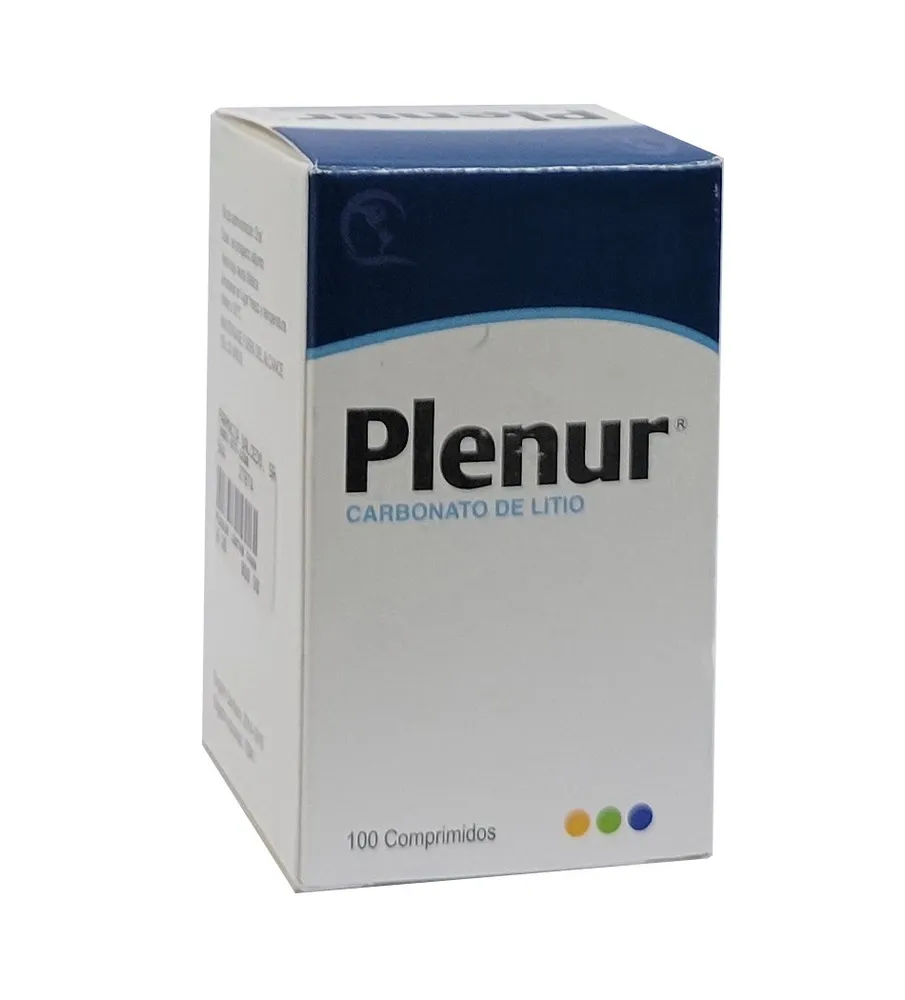
Table of Contents
Package leaflet: Information for the user
Introduction
Package leaflet: information for the patient
Plenur 400 mg modified-release tablets
lithium, carbonate
Read the entire leaflet carefully before you start taking this medicine, because it contains important information for you.
- Keep this leaflet, as you may need to read it again.
- If you have any questions, ask your doctor or pharmacist.
- This medicine has been prescribed for you only, and you should not give it to other people, even if they have the same symptoms as you, because it could harm them.
- If you experience any adverse effects, consult your doctor or pharmacist, even if they are adverse effects not listed in this leaflet. See section 4.
Leaflet contents
- What Plenur is and what it is used for
- What you need to know before taking Plenur
- How to take Plenur
- Possible side effects
- How to store Plenur
- Contents of the pack and other information
1. What Plenur is and what it is used for
Plenur contains lithium carbonate as the active ingredient, an antipsychotic used as a mood stabilizer.
It is indicated for the prevention and treatment of bipolar disorder (mood disorders characterized by alternating periods of depression and periods of extreme euphoria) and as an adjunctive treatment in treatment-resistant major depression (repeated episodes of severe depression) in patients who have not achieved an optimal response to antidepressant therapy.
2. What you need to know before taking Plenur
Do not take Plenur
- if you are allergic to lithium carbonate or to any of the other ingredients of this medicine (listed in section 6)
- if you are pregnant or breastfeeding
- if you have severe renal insufficiency
- if you have severe heart disease
- if you have any cardiac condition associated with arrhythmia
- if you are very weak, dehydrated, have severe hyponatremia, follow a low-sodium diet, or have Addison's disease
- if you have Brugada syndrome or a family history of Brugada syndrome
- if you have untreated or intractable hypothyroidism
Warnings and precautions
Consult your doctor or pharmacist before starting Plenur
- if you have excessive sweating
- if you have diarrhea
- if you have nausea
- if you have vomiting
- if you have high fever
- if you are taking diuretics
- if you follow a low-salt (hyposodic) diet
- if you suffer from hypothyroidism or psoriasis
- if you are receiving lithium in any other form
- if you are epileptic
- if you have an acute infectious condition (e.g., flu, urinary tract infection…)
- if you have renal insufficiency
- if you have a condition called Brugada syndrome (a hereditary heart disorder), or if anyone in your family has had Brugada syndrome, cardiac arrest, or sudden death.
Consult your doctor even if any of the above circumstances occurred in the past.
Plenur must always be used under medical supervision. Visit your doctor regularly. To properly monitor treatment, your doctor may request periodic blood tests.
Patients with severe renal disease, severe cardiovascular disease, severe dehydration, and patients treated with diuretics
In these patient groups, lithium should be used with extreme caution and only if the benefit-risk balance is favorable and no alternative therapeutic options exist.
Patients with thyroid disorders
Lithium may cause hypothyroidism.
Cases of hypothyroidism have been reported, including Graves' disease, toxic multinodular goiter, and silent thyroiditis.
Electrolyte/fluid balance
Care should be taken to ensure that diet and fluid intake are adequate to maintain a stable electrolyte balance (salt/water). Infectious diseases such as colds, flu, gastroenteritis, and urinary tract infections may disrupt electrolyte balance and consequently affect serum lithium levels. In case of intercurrent infections, discontinuation of treatment should be considered.
Seizure risk
The risk of seizures may increase when lithium is used concomitantly with other medicines (see section Other medicines and Plenur).
Renal tumors
Cases of microcysts, oncocytomas, and carcinomas of the renal collecting tubules have been reported in patients with severe renal insufficiency who received lithium for more than 10 years.
Serotonin syndrome
Lithium may precipitate serotonin syndrome, increasing the risk when used with other serotonergic medicines or those affecting serotonin metabolism (see section “Other medicines and Plenur”).
Signs and symptoms of serotonin syndrome should be monitored, especially at the beginning of treatment. If serotonin syndrome occurs, the doctor should consider discontinuing lithium treatment or its concomitant use with other serotonergic medicines.
Patients treated with typical and atypical antipsychotics
The use of typical and atypical antipsychotics is not recommended during Plenur treatment due to the possible occurrence of neurological adverse reactions (see section “Other medicines and Plenur”).
Patients undergoing bariatric surgery
In patients who have undergone bariatric surgery (a surgical procedure used for the treatment of obesity), a reduction in the maintenance dose of lithium should be considered due to the risk of lithium toxicity following significant weight loss.
Brugada syndrome
Lithium may worsen or mask Brugada syndrome (a hereditary heart disorder). This medicine should not be administered to patients with Brugada syndrome or a family history of Brugada syndrome. Caution should be exercised in patients with a family history of cardiac arrest or sudden death.
Benign intracranial hypertension
Cases of benign intracranial hypertension have been reported. Inform your doctor if you experience persistent headache and/or visual disturbances.
Patients with long QT syndrome
The use of lithium is not recommended in patients with congenital long QT syndrome, in patients taking other medicines that prolong the QT interval, or in patients with risk factors for QT prolongation (heart disease, bradycardia, thyroid disorders, hypokalemia, hypomagnesemia, hypocalcemia, advanced age, female sex).
Interference with laboratory tests: taking this medicine may alter the results of certain laboratory tests. Consult your doctor if you are taking this medicine and are scheduled for any laboratory tests such as blood glucose, protein-bound iodine, or uric acid.
Children
The use of lithium is not recommended in children due to lack of studies on safety and efficacy in this population group.
Elderly population
Elderly patients have a higher risk of lithium toxicity; therefore, use of this medicine should be done with caution.
Other medicines and Plenur
Inform your doctor or pharmacist if you are using, have recently used, or might need to use any other medicines, including those obtained without a prescription.
Inform your doctor if you are taking any of the following medicines, as their concomitant use with Plenur may lead to interactions that increase or decrease lithium levels.
Interactions that increase lithium levels:
Concomitant administration of lithium with the following medicines may lead to increased lithium levels and thus increase the risk of lithium toxicity. In such cases, lithium levels should be closely monitored and, if necessary, the dose adjusted.
- antibiotics (such as metronidazole, tetracyclines, co-trimoxazole, or trimethoprim)
- non-steroidal anti-inflammatory drugs (such as indomethacin, mefenamic acid, phenylbutazone, piroxicam, ibuprofen, celecoxib, or etoricoxib)
- medicines for treating high blood pressure (such as captopril or enalapril)
- diuretics used to increase urine output (such as thiazides, furosemide, or bumetanide), including herbal preparations
- drugs affecting water-electrolyte balance (such as corticosteroids: hydrocortisone or prednisone)
Interactions that decrease lithium levels:
Concomitant administration of lithium with the following medicines may lead to decreased lithium levels and thus risk of reduced efficacy.
- antidiabetic medicines used to treat type 2 diabetes mellitus (such as empagliflozin and dapagliflozin)
- xanthines (such as caffeine and theophylline) used to treat asthma
- carbonic anhydrase inhibitor diuretics (such as acetazolamide, also used in the treatment of glaucoma)
- urea
- sodium-rich products such as sodium bicarbonate
Interactions that may not be associated with elevated or decreased lithium levels:
Concomitant administration of lithium with the following medicines may cause symptoms of intoxication even when lithium levels are within the normal range.
- typical and atypical antipsychotics (such as risperidone, haloperidol, thioridazine, fluphenazine, chlorpromazine, perphenazine, olanzapine, clozapine, etc.)
- antiepileptic drugs (such as carbamazepine, phenytoin, or clonazepam)
- serotonergic medicines (such as fluoxetine) and tricyclic and tetracyclic antidepressants, used in the treatment of depression
- antihypertensives (such as methyldopa) and calcium channel blockers (such as diltiazem, nifedipine, verapamil), used in the treatment of hypertension
- neuromuscular blocking/relaxant agents, used to relax muscles during surgery (such as succinylcholine or pancuronium)
- iodides (such as potassium iodide)
- sodium
- medicines that may prolong the QT interval on the electrocardiogram, such as: antiarrhythmics (ajmaline, disopyramide, hydroquinidine, procainamide, quinidine, amiodarone, azimilide, cibenzoline, dofetilide, ibutilide, sotalol, etc.), antipsychotics (such as amisulpride, haloperidol, droperidol, mesoridazine, pimozide, sertindole, thioridazine, and clozapine), antibiotics (such as intravenous erythromycin or sparfloxacin), serotonin antagonists (such as ketanserin or dolasetron mesylate), antihistamines (astemizole, terfenadine), antimalarials (artemisinin derivatives, mefloquine, halofantrine), and other medicines such as arsenic trioxide, cisapride, and ranolazine.
Taking Plenur with food and drinks
This medicine may be taken with any food or non-alcoholic beverage.
During treatment, it is recommended to drink plenty of water or other fluids daily to avoid situations that may lead to dehydration.
If you are on a low-salt diet, inform your doctor.
Pregnancy, breastfeeding, and fertility
If you are pregnant or breastfeeding, think you may be pregnant, or plan to become pregnant, consult your doctor or pharmacist before using this medicine.
Pregnancy
Plenur is contraindicated during pregnancy, especially during the first trimester, due to its potential teratogenicity. Women receiving lithium treatment should use appropriate contraceptive methods. In women of childbearing age who wish to become pregnant, discontinuation of lithium treatment is recommended due to the potential risks to the fetus.
If lithium treatment is considered necessary during pregnancy, your doctor will likely monitor your serum lithium levels closely, and dose adjustments may be required.
Newborns may experience lithium intoxication (e.g., floppy muscles or hypotonia).
Breastfeeding
Plenur is contraindicated during breastfeeding because lithium is excreted in breast milk.
If necessary, the doctor will evaluate whether to discontinue Plenur treatment or breastfeeding, depending on the importance of the medicine to the mother and the importance of breastfeeding to the infant.
Fertility
Based on animal studies, spermatogenesis (sperm formation) may be affected, leading to reduced fertility.
Driving and use of machines
Plenur may cause symptoms such as drowsiness, dizziness, or visual disturbances, and may reduce reaction capacity. These effects, as well as the underlying illness itself, may impair your ability to drive or operate machinery. Therefore, do not drive or operate machinery or engage in other activities requiring special attention until your doctor has assessed your response to this medicine.
Plenur contains sodium (from sodium croscarmellose)
This medicine contains less than 1 mmol (23 mg) of sodium per tablet; hence, it is essentially “sodium-free”.
3. How to take Plenur
Follow exactly the instructions for administering this medicine as given by your doctor. If in doubt, consult your doctor or pharmacist again.
The recommended dose varies from patient to patient. Your doctor will adjust your dose according to your response and your serum lithium levels (amount or levels of lithium in the blood).
The usual doses range between 1 and 4 tablets per day.
Lithium blood levels
For lithium to be effective, certain levels of lithium must be present in the blood. Your doctor may request blood tests to ensure that you have an adequate, but not excessive, amount of lithium in your blood. At the beginning of treatment, these tests may be required 1 or 2 times per week, and later every 1–2 months. Blood tests should be performed immediately before taking the medicine; if you are to take one Plenur tablet in the morning, take it after the blood test has been performed.
If you switch from one lithium formulation to another, serum lithium levels must be monitored, and only then should lithium treatment be initiated at a daily dose as close as possible to the dose of the initial lithium formulation. Changing products should be considered as starting a new treatment.
You may need to undergo additional blood tests to determine any possible harmful effects of lithium on the kidney or thyroid.
Instructions for use
Plenur is administered orally. For proper use of Plenur, note that the tablets are formulated with special excipients that allow the active ingredient (lithium carbonate) to be slowly released in the gastrointestinal tract. Therefore, the tablets must be swallowed whole, without chewing or crushing, and taken with a glass of water or another non-alcoholic beverage to maintain their efficacy. It is advisable to take the medicine with meals.
If treatment with this medicine needs to be discontinued, the dose should be gradually reduced as directed by your doctor, over a reasonable period of time to avoid the risk of relapse.
If you think that the effect of Plenur is too strong or too weak, inform your doctor or pharmacist.
Use in children
Plenur is not recommended for use in children.
Use in elderly patients
Elderly patients generally require lower doses of lithium and need more frequent monitoring of serum lithium levels (lithium blood levels).
Use in patients on low-salt diets
These patients require more frequent visits and monitoring of serum lithium levels (lithium blood levels).
Use in patients with mild or moderate renal disease, severe cardiovascular disease, patients treated with diuretics, and in situations involving significant fluid loss (excessive sweating, diarrhea, high fever)
In these cases, lithium should be used with extreme caution and close monitoring.
Use in patients with hypothyroidism
Thyroid function should be closely monitored, and supplementary thyroid treatment may be necessary.
If you take more Plenur than you should
In case of overdose or accidental ingestion, contact your doctor or pharmacist immediately or call the Toxicology Information Service at 91 562 04 20, stating the medicine and the amount taken. Symptoms of possible overdose may include diarrhea, vomiting, fatigue, muscle weakness, lack of coordination, and dysarthria. Ultimately, coma, generalized tonic-clonic seizures, circulatory collapse, etc., may occur.
If you forget to take Plenur
Do not take a double dose to make up for missed doses.
If you stop taking Plenur
Your doctor will advise you on the duration of your treatment with Plenur.
Do not discontinue treatment without consulting your doctor, as your condition may return or you may experience other symptoms.
If you have any further questions about using this medicine, ask your doctor or pharmacist.
4. Possible adverse effects
Like all medicines, this medicine can cause adverse effects, although not everyone will experience them.
Contact your doctor immediately if the following symptoms appear or suddenly worsen:
- Diarrhea, vomiting, fatigue, muscle weakness, lack of coordination, or difficulty speaking.
Very common adverse effects (may affect more than 1 in 10 patients)
- Excessive thirst or increased amount or frequency of urination (diabetes insipidus): these usually occur at the beginning of treatment and disappear with continued use of lithium.
- Increased levels of calcium in the blood.
- Fatigue, tremor, muscle weakness, headache, difficulty speaking, confusion, mild difficulty concentrating. These occur at the beginning of treatment and usually disappear with continued use of lithium. Stress and caffeine may worsen tremor.
- Drowsiness: this usually disappears with time. If it occurs, exercise caution when driving or operating dangerous machinery.
- Hyperirritability of muscles (involuntary muscle contractions and movements)
- Non-serious changes in electrocardiogram: these disappear when treatment is stopped.
Common adverse effects (may affect up to 1 in 100 patients)
- Increased white blood cells in the blood, which disappears when the medicine is discontinued.
- Hypothyroidism (low activity of the thyroid gland), euthyroid goiter (enlargement of the thyroid gland not associated with hyper- or hypothyroidism)
- Loss of appetite, which may lead to weight loss.
- Muscle stiffness, excessive reaction to stimuli, increased muscle tone.
- Nausea, vomiting, diarrhea or constipation, abdominal pain, abdominal distension: these usually disappear within a few weeks with continued use. If they persist or become troublesome, contact your doctor.
Uncommon adverse effects (may affect up to 1 in 1,000 patients)
- Mild primary hyperparathyroidism (increased size and activity of the parathyroid glands located in the neck next to the thyroid gland).
- Weight loss or weight gain.
- Transient excess of sugar in the blood
- Dizziness, vertigo, seizures, transient loss of consciousness, stupor, coma. Rapid, uncontrolled eye movements, blurred vision, transient loss of vision, protruding eyes. Visual disturbances, abnormal involuntary movements, involuntary muscle contractions, restlessness.
- Isolated cases of pseudotumor cerebri (increased intracranial pressure and papilledema) have been reported in patients treated with lithium; if undetected, this may lead to enlargement of the blind spot, constriction of optic fibers, and eventual blindness due to optic nerve atrophy. In such cases, lithium treatment must be discontinued.
- Changes in heart rhythm, decreased heart rate, low blood pressure, peripheral circulatory failure, fluid retention and swelling (edema), fainting (syncope).
- Dry mouth, altered taste.
- Acne, skin rash, which resolves spontaneously or upon discontinuation of the medicine.
- Kidney problems such as presence of sugar or albumin in the urine, reduced urine production.
- Impotence, sexual dysfunction.
Rare adverse effects (may affect up to 1 in 10,000 patients)
- Psoriasis (a skin disease characterized by red scaly patches, especially on knees, elbows, or head), or worsening of psoriasis in patients who already have it, hair loss, dry and brittle hair, itching with or without skin rash, skin ulcers or peeling, dry skin, loss of skin sensation.
Very rare adverse effects (may affect fewer than 1 in 10,000 patients)
- A single case has been reported of painful loss of color in fingers and heels when cold. This resolves upon discontinuation of treatment.
Frequency not known (cannot be estimated from available data)
- Increased antinuclear antibodies
- Hyperthyroidism (increased activity of the thyroid gland) and parathyroid adenoma
- Increased magnesium or sugar in the blood
- Encephalopathy, neuroleptic malignant syndrome, cerebellar syndrome, serotonin syndrome, delirium, irreversible lithium-induced neurotoxicity syndrome (permanent nerve damage), parkinsonism, myasthenia gravis (muscle weakness and marked fatigue).
- Memory loss, lack of coordination, mild cognitive impairment, sensation of dizziness
- Eye irritation, optic nerve edema, palpebral edema (eyelid swelling)
- Cardiomyopathy, changes in electrocardiogram, arrhythmia, QT interval prolongation (Torsade de Pointes), cardiac arrest
- Gastrointestinal discomfort such as increased salivation and gastritis
- Skin or mucosal rash (lichenoid drug reaction), acne, skin lesions
- Weakness and rhabdomyolysis (breakdown of damaged muscles causing pain, weakness, and discolored urine)
- Tubulointerstitial nephritis, deterioration of kidney function
- Benign or malignant kidney tumors (microcysts, oncocytomas, or collecting duct carcinomas) with long-term treatment
- General disorders such as: edema, fatigue, drowsiness, thirst, tiredness, general malaise, and unexplained sudden death
- Unmasking or worsening of Brugada syndrome (a hereditary condition affecting the heart).
Reporting of adverse effects
If you experience any type of adverse effect, consult your doctor or pharmacist, even if it is a possible adverse effect not listed in this leaflet. You may also report them directly via the Spanish Pharmacovigilance System for Human Medicines: www.notificaram.es. By reporting adverse effects, you can help provide more information on the safety of this medicine.
5. Storage of Plenur
Keep this medicine out of the sight and reach of children.
This medicine does not require special storage conditions. Store in the original container.
Do not use this medicine after the expiry date which is stated on the packaging after EXP. The expiry date refers to the last day of the month indicated.
Medicines should not be disposed of via wastewater or household waste. Dispose of unused medicines and their containers at the SIGRE point at your pharmacy. If in doubt, ask your pharmacist how to dispose of medicines and containers you no longer need. This will help protect the environment.
6. Contents of the pack and other information
Composition of Plenur
- The active substance is lithium carbonate. Each tablet contains 400 mg of lithium carbonate.
- The other components (excipients) are: carbomer, sodium carmellose, magnesium carbonate, microcrystalline cellulose, glycerol (E-422), magnesium stearate, macrogol 6000, titanium dioxide (E-171), basic butyl methacrylate copolymer, talc.
Appearance of the product and contents of the pack
Plenur is a modified-release coated tablet, white in color, biconvex, round, and with a score line on one side. Each bottle contains 100 tablets.
Marketing Authorization Holder
Faes Farma, S.A.
Autonomia Etorbidea, 10
48940 Leioa (Bizkaia)
Spain
Manufacturer
Faes Farma, S.A.
Maximo Agirre Kalea, 14
48940 Leioa (Bizkaia)
Spain
Or
Faes Farma, S.A.
Parque Científico y Tecnológico de Bizkaia
Ibaizabal Bidea, Edificio 901
48160 Derio (Bizkaia)
Spain
Date of the most recent review of this leaflet: July 2024
Detailed information on this medicine is available on the website of the Spanish Agency of Medicines and Medical Devices (AEMPS): https://www.aemps.gob.es/.