Plendil 5 mg prolonged-release tablets
Spain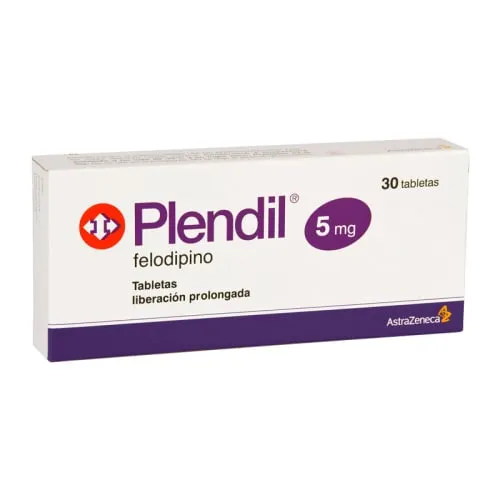
Table of Contents
Patient Information Leaflet
Introduction
Patient Information Leaflet
Plendil 5 mg prolonged-release tablets
felodipine
Read the entire leaflet carefully before you start taking this medicine, as it contains important information for you.
- Keep this leaflet, as you may need to read it again.
- If you have any questions, consult your doctor.
- This medicine has been prescribed for you only and must not be given to other people, even if they have the same symptoms as you, because it could harm them.
- If you experience any adverse effects, consult your doctor or pharmacist, even if they are adverse effects not listed in this leaflet. See section 4.
Leaflet Contents
- What Plendil is and what it is used for
- What you need to know before taking Plendil
- How to take Plendil
- Possible side effects
- How to store Plendil
- Contents of the pack and other information
1. What Plendil is and what it is used for
Plendil contains the active substance felodipine. It belongs to a group of medicines called calcium antagonists. It lowers blood pressure by dilating the blood capillaries. It does not negatively affect cardiac function.
Plendil is used to treat high blood pressure (hypertension) and chest pain caused, for example, by exercise or stress (angina pectoris).
2. What you need to know before taking Plendil
Do not take Plendil
- if you are pregnant. You must inform your doctor as soon as possible if you become pregnant while taking this medicine.
- if you are allergic to felodipine or to any of the other ingredients of this medicine (listed in section 6).
- if you have uncompensated heart failure.
- if you have acute myocardial infarction (heart attack).
- if you have newly developed chest pain or angina lasting more than 15 minutes or more, or if it is more severe than usual.
- if you have a heart valve disease or heart muscle disease, until you have consulted your doctor.
Warnings and precautions
Plendil, like other medicines that lower blood pressure, may rarely cause a marked decrease in blood pressure, which in some patients may lead to an inadequate blood supply to the heart. Symptoms of excessively low blood pressure and insufficient blood supply to the heart itself often include dizziness and chest pain. If you experience these symptoms, contact emergency services immediately.
Consult your doctor before starting Plendil, especially if you have liver problems.
Taking Plendil may cause your gums to swell. Maintain good oral hygiene to help prevent gum swelling (see section 4).
Children
The use of Plendil is not recommended in children.
Taking Plendil with other medicines
Tell your doctor if you are taking, have recently taken, or might need to take any other medicines. Some medicines/herbal remedies may affect treatment with Plendil.
Examples include:
- cimetidine (a medicine used to treat stomach ulcers)
- erythromycin (a medicine used to treat infections)
- itraconazole (a medicine used to treat fungal infections)
- ketoconazole (a medicine used to treat fungal infections)
- medicines for treating HIV – protease inhibitors (such as ritonavir)
- medicines for treating HIV infection (such as efavirenz, nevirapine)
- phenytoin (a medicine used to treat epilepsy)
- carbamazepine (a medicine used to treat epilepsy)
- rifampicin (a medicine used to treat infections)
- barbiturates (medicines used to treat anxiety, sleep disorders, and epilepsy)
- tacrolimus (a medicine used in organ transplantation)
Medicinal products containing St. John’s wort (Hypericum perforatum) (a herbal remedy used to treat depression) may reduce the effects of Plendil and should therefore be avoided.
Taking Plendil with food and drinks
Do not drink grapefruit juice if you are being treated with Plendil, as this may increase the effect of Plendil and the risk of adverse reactions.
Pregnancy and breastfeeding
Pregnancy
Do not use Plendil if you are pregnant.
Breastfeeding
Inform your doctor if you are breastfeeding or intend to breastfeed. Plendil is not recommended for use in breastfeeding mothers, and your doctor may choose another treatment for you if you wish to breastfeed.
Driving and using machines
Plendil may have a negligible or moderate effect on the ability to drive or use machines. If you experience headache, nausea, dizziness, or fatigue, your reaction ability may be impaired. Caution is advised, especially at the beginning of treatment.
Plendil contains lactose, castor oil, and sodium
Plendil contains lactose, which is a type of sugar. If your doctor has informed you that you have an intolerance to certain sugars, consult your doctor before taking this medicine.
Plendil contains castor oil, which may cause stomach discomfort and diarrhoea.
Plendil contains less than 1 mmol of sodium (23 mg) per tablet; hence, it is essentially “sodium-free”.
3. How to take Plendil
Follow exactly the instructions for use of this medicine given by your doctor. If in doubt, consult your doctor again.
Plendil prolonged-release tablets should be taken in the morning and swallowed with water. The tablet must not be divided, crushed, or chewed. This medicine may be taken on an empty stomach or with a light low-fat or low-carbohydrate meal.
Hypertension
Treatment should be initiated with 5 mg once daily. If necessary, your doctor may increase the dose or add another medicine to lower blood pressure. The usual maintenance dose for long-term treatment of this condition is 5–10 mg once daily. In elderly patients, a starting daily dose of 2.5 mg may be considered.
Stable angina pectoris
Treatment should be initiated with 5 mg once daily, and if necessary, your doctor may increase the dose to 10 mg once daily.
If you have liver problems
Drug concentrations in the blood may increase. Your doctor may reduce your dose.
Elderly patients
Your doctor may initiate treatment with the lowest available dose.
If you take more Plendil than you should
If you take more than the recommended number of doses of Plendil, you may experience very low blood pressure and sometimes palpitations, increased heart rate, or, rarely, slow heart rate. Therefore, it is very important to take the number of doses prescribed by your doctor. If you experience symptoms such as weakness, slight dizziness, or vertigo, contact your doctor immediately.
In case of overdose or accidental ingestion, contact your doctor or pharmacist immediately, or call the Toxicology Information Service at telephone number 91 562 04 20, indicating the medicine and the amount ingested.
If you forget to take Plendil
If you forget to take a tablet, skip the missed dose completely. Take the next dose at the correct time. Do not take a double dose to make up for forgotten doses.
If you stop taking Plendil
If you stop treatment with this medicine, your condition may recur. Consult your doctor and seek advice before stopping Plendil. Your doctor will inform you about how long you should take the medicine.
If you have any further questions about the use of this medicine, ask your doctor.
4. Possible adverse effects
Like all medicines, this medicine can cause adverse effects, although not everyone experiences them.
If you experience any of the following, stop taking Plendil and contact your doctor immediately:
- Hypersensitivity and allergic reactions: signs may include skin lumps (wheals) or swelling of the face, lips, mouth, tongue or throat.
The following adverse effects have been identified. Most of these effects occur at the beginning of treatment or after an increase in dose. If these reactions occur, they are usually transient and decrease in intensity over time. If you experience any of the following symptoms persistently, please inform your doctor.
Mild swelling of the gums has been reported in patients with existing mouth inflammation (gingivitis/periodontitis). This swelling can be prevented or reversed by careful oral hygiene.
Very common: may affect more than 1 in 10 people
- Ankle swelling
Common: may affect up to 1 in 10 people
- Headache
- Flushing
Uncommon: may affect up to 1 in 100 people
- Abnormally rapid heartbeat
- Palpitations
- Low blood pressure (hypotension)
- Nausea
- Abdominal pain
- Burning, pricking, or tingling sensations
- Rash or itching
- Fatigue
- Dizziness
Rare: may affect up to 1 in 1,000 people
- Fainting
- Vomiting
- Urticaria
- Joint pain
- Muscle pain
- Impotence/sexual dysfunction
Very rare: may affect up to 1 in 10,000 people
- Gingivitis (inflamed gums)
- Increased liver enzymes
- Skin reactions due to hypersensitivity to sunlight
- Inflammation of the skin's blood capillaries
- Need to urinate frequently
- Hypersensitivity reactions such as fever or swelling of the lips or tongue
Other adverse effects may occur. If you experience any bothersome or unusual reaction while taking Plendil, contact your doctor immediately.
Reporting of adverse effects
If you experience any type of adverse effect, consult your doctor, even if it is a possible adverse effect not listed in this leaflet. You may also report them directly via the Spanish Pharmacovigilance System for Human Medicines: https://www.notificaram.es. By reporting adverse effects, you can help provide more information on the safety of this medicine.
5. Storage of Plendil
No special storage conditions are required.
Keep this medicine out of the sight and reach of children.
Do not use this medicine after the expiry date stated on the carton, blister, and bottle after "EXP". The expiry date refers to the last day of the month indicated.
Do not use this medicine if you notice that the packaging is torn or damaged.
Medicines must not be disposed of via wastewater or household waste. Dispose of unused medicines and their containers at the SIGRE collection point at your pharmacy. If you are unsure, ask your pharmacist how to properly dispose of unused medicines and their packaging. This will help protect the environment.
6. Contents of the pack and other information
Composition of Plendil
-
The active substance is felodipine. Each tablet contains 5 mg of felodipine.
-
The other components are:
Tablet core:
Hydroxypropyl cellulose
Hypromellose 50 mPa·s
Hypromellose 10000 mPa·s
Anhydrous lactose (lactose)
Macrogol glycerol hydroxystearate (castor oil)
Microcrystalline cellulose
Propyl gallate
Sodium aluminium silicate
Sodium stearyl fumarate
Coating:
Carnauba wax
Red iron oxide (E172)
Yellow iron oxide (E172)
Hypromellose 6 mPa·s
Polyethylene glycol 6000
Titanium dioxide (E171)
Nature of the product and contents of the pack
Plendil 5 mg prolonged-release tablet, the tablet is pink, round, biconvex, engraved with A/Fm on one side and 5 on the other, with a diameter of 9 mm.
Prolonged-release tablets 5 mg
14 tablets (blister with days of the week printed)
20 tablets (blister)
28 tablets (blister with days of the week printed)
30 tablets (blister and plastic bottle)
50 tablets (unit dose)
90 tablets (blister)
98 tablets (blister with days of the week printed)
100 tablets (blister and plastic bottle)
500 tablets (plastic dispensing bottle)
Only some pack sizes may be marketed.
Marketing Authorization Holder and Manufacturer
Marketing Authorization Holder:
Glenwood GmbH
Pharmazeutische Erzeugnisse
Arabellastr. 17
81925 Munich
Germany
Manufacturer:
AstraZeneca AB
Gärtunavägen
152 57 Södertalje
Sweden
AstraZeneca Reims Production
Parc industriel de la Pompelle
Chemin de Vrilly
51100 Reims
France
Saneca Pharmaceuticals a.s.
Nitrianska 100
920 27 Hlohovec
Slovakia
This medicinal product is authorized in the European Economic Area countries and the United Kingdom (Northern Ireland) under the following names:
Austria, Cyprus, Czech Republic, Estonia, Finland, Greece, Ireland, Italy, Netherlands, Norway, Poland, Romania, Slovakia, Spain, Sweden, United Kingdom (Northern Ireland): Plendil
France: Flodil
Germany: Modip
Date of latest revision of this leaflet: May 2024
Detailed and up-to-date information on this medicinal product is available on the website of the Spanish Agency for Medicines and Health Products (AEMPS) http://www.aemps.gob.es/