Plegridy 63 94 micrograms solution for injection in pre-filled pen
Spain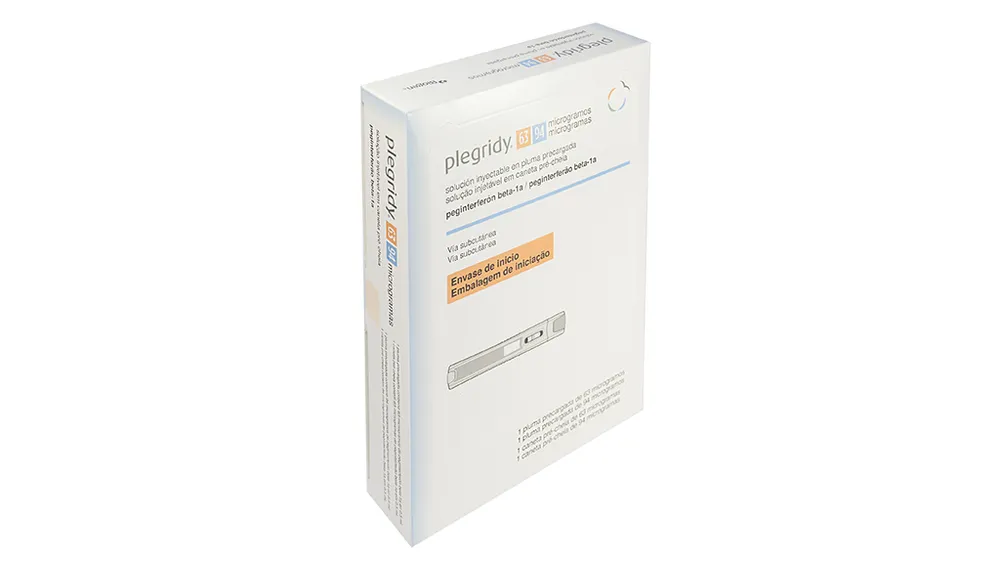
Table of Contents
Package leaflet: Information for the user
Introduction
Package leaflet: information for the user
Plegridy 63 micrograms solution for injection in pre-filled pen
Plegridy 94 micrograms solution for injection in pre-filled pen
Plegridy 125 micrograms solution for injection in pre-filled pen
peginterferon beta-1a
Read this entire leaflet carefully before you start using this medicine, because it contains important information for you.
-
Keep this leaflet. You may need to read it again.
-
If you have any questions, ask your doctor, pharmacist, or nurse.
-
This medicine has been prescribed for you only. Do not pass it on to other people, even if they have the same symptoms as yours, because it may harm them.
-
If you experience any side effects, talk to your doctor, pharmacist, or nurse, even if they are side effects not listed in this leaflet. See section 4.
Contents of this leaflet
- What Plegridy is and what it is used for
- What you need to know before using Plegridy
- How to use Plegridy
- Possible side effects
- How to store Plegridy
- Contents of the pack and other information
- Instructions for injecting with the Plegridy pre-filled pen
1. What Plegridy is and what it is used for
What Plegridy is
The active substance in Plegridy is peginterferon beta-1a. Peginterferon beta-1a is a modified long-acting form of interferon. Interferons are natural substances produced in the body that help protect against infections and diseases.
What Plegridy is used for
This medicine is used to treat Relapsing-Remitting Multiple Sclerosis (MS) in adults aged 18 years or older.
MS is a long-term disease affecting the central nervous system (CNS), including the brain and spinal cord, in which the body's immune system (its natural defenses) damages the protective layer (myelin) surrounding the nerves in the brain and spinal cord. This disrupts the messages between the brain and other parts of the body, causing the symptoms of MS.
Patients with relapsing-remitting MS have periods when the disease is not active (remission) between exacerbations of symptoms (relapses).
Each patient has specific MS symptoms. These may include:
- feelings of unsteadiness or dizziness, difficulty walking, muscle stiffness and spasms, fatigue, numbness in the face, arms, or legs;
- acute or chronic pain, bladder and bowel problems, sexual problems, and vision problems;
- difficulty thinking and concentrating, depression.
How Plegridy works
Plegridy appears to work by preventing the immune system from damaging the brain and spinal cord. This may help reduce the number of relapses you experience and slow down the disabling effects of MS. Treatment with Plegridy may help prevent worsening of the disease, although it will not cure MS.
2. What you need to know before using Plegridy
Do not use Plegridy
-
if you are allergic to peginterferon beta-1a, interferon beta-1a, or to any of the other ingredients of this medicine (listed in section 6). See the symptoms of an allergic reaction in section 4;
-
if you have severe depression or suicidal thoughts.
Warnings and precautions
Talk to your doctor if you have ever had:
-
depression or mood-related problems;
-
suicidal thoughts.
-
Your doctor may still prescribe Plegridy, but it is important that you inform them if you have ever had depression or any other mood-related condition in the past.
Talk to your doctor, pharmacist, or nurse before injecting Plegridy if you have any of the following conditions, as they may worsen while using Plegridy:
- severe kidney or liver problems;
- injection site reactions, which may cause skin and tissue damage
(necrosis at the injection site). When you are ready to administer your dose, carefully follow the instructions provided in section 7 “Instructions for injecting from the Plegridy pre-filled pen” at the end of this leaflet. This will help reduce the risk of injection site reactions;
-
epilepsy or other seizure disorders not controlled by medication;
-
heart problems that may cause symptoms such as chest pain (angina), especially after physical activity; ankle swelling, difficulty breathing (congestive heart failure), or an irregular heartbeat (arrhythmias);
-
thyroid problems;
-
low white blood cell or platelet counts, which may increase the risk of infection or bleeding.
Other considerations when using Plegridy
-
You will need blood tests to monitor your blood cell counts, blood chemistry, and liver enzyme levels. These tests will be performed before starting Plegridy, at regular intervals after beginning treatment, and periodically throughout treatment—even if you do not have specific symptoms. These blood tests are in addition to the routine monitoring tests for your MS.
-
Your thyroid gland function will be monitored regularly or at any time your doctor considers it necessary for other reasons.
-
Blood clots may form in small blood vessels during treatment. These blood clots could affect your kidneys. This may occur several weeks or years after starting Plegridy treatment. Your doctor may want to monitor your blood pressure, blood (platelet count), and kidney function.
If you or someone else is accidentally pricked with the Plegridy needle, the affected area should be washed immediately with soap and water and medical or nursing advice should be sought as soon as possible.
Children and adolescents
Plegridy must not be used in children and adolescents, as its efficacy and safety have not yet been established in this population.
Other medicines and Plegridy
Plegridy should be used with caution when administered together with other medicines that are processed in the body by a group of proteins called “cytochrome P450” (e.g., some medicines used for epilepsy or depression).
Tell your doctor or pharmacist if you are taking, have recently taken, or might need to take any other medicines, especially those used to treat epilepsy or depression. This includes any medicines obtained without a prescription.
On occasion, you may need to remind other healthcare professionals that you are being treated with Plegridy, for example, if you are prescribed other medicines or if you undergo blood testing. Plegridy may interact with other medicines or affect test results.
Pregnancy and breastfeeding
If you are pregnant or breastfeeding, think you may be pregnant, or plan to become pregnant, consult your doctor or pharmacist before using this medicine.
Harmful effects in the breastfed infant are not expected. Plegridy may be used during breastfeeding.
Driving and using machines
The effect of Plegridy on the ability to drive and use machines is negligible or none.
Plegridy contains sodium
This medicine contains less than 1 mmol of sodium (23 mg), i.e., essentially “sodium-free”.
3. How to use Plegridy
Follow exactly the administration instructions for this medicine given by your doctor or pharmacist. If in doubt, consult your doctor or pharmacist again.
Usual dose
One injection of Plegridy 125 micrograms every 14 days (every two weeks). Try to use Plegridy at the same time on the same day each time you inject.
Starting Plegridy
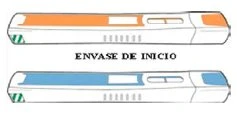
If you are using Plegridy for the first time, your doctor may advise you to gradually increase the dose so that you can get used to the effects of Plegridy before administering the full dose. You will be provided with a starter pack containing the first 2 injections: an orange pen with Plegridy 63 micrograms (for day 0) and a blue pen with Plegridy 94 micrograms (for day 14).
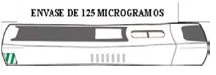
Afterwards, you will be supplied with a maintenance pack containing grey pens with Plegridy 125 micrograms (for day 28 and then every two weeks).
Read the instructions in section 7 “Instructions for injection with the Plegridy pre-filled pen” at the end of this leaflet before starting to use Plegridy.
Use the printed record box inside the lid of the starter pack to keep track of your injection dates.
Self-injection
Plegridy is injected under the skin (subcutaneous injection). Alternate the injection site. Do not always use the same injection site for subsequent injections.
You may self-inject Plegridy without assistance from your doctor if you have been trained to do so.
-
Refer to and follow the instructions provided in section 7 “Instructions for injection with the Plegridy pre-filled pen” before starting.
-
If you have difficulty handling the pen, speak with your doctor or nurse who can assist you.
Duration of treatment with Plegridy
Your doctor will inform you how long you should use Plegridy. It is important that you use Plegridy regularly. Do not make any changes not specifically instructed by your doctor.
If you use more Plegridy than you should
You should inject Plegridy only once every 2 weeks.
- If you have administered more than one injection of Plegridy within a 7-day period, contact your doctor or nurse immediately.
If you forget to use Plegridy
You should inject Plegridy once every 2 weeks. This regular schedule helps ensure the treatment is administered as consistently as possible.
If you miss your scheduled dose, inject a dose as soon as possible and then continue as usual. However, do not inject more than once within a 7-day period. Do not administer two injections to make up for a missed injection.
If you have any further questions about the use of this medicine, ask your doctor, pharmacist, or nurse.
4. Possible adverse effects
Like all medicines, this medicine can cause adverse effects, although not everyone will experience them.
Serious adverse effects
- Liver problems
(common: may affect up to 1 in 10 people)
If you experience any of the following symptoms:
-
yellowing of the skin or the whites of the eyes;
-
widespread itching;
-
feeling unwell (nausea and vomiting);
-
easy bruising on the skin.
-
Contact a doctor immediately, as these may be signs of a possible liver problem.
-
Depression
(common: may affect up to 1 in 10 people)
If you experience:
-
unusual feelings of sadness, anxiety, or hopelessness; or
-
suicidal thoughts.
-
Contact a doctor immediately.
-
Serious allergic reactions
(uncommon: may affect up to 1 in 100 people)
If you experience any of the following:
-
difficulty breathing;
-
swelling around the face (lips, tongue, or throat);
-
skin rash or redness.
-
Contact a doctor immediately.
-
Seizures
(uncommon: may affect up to 1 in 100 people)
If you experience a seizure or epileptic attack.
-
Contact a doctor immediately.
-
Injection site damage
(rare: may affect up to 1 in 1,000 people)
If you experience any of the following symptoms:
-
any open wound on the skin along with swelling, inflammation, or fluid discharge around the injection site.
-
Contact a doctor for advice.
-
Kidney problems including scarring which may reduce kidney function
(rare: may affect up to 1 in 1,000 people)
If you experience any or all of the following symptoms:
-
foamy urine;
-
fatigue;
-
swelling, especially in the ankles and eyelids, and weight gain.
-
Contact a doctor, as these may be signs of a possible kidney problem.
-
Blood problems
(rare: may affect up to 1 in 1,000 people)
The following may occur: blood clots in small blood vessels that can affect the kidneys (thrombotic thrombocytopenic purpura or hemolytic uremic syndrome). Symptoms may include increased bruising, bleeding, fever, extreme weakness, headache, dizziness, or lightheadedness. Your doctor may detect abnormalities in your blood and kidney function.
If you experience any or all of the following symptoms:
-
increased bruising or bleeding;
-
extreme weakness;
-
headache, dizziness, or lightheadedness.
-
Contact a doctor immediately.
Other adverse effects
Very common adverse effects
(may affect more than 1 in 10 people)
-
flu-like symptoms. These symptoms are not actually due to influenza, see below. They cannot be transmitted to others;
-
headache;
-
muscle pain (myalgia);
-
joint, arm, leg, or neck pain (arthralgia);
-
chills;
-
fever;
-
weakness and tiredness (asthenia);
-
redness, itching, or pain around the injection site.
-
If you are concerned about any of these effects, contact a doctor.
Flu-like symptoms
Flu-like symptoms are more common when you first start using Plegridy. As you continue with the injections, these symptoms gradually diminish over time. Below are some simple ways to help manage flu-like symptoms if you experience them.
Three simple ways to help reduce the impact of flu-like symptoms:
-
Be mindful of the time you administer your Plegridy injection. The onset and duration of flu-like symptoms vary from patient to patient. On average, flu-like symptoms begin approximately 10 hours after injection and last between 12 and 24 hours.
-
Take paracetamol or ibuprofen half an hour before your Plegridy injection and continue taking it for as long as the flu-like symptoms last. Ask your doctor or pharmacist how much to take and for how long.
-
If you have a fever, drink plenty of water to stay hydrated.
Common adverse effects
(may affect up to 1 in 10 people)
-
feeling unwell (nausea or vomiting);
-
hair loss (alopecia);
-
skin itching (pruritus);
-
increased body temperature;
-
changes around the injection site such as swelling, inflammation, bruising, warmth, rash, or discoloration;
-
blood changes that may cause tiredness or reduced ability to fight infections;
-
increased liver enzymes in the blood (detected in blood tests).
-
If you are concerned about any of these effects, contact your doctor.
Uncommon adverse effects
(may affect up to 1 in 100 people)
-
hives;
-
blood changes that may cause unexplained bruising or bleeding.
-
If you are concerned about any of these effects, contact your doctor.
Frequency not known
(cannot be estimated from the available data)
- Pulmonary arterial hypertension: A condition in which the blood vessels in the lungs become severely narrowed, leading to increased pressure in the blood vessels carrying blood from the heart to the lungs. Pulmonary arterial hypertension has been observed at various times, even several years after starting treatment with medicines containing interferon beta.
Children (from 10 years of age) and adolescents
In clinical trials, certain adverse effects were very commonly reported in both adults and children, such as redness at the injection site, flu-like symptoms, headache, and fever.
Reporting of adverse effects
If you experience any adverse effect, talk to your doctor, pharmacist, or nurse, even if it is a possible adverse effect not listed in this leaflet. You can also report them directly through the national reporting system detailed in Appendix V. By reporting adverse effects, you can help provide more information on the safety of this medicine.
To improve traceability of this medicine, your doctor or pharmacist should record the medicine’s name and batch number administered to you in your medical record. You may also wish to note this information down in case you are asked for it in the future.
5. Storage of Plegridy
Keep this medicine out of the sight and reach of children.
Do not use this medicine after the expiry date stated on the label and carton after EXP. The expiry date refers to the last day of the month indicated.
-
Store in the original packaging to protect from light. Only open the container when a new pen is needed.
-
Store in the refrigerator at 2°C to 8°C.
- Do not freeze. Discard any Plegridy that has been accidentally frozen.
-
Plegridy may be stored outside the refrigerator at room temperature (up to 25°C) for a maximum of 30 days, but must be kept protected from light.
- The containers may be removed from and returned to the refrigerator more than once if necessary.
- Ensure that the total time the pens are kept outside the refrigerator does not exceed 30 days in total.
-
Discard any pen that has been kept outside the refrigerator for more than 30 days.
-
If the number of days a pen has been kept outside the refrigerator is uncertain, discard the pen.
-
Do not use this medicine if you observe that:
- the pen is damaged.
- the solution has changed colour, is cloudy, or particles are visible.
-
Medicines should not be disposed of via wastewater or household waste. Ask your pharmacist how to dispose of medicines and containers you no longer need. This helps protect the environment.
6. Contents of the pack and other information
Composition of Plegridy
The active substance is peginterferon beta-1a.
Each 63 microgram pre-filled pen contains 63 micrograms of peginterferon beta-1a in 0.5 ml of injectable solution.
Each 94 microgram pre-filled pen contains 94 micrograms of peginterferon beta-1a in 0.5 ml of injectable solution.
Each 125 microgram pre-filled pen contains 125 micrograms of peginterferon beta-1a in 0.5 ml of injectable solution.
The other components are sodium acetate trihydrate, glacial acetic acid, arginine hydrochloride, polysorbate 20, and water for injections (see section 2, “Plegridy contains sodium”).
Appearance of the product and contents of the pack
Plegridy is a clear, colourless injectable solution in a pre-filled glass pen with an attached needle.
Pack sizes:
The Plegridy starter pack contains one orange 63 microgram pre-filled pen and one blue 94 microgram pre-filled pen.
The grey 125 microgram pens are supplied in packs containing either 2 or 6 pre-filled pens.
Only certain pack sizes may be marketed.
Marketing Authorisation Holder
Biogen Netherlands B.V.
Prins Mauritslaan 13
1171 LP Badhoevedorp
The Netherlands
Manufacturer
FUJIFILM Diosynth Biotechnologies Denmark ApS
Biotek Allé 1
DK-3400 Hillerød
Denmark
Biogen Netherlands B.V.
Prins Mauritslaan 13
1171 LP Badhoevedorp
The Netherlands
For more information about this medicine, contact the local representative of the Marketing Authorisation Holder:
|
| ||
|
| ||
|
| ||
|
| ||
|
| ||
|
| ||
|
| ||
|
| ||
|
| ||
|
| ||
|
| ||
|
| ||
|
| ||
|
| ||
|
Date of the most recent review of this leaflet:
Other sources of information
Detailed information on this medicine is available on the European Medicines Agency website: http://www.ema.europa.eu.
- Instructions for injection with the Plegridy pre-filled pen
Warning: Do not remove the cap until you are ready to inject.
How to inject Plegridy
Read the instructions before starting to use Plegridy and each time you receive a new prescription. There may be new information available. This information does not replace the conversation with your doctor or nurse about your condition or your treatment.
Note:
Before using the pen for the first time, your doctor or nurse must show you or your caregiver how to prepare and inject the pen.
The pen is intended for single use only and for subcutaneous (under the skin) administration.
Each pen can only be used once.
- Do not share the pen with anyone else to avoid the risk of transmitting infections.
- Do not use more than one pen every 14 days (every 2 weeks).
- Do not use the pen if it has been dropped or shows visible damage.
Dosing schedule
The starter pack contains your first two injections to gradually adjust your dose. Select the correct pen from the pack.
When | Dose | Which pack |
Day 0 (63 micrograms) | First injection: 63 micrograms choose the orange pen |
|
Day 14 (94 micrograms) | Second injection: 94 micrograms choose the blue pen |
|
Day 28 and every two weeks thereafter (125 micrograms) | Full dose injection: 125 micrograms choose the grey pen |
|
Do not use more than one pen within a 14-day (2-week) period.
Materials needed for the injection with the Plegridy pen:
1 Plegridy pen (see Figure A)
Before use – Parts of the Plegridy pen (Figure A)
|
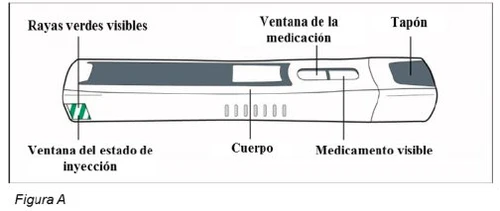
Warning: Do not remove the cap until you are ready to inject. If you remove the cap, do not put the cap back on the pen. Replacing the cap could block the pen.
Additional supplies not included in the package (see Figure B):
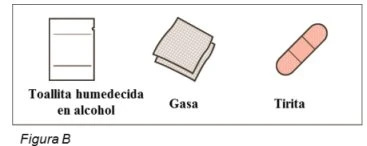
Preparation for injection
Step 1: Remove the pen from the refrigerator.
- Remove a Plegridy package from the refrigerator and select the appropriate pen (dose) from the package.
- Close the package and return it to the refrigerator after removing the pen.
- Allow the pen to reach room temperature for at least 30 minutes.
Do not use external heat sources, such as hot water, to warm the pen.
Step 2: Gather supplies and wash your hands.
- Use a clean, flat, well-lit surface, such as a table. Gather all the supplies needed to administer or have administered the injection.
- Wash your hands with soap and water.
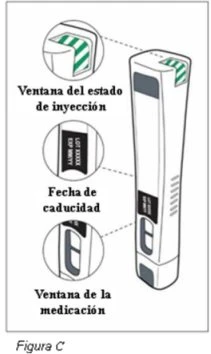
Step 3: Check the Plegridy pen (see Figure C) | |
Note: You may see air bubbles in the medication window. This is normal and will not affect your dose.
|
|
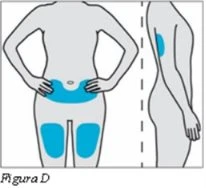
Step 4: Choose and clean the injection site | |
|
|
Administering the injection | |
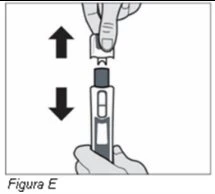
Step 5: Remove the cap from the Plegridy pen | |
|
|
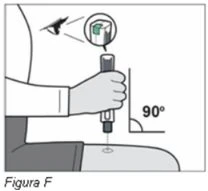
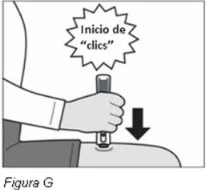
Step 6: Administer the injection | |
Warning: Do not press the pen against the injection site until you are ready to inject. You may accidentally block the pen. |
|
|
|
|
|
Step 7: Remove the Plegridy pen from the injection site | |
|
|
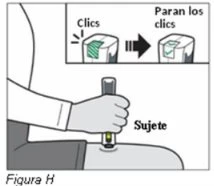
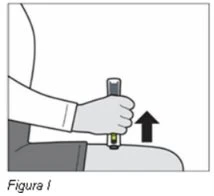
Step 8: Check that you have received the full dose of Plegridy (see Figure J) | ||
|
|
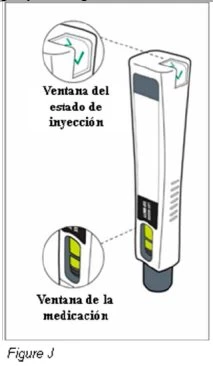
After injection
After use – Parts of the Plegridy pen (see Figure K):
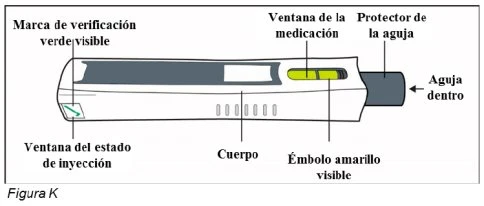
Note: Once the pen has been removed from the injection site, the needle shield will lock into place to protect against needlestick injury. Do not re-cap the pen.
Step 9: Disposal of the used Plegridy pen
Consult your doctor, pharmacist, or nurse for proper disposal of the used pen.
Do not re-cap the pen.
Step 10: Care of the injection site
If needed, apply gauze or a bandage to the injection site.
Step 11: Check the injection site
After 2 hours, check the injection site for redness, swelling, or tenderness upon palpation.
If you experience a skin reaction that does not resolve within a few days, contact your doctor or nurse.
Record the date and injection site
Record the date and site of administration for each injection.
For injections from the starter pack, you may use the recording box printed on the inside of the starter pack’s lid.
General warnings
Do not reuse the Plegridy pen.
Do not share the Plegridy pen.
Keep the Plegridy pen and all medicines out of the reach of children.
Storage
Store in the refrigerator at a controlled temperature between 2°C and 8°C, in the original closed packaging to protect from light.
If necessary, Plegridy may be stored outside the refrigerator, in the original closed packaging, at temperatures up to 25°C for a period of up to 30 days.
If necessary, Plegridy may be removed from the refrigerator and returned. The total cumulative time outside the refrigerator at temperatures up to 25°C must not exceed 30 days.
Do not freeze or expose to high temperatures.