Picoprep powder for oral solution
Spain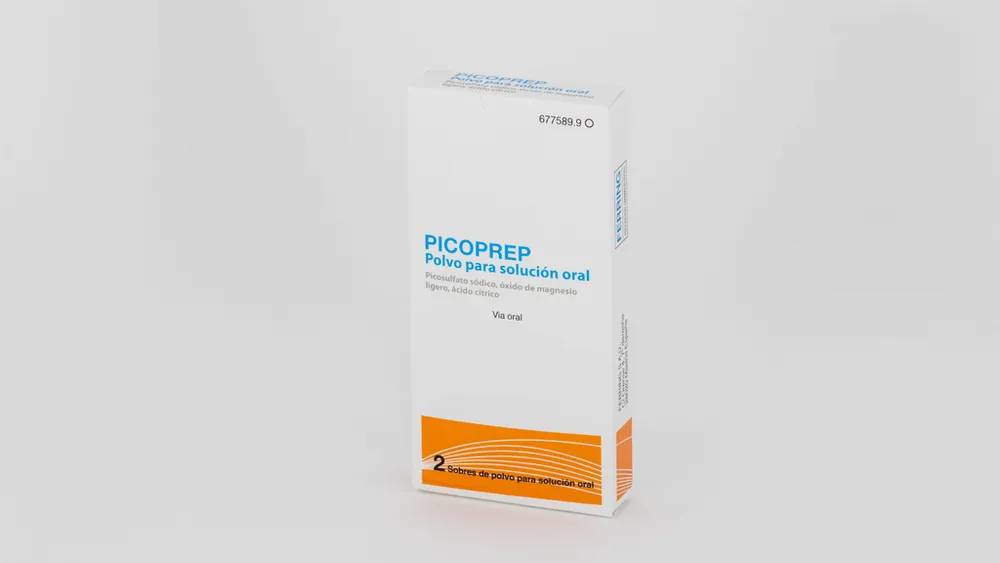
Table of Contents
- Patient Information Leaflet
- Introduction
- 1. What Picoprep is and what it is used for
- 2. What you need to know before taking Picoprep
- 3. How to take Picoprep
- 4. Possible adverse effects
- 5. Storage of Picoprep
- 6. Contents of the pack and other information
- **Marketing Authorization Holder**
- **Manufacturer**
Patient Information Leaflet
Introduction
Patient Information Leaflet
PICOPREP Powder for oral solution
Sodium picosulfate/magnesium oxide/citric acid
Read the entire leaflet carefully before you start taking this medicine, as it contains important information for you
- Keep this leaflet, as you may need to read it again. If you have any questions, consult your doctor or pharmacist.
- This medicine has been prescribed for you only, and you should not give it to other people, even if they have the same symptoms as you, because it may harm them.
- If you experience any adverse effects, consult your doctor or pharmacist, even if they are adverse effects not listed in this leaflet. See section 4.
Leaflet Contents
- What Picoprep is and what it is used for
- What you need to know before taking Picoprep
- How to take Picoprep
- Possible adverse effects
- How to store Picoprep
- Contents of the pack and other information
1. What Picoprep is and what it is used for
Picoprep is a powder containing sodium picosulfate, a laxative that works by increasing intestinal activity. Picoprep also contains magnesium citrate, another type of laxative that acts by retaining fluid in the intestine to produce a washing effect.
Picoprep is indicated in adults, adolescents, and children from 1 year of age for bowel evacuation prior to radiological examination, endoscopy, or surgery when clinically necessary.
2. What you need to know before taking Picoprep
Do not take Picoprep
- if you are allergic to sodium picosulfate, magnesium oxide, citric acid, or any of the other ingredients of this medicine (listed in section 6).
- if you have reduced ability to empty your stomach (gastric retention)
- if you have stomach or intestinal ulcers
- if you have severe kidney problems
- if you have intestinal obstruction or perforation
- if you are currently ill or feel unwell
- if you require abdominal surgery, such as for acute appendicitis
- if your doctor has told you that you have heart failure (the heart is unable to pump blood efficiently around the body)
- if you have active inflammatory bowel disease such as Crohn's disease or ulcerative colitis
- if your doctor has told you that you have too much magnesium in your blood
- if you are very thirsty or may be severely dehydrated
- if your doctor has told you that you have damaged muscles leaking their contents into the blood
- if you have any of the following conditions:
- ileus (intestinal blockage or failure of normal intestinal movements)
- toxic colitis (damage to the intestinal wall)
- toxic megacolon (enlargement of the large intestine)
In these conditions, movement of intestinal contents may be affected or blocked. Symptoms include nausea, vomiting, diarrhea, abdominal pain, tenderness or swelling, colicky pain, and fever.
Warnings and precautions
Talk to your doctor or pharmacist before taking Picoprep
- if you have recently had abdominal surgery
- if you have heart or kidney disease
- if you have inflammatory bowel disease such as ulcerative colitis or Crohn's disease
- if you are taking Picoprep before intestinal surgery
You must ensure that you drink enough fluid and electrolytes during the course of treatment. This is especially important if you are under 18 years of age, elderly, or physically weak.
If the procedure is scheduled for early in the morning, you may need to take the second dose during the night, which may disrupt sleep.
The bowel cleansing period should not exceed 24 hours, as a longer duration may increase the risk of fluid and electrolyte imbalance.
Other medicines and Picoprep
Tell your doctor or pharmacist if you are taking, have recently taken, or might need to take any other medicines.
It is especially important that you tell your doctor if you are taking:
- bulk-forming laxatives, e.g., bran
- prescription medications taken orally, especially if taken regularly, as their effects may be altered, e.g., contraceptives, antibiotics, antidiabetics, iron, penicillamine, or antiepileptics. These medications should be taken at least 2 hours before and not less than 6 hours after taking Picoprep.
- prescription medications that may affect fluid and/or electrolyte balance, e.g., diuretics, steroids, lithium, digoxin, antidepressants, carbamazepine, or antipsychotics
Pregnancy, breastfeeding, and fertility
If you are pregnant or breastfeeding, think you may be pregnant, or are planning to become pregnant, consult your doctor or pharmacist before using this medicine.
Driving and using machines
Picoprep has no effect on the ability to drive or operate machinery. However, you must ensure immediate access to a toilet after each dose until the effects have passed.
Picoprep contains potassium, lactose, and sodium
Each sachet contains 5 mmol (or 195 mg) of potassium. You should discuss this with your doctor if you have kidney problems or are on a low-potassium diet.
This medicine also contains lactose. If your doctor has diagnosed you with an intolerance to certain sugars, consult him or her before taking this medicine.
This medicine contains less than 1 mmol of sodium (23 mg) per sachet, i.e., essentially "sodium-free".
3. How to take Picoprep
Follow exactly the instructions for administration of this medicine as given by your doctor. If in doubt, consult your doctor or pharmacist again.
Picoprep powder must be dissolved in a glass of cold water (approximately 150 ml). Shake for 2–3 minutes and then drink the solution. Sometimes the solution becomes warm when Picoprep dissolves. If this happens, wait until it cools sufficiently before drinking.
Adults (including elderly) and children aged 9 years and older:
The recommended dose is one sachet 10 to 18 hours before the procedure and another sachet 4 to 6 hours before the procedure.
The first sachet should be taken followed by at least five glasses of clear liquids (not water only) of 250 ml, consumed over several hours, and the second sachet should be taken followed by at least three glasses of clear liquids (not water only) of 250 ml, taken over several hours. You should continue drinking clear liquids (not water only) up to 2 hours before the procedure. Do not drink water only.
Children (under 9 years): For determining dosing times in children, refer to the instructions for adults.
A measuring spoon is provided with the medicine.
From 1 year to under 2 years: the first dose is 1 teaspoon, the second dose is 1 teaspoon.
From 2 years to under 4 years: the first dose is 2 teaspoons, the second dose is 2 teaspoons.
From 4 years to under 9 years: the first dose is 1 sachet (taken as described under "adults"), the second dose is 2 teaspoons.
9 years and older: dosing as for adults.
To measure the dose using the measuring spoon:
-
Fill the measuring spoon with the powder from the sachet.
-
Run the edge of a knife across the top of the measuring spoon.
-
The powder remaining in the measuring spoon is one teaspoon (4 g of powder).
-
Pour the powder from the measuring spoon into a glass of water. The glass should contain:
-
Approximately 50 ml of water if measuring one teaspoon of powder
-
Approximately 100 ml of water if measuring two teaspoons of powder
-
Stir the mixture in the glass for 2–3 minutes.
-
Drink the solution. Occasionally the solution warms up when Picoprep dissolves. If this occurs, wait until it cools sufficiently before drinking.
-
Discard the remaining powder from the sachet.
After taking a dose of Picoprep, you will likely experience frequent bowel movements with a sensation of evacuation. Please ensure you have access to a toilet at all times after each dose, until the effects subside.
To replace fluid loss from the body, it is important to drink plenty of clear liquids (not water only) throughout treatment with Picoprep until bowel movements have stopped. In general, you should drink clear liquids (not water only) whenever you are thirsty. Do not drink water only.
Clear liquids include pulp-free fruit juices, soft drinks, broths, tea, coffee (without milk, soy, or cream), and water. Do not drink water only.
The success of the hospital procedure you are undergoing depends on the intestine being as clean as possible. The hospital procedure may need to be repeated if the intestine is not adequately cleaned. Always follow the dietary instructions provided by your doctor.
Picoprep must not be used as a regular laxative.
If you take more Picoprep than you should
If you have taken more Picoprep than you should, contact your doctor or nearest hospital immediately.
In case of overdose or accidental ingestion, contact your doctor or pharmacist immediately, or call the Toxicology Information Service at: 91 562 04 20 (indicating the medicine and amount ingested).
If you forget to take Picoprep
Please consult your doctor, nurse, or pharmacist.
If you have any further questions about the use of this product, ask your doctor or pharmacist.
4. Possible adverse effects
Like all medicines, this medicine can cause adverse effects, although not everyone will experience them.
Contact your doctor immediately if any of the following adverse effects occur, as they may be serious:
- Allergic reaction including skin rash, redness of the skin, hives, itching, swelling of the throat and/or difficulty breathing (uncommon)
- Change in consciousness, such as loss or reduction in level of consciousness (uncommon)
- Confusion/disorientation (uncommon)
- Fainting/syncope (uncommon)
- Dizziness/vertigo (uncommon)
- Seizures (uncommon)
- Abdominal pain (common)
- Vomiting (common)
Other known adverse effects of Picoprep are listed below:
Common (affects less than 1 in 10 but more than 1 in 100 patients):
- Headache
- Nausea
- Hypermagnesemia (elevated levels of magnesium in blood)
Uncommon (affects less than 1 in 100 but more than 1 in 1,000 patients):
- Low levels of potassium in the blood ("hypokalemia")
- As initial clinical effects, very frequent loose stools or diarrhea may occur. However, if your bowel movements become problematic or cause concern, you should contact your doctor.
Rare (affects less than 1 in 1,000 but more than 1 in 10,000 patients):
- Low levels of sodium in the blood ("hyponatremia")
- Intestinal ulcers
- Involuntary or accidental loss of intestinal contents ("anal incontinence")
- Anal pain
If any of the side effects worsen, inform your doctor or nurse. If you notice any side effect not listed in this leaflet, inform your doctor, nurse, or pharmacist.
Reporting of adverse effects:
If you experience any type of adverse effect, consult your doctor or pharmacist, even if it is a possible adverse effect not listed in this leaflet. You can also report them directly through the Spanish Pharmacovigilance System for Human Medicines: https://www.notificaram.es. By reporting adverse effects, you can help provide more information on the safety of this medicine.
5. Storage of Picoprep
Keep this medicine out of the sight and reach of children.
Do not use this medicine after the expiry date stated on the container following EXP. The expiry date is the last day of the month indicated.
Store in the original packaging to protect from moisture.
For single use only. Discard any unused contents.
Medicines must not be disposed of via wastewater or household waste. Dispose of unused medicines and their containers at the SIGRE collection point at your pharmacy. If you are unsure, ask your pharmacist how to dispose of medicines and containers you no longer need. This will help protect the environment.
6. Contents of the pack and other information
Composition of Picoprep
The active substances are sodium picosulfate 10 mg, magnesium oxide 3.5 g and citric acid 12 g.
The other components are potassium hydrogen carbonate, sodium saccharin and a natural orange flavour based on dehydrated orange, including arabic gum, lactose, ascorbic acid and butylated hydroxyanisole.
Nature and contents of the container
This medicine is called Picoprep. It is a powder for oral solution. It is available in packs containing 2, 100 sachets (50 packs of 2 sachets) and 300 sachets (150 packs of 2 sachets).
The pack includes a measuring spoon to ensure correct dosing in children. The measuring spoon is used to measure 4 g of powder (4.75 ml). You should only use the measuring spoon if you need to dose for a child under 9 years of age.
Only some pack sizes may be marketed.
Marketing Authorization Holder
FERRING S.A.U
C/ del Arquitecto Sánchez Arcas 3, 1º
Madrid 28040
-Spain
Manufacturer
Ferring GmbH
Wittland 11
D-24109 Kiel
Germany
This medicine is authorised in the European Economic Area member states under the following names:
PICOLAX United Kingdom
PICOPREP Germany, Austria, Belgium, Bulgaria, Cyprus, Denmark, Estonia, Finland, France, Greece, Hungary, Iceland, Italy, Latvia, Lithuania, Luxembourg, Norway, Netherlands, Portugal, Romania, Czech Republic, Slovak Republic, Sweden.
This leaflet was approved in April 2025.
Detailed and up-to-date information on this medicine is available on the website of the Spanish Agency for Medicines and Health Products (AEMPS) http://aemps.gob.es