Piasky 340 mg solution for injection and for infusion
Spain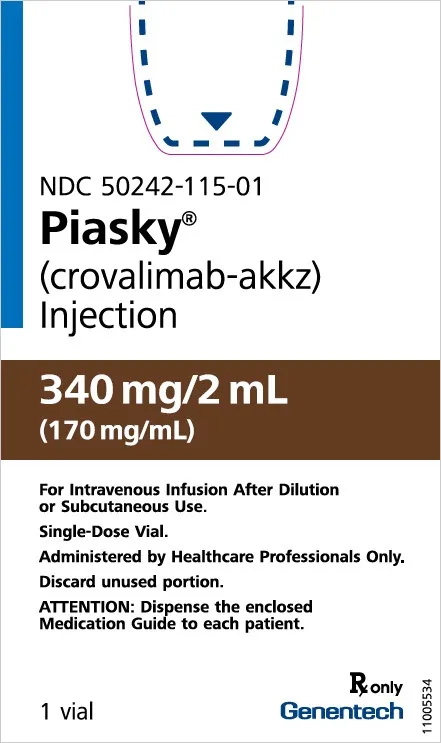
Table of Contents
Package leaflet: Information for the user
Introduction
Package leaflet: information for the patient
Piasky 340 mg injection solution for infusion
crovalimab
This medicinal product is subject to additional monitoring, which will allow rapid identification of new safety information. You can help by reporting any adverse reactions you may experience. Information on how to report adverse reactions is included at the end of section 4.
Please read this entire leaflet carefully before you start using this medicine, as it contains important information for you.
- Keep this leaflet, as you may need to read it again.
- If you have any questions, consult your doctor, pharmacist, or nurse.
- This medicine has been prescribed for you only and must not be given to other people, even if they have the same symptoms as you, since it could harm them.
- If you experience any adverse reactions, consult your doctor, pharmacist, or nurse, even if they are adverse reactions not listed in this leaflet. See section 4.
In addition to this leaflet, your doctor will provide you with a "Patient Information Card" listing the signs of meningococcal infection and sepsis:
- carry it with you at all times throughout treatment and
- for 11 months after the last dose of Piasky
Contents of this leaflet
- What Piasky is and what it is used for
- What you need to know before using Piasky
- How to use Piasky
- Possible side effects
- How to store Piasky
- Contents of the pack and other information
- Instructions for use
1. What Piasky is and what it is used for
What Piasky is
Piasky contains the active substance crovalimab. It belongs to a class of medicines called "monoclonal antibodies", which are proteins designed to bind to a specific target in the body. Piasky is also known as a complement component C5 (C5) inhibitor.
What Piasky is used for
Piasky is used for the treatment of a disease called paroxysmal nocturnal haemoglobinuria (PNH). It is used in adults and adolescents aged 12 years and older who weigh 40 kg or more, including patients with haemolysis (destruction of red blood cells) and clinical symptoms indicative of high disease activity, and in patients with stable disease after having received treatment with a C5 inhibitor for at least the previous 6 months.
PNH can cause the immune system to attack the body's own red blood cells, leading to haemolysis and resulting in:
- Symptoms of anaemia (low red blood cell levels), such as fatigue or lack of energy and dark-coloured urine
- Abdominal pain
- Difficulty swallowing
- Difficulty achieving or maintaining an erection (erectile dysfunction)
- Impaired kidney function
- Blood clot formation with symptoms such as progressive swelling of one leg or difficulty breathing without having performed strenuous activities
Patients with PNH may require periodic blood transfusions.
How Piasky works
The active substance in Piasky, crovalimab, binds to complement protein 5 (C5), which is part of the body's defence system known as the "complement system". By doing so, it blocks the activation of C5, thereby preventing the immune system from attacking and damaging red blood cells, thus reducing the breakdown of red blood cells. This helps reduce the symptoms of PNH and the number of blood transfusions required.
2. What you need to know before using Piasky
Do not use Piasky
- if you are allergic to crovalimab or to any of the other ingredients of this medicine (listed in section 6).
- if you have a meningococcal infection (a serious infection caused by the bacterium Neisseria meningitidis that can affect the membranes covering the brain and spinal cord and spread through the blood).
- if you have not been vaccinated against meningococcal infection, unless you are to receive preventive antibiotic treatment for up to 2 weeks after receiving this vaccine.
Do not use Piasky if any of the above apply to you. If you are unsure, consult your doctor, pharmacist, or nurse before using Piasky.
Warnings and precautions
Talk to your doctor, pharmacist, or nurse before starting Piasky. You and/or your caregiver will also be given a patient or caregiver guide containing additional information about Piasky.
Serious meningococcal infections
Piasky may increase the risk of meningococcal infections caused by a bacterium called Neisseria meningitidis, because it blocks part of the immune system. This includes serious infections such as septicemia (blood poisoning) and meningitis (inflammation of the membranes covering the brain and spinal cord).
-
Immediately inform your doctor if you experience any of the following symptoms, which may be signs of meningococcal infection:
-
Fever
-
Feeling unwell (nausea)
-
Vomiting
-
Headache
-
Confusion or irritability
-
Stiff back or neck
-
Muscle pain, with flu-like signs or symptoms
-
Sensitivity of the eyes to light
-
Skin rash or spots
Talk to your doctor before starting Piasky to ensure your meningococcal infection vaccine is up to date; complete vaccination must have been received at least 2 weeks before starting Piasky. Your doctor may decide you need to be revaccinated, even if you were vaccinated in childhood.
If you have not completed the full vaccination series but need to receive Piasky immediately, you should be vaccinated as soon as possible. To reduce the risk of infection, your doctor will prescribe antibiotics starting when you begin Piasky treatment and continuing for 2 weeks after vaccination.
Vaccination does not always prevent this type of infection. Your doctor may decide you need additional measures to prevent infection.
Patient information card
Your doctor will give you a "Patient Information Card" listing the signs of meningococcal infection and sepsis:
- carry it with you at all times during treatment with Piasky, and
- for 11 months after your last dose of Piasky.
Other serious infections
Piasky may also increase the risk of other serious infections, such as those caused by Streptococcus pneumoniae and Haemophilus influenzae.
-
Inform your doctor, pharmacist, or nurse if you experience any of the following symptoms, which may be signs of infection:
-
Fever
-
Cough
-
Chest pain
-
Fatigue
-
Shortness of breath
-
Painful rash
-
Sore throat
-
Burning or stinging pain when urinating
-
Feeling weak or generally unwell
Talk to your doctor before starting Piasky to ensure your vaccines against Streptococcus pneumoniae and Haemophilus influenzae infections are up to date; complete vaccination must have been received at least 2 weeks before starting Piasky. Your doctor may decide you need to be revaccinated, even if you were vaccinated in childhood.
If you have not completed the full vaccination series but need to receive Piasky immediately, you should be vaccinated as soon as possible. To reduce the risk of infection, your doctor will prescribe antibiotics starting when you begin Piasky treatment and continuing for 2 weeks after vaccination.
Your doctor may recommend you receive other vaccines before treatment. Talk to your doctor before starting treatment.
Reaction due to switching from another C5 inhibitor
Before using Piasky, inform your doctor if you have ever received treatment with any other C5 inhibitor. This is because you may experience a temporary type of reaction known as immune complex-mediated type III reaction during the first 30 days after switching from another C5 inhibitor to Piasky. This may also occur if you stop using Piasky and switch to a different C5 inhibitor.
-
Inform your doctor if you experience any signs of this type of reaction, such as:
-
Joint pain or other muscle, bone, or tissue problems
-
Numbness, tingling, or pins-and-needles sensation, especially in the hands and feet
-
Rash or other skin problems
-
Fever
Infusion and injection reactions
When Piasky is administered by intravenous infusion (drip into a vein) or subcutaneous injection (injection under the skin), you may experience infusion or injection reactions. Immediately inform your doctor or nurse if you experience any of the following, which may be signs of an infusion or injection reaction:
- Headache
- Back pain
- Pain at the infusion site or elsewhere
- Swelling
- Bruising or bleeding
- Reddened skin
- Itching and rash
You may also have an allergic reaction to the infusion or injection. Immediately inform your doctor or nurse if you experience any of the following signs of serious allergic reactions:
- Chest tightness or wheezing
- Shortness of breath
- Fever or chills
- Severe dizziness or mild lightheadedness
- Swelling of the lips, tongue, or face
- Itchy skin, hives, or rash
If you have had an infusion or injection reaction, including an allergic reaction, you must consult your doctor or nurse to confirm whether treatment with Piasky should continue.
Discontinuation of Piasky treatment
If you stop treatment with Piasky and do not switch to another treatment for PNH, immediately inform your doctor if you develop symptoms indicating intravascular hemolysis (destruction of red blood cells in blood vessels), including:
- Symptoms of anemia (low red blood cell levels), such as fatigue or lack of energy and dark urine
- Abdominal pain
- Difficulty swallowing
- Difficulty achieving or maintaining an erection (erectile dysfunction)
- Kidney dysfunction
- Blood clot formation with symptoms such as progressive swelling in one leg or difficulty breathing without having performed strenuous activity
Formation of antibodies (immunogenicity)
The immune system may produce antibodies (proteins the body produces to fight unwanted substances) against crovalimab, which could lead to a reduced response or loss of response to Piasky. Immediately inform your doctor if you experience any of the following symptoms:
- Symptoms of anemia (low red blood cell levels), such as fatigue or lack of energy and dark urine
- Abdominal pain
- Difficulty swallowing
- Difficulty achieving or maintaining an erection (erectile dysfunction)
- Kidney dysfunction
- Blood clot formation with symptoms such as progressive swelling in one leg or difficulty breathing without having performed strenuous activity
Children and adolescents
Do not administer Piasky to children under 12 years of age or who weigh less than 40 kg. This is because it has not yet been studied in this group.
Other medicines and Piasky
Inform your doctor, pharmacist, or nurse if you are taking, have recently taken, or might need to take any other medicines.
In particular, inform your doctor if you are currently receiving or have ever received treatment with any other C5 inhibitor. This is because you may experience a temporary type of reaction known as immune complex-mediated type III reaction (see "Warnings and precautions").
Pregnancy, breastfeeding, and fertility
If you are pregnant or breastfeeding, think you may be pregnant, or plan to become pregnant, consult your doctor before using this medicine.
There is no information on the use of Piasky in pregnant women, and the effects on the fetus are unknown. Your doctor will inform you of the potential risks of using Piasky during pregnancy.
If you are breastfeeding, it is unknown whether Piasky passes into breast milk, but based on its characteristics, it is expected to pass into milk. Your doctor will inform you of the potential risks of using Piasky while breastfeeding.
Driving and using machines
The influence of Piasky on the ability to drive and use machines is none or negligible.
3. How to use Piasky
Follow exactly the administration instructions for this medicine given by your doctor. If in doubt, consult your doctor again.
Vaccines administered before using Piasky
At least 2 weeks before starting treatment with Piasky, your doctor will administer a vaccine against meningococcal infections if you have not been vaccinated before or are not up to date with vaccination.
If you start treatment with Piasky less than 2 weeks after receiving this vaccine, your doctor will prescribe antibiotics for at least 2 weeks after vaccination to reduce the risk of infection.
How to use Piasky
Piasky is administered by intravenous infusion (intravenous drip) or by subcutaneous injection (injection under the skin).
Only the first dose will be administered by intravenous infusion by a healthcare professional. Subsequent doses are administered by subcutaneous injection. Once you have been trained, you may self-inject, or your caregiver may administer the subcutaneous injection of Piasky without medical supervision.
Your doctor or nurse will teach you or your caregiver how to prepare this medicine and how to administer the subcutaneous injections. Read carefully and follow the instructions provided in the "Instructions for use" at the end of this leaflet.
When to use Piasky
A healthcare professional will administer your first dose on Day 1. This is the first loading dose and is higher than the doses that will be administered subsequently during treatment. Additional loading doses will be given on Days 2, 8, 15, and 22.
From then on, Piasky will be administered on Day 29 and then every 4 weeks by subcutaneous injection. These are the maintenance doses.
If you were previously receiving another medication for PNH called a "complement inhibitor," the first loading dose of Piasky should be given at the time when your next dose of that medication was scheduled.
How much Piasky to use
Your doctor will prescribe a dose and treatment schedule based on your body weight.
If you weigh 40 kg or more, but less than 100 kg:
- The first loading dose on Day 1 will be 1,000 mg, administered by intravenous infusion over 60 minutes.
- Subsequent loading doses on Days 2, 8, 15, and 22 will be 340 mg, administered by a single subcutaneous injection.
- You will receive a maintenance dose of 680 mg, administered by two subcutaneous injections on Day 29 and thereafter every 4 weeks.
If you weigh 100 kg or more:
- The first loading dose on Day 1 will be 1,500 mg, administered by intravenous infusion over 90 minutes.
- Subsequent loading doses on Days 2, 8, 15, and 22 will be 340 mg, administered by a single subcutaneous injection.
- You will receive a maintenance dose of 1,020 mg, administered by three subcutaneous injections on Day 29 and thereafter every 4 weeks.
The maintenance dose may change if your body weight changes during treatment with Piasky. Consult your doctor if your weight increases above or decreases below 100 kg. Your doctor or nurse should monitor your weight regularly.
If you use more Piasky than you should
If you think you have used more Piasky than prescribed, consult your doctor, pharmacist, or nurse.
If you forget to use Piasky
For the treatment to be fully effective, it is very important to use Piasky as prescribed.
- If you miss an appointment with your doctor or nurse to receive injections, schedule another appointment immediately.
- If you or your caregiver forgets to administer part or all of the dose of Piasky at home, the missed dose or remaining portion should be administered as soon as possible, and then the next dose should be given at the usual scheduled time. Do not administer a double dose to make up for a missed dose. If in doubt, consult your doctor, pharmacist, or nurse.
If you stop using Piasky
Do not stop treatment with Piasky unless you have discussed it with your doctor first. This is because stopping treatment will discontinue the effect of the medicine, which may cause symptoms of PNH to reappear or worsen.
4. Possible adverse effects
Like all medicines, this medicine can cause adverse effects, although not everyone will experience them.
Your doctor will discuss the possible adverse effects with you and explain the risks and benefits of Piasky before starting treatment.
Piasky may cause some adverse effects that you must report to your doctor immediately. The most serious adverse effects are meningococcal infection and serious allergic reaction.
-
If you have any of the following signs of meningococcal infection, you must inform your doctor immediately:
-
Fever
-
Malaise (nausea or vomiting)
-
Headache
-
Confusion or irritability
-
Stiff back or neck
-
Muscle pain, with flu-like signs or symptoms
-
Sensitivity of the eyes to light
-
Skin rash or spots
-
If you experience any of the following signs of serious allergic reaction, you must inform your doctor immediately:
-
Chest tightness or wheezing
-
Feeling short of breath
-
Fever or chills
-
Severe dizziness
-
Lightheadedness
-
Swelling of the lips, tongue, or face
-
Itching of the skin, hives, or rash
Very common (may affect more than 1 in 10 people):
- Fever
- A reaction due to switching from another C5 inhibitor (type III hypersensitivity mediated by immune complexes; symptoms may include redness, itching, or pain of the skin)
- Nasal and throat infection (upper respiratory tract). Symptoms may include runny nose, sneezing, sore throat, and cough
- Infusion-related reactions
- Headache
Common (may affect up to 1 in 10 people):
- Allergic reactions (hypersensitivity)
- Urinary tract infection
- Lung infection (pneumonia)
- Reaction to injection
- Sore throat and runny nose (nasopharyngitis)
- Joint pain (arthralgia)
- Abdominal pain
- Diarrhea
- Extreme tiredness/weakness (asthenia)
- Fatigue
- Rash
- Respiratory tract infection
Uncommon (may affect up to 1 in 100 people):
- Bacterial infection (bacteremia)
- Kidney infection (pyelonephritis)
- Severe reaction to an infection (sepsis), which may be accompanied by severely low blood pressure (septic shock)
- Local reaction at the injection site
Tell your doctor, pharmacist, or nurse if you experience any of the adverse effects listed above. If you are unsure about what the aforementioned side effects are, ask your doctor to explain them to you.
Reporting of adverse effects
If you experience any type of adverse effect, consult your doctor, pharmacist, or nurse, even if it is a possible adverse effect not listed in this leaflet. You can also report them directly through the national reporting system included in Appendix V. By reporting adverse effects, you can help provide more information on the safety of this medicine.
5. Storage of Piasky
Keep this medicine out of the sight and reach of children.
Do not use this medicine after the expiry date stated on the carton and on the label of the vial after EXP. The expiry date refers to the last day of the month indicated.
Store in a refrigerator (between 2 °C and 8 °C). Do not freeze.
Prior to administration, unopened Piasky vials may be kept outside the refrigerator at room temperature if necessary, and may then be returned to the refrigerator. In the event of temperature deviations outside 2 °C – 8 °C, unopened vials in their original packaging may be stored at room temperature (up to 30 °C) for a total cumulative period not exceeding 7 days. You may mark a check box inside the vial carton for each day Piasky is stored outside the refrigerator. Discard the vial if it has been stored outside the refrigerator at room temperature for more than 7 days.
Keep the vial in the outer packaging to protect it from light.
Do not store pre-filled syringes of this medicine. Pre-filled syringes containing Piasky must be used immediately.
Do not use this medicine if you notice it is cloudy, discolored, or contains particles.
Medicines must not be disposed of via wastewater or household waste. Ask your pharmacist how to dispose of medicines and packaging that you no longer need. This will help protect the environment.
Further details are provided in the "Instructions for Use". Please read them carefully before using the Piasky vial.
6. Contents of the pack and other information
Composition of Piasky
-
The active substance is crovalimab. Each glass vial contains 340 mg of crovalimab in 2 ml of solution. Each ml of injectable and infusion solution contains 170 mg of crovalimab.
-
The other components are histidine, aspartic acid, arginine hydrochloride, poloxamer 188, and water for injections.
Appearance of the product and contents of the pack
Piasky is an injectable and infusion solution ranging from clear to very opalescent and from almost colourless to yellowish-brown (injectable/for infusion).
Each pack of Piasky contains 1 glass vial of 2 ml.
Marketing Authorization Holder
Roche Registration GmbH
Emil-Barell-Strasse 1
79639 Grenzach-Wyhlen
Germany
Manufacturer
Roche Pharma AG
Emil-Barell-Strasse 1
79639 Grenzach-Wyhlen
Germany
For further information about this medicinal product, you may contact the local representative of the Marketing Authorization Holder:
Belgium/Belgium/Belgium Luxembourg/Luxembourg N.V. Roche S.A. Belgium/Belgium/Belgium Tel/Tel: +32 (0) 2 525 82 11 | Latvia Roche Latvija SIA Tel: +371 - 6 7039831 |
| Lithuania UAB “Roche Lietuva” Tel: +370 5 2546799 |
Czech Republic Roche s. r. o. Tel: +420 - 2 20382111 | Hungary Roche (Hungary) Ltd. Tel: +36 – 1 279 4500 |
Denmark Roche Pharmaceuticals A/S Tlf: +45 - 36 39 99 99 | Netherlands Roche Nederland B.V. Tel: +31 (0) 348 438050 |
Germany Roche Pharma AG Tel: +49 (0) 7624 140 | Norway Roche Norge AS Tlf: +47 - 22 78 90 00 |
Estonia Roche Eesti OÜ Tel: + 372 - 6 177 380 | Austria Roche Austria GmbH Tel: +43 (0) 1 27739 |
Greece, Cyprus Roche (Hellas) A.E. Greece Tel: +30 210 61 66 100 | Poland Roche Polska Sp.z o.o. Tel: +48 - 22 345 18 88 |
Spain Roche Farma S.A. Tel: +34 - 91 324 81 00 | Portugal Roche Farmacêutica Química, Lda Tel: +351 - 21 425 70 00 |
France Roche Tél: +33 (0)1 47 61 40 00 | Romania Roche România S.R.L. Tel: +40 21 206 47 01 |
Croatia Roche d.o.o Tel: +385 1 4722 333 | Slovenia Roche farmacevtska družba d.o.o. Tel: +386 - 1 360 26 00 |
Ireland, Malta Roche Products (Ireland) Ltd. Ireland/Ireland Tel: +353 (0) 1 469 0700 | Slovakia Roche Slovensko, s.r.o. Tel: +421 - 2 52638201 |
Iceland Roche Pharmaceuticals A/S c/o Icepharma hf Sími: +354 540 8000 | Finland Roche Oy Puh/Tel: +358 (0) 10 554 500 |
Italy Roche S.p.A. Tel: +39 - 039 2471 | Sweden Roche AB Tel: +46 (0) 8 726 1200 |

Date of the most recent review of this leaflet:
Other sources of information
Detailed information on this medicine is available on the website of the European Medicines Agency: https://www.ema.europa.eu.
This leaflet is available on the website of the European Medicines Agency in all languages of the European Union/European Economic Area.
- Instructions for use
Before using the vial
Read all of these instructions for use before you or your caregiver begin using the Piasky vial and each time the medicine is prescribed again. It may contain new information. This information does not replace the consultation with your doctor regarding your condition or treatment.
Your doctor may decide that you or your caregiver may administer Piasky injections.
- In such case, your doctor or nurse will show you or your caregiver how to correctly inject the Piasky dose.
- Do not use the Piasky vial until your doctor or nurse has shown you or your caregiver how to correctly inject it.
- Do not inject the medicine into a vein (intravenous injection).
Storage and handling
- Store the Piasky vial in its original packaging in the refrigerator at 2 °C to 8 °C until ready for use.
- Once removed from the refrigerator, unopened vials in their original packaging may be stored at room temperature (up to 30 °C) for a total cumulative period not exceeding 7 days.
- In case of temperature deviation outside 2 °C – 8 °C, at room temperature, you may check a box inside the vial packaging for each day that Piasky is stored outside the refrigerator. Discard the vial if it has been stored outside the refrigerator at room temperature for more than 7 days.
- Store the Piasky vial in the outer packaging to protect it from light.
- Once removed from the packaging, keep the Piasky vial away from direct sunlight.
- Keep Piasky vials, syringes, and needles out of the reach of children.
- Each Piasky vial, syringe, and needle may be used only once.
- Keep hands away from the needle tip during use and disposal.
- Do not freeze the vial. Do not use the vial if it has been frozen. Dispose of the vial safely in a sharps container (see step 43) and contact your doctor or pharmacist.
- Do not use the vial if it has been stored at room temperature, up to 30 °C, for more than 7 days. Dispose of the vial safely in a sharps container (see step 43) and contact your doctor or pharmacist.
- Do not store pre-filled Piasky syringes. Any syringe filled with the medicine must be used immediately.
- Do not shake the vial.
- Do not reuse the vial, syringe, or needles for another injection.
- Do not share the syringe or needles with other people.
Full dose and number of injections
Your Piasky dose may require up to 3 consecutive injections. You may need up to 3 Piasky vials to receive your full dose.
- Your doctor or pharmacist will tell you or your caregiver how many injections are needed and how often the medicine should be injected.
- If the prescribed dose of Piasky is 680 mg, administer 2 separate consecutive injections.
- If the prescribed dose of Piasky is 1,020 mg, administer 3 separate consecutive injections.
- Always use a new Piasky vial for each injection.
- If you are unsure about the dose, ask your doctor or pharmacist.
- Do not split your full dose if you do not have all the Piasky vials you need. Contact your doctor or pharmacist.
Materials needed for 1 injection
This list is for a single injection. Adjust the number of materials according to the number of injections required (see section "Full dose and number of injections" above).
Included in the package:
- 1 Piasky vial
Not included in the package:
- 18G single-bevel transfer needle or standard 21G needle.
- 25G, 26G, or 27G injection needle with safety shield. Needle length should be between 9 mm (3/8") and 13 mm (½").
- 2 ml or 3 ml syringe
- 2 alcohol-impregnated wipes (one for skin and one for the vial)
- 1 sterile cotton ball or gauze pad
- 1 small adhesive bandage
- 1 puncture-resistant sharps container (see step 43)
Open the package
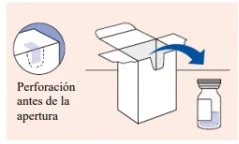
- Remove from the refrigerator the number of Piasky vial packages you need. Open the package(s) and take out the vial(s).
Check the dose prescribed by your doctor. The full dose may require up to 3 consecutive injections. You may need up to 3 vials to receive a complete dose. Gather all the vials you need. |
- Place the vial(s) on a clean, flat surface.
- Do not use the vial if the container is damaged or if the breakage seal is broken. Safely dispose of the vial in a sharps container (see step 43) and contact your doctor or pharmacist.
Check the vial(s)
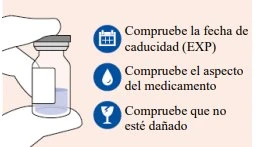
-
Check the expiration date (EXP) on the vial(s).
-
Check the appearance of the medicine.
The medicine should be clear to very opalescent and from almost colorless to brownish yellow.
- Check whether the vial(s) show any damage, such as cracks or scratches.
- Do not use if the expiration date (EXP) has passed.
- Do not use if the medicine is cloudy, discolored, or contains particles.
- Do not use the vial if it is cracked or broken.
- If any of the above conditions are observed, safely dispose of the vial in a sharps container (see step 43) and contact your doctor or pharmacist.
Warming time
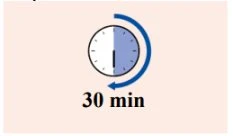
- Leave the vial(s) on a clean, flat surface for 30 minutes, protected from direct sunlight. This allows the medicine to reach room temperature.
If the vial is not at room temperature, the cold medicine may make it difficult to withdraw from the vial and administer the injection. It could also cause discomfort.
- Do not speed up the warming process in any way; for example, do not use a microwave, hot water, or expose it to direct sunlight.
- Do not remove the vial cap while it is reaching room temperature.
Gather the remaining materials
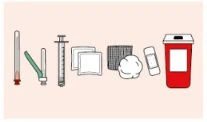
- Gather the remaining materials while the vial reaches room temperature.
This list is for one single injection. Adjust the quantity of materials according to the number of injections required.
Note: The color of the materials may differ from that shown in the images.
- 1 transfer needle
- 1 injection needle with safety shield
- 1 syringe
- 2 alcohol-impregnated wipes: one for the skin and one for the vial
- 1 sterile cotton ball or gauze pad
- 1 small adhesive bandage
- 1 sharps container
Choose the injection site
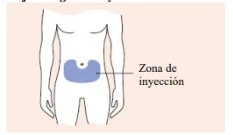
- Piasky must only be injected into the stomach (abdominal) area.
Make sure not to administer the injection in the same spot repeatedly. Each injection should be given at least 5 cm away from the site used for the previous injection.
- Do not inject into the arm or thigh.
- Do not inject within 5 cm of the navel.
- Do not administer the injection into moles, scars, or areas where the skin is tender, bruised, red, hard, or damaged.
Clean the injection site
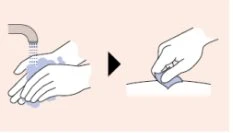
-
Wash your hands with soap and water.
-
Clean the injection site with an alcohol-impregnated wipe and allow it to air dry.
- Do not touch, fan, or blow on the area you have cleaned.
Clean the vial top
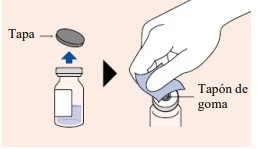
-
Remove the colored cap from the vial. Dispose of the colored cap in a sharps container (see step 43).
-
Clean the rubber stopper with the other alcohol-impregnated wipe.
- Do not touch the rubber stopper after cleaning it.
Attach the transfer needle
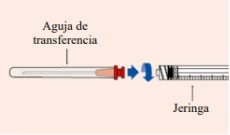
-
Remove the syringe and transfer needle from their packaging.
-
Push and twist the transfer needle onto the syringe until it is securely attached.
Do not remove the needle cap.
- Do not use the injection needle (with safety shield) to withdraw the medicine.
Fill the syringe with air
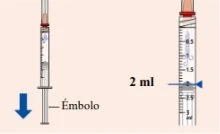
- With the needle cap still in place, slowly pull back the plunger to draw air into the syringe up to the 2 mL mark.
Note: The vial does not contain air. Injecting air into the vial will facilitate medicine withdrawal and prevent the plunger from moving.
Remove the transfer needle cap
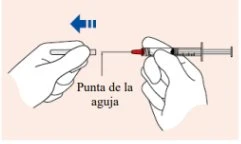
-
Hold the syringe in the center and carefully remove the needle cap.
-
Place the cap on a flat surface.
You will need to replace this cap on the needle after transferring the medicine.
- Do not discard the cap.
- Do not touch the needle or allow the needle to touch any surface after removing the cap.
Inject air into the vial
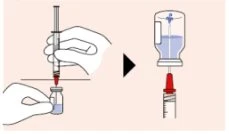
-
Hold the vial on a flat surface and insert the entire needle straight into the center of the rubber stopper.
-
Hold the needle in place and turn the vial upside down.
-
Ensure the needle tip is above the medicine level.
-
With the vial held in the inverted position, push the plunger to inject air into the vial.
-
Continue to press down on the plunger with your fingers to prevent it from moving.
- Do not inject air into the medicine, as this may create bubbles.
Transfer all the medicine
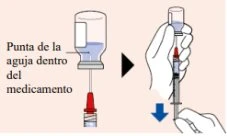
-
Slide the needle tip down into the medicine.
-
Slowly pull back the plunger to transfer all the medicine into the syringe.
Make sure to keep the needle tip inside the medication at all times while transferring the medication into the syringe. You may need to slide the needle downward at some point, otherwise you may transfer some air into the syringe |
- Do not completely remove the needle from the vial.
- Do not completely pull out the plunger from the syringe.
Remove air bubbles
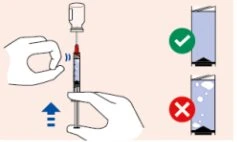
-
If you see air bubbles or an air-filled space in the syringe, gently tap one side of the syringe with your finger until the bubbles rise to the top of the syringe.
-
Slowly push the plunger upward to return the air bubbles into the vial.
If some medication is pushed back into the vial, slowly pull back the plunger (more slowly this time) to transfer all of the medication from the vial (steps 23 and 24).
Replace the cap on the transfer needle
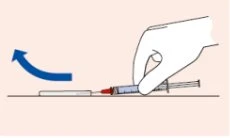
-
Remove the syringe from the vial.
-
With one hand, place the needle with the cap onto a flat surface, inserting the needle into the cap.
-
Once the needle is covered, lift the syringe and press the cap so it fits completely onto the needle.
- Do not hold the cap with your fingers while sliding the needle into it.
Warning: Do not use the transfer needle to inject the medicine. The transfer needle is too large to inject the medicine. |
Remove the transfer needle
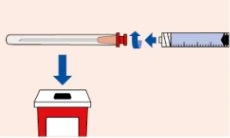
-
Hold the syringe and twist to remove the transfer needle.
-
Dispose of the transfer needle in a sharps container (see step 43).
- Do not touch the tip of the syringe after removing the transfer needle.
Attach the injection needle
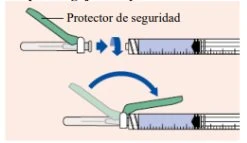
-
Remove the injection needle from its packaging.
-
Push and twist the injection needle until it is securely attached to the syringe.
-
Slide the safety shield toward the syringe as shown in the figure above.
Remove the injection needle cap
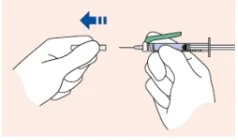
- Hold the syringe in the center and carefully remove the needle cap.
- Do not twist or bend the cap when pulling it off.
- Do not touch the needle or allow it to touch any surface after removing the cap.
- Do not recap the needle after removal, as this may damage the needle.
- Do not use the syringe if it has been dropped or damaged.
Adjust the plunger
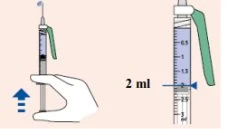
- Slowly push the plunger to the 2 mL mark.
Insert the needle
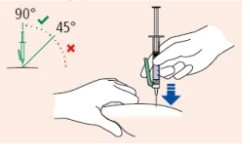
-
With one hand, pinch the cleaned area of skin.
-
With the other hand, hold the syringe in the center and position it at an angle of between 45º and 90º to the skin.
-
With a quick motion, insert the entire needle into the skin fold.
- Do not hold or push the plunger while inserting the needle.
Inject the medication
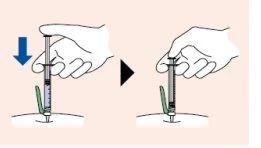
-
Slowly push the plunger all the way down to inject the full dose of medication.
-
Release the skin fold and withdraw the needle.
Cover the injection needle
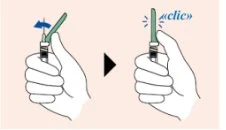
- After the injection, use your thumb to push the safety shield over the needle until you hear or feel a "click." If you do not hear a "click," check that the needle is fully covered by the safety shield.
- Do not recap the needle with the original cap.
- Do not use both hands to cover the needle with the safety shield.
- Do not remove the needle from the syringe.
Dispose of the syringe and vial
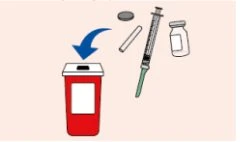
- Immediately after use, place the Piasky vial, syringe, needles, and all other used materials into a sharps container.
- Do not throw loose needles, the syringe, or the vial into the household trash.
- Do not attempt to disassemble the syringe.
Examine the injection site
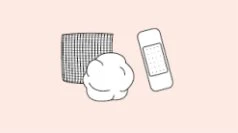
- There may be a small amount of blood or medication at the injection site.
You may apply gentle pressure with a cotton ball or gauze until bleeding stops. If needed, cover the injection site with a bandage. If bleeding does not stop, contact your doctor.
The injection is complete.
- Do not rub or massage the area where the injection was given.
Second or third injection
If the prescribed dose consists of 2 or 3 consecutive injections, restart again from step 8 using a new Piasky vial and new supplies. You may need up to 3 vials to receive the complete dose. Make sure the next injection is not administered in the same site used for the previous injection. |
Disposal of syringes and vials
Medicines must not be disposed of via wastewater drains or household waste. Ask your pharmacist how to properly dispose of unused medicines and their packaging. This helps protect the environment. When the container is full, make sure to dispose of it as instructed by your doctor, nurse, or pharmacist. |